
Orthopedic Trauma Fixation Devices Market Snapshot

Key Players

  • Johnson & Johnson (US)
  • Stryker Corporation (US)
  • Zimmer Biomet (US)
  • Smith & Nephew (UK)
  • Medtronic (Ireland)
  • Orthofix International (Curaçao)
  • Globus Medical (US)
  • B Braun Melsungen (Germany)
  • Aap Implantate (Germany)
  • Integer Holdings Corporation (US)

Market Size

Base Year 2024
$10.72 Bn
CAGR
6.54%
Forecast 2034
$20.20 Bn

Market Segments

By Product
  • Internal Fixators
  • External Fixators
By End User
  • Hospitals
  • Orthopedic & Trauma Centres
  • Ambulatory Surgical Centers (ASCs)

Market Dynamics

Drivers
  • Rising geriatric population
  • Increasing orthopedic injuries
Restraints
  • High device costs
  • Stringent regulatory frameworks
Opportunities
  • Increasing geriatric population
  • Technological advancements in fixation devices

Market Size

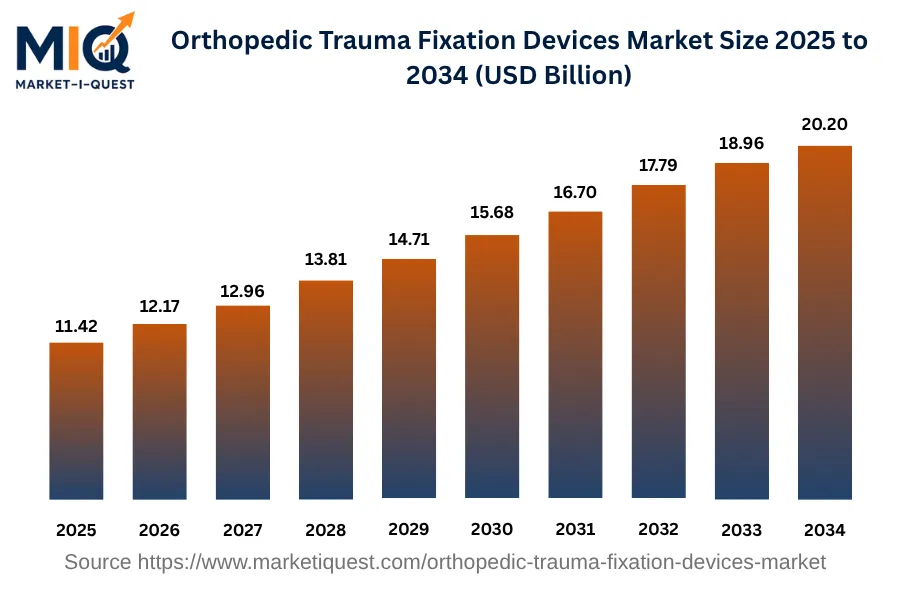
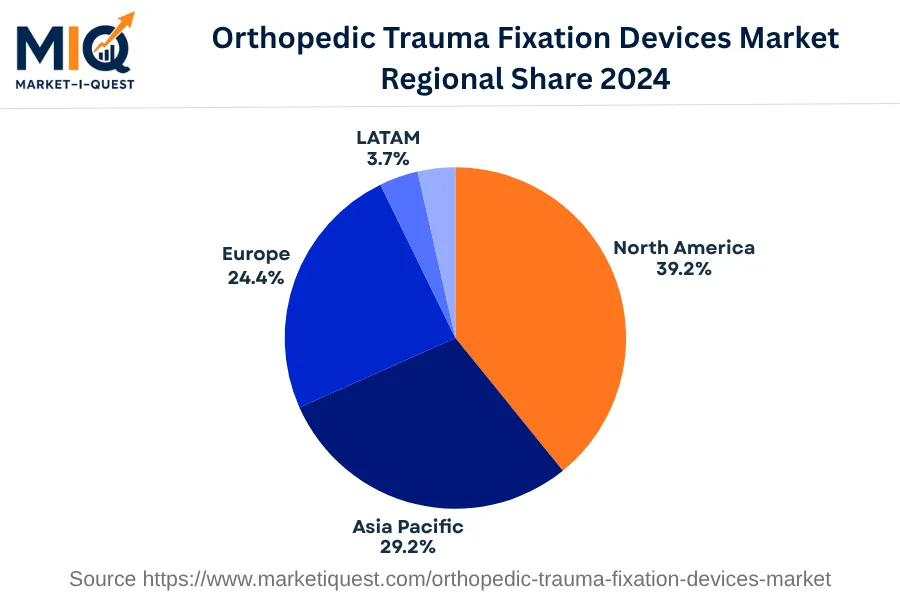
The Orthopedic Trauma Fixation Devices Market was valued at USD 10.72 billion in 2024 and is projected to increase to USD 11.42 billion in 2025. By the end of 2034, the market size is expected to reach USD 20.20 billion, growing at a CAGR of 6.54% from 2025 to 2034. This consistent growth is primarily on account of ongoing technological advancements and increased demand for orthopedic trauma fixation devices globally. In 2024, North America held the largest share of the market at 39.16%, followed by the Asia Pacific at 29.18%. Europe contributed 24.42% to the market, while LATAM and MEA accounted for 3.68% and 3.56% respectively.

Key Takeaways

  • By Product - Internal Fixators lead the market holding a majority share in 2024.
  • By End User - Hospitals emerged as the top users of Orthopedic Trauma Fixation Devices in 2024.
orthopedic-trauma-fixation-devices-market market size

Key Driving Factors

Increase in Geriatric Population

A significant factor driving the orthopedic trauma fixation devices market is the increase in the geriatric population, particularly in developed countries. Older people are at a higher risk of orthopedic conditions such as fractures and bone degeneration due to osteoporosis and arthritis. As a result, there's a direct correlation between the increasing geriatric population and demand for orthopedic trauma fixation devices, such as bone screws and plates, orthopedic nails, and bio-compatible fixation devices. Hospitals and healthcare providers are becoming more accustomed to the use of these devices, which can enhance the quality of life for an elderly person recovering from a severe injury, ultimately driving market growth.
Government Initiatives Toward Trauma Cases

Government initiatives and funding toward trauma cases is another major driving factor for the orthopedic trauma fixation devices market. State-led programs aimed at reducing the burden of trauma cases, such as the U.S.'s Trauma System Agenda for the Future, have led to an increase in the number of trauma centers equipped with orthopedic trauma fixation devices. In addition to providing immediate care, these programs also focus on rehabilitation, further increasing reliance on these devices. High-income countries are investing in these initiatives due to the cost-effectiveness of providing immediate and comprehensive trauma care, which invariably involves orthopedic trauma fixation devices.

Market Evolution by Timeline

2019-2023
In this period, the orthopedic trauma fixation devices market saw particular demand from older populations in developed nations such as the United States, Germany, and Japan due to age-related bone health issues. Notably, bioabsorbable fixation devices were increasingly adopted because of their benefits in wound healing. However, high device costs were a significant constraint, particularly in developing countries with less funding for healthcare. Regulatory bodies like the FDA in the U.S. and the EMA in Europe tightly controlled the quality of devices, which raised the entry barriers for new manufacturers. Hospitals typically entered into multi-year purchasing agreements with suppliers, with price negotiation influenced by factors like volume of purchase and length of contract term.
2024
In 2024, South American and Asian nations like Brazil and India emerged as major markets for orthopedic trauma fixation devices owing to growing older population and increased healthcare expenditure. Internal fixation devices were more widely adopted in these regions, due to the lower complexity and cost compared to bioabsorbable devices. The presence of several low-cost manufacturers was noted in these regions, though there was uncertainty about product quality. Regulatory bodies started to introduce regulations regarding medical device quality, which posed challenges for these manufacturers. Long-term contracts with hospitals continued as the dominant commercial model.
2025-2029
During the period from 2025 to 2029, demand for orthopedic trauma fixation devices further spread to Africa with countries like South Africa and Nigeria leading the way. Owing to progress in nanotechnology, there was a rise in the supply of implantable devices with nanoscale features for improved longevity and recovery. However, this technology was mainly accessible to developed nations due to high costs. Regulatory agencies globally placed more emphasis on patient safety during device testing, leading to increased regulatory scrutiny. Manufacturers started shifting toward value-based pricing models, challenging the usual volume-based contractual arrangements with hospitals.
2030-2034
From 2030 to 2034, the demand for orthopedic trauma fixation devices remained robust globally due to the growing trend of sports injuries alongside an aging population. Advances in 3D printing technology started to revolutionize the supply side, with an increased rate of personalized implant production. It should be noted, however, that the market for these highly personalized devices was still in its infancy, mostly confined to high-income countries due to the high investment required. Concerns about the potential risks associated with these new devices, particularly biocompatibility, led to stringent regulations by authorities like the FDA and EMA.

Future Market Outlook

Future Opportunities

As the orthopedic trauma fixation devices market evolves, there are numerous future opportunities shaped by current trends and technological advancements. The advent of telehealth services shows promise for postoperative follow-ups, which could boost the demand for home-use orthopedic devices. In March 2023, a partnership between Zimmer Biomet and a telehealth platform was established, integrating remote monitoring capabilities into their rehabilitation devices. The aging population in regions like North America, projected to reach 23% by 2030, will drive demand for orthopedic interventions and fixation devices suitable for seniors. As the market adopts innovative materials like alloys and polymers that enhance compatibility and reduce rejection rates, opportunities may broaden in arthroplasties and fracture fixation. Regulatory bodies are also increasingly establishing clear guidelines for the approval of novel materials, allowing quicker access to the market for innovative products. Additionally, collaborations between medical device companies and technology firms are expected to yield smarter fixation devices equipped with sensors to monitor patient progress, evident in past initiatives such as the partnership between Stryker and IBM Watson Health. Emphasizing patient education through digital solutions could further promote adherence to post-surgery protocols, allowing for holistic care approaches that enhance device effectiveness. This evolving landscape indicates that companies willing to innovate and adapt to demographic and technological changes will be well-positioned in the growing orthopedic trauma fixation market.

Segmentation Analysis

By Product

The market is divided into subsegments including Internal Fixators and External Fixators. Internal Fixators accounted for the largest revenue share while External Fixators are expected to grow at the fastest CAGR during the forecast period.

Largest Revenue Share

Internal Fixators

Market Share Leader

Internal Fixators dominated the market in 2024, driven by the high demand in fracture management procedures worldwide. These devices earn preference over their alternatives due to their unique advantages of minimizing soft tissue damage and enabling rapid rehabilitation. Being less invasive, they drastically reduces the risk of infection and thus are favoured in many surgical procedures. Their application is seen particularly in cases with complications, with orthopedic surgeons opting to use them in the event of treating open fractures, segmented fractures, and comminuted fractures. They've also found critical use in managing injuries in various geographical locations where outdoor activities are popular, making them profitable in diverse regions. The purchasing criteria for such devices are stringent, with many industry regulations favouring high-quality, durable, and reliable devices. Many hospitals tend to stick to trusted brands for supply, consequently increasing the switching cost and giving an edge to established players.

Fastest CAGR

External Fixators

Forecast Period Growth Leader

Despite Internal Fixators taking a larger revenue share, External Fixators are witnessing a faster CAGR and are expected to significantly gain market share during the forecast period. The rapid development in tech innovations has led to the creation of more compact, comfortable, and efficient external fixation devices, thereby enhancing patient compliance. This growth is also attributed to the broadening applications of these devices in pediatrics, hand surgery, foot and ankle surgery, and deformity correction. However, barriers still exist such as patient discomfort and risk of pin site infection. Many companies are investing heavily in R&D to overcome these constraints, and to foster greater acceptance amongst orthopedic surgeons. Notwithstanding, some risks remain especially in the volatile regulatory environment that oversees the use and distribution of these devices.

By End User

The market is divided into subsegments including Hospitals, Orthopedic & Trauma Centres, and Ambulatory Surgical Centers (ASCs). In the base year 2024, Hospitals accounted for the largest revenue share while Orthopedic & Trauma Centres are expected to grow at the fastest CAGR during the forecast period.

Largest Revenue Share

Hospitals

Market Share Leader

Hospitals are a primary hub for medical services, and significantly influence the financial structure of the healthcare industry. The high volume of patients that hospitals cater to, combined with the extensive range of services offered, contribute to their greater share of revenue in the market segment. A high proportion of critical care procedures, surgeries, and emergencies are treated in hospitals, requiring access to a multitude of medical equipment and devices. This demand enables high revenue generation for hospitals. This segment dominance is also supported by the sizeable hospital budgets that fund the large-scale procurement of these medical devices. Furthermore, government regulations and incentives often favor large-scale healthcare providers such as hospitals, fueling their revenue growth.

Fastest CAGR

Orthopedic & Trauma Centres

Forecast Period Growth Leader

While hospitals presently dominate the market in terms of revenue, Orthopedic & Trauma Centres are rapidly emerging as a strong market player, bolstered by the escalating incidence of musculoskeletal conditions and injuries. These centers specialize in orthopedic care and typically have a faster turnaround time for procedures, and a more targeted patient care approach. Favorable insurance policies, increasing outpatient preference for minimally invasive procedures, and investments in specialization are driving the growth of these centers. However, potential obstacles to growth include a shortage of skilled orthopedic surgeons and stringent regulations surrounding device approval and patient safety. Despite these barriers, the developing focus on outpatient orthopedic surgery and the rise of innovative trauma care equipments position Orthopedic & Trauma Centres as the fastest-growing subsegment.

Competitive Analysis

Key Market Players

Manufacturers / OEMs

Johnson & Johnson
US
Stryker Corp.
US
Smith & Nephew
UK

Key Suppliers & Raw Materials

Carpenter Technology Corporation
US
Sandvik AB
Sweden
Royal DSM
Netherlands

Distributors, Integrators & Channel Partners

IQVIA
US
Henry Schein, Inc.
US
Patterson Companies, Inc.
US

Porter’s Five Forces Analysis

This analysis explores the competitive intensity and attractiveness of the Orthopedic Trauma Fixation Devices Market.

Supplier Bargaining Power

Medium

Suppliers' bargaining power is moderated by their specialized knowledge and high switching costs.

Buyer Bargaining Power

Low

Buyers have low bargaining power due to the highly specialized nature of these medical devices and limited alternatives.

Threat of Substitutes

Low

Threat of substitutes is low as there are limited alternative treatments for trauma orthopedic cases.

Threat of New Entrants

Medium

High R&D costs and stringent regulatory barriers restrict entry, but possibilities exist through innovation.

Competitive Rivalry

High

The market witnesses high rivalry given the presence of multiple established players with similar product offerings.

Regional Analysis

Geographic market dynamics and growth opportunities across key regions

Global Market Outlook

orthopedic-trauma-fixation-devices-market market regional share

North America

The North America Orthopedic Trauma Fixation Devices Market in 2024 is experiencing considerable expansion underpinned by various forces. Key drivers of this surge include an uptick in the incidence of bone-related diseases and fractures coupled with an ageing population. Technological advancements in fixation devices, particularly minimally invasive surgical techniques, are triggering increased adoption in the healthcare sector. Equally influential are government initiatives and regulatory support for device innovations, which are stimulating investment in this vertical.

The market is also undergoing several transformations. A conspicuous trend is the growing preference of health providers for bioabsorbable implants, driven by their superior compatibility and lower complication rates. Major shifts in patient behaviour and demand parameters are also apparent with the rising proclivity for personalized orthopedic solutions, prompting manufacturers to invest in patient-specific implants. Channel dynamics are evolving with the proliferation of online sales platforms broadening market penetration and accessibility. Amidst this landscape, strategic collaborations and mergers between healthcare institutions and device manufacturers, like Stryker Corporation and Wright Medical Group, are becoming more commonplace, fostering industry consolidation and stimulating innovation. Notably, stricter enforcement of device standardization policies by regulatory bodies like the FDA is maintaining market integrity while prompting improvements in device safety and effectiveness.

Asia Pacific

The Orthopedic Trauma Fixation Devices Market in the Asia Pacific region showcased significant dynamism in 2024. The market witnessed notable growth due to rising incidence of orthopedic injuries, increased healthcare spending, and rapid uptake of advanced technology devices in key markets--China, India, and Japan. In particular, China's focus on upgrading healthcare infrastructure drove investment and adoption in this space. Meanwhile, India’s policy push towards affordable healthcare augmented the demand for cost-effective Orthopedic Trauma Fixation Devices. Yet, traditional supply chains struggled to meet this escalating demand, leading to urgency in restructuring and investment.

In terms of trends, buyer behavior highlighted a preference for minimally invasive devices, translating to considerable shift towards bio-absorbable fixation devices across markets, particularly in Australia and South Korea. With the expansion of digital channels and online platforms, e-pharmacies and e-commerce emerged as popular mediums for the purchase of these devices. Increased M&A activities were seen surrounding tech-based companies that develop nanotechnology-enhanced fixation devices. Furthermore, stricter policy enforcement around device standards was prevalent in key ASEAN markets. The trend towards precision technologies propelled demand at healthcare enterprises, whereas partnerships were a notable feature among manufacturers eager to expand their footprint and reach across the region.

Europe

In 2024, the Orthopedic Trauma Fixation Devices Market in Europe observed substantial growth. Drivers contributing to this expansion included rising incidences of bone-related injuries in the United Kingdom and Germany, increased governmental support for medical technology advancement in France, escalating investments in healthcare infrastructure across Benelux countries, and higher adoption of minimally invasive surgeries in Italy and Spain. Additionally, the supply dynamics in Central and Eastern Europe have been heavily influenced by price reductions in the wake of more affordable, high-quality domestic products.

In terms of trends, an uptick in buyer demand for bioresorbable gadgets was witnessed, particularly in the Nordics. Technological advancements such as the innovation of antimicrobial-coated devices created a positive impact on the market, most notably in Germany. Channel dynamics shifted towards online sales, especially in Spain, due to its convenience and accessibility. Partnerships and merger activities amplified, with Italian device manufacturers entering collaborations to expand their product portfolio. Finally, the strict enforcement of device standards by government agencies like the French National Authority for Health resulted in safer and better-quality devices, raising user confidence in these products. The primary sector driving the demand was healthcare, with specific emphasis on hospitals and orthopedic clinics.

Latin America

In 2024, the Orthopedic Trauma Fixation Devices Market in Latin America (LATAM) showed significant dynamics influenced by diverse factors. Market growth accelerated due to increased incidence of orthopedic trauma, augmented healthcare expenditure in economies like Brazil and Mexico, and enhanced adoption of advanced surgical technologies across LATAM. A push from governments for better healthcare infrastructure investment particularly in Argentina and Colombia also contributed. However, high device costs threatened market expansion.

Patient preference was seen shifting towards minimally invasive surgeries, driving demand for bio-resorbable implants. In Brazil, with robust healthcare policy enforcement, hospitals started adopting these advanced devices at a higher rate. Mexico saw increased partnerships among leading device manufacturers and local companies, expediting the market expansion.

In Colombia, enhanced governmental focus on orthopaic trauma led to a rise in the use of fixation devices in public hospitals. Chile's robust healthcare sector made significant strides in medical research, improving device efficacy and expanding the market. In Peru, the medical devices market matured, contributing to the increased consumption of orthopedic trauma fixation devices. Overall, the adoption of innovative devices, governmental support, and increasing healthcare spending defined the LATAM Orthopedic Trauma Fixation Devices Market in 2024.

Middle East & Africa

In 2024, the Orthopedic Trauma Fixation Devices Market in the Middle East and Africa showed a steady growth trajectory driven by various factors. Enhanced healthcare investments in Saudi Arabia and the United Arab Emirates emerged as key drivers, with both governments aiming to bolster their healthcare sectors. Moreover, the growing elderly population in Egypt, South Africa, and Israel fostered increased demand for orthopedic trauma fixation devices, given the heightened risk of fractures and musculoskeletal issues in this age group. Technology adoption witnessed an upward trend, with medical providers in Qatar and Kenya leading the way in incorporating advanced orthopedic solutions.

Trends within the market were multifaceted. In South Africa and Nigeria, patient trends leaned towards minimally invasive surgical procedures which led to the popularity of biodegradable fixation devices. In the United Arab Emirates and Saudi Arabia, private hospital chains became preferred channels, aligning with government policies to encourage private sector participation in healthcare. Government procurement of trauma fixation devices noticeably increased in Israel, while in Egypt, M&A activity in the healthcare sector broadened the reach of advanced orthopedic devices. As healthcare delivery became increasingly digitized across the region, telemedicine consultations relevant to orthopedics saw a substantial uptake in Kenya. Together, these drivers and trends shaped the Orthopedic Trauma Fixation Devices Market in the Middle East and Africa in 2024.

Recent Industry Developments

Latest market innovations, product launches, and strategic initiatives

January 2026

Medical equipment innovator Osteo-Engineering unveiled its next-generation ultra-low-profile, titanium-alloy locking plate system. Engineered with dynamic compression hole (DCH) geometry, the plate design minimizes post-operative soft-tissue irritation while providing high multi-planar fixation for complex peri-articular fractures.

July 2025

Precision trauma device developer Auxein Medical expanded its internal fixation catalog by releasing its specialized 3.5mm and 4.5mm polyaxial locking compression plate (LCP) systems. The implants feature variable-angle locking screws that allow surgeons to customize fixation angles for osteoporotic bone fractures.

Frequently Asked Questions