Orthobiologics Market Snapshot

Key Players

  • Medtronic (Ireland)
  • DePuy Synthes (United States)
  • Stryker Corporation (United States)
  • Zimmer Biomet Holdings Inc. (United States)
  • Bioventus LLC (United States)
  • BONESUPPORT AB (Sweden)
  • Anika Therapeutics S.r.l (Italy)
  • Nuvasive Inc. (United States)
  • Sanofi S.A (France)
  • Orthofix Holdings Inc. (United States)

Market Size

Base Year 2024
$7.93 Bn
CAGR
5.94%
Forecast 2034
$14.12 Bn

Market Segments

By Product Type
Stem Cells, Growth Factors, Bone Grafts, Allografts, Bone Morphogenetic Proteins (BMPs)
By Delivery Method
Surgical Procedure, Intra-arterial Administration, Local Injection, Systemic Administration
By Application
Orthopedic Surgery, Sports Medicine, Dental Applications, Spinal Surgery, Wound Healing, Others
By End User
Hospitals, Ambulatory Surgical Centers (ASCs), Specialty Clinics, Rehabilitation Centers

Market Dynamics

Drivers
  • Rising prevalence of orthopedic conditions
  • Advancements in orthobiologics technology
Restraints
  • High treatment cost
  • Regulatory approval hurdles
Opportunities
  • Rising prevalence of orthopedic conditions
  • Sophisticated healthcare infrastructure development

Market Size

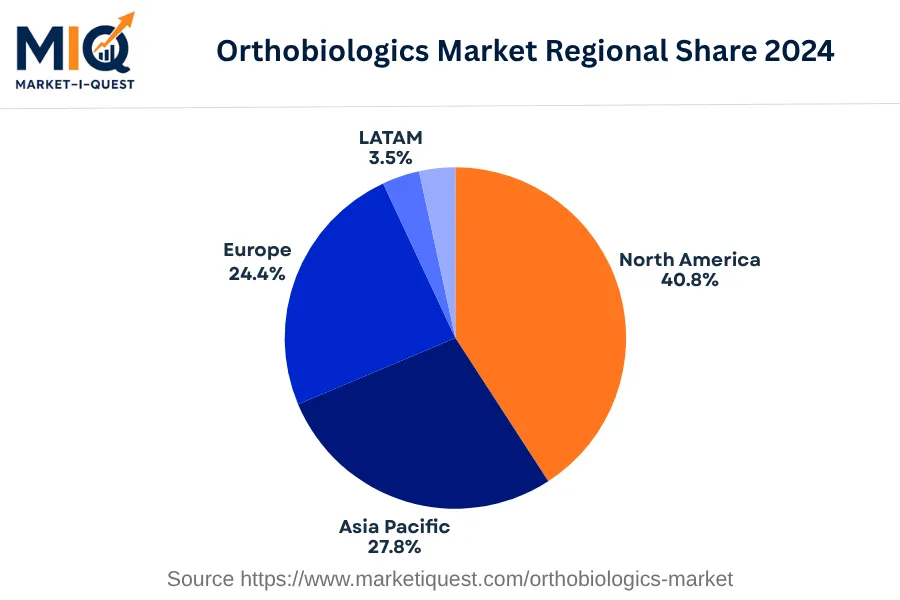
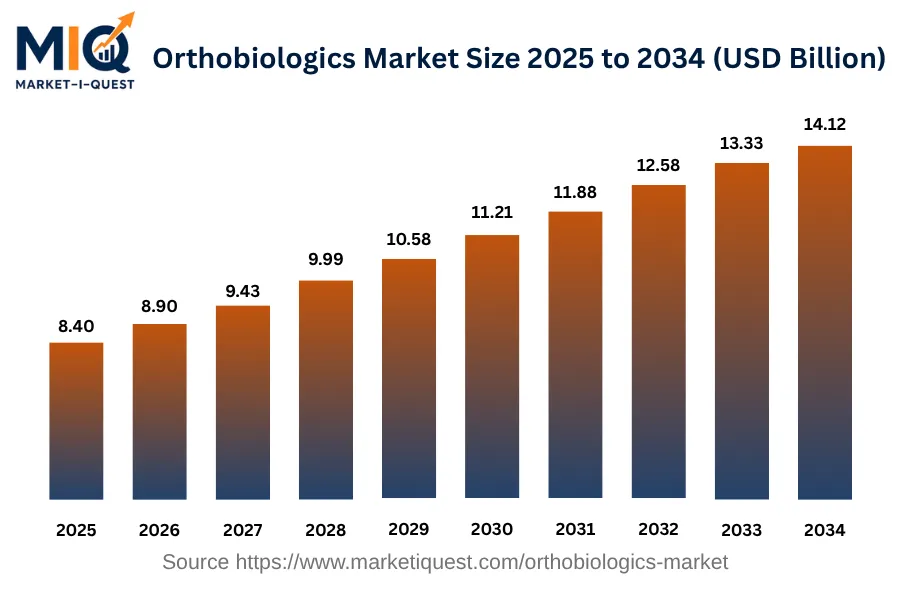
The Orthobiologics Market size in 2025 stood at $8.40 billion, having risen from $7.93 billion in the previous year, 2024. By 2034, the size of this market is anticipated to grow to $14.12 billion, representing a CAGR of 5.9%. It is this strong CAGR that is propelling the increase in the market size over the decade. Precisely, the market's steady growth is due to the consistent rise year on year, driven by the CAGR of 5.9%. In regards to regional market shares in 2024, North America held the largest share with 40.8%, followed by the Asia Pacific at 27.8%. Europe trailed close behind with a market share of 24.4%, with LATAM and MEA accounting for the smallest shares at 3.5% and 3.4% respectively. This information gives insight into a diverse regional distribution of the Orthobiologics Market in 2024.

Key Takeaways

  • By Product Type - Bone Grafts held the top position with a significant market share in 2024.
  • By Delivery Method - Surgical Procedure led the market with a vast percentage of procedures performed in 2024.
  • By Applications - Orthopedic Surgery accounted for a substantial proportion in 2024.
  • By End User - Hospitals emerged as leaders with a significant utilization rate of orthobiologics in 2024.
orthobiologics-market market size

Key Driving Factors

Implementation of Minimally Invasive Surgery Procedures

As a seasoned market analyst, one noticeable driver of the Orthobiologics Market is the increasing adoption of minimally invasive surgery procedures. Minimally invasive procedures cause less damage to human tissues and offer faster recovery times, making orthobiologic products an ideal fit due to their organic restorative properties. More and more hospitals and clinics are starting to embrace such techniques due to their myriad of benefits over traditional surgeries. This shift in medical surgical methodology significantly contributes to the rising demand for orthobiologic products as they help improve the outcome of these procedures.

Increasing Prevalence of Orthopedic Conditions in Aging Population

Another specific driving factor in the Orthobiologics Market is the increase in orthopedic conditions linked to the aging global population. As people age, instances of degenerative disc diseases, spinal deformities, and other orthopedic conditions grows. Orthobiologic products have been recognized for their ability to stimulate healing in bones and spinal conditions, making them particularly desirable for treatment of elderly patients. Furthermore, health systems in developed countries where aging population is significantly high, like Japan and Germany, are becoming more proactive in sourcing effective and efficient treatment options such as orthobiologics. This rise in elderly orthopedic cases, coupled with the capabilities of orthobiologics, is driving market growth.

Market Evolution by Timeline

2019-2023
During this period, key buyers of orthobiologics were primarily hospitals, followed by orthopedic clinics, in developed economies like the US, Canada, Germany and Japan due to higher prevalence of musculoskeletal ailments. Most products were allografts, bone morphogenetic proteins, and viscosupplementation. However, supply constraints were common due to stringent donor screening and tissue harvesting procedures. The FDA regulation on Human Tissue used in transplantation (21 CFR Part 1271) and EU regulatory framework 1394/2007 presented challenges in product approvals. Pay-per-use pricing model was the norm. Major companies operated through partnerships with local distributors to increase their geographical reach. The risk of disease transmission from allografts was a major concern.
2024
In this year, Asia Pacific region saw an increase in demand due to rapidly aging population and improving healthcare infrastructure. China, India and South Korea were key markets. The introduction of synthetic orthobiologics and growth factors reduced reliance on tissue donations, addressing supply issues. The regulatory bodies in these regions adopted elements from the WHO's Guiding principles on human cell, tissue and organ transplantation, easing product approval process. Companies also moved towards outcome-based pricing models. Risks included patent expirations of key products affecting revenues of leading companies
2025-2029
An increase in demand was seen from sports medicine and trauma cases, as the use of orthobiologics for these cases became more established. Advent of advanced cell therapies and 3D printed orthobiologics improved product efficiency. The ISO standard 13485 for medical devices influenced product development. Sponsorship agreements became more common between orthobiologic companies and professional sports leagues. A significant concern during this time was the need to produce clinical evidence demonstrating the economic value and therapeutic efficacy of orthobiologics.
2030-2034
Middle East and Africa expanded as potential markets for orthobiologics, particularly UAE, Saudi Arabia and South Africa, driven by increasing healthcare expenditure. Companies introduced orthobiologics combined with drug delivery systems providing targeted and sustained delivery, improving clinical outcomes. Technological matures paced with integration of artificial intelligence and machine learning for personalized orthobiologic solutions. Commercially, revenue-sharing agreements were more common with healthcare providers. The primary risk was managing pricing and reimbursement issues in new markets.

Future Market Outlook

Future Opportunities

The future of the orthobiologics market is poised for expansion as ongoing research continues to unlock new therapeutic possibilities. Companies like Medtronic are currently investing in the development of novel biomaterials that enhance the healing process, positioning themselves to capture future market segments. In early 2024, the National Institute of Health is expected to release guidelines that emphasize the use of orthobiologics in combination with traditional treatments, increasing the relevance of such therapies in clinical practice. Collaborations between academic institutions and private firms are gaining momentum; for instance, a 2023 partnership between Stanford University and a biotech company focuses on harnessing gene editing technologies to enhance the efficacy of stem cell therapies. The United States is also witnessing legislative movements aimed at simplifying the approval process for regenerative medicine products, which could significantly accelerate the introduction of next-generation treatments. Countries like Germany are pushing the envelope on bioreactor technology, allowing for more robust production of orthobiologic materials. With patient demand for minimally invasive and effective treatments on the rise, opportunities will likely arise for companies that can streamline production and demonstrate superior clinical outcomes. In this evolving landscape, access to patient data through electronic health records is expected to enable more personalized treatment plans, paving the way for advancements in precision orthobiologics.

Segmentation Analysis

By Product Type

The market is divided into subsegments including Stem Cells, Growth Factors, Bone Grafts, Allografts, and Bone Morphogenetic Proteins (BMPs), with Bone Grafts accounting for the largest revenue share while Stem Cells subsegment is expected to grow at the fastest CAGR during the forecast period.

Largest Revenue Share

Bone Grafts

Market Share Leader

The Bone Grafts subsegment leads in revenue due to their widespread adoption in the medical sector, driven by their crucial role in orthopedic surgeries and some dental procedures. The increase in the prevalence of musculoskeletal conditions, along with the aging population, has resulted in a greater demand for surgeries where bone grafts are indispensable, thus driving their sales. Additionally, the enhanced success rate of surgeries using bone grafts has further escalated their popularity among healthcare professionals. Geographically, developed countries with advanced healthcare systems hold a significant share in the market revenue, attributing to the higher patient affordability and availability of sophisticated treatment options. The procurement of bone grafts predominantly happens through direct channels, involving suppliers and hospitals or clinics, minimising the switching cost. However, regulations concerning the source of bone grafts and their quality control can pose constraints on this subsegment's growth.

Fastest CAGR

Stem Cells

Forecast Period Growth Leader

The stem cells market is projected to witness the fastest growth, driven by several catalysts. Firstly, advancements in technology have resulted in an improvement in stem cell therapies, thereby broadening their application scope in treating a host of diseases which are currently lacking medicaments, thus driving demand. A prime example is the use of stem cells in regenerative medicine to repair damaged tissues or organs. Secondly, capital expenditure in stem cell research has spiked due to increasing commercial interest and government funding, predicting a bright future for this subsegment. However, high treatment costs and technical expertise required for stem cell therapies may be major barriers, hampering widespread adoption, particularly in less developed regions. Lastly, partnerships between stem cell firms and healthcare institutions play a key role in accelerating market penetration. But the ethical and regulatory issues surrounding stem cell research pose potential risks that could slow down the projected growth.

By Delivery Method

The market is divided into subsegments including Surgical Procedure, Intra-arterial Administration, Local Injection, and Systemic Administration. Of these, the Surgical Procedure subsegment accounted for the largest revenue share, while Local Injection is predicted to show the fastest growth during the forecast period.

Largest Revenue Share

Surgical Procedure

Market Share Leader

The Surgical Procedure subsegment holds the largest revenue share as of 2024. Factors driving this market dominance include the rising prevalence of chronic diseases like cancer, cardiovascular disorders, and gastrointestinal ailments which often necessitate surgical interventions. Another key driver is the increasing technological advancements which have made surgeries safer and more efficient. Geographic regions with advanced healthcare infrastructure like North America and Europe have been key contributors to the revenue generation in this subsegment. Regulatory approvals for new and improved surgical procedures combined with increased public and private healthcare spending have led to a surge in the number of procedures conducted. Switching costs from traditional techniques to modern surgical procedures can be high, but these are offset by improved patient outcomes and shorter hospital stays, making it the preferred choice for both healthcare providers and patients.

Fastest CAGR

Local Injection

Forecast Period Growth Leader

The Local Injection subsegment is anticipated to grow at the fastest CAGR. Factors driving growth in this subsegment include the increasing prevalence of chronic pain conditions, dermatological conditions and localized infectious diseases requiring targeted drug delivery. Local injections also eliminate systemic side effects, making this method attractive for patient populations with comorbidities. Technological advancements like needle-free injections and use of smart injectors are reducing barriers to adoption, while partnerships among medical device companies and pharmaceuticals are helping to bring innovative delivery methods to market. However, capital expenditure on new equipment and training staff for local injection procedures may pose near-term growth challenges. Regulatory approvals for new delivery methods can pose a moderate risk if delays occur. Nevertheless, the overall growth prospects of this subsegment remain robust.

By Application

The market is divided into subsegments including Orthopedic Surgery, Sports Medicine, Dental Applications, Spinal Surgery, Wound Healing, and Others. Among these, Orthopedic Surgery accounted for the largest revenue share, while Sports Medicine is anticipated to exhibit the fastest growth during the forecast period.

Largest Revenue Share

Orthopedic Surgery

Market Share Leader

Orthopedic Surgery emerged as the subsegment with the highest revenue. This is attributed to the increasing prevalence of orthopedic conditions such as osteoporosis and arthritis alongside a rising elderly population globally, a demographic notoriously susceptible to such conditions. Moreover, the subsegment benefits from constant advancements in surgical procedures and implants, which add to its growth. Geographically, developed regions like North America and Europe contribute significantly due to their mature healthcare systems, and higher patient awareness levels. The purchasing decision in this subsegment largely depends on the quality of the implants, affordability, and the reputation of the manufacturing companies. Government regulations also play a key role, especially for product approval and patient safety. The distribution channel primarily involves direct sales to hospitals, clinics, and healthcare institutions.

Fastest CAGR

Sports Medicine

Forecast Period Growth Leader

Sports Medicine is projected to be the fastest-growing subsegment. The primary drivers for growth include a rising number of sports-related injuries and greater emphasis on physical fitness in recent years. Additionally, an increase in the uptake of minimally invasive surgeries and innovations in regenerative medicine magnify this subsegment's growth potential. However, the high cost associated with treatment and surgery can pose as potential barriers to adoption. Partnerships between sports medicine companies and sports organizations, research institutions, and healthcare providers serve as a significant catalyst for market growth. Policymakers need to take note of the affordability and accessibility of sports medicine to ensure that everyone can benefit from advances in this field. The main risk in the near-term revolves around the uncertainty caused by the global pandemic, likely causing interruptions in the sports events, thus affecting the subsegment.

By End User

The market is divided into subsegments including Hospitals, Ambulatory Surgical Centers (ASCs), Specialty Clinics, and Rehabilitation Centers. Hospitals accounted for the largest revenue share while Specialty Clinics are expected to grow at the fastest CAGR during the forecast period.

Largest Revenue Share

Hospitals

Market Share Leader

Hospitals have been the dominant subsegment in the market due to several reasons. The first reason is volume; hospitals, by their nature, handle a significant number of patients, and as a result, have a high demand for healthcare products and services. Secondly, hospitals are more likely to have access to larger budgets compared to other healthcare facilities, allowing them to invest more in products, technologies, and services. Geographically, hospitals are widespread, from urban to rural areas, increasing their market reach and penetration. Regulations also play a crucial role, as hospitals need to adhere to a variety of healthcare standards, increasing the demand for quality products and services. Finally, from the customer's perspective, hospitals serve as one-stop hubs for medical needs and offer a broad range of services, pushing the revenue share upwards.

Fastest CAGR

Specialty Clinics

Forecast Period Growth Leader

Specialty Clinics are forecasted to achieve the fastest growth. These facilities focus on particular patient groups, conditions, or treatments, and as such, they provide tailored services that general practitioners might not provide. These clinics are gaining popularity due to the increasing number of patients suffering from specific diseases that require specialized care and treatment. Advances in medical technology have also supported the growth of specialty clinics by providing them with tools that enhance precision and reduce treatment times. Partnerships and collaborations between specialty clinics and research institutions or pharmaceutical companies contribute to their rapid growth. However, they face barriers of high capital expenditure and regulatory scrutiny, which might moderate their growth rate. Despite these challenges, their highly targeted approach and the growing demand for specialized care are expected to fuel their strong CAGR outlook.

Competitive Analysis

Key Market Players

Manufacturers / OEMs

Medtronic
Ireland
DePuy Synthes
US
Zimmer Biomet
US

Key Suppliers & Raw Materials

Stryker Corporation
US
Smith & Nephew
UK
Integra Lifesciences
US

Distributors, Integrators & Channel Partners

Arthrex, Inc.
US
J. Morita MFG. Corp.
Japan
Baxter
US

Porter’s Five Forces Analysis

An examination of competitive dynamics within the Orthobiologics Market.

Supplier Bargaining Power

Medium

Limited suppliers of raw materials increase their bargaining power.

Buyer Bargaining Power

High

Buyers, mainly healthcare providers, have numerous supplier options and low switching costs.

Threat of Substitutes

Low

Unique and specialized nature of Orthobiologics offers few substitute products.

Threat of New Entrants

Medium

High R&D costs and regulatory barriers limit new market entrants, but market growth potential could attract startups.

Competitive Rivalry

High

Large multinational players and innovation-driven competition lead to high industry rivalry.

Regional Analysis

Geographic market dynamics and growth opportunities across key regions

Global Market Outlook

orthobiologics-market market regional share

North America

In 2024, the Orthobiologics Market in North America has emerged as a significant biomedical sector. This elevation has been driven largely by the increasing demand for advanced treatment modalities in orthopedics, stemming from the region's growing aging population and the rise in musculoskeletal conditions. Governments have heavily regulated the sector, establishing strict standards for product quality and safety. Further, notable investments from healthcare giants like Medtronic and Stryker have accelerated technology adoption, enhancing the efficiency and effectiveness of orthobiologic treatments. Supply dynamics have also played a role, with a surge in R&D initiatives contributing to the availability of innovative solutions.

Key North American trends have revolved around changes in buyer behavior and technological shifts. There has been a discernible move towards non-operative care before orthopedic surgery, resulting in increased demand for orthobiologics. Technological advancements, such as the development of 3D printable bone grafts and the enhanced precision of bone morphogenetic proteins, have changed treatment approaches. Channel dynamics have also evolved, with the rise of telehealth promoting remote consultations for implementing orthobiologic solutions. Partnerships and M&A activity have shaped the market, most notably Johnson & Johnson’s acquisition of Momenta Pharmaceuticals. Compliance with established standards and policy enforcement, particularly by the Food and Drug Administration, has been critical in ensuring market integrity. The primary customers have been healthcare institutions like hospitals and clinics, and patients requiring orthopedic care.

Asia Pacific

In 2024, the Asia Pacific Orthobiologics market saw lively activities, with key drivers including rising demand, rapid tech adoption, and significant investments. The growing need for these biological substances finds its roots in increasing incidents of sports-related injuries and bone disorders, particularly in China, India, and Australia. In China, the government's aging policy increased the demand for orthobiologics while the Indian Orthobiologics field expanded due to significant investments by multinational companies. Meanwhile, advanced healthcare paradigms in Japan and South Korea entailed the adoption of cutting-edge technology thus propelling market growth.

Trends observed within the year showcased an evolving panorama with buyer behavior and policy enforcement taking the lead. In India and ASEAN markets, a shift towards affordable healthcare solutions catalyzed the preference for orthobiologics—an economical, efficient alternative to conventional therapies. Besides, there was a push for partnerships and mergers, particularly in South Korea and Australia, intensifying market competition. In terms of product shifts, an inclination towards bone graft substitutes was palpable across the region. Governments across these countries also enforced policies to ensure quality and safety standards aligning with international norms. The principal sectors touching these trends included healthcare providers, orthopedic clinics and manufacturing companies, where the adoption of orthobiologics was notably high.

Europe

In the base year of 2024, the Orthobiologics Market in Europe was sustained by investment, technological advancements, and strict regulatory standards. Market drivers included high demand for Orthobiologics due to the increasing prevalence of orthopedic conditions, such as osteoarthritis and rheumatoid arthritis. Advances in technology allowed for new product development and improved techniques, which further stimulated the market. Stringent regulations by the European Union Health and Safety bodies raised quality standards, fostering market growth. Significant investments from countries like Germany, the United Kingdom, and France facilitated R&D initiatives promoting innovation.

Market trends in 2024 included shifting buyer preferences towards minimally invasive procedures and biodegradable products. The rapid adoption of advanced technologies reshaped the treatment landscape, with a notable emphasis on personalized medicine and digitization in healthcare. Italy, Spain, and the Central & Eastern European countries observed dynamic channel shifts towards online platforms for product procurement, transforming the customer acquisition process for orthobiologics manufacturers. Regulatory enforcements, such as the EU's Medical Device Regulation (MDR), influenced market practices, provoking strategic collaborations and M&A activities amongst key players to comply with heightened standards. Primary sectors involved in the market included healthcare, research institutions, and government bodies.

Latin America

In 2024, the Latin American orthobiologics market flourished across various healthcare domains. Market growth was driven by escalating musculoskeletal disorders incidence in countries such as Argentina and Chile, invigorating the demand for orthobiologics products. Increased government investment in healthcare across the region, especially in Brazil and Mexico also augmented market growth. Enhanced adoption of advanced biotech tools, visible in Colombia and Peru, bolstered product innovation and supply.

Changing consumer preferences marked a notable trend. Latin American patients actively sought hyaluronic acid-based products for their osteoarthritis treatment. There was a notable rise in biological surgeries, reflecting a shift from traditional surgical methods. Automated sales channels witnessed an uptick, streamlining orthobiologics' distribution in the region. Corporate consolidation marked another trend, visible in the partnership between Brazil's OrthoPediatrics Corp and Argentina's Biotech Mayflower, to extend the product portfolio and influence the market landscape. Regulatory policies reinforced the market behavior, with Mexico's COFEPRIS implementing stringent product approval norms, elevating orthobiologics' quality standards and patient safety.

This dynamic affected various sectors, primarily healthcare providers and retail, impacting product availability schedules and pricing benchmarks. As a result, the region’s orthobiologics market in 2024 was characterized by increasing demand, supply-side evolution, and significant regulatory compliance.

Middle East & Africa

In 2024, the Orthobiologics market in the Middle East and Africa witnessed substantial growth driven by several factors. Investments surged as initiatives like Saudi Arabia's Vision 2030 sought to upgrade healthcare infrastructure. Successful implementation of such policies catalyzed demand for advanced Orthobiologics solutions.

Rising prevalence of chronic bone disorders, owing to the aging population in Egypt and South Africa, bolstered the market. Furthermore, authorities in Israel and United Arab Emirates pushed for the adoption of biologic treatments over surgical interventions, boosting regional market expansion.

Where trends are concerned, patients in Kenya and Nigeria exhibited growing preference for minimally invasive orthopedic treatments, stimulating the use of growth factor Orthobiologics. Shifting channel dynamics were also observed, with increased reliance on e-pharmacies in response to the COVID-19 pandemic.

Interestingly, unique partnerships emerged in the market; an alliance between healthcare and telecom sectors led to advanced telemedicine services in Qatar, improving orthobiologic product accessibility. Meanwhile, standards tightened in South Africa, with stricter policy enforcement on Orthobiologics manufacturers to ensure product safety and efficacy.

In conclusion, the 2024 Orthobiologics market in the Middle East and Africa witnessed growth driven by a blend of demand factors, regulatory changes, technological advancements, and shifting sector dynamics.

Recent Industry Developments

Latest market innovations, product launches, and strategic initiatives

January 2025

Ventris Medical secured FDA 510(k) clearance for its Backpack bone graft containment platform. The device is engineered to hold osteoinductive and surface-activated bioactive materials, enhancing handling and retention during orthopedic surgical procedures.

Frequently Asked Questions