Neurology Devices Market Snapshot

Key Players

  • Medtronic (Ireland)
  • Boston Scientific (United States)
  • Biotronik (Germany)
  • LivaNova (United Kingdom)
  • Nihon Kohden (Japan)
  • Stryker (United States)
  • Integra LifeSciences (United States)
  • NeuroPace (United States)
  • Magstim (United Kingdom)
  • MicroPort Scientific (Hong Kong)

Market Size

Base Year 2024
$16.48 Bn
CAGR
8.75%
Forecast 2034
$38.13 Bn

Market Segments

By Device Type
  • Neurostimulation Devices
  • Cerebrospinal Fluid Management Devices
  • Interventional Neurology Devices
  • Neurosurgery Devices
  • Diagnostic Neurology Devices
By Application
  • Stroke
  • Epilepsy
  • Parkinson’s Disease
  • Alzheimer's Disease
  • Chronic Pain
  • Others
By End User
  • Hospitals
  • Specialty Neurology Clinics
  • Ambulatory Surgical Centers
  • Research Institutes

Market Dynamics

Drivers
  • Rising neurological conditions prevalence
  • Technological advancements in Neurology Devices
Restraints
  • High device costs
  • Regulatory approval complexities
Opportunities
  • Rising neurological disorders
  • Increased healthcare spending

Market Size

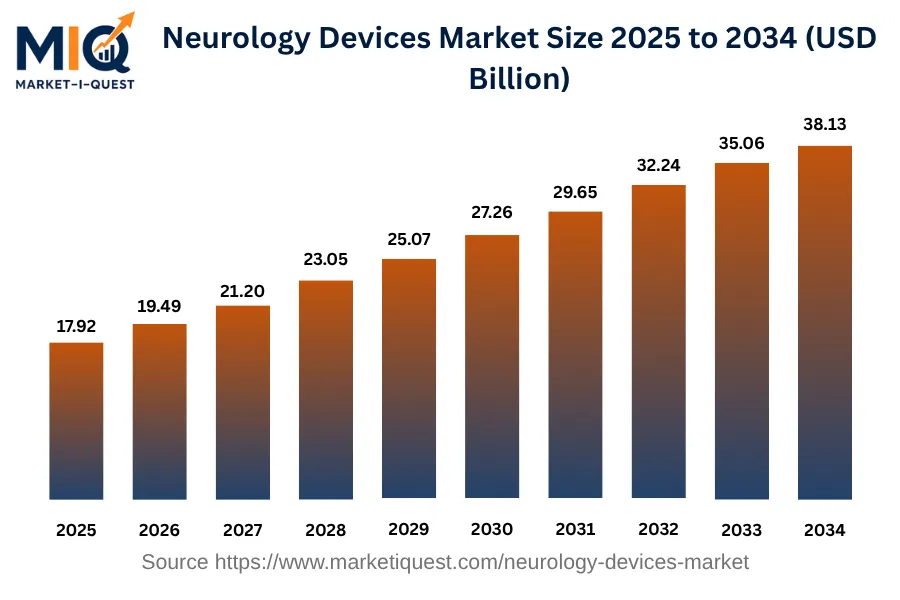
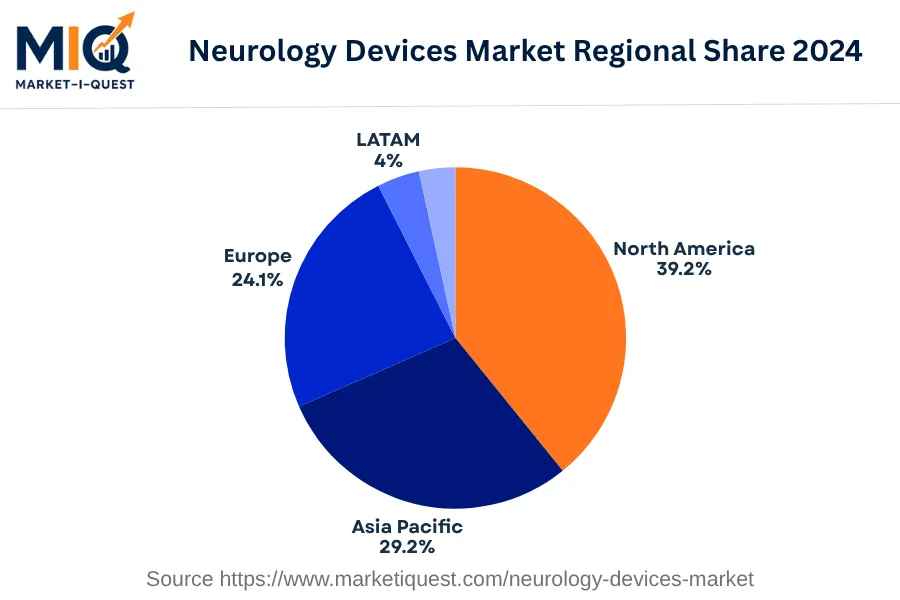
The Neurology Devices Market in 2025 is anticipated to be worth USD 17.92 billion, up from a valuation of USD 16.48 billion in 2024. By 2034, the market size is expected to surge to USD 38.13 billion, registering a CAGR of 8.75% over the intervening period. This considerable increase in market valuation will occur over nearly a decade, fuelled by continuous advancements in neurology devices and increased adoption of these technologies in healthcare systems around the globe. Examining the regional distribution in 2024, North America held the largest share at 39.2%, followed by Asia Pacific at 29.2% and Europe at 24.1%. Notably, the Latin America and the Middle East and Africa regions accounted for smaller market shares of 4.02% and 3.44% respectively.

Key Takeaways

  • By Device Type - Neurosurgery Devices held a dominant market share in 2024.
  • By Application - Alzheimer's Disease accounted for a significant segment share in 2024.
  • By End User - Hospitals held the leading position in the Neurology Devices Market in 2024.
neurology-devices-market market size

Key Driving Factors

Innovations in Non-Invasive Brain Stimulation Technique

In the field of neurology, the development of non-invasive brain stimulation technologies is pushing the growth of neurology devices market. Mainly, Transcranial Magnetic Stimulation (TMS) and Transcranial Direct Current Stimulation (tDCS) techniques are driving this segment. These techniques are proving beneficial for treating several neurological conditions like depression, movement disorders, stroke, and Alzheimer's disease without causing any critical side-effects. Researchers worldwide are looking forward to enhancing the knowledge about the brain's sophisticated network and its normal or abnormal functioning. The non-invasive nature and the promise of positive patient outcomes have intrigued numerous neurologists to adopt these newer technologies, giving a significant push to the neurology devices market.
Increasing Adoption of Neurostimulation Devices for Pain Management

Increasing prevalence of chronic pain conditions and the need for managing it effectively are pushing the adoption of neurostimulation devices – a segment of the neurology devices market. Conditions like neuropathic pain, uncontrolled seizures, and intractable chronic migraines often do not respond positively to conventional therapies. To address this issue, physicians are increasingly considering neurostimulation devices that help manage such pain effectively and promisingly. For instance, Spinal Cord Stimulation (SCS) Devices and Deep Brain Stimulation (DBS) Devices are gaining popularity among medical professionals. The growing acceptance of these techniques for effective pain management and improved patient quality of life act as a critical driver for the neurology devices market.

Market Evolution by Timeline

2019-2023
From 2019 to 2023, the neurology devices market saw an increase in demand, particularly within developed regions including North America and Europe, driven by the growing prevalence of neurodegenerative diseases. The supply of neurostimulation devices rose to meet this demand, with advancements in device integration and miniaturization. However, practical constraints such as high costs and a lack of skilled professionals persisted. Regulation was primarily influenced by the US's FDA, which tightened its surveillance grounded on quality and safety concerns. Market models shifted towards value-based policies, which allowed providers to closely align costs with outcomes. However, the high cost of devices and treatments emerged as a significant barrier to market growth, instigating discussions on the need for novel funding mechanisms.
2024
In 2024, the demand for neurology devices persisted due to a consistent rise in the incidences of cerebrovascular and neurodegenerative diseases. This time, however, emerging markets such as India and China also began seeking these treatments, given the increasing awareness and healthcare infrastructure developments. The supply chain grew more sophisticated, integrating artificial intelligence for efficient production and distribution. Mostly, the regulatory landscape remained unchanged, still dominated by market approval requirements from agencies like US FDA and EU's EMA. The pricing models saw a trend towards transparency and patient centricity, acknowledging patients' ability to pay. Risks included the ongoing strain on healthcare systems brought by ageing population and rising chronic disease times.
2025-2029
Between 2025 and 2029, the neurology devices market is expected to broaden its user base to include not only hospitals but also diagnostic centres and research institutions. The devices will likely become wider range to serve varying needs, from deep brain stimulation devices to cerebrospinal fluid management devices. However, issues of integration and compatibility amongst these devices might act as a constrain to expansion aspirations. 'Safety First' will likely become a market agreement during this time frame, driving major policy efforts to ensure the safety and efficacy of neurology devices.
2030-2034
Moving into the years 2030–2034, home healthcare is expected to emerge as a growing buyer segment, growing global trends of patient preference for treatment in their own homes. Market supply may aim more durable, patient-friendly devices that can be operated with minimal medical supervision. Policy emphasis might lean towards promoting user friendliness of these devices to encourage their adoption in home settings. Competitive bidding may slowly begin replacing traditional procurement models as more manufacturers will likely enter the market, thereby lowering device prices. However, latent concerns over the mismanagement of these devices by lay citizens, and lack of immediate medical intervention in case of emergencies.

Future Market Outlook

Future Opportunities

As the neurology devices landscape evolves, numerous opportunities will likely arise for growth and innovation. The ongoing partnership between Biogen and Eisai aims to expedite the development of Alzheimer's therapies, presenting opportunities for diagnostics and monitoring tools. The rise in patient-centered care models highlights the importance of devices that facilitate real-time data collection or remote monitoring, something that companies like Philips are actively working on through their health technology solutions. The implementation of the European Medical Device Regulation has created pathways for novel device approvals but also demands heightened compliance, offering opportunities for compliance consulting firms to flourish. Furthermore, ongoing research initiatives funded by organizations like the National Institutes of Health are emphasizing the integration of AI within diagnostic technologies, opening avenues for start-ups and established firms alike to innovate at the intersection of technology and neurology. The global focus on mental health, spurred by reports from the World Health Organization on increasing anxiety and depression rates, further broadens the potential market for devices aimed at mental health management. Opportunities will also likely arise from enhanced data analytics capabilities, enabling improved treatment effectiveness through personalized healthcare strategies.

Segmentation Analysis

By Device Type

The market is divided into subsegments including Neurostimulation Devices, Cerebrospinal Fluid Management Devices, Interventional Neurology Devices, Neurosurgery Devices, and Diagnostic Neurology Devices. Neurosurgery Devices accounted for the largest revenue share while Interventional Neurology Devices is expected to grow at the fastest CAGR during the forecast period.

Largest Revenue Share

Neurosurgery Devices

Market Share Leader

Neurosurgery Devices emerge as the market segment with the highest revenue, primarily due to the increasing prevalence of neurological disorders and technological advancements in neurosurgical procedures. These devices play a critical role in treating conditions such as brain tumors, stroke, and neurological trauma, which are increasing globally due to several factors including population aging. Advances in imaging technologies and minimally invasive surgical procedures are improving patient outcomes, which in turn is boosting the demand for these devices. Geographically, developed markets like North America and Europe contribute significantly to the segment's revenue owing to higher healthcare spending and the presence of specialized neurosurgical facilities. Regulatory environment also favors growth, with approvals for innovative devices coming in at a steady pace. From the customer perspective, quality and innovation in device design are key purchasing criteria, making it a competitive marketplace for manufacturers.

Fastest CAGR

Interventional Neurology Devices

Forecast Period Growth Leader

Interventional Neurology Devices are anticipated to show the fastest growth during the forecast period. Key growth drivers include rising incidences of cerebrovascular diseases and an expanding geriatric population prone to neurological disorders. The technology is gaining acceptance as it offers minimally invasive procedures that result in less post-operative complications and faster recovery times. As a consequence, patient preference for these types of procedures is gradually increasing. However, adoption barriers such as high procedure costs and lack of awareness in developing regions could hamper market growth to an extent. Catalysts for growth include advances in the technology itself, policy support for better neurological care, increasing investments in healthcare facilities, and growing partnerships between device manufacturers and healthcare institutions.

By Application

The market is segmented into various applications including Stroke, Epilepsy, Parkinson’s Disease, Alzheimer's Disease, Chronic Pain, and others. However, Alzheimer's Disease accounted for the largest revenue share, while Parkinson’s Disease is anticipated to grow at the fastest CAGR during the forecast period.

Largest Revenue Share

Alzheimer's Disease

Market Share Leader

The Alzheimer's Disease segment holds the largest revenue share in the application market in base year 2024. This is driven by the increasing global aging population, heightened awareness regarding Alzheimer's Disease, as well as improved diagnostic techniques. Additionally, there is significant investment into research and development for treating Alzheimer's, with various innovative therapies in the pipeline, further supporting market growth. The recurring nature of the disease also contributes to the constant consumer demand for medication and treatment. Furthermore, various policies and government support in developed countries for early detection and treatment of Alzheimer's Disease also drive the growth of this segment, solidifying its position as the lead revenue contributor.

Fastest CAGR

Parkinson’s Disease

Forecast Period Growth Leader

The Parkinson’s Disease segment is projected to register the highest CAGR in the forthcoming period. Market growth is driven by an increasing prevalence of the disease, advancement in surgical treatment and development of novel medications. There is also a growing emphasis on early diagnosis, catalyzed by heightened public awareness and improved diagnostic protocols. This early detection then drives adoption of focused therapies at earlier disease stages. Technological advancements, especially in the Deep Brain Stimulation (DBS) surgeries, offer effective treatment options and thus, boost the growth of the Parkinson's Disease market segment.

By End User

The market is divided into subsegments including Hospitals, Specialty Neurology Clinics, Ambulatory Surgical Centers, and Research Institutes. Among these, Hospitals accounted for the largest revenue share while Specialty Neurology Clinics is expected to grow at the fastest CAGR.

Largest Revenue Share

Hospitals

Market Share Leader

The hospital segment recorded the largest revenue share in 2024, driven by several factors. Primarily, hospitals are major centers for treatment and undergo a higher volume of neurological procedures, contributing to their higher revenue. Furthermore, hospitals often have the resources to invest in advanced technologies, effectively driving their demand for neurological devices. The purchasing power of these organizations also allows them to procure more expensive devices compared to other end-users like clinics. Additionally, in the healthcare ecosystem of many countries, hospitals usually play a more centralized role, taking care of both primary and sophisticated healthcare needs, thus driving the demand for neurology devices. The expanding number of hospitals globally, particularly in developing regions, is another factor contributing to this segments' large share.

Fastest CAGR

Specialty Neurology Clinics

Forecast Period Growth Leader

Specialty Neurology Clinics are projected to gain the fastest growth in the market. This segment's acceleration can be attributed to its unique combination of specialized care, advanced diagnostic capabilities, and targeted treatment plans. Technological advancements are allowing these clinics to offer highly specialized neurology services that were previously only available in larger hospital settings. This progress can be related to the increased funding in the technology for diagnostic equipment and treatment solutions in these clinics. Furthermore, the growing patient preference for personalized and outpatient care has increased the demand for specialty clinics.

Competitive Analysis

Key Market Players

Manufacturers / OEMs

Medtronic plc
Ireland
Boston Scientific Corporation
US
Stryker Corporation
US

Key Suppliers & Raw Materials

Johnson Matthey
UK
Evonik Industries
Germany
Royal DSM
Netherlands

Distributors, Integrators & Channel Partners

Cardinal Health
US
McKesson Corporation
US
AmerisourceBergen Corporation
US

Porter’s Five Forces Analysis

A deep dive into the competitive landscape of the Neurology Devices Market.

Supplier Bargaining Power

Medium

Influence driven by specialized materials and patented technologies for neurology devices.

Buyer Bargaining Power

Low

Limited by the critical nature of neurology devices, technical complexity, and less availability of alternatives.

Threat of Substitutes

Low

Low replacement probability due to high switching costs and performance specificity of equipment.

Threat of New Entrants

Medium

Barrier: stringent compliance requirements, high R&D costs but driven by technological advancements.

Competitive Rivalry

High

Intense due to continuous innovation, strong brands, and a small number of established companies.

Regional Analysis

Geographic market dynamics and growth opportunities across key regions

Global Market Outlook

neurology-devices-market market regional share

North America

In 2024, the neurology devices market in North America was pervasive in response to increasing neurological disorders. Demand factors largely driving the market included the rise in aging population susceptible to neurological conditions and advancements in neurology devices technology. Strict FDA regulations for device approval, combined with heavy investments in R&D by leading companies, further secured the market's expansion. Technological adoptions such as deep brain stimulation devices, progressive telemedicine services and digital health platforms also fueled the market.

Changing buyer behavior revealed a keen interest in non-invasive neurology devices and AI-enabled diagnostic tools for improved patient outcomes. Major technology shifts noticed were towards wearable neurology devices and 3D-printed personalized neurological implants. Multi-disciplinary partnerships and M&A boosted market competitiveness and innovation, with key players such as Medtronic, Boston Scientific, and Abbott leading the pack. Furthermore, enhanced policy enforcement encouraged safety measures in neurology devices manufacturing and usage. The healthcare sector, especially hospitals, rehabilitation centers, and diagnostic laboratories, remained predominant customers of these devices. The retail sector also observed a surge in the demand for easy-to-use at-home neurology devices. Government initiatives advocated wider accessibility of these devices within public healthcare facilities, which significantly increased their adoption across North America. The U.S. exhibited the most substantial activity in the neurology devices market, followed by Canada and Mexico.

Asia Pacific

In 2024, the Neurology Devices Market in the Asia Pacific demonstrated robust growth, primarily due to compelling drivers and prevalent trends within this sector. The rising incidence of neurological disorders in populous countries such as China and India pressurized healthcare infrastructure, leading to increased demand for advanced neurology devices. Rapid technological adoption in Japan and South Korea, along with significant medical device investments in Australia, contributed significantly to market growth. Changes in regulatory environments, particularly in the key ASEAN markets, incentivized production and supply of these devices, further bolstering market performance.

Distinct patterns emerged in terms of purchasing behavior, especially for automated devices within hospitals and healthcare providers in China and Australia, evidencing a shift towards product efficiency and safety. The prevalence of strategic collaborations and mergers between tech firms and medical device manufacturers was observed throughout 2024, particularly in India and Japan, aimed at further enhancing the quality and supply of neurology devices. Several nations implemented stricter policy enforcements around device standards and usage, creating a consumer environment focused on reliability and trust. Hence, the Neurology Devices Market's growth in Asia Pacific was a confluence of regulatory changes, technological advancements, and alterations in consumer behavior.

Europe

In 2024, the neurology devices market in Europe flourished, supplying tools for diagnosis, treatment, and disease management. Key drivers included favorable regulations such as the EU Medical Device Regulation, which boosted the market by ensuring high device quality, safety, and efficacy. Increasing incidence of neurological diseases inflated demand, while investment in technological innovation allowed for advanced epilepsy, Parkinson’s disease, and migraine management devices. Rise in elderly population pressured healthcare systems to update and adopt neurology devices to address age-related neurological disorders.

In terms of trends, a clear shift towards home healthcare illustrated a moderate change in buyer behavior. This shift pulled the market towards more portable and user-friendly neurology devices. The merger of Medtronic and Mazor Robotics exemplified growing interest in combining robotics and neurology devices for precision in surgical procedures. Neurology devices also gained ground in the telehealth sector with recent updates in EU policy, signifying a broader shift towards digital healthcare. The market catered to sectors including healthcare facilities such as hospitals and clinics, research institutions, and home healthcare providers. Devices were used by professionals ranging from neurologists and radiologists to family doctor, reaching patients with Alzheimer’s disease, brain tumors, epilepsy, Parkinson’s disease and multiple sclerosis in substantial numbers. Ultimately, the base year revealed a dynamic market adapted to the demographics, regulatory environment, and technological advancements in Europe.

Latin America

In 2024, the neurology devices market in Latin America witnessed significant evolution characterized by increased technology adoption and investment opportunities. Concerning drivers, increased prevalence of neurological diseases in countries like Brazil and Mexico accelerated the demand for neurology devices. Regulatory guidelines in Argentina fostered a conducive environment for market growth, while in Chile and Colombia, greater investment in healthcare infrastructure led to an increase in the availability of these devices. The adoption of cutting-edge technology in neurology devices within Peru's healthcare sector also stimulated market progression.

The year's trends saw a shift in the buyer behavior, with healthcare providers prioritizing the acquisition of diagnostic neurology devices due to the rise in neurological disorders. The emergence of tele-neurology was a notable trend, driven by the digital transformation wave in Latin America's healthcare sector. The partnership between Medtronic and hospitals in Brazil for the provision of neurovascular devices highlighted the growth of strategic collaborations in this market. Government policies also played a crucial role in promoting the standardization of neurology devices in hospitals across Argentina and Chile. The implementation of the National Neurologic Device Policy in Colombia further strengthened the region's commitment to maintaining high-quality standards in this market.

Middle East & Africa

In 2024, the Neurology Devices Market in the Middle East and Africa observed substantial growth, highly driven by escalated healthcare spending, increased neurology disorders, and technological advancements. Rising neurological diseases, like Alzheimer’s and Parkinson's in nations including South Africa, Saudi Arabia, and UAE, propelled the market. Concurrently, government-induced healthcare reforms and investment in neurological research, especially in Israel and Qatar, boosted the acquisition of advanced neurology devices. Simultaneously, robust adoption of minimally invasive neurological devices, prompted by their accuracy, reliability, and efficient results, was evident in regions especially like Egypt and Nigeria. Additionally, reinforced partnerships among regional medical institutions, foreign neurotech developers underlined the significant trend in this market space.

Primarily, the healthcare sector was the largest consumer of neurology devices followed by research institutions. For instance, the Circadia Health’s Neurocap made substantial sales, especially in Saudi Arabian government hospitals. Further, technology adoption was more prevalent in advanced healthcare systems, notably in UAE and Israel, pursuing better disease diagnosis and patient care. Evidently, price dynamics were also a critical driver, with Kenya sourcing cost-effective neurology devices to cater to the low-income population. Overall, the Middle East and Africa Neurology Devices Market was mainly shaped by healthcare sector demands, research investments, technology adoption trends, and pricing dynamics.

Recent Industry Developments

Latest market innovations, product launches, and strategic initiatives

June 2026

Medtronic completed the acquisition of Scientia Vascular for $550 million, adding guidewires and catheter technologies designed to improve access in complex cerebral vasculature for stroke and aneurysm procedures.

May 2026

MintNeuro and Motif Neurotech partnered to advance miniature brain-computer interface therapy for mental health conditions, combining MintNeuro's neural interface chip technology with Motif's clinical-stage therapeutic implant platform.

Frequently Asked Questions