
Fluid Management Systems Market Snapshot

Key Players

  • Fresenius Medical Care AG & Co. KGaA (Germany)
  • Baxter International Inc. (US)
  • B. Braun Melsungen AG (Germany)
  • Stryker Corporation (US)
  • Smith & Nephew (UK)
  • Medtronic Plc (Ireland)
  • Boston Scientific Corporation (US)
  • Johnson & Johnson (US)
  • Zimmer Biomet Holdings Inc. (US)
  • Cardinal Health Inc. (US)

Market Size

Base Year 2024
$12.86 Bn
CAGR
7.57%
Forecast 2034
$26.68 Bn

Market Segments

By Product
Fluid Management Systems, Fluid Management Disposables & Accessories
By Application
Urology & Nephrology, Laparoscopy, Gastroenterology, Gynecology/Obstetrics, Bronchoscopy, Arthroscopy, Cardiology, Neurology, Otoscopy, Dentistry, Others
By End-User Industry
Manufacturing, Energy, Healthcare, Government & Defense, Others

Market Dynamics

Drivers
  • Rising Chronic Disease Incidence
  • Increasing Surgical Procedures
Restraints
  • High cost of equipment
  • Strict regulation policies
Opportunities
  • Increasing healthcare expenditure
  • Advancement in fluid management technologies

Market Size

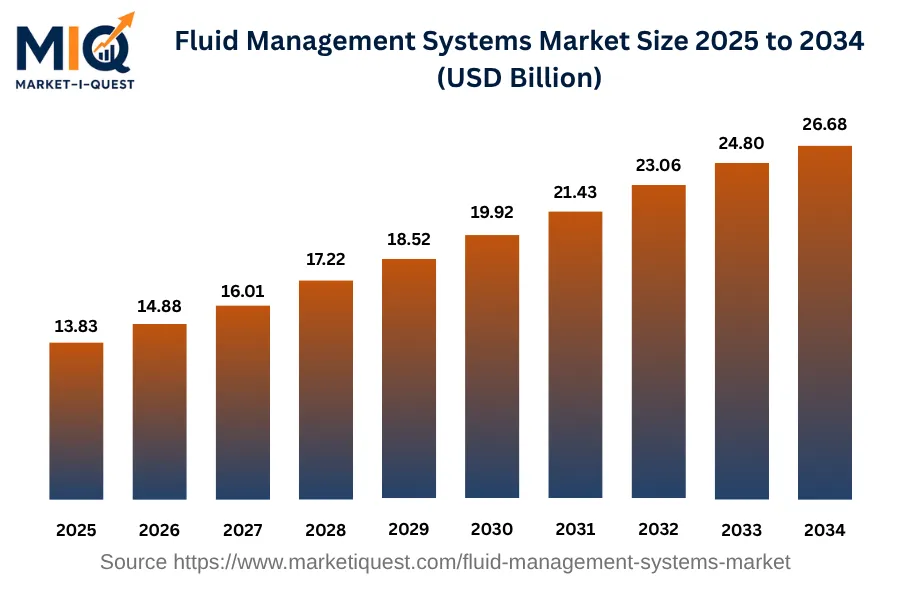
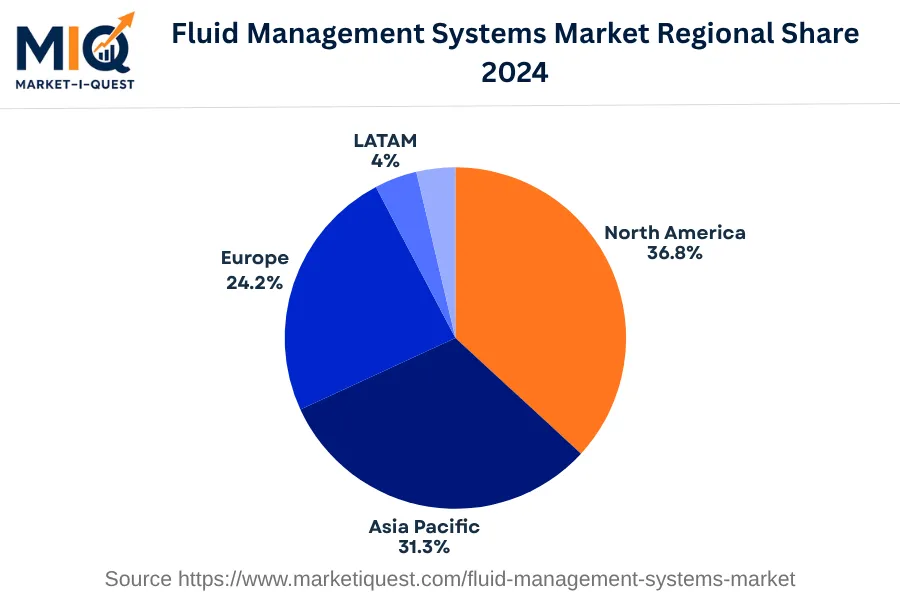
The Fluid Management Systems Market was worth $12.86 billion in 2024 and accelerated to $13.83 billion by 2025. By the end of 2034, the market value catapulted to $26.68 billion, demonstrating a Compound Annual Growth Rate (CAGR) of 7.6% from 2025. This growth over a decade marks a nearly twofold increase in the value of the market. As for the geographical distribution of the market in 2024, North America led the share with 36.8%, followed by Asia Pacific at 31.3% and Europe with a 24.2% share. The smaller shares were taken by the Latin America and Middle East and Africa regions, comprising 4.0% and 3.7% of the global market respectively. This regional share mix highlights a dominant lead of the North American region in the Fluid Management Systems Market in 2024.

Key Takeaways

  • By Product - Fluid Management Systems led with 52.3% share in 2024.
  • By Application - Cardiology dominated the market with a 48.5% share in 2024.
  • By End-User Industry - Healthcare is anticipated to expand fastest at a CAGR of 7.3% (2025-2034).
fluid-management-systems-market market size

Key Driving Factors

Adoption of Minimally Invasive Surgeries

One of the critical driving factors for the fluid management systems market is the increasing adoption of minimally invasive surgeries (MIS). MIS often requires complex fluid management technologies to maintain the necessary intraoperative conditions, such as injury-site irrigation and smoke evacuation. Surgeons worldwide are advocating the benefits of minimally invasive procedures, including faster recovery, less post-operative pain, and a decrease in hospital stay. Acknowledging these benefits, healthcare institutions are advancing toward these procedures, escalating the need for fluid management systems, which are integral components of these operations. This shift is a result of the evolving surgical practices adopted by hospitals, clinics, and other medical institutions to improve patient outcomes, thereby pushing the fluid management systems market forward.
Stringent Health and Safety Regulations

Stringent health and safety regulations imposed by governmental and international bodies are another driving factor for the fluid management systems market. Particularly, standards set by organizations like the Occupational Safety and Health Administration (OSHA) and the Centers for Disease Control and Prevention (CDC) require specific protocols related to fluid management in various healthcare settings. For instance, hospitals must adhere to strict guidelines to avoid nosocomial infections and ensure patient safety during surgeries. Consequently, medical institutions are compelled to invest in advanced fluid management systems to meet these standards. The compulsion to adhere to such stern regulations induces a steady demand for fluid management systems, significantly impacting the market growth.

Market Evolution by Timeline

2019-2023
In this four-year stretch, the Fluid Management Systems Market saw an increased interest from healthcare institutions, primarily from the United States and Europe, due to the rise in minimally invasive surgeries. The technology advancements centered on the equipment like integrated and standalone fluid management systems, with manufacturers such as Stryker, Olympus, and Fresenius. Restrictions in terms of cost and limited scope for technological innovation posed constraints. US FDA's stringent guidelines for fluid management systems maintained quality standards. The dominant commercial model was direct sales, involving long-term customer relationships with hospitals and clinics. A significant risk was the high cost of installation and maintenance of advanced fluid management systems, resulting in adoption hesitation.
2024
In 2024, major hospital chains globally, including the United States and developing regions like India and China, increased their demand for fluid management systems for endoscopic and laparoscopic surgeries. The supply side witnessed the introduction of AI-enabled fluid management systems for better patient outcomes. However, slow integration and high cost of these systems were typical constraints. Standards from regulatory bodies like the EU Medical Device Regulation was influential in adoption. Partnerships between hospitals and manufacturers rose to spread out the high costs. Systems' compatibility with the existing infrastructure emerged as a challenge requiring strategic planning.
2025-2029
During this period, demand surged in low- and middle-income countries driven by increasing healthcare expenditure and the need for streamlined surgical procedures. Manufacturers released new versions of systems like the fluid waste management and irrigation system, but the technology absorption was gradual due to a lack of skilled professionals. The WHO's campaigns emphasized on hygienic surgical spaces, influencing market adoption positively. A shift was seen toward performance-based contracts and leases. Inadequate healthcare infrastructure in certain regions was a notable barrier to the widespread implementation of advanced fluid management systems.
2030-2034
Household use of fluid management systems increased in the west, due to increased home healthcare services demand. Newer systems were released in the market, concentrating on telemedicine-friendly features. Owing to improvement in technology, the issue of complex integration was largely mitigated. National initiatives like 'Digital India' promoted adoption in countries with large-scale public health programs. Cost-plus pricing was common due to higher demand and improved manufacturing processes. Constraints included lack of awareness about the usage of these systems at home, often requiring detailed patient education programs.

Future Market Outlook

Future Opportunities

Future opportunities within the fluid management systems market are increasingly shaped by current technological trends and regulatory landscapes. The push for enhanced environmental sustainability outlined in the United Nations’ Sustainable Development Goals presents avenues for companies like Honeywell and Emerson to innovate eco-friendly fluid management solutions. Additionally, the strategic partnerships between firms and universities, exemplified by a collaboration initiated in 2023 between Michigan State University and global fluid technology leaders, are likely to cultivate breakthroughs in fluid dynamics and resource conservation. The adoption of blockchain for enhanced traceability in fluid transactions could become prominent, especially in countries like Australia, where supply chain transparency is mandated under local regulations. As industries seek to minimize waste, the adoption of closed-loop fluid management systems is expected to gain traction, particularly in manufacturing sectors responding to the Ellen MacArthur Foundation’s initiatives promoting circular economy principles. Furthermore, the increasing reliance on renewable energy sources influences fluid management practices as evidenced by recent projects in Europe utilizing smart fluid systems for managing biogas, showcasing the sector's adaptability. Regulatory bodies, such as the International Organization for Standardization, are likely to play a pivotal role in standardizing protocols for emerging technologies, giving organizations certainty in their fluid management strategy development. These factors indicate fertile ground for innovation and growth in the fluid management systems landscape.

Segmentation Analysis

By Product

The market is divided into subsegments including fluid management systems and fluid management disposables & accessories. The fluid management systems subsegment accounted for the largest revenue share, while the fluid management disposables & accessories is expected to grow at the fastest CAGR during the forecast period.

Largest Revenue Share

Fluid Management Systems

Market Share Leader

The Fluid Management Systems subsegment occupies a leading position in terms of revenue generation, driven by multiple factors. The key driver for this dominance is the extensive utility of these systems across various medical and surgical procedures. These systems manage the patient's body fluid levels, reducing complications related to fluid overload. Their use is crucial in surgeries, dialysis, and various other medical procedures where fluid balance is essential. In addition, due to technological advancements, fluid management systems have seen improvements in their precision and efficacy, leading hospitals and healthcare centers to invest more in them. They are further bolstered by the global increase in surgical procedures and the growing prevalence of chronic diseases, both of which demand advanced fluid management solutions. Favorable regulations and government initiatives in many regions also support the growth of this market segment. It is important to note that this explanation assumes a conventional market structure where utility, technological advancements, and healthcare demands fuel the sales of high-value products like fluid management systems.

Fastest CAGR

Fluid Management Disposables & Accessories

Forecast Period Growth Leader

The Fluid Management Disposables & Accessories subsegment is projected to be the fastest-growing in the near term. The growth of this segment can be attributed to the rising demand for disposable surgical products because of their benefits in reducing cross-contamination, thus preventing hospital-acquired infections, which are a significant concern for healthcare institutions. Disposable fluid management products such as tubing sets, suction canisters, and catheters have seen increased adoption. Also, technological advancements, like enhanced designs for aiding user experience, and strategic partnerships among key players are anticipated to catalyze this growth further. However, barriers such as waste management related to disposable items pose some challenges. High capital expenditure might also deter smaller healthcare settings from immediate adoption. Despite these factors, with increasing concerns about patient safety and shifting trends towards disposable medical supplies, this segment's expansion appears promising. Once again, this analysis assumes a conventional market-structure dynamic where demand, safety, and technological advancements are the key contributors to growth.

By Application

The market is segmented by application into Urology & Nephrology, Laparoscopy, Gastroenterology, Gynecology/Obstetrics, Bronchoscopy, Arthroscopy, Cardiology, Neurology, Otoscopy, Dentistry, and others. In 2024, Cardiology accounted for the largest revenue share while Neurology is expected to grow at the fastest CAGR during the forecast period.

Largest Revenue Share

Cardiology

Market Share Leader

Cardiology, as a subsegment of the market, has gleaned significant revenue in 2024, fueled by several influential factors. As future heart disease rates show worrying signs of increasing, the demand for cardiology procedures is expected to rise. The availability and technical advancements in heart-related diagnostic equipment play a key role in aiding specialist’s efficacy to diagnose and manage heart diseases, which might have contributed to the high revenue generation. Technological innovations within cardiac care such as minimally invasive procedures, implantable cardiac monitors, and robotic heart surgeries pushed the boundaries of medical science, resulting in the highest adoption rates, thereby steering the cardiology segment toward the most revenue. Moreover, lifestyle diseases and the aging population have led to a rise in cardiology patients, further driving the revenues in this segment.

Fastest CAGR

Neurology

Forecast Period Growth Leader

While Cardiology leads in revenue, the Neurology subsegment is forecasted to grow at the fastest CAGR. This surge can be attributed to a host of factors including an aging population susceptible to neurodegenerative disorders. A concurrent rise in chronic diseases associated with neurological disorders also acts as a growth driver. Breakthroughs such as novel treatment methodologies for severe neurological conditions, increase in research funding, and the emergence of advanced neuro-imaging techniques, are making early detection and treatment possible, thereby catalyzing the growth. In terms of risks, stringent regulatory scenarios may slow the pace of growth in the short run. Nonetheless, strategic collaborations and partnerships that open up product innovation opportunities and market expansion are aiding in this segment's velocity. It should be noted that the forecasted growth varies with the speed of technological development and adoption.

By End-User Industry

The market is divided into subsegments including Manufacturing, Energy, Healthcare, Government & Defense, and Others. In 2024, Manufacturing has accounted for the largest revenue share while Healthcare is expected to grow at the fastest CAGR during the forecast period.

Largest Revenue Share

Manufacturing

Market Share Leader

The manufacturing industry has led the market in terms of revenue in the base year 2024 due to various factors. The demand for efficient and less time-consuming procedures in manufacturing processes requires heightened technological assistance, driving the revenue for this sector. The convergence of physical and digital worlds has revolutionized the manufacturing landscape, with increasing adoption of internet of things, artificial intelligence and machine learning. Additionally, the industry has witnessed significant shifts in purchasing criteria with an increased focus on custom solutions tailored to specific manufacturing needs. Furthermore, regulatory frameworks have also played a role, with stricter guidelines pushing for advanced and safer technologies in manufacturing processes. This coupled with the limited supply and higher switching costs for technological solutions has further solidified manufacturing's dominant position in the revenue share. While the sector's vast global presence amplifies the impact of these factors, it is crucial to consider regional particularities in assessing these trends.

Fastest CAGR

Healthcare

Forecast Period Growth Leader

Expected to grow at the fastest rate, the healthcare subsegment demonstrates a great potential for market expansion. The drivers for robust growth in healthcare involve technology advancements including implementation of AI, data analytics, and digital health solutions that improve patient care. Additionally, the increasing capital expenditures in the field suggest a more favorable environment for the adoption of cutting-edge technologies. However, several barriers to adoption exist such as high costs, complex integration into existing systems, regulatory uncertainties, and data security concerns. Therefore, strategic partnerships are necessary to overcome these spiraling issues and introduce efficient technological solutions in healthcare. Despite near-term risks related to stringent regulation in healthcare technology and the limited speed of adoption, the long-term outlook for the industry remains strong. The growing realization of the importance of digital transformation in healthcare, accelerated by recent events like the global pandemic, further adds to the catalysts for growth.

Competitive Analysis

Key Market Players

Manufacturers / OEMs

Stryker Corporation
US
Olympus Corporation
Japan
Fresenius Medical Care AG & Co. KGaA
Germany

Key Suppliers & Raw Materials

B Braun Melsungen AG
Germany
Cardinal Health
US
Smiths Medical
UK

Distributors, Integrators & Channel Partners

Medtronic
Ireland
Baxter International, Inc.
US
Johnson & Johnson
US

Porter’s Five Forces Analysis

This analysis provides insights into the competitive dynamics within the Fluid Management Systems Market.

Supplier Bargaining Power

Medium

Suppliers have moderate power due to the specialized components used in these systems.

Buyer Bargaining Power

High

Buyers hold power due to availability of multiple suppliers and comparability of products.

Threat of Substitutes

Low

Low substitute threat due to the unique functionality and usage of fluid management systems.

Threat of New Entrants

Medium

Barriers including regulatory compliance and high capex limit entry, but technology advancements may reduce these.

Competitive Rivalry

High

High rivalry due to numerous established competitors and high stakes for market share.

Regional Analysis

Geographic market dynamics and growth opportunities across key regions

Global Market Outlook

fluid-management-systems-market market regional share

North America

In 2024, the North American fluid management systems market reflected a highly competitive and diversified landscape with significant investment in healthcare. Factors driving the market included increased demand for non-invasive and minimally invasive procedures, technological advancements offering higher accuracy and rapid real-time results, stricter regulations pushing for improved fluid management practices, and an expanding elderly population with chronic diseases requiring fluid management. Investment from hospitals in advanced fluid management devices also played a pivotal role, triggered by rising costs of medical lawsuits and readmissions due to fluid-associated complications.

Key trends within this space involved an increased focus on data integration and connectivity for effective fluid balance management in patients, especially through modern fluid management systems. The emergence of telehealth in areas such as chronic disease management also fueled the trend of remote patient monitoring, increasing the adoption of fluid management systems. Innovations in channel dynamics were further challenged as the sector saw more strategic collaborations between manufacturers and healthcare providers, thereby ensuring the development of systems more attuned to the needs of end-users. Additionally, there was a significant adoption of standardized guidelines across North American healthcare centers for effective fluid management and enhanced patient safety. These systems were predominantly used in the healthcare sector, including hospitals, clinics, and ambulatory surgical centers.

Asia Pacific

In 2024, the Fluid Management Systems Market in Asia Pacific showed significant dynamics influenced by a multitude of factors. Drivers included growing healthcare expenditures particularly in China and India, mandates for water conservation from governments in Japan and Australia, and accelerated adoption of advanced diagnostics in the major ASEAN markets. Additionally, tech innovations in membrane technologies were driving demand, while the supply chain showed efficiency gains from regional manufacturing hubs in South Korea and China. Trends spotted in this period pointed towards buyer preference for integrated fluid management systems in healthcare, manufacturing and utilities sectors.

Adoption of automation and IoT in fluid management systems was particularly prominent in the enterprise sector, largely in China and Japan. In addition, policy enforcement on waste management across ASEAN countries propelled a shift towards eco-friendly fluid systems. Strategic partnerships, such as in wastewater treatment between Indian and Australian firms, fostered technology transfer and brought diversification to the market. Moreover, the year 2024 witnessed a growth in sustainable fluid management solutions in regions dealing with water scarcity, such as certain parts of Australia and India, reflecting environmentally-driven policy and market response. The fluid management systems climate in Asia Pacific was characterized by innovation, regulation, and collaboration in the base year.

Europe

In 2024, Europe’s fluid management systems market was predominantly influenced by the healthcare sector across different regions including Germany, the United Kingdom, France, Italy, Spain, the Nordics, Benelux, and Central & Eastern Europe. Aging populations and increased focus on healthcare hygiene led to strong demand for high-quality fluid management systems. Government regulations promoting health and safety lifted investments in these systems, with technology adoption being spearheaded particularly by Germany and the Nordics. At the same time, supply dynamics were significantly affected by the COVID-19 pandemic in previous years, resulting in price adjustments.

Seen trends include a rapid shift towards disposable fluid management systems as a reaction to the aforementioned focus on hygiene. A rise in strategic partnerships and acquisitions strengthened market presence and diversified product portfolios for key players. Telemedicine, seen predominantly in countries like the United Kingdom, France, and Italy, marked a new sales channel, driving increased purchases of fluid management systems. Patient-centered care models were established as the new norm, causing systems simulations and standardized equipment to be highly valued across all sectors employing fluid management systems, especially healthcare and manufacturing sectors. Overall, Europe's focus on health, safety, and modern technological adoption significantly shaped the fluid management systems market in 2024.

Latin America

In 2024, the Fluid Management Systems (FMS) market in Latin America underwent robust development due to factors ranging from the commercial application to regulatory impetus. Prime drivers included burgeoning demographic pressures, with a growing, aging population in countries like Brazil and Mexico necessitating advanced healthcare facilities. Moreover, stringent healthcare regulations established by governments of Argentina, Colombia, and Chile drove adoption, emphasizing the need to curtail surgical site infections. The rise in public and private healthcare investments, particularly in Peru, fostered a conducive environment for innovative FMS solutions. Emerging trends in the FMS market show consumers inclining towards technologically sophisticated systems providing accurate, efficient fluid management. Latin American hospitals have been adopting technologically advanced fluid management systems to improve surgical outcomes.

This adoption was accompanied by a notable uptick in partnerships and M&As, especially in Brazil's burgeoning medical device sector, aimed at enhancing product offerings. Channels dynamics also shifted with an increased online presence and e-commerce penetration, providing better access to medical facilities in remote areas. Lastly, in terms of policies, regulatory enforcement was strengthened in Argentina and Mexico, emphasizing the criticality of compliant fluid management in hospitals and clinics to minimize health risks. The impact of these trends was most evident in the healthcare sector, with secondary effects in peripheral sectors like manufacturing and retail.

Middle East & Africa

In 2024, the Middle East and Africa's fluid management systems market witnessed substantial growth. Driver mechanisms included burgeoning demand from healthcare industries in countries such as Saudi Arabia, South Africa, and Israel. Infrastructure commitments to upgrading hospitals and medical centers markedly impacted uptake of sophisticated systems. Moreover, enhanced investment in the oil and gas sector, namely in Qatar, Saudi Arabia and UAE, necessitated sophisticated fluid management systems, accelerating market growth. Adoption of advanced technology for efficient fluid handling, particularly in Nigeria's manufacturing sector, further steered market dynamics.

On the trend landscape, a shift towards digital and automated fluid management systems, predominantly in SA’s mining and UAE's utilities companies, was prominent. Adoption of such systems enabled real-time monitoring, improving operational efficacy. Israeli healthcare sector's inclination towards minimally invasive procedures dictated requirement for innovative fluid management technologies, shaping product makeover. An upturn in partnerships and M&A among fluid management system providers and customers across government, oil and gas, and healthcare sectors, chiefly in Egypt, Nigeria and Kenya, induced market consolidation. Stricter policy enforcement on appropriate fluid handling held sway, particularly in the Middle Eastern nations. The healthcare sector in Saudi Arabia, South Africa and Israel, and the oil and gas industry in Qatar, UAE and Nigeria remained the key beneficiaries of this market evolution.

Recent Industry Developments

Latest market innovations, product launches, and strategic initiatives

January 2026

FDA granted 510(k) clearance for Intellidrop (BrainSpace), an automated cerebrospinal fluid drainage and intracranial pressure monitoring device for use in brain fluid management. The system integrates proprietary hardware and software to achieve continuous brain pressure measurement and closed-loop, gravity-driven, precision drainage of brain fluid.

August 2025

Baxter launched its next-generation IntelliGuard™ Fluid Monitoring System for ICU patients. The system integrates AI-driven analytics to optimize fluid therapy, reduce complications, and improve patient outcomes.

Frequently Asked Questions