
Natural Fibers Market Snapshot

Key Players

  • Lenzing AG (Austria)
  • International Fiber Corporation (United States)
  • Grasim Industries (India)
  • Grupo Sniace (Spain)
  • Bast Fiber Tech Inc (Canada)
  • Cellulose Company (Egypt)
  • Vaidehi Rayon (India)
  • Sateri Holdings Limited (China)
  • Eastman Chemical Company (United States)
  • Infinited Fiber Company (Finland)

Market Size

Base Year 2024
$8.91 Bn
CAGR
6.48%
Forecast 2034
$16.69 Bn

Market Segments

By Fiber Type
Cellulose Fibers, Protein Fibers, Lignin Fibers
By Source
Plant-Based, Animal-Based, Mineral-Based
By Production Process
Mechanical, Chemical, Bio-Based
By End-Use Sector
Apparel & Fashion, Household & Textiles, Construction & Infrastructure, Industrial & Automotive, Medical & Healthcare, Others

Market Dynamics

Drivers
  • Growing environmental consciousness
  • Demand for sustainable products
Restraints
  • High production costs
  • Fluctuation in raw material availability
Opportunities
  • Rising eco-consciousness
  • Emerging sustainable fashion trends

Market Size

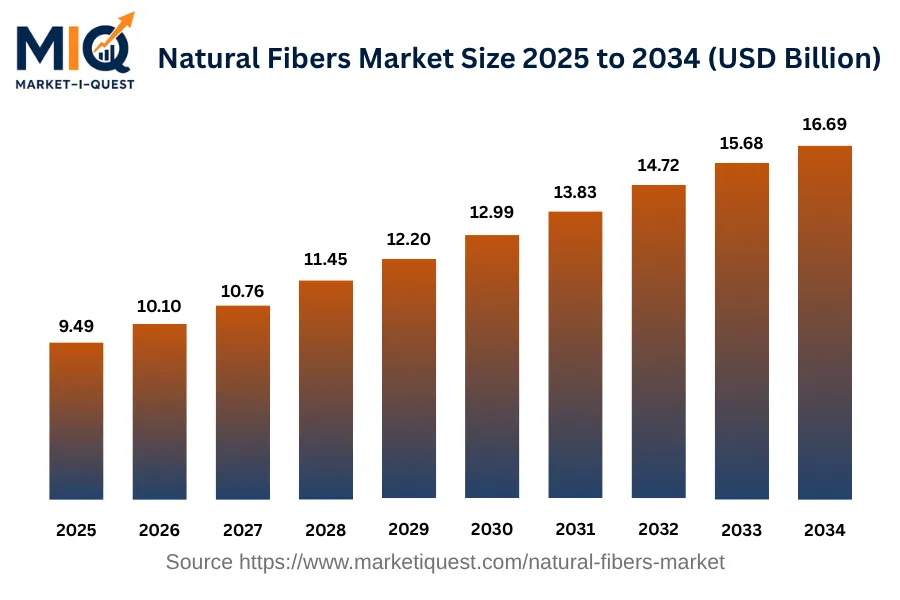
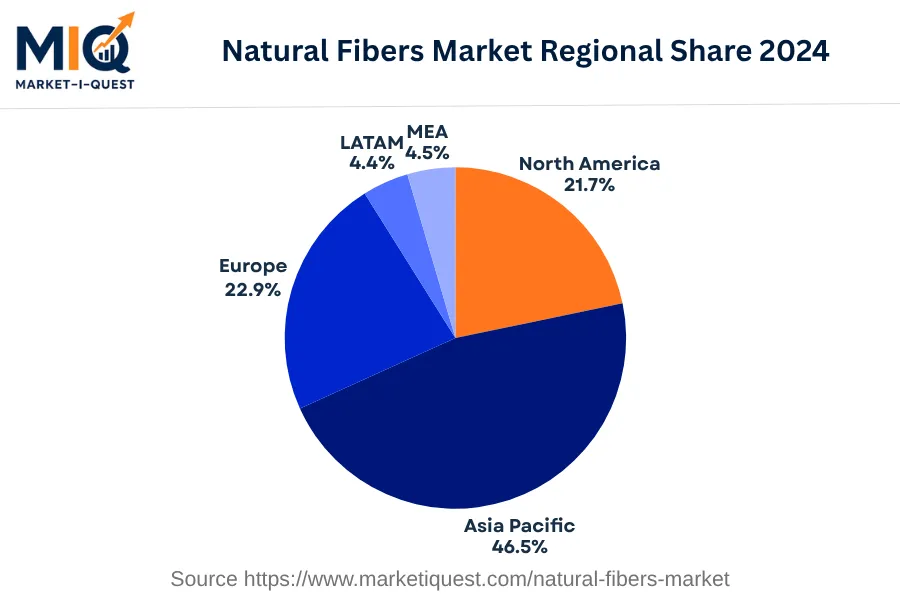
The Natural Fibers Market was worth $9.49 billion in 2025 and is projected to grow to $16.69 billion by 2034, registering a CAGR of 6.48%. This progressive growth from $8.91 billion in 2024 to nearly double the value a decade later in 2034 indicates a continuously expanding market. The growth is attributed to the consistent increase in demand for these environmentally friendly alternatives to synthetic fibers throughout this period. In 2024, the regional share was distributed with Asia Pacific holding the most significant share at 46.5%. This was closely followed by North America and Europe holding 21.7% and 22.9% shares, respectively. The regions with less market share were LATAM and MEA, contributing to 4.4% and 4.5% of the total market respectively.

Key Takeaways

  • By Fiber Type - Cellulose Fibers held the lead in market share in the base year.
  • By Source - Animal-Based dominated accounting for a robust market position in the mentioned year.
  • By Production Process - Chemical process emerged as the top method securing a significant percentage in market share.
  • By End-Use Sector - Medical & Healthcare expanded rapidly marking the fastest growth rate during the forecast period.
natural-fibers-market market size

Key Driving Factors

Ongoing Shift Towards Sustainability in Fashion Industry

The natural fibers market is heavily influenced by the sweat to sustainability that is taking hold in the fashion and apparel industry. Industry heavyweights and newcomers alike are setting ambitious environmental targets for their supply chains. The pursuit of these objectives has increased the demand for natural fibers such as cotton, silk, and wool, which have a lower environmental impact compared to synthetic materials. With more consumers making conscious choices about the environmental footprint of their clothing, fashion brands are responding by integrating more natural materials into their product lines. While use of synthetic fibers continues, the fashion industry's commitment to sustainability is creating a significant push for the proliferation of natural fibers.
Stringent Regulations on Use of Synthetic Materials

Another driver in the natural fibers market is the tightening of regulations around the use of synthetic materials. Various governments, particularly in Europe, have introduced legislation limiting the use of certain synthetic fibers due to their detrimental environmental and health impacts. For instance, the European Union has imposed restrictions on the use of synthetic fibers such as polyester due to microplastic pollution. Similarly, there are increasing health concerns related to the use of synthetic materials in applications such as home furnishings and children's clothing. To comply with these regulations and maintain market access, manufacturers are turning to natural fibers as alternatives. Consequently, the legal landscape is accelerating the shift from synthetic to natural fibers.

Market Evolution by Timeline

2019-2023
Between 2019 and 2023, the energy sector emerged as a major buyer of natural fibers for use in insulation, primarily in North America and Europe. Cotton and hemp fibers due to their low thermal conductivity were highly sought. Supply, on the other hand, was constrained by cultivation limitations and processing technologies. The US Farm Bill 2018, which legalized industrial hemp cultivation, facilitated supply growth to a certain extent. Pricing typically involves long-term contracts with stable pricing adjustments. The key risk was dependency on crop yield which was influenced by weather conditions, underscoring the need for crop insurance.
2024
In 2024, the automotive industry, especially in China and Germany, increasingly incorporated natural fibers like flax and kenaf into door panels, seat backs, and trays due to their lightweight and strong properties. However, integrating these fibers into manufacturing systems posed technical challenges. Policies, like the EU End of Life Vehicle Directive incentivized this shift towards sustainable materials. Natural fibers were typically sold directly to manufacturers or through B2B online marketplaces with transparent price mapping. The main risk was the fluctuating cost of raw materials and transportation, leading to investing in localized production.
2025-2029
From 2025 to 2029, the textile industry, primarily in India and Bangladesh, increasingly used natural fibers over synthetic alternatives for apparel manufacturing. Jute and silk were in high demand due to their biodegradability. Advances in fibre processing technology eased supply challenges. The Sustainable Apparel Coalition's Higg Index was a key standard driving this adoption. The commercial model leaned towards spot pricing, influenced by global commodity trends. However, ensuring labor rights in the supply chain remained a challenge, necessitating stronger ethical sourcing policies.
2030-2034
During 2030-2034, the packaging industry, particularly in the US and Canada, adopted natural fibers like coir and bamboo for its biodegradable packing products. Despite advancing manufacturing technology, upscaling production while maintaining fibre quality remained a constraint. The implementation of the circular economy package by the EU accelerated the shift towards sustainable packaging. The pricing model typically involved long-term tenders or contracts. The primary risk was the generation of waste in the processing of these fibers, leading to increased investments in waste management systems.

Future Market Outlook

Future Opportunities

As global consumers increasingly prioritize sustainability, the natural fibers market is expected to evolve in response to this demand. In March 2023, a major partnership between Unifi, Inc. and the global fashion brand Reebok was announced, showcasing a commitment to using recycled and sustainable natural fibers in their product lines. With the rise of e-commerce and digital platforms, brands are leveraging innovations in material sourcing and consumer education to market natural fibers more effectively. Collaboration between companies and research institutions is also on the rise; for instance, in 2023, the Textile Institute in the UK announced initiatives aimed at integrating biopolymers derived from natural fibers into conventional textile production methods, which could lead to novel product offerings. Furthermore, the United Nations’ Sustainable Development Goals (SDGs) serve as a framework driving many companies towards investing in sustainable manufacturing processes that utilize natural fibers. Regions such as South America are increasingly capitalizing on their indigenous natural fibers, fostering local economies and creating premium products marketed as eco-friendly alternatives. Additionally, there is an increasing awareness of biodiversity preservation, leading to potential development in textile products derived from lesser-known natural fibers, such as ramie and jute, inviting exploration into untapped market segments. The existing landscape thus creates an environment ripe for impactful advancements and strategic partnerships that align with sustainability trends, ensuring the future relevance of natural fibers.

Segmentation Analysis

By Fiber Type

The Fiber Type market is divided into subsegments including Cellulose Fibers, Protein Fibers, and Lignin Fibers. Among these, Cellulose Fibers accounted for the largest revenue share while Protein Fibers is expected to grow at the fastest CAGR during the forecast period.

Largest Revenue Share

Cellulose Fibers

Market Share Leader

Cellulose Fibers are commanding the largest revenue share due to their versatile nature and extensive use in various sectors such as textile, pulp & paper, hygiene, and food & beverage industry. The demand is driven by amazing properties such as biodegradability, low-cost production, and eco-friendliness. Cellulose Fibers are plant-based fibers and are relatively easy to produce, which has led to increased interest and acceptance by consumers, especially in geographies with stringent environmental regulations. Customers increasingly prefer natural over synthetic fibers due to growing concerns related to the environment and sustainability. Furthermore, the global push towards environmentally friendly products has resulted in more favorable regulatory conditions for the production and usage of cellulose fibers. The global fashion industry, one of the largest consumers of Cellulose Fibers, sees them as an effective replacement for non-renewable, petroleum-based synthetic fibers. The substantial switching costs associated with shifting to an entirely new material further reinforces the dominant position of Cellulose Fibers.

Fastest CAGR

Protein Fibers

Forecast Period Growth Leader

Protein Fibers are projected to experience the fastest growth rate. Their growth is catalyzed by increasing technological advancements that have improved the production process and quality of protein fibers making them more appealing to manufacturers. Increased capital expenditures and partnerships with research institutions have further improved the outlook of this subsegment. In terms of adoption barriers, one near-term risk is the higher cost of protein fiber production as compared to synthetic fibers. Nonetheless, the superior qualities such as thermal insulation, fire-resistance, biodegradability, and soft-touch have outweighed these concerns, leading to a higher adoption rate. Another contributing factor to the growth of Protein Fibers market is the policy erosion against non-biodegradable synthetic fibers, providing a conducive environment for growth. Given the beneficial properties and strengthening market dynamics for Protein Fibers, it is expected that growth in this subsegment will continue to accelerate.

By Source

The market is divided into subsegments including Plant-Based, Animal-Based, and Mineral-Based, with Animal-Based accounting for the largest revenue share, while Plant-Based is expected to grow at the fastest CAGR during the forecast period.

Largest Revenue Share

Animal-Based

Market Share Leader

The animal-based segment emerged as the market revenue leader in 2024, a logical development given its more extensive reach and established consumer base. Products in this segment range from dairy and meat to collagen and gelatin, spanning various demographics, cultures, and dietary requirements worldwide. It also has a mature supply chain, including farming, processing, and retail - a framework developed over several years. The industry benefits from regulatory supports internationally, with a wide range of regulations ensuring product quality and safety, bolstering consumer trust. Its customers prioritize taste and familiarity, making animal-based products a safe bet for regular purchases. Although purchasing criteria often vary, attributes such as price, brand reputation, and availability are prime considerations for consumers, for which animal-based products rank high. Regarding switching costs, consumers show resistance to switching from animal-based to alternative products, especially when factors like taste and texture are considered. Via channels such as supermarkets, online retailers, and restaurants, these products have broad and convenient access.

Fastest CAGR

Plant-Based

Forecast Period Growth Leader

Contrary to the animal-based segment's more substantial revenue share, the plant-based segment is projected to be the fastest-growing. It's primarily due to rising consciousness about health, sustainability, and animal welfare among consumers. Technological advancements are driving product improvements, making them more palatable and nutritiously comparable to their animal counterparts, thus breaking adoption barriers. Furthermore, policy-level support to mitigate climate change and increase sustainability is prompting more investment in this sector. With significant capital expenditure on R&D and scalability, innovative startups are entering the market and forming strategic partnerships to speed up growth. However, near-term risks such as supply chain disruptions and regulatory ambiguities pose challenges. Yet, the overall outlook remains positive as these challenges present opportunities for companies to innovate resilient business models and agile manufacturing processes.

By Production Process

The market, categorized by production process, is divided into subsegments including Mechanical, Chemical, and Bio-Based production processes. In the base year of 2024, the Chemical process accounted for the largest revenue share while the Bio-Based process is expected to grow at the fastest CAGR during the forecast period.

Largest Revenue Share

Chemical

Market Share Leader

The chemical process has held the highest revenue share in 2024 due to its widespread utilization in diverse industries, including manufacturing, pharmaceuticals, and agrochemicals. This production process is highly favored due to its ability to produce a high volume of products, in a cost-effective manner, making it accessible to a broad spectrum of customers across various geographies. Furthermore, compliance with current regulations governing chemical processes, and established supply chains, greatly facilitate reliable and efficient production. Consumers, guided by purchasing criteria centered around quality and price, generally show a high preference for products made through the chemical process. Additionally, the presence of substantial switching costs for producers also contributes to the dominance of this production segment in the market.

Fastest CAGR

Bio-Based

Forecast Period Growth Leader

The Bio-Based production process is projected to experience the most rapid growth in the foreseeable future. The drivers behind this growth include mounting environmental concerns and heightened sustainability initiatives throughout the global market. Government regulations promoting eco-friendly processes are accelerating the adoption of bio-based production methods. Along with favorable policies, advancements in technology, and increasing capital investment in green innovations act as catalysts for this growth. While the bio-based process still faces adoption barriers due to its comparatively higher production costs, strategic partnerships within the industry, and increased research and development efforts are paving the way for cost-effective solutions. However, uncertainties in source material supply and the pace of technological advancement present short-term risks that may impact this growth trajectory.

By End-Use Sector

The market is divided into subsegments including Apparel & Fashion, Household & Textiles, Construction & Infrastructure, Industrial & Automotive, Medical & Healthcare, and Others. Among these, the Industrial & Automotive subsegment accounted for the largest revenue share in 2024, while the Medical & Healthcare subsegment is expected to grow at the fastest Compound Annual Growth Rate (CAGR) during the forecast period.

Largest Revenue Share

Industrial & Automotive

Market Share Leader

In the base year of 2024, the Industrial & Automotive segment appeared to generate the highest revenue. These subsegments are driven by factors such as the growing demand for automation and an increase in investment in infrastructure projects. In recent years, technological advancements have helped the industrial & automotive sector operate at lower costs with a higher level of efficiency, making this subsegment more profitable and therefore, more attractive to investors. Additionally, economic growth in certain regions, primarily Asia and North America, has directly contributed to the growth of this subsegment. Government policies, fueling the investment in infrastructure and industrial development, have also played a crucial role. However, inherent switching costs associated with the adoption of new technology and equipment could pose a potential barrier to speedy adoption. From a demand perspective, this subsegment has been driven by diverse end-user applications in various verticals, spanning from manufacturing to transportation.

Fastest CAGR

Medical & Healthcare

Forecast Period Growth Leader

While the Industrial & Automotive segment captured the largest revenue share, the Medical & Healthcare segment is expected to grow at the fastest rate in the coming years. This rapid growth could be attributed to the increasing adoption of newer technologies and the growth of demand in medical and healthcare services worldwide. One significant growth driver is the surge of investments in healthcare infrastructure and the public's increased health awareness, particularly in the light of the recent pandemics. Similarly, policy-level shifts promoting healthcare investments, technological advancements, and strategic partnerships among key players trigger a positive cascade effect on this subsegment’s growth. However, stringent regulations, high capital expenditure, and the risk of technology obsolescence are significant challenges that need to be overcome for sustained growth.

Competitive Analysis

Key Market Players

Manufacturers / OEMs

Fibertex Personal Care A/S
Denmark
Teijin Limited
Japan
Lenzing Ag
Austria

Key Suppliers & Raw Materials

DuPont
US
Mitsubishi Rayon Co. Ltd.
Japan
SGL Carbon
Germany

Distributors, Integrators & Channel Partners

RSK Systems Ltd.
UK
Ravago Manufacturing Americas, LLC
US
Trelleborg Sealing Solutions
Sweden

Porter’s Five Forces Analysis

This analysis delves into the competitive dynamics within the Natural Fibers Market.

Supplier Bargaining Power

Medium

Suppliers gain leverage via quality and sustainability certifications, but big buyers can drive prices.

Buyer Bargaining Power

High

Numerous suppliers and undifferentiated products boost buyers' negotiation power.

Threat of Substitutes

Medium

Synthetic fibers offer a considerable threat, though environmental concerns limit their appeal.

Threat of New Entrants

Low

High upfront capex and expertise barriers deter new entrants.

Competitive Rivalry

High

Numerous well-established players lead to intense price competition and innovation.

Regional Analysis

Geographic market dynamics and growth opportunities across key regions

Global Market Outlook

natural-fibers-market market regional share

North America

In 2024, the North American natural fibers market experienced dynamic developments, influenced by numerous drivers and emerging trends across the United States, Canada, and Mexico. Major drivers included heightened consumer demand for environmentally friendly and sustainable products which substantially favored market growth. Regulatory shifts, particularly in the U.S, mandated reduced usage of synthetic fibers in favor of natural ones, further propelling the market. Additionally, considerable investment in innovative technology enabled improved cultivation and processing techniques, enhancing supply chain efficiency and productivity. Market trends were characterized by changed buyer perceptions, preferring natural fibers due to their eco-friendly and biodegradable properties. A noticeable tech shift was seen as several companies, especially in the U.S., adopted advanced harvesting technologies to maximize yield and quality.

Distribution channels evolved with online platforms gaining popularity for their wider reach and convenience. The year also observed strategic partnerships and acquisitions aimed at expanding product portfolios and strengthening market positions. Policy enforcement focused on controlling synthetic fiber waste propelled the demand for natural fibers. Prominent sectors utilizing natural fibers included textiles, manufacturing, and construction. Their uses ranged from clothing and home furnishing to industrial applications, all of which capitalized on the beneficial properties of natural fibers such as durability, comfort, and sustainability. This market performance underscores the relevance and potential of natural fibers in diverse applications.

Asia Pacific

In 2024, the Natural Fibers Market in Asia Pacific saw robust activity across sectors and countries. Drivers included a significant rise in demand from the region's expanding textile industry, particularly in India and China, where accelerating urbanization and a buoyant middle class propelled consumption. Concurrently, governmental regulations in Japan, South Korea, and key ASEAN markets encouraged the use of eco-friendly materials, further stimulating the market. Innovation in manufacturing technologies, notably in China, expedited mass production, reducing costs and enhancing supply dynamics. The shift towards sustainable fashion among consumers substantially influenced market trends. Brands across the region, led by major players in Australia and China, responded by incorporating natural fibers in their product lines, adding to market demand.

There was a rising emphasis on traceability and transparency, particularly in Indian and Japanese textile sectors, causing brands to source responsibly and capitalize on a more informed customer base. Policy enforcement also acted as a market catalyst, with ASEAN countries implementing standards to ensure the quality of natural fibers. Meanwhile, strategic partnerships and M&A activity were prominent, especially in South Korea, where established companies aligned with start-ups to leverage emergent technologies. In 2024, the Natural Fibers Market in Asia Pacific was decidedly shaped by evolving consumer trends, technological advancements, sound regulations, and market dynamics favoring environmentally friendly materials.

Europe

In 2024, the European market for natural fibers experienced significant development due to several key drivers. First, enhanced environmental regulations imposed by the European Union elevated the demand for eco-friendly materials. Second, large-scale investments in technology and research, specifically from Germany and the UK, enabled advanced processing and improved quality of natural fibers. Finally, supply dynamics were instrumental, as Spain and Italy's abundant supply of raw materials hastened the production process. Emerging trends shaping the industry included increased consumer awareness toward sustainable products, evident in retail sectors across France and Benelux. Technological advancements in Italy and the UK also led to the production of high-performance natural fibers, garnering interest from manufacturing sectors.

Furthermore, we observed significant channel dynamics as e-commerce platforms became prominent suppliers due to consumer preference for online shopping, particularly in Germany and Central & Eastern Europe. Lastly, policy enforcement in the form of EU's Circular Economy Action Plan bolstered the market by promoting the use of sustainable and renewable resources over synthetic materials. Key sectors driving the consumption of natural fibers included the automotive, textiles, food packaging, and construction industries, particularly in the Nordics, where eco-friendly solutions are highly favoured. Overall, the European natural fiber market in 2024 thrived due to an amalgamation of strategic investments, technological advancements, policy implementations, and changing consumer behaviour.

Latin America

In 2024, the natural fibers market in Latin America was driven by an amalgamation of socioeconomic factors and green agendas across countries like Brazil, Mexico, Argentina, Colombia, Chile, and Peru. Greater consumer awareness of ecological issues created a surge in demand for natural fiber products. Stringent environmental regulations enforced in LATAM accelerated the shift towards sustainability, encouraging industries like textiles, automotive, and construction to adopt natural fibers in their operations. Increased investments in R&D strengthened the supply chain of natural fibers, while advances in processing technologies facilitated higher yields and lower costs. Price volatility of synthetic fibers also played a significant role in driving the growth of the market.

Shifting consumer preferences towards eco-friendly products marked the main trend in 2024, further solidifying LATAM's commitment to sustainable production and consumption. To meet this amplified demand, businesses diversified their offerings, with many engaging in partnerships and acquisitions to enhance their natural fiber portfolio. Retail was a hotbed of activity, with the adoption of sustainable packaging using natural fibers. Additionally, there was stringent enforcement of green standards in sectors like manufacturing and state-owned utilities, thereby nurturing the growth of the natural fibers market. Hence, a combination of regulatory facilitation and market dynamics created a favorable environment for natural fibers in LATAM in 2024.

Middle East & Africa

In 2024, the natural fibers market in the Middle Eastern and African regions indicated a consistent vitality centered when it comes to demands and investments. In terms of major drivers, increased demand for eco-friendly materials in the fashion industry, particularly in South Africa and Egypt, has significantly boosted the market. Alongside this, Saudi Arabian government regulations endorsing environmental sustainability has indirectly promoted natural fibers usage. Technology adoption has also escalated, with Qatar and Israel taking the lead in incorporating advanced technology to their fiber manufacturing processes. Significant trends show a shift in buyer behavior, with consumers in United Arab Emirates and Kenya, giving preference to natural fiber-based products, driving an increased demand. Aggressive technology shifts were observed with companies in Nigeria, investing in bolstering manufacturing processes efficiency. Channel dynamics revealed a surge in direct-to-consumer modes, especially noticeable in South Africa's retail scene.

However, M&A activities had decreased due to regulatory constraints, particularly in Saudi Arabia and Israel. Finally, policy enforcement regarding sustainability standards in Egypt and Kenya has changed the competitive landscape by forcing firms to prioritize ecological efficiency. Major consumers of natural fibers come from various sectors including manufacturing in Israel, retail in the UAE, and other industries including automotive and textiles in South Africa and Egypt respectively. As the consumers' environmental awareness grows, the demand also magnifies across sectors.

Recent Industry Developments

Latest market innovations, product launches, and strategic initiatives

April 2026

Adidas announced a partnership with a Brazilian natural fiber producer to develop performance sportswear using Amazonian fiber blends, including curauá and piassava. The collaboration aims to create sustainable alternatives to synthetic fabrics and support forest-friendly economic development.

October 2025

China's Ministry of Agriculture announced a five-year plan to increase domestic hemp and flax fiber production by 40% by 2030, positioning the country to become a leading supplier of industrial hemp fibers for global textile and composite markets. The plan includes subsidies and R&D funding for advanced fiber processing technologies.

Frequently Asked Questions