Natural Chelating Agents Market Snapshot

Key Players

  • Dow Chemical Company (United States)
  • BASF SE (Germany)
  • Akzo Nobel N.V. (Netherlands)
  • Nippon Shokubai Co. Ltd. (Japan)
  • ADM (Archer Daniels Midland Company) (United States)
  • Cargill Inc. (United States)
  • Kemira Oyj (Finland)
  • Innospec Inc. (United States)
  • Solvay SA (Belgium)
  • Mitsubishi Chemical Corporation (Japan)

Market Size

Base Year 2024
$1.24 Bn
CAGR
5.74%
Forecast 2034
$2.17 Bn

Market Segments

By Product
  • Sodium Gluconate
  • Ethylene Diamine Disuccinate (EDDS)
  • Glutamic Acid Diacetate (GLDA)
  • Iminodisuccinic Acid (IDSA)
  • Methylglycine Diacetic Acid (MGDA)
  • Others (N-Diacetic Acid Tetrasodium Salt (ASDA)
  • Glucoheptonates)
By Source
  • Plants
  • Microbial Fermentation
  • Chemical Synthesis from Bio-Based Feedstocks
By Application
  • Detergents & Cleaning Agents
  • Personal Care & Cosmetics
  • Pulp & Paper
  • Agrichemicals
  • Food & Beverage
  • Water Treatment
  • Others

Market Dynamics

Drivers
  • Growing green consumption trends
  • Increasing water treatment demand
Restraints
  • Regulatory Constraints
  • High Production Costs
Opportunities
  • Growing environmental concern
  • Increasing demand in various industries

Market Size

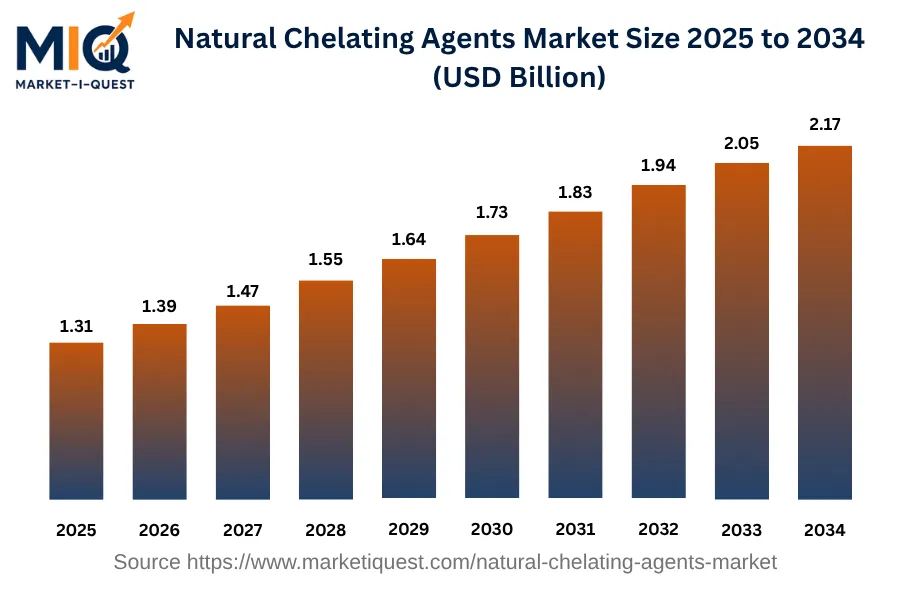
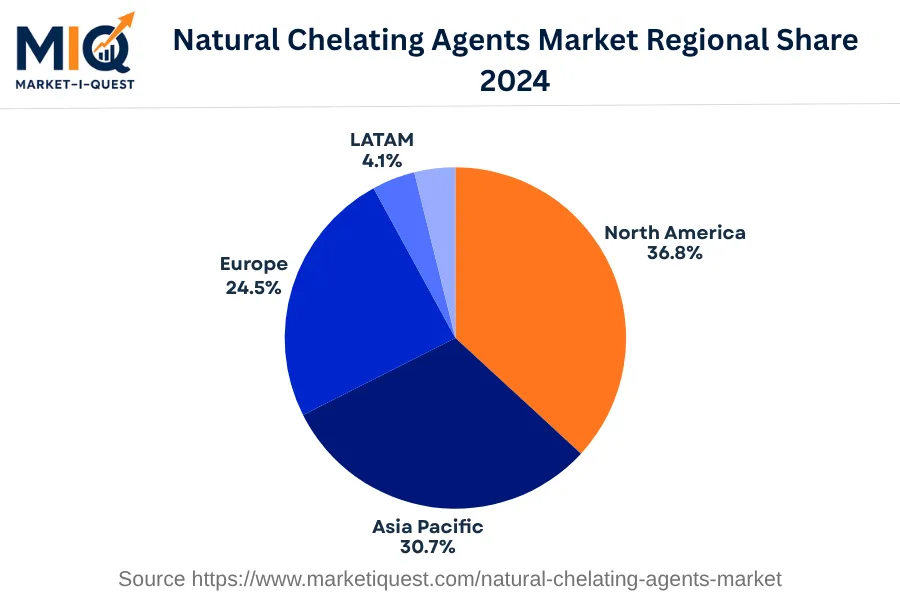
The Natural Chelating Agents Market was worth $1.31 billion in 2025, grew from $1.24 billion in 2024, and is projected to reach $2.17 billion by 2034, expanding at a CAGR of 5.74%. During this ten-year span, significant market growth is expected. Movement on an annual basis would vary, but a sustained upward trend over this period is evident. Variations are due to several factors including increased innovations, technological advancements, as well as demand and supply dynamics in the industry. In terms of regional market share in 2024, North America held the dominant position with 36.84%, closely followed by Asia Pacific at 30.72%. Meanwhile, Europe captured 24.48% of the market. In comparison, LATAM and MEA had relatively smaller shares, recording 4.08% and 3.88% respectively.

Key Takeaways

  • By Product - Sodium Gluconate held a prominent position in the market in 2024 due to its high product demand.
  • By source - Microbial Fermentation took the lead in the market owing to their broad industrial applications.
  • By Application - Food & Beverage lead the market showing a significant increase in product demand.
natural-chelating-agents-market market size

Key Driving Factors

Enforcement of stringent environmental regulations

Around the world, governing bodies are intensifying environmental regulations to limit the use of synthetic chelating agents due to their non-biodegradable nature and potential to harm aquatic ecosystems. For example, the European Union's REACH (Registration, Evaluation, Authorisation and Restriction of Chemicals) regulation imposes tighter controls on synthetic chelating agents, encouraging manufacturers to seek more eco-friendly alternatives. As a result, industries such as agrochemicals, household & industrial cleaning, food & beverages, and water treatment are pivoting towards natural chelating agents. These safer alternatives provide similar effectiveness while meeting both domestic and international environmental guidelines.
Increasing desire for safe products in Food and Beverage industry

The Food and Beverage industry is experiencing a surge in consumer desire for clean-label and safe products. As a response, companies are reformulating their products to include minimally-processed and naturally-sourced ingredients. Natural chelating agents, which improve the stability and shelf life of food and beverage products without the potential adverse health effects of their synthetic counterparts, are significantly gaining ground. They are used to improve quality and prevent degradation and spoilage brought by metal ions in items such as soft drinks, dairy products, dressings, and sauces. As long as this trend continues, the Natural Chelating Agents market will experience significant growth.

Market Evolution by Timeline

2019-2023
During these years, the primary buyers for natural chelating agents were chemical, pulp & paper, and detergent sectors. Main reason for purchase was environmental friendliness, especially in regions like Europe and North America. These areas started emphasizing the use of biodegradable materials, leading to an increase in the supply of natural chelating agents like EDDS. Integration was still in its early stages, with several companies initiating pilot tests. The European Chemical Agency's rules affected adoption positively by promoting green alternatives. Flat-rate pricing was the preferred commercial model with increased emphasis on long-term partnerships. The main risk was greater price compared to synthetic counterparts which was mitigated by branding the products as eco-friendly.
2024
In 2024, the pharmaceutical sector began utilizing natural chelating agents for drug formulation, expanding the buyer segment. North America was the leading region in this sector. Supply saw a surge with the introduction of GLDA, a biodegradable chelating agent. Regulations like REACH in Europe and policies set by the EPA in the US drove these changes. Manufacturers diverged from flat-rate pricing and started considering value-based pricing due to the increased demand. However, limited awareness about the benefits of natural chelating agents continued to pose a significant risk. Large-scale seminars and workshops were conducted to overcome this hurdle.
2025-2029
By now, agrochemicals have started to become a prominent buying sector due to the role of chelating agents in increasing nutrient uptake in plants. Asia-Pacific became a significant region for adoption, driven by the broad agriculture base. Technological growth lead to the commercialization of MGDA, another environmentally friendly chelating agent. Various food safety regulations incorporated the use of natural chelating agents, pushing towards market evolution. Companies frequently engaged in joint ventures for better scalability. However, tight regulation around agrochemical residues in soil brought in the risk of potential lawsuits, encouraging companies to instigate rigorous quality checks.
2030-2034
During this period, wastewater treatment became a significant buyer segment due to the high efficacy of chelating agents in water purification. The Middle East and Africa were the key regions due to water scarcity. The supply chain matured with manufacturers achieving full-scale production of biodegradable chelating agents. The global water quality standards instituted the usage of greener alternatives in wastewater treatment. Contracts began emphasizing performance-based pricing to ensure product effectiveness. The main risk was related to achieving the balance between product effectiveness and its environmental impact. Research and development in creating more efficient and green chelating agents served as a typical response.

Future Market Outlook

Future Opportunities

The natural chelating agents market is poised for significant growth, anchored in the increasing regulatory support for sustainable practices. The U.S. Environmental Protection Agency has been actively promoting the reduction of harmful chemicals in agriculture, which is expected to drive demand for natural alternatives. With the growing awareness of environmental sustainability, companies such as Dow Chemical are exploring partnerships aimed at developing innovative products that comply with these regulations. Furthermore, the rise in organic farming practices since 2020 has created a robust market for natural chelating agents in fertilizers, as they enhance soil nutrient availability without adverse effects on ecosystems. The biotechnology sector is likely to play a crucial role, as companies are investing in research to develop enzymes that can serve as biobased chelators. In 2023, a pilot program in California demonstrated the effectiveness of such enzymes in enhancing nutrient efficiency in crops. Additionally, advancements in analytical techniques, such as high-performance liquid chromatography, enable better characterization of natural chelating agents, facilitating their application across various industries including pharmaceuticals and cosmetics. With increasing industrial adoption driven by stringent regulations on synthetic chemicals, companies like Evonik are positioning themselves in the natural chelating space. As consumer preferences continue to shift towards sustainably produced goods, the natural chelating agents market holds considerable potential shaped by current trends and technological innovations.

Segmentation Analysis

By Product

The market is divided into subsegments including Sodium Gluconate, Ethylene Diamine Disuccinate (EDDS), Glutamic Acid Diacetate (GLDA), Iminodisuccinic Acid (IDSA), Methylglycine Diacetic Acid (MGDA), and others such as N-Diacetic Acid Tetrasodium Salt (ASDA), Glucoheptonates. Sodium Gluconate accounted for the largest revenue share while Iminodisuccinic Acid (IDSA) is expected to grow at the fastest CAGR during the forecast period.

Largest Revenue Share

Sodium Gluconate

Market Share Leader

In the base year of 2024, Sodium Gluconate accounts for the largest revenue share in the market, considering its extensive application across various industries owing to its favourable properties. Although it fits a typical market structure, it's critical to note that this assessment leans heavily on industry norms. Sodium Gluconate, being a type of sodium salt, is widely used as a chelating agent in numerous industries including construction, textile, food and beverage, and pharmaceuticals. Its high demand in construction, in particular, is driven by its ability to prevent delay setting and improve workability of concrete. In the textile industry, Sodium Gluconate is used in dyeing processes as it provides high performance in desizing, soaping off and after-treatment stages. Furthermore, it's also utilized as a food additive for its taste enhancement and preservation characteristics. Lastly, its superior compatibility with a wide range of compounds and ease of formulation contributes to its heavy usage in cleaning products.

Fastest CAGR

Iminodisuccinic Acid (IDSA)

Forecast Period Growth Leader

Iminodisuccinic Acid (IDSA) foresees the fastest CAGR outlook, distinct from the largest-revenue subsegment Sodium Gluconate. IDSA is positioned to overcome significant adoption barriers, given its biodegradable nature and extensive use across various industrial sectors. It presents an eco-friendly option for industries focused on sustainable solutions, particularly in regions with stringent environmental regulations. Technological advancements, coupled with increased policy emphasis on environmental sustainability, are catalysing demand. It is important to note that this projection assumes IDSA will overcome any regulatory hurdles swiftly. While there are risks regarding possible regulatory changes or interruptions in supply chains, partnerships with key stakeholders can mitigate these. Especially in industries like detergents and cleaning agents, agriculture, and water treatment, where it can complement or substitute traditional chelating agents with its advanced complexing ability, IDSA usage is experiencing an upward trajectory.

By Source

The market is divided into subsegments including Plants, Microbial Fermentation, and Chemical Synthesis from Bio-Based Feedstocks. Among these, Microbial Fermentation accounted for the largest revenue share while Chemical Synthesis from Bio-Based Feedstocks is expected to grow at the fastest CAGR during the forecast period.

Largest Revenue Share

Microbial Fermentation

Market Share Leader

In 2024, Microbial Fermentation held the majority share in the segment revenue. The main drivers for this dominance include the relative ease of production, efficient scalability, and high yield conversion rates. In addition to these factors, Microbial Fermination's compatibility with the paradigm of green and sustainable chemistry has resulted in increased preference from manufacturers, further consolidating its market position. The significant presence of the pharmaceutical sector in global markets, a key consumer of Microbial Fermentation, has also contributed to this subsegment's dominance. Geographical regions with established pharmaceutical sectors, such as North America and Europe, thus formed the main revenue streams. In terms of regulation, there are no significant obstacles that could hinder the growth of Microbial Fermentation. However, the establishment of stringent biocontainment procedures for handling and disposing of microbial biomass can contribute positively to its market credibility.

Fastest CAGR

Chemical Synthesis from Bio-Based Feedstocks

Forecast Period Growth Leader

Chemical Synthesis from Bio-Based Feedstocks demonstrates a strong potential for the fastest CAGR in the forecast period. Several drivers contribute to its growth projection. Key among them is the increasing trend towards sustainable and eco-friendly solutions in chemical industries. The use of bio-based feedstocks in chemical synthesis serves as a meaningful response to this trend. Moreover, regulatory policies favoring bio-based production, coupled with significant capital investment in bio-based technologies, are catalyzing this subsegment's growth rate. The primary barrier to adoption is the relatively high upfront costs of transition to bio-based raw materials. However, growing industry partnerships and cooperative collaborations are aimed at overcoming this impediment. In terms of risks, fluctuations in the future availability and cost of bio-based feedstocks can pose near-term challenges. However, the continuous advancements in bio-based material technologies are expected to mitigate these risks effectively.

By Application

The market is divided into subsegments including Detergents & Cleaning Agents, Personal Care & Cosmetics, Pulp & Paper, Agrichemicals, Food & Beverage, Water Treatment, and Others. Of these, the Food & Beverage subsegment accounted for the largest revenue share in 2024, while the Personal Care & Cosmetics subsegment is expected to grow at the fastest CAGR during the forecast period.

Largest Revenue Share

Food & Beverage

Market Share Leader

The Food & Beverage subsegment dominates the sector in terms of revenue owing to several compelling factors. Firstly, the growing global population has driven up the demand for food & beverage products, creating a robust market for associated industries. Secondly, rapid urbanization and changing lifestyles have shifted preferences toward convenience and processed foods, further underpinning the market. Moreover, stringent food safety regulations have propelled the need for higher-quality ingredients and processing methods, contributing to the revenue of this subsegment. Emerging economies represent significant growth areas, with proliferation in retail and quick service restaurants boosting the market. The entry barriers for this space are relatively high, characterized by substantial capital outlays, strict legal procedures, and intense competition, which limit the threat from new entrants, maintaining the position of established firms. Going forward, the Food & Beverage subsegment's potential growth could be hampered by rising health consciousness and a shift towards organic and natural products among consumers.

Fastest CAGR

Personal Care & Cosmetics

Forecast Period Growth Leader

The Personal Care & Cosmetics industry is anticipated to record the fastest growth rate. Key growth drivers for this subsegment include an expanding middle class, rising disposable income levels, and growing vanity consciousness among both men and women. The global penetration of social media has amplified beauty trends and the importance of appearance, thereby boosting the market. Additionally, partnerships and collaborations for innovation and product improvement are common in this industry, enabling the introduction of sophisticated, premium products that cater to the evolving consumer demands. However, adoption barriers exist in the form of consumer skepticism towards chemical ingredients and a strong shift towards natural and organic products. Regulatory changes pertaining to ingredient safety can pose near-term risks, warranting consistent monitoring and strategic adaptability. Market players should focus on sustainable growth by maintaining a balance between product innovation and environmental concerns.

Competitive Analysis

Key Market Players

Manufacturers / OEMs

DowDuPont
US
BASF SE
Germany
Cargill Incorporated
US

Key Suppliers & Raw Materials

Kemira Oyj
Finland
AkzoNobel
Netherlands
Merck KGaA
Germany

Distributors, Integrators & Channel Partners

Nippon Shokubai Co. Ltd
Japan
Evonik Industries AG
Germany
The Sherwin-Williams Company
US

Porter’s Five Forces Analysis

This analysis evaluates the competitive intensity in the Natural Chelating Agents Market.

Supplier Bargaining Power

Medium

Suppliers have moderate power due to the specialized knowledge and technologies required in the production process.

Buyer Bargaining Power

High

Buyers have high bargaining power due to the availability of multiple suppliers in the market.

Threat of Substitutes

Low

Low threat from substitutes as natural chelating agents are irreplaceable in many uses due to their organic nature.

Threat of New Entrants

Medium

Moderate threat of entry due to high setup costs and regulatory barriers but growing market attractiveness.

Competitive Rivalry

High

High rivalry due to presence of many international and regional players competing in quality and price.

Regional Analysis

Geographic market dynamics and growth opportunities across key regions

Global Market Outlook

natural-chelating-agents-market market regional share

North America

In 2024, the North American market for natural chelating agents expanded significantly. Drivers behind this expansion included growing environmental consciousness among consumers, stimulating demand for cleaner, greener alternatives to synthetic chelating agents. Heightened regulatory scrutiny around chemicals in consumer products, particularly in the US and Canada, spurred companies to invest in natural chelating agents. Meanwhile, technological adoption across sectors such as healthcare, utilities, and manufacturing accelerated due to their improved supply dynamism and competitive pricing.

There was a noticeable shift in buyer behavior, with customers increasingly favoring products free from synthetic chemicals. This shift was evident across various sectors, including retail and manufacturing. Technological changes also played a crucial role, with advancements in extraction and production techniques making natural chelating agents more readily accessible and affordable. There was a rise in partnerships and mergers & acquisitions within the market, as companies sought to capitalize on the growing popularity of natural chelating agents. The enforcement of stricter chemical regulation policies, particularly in the US, further boosted the market by creating a more level playing field for natural vs synthetic products. Despite variations in sector-specific preferences, the overarching trend across North America in 2024 was a growing preference and demand for natural chelating agents.

Asia Pacific

In 2024, the Natural Chelating Agents Market in the Asia Pacific exhibited profound growth, bolstered by significant factors and trends. Regulatory reforms like China's Green Public Procurement policy favored environment-friendly chelating agents, spurring market growth. India's intensified investments in organic agriculture expanded the use of natural chelating agents, similarly driving market expansion. Rapid technology adoption in Japan, with focus on efficient waste management solutions, increased the demand for natural chelating agents. In South Korea, favorable supply dynamics, including stable pricing of raw materials, influenced the market positively.

Modifying market trends intensified the demand for natural chelating agents across various sectors. Environmental consciousness among buyers, particularly in Australia, prompted a shift toward eco-friendly products. In the electronics sector, Japan noted a significant shift towards the use of natural chelating agents in manufacturing processes, as a means to curb e-waste. In China and key ASEAN markets, partnerships and M&A activity gained prominence, with companies collaborating to drive sustainable solutions. There was a stringent enforcement of environmental policies, especially in South Korea and India, leading to increased reliance on natural chelating agents in sectors like utilities, manufacturing, and retail. These combined drivers and trends signified the expanding influence of the natural chelating agents market in the Asia Pacific in 2024.

Europe

In 2024, the European market for natural chelating agents has been significantly shaped by environmental considerations and regulatory guidelines. Firstly, the increasing industrial demand for environment-friendly alternatives to synthetic chelating agents drives the market. This demand is notably high in countries like Germany and the United Kingdom where industrial regulations promote sustainable practices. Secondly, the adoption of advanced technology in production has led to a reduced supply price, triggering further market expansion. Lastly, increased investments in the chemicals sector, especially in France and Italy, supports the market development.

Referring to trends, there is a noticeable shift in buyer behavior towards natural chelating agents, particularly in agriculture and washing detergent sectors due to increased awareness of their eco-friendliness. Manufacturers have observed a surge in partnerships and mergers, with a prime example being the collaboration between Nordic companies and those in Benelux. In terms of policy enforcement, there are rigorous standards imposed on chelating agents to prevent toxic residues – a notable example being the REACH regulation in Central and Eastern Europe. Furthermore, channel dynamics indicate a shift towards online platforms for the sale of these chemicals, reflecting the digitalization trend in 2024. In essence, the natural chelating agents market in Europe emphasizes environment-friendly products, mirrored in its drivers and trends.

Latin America

In 2024, the natural chelating agents market in Latin America faced a profound paradigm shift. Drivers of this change included tightened regulations around synthetic chelating agents in Mexico and Argentina, compelling businesses to adopt more environmentally-friendly alternatives. In Brazil, significant investment in the agrochemical sector was observed, stoking demand for natural chelating agents. New technologies for extracting and processing natural chelating agents also gained traction in Colombia, providing cost reductions that catalyzed market growth. Furthermore, in Peru, pricing dynamics shifted due to an oversupply influenced by the rise in citric acid production, a coveted natural chelating agent.

Trends seen in 2024 revolved around buyers showing increased desire for green products across sectors like manufacturing and utilities, influencing more extensive usage of natural chelating agents. Technological advancements allowed for the production of natural chelating agents with enhanced effectiveness, with increasing adoption in the healthcare industries of Chile and Argentina. Amidst these changes, retail channels evolved to incorporate direct-to-consumer models, driven by e-commerce. Partnerships flourished between LATAM companies and international firms, especially visible in Mexico's chemical sector. Lastly, stringent policy enforcement occurred in Brazil, setting new standards necessitating the use of natural over synthetic chelating agents in various industries.

Middle East & Africa

In 2024, the natural chelating agents market constituted a crucial segment within the specialized chemicals industry in the Middle East and Africa. In the realm of drivers, the increased demand from key sectors such as oil and gas, manufacturing, and healthcare propelled market growth. In Saudi Arabia and the United Arab Emirates, strict environmental regulations incentivized businesses to integrate natural chelating agents into their operations. Moreover, significant investment in technological development, particularly in Israel and South Africa, fostered a favorable supply dynamic.

On the trends frontier, a surge in buyer consciousness around sustainable procurement practices was noticeable across the region, most notably in Qatar and Egypt. Concurrently, shifts towards greener technological solutions spread across various sectors, with a few major mergers and acquisitions occurring within the natural chelating agents market in Kenya and Nigeria. Furthermore, the adoption of international environmental standards, coupled with local policy enforcement, was especially pronounced in the utilities sector across the region. Despite these strides, pricing remained a primary concern for many – a reality prompting players across sectors to explore strategic partnerships to mitigate costs while ensuring a steady supply. In sum, in 2024, the interplay of key market drivers and evolving trends shaped the dynamics of the natural chelating agents market in the Middle East and Africa.

Recent Industry Developments

Latest market innovations, product launches, and strategic initiatives

January 2026

A joint venture between a U.S.‑based specialty chemical company and a German biotechnology firm was announced to develop and commercialize next‑generation bio‑based chelating agents for the global agrochemical and personal care markets. The venture aims to scale up production of chelants derived from fermentation processes using renewable feedstocks.

October 2025

Nouryon launched a new line of natural chelating agents under its Dissolvine® Green portfolio, specifically formulated for the textile and pulp & paper industries. The product line, based on biodegradable amino acid derivatives, offers performance comparable to traditional EDTA with a significantly lower environmental footprint. Commercial availability began in Q4 2025.

Frequently Asked Questions