Narcolepsy Therapeutics Market Snapshot

Key Players

  • Jazz Pharmaceuticals (Ireland)
  • Teva Pharmaceutical Industries (Israel)
  • Novartis AG (Switzerland)
  • Mylan N.V. (United States)
  • Bioprojet (France)
  • Shire (Ireland)
  • Arena Pharmaceuticals (United States)
  • Ligand Pharmaceuticals (United States)
  • Graymark Healthcare Inc. (United States)

Market Size

Base Year 2024
$4.17 Bn
CAGR
7.68%
Forecast 2034
$8.74 Bn

Market Segments

By Treatment Type
  • Narcolepsy with Cataplexy
  • Narcolepsy without Cataplexy
  • Secondary Narcolepsy
By Product
  • Central Nervous System (CNS) Stimulants
  • Sodium Oxybate
  • Selective Serotonin Reuptake Inhibitors (SSRIs)
  • Tricyclic Antidepressants (TCAs)
  • Others
By Distribution Channel
  • Hospital Pharmacies
  • Retail Pharmacies
  • Online Pharmacies

Market Dynamics

Drivers
  • Increasing narcolepsy prevalence
  • Advancements in treatment techniques
Restraints
  • High treatment costs
  • Limited awareness and diagnosis
Opportunities
  • Unmet treatment needs
  • Growing patient awareness

Market Size

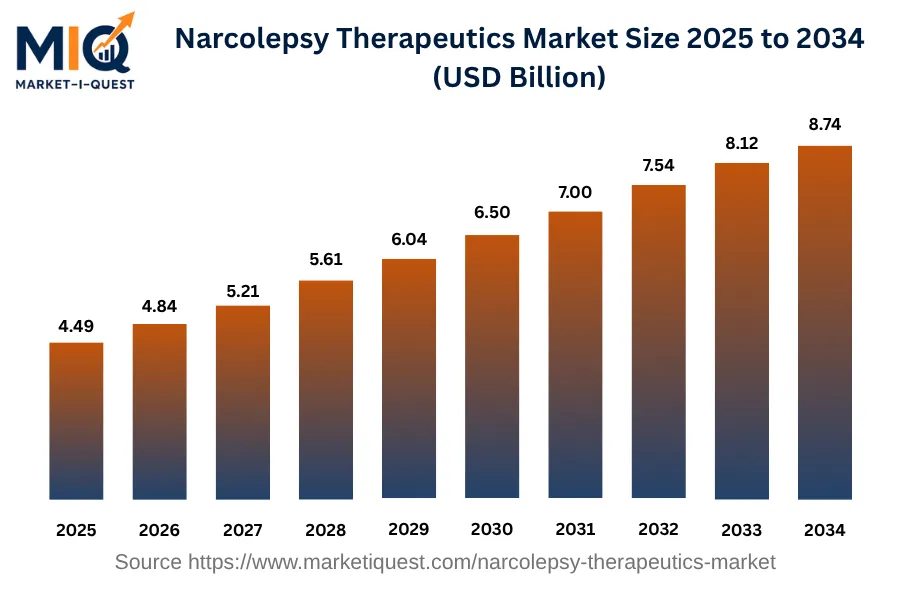
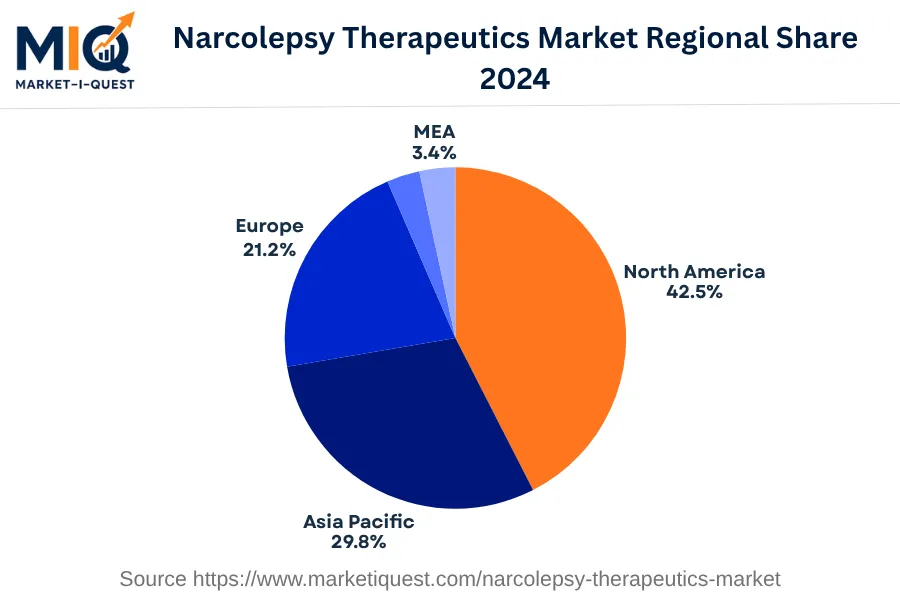
The Narcolepsy Therapeutics Market was valued at 4.49 billion USD in 2025 and is expected to grow to 8.74 billion USD by 2034, with a CAGR of 7.7%. Starting at a market value of 4.17 billion USD in 2024, the market has seen continual growth through the years, with a notable increase in value to 4.49 billion USD in 2025. This steady rise in market size is expected to maintain its trajectory through to 2034. The growth in the market value of narcolepsy therapeutics from 2025 to 2034 is largely due to these years' increased demand and continuous advancements, which have played a significant role in this market's expansion. Regionally, the market shares in 2024 were distributed as follows: North America held 42.5%, Asia Pacific followed at 29.8%, Europe at 21.2%, Latin America at 3.1%, and the Middle East and Africa held the smallest portion at 3.4%.

Key Takeaways

  • By Treatment Type - Narcolepsy with Cataplexy held the major share in the base year.
  • By Product -Selective Serotonin Reuptake Inhibitors (SSRIs) led the market accounting for notable market share in the base year.
  • By Distribution Channel - Hospital Pharmacies dominated representing a significant portion of the market in the base year.
narcolepsy-therapeutics-market market size

Key Driving Factors

Increase in Clinical Trials for Novel Narcolepsy Therapeutics

The significant increase in the number of clinical trials for novel narcolepsy therapeutics is one driving factor for the market.Several biotechnology and pharmaceutical companies are researching and developing new therapeutics for narcolepsy. This is prompted by the need for treatments that have fewer side effects and are more efficient than the current ones. By investigating different molecular targets and sophisticated drug design techniques, these companies are developing drugs that could improve the lives of people living with narcolepsy. This continued innovation and development is expected to propel the growth of the narcolepsy therapeutics market over the next few years.
Implementation of Patient Assistance Programs

Another driving factor for the narcolepsy therapeutics market is the implementation of patient assistance programs. These programs are designed to help patients who cannot afford to pay for their medications. Some pharmaceutical companies offer these programs to assist eligible patients by providing medications at little or no cost. By reducing the financial burden for patients, these programs encourage more patients to seek treatment for narcolepsy. This, in turn, boosts the demand for narcolepsy therapeutics and stimulates growth in the market.

Market Evolution by Timeline

2019-2023
During this period, North America and Europe were the leading regions for demand in the Narcolepsy Therapeutics Market, driven largely by an increase in diagnosis and awareness of sleep disorders. Primary suppliers were large, established pharmaceutical companies who shipped FDA-approved medicines such as Nuvigil and Xyrem. Federal regulations guided the scripts doctors could write, and FDA-approved treatments were typically covered by health insurance providers, setting the commercial model. However, restricted access to these medicines in some regions posed a risk - both to patients and to market growth. High prices and stringent prescription controls potentially limited reach.
2024
In 2024, Asia-Pacific regions, specifically Japan, started showing significant demand due to the launch of new medicines like Solriamfetol by the company Jazz pharmaceuticals. This drug, initially introduced in the U.S., broadened the supply side of the market, showing promising integration in the global market. Regulatory approval by health departments like the Ministry of Health, Labour and Welfare (MHLW) in Japan influenced market growth. Distribution was mainly via hospital pharmacies, which became the preferred commercial model. The risk lay in the acceptance and adoption by doctors.
2025-2029
Demand in the Narcolepsy Therapeutics Market broadened with emerging middle-income countries in Asia starting to contribute significantly. An increase in partnerships between local and international pharmaceutical companies played a vital role in the supply. The World Health Organization's increased focus on mental health and sleep disorders altered global awareness and policy during this period. With more players entering the market, competition is likely to have led to better pricing and contract models for patients. Awareness and the requirement for policy adherence risked curtailing the speed of growth.
2030-2034
By 2030-2034, the demand for narcolepsy therapeutics expands into the underdeveloped countries. Emergence of online pharmacies changes the distribution dynamics, giving easier access for patients living remotely. The supply is also impacted by the increased involvement of biotech companies developing new generation drugs. Rigorous clinical trials are enforced as per WHO guidelines. Companies compete on value-based pricing models, often partnering with local clinics for better market penetration. While technological advancements provide potential solutions to narcolepsy, late-stage failures of pipeline and side-effects risks contribute significantly.

Future Market Outlook

Future Opportunities

The narcolepsy therapeutics market presents several growth prospects fueled by current developments and active research initiatives. The ongoing collaboration between pharmaceutical companies and academic institutions is paving the way for novel treatment modalities. For instance, partnerships like those between Takeda Pharmaceuticals and academic researchers facilitate the exploration of gene therapy and personalized medicine, targeting underlying mechanisms of narcolepsy. Moreover, the increasing prevalence of narcolepsy in children and adolescents has led to heightened interest in pediatric treatments, as evidenced by a 2021 study from the Journal of Clinical Sleep Medicine that highlighted an alarming rise in pediatric cases. As awareness around narcolepsy grows, patient advocacy groups are becoming more prominent, driving initiatives that promote research funding and education. In 2023, the World Sleep Society launched a global awareness campaign aimed at improving the understanding and diagnosis of sleep disorders, including narcolepsy. The regulatory landscape is also evolving, with the European Medicines Agency proposing a review process for innovative sleep medications, thereby expediting access to new therapies for patients. Additionally, advancements in telemedicine are improving access to specialists, particularly in rural regions where sleep disorder clinics may not be readily available. These developments signal a promising future in the narcolepsy therapeutics market, enhancing treatment access and fostering continuous innovation.

Segmentation Analysis

By Treatment Type

The market, segmented by treatment type, includes subsegments such as Narcolepsy with Cataplexy, Narcolepsy without Cataplexy, and Secondary Narcolepsy. Of these, Narcolepsy with Cataplexy accounted for the largest revenue share, while Secondary Narcolepsy is predicted to grow at the fastest CAGR during the forecast period.

Largest Revenue Share

Narcolepsy with Cataplexy

Market Share Leader

Narcolepsy with Cataplexy leads in revenue owing to the prevalence of the condition and the higher cost associated with its treatment. This form of narcolepsy, often characterized by sudden loss of muscle tone, makes it challenging for patients to manage without medication, thus creating a high demand for effective treatments. The patient pool for this disorder tends to be larger, leading to increased use of the treatments, and therefore contributing to a higher revenue share. Geography also plays a significant role here. Regions with better access to healthcare, like North America and Europe, report larger numbers of patients diagnosed and treated, thus driving up the revenue specifically for this segment. The well-established treatment protocols, easy access to medication and higher per capita healthcare spend in these regions also contribute significantly to the revenue share. The high switching costs and regulatory complexities involved also solidify the largest revenue share of Narcolepsy with Cataplexy. Furthermore, strong sales channels via specialist clinics, hospitals, and online platforms ensure steady revenue flow in this particular segment.

Fastest CAGR

Secondary Narcolepsy

Forecast Period Growth Leader

On the other hand, Secondary Narcolepsy, albeit starting with a smaller patient base, is expected to show the fastest CAGR. While the reasons behind the growth of this segment are multifaceted, key drivers include increasing awareness, advancements in diagnostic techniques, and a better understanding of the disease itself. Secondary Narcolepsy, linked to specific underlying neurological conditions, is being diagnosed at an increasing rate due to improved medical imaging and diagnostic tests. Along with it, recent advancements in treatment methods offer hope for more effective management of the condition, prompting higher adoption rates. Despite the expected robust growth, this segment is not without its risks. Significant barriers to treatment adoption persist, including high treatment costs, accessibility, and patient's lack of awareness about the condition. A staunch focus on partnerships and policies that emphasize affordable care, educating patients, and fostering research and development could help this subsegment overcome these hurdles and achieve higher adoption rates.

By Product

The product-based market segment includes Central Nervous System (CNS) Stimulants, Sodium Oxybate, Selective Serotonin Reuptake Inhibitors (SSRIs), Tricyclic Antidepressants (TCAs), and others. In 2024, SSRIs accounted for the largest revenue share while Sodium Oxybate is expected to grow at the fastest CAGR during the forecast period.

Largest Revenue Share

Selective Serotonin Reuptake Inhibitors (SSRIs)

Market Share Leader

Selective Serotonin Reuptake Inhibitors (SSRIs) became the most revenue-generating subsegment in 2024 due to multiple factors. Their broad application range treating various mental health disorders including depression, anxiety disorders, and some personality disorders assured their widespread usage. Their popularity among healthcare professionals can be attributed to their generally better side-effect profile, safety in overdose, and lower risk of dependency than other classes of psychotropic drugs. Patients are keen on SSRIs owing to fewer side effects and low risk of addiction compared to other medications. Most prevalent mental health disorders like depression and anxiety are often treated with SSRIs, further driving up demand. Regulatory bodies' approval for these medicines in multiple countries has also played a vital role in their high demand. Easy availability across multiple sales channels, including online and offline pharmacies, has contributed significantly to the accessibility of SSRIs, hence their large revenue share.

Fastest CAGR

Sodium Oxybate

Forecast Period Growth Leader

Expectations are high for Sodium Oxybate to experience the fastest CAGR during the forecast period. Most of its projected growth is due to its increasing applications in treating a form of Narcolepsy, with symptoms like Cataplexy and excessive daytime sleepiness, a disorder that has seen a recent spike in diagnosed cases globally. Current market trends also show a rising preference for Sodium Oxybate due to its enhanced efficacy in treating this condition compared to other available treatment options. Furthermore, its increased adoption is fostered by partnerships between pharmaceutical companies and healthcare providers for promotion and distribution. Yet, risks related to regulatory compliance and potential side effects might pose challenges to its growth. However, continuous advancements in pharmaceutical technologies are set to mitigate these risks, upping its potential for substantial growth.

By Distribution Channel

The market is divided into subsegments including Hospital Pharmacies, Retail Pharmacies, and Online Pharmacies. Hospital Pharmacies accounted for the largest revenue share while Online Pharmacies is expected to grow at the fastest CAGR during the forecast period.

Largest Revenue Share

Hospital Pharmacies

Market Share Leader

Hospital pharmacies remain the predominant distribution channel and account for the highest revenue share. This can be attributed to a combination of factors. Firstly, the influx of in-patients and out-patients in hospitals invariably leads to prescriptions being filled at the on-site hospital pharmacy. Secondly, rare and high-cost medications, which are typically used for in-patient treatments, are normally distributed through hospital pharmacies. This is because these pharmacies are often better equipped to handle, store, and dispense specialized medications. Also, stakeholders have lesser financial risk related to the wastage of expensive drugs in hospital domains. Regulations that stipulate certain medications be hospital dispensed also contributes to their high revenue share. Moreover, emergency medications and bulk stock requirements within hospital premises often ensure steady demand. The mix these factors has cemented hospital pharmacies' lead in revenue generation.

Fastest CAGR

Online Pharmacies

Forecast Period Growth Leader

Online Pharmacies, on the other hand, are expected to experience the fastest growth rate. This can be mainly attributed to the convenience they offer - timely delivery of medications at the doorstep and round-the-clock accessibility. This growth is also fueled by the rising penetration of the internet and increasing smartphone usage. As customers become more comfortable with online transactions, the fear and skepticism regarding online purchases of medications are dissipating. Also, online platforms offer price transparency and competitive pricing, which is another growth driver. Despite this swift growth, certain barriers remain, including skepticism associated with the authenticity of drugs and regulatory issues related to cross-border trade. So, the acceleration of this subsegment rests on overcoming regulatory hurdles and establishing stringent protocols to ensure the delivery of genuine products.

Competitive Analysis: Narcolepsy Therapeutics Market

Key Market Players

Manufacturers / OEMs

TEVA Pharmaceutical Industries Ltd.
Israel
Jazz Pharmaceuticals PLC
Ireland
Bioprojet
France

Key Suppliers & Raw Materials

Lonza Group AG
Switzerland
Dow Chemical Company
US
BASF SE
Germany

Distributors, Integrators & Channel Partners

Cardinal Health
US
McKesson Corporation
US
AmerisourceBergen Corporation
US

Porter’s Five Forces Analysis

Analysis of competitive dynamics in the Narcolepsy Therapeutics Market

Supplier Bargaining Power

Medium

Limited suppliers of active pharmaceutical ingredients expand their bargaining power.

Buyer Bargaining Power

Low

Patients have low bargaining power due to the life-critical nature of narcolepsy therapeutics.

Threat of Substitutes

Low

Low threat due to lack of alterative treatments and high switching costs.

Threat of New Entrants

Low

Complex regulatory requirements and high R&D costs limit the entry of new players.

Competitive Rivalry

High

High rivalry due to increasing number of companies developing drugs for narcolepsy.

Regional Analysis

Geographic market dynamics and growth opportunities across key regions

Global Market Outlook

narcolepsy-therapeutics-market market regional share

North America

In 2024, the Narcolepsy Therapeutics Market in North America underwent significant developments. Driving factors included an increase in narcolepsy diagnoses across the U.S., Canada, and Mexico, heightened awareness of the condition due to extensive healthcare campaigns, and advancements in healthcare technology improving the availability and efficacy of treatments. Rising R&D investments from pharmaceutical corporations and government bodies also enhanced drug discovery and development in narcolepsy therapeutics. Regulatory approvals, most notably from the FDA, further influenced the market through the endorsement of new medications, expanding treatment options for patients.

Trends in 2024 saw a consumer shift towards newer drug categories, linked to greater efficacy and fewer side effects. There was heightened use of e-commerce channels to purchase medication, influenced by the convenience of online pharmacies. The adoption of telemedicine services in healthcare also impacted the market, as virtual consultations improved access to diagnosis and treatment planning, especially in remote regions. The industry saw several strategic collaborations between pharmaceutical companies, aiming to share resources and expertise in narcolepsy drug development. A strong emphasis on policy enforcement was noticeable, particularly in the U.S., ensuring the safe and ethical provision of narcolepsy treatments. The market primarily catered to the healthcare sector, with a focus on adult patients, although increased recognition of pediatric narcolepsy also created an emerging customer base.

Asia Pacific

In 2024, the Narcolepsy Therapeutics Market in Asia Pacific experienced remarkable traction. Key drivers include amped demand due to increased diagnostic rates and growing awareness alongside a rise in investments in healthcare facilities. Specifically, technology adoption in China's healthcare sector created new opportunities for narcolepsy therapeutics. Advances in delivery modes harnessed by India attribute to better patient compliance and easy management of the disease. Moreover, stringent drug regulation policies in countries like Japan and Australia bolstered the market, enhancing product reliability. Parallelly, attentive trends underlining shifts in patient behavior marked importance. The use of online platforms for consultation and drug purchasing gained momentum, necessitating a shift in channel dynamics.

There was a distinctive inclination towards non-amphetamine-based drugs to reduce adverse side effects, demanding attention from pharmaceutical companies. Moreover, alliances formed by healthcare providers and healthcare IT companies had a significant impact. The approval of solriamfetol in South Korea and the implementation of the National Sleep Program in China are examples of policy enforcement initiating notable change. The market substantially impacted sectors including healthcare and pharmaceutical manufacturing. Governments likewise played instrumental roles, enforcing policies to ensure the distribution of high-quality therapeutics. Thus, it was a year of significant growth and transformation for the Asia Pacific Narcolepsy Therapeutics market.

Europe

In 2024, Europe's Narcolepsy Therapeutics Market experienced substantial growth. Driving factors included heightened research investments, particularly in Germany and the United Kingdom, leading to faster adoption of novel therapeutics. Regulatory bodies across Benelux and Central & Eastern Europe streamlined the approval process, thereby expediting the launches of pioneering treatments. Furthermore, the increased prevalence of narcolepsy across the region, especially in Italy, intensified demand, pushing companies to invest in supply chain improvements. Trends notably shifted buyer behavior towards personalized diagnostics and tailored treatment regimes, incorporating factors like genetic predisposition and individual health records.

The digitalization of healthcare systems, especially in Spain and the Nordics, further facilitated this. A marked rise in cross-industry collaborations and acquisitions, notably between technology and pharmaceutical companies, allowed for a more multidisciplinary approach, focusing on advanced technologies like AI in diagnosing and managing narcolepsy symptoms. Due to the pervasiveness of the condition across different age groups, policy enforcement became uniform across sectors, from education to enterprise, to ensure the wellbeing of narcoleptic individuals. Finally, standardization norms across the continent, established by European Union health bodies, helped attain equivalent care levels across diverse healthcare systems.

Latin America

In 2024, the Latin American Narcolepsy Therapeutics market demonstrated steady growth due to various drivers and trends. A considerable increase in narcolepsy diagnoses, primarily in Brazil and Mexico, fueled demand for efficient treatments. Government regulations in Brazil, Argentina, and Colombia mandated enhanced accessibility to narcolepsy medication, leading to increased market penetration. Also, significant investments in healthcare technology adoption, particularly in Chile and Peru, advanced the market significantly. The trend of personalized treatment options reshaped the patient-doctor dynamic across the region, with higher patient involvement in treatment plans fostering a patient-centric approach. A noticeable shift toward digital platforms for acquiring medications in Mexico and Colombia was an essential trend, streamlining prescription handling and patient follow-up.

Additionally, expanded partnerships between government healthcare systems and pharmaceutical firms, particularly in Argentina, improved the reach and affordability of narcolepsy medications. The primary customers for narcolepsy therapeutics in LATAM were healthcare establishments like hospitals, clinics, and pharmacies. Brazil and Mexico held the largest share of the market due to government healthcare policies focusing on expanding access to neurology-related treatments. Furthermore, the increased use of narcolepsy therapeutics in utilities sector, notably in office environments and manufacturing industries, signified the widening understanding of the condition across different professional settings.

Middle East & Africa

In 2024, the Narcolepsy Therapeutics Market in the Middle East and Africa experienced significant activity. A surge in demand was driven by an increased awareness of narcolepsy signs and symptoms, especially in countries such as Saudi Arabia, United Arab Emirates, and South Africa. Government health initiatives promoted early diagnosis and effective therapy, propelling market growth. Additionally, significant investments in healthcare infrastructure and innovative technology adoption in Israel and Qatar enabled advanced narcolepsy treatment methods. Market trends were marked by shifting buyer behavior towards personalized and advanced treatments, particularly in economies such as Nigeria and Kenya. The rise in partnership alliances and M&A activities among pharmaceutical players and healthcare providers boosted the availability and accessibility of therapeutics within the region. In Egypt, policy enforcements to upgrade the healthcare system significantly impacted the narcolepsy therapeutics market.

The leading sectors engaged with the narcolepsy therapeutics market were healthcare and pharmaceutical manufacturing, with a high influence from retail pharmacies. In Saudi Arabia and the UAE, the government and major healthcare facilities were key players, while in South Africa and Nigeria, multinational pharmaceutical companies played a critical role. Key stakeholders included patients, healthcare providers, and insurance companies,pushing for affordable and innovative treatments to cater to the accelerating demand within the region.

Recent Industry Developments

Latest market innovations, product launches, and strategic initiatives

March 2026

Harmony Biosciences announced a strategic partnership with CNS Pharmaceuticals to co-develop and commercialize a novel, once-daily formulation of pitolisant for narcolepsy in European and Asian markets. The partnership combines Harmony's expertise in narcolepsy with CNS Pharmaceuticals' European commercial infrastructure.

July 2025

The U.S. FDA approved Lumryz (sodium oxybate) for the treatment of cataplexy in adults with narcolepsy. The extended-release formulation, developed by Avadel Pharmaceuticals, is the first and only once-at-bedtime oxybate product approved for cataplexy and excessive daytime sleepiness (EDS) in narcolepsy, offering a single-dose alternative to the twice-nightly dosing of other oxybate therapies.

Frequently Asked Questions