Microwave Oven Market Snapshot

Key Players

  • LG Electronics (South Korea)
  • Panasonic Corporation (Japan)
  • Samsung Electronics (South Korea)
  • Whirlpool Corporation (United States)
  • Bosch Hausgeräte Gmbh (Germany)
  • Electrolux AB (Sweden)
  • Sharp Corporation (Japan)
  • GE Appliances (United States)
  • Toshiba Corporation (Japan)
  • Haier Group Corporation (China)

Market Size

Base Year 2024
$13.95 Bn
CAGR
3.6%
Forecast 2034
$19.87 Bn

Market Segments

By Product Type
Convection, Grill, Solo
By Structure
Built-in, Counter-top
By Sales Channel
Online, Offline
By End Use
Residential, Commercial

Market Dynamics

Drivers
  • Rising disposable income
  • Increasing consumer preference for ready-to-eat meals
Restraints
  • High product penetration
  • Healthy competition
Opportunities
  • Growing healthy eating trend
  • Increasing home cooking culture

Market Size

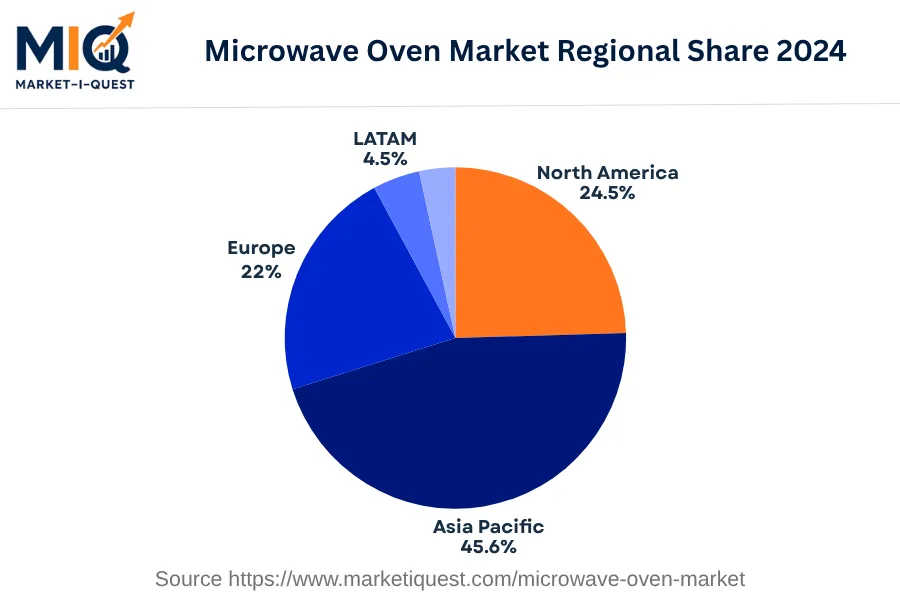
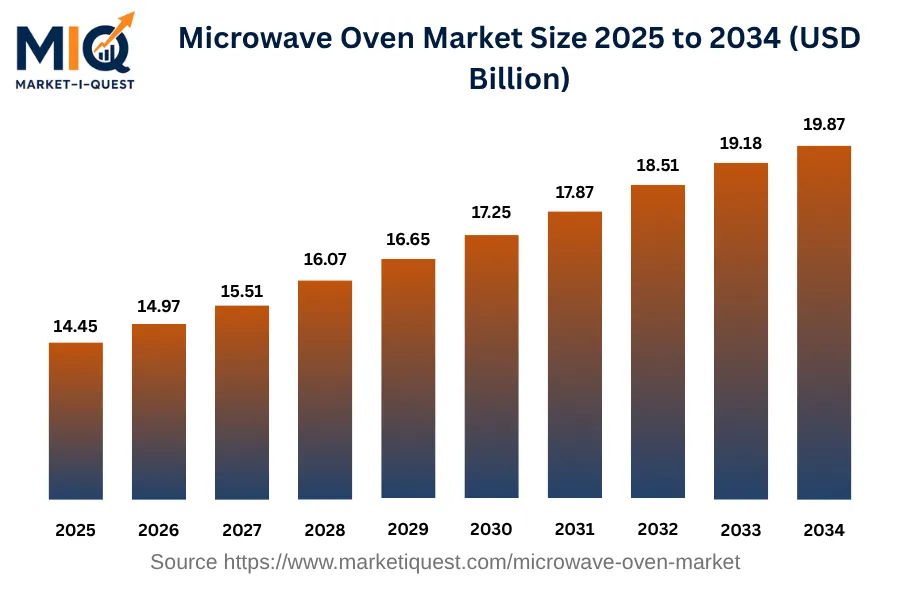
The Microwave Oven Market size was $14.45 billion in 2025, and is projected to reach $19.87 billion by 2034, reflecting CAGR of 3.6%. This expansion path from $13.95 billion in 2024 to nearly $20 billion a decade later indicates a consistent demand growth for microwave ovens. This growth is largely attributed with combinations of evolving consumer and growing interest in fast and convenient cooking processes. Whereas, the regional share distribution in 2024 consisted of North America holding 24.5%, followed by Asia Pacific which had largest share at 45.6%. Europe had a share of 21.9%, while LATAM and MEA held 4.5% and 3.4%, respectively of the market.

Key Takeaways

  • By Product Type - Convection segment held the leading market position in 2024.
  • By Structure - Counter Top represented the fastest-growing subsegment showcasing significant growth during 2025-2034.
  • By Sales Channel - Offline outlets held a dominating presence in 2024.
  • By End Use - Commercial segment led the market dynamics accounting for the largest share in 2024.
microwave-oven-market market size

Key Driving Factors

Stringent Energy Efficiency Regulations

One key factor driving the microwave oven market is rising adoption of energy efficiency measures by government bodies globe. These policies are primarily designed for the reduction of energy consumption and greenhouse gas emissions. For instance, the European Union's Energy Label that sets standards for microwave ovens energy efficiency is having a significant impact on the market. The Energy Label legislation drives manufacturers to design and produce microwave ovens meeting specific power consumption criteria. With consciousness of customers is increasingly towards energy efficiency, not just for environmental reasons but also for reducing electricity bills. Thus, these stringent regulations are compelling manufacturers to innovate energy-efficient microwave ovens.

Introduction of Microwave Ovens with Advanced Features

Various factors including the introduction of ovens integrated with advanced and innovative features significantly drove the market. Smart microwave ovens that can be controlled via smartphone apps have preset meal options and can assess the weight and type of food for adjusting the cooking time and temperature. For instance, products such Amazon Basics Microwave allow customers to control cooking times and power levels through voice commands via Alexa, addressing both disabilities and busy lifestyles. Similar features by manufacturers are boosting customer interest and fueling the microwave oven market.

Market Evolution by Timeline

2019-2023
Within this period majorly households in North America and Europe experienced interest in microwave ovens with smart features such as user-friendly interfaces and energy efficiency due their high utility in daily routines. Companies such as Panasonic and Samsung launched products with sensor cooking and energy-saving mode. Guidelines under International Electro Technical Commission (IEC) and Energy Star certification standards drove adoption. The pricing generally remained high due to cost of advanced features with consumers highly preferring purchase instead of rental. Thus, this period showed significant growth of the market.
2024
In 2024, a significant rise was seen in demand for microwaves in Asian markets particularly in the emerging economies such as India and China. With adoption of western lifestyles and increased disposable income are key factors for this shift. In terms of technology, market saw introduction of IOT-integrated ovens from companies such as LG Electronics with automated cooking recipes and predictive maintenance. The EU Ecodesign Directive influenced inclusion of energy-saving functions in design. Thus, pricing was competitive with flexible EMI options and strategic partnerships were seen among manufacturers and technology vendors for innovation.
2025-2029
In these years, the interest of the consumers is likely increase towards eco-friendly microwave ovens with solar or wind energy integration, mainly in environmentally conscious regions such as Scandinavia. Technologies such as artificial intelligence (AI) for personalized cooking options are likely to be introduced by major players such as Bosch and Whirlpool. Regulations under UN's Sustainable Development Goals will encourage clean-energy appliances. Thus, commercial model will still be purchase-oriented with rise in leasing options for high-end models.
2030-2034
Microwave ovens with immersive technology for better cooking experience are likely to become popular with global audiences with North America will likely lead the demand. Gesture recognition technology will br seen in products from Electrolux and General Electric. The integration of such technology will drive the product price up. Standards dictated by Federal Communications Commission (FCC) will be instrumental in leveraging technology. Hybrid models of purchase and leasing are likely to become more prevalent with consumers will be often choose to upgrade via lease programs. Thus, rapid technological development allowed manufacturers to solve these problems.

Future Market Outlook

Future Opportunities

Looking ahead, the global microwave oven market stands to significantly benefit from accelerated sustainability initiatives as seen in European Union's focus on reducing household energy consumption by 2025. Ongoing research into new technologies, particularly in the realm of energy-efficient heating methods, suggests that manufacturers may explore advancements similar to those found in induction cooking by 2024. Companies like Whirlpool have begun pilot programs to develop ovens with a reduced carbon footprint, paving way for heightened consumer interest in eco-friendly appliances. Emphasis on multi-functional cooking appliances is evidenced by increasing popularity of combination microwave and convection ovens, like the Breville Combi Wave 3-in-1 launched in 2021. This reflects a shift in consumer preferences toward appliances that offer versatile cooking options without compromising on performance. Additionally, integration of health-centric features, like sanitization cycles found in models from Sharp, aligns with consumer interest in health and hygiene, an area that gained traction during COVID-19 pandemic. Partnerships between tech companies and appliance manufacturers, like collaboration between Google and various brands to incorporate advanced voice assistants, further highlight potential for innovation in user interaction. As sustainability and convenience remain focal points, the microwave oven market is poised for transformative growth driven by these emerging technologies and consumer demands.

Segmentation Analysis

By Product Type

The market is divided into subsegments including Convection, Grill, and Solo. Convection accounted for the largest revenue share while Solo is expected to grow at the fastest CAGR during the forecast period.

Largest Revenue Share

Convection

Market Share Leader

Convection ovens have been leading the market revenue due to their versatile functionality and effectiveness in cooking. Unlike traditional ovens, a convection oven has built-in fans that circulate hot air, providing even heat distribution throughout the oven. This results in food being cooked evenly without hot spots, making it a preferred choice for professional chefs and households alike. Additionally, they shorten cooking time and offer energy-saving benefits, thus gaining favor amidst energy and environment-conscious users. Moreover, convection ovens are now coming with advanced features like touch control, digital display, and preset cooking menus, making them more appealing to modern consumers. While these factors contribute to their current dominant share in terms of revenue, the trend is also being supported by the penetration of e-commerce channels, which allow consumers from various geographies easy access to a broader range of product offerings.

Fastest CAGR

Solo

Forecast Period Growth Leader

Solo microwave ovens, despite accounting for a smaller portion of the market presently, are forecasted to grow at the fastest CAGR in coming years. They are an economical option and the most basic model of microwave ovens capable of defrosting, heating, and cooking food, making them a perfect fit for small to medium-sized families with basic cooking needs. In an era where trend is towards minimalistic and compact appliances due to a shift towards nuclear families, particularly in urban areas, the Solo microwave segment is expected to grow rapidly. Rise of 'smart' appliances appears to be next key growth driver for this segment, with Wi-Fi-enabled products and smartphone controls becoming increasingly common. It should be noted, though, that the high degree of competition among leading players, combined with consumers’ lack of awareness about benefits of advanced and 'smart' appliances, does present potential obstacles to the adoption of these products.

By Structure

The market is divided into two key subsegments which are built-in and counter-top structures. The Counter-top structure accounted for the largest revenue share while the Built-in structure is expected to grow at the fastest Compound Annual Growth Rate (CAGR) during the forecast period.

Largest Revenue Share

Counter-top

Market Share Leader

The Counter-top subsegment is a top performer in the structure segment due to several factors. Counter-top appliances offer significant advantages such as easy installation, portability, and above all, they are less expensive compared to their built-in counterparts. This makes them preferred choice among broad clientele, including homeowners looking to save space, renters, and small businesses. Further, proliferation of small households and compact apartments especially in urban areas is leading to increased demand for these products. The subsegment's success is also due to the wide range of available products, catering to different customer needs and preferences. Regulatory easing in various regions has also had a positive impact. Even though some customers might prefer built-in appliances due to their aesthetic appeal and functionality, the high cost and complexity of installation are key deterrents. Consequently, the counter-top subsegment continues to command the largest revenue share in 2024.

Fastest CAGR

Built-in

Forecast Period Growth Leader

Despite commanding a lower revenue share compared to the counter-top subsegment in 2024, the built-in structure segment is anticipated to exhibit the strongest growth in the coming years. There are several reasons driving this trend. Firstly, there is a growing desire for streamlined aesthetics and functionality in modern households. Built-in appliances offer clean lines and integration with existing cabinetry, which is appealing to homeowners. Increasing trend towards smart homes and connected living spaces is also acting as a catalyst for this subsegment. New technological advancements, partnerships with tech companies, and increased capital expenditure towards home innovations drive this trend. For example, built-in appliances can often be controlled remotely via apps, adding to their appeal. But they do have some challenges like high costs and complex installation process. Nevertheless, overall appeal and advantages of built-in structures are set to spur their growth over the forecast period.

By Sales Channel

The market is divided into subsegments including Online and Offline. In the base year of 2024, the Offline subsegment accounted for the largest revenue share while the Online subsegment is expected to grow at the fastest CAGR during the forecast period.

Largest Revenue Share

Offline

Market Share Leader

In our base year of 2024, Offline subsegment dominates in terms of revenue generation. This is facilitated by a number of factors. Consumers largely prefer the experience of physically inspecting products before making a purchase decision, hence fueling sales in offline stores. Such buying behavior is particularly prevalent in segments with high-value goods where customers place a high importance on quality assurance. In areas with lower internet penetration and digital literacy, shoppers rely heavily on brick-and-mortar stores. Even in mature markets, a considerable number of customers continue to buy offline due to well-established supply chains, as well as the immediate gratification and convenience it provides in terms of zero wait time for shipping and the ability to make purchases on credit in some localities. Convincing these customers to switch to online shopping may pose a challenge due to entrenched habits and satisfaction with existing channels.

Fastest CAGR

Online

Forecast Period Growth Leader

Despite Offline capturing the largest revenue share in 2024, the Online subsegment is anticipated to outpace this growth over the forecasted period. This subsegment's accelerated growth can be attributed to various growth drivers. Firstly, constant advancements in technology and the infiltration of high-speed internet have made online shopping more accessible and reliable. An increasing number of smartphone users is also contributing to the surge in online sales. This, coupled with the speed and convenience of shopping online, and the ability to compare prices, read reviews and access a broader range of products compared to traditional brick-and-mortar stores, are major considerations making consumers lean towards online shopping. Despite these attractions, some challenges remain. Security concerns, inadequate digital payment infrastructure in some regions, and returns policy issue may hinder adoption. Nonetheless, aggressive marketing campaigns, discounts, and the push for secure payments by key market players are expected to assist with overcoming these barriers.

By End Use

The market for segment_4 is divided into Residential and Commercial subsegments with the Commercial subsegment accounting for the largest revenue share while Residential is expected to grow at the fastest CAGR during the forecast period.

Largest Revenue Share

Commercial

Market Share Leader

The Commercial subsegment has been the traditional revenue driver in segment_4 largely because of the high demand from businesses and corporate entities that require its use. A larger scale of operations typical in Commercial entities necessitates the use of Segment_4’s services, thereby cementing its position as the subsegment with the largest revenue. Geographically, dense urban areas with a high concentration of businesses contribute to a significant proportion of this demand. Regulatory frameworks also favor Commercial entities as tax incentives and subsidies for environmental-friendly practices indirectly incentivize the use of segment_4. The purchasing criteria often place a high emphasis on quality and reliability, areas where the Commercial subsegment is typically strong due to its established supply chains, diversified service offerings, and experienced service providers. High switching costs involved in shifting to alternatives also sustain segment_4's demand in the Commercial market.

Fastest CAGR

Residential

Forecast Period Growth Leader

The Residential subsegment in segment_4 is poised to be the fastest-growing sector. A number of variables are contributing to this upswing, including advances in technology that have made residential usage more practical and cost-effective. The expanding adoption is being fueled by the growing awareness of the benefits, resulting in a shift in consumer preference. Moreover, strategic partnerships between manufacturers and distributors are making it easier for average consumers to access segment_4. Policy changes are also providing the sector with some momentum, with more incentives for residential use of segment_4 – a trend that is expected to continue in the coming years. However, the Residential subsegment also faces its own set of challenges in the form of adoption barriers including the initial capital expenditures and skepticism surrounding the reliability and efficiency of segment_4. Tackling these barriers will be crucial for sustenance of growth trajectory.

Competitive Analysis: Microwave Oven Market

Key Market Players

Manufacturers / OEMs

Whirlpool Corporation
US
LG Electronics
South Korea
Panasonic Corporation
Japan

Key Suppliers & Raw Materials

Kyocera Corporation
Japan
Murata Manufacturing Co., Ltd.
Japan
Ohmite Manufacturing Co.
US

Distributors, Integrators & Channel Partners

Best Buy Co., Inc.
US
Amazon.com, Inc.
US
Argos Limited
UK

Porter’s Five Forces Analysis

This analysis provides information on competitive dynamics within the global Microwave Oven Market.

Supplier Bargaining Power

Medium

The cost of microwave component production and availability vary across regions.

Buyer Bargaining Power

High

High competition and product alternatives grant significant power to buyers.

Threat of Substitutes

Medium

The growing popularity of other cooking appliances poses a mid-level threat.

Threat of New Entrants

Low

High market entry barriers like capital expenditure and product safety standards limit competition.

Competitive Rivalry

High

Several established brands constantly innovate to retain customer base, intensifying rivalry.

Regional Analysis

Geographic market dynamics and growth opportunities across key regions

Global Market Outlook

microwave-oven-market market regional share

North America

In 2024, the North American microwave oven market saw significant growth largely fueled by demand, technological advancements, and shifts in consumer behavior.

The surge in urbanization coupled with fast-paced living standard in countries like U.S., Canada, and Mexico have amplified demand. The real estate sector's pivot towards constructing housing with advanced, built-in appliances has also contributed to heightened demand for microwave ovens. Technology adoption witnessed a rise influenced by industries introducing energy-efficient models that resulted in reduced electricity bills, driving purchases.

Evolving buyer behavior redefined trends in market. Consumers showed preference for smart microwave ovens, which offer features like voice control and phone synchronization. Uptick in e-commerce has reshaped channel dynamics, with more consumers preferring online shopping for home appliances, making Internet retailing a key sales channel. Manufacturers have also been focused on partnerships and M&A activities in a bid to combine technological know-how and expand their product range tailored to current demand.

Notably, health-conscious consumers prompted manufacturers to ensure their appliances meet certain standards that reduce harm by radiation. This has led to stricter policy enforcement within the sector, especially in Canada, ensuring that microwave ovens in market are within safety regulations.

Asia Pacific

In 2024, microwave oven market in Asia Pacific demonstrated a vibrant growth profile. This was primarily driven by robust demand from burgeoning middle classes in India and China, spurred by rising disposable incomes and changing lifestyles favoring time-saving kitchen appliances. In South Korea and Japan, the replacement market was robust due to high usage wear and tear. Additionally, favorable government regulations, like China's energy efficiency policy, also stimulated increased microwave oven adoption across all regions.

Several trends were evident within this market. First, increasing health consciousness created higher demand for microwave ovens with advanced technologies like steam cooking and automatic cooking programs across urban centers in Australia and major ASEAN markets. Second, changing retailer strategies in India and China saw significant shift in sales from traditional outlets to online, reflecting greater internet penetration in these economies. Lastly, partnerships and M&A activities were high as local players recognized potential to scale through collaborations with global manufacturers.

In terms of sectors, the enterprise segment emerged as a key customer, with rapid commercialization of space witnessing a surge in demand for microwave ovens in hospitality and corporate spaces, particularly in Japan and South Korea. The demand was also strong in residential households, especially in China and India, due to increasing urbanization and modernization of homes in these countries.

Europe

In 2024, the European microwave oven market displayed robust growth, driven by rising demand, technological advancements, and strategic partnerships. Urbanization and growing working-class population in countries like Germany, UK, and France spiked need for quick, efficient home cooking solutions. In addition, new regulations encouraging energy-efficient appliances have positively affected the market. Consumer preference to replace traditional cooking methods with advanced microwaves designed with smart features was also observed.

Significant investments in R&D fostered innovation in product design and functionality, propelling brand competition, particularly in Italy, Central & Eastern Europe. Conversely, volatile raw material prices impacted manufacturing costs, influencing market pricing structures and supplier dynamics.

Buyer behavior showed clear tilt towards sensor-driven, energy-efficient microwave ovens with connected features, enhancing ease-of-use and convenience. Meanwhile, manufacturers engaged in partnerships and M&A to expand their retail distribution networks, particularly in Spain and Benelux region. We witnessed a remarkable technological shift towards AI-enabled and IOT integrated microwaves, creating new standards for kitchen appliances.

The trend to incorporate microwave ovens within integrated kitchen appliances was prominent in enterprise sectors, including hospitality, while healthcare sector benefited from specific-use microwaves designed for sterility purposes. Retail penetration saw steady increase, attributed to effective omnichannel strategies implemented by major manufacturers. Thus, both drivers and trends outlined a positive trajectory in European microwave oven market dynamics for 2024.

Latin America

In 2024, Microwave Oven Market in Latin America (LATAM) witnessed robust growth characterized by diversified use across multiple sectors. Driving forces included urbanization in countries like Brazil and Mexico, favoring consumer electronics adoption. New regulatory standards in Argentina promoted energy-efficient appliances, propelling market competitiveness. Furthermore, sustained investment in Colombia from multinational manufacturers boosted local production capacities, with technology adoption advancing microwave oven features and functionalities.

Market trends indicated shifting consumer preferences towards multifunctional and smart appliances. In Chile, demand for sensor-based microwave ovens, designed for precise heating, rose steadily. Similarly, over-the-range microwave ovens gained popularity in Peru owing to space-saving design, indicating deviations in buyer behavior. New distribution channel dynamics emerged with online sales escalating in Mexico and Brazil, attributing to enterprise partnerships and enhanced e-commerce infrastructure. Government incentives in Colombia encouraged manufacturing sector involvement, impacting product quality and innovation.

Across sectors, retail and manufacturing companies were predominant customers, their demand spurred by changing lifestyle and dietary habits. Healthcare facilities utilized microwave appliances for sterilization, expanding their utility beyond basic cooking. The LATAM microwave oven market in 2024 depicted a dynamic landscape, stimulated by diverse demand factors, innovative technology adoption, and evolving consumer behaviors.

Middle East & Africa

In the 2024 base year, Microwave Oven Market in Middle East and Africa exhibited dynamic growth due to diverse factors. Economic stability in key markets like Saudi Arabia, United Arab Emirates, and Qatar facilitated increased purchasing power, driving demand for modern kitchen appliances. Moreover, rapid urbanization and lifestyle changes in populous regions like Egypt, Nigeria, and South Africa also heightened demand for quick cooking solutions. Furthermore, technological advancements in consumer electronics sector in Israel resulted in energy-efficient microwave ovens, enhancing their adoption.

Trending in this market were smart microwaves equipped with IoT capabilities aiming at energy conservation and ease of use. This trend was more noticeable in technologically advanced regions such as Israel and the United Arab Emirates. In retail circuits across Saudi Arabia, South Africa, and Kenya, brick-and-mortar stores continued to be preferred purchase channel, though e-commerce was gaining strong acceptance. Partnering with local distributors and creating in-store experiences were key strategies adopted by leading manufacturers. Compliant with safety regulations and standards, these microwave ovens were particularly popular in residential sector, alongside hospitality and healthcare sectors requiring quick meal solutions. Consumption was also high in corporate sector, specifically in sectors like telecom, utilities, and financial services. The market was therefore marked by a blend of economic, urbanization, and technological factors.

Recent Industry Developments

Latest market innovations, product launches, and strategic initiatives

June 2026

Panasonic officially launched Japanese Countertop Microwave (NN-SF57RM). This model eliminates the traditional turntable in favor of a flatbed interior to maximize capacity. It introduces the Genius Sensor 2.0, which uses a 64-point thermo-sensor network to automatically adjust cooking times and power levels in real time.

February 2026

On presentation of Union Budget, the Indian government officially proposed the exemption of basic customs duty on specified imported parts used in manufacturing of microwave ovens. This structural policy development will drastically lower domestic production costs and force a market shift from importing finished units to building a localized manufacturing supply chain.

February 2025

At the NAFEM trade show, RATIONAL unveiled the iHexagon, a new category of commercial intelligent cooking system. This system simultaneously combines microwave technology with convection and steam heat. This hybrid approach allows commercial kitchen operators to cook high volumes of food up to 30% faster without the severe drying effect typically caused by standard commercial microwaves.

Frequently Asked Questions