Medical Plastic Compounds Market Snapshot

Key Players

  • Celanese Corporation (United States)
  • BASF SE (Germany)
  • DuPont de Nemours Inc. (United States)
  • Solvay SA (Belgium)
  • Exxon Mobil Corporation (United States)
  • PolyOne Corporation (United States)
  • SABIC (Saudi Arabia)
  • LyondellBasell Industries N.V. (Netherlands)
  • Lanxess AG (Germany)
  • INEOS Group Holdings S.A. (United Kingdom)

Market Size

Base Year 2024
$70.94 Bn
CAGR
7.95%
Forecast 2034
$152.45 Bn

Market Segments

By Product
  • Polyvinyl Chloride (PVC)
  • Polyethylene
  • Polypropylene
  • Polystyrene
  • Polyester
  • Polycarbonate
  • Polyurethane
  • Acrylics
  • Others
By Application
  • Disposables
  • Catheters
  • Surgical Instruments
  • Medical Bags
  • Implants
  • Drug Delivery Systems
  • Others

Market Dynamics

Drivers
  • Rising healthcare plastic consumption
  • Increasing medical equipment manufacturing
Restraints
  • Regulatory compliance challenges
  • Increasing raw material costs
Opportunities
  • Increasing demand for medical devices
  • Advancements in plastic compound technology

Market Size

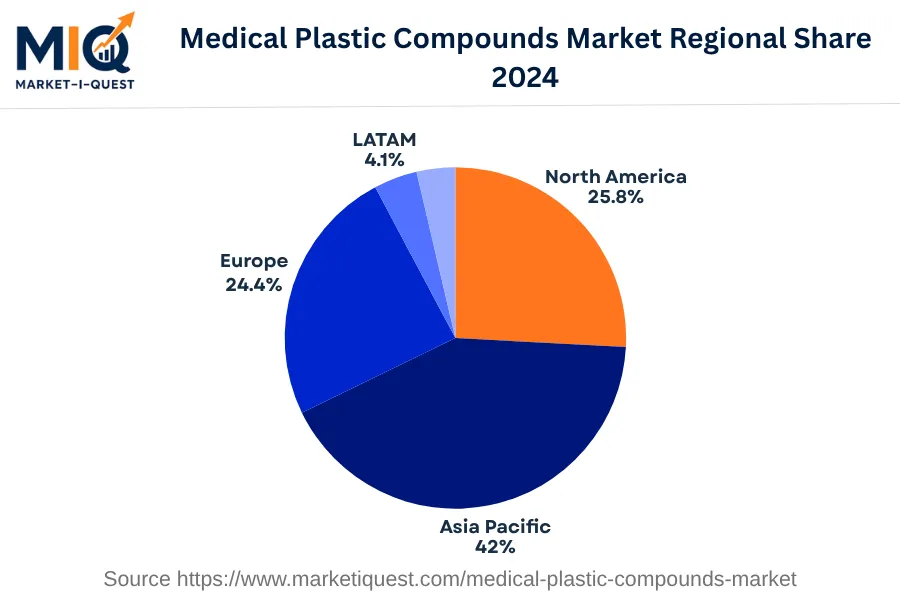
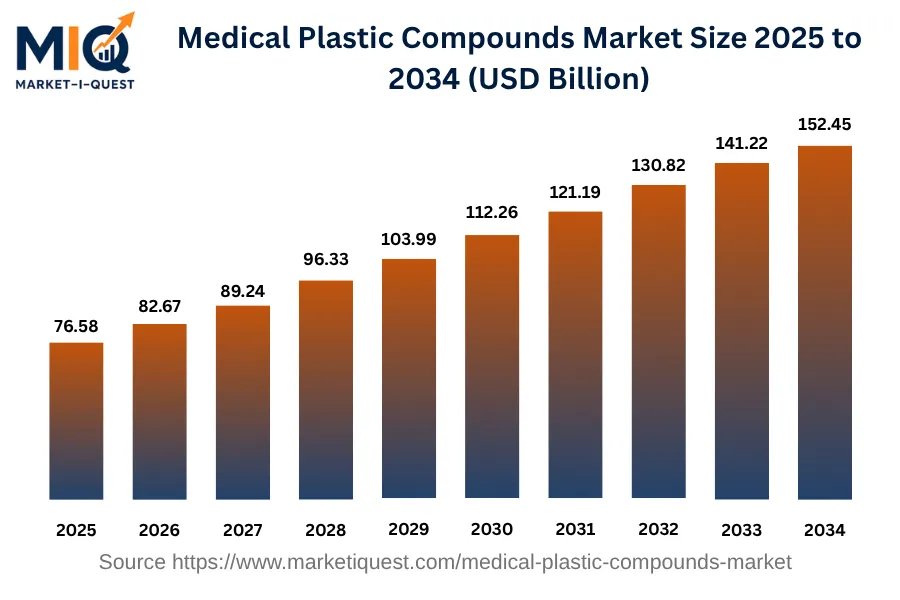
The Medical Plastic Compounds Market had a size of $76.58 billion in 2025. It expanded over the following years, reaching $152.45 billion in 2034, exhibiting a compound annual growth rate (CAGR) of 7.95%. This persistent growth, between 2025 to 2034, reflects consistent demand for these compounds across multiple sectors. The regional distribution of the market in 2024 was as follows: Asia Pacific held the largest share at 41.96%, followed by North America at 25.84%. Europe came in next with 24.42%, while lesser shares were held by LATAM and MEA, at 4.12% and 3.66% respectively.

Key Takeaways

  • By Product - Polyethylene led the Medical Plastic Compounds Market accounting for a significant share in 2025.
  • By Application - Surgical Instruments held the leading position in the Medical Plastic Compounds Market in 2025.
medical-plastic-compounds-market market size

Key Driving Factors

Implementation of Stringent Hygiene Standards in Healthcare Sector

The healthcare sector has been moving more towards compliance with rigorous hygiene standards to minimize risks of infection, within both developing and developed nations. This development roots in regulations enacted by health authorities such as the Centers for Disease Prevention and Control (CDC) and the World Health Organization (WHO). Medical plastics play a crucial role in achieving these standards due to their resistant properties against bacteria and other microbial organisms, as well as cost-efficiency in terms of sterilization. From the making of disposable syringes and intravenous bags to surgical instruments and implants, the demand for medical plastic compounds is driven up significantly.

Emergence of Bio-Compatible Plastic Materials

Bio-compatible plastic materials are getting considerable attention from the medical industry lately, mainly due to their capacity to interact safely with the human body. These pioneering materials offer impressive flexibility, durability, and can be modified to mimic various human tissues, leading to a surge in their application in prosthetics, implants, and other medical devices. This trend traces back to initiatives by organizations like the Food and Drug Administration (FDA) encouraging industries to invest in bio-compatible materials to improve patient outcomes and safety. Consequently, the demand for these plastic compounds in the medical sector is accelerated, promising a positive impact on market growth.

Market Evolution by Timeline

2019-2023
From 2019-2023, major buyers for medical plastic compounds were primarily in North America and Europe, seeking materials for medical devices and sealing applications. Biomaterial-grade polymers like bio-resorbable PHA were trialed, linking the demand surge to integration maturity. However, supply remained challenged by scalability limitations and raw material cost fluctuations. Regulatory landscape, particularly in the US, was dominated by FDA's Center for Devices and Radiological Health requirements. Buyers typically preferred traditional procurement, with less preference for contracts involving risk-sharing or output-based pricing. Blockers appeared in the form of environmental concerns related to plastic waste, initiating reactions including use reduction and alternatives search.
2024
In 2024, the demand increased in Asia, particularly from Chinese and Indian markets. Notable applications remain in medical devices but extension into implants was observed. Vendors reported advancements in production processes to escalate supply, despite recurrent raw material pricing gyrations. 'ISO 10993-1:2018 Biological evaluation of medical devices — Part 1: Evaluation and testing within a risk management process' made significant impact on regulation. Outright purchase remained the dominant commercial model, though risk-sharing contracts saw increments. Risk factors centered around raw material availability, promoting protective measures like strategic inventories and diversified sourcing.
2025-2029
During 2025-2029, Latin America and Africa emerged as new buyer markets. The demand shifted towards newer compounds like PEEK, reflecting promising use in orthopedic and cardiovascular applications. Technology recalibrated towards green solutions like bioplastics for backing sustainability. Demonstrated compliance towards ASTM F2026 standard became a distinct supply facet. Despite inflationary pressures, price stability was sustained through long-term contracts. Risks primarily involved changing environmental regulations, tackled through preemptive compliance measures and increasing green product lineups.
2030-2034
From 2030-2034, demand persisted across all regions, with increased focus on sustainable and biodegradable options. Applications extended to the wearable medical devices segment. Supply got a boost through novel production routes using renewable feedstock. Major regulations involved compliance to evolving RoHS and REACH directives. Commercial models began incorporating performance-linked pricing elements. Risks related to supply chain disruption, particularly from geopolitical conditions, were addressed through supply chain localization and vertical integration attempts.

Future Market Outlook

Future Opportunities

The evolving landscape of the medical plastic compounds market is creating substantial opportunities for stakeholders. With the ongoing push for sustainable healthcare solutions, many companies are now seeking materials that are not only compliant with various regulations but also environmentally friendly. The implementation of the Medical Device Regulation (EU MDR) in 2021 has prompted manufacturers to enhance their product design for minimal environmental impact while maintaining compliance. As a result, demand for recyclable and bio-based medical plastics is on the rise. Furthermore, the World Health Organization's initiatives in 2023, promoting the use of single-use medical devices in resource-limited settings, indicates a potential surge in demand for economically viable plastic solutions that still meet safety standards. Companies such as Tredegar Corporation are already positioning themselves to capitalize on these trends by developing innovative polymer blends suitable for both recyclability and effective sterilization. Additionally, advancements in nanotechnology are being explored to create antimicrobial medical plastics, addressing persistent concerns in infection control. The collaboration between traditional plastic manufacturers and tech startups specializing in advanced materials is expected to foster new product lines and applications. As these industry dynamics evolve, the focus on customization, regulatory compliance, and sustainability is likely to generate a diverse array of new business models and partnerships throughout the global medical plastic compounds market.

Segmentation Analysis

By Product

The market is divided into subsegments including Polyvinyl Chloride (PVC), Polyethylene, Polypropylene, Polystyrene, Polyester, Polycarbonate, Polyurethane, Acrylics and Others, where Polyethylene accounted for the largest revenue share while Polystyrene is expected to grow at the fastest CAGR during the forecast period.

Largest Revenue Share

Polyethylene

Market Share Leader

Polyethylene generated the highest revenue among all segments in 2024 due to its distinctive characteristics and broad scope of applications. Foremost among these characteristics is its exceptional versatility and low cost, making it desirable in several end-use industries, notably packaging, construction, and agriculture. The packaging sector's steady expansion, attributed to population growth and increasing consumer goods demand, fuels polyethylene consumption. In construction, polyethylene's resistant nature to moisture and chemicals makes it ideal for applications like piping. On top of it, growth in infrastructure and the construction industry, especially in developing nations, further propels this subsegment. Polyethylene also benefits from favorable regulations encouraging plastic use in food packaging and medical products. Note, however, that the market's competitiveness could restrain its future growth, as suppliers face pricing pressures and possible disruptions in raw material supply.

Fastest CAGR

Polystyrene

Forecast Period Growth Leader

While Polyethylene leads in terms of revenue, Polystyrene is the fastest-growing subsegment in this industry. The projected high growth rate can be attributed to its unique properties such as lightweight, transparent, and easy to form - making it ideal for a wide array of applications in the packaging, electronics, and construction industries. The key driver for its growth is the increasing adoption in protective packaging for consumer electronics, food service trays, and lightweight, effective insulation in construction. Technological advancements—particularly in recycling techniques and bio-based polystyrene—provide additional growth opportunities. However, certain barriers exist that could hinder the market's expansion. Notably, fluctuating raw material prices and environmental concerns about polystyrene waste could pose near-term risks. Companies will need to negotiate these potential speedbumps to exploit the subsegment's full growth potential.

By Application

In terms of application, the market is subdivided into various sectors including Disposables, Catheters, Surgical Instruments, Medical Bags, Implants, Drug Delivery Systems and Others. In the base year of 2024, Surgical Instruments generated the highest revenue, while Drug Delivery Systems is projected as the fastest-growing subsegment within the forecast period.

Largest Revenue Share

Surgical Instruments

Market Share Leader

The Surgical Instruments subsegment leads the market largely due to the increasing number of surgical procedures worldwide. These procedures require a variety of intricate surgical instruments to successfully execute, driving demand and thus revenue for this subsegment. The advent of technologically advanced instruments further fuels market growth. In addition, the global shift towards minimally invasive surgeries, which require precise and specialized surgical tools, is also contributing to the subsegment's significant revenue. Geographically, regions with advanced healthcare infrastructure such as North America and Europe are crucial contributors to this subsegment's revenue. Regulatory policies focusing on patient safety and reducing the probability of infections during operations bolster the demand for sterilized and single-use surgical instruments. Moreover, high switching costs associated with changing medical equipment and devices provide a stable revenue base for the Surgical Instruments subsegment.

Fastest CAGR

Drug Delivery Systems

Forecast Period Growth Leader

Drug Delivery Systems is anticipated to be the fastest-growing subsegment, driven by multiple factors. The growing prevalence of chronic diseases that require controlled medication distribution is a fundamental growth driver. Technological advancements, particularly in nanotechnology and biodegradable polymers, have catalyzed the development of innovative drug delivery systems. Healthcare policy shifts promoting home healthcare solutions and self-administration of medicine offer significant growth opportunities for this subsegment. Strategic partnerships with healthcare institutes, combined with increased capital expenditure for research and development activities, further accelerate growth. However, stringent regulatory frameworks for product approval present near-term risks and may slow the pace of growth. While adoption barriers for new drug delivery systems exist, mainly concerning safety and efficacy, continuous research and development efforts are underway across the world to overcome them.

Competitive Analysis - Medical Plastic Compounds Market

Key Market Players

Manufacturers / OEMs

Solvay
Belgium
Trinseo
US
Evonik Industries AG
Germany

Key Suppliers & Raw Materials

Dow Chemical Company
US
BASF SE
Germany
ExxonMobil Corporation
US

Distributors, Integrators & Channel Partners

Biesterfeld Plastic GmbH
Germany
Nexeo Plastics
US
Piedmont Plastics, Inc.
US

Porter’s Five Forces Analysis

This is an analysis of the competitive environment within the Medical Plastic Compounds Market.

Supplier Bargaining Power

Medium

Controlled by few key suppliers with specialized production.

Buyer Bargaining Power

Low

Quality and compliance matters outweigh price, limiting negotiation power.

Threat of Substitutes

Low

Limited substitutes available due to stringent medical grade requirements.

Threat of New Entrants

Medium

High investment in R&D and compliance could deter newcomers.

Competitive Rivalry

High

Competition is high with several well-established market players.

Regional Analysis

Geographic market dynamics and growth opportunities across key regions

Global Market Outlook

medical-plastic-compounds-market market regional share

North America

In 2024, the North American market for medical plastic compounds demonstrated significant expansion. The driving factors included escalating demand for home healthcare items, a surge in investment in medical equipment manufacturing, particularly in the U.S. and Canada, and the swift adoption of advanced plastic technologies in the healthcare sector. New regulations favoring the use of medical-grade plastics for hygiene products further reinforced market growth. A noticeable increase in supply and competitive pricing dynamics, particularly from Mexican producers, contributed to an accessible marketplace.

The year saw changing trends with consumers increasingly preferring medical plastics for homecare due to their durability and resistance to contamination. In terms of technology, there was a sharp shift towards the use of bio-based plastic compounds, a trend driven by medical manufacturing companies in North America. The channel dynamics witnessed an uptick in online sales of medical plastic-based products, owing to the growth of e-commerce in healthcare. Mergers and acquisitions featured prominently, and policy enforcement around regulations for hygiene plastic products became stricter. In terms of sectors, healthcare was the primary customer, followed by the retail industry and homecare services. Government purchases of medical plastics also increased, underlining the broad reach of these chemical compounds in North America.

Asia Pacific

In 2024, Asia Pacific's Medical Plastic Compounds Market was primarily driven by heightened healthcare demand, advancements in plastic technologies, and encouraging regulations. Increasing healthcare needs, spurred by population growth and surge in diseases, enhanced the demand for medical plastic compounds in countries like China, India, and Japan. Additionally, sustained investment in research led to the adoption of advanced plastic technologies, fostering a diversified product range with sustainable features. Furthermore, supportive government policies, particularly in India and China, stimulated local production, promoting market dynamism and cost-effective solutions.

The market trends in 2024 were shaped by evolving consumer preferences, innovative product launches, and strategic collaborations. Amidst rising consumer awareness, a shift towards eco-friendly and high-performing medical plastic compounds was observed in key ASEAN markets. Manufacturers, in response, were infusing innovation into operations, introducing products that catered to these emerging patterns, notably in Japan and South Korea. Strategic alliances and partnerships were prominent, accelerating knowledge exchange and broadening product portfolios- a prevalent strategy in Australia. To uphold product standards, governments were stringently enforcing policies, maintaining the consumers' trust, and market integrity. Sectors underpinning the market included healthcare, manufacturing, and pharmaceuticals, where medical plastic compounds were integral to the provision of reliable and cost-efficient solutions.

Europe

In 2024, the Medical Plastic Compounds Market in Europe maintained a notable presence amid evolving healthcare requirements and sustainability initiatives. Drivers of this market included growing demand for lightweight, durable, and sterile plastic compounds within the healthcare sector, particularly in countries like Germany, the UK, and France. Regulatory pressures reinforced the shift towards sustainable and biocompatible plastics, leading to increased investments in innovative material solutions. Moreover, increased adoption by medical device manufacturers highlighted the cost-effectiveness of these compounds. Supply dynamics also played a role as raw material shortages with traditional plastics prompted a shift towards medical-grade compounds.

Key market trends included the surge in telemedicine in the Nordics, leading to the need for plastic compounds in portable medical devices. With the expansion of the digital health sector in countries like Spain and Italy, an increased emphasis was placed on plastic components that offered electronic compatibility. A rise in strategic partnerships between plastic compound manufacturers and medical device OEMs was seen in Central & Eastern Europe as a means of optimizing supply chain efficiencies. Policy enforcement around materials safety, particularly in Benelux, redirected demand towards medical-grade plastics. Customers across the healthcare, retail, and manufacturing sectors were key in driving these trends, emphasizing the role of medical plastic compounds in modernizing European healthcare.

Latin America

In 2024, the Latin American (LATAM) medical plastic compounds market was gaining traction due to a surge in healthcare sector funding, technological uptake, and improved regulatory landscapes. Key drivers shaping the market included increasing demand for improved healthcare services especially in populous countries like Mexico and Brazil, fostering the need for high-quality medical plastic compounds. Regulatory changes, such as Brazil's regulatory standard ANVISA RDC 356/2020, facilitated the adoption of advanced medical plastic compounds resulting in increased investment in the market. Rapid advancement in technology led plastic producers in LATAM to adopt innovative medical-grade plastic materials such as PEEK, which enhanced the supply dynamics. Furthermore, competitive pricing significantly impacted the medical plastic compounds market driving its expansion in Peru and Argentina.

Market trends in 2024 reflected an increasingly sophisticated consumer base opting for quality healthcare products. There was a notable shift towards biocompatible and recyclable medical plastic compounds, underlining the growing influence of sustainability across LATAM's healthcare sector. Channel dynamics also evolved, with a trend towards online platforms for procurement observed in countries such as Chile and Colombia. Market consolidation through partnerships and mergers was another significant trend, primarily in Brazil and Mexico. Meanwhile, stricter enforcement of regulatory policies, including Colombia's Resolution 686 of 2020, solidified market standards, driving customer confidence in the medical plastic compounds market.

Middle East & Africa

In 2024, the Medical Plastic Compounds Market in Middle East and Africa was conditioned by several key factors. Demand from healthcare industries, driven by increasing investments in facilities in Saudi Arabia, UAE, and Qatar contributed to market growth. Regulatory standards fuelled a shift towards higher quality medical plastic compounds, leading Nigeria and Israel to become noteworthy contributors. Advances in technology, including the adoption of 3D printing, had boosted the supply of medical plastic compounds in Egypt and South Africa.

Notably, buyer behavior exhibited an inclination towards eco-friendly medical plastics, in line with Kenya's progressive environmental policies. Product innovations aimed at enhancing patient experiences, such as the use of soft touch plastics in medical devices, remained a prevailing trend across the region. In terms of distribution, the introduction of digital platforms enabled accelerated trade in Saudi Arabia and UAE. Strategic partnerships, highlighted by the collaboration between RAK Medical & Health Sciences University in UAE and major plastic compound suppliers, fostered market development. Across the board, enforcement of safety and quality control standards heightened, especially within the healthcare sector in pertaining countries, ensuring consistency in the quality of medical plastic compounds used.

Recent Industry Developments

Latest market innovations, product launches, and strategic initiatives

March 2026

SABIC debuted a new family of UL746G-certified polycarbonate copolymers and biocompatible SILTEM HU resins at MD&M West 2026, formulated without fluorine or PFAS chemicals to potentially replace fluoropolymers in medical tubing.

February 2026

Lubrizol launched Tolerathane TPU, a new medical-grade thermoplastic polyurethane engineered for implantable medical devices including neuromodulation and cardiac leads, structural heart implants, and percutaneous catheters.

Frequently Asked Questions