Local Anesthesia Drugs Market Snapshot

Key Players

  • Aspen Pharmacare (South Africa)
  • Pfizer Inc. (US)
  • AstraZeneca (UK)
  • Novartis AG (Switzerland)
  • Abbott Laboratories (US)
  • Baxter International (US)
  • Fresenius SE & Co. KGaA (Germany)
  • Boehringer Ingelheim (Germany)
  • Sanofi (France)

Market Size

Base Year 2024
$4.76 Bn
CAGR
5.82%
Forecast 2034
$8.38 Bn

Market Segments

By Drug
  • Bupivacaine
  • Ropivacaine
  • Lidocaine
  • Chloroprocaine
  • Prilocaine
  • Benzocaine
  • Others
By Application
  • Injectable
  • Surface Anesthetic

Market Dynamics

Drivers
  • Increasing surgical procedures
  • Advancements in anesthesia drugs
Restraints
  • Regulatory compliance issues
  • Potential side effects
Opportunities
  • Untapped emerging markets
  • Technological advancements in drug delivery

Market Size

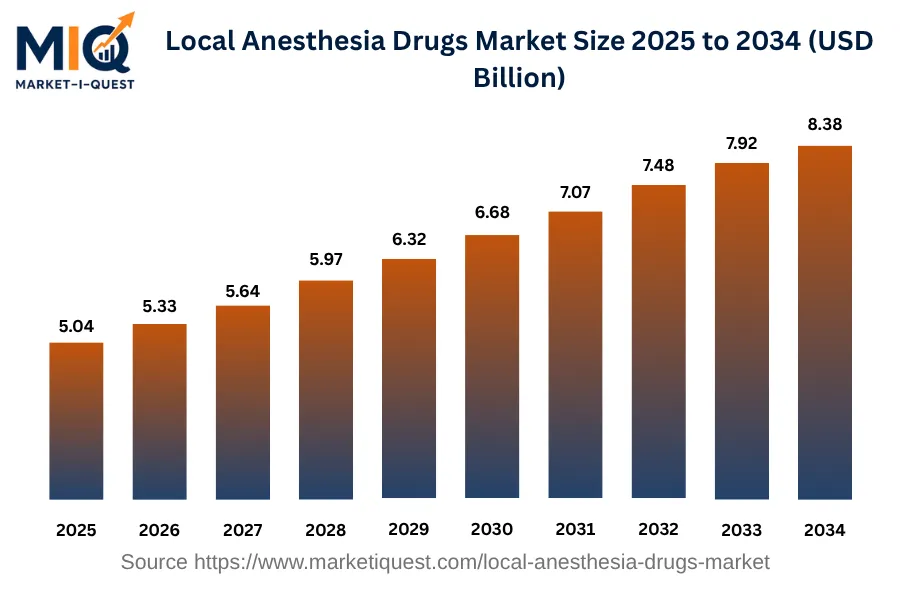
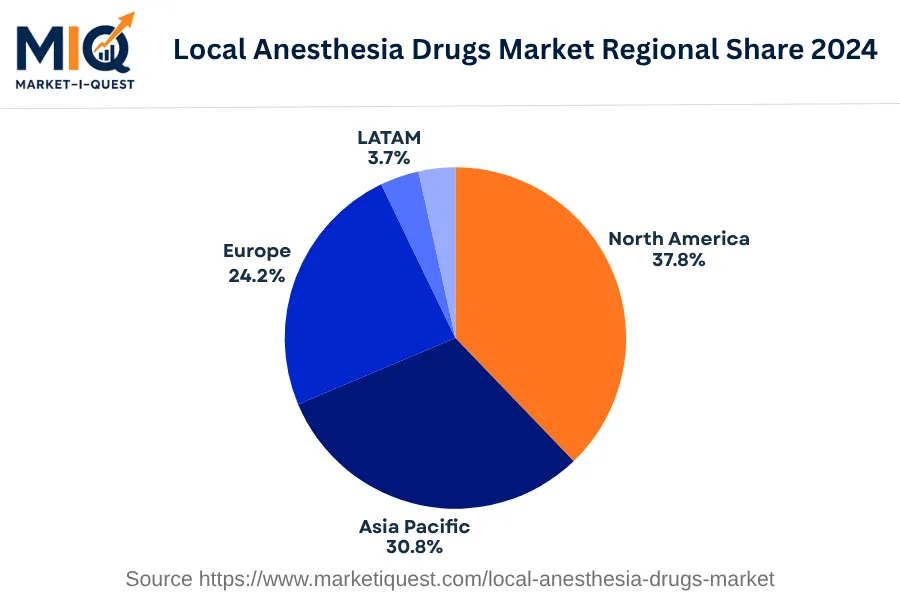
The Local Anesthesia Drugs Market is projected to increase from a value of $5.04 Billion in 2025 to $8.38 Billion in 2034. The market size is expected to grow at a CAGR of 5.82% over the forecast period. This growth trajectory indicates a steady rise in market value. The factors contributing to the growth in the Local Anesthesia Drugs Market majorly include a growing preference for minimally invasive surgeries, increased research and development, and a surge in the number of surgeries due to increased prevalence of chronic diseases. In 2024, regional market share data was as follows - North America held 37.8%, Asia-Pacific had 30.8%, Europe accounted for 24.2%, Latin America reported 3.7%, and the Middle East and Africa represented 3.5% of the total market.

Key Takeaways

  • By Drug - Lidocaine led the market holding a significant share in 2024.
  • By Application - Injectable drugs led the market with the most significant share in 2024.
local-anesthesia-drugs-market market size

Key Driving Factors

Increase in Minimally Invasive Surgical Procedures

A clear driving factor for the Local Anesthesia Drugs Market is the expanding prevalence of minimally invasive surgical procedures across the globe. These surgeries, including procedures like endoscopies or laparoscopies, often require the use of local anesthetics, thus increasing the demand for these drugs. As more individuals opt for these less invasive options due to reduced hospital stays, lower risks of infection, quicker recovery times, and smaller scars, healthcare providers are required to stock more local anesthesia drugs, resulting in market expansion. Efforts by healthcare providers to keep up with this demand is a significant contributor to the growth of the local anesthesia drug market.
Implementation of Favorable Reimbursement Policies

Another critical factor driving the local anesthesia drugs market is the introduction and implementation of favorable reimbursement policies worldwide. Regulatory authorities in various countries provide reimbursement for anesthesia drugs, which encourages more healthcare providers to adopt them. For instance, in the United States, Medicare and Medicaid cover a significant portion of anesthesia costs, which reduces patients' out-of-pocket expenses. This facilitates easier access for patients and makes the practice more financially sustainable for providers, thereby driving an upsurge in the use of local anesthesia drugs. This progression is continually propelling the market advancement of local anesthesia drugs.

Market Evolution by Timeline

2019-2023
During this period, main buyers of local anesthesia drugs were large hospitals and surgical centres across North America and Europe, alongside a rising uptake in Asia-Pacific due to increasing surgical procedures. Major suppliers included global pharmaceuticals like Pfizer and Novartis with offerings of Lidocaine and Mepivacaine, amongst others. Challenges in this period included adverse effects and allergies to certain drugs, leading to the withdrawal of some from the market. Under the US FDA's Drug Safety Oversight Board, there were stricter regulations affecting premiums and ADA Standards for Accreditation of Dental Education Programs. The pricing was mostly driven by healthcare agreements and insurance coverage. Partnerships revolved around R&D collaboration and patent sharing.
2024
In 2024, oral care clinics emerged as significant buyers enhancing the demand in North America and Europe, due to increased dental procedures and care. Major supply remained through pharmaceuticals, but the entry of generic drugs challenged the market dominance. There was a notable improvement in drug tolerance and reduction of side effects due to targeted R&D. Cohort regulations under EU's Medical Device Regulation, replacing the previous legislation, impacted the adoption. Cost containment strategies started shaping the pricing dynamics. Contracts shifted towards long-term deals, ensuring a steady supply. The risk of patent cliffs was apparent with imminent expiry of many patents.
2025-2029
This period saw a demand surge in emerging markets like Africa due to the expansion of healthcare infrastructure. Increased use of local anesthesia in childbirth and chronic disease treatments was seen. The supply was augmented with the introduction of new entrants and generic drugs. However, concerns arose about drug shortages and quality of generic drugs. FDA's 'Drug Shortage Prevention Strategy' introduced more stringent quality requirements. The commercial model now included more competitive pricing due to generic penetration. Increased collaborations between governments and suppliers around supply agreements became more common. Risks related to drug shortages and the repercussions of substandard drugs caused shifts in production and purchasing policies.
2030-2034
Demand in this period was driven by increased need for pain management in minor surgeries and ageing population across regions. Supply was steady but punctuated with periodic drug shortages. Advances in drug design reduced adverse effects significantly. Regulatory environment evolved towards patient safety and stricter manufacturing controls enforced by FDA and EMA. Pricing saw predicaments due to shortages leading to price hikes and bidding wars. Contracts included worst-case contingency plans for drug shortages and matured risk sharing mechanisms between buyers and sellers. The risks of reliance on single source suppliers were apparent, prompting diversification of procurement among buyers.

Future Market Outlook

Future Opportunities

Opportunities in the local anesthesia drugs market will likely expand as healthcare demands evolve, especially considering the increasing emphasis on outpatient procedures. The 2021 guidelines from the American Society of Anesthesiologists highlight regional anesthesia's role in managing pain and minimizing opioid use, reflecting a broader trend in pain management strategies. In regions like North America, a push towards personalized medicine is growing, which may lead to innovations in local anesthesia formulations tailored to individual patient needs, thereby improving outcomes. The establishment of multidisciplinary pain management clinics is another opportunity, as seen in Australia where collaborations among anesthesiologists, pain specialists, and physical therapists are enhancing service delivery. Moreover, increased funding for research in local anesthetic agents, as evidenced by the National Institutes of Health’s initiatives in 2022, could pave the way for novel compounds or techniques that can address current gaps in pain management. Further collaborative efforts between academia and industry, such as the partnership between the University of California, San Francisco and pharmaceutical firms, could lead to breakthroughs in drug delivery systems, making local anesthesia safer and more effective. The global shift towards minimally invasive surgical techniques is also expected to create a higher demand for reliable and effective local anesthetics, thus broadening the market landscape for existing and new players alike.

Segmentation Analysis

By Drug

The market is divided into subsegments including Bupivacaine, Ropivacaine, Lidocaine, Chloroprocaine, Prilocaine, Benzocaine, and others. Lidocaine accounted for the largest revenue share while Ropivacaine is expected to grow at the fastest CAGR during the forecast period.

Largest Revenue Share

Lidocaine

Market Share Leader

Lidocaine, a versatile anesthetic drug with multiple administration modes, holds the lion's share of the market revenue in our base year 2024. The drug's excellent safety profile, combined with its effectiveness in managing acute and chronic pain, has significantly boosted its demand across medical settings. Lidocaine's ubiquity as a go-to local anesthetic in minimally invasive procedures contributes substantially to its market dominance. Additionally, it is a preferred choice among healthcare providers for postoperative pain management, a segment that continues to grow parallel to the rise in surgical procedures globally. Lidocaine's different formulations, including injectables, topical preparations, and transdermal patches, cater to diverse use cases: less invasive for routine pain management and more potent formulations for the complex clinical scenarios. Having established its reputation over time, Lidocaine benefits from its incumbency, making potential switching to other anesthetics a challenge for healthcare systems accustomed to its reliable outcomes. To conclude, Lidocaine's strong market performance can be attributed to the drug's proven efficacy, adaptability, extensive use, and the high barriers to switching.

Fastest CAGR

Ropivacaine

Forecast Period Growth Leader

The Ropivacaine subsegment is projected to be the fastest growing in the market due to several factors. As a newer product characterized by its lower cardiotoxicity compared to other local anesthetics, Ropivacaine is gaining prominence in anesthesiology. This advantage is particularly important for patients with cardiovascular comorbidities, a population that is expanding parallel to the global aging and obesity trends. As a result, Ropivacaine is finding a niche in the increasing geriatric and high-risk surgical patient populations. Importantly, Ropivacaine's relatively gentle sensory and motor blockage brings an added value for ambulatory procedures, a segment foreseen to grow at a brisk pace amid the shift toward outpatient surgery. However, certain barriers, like the higher cost relative to older drugs like Lidocaine and lower availability in some regions, may slow down adoption. Nevertheless, strategies like forming strategic partnerships for production and distribution, and leveraging policy changes favoring safer anesthetic options, can catalyze Ropivacaine's growth in the near term.

By Application

The market, by application, is divided into subsegments including injectable and surface anesthetic. In 2024, the injectable subsegment accounted for the largest revenue share, while surface anesthetic is expected to grow at the fastest CAGR during the forecast period.

Largest Revenue Share

Injectable

Market Share Leader

Injectable anesthetics held the largest market share in 2024. Industry trends indicate that this is driven by several factors. The surge in the demand for injectable anesthetics can be attributed to the rapidly growing number of surgeries worldwide, which invariably require anesthetics. This is further buoyed by the increasing prevalence of chronic diseases. Injectable anesthetics are usually characterized by quick onset and high efficacy, traits that contribute significantly to their wide acceptance and usage. Furthermore, advances in medical technology that facilitate more precise control of the effect and duration of the injectable anesthetic have bolstered their attractiveness. The formulation of injectable anesthetics also often allows for fewer side effects. These significant advantages of injectable anesthetics over other forms of anesthetics have sustained their demand, cementing their position as the leading revenue-generating subsegment.

Fastest CAGR

Surface Anesthetic

Forecast Period Growth Leader

Despite injectable anesthetics dominating the market in terms of revenue, the surface anesthetic subsegment is projected to witness the fastest growth. Major contributing factors to this rapid growth include the increasing demand for non-invasive surgical procedures and the rising trend towards self-medication. Surface anesthetics offer patients a non-invasive option for minor procedures, broadening their appeal. Moreover, growing health awareness, self-medication habits, and easier availability of over-the-counter surface anesthetics are playing a vital role in driving growth in this subsegment. On the flipside, potential risks include regulatory restrictions and potential side effects, which could slow down its CAGR. While these challenges exist, partnerships and investments in research and development towards safer and more efficient surface anesthetics signal a positive outlook for the subsegment's growth.

Competitive Analysis

Key Market Players

Manufacturers / OEMs

Pfizer
US
Novartis
Switzerland
Baxter International
US

Key Suppliers & Raw Materials

Siegfried Holdings
Switzerland
DISHMAN PHARMACEUTICALS & CHEMICALS
India
Johnson Matthey
UK

Distributors, Integrators & Channel Partners

Cardinal Health
US
McKesson Corporation
US
AmerisourceBergen Corporation
US

Porter’s Five Forces Analysis

This analysis examines the competitive dynamics within the Local Anesthesia Drugs Market.

Supplier Bargaining Power

Medium

Suppliers have moderate power due to the specialized nature of anesthesia drugs production.

Buyer Bargaining Power

High

Healthcare providers and patients have high power due to numerous suppliers and price sensitivity.

Threat of Substitutes

Low

Low threat given the critical nature and specific use of local anesthesia drugs.

Threat of New Entrants

Low

Entry barriers are high due to stringent regulatory approvals and high research and development costs.

Competitive Rivalry

High

Competition is intense among existing drug manufacturers with similar product offerings.

Regional Analysis

Geographic market dynamics and growth opportunities across key regions

Global Market Outlook

local-anesthesia-drugs-market market regional share

North America

In 2024, the North American local anesthesia drugs market witnessed substantial dynamism driven by several factors. Firstly, increasing demand stimulated by surgical procedures requiring localized numbing, predominantly in dental, ophthalmic, and minor skin surgeries, acted as a significant growth driver. Secondly, investment intensified in new product development, enabling better drug efficiency and minimizing side effects. Additionally, strict FDA regulations concerning these drugs' safety and efficacy standards impacted market movements considerably, ensuring manufacturers comply, contributing to enhanced trust among consumers.

On the trends front, buyer behavior shifted towards anesthesia drugs with fewer side effects and quicker recovery times, leading to considerable advancements in the creation and distribution of these drugs. A key trend was the adoption of technology, specifically in the healthcare sector, to improve drug application techniques and patient monitoring during local anesthesia. Concurrently, partnerships and mergers & acquisitions became more frequent, with pharmaceutical heavyweights in the U.S., such as Pfizer and Johnson & Johnson, intending to expand their local anesthesia portfolios. Finally, enforcement of policies formulated by the American Society of Anesthesiologists and similar bodies in Canada and Mexico served to standardize anesthesia practices further, creating a reliable market climate. These drivers and trends collectively played a pivotal role in shaping the local anesthesia drugs market in North America in 2024.

Asia Pacific

In 2024, the Local Anesthesia Drugs Market in the Asia Pacific was greatly impacted by increasing surgical procedures, government policies, and advanced technologies. Rising incidences of chronic diseases, aging populations in Japan, and extensive cosmetic surgeries in South Korea triggered a higher demand for local anesthesia drugs. Chinese and Indian governments' investments in healthcare infrastructure and policies to promote generic drugs magnified the market's growth. Advancements in drug delivery systems and the adoption of nanotechnology in Australia further fueled the supply dynamics. Buyer behaviors indicated a preference for minimally invasive surgeries, augmenting the need for local anesthesia. The shift towards bio-based anesthetic drugs was a prominent trend in ASEAN countries, recognizing environmental sustainability. Regulatory scrutiny tightened in the Indian market following incidents of spurious drugs affecting product quality. Japanese pharmas increasingly partnered with international companies to bolster drug manufacturing capacities. Digital platforms enhanced distribution channels across the region, particularly China.

Local anesthesia drugs found wide applications in dental procedures, cosmetic surgeries, and chronic pain management. The demand was particularly high in healthcare sectors of India, China, and Japan due to the sheer population size and evolving healthcare infrastructure. Meanwhile, Australia's advanced clinical research capabilities focused on developing more efficient and safer local anesthetics. Governments across the region played pivotal roles in setting standards and enforcing policies to ensure drug safety and affordability.

Europe

In 2024, the local anesthesia drugs market in Europe showed substantial growth, reflecting a rise in surgeries requiring local anesthetics. Primary drivers included well-regulated healthcare systems, and robust investment in medical and pharmaceutical research across key countries such as Germany, the United Kingdom, France, and Italy. This investment facilitated advancements in anesthesia technology, and improvement in supply chain dynamics, thereby enabling cost-effective procurement of drugs. A trend observed was the shift in buyer preference towards less invasive anesthesia drugs, with minimal side effects. The growing channel dynamics evidenced a surge in online purchasing of medical supplies, including anesthesia drugs, particularly in the Nordics and the Benelux region. In the same year, a spurt in partnerships and mergers was also noticed, reflecting market consolidation and stronger intra-region trade ties.

Key sectors utilizing local anesthesia drugs were healthcare and retail pharmacies, with the former involving hospitals and clinics. The active policy enforcement by European governments played a crucial role in the local anesthesia drugs market, with a focus on quality checks and stringent approval processes to ensure patient safety. Central & Eastern Europe, although a smaller market, showed promise with rising hospital infrastructure and healthcare spending.

Latin America

The Local Anesthesia Drugs Market in Latin America (LATAM) experienced dynamic changes in 2024. Key drivers include increased awareness and accessibility of healthcare facilities, boosted investment in healthcare infrastructure in countries like Brazil and Mexico, and adoption of advanced medical technologies in Argentina and Chile. Regulatory approvals for new local anesthesia drugs spurred market growth, with Colombia introducing stringent standards to ensure drug efficacy and safety. The pricing dynamics shifted as Peru initiated policies aimed at making healthcare services more affordable. Major trends include a shift towards minimally invasive surgeries requiring local anesthetics in healthcare institutions, altering buyer behavior significantly.

In terms of product development, companies made notable strides in creating fast-acting local anesthetics, benefiting medical procedures in Brazilian hospitals, clinics, and private practices. Channel dynamics evolved, with an increase in online sales of medical products, bolstered by partnerships; for instance, between local drug manufacturers and international pharmaceutical giants. Meanwhile, policy enforcement intensified, with governments in Mexico and Chile implementing robust policies to regulate local anesthesia drug quality. Consequently, the LATAM market experienced higher demand in healthcare settings, particularly ministries of health, specialty clinics, and private hospitals. The manufacturing sector also leveraged local anesthetics for various industrial applications, marking another noteworthy trend in 2024.

Middle East & Africa

In 2024, the local anesthesia drugs market in the Middle East and Africa witnessed a significant growth. Owing to the rising preference for minimally invasive surgeries in countries like Saudi Arabia, Qatar, and Israel, the demand for local anesthetics increased. In addition, enhanced healthcare infrastructure fueled by investment from oil-rich economies such as UAE and Nigeria also bolstered the market. Trends indicated a shift towards non-opioid local anesthetics in Egypt and South Africa, attributed to government policies curbing opioid addiction. Moreover, direct supply agreements between manufacturers and healthcare establishments were increasingly common in Kenya, eliminating middlemen and reducing costs. We note flourishing partnerships in research and development, with Israel leading in the adoption of novel, safer anesthesia drugs.

Across sectors, the healthcare industry remained the predominant consumer of these drugs. However, usage was on the rise in veterinary care, especially in countries such as Nigeria and Kenya with a substantial livestock industry. Consumers mainly constituted large hospital chains and specialty clinics. The year 2024 also witnessed a slight surge in demand from the cosmetic industry in middle Eastern countries such as the UAE and Saudi Arabia, due to the increasing popularity of cosmetic surgeries. So in brief, 2024 was a year of substantial evolution for the local anesthesia drugs market in the Middle East and Africa.

Recent Industry Developments

Latest market innovations, product launches, and strategic initiatives

May 2026

Cutia Therapeutics (02487.HK) received NMPA approval in China for CU-30101, a self-developed topical lidocaine and tetracaine cream for superficial anesthesia. The product combines lidocaine (fast-acting) and tetracaine (long-acting) with good safety, based on positive Phase III trial results.

July 2025

The FDA cleared QuickSleeper 5 (K243427), a reusable, computer-controlled injection system for dental local anesthesia, consisting of a handheld syringe, electronic control box, and wireless foot pedal. The system is indicated for administration of local anesthesia for dental procedures in adult and pediatric patients (4 years and older).

Frequently Asked Questions