
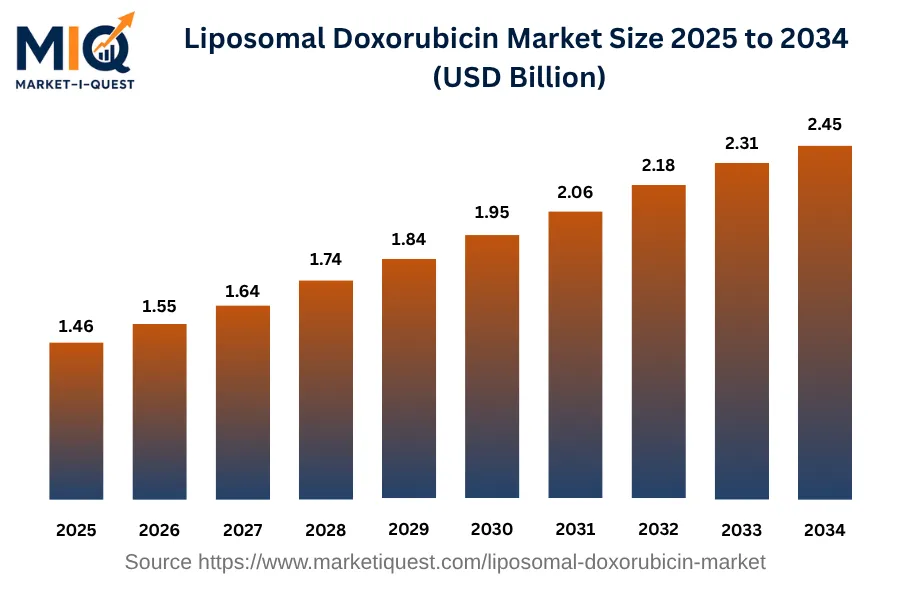
Liposomal Doxorubicin Market Snapshot

Key Players

  • Johnson & Johnson (US)
  • Pfizer Inc. (US)
  • Sun Pharmaceutical Industries Ltd. (India)
  • Cipla Ltd. (India)
  • Dr. Reddy's Laboratories Ltd. (India)
  • Teva Pharmaceutical Industries Ltd. (Israel)
  • Jiangsu Hengrui Medicine Co. Ltd. (China)
  • Hisun Pharmaceutical Co. Ltd. (China)
  • Baxter International Inc. (US)

Market Size

Base Year 2024
$1.38 Bn
CAGR
5.91%
Forecast 2034
$2.45 Bn

Market Segments

By Formulation Type
Liposomal Formulation, Conventional Doxorubicin, Nanoparticle-Encapsulated Doxorubicin
By Route of Administration
Intravenous, Intraperitoneal, Intramuscular
By Application
Breast Cancer, Ovarian Cancer, AIDS-related Kaposi Sarcoma, Lung Cancer
By End Use
Hospitals, Cancer Treatment Centers, Research Institutions

Market Dynamics

Drivers
  • Increasing cancer prevalence
  • Advanced drug delivery systems
Restraints
  • High treatment costs
  • Adverse side effects
Opportunities
  • Rising Cancer Incidence Rates
  • Increasing Drug Delivery Innovations

Market Size

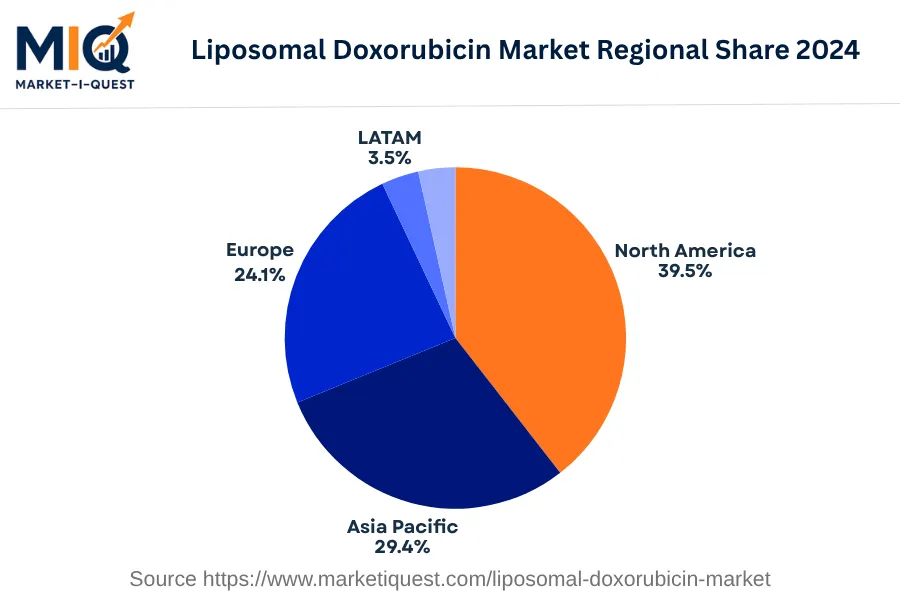
The Liposomal Doxorubicin Market is estimated to have a value of $810.20 million in 2024 and this value is projected to increase to $872.50 million in 2025. Over a ten-year period, by 2034, the market size is expected to grow significantly to reach a value of $2,108.40 million. This corresponds to a Compound Annual Growth Rate (CAGR) of 8.9% from 2024 to 2034. The progression along this growth path is characterized by steady increases in value over the years. In 2024, the regional share mix of the Liposomal Doxorubicin Market shows that North America holds 40.2%, Asia Pacific 28.9%, Europe 20.9%, Latin America 6.0%, and Middle East & Africa 4.0%. The considerable size of the North American region in Liposomal Doxorubicin Market is noteworthy.

Key Takeaways

  • By Formulation Type - Conventional Doxorubicin held a significant market share in base year.
  • By Route of Administration - Intravenous was predominant in base year.
  • By Application - Breast Cancer accounted for a large chunk of the Liposomal Doxorubicin Market share in base year.
  • By End Use - Hospitals led the market accounting for a substantial fraction of the market in base year.
liposomal-doxorubicin-market market size

Key Driving Factors

Increasing prevalence of cancer types treatable by Liposomal Doxorubicin

One of the pivotal elements influencing the Liposomal Doxorubicin market is the increasing incidence of specific cancer types that can be effectively treated using this drug. Specifically, ovarian cancer, multiple myeloma, and Kaposi's sarcoma have shown promising response rates to Liposomal Doxorubicin. This is backed up by its approval by health agencies such as the United States Food and Drug Administration in treating these conditions. The drug's specific mechanism of action and ability to selectively target cancer cells have led to a wider recognition of its therapeutic potential. Therefore, as the number of patients diagnosed with these cancers grows, the demand for Liposomal Doxorubicin correspondingly increases, creating a favorable environment for market growth.
Emergence of Nanomedicine and its Adoption for Cancer Treatment

The second influential driver is the increasing adoption of nanomedicine for cancer treatment. Liposomal Doxorubicin is a key example of a successful nanomedicine, whereby the drug is encapsulated in minuscule liposomes. These allow for greater drug bioavailability and improved targeted drug delivery to the tumor cells, while minimizing the severe side effects associated with traditional chemotherapies. The unique drug delivery system offered by nanomedicine is drawing significant interest from the medical community due to its potential to enhance patient quality of life while maintaining effective cancer control. As the industry continues to realize the value and potential of this approach, more investigations into liposomal formulations like Liposomal Doxorubicin are being carried out, propelling the market forward.

Market Evolution by Timeline

2019-2023
In this period, the demand for Liposomal Doxorubicin, a chemotherapy drug, saw growth because of an increase in cancer cases globally, particularly in North America and Europe. Sale channels saw expansion due to online pharmacy proliferation and government schemes promoting cancer care accessibility. On the supply side, manufacturers improved production capacities, although supply-chain disruptions linked to global lockdowns caused by the COVID-19 pandemic posed challenges. A noteworthy aspect of this era was the introduction of regulatory policies focusing on drug approval, like Europe's EMA granting a positive opinion for Lipodox. The commercial model observed price drops due to bulk buying particularly by government bodies. A key risk was medicine depletion due to supply-chain disruptions, counteracted by local manufacturing encouragement.
2024
This year, pharmaceutical firms piloted better Liposomal Doxorubicin versions to counter drug resistance problems, marking a significant stride in supply innovation. The Asian market, specifically India and China, became more prominent in terms of demand, largely because of increasing cancer rates and affordable generics. Another discernible facet of this year was a move towards stringent regulatory approach, evident in higher safety standards and efficacy rules around pharmaceutical goods. This change reflected in the commercial models as companies spent more on regulatory compliance, somewhat impacting product pricing. The risk of counterfeit drugs was increasingly evident, leading to stricter import regulations.
2025-2029
During this half-decade, an observable demand shift occurred from developed nations towards emerging economies like Brazil and South Africa, owing to escalating cancer patient numbers and growing government healthcare investment. An integration of AI in drug manufacturing resulted in quality improvements and time savings. Regulatory trends encompassed a push towards comprehensive clinical trials before receiving market approval, thereby increasing product dependability. The commercial model introduce novel contract types that combined payment models based on outcomes and drug efficiency, mitigating the risk of adverse drug reactions and financial burdens for patients. There was an increased risk of failing clinical trials, resulting in companies inclining towards collaborative ventures to share trial costs.
2030-2034
In these years, market demand witnessed growth in less developed countries due to urbanization and increase in cancer awareness programs. Pharmaceutical producers faced capacity constraints due to the high cost of advanced manufacturing technologies. Stringent regulations like enhanced post-market surveillance were enacted to promptly track adverse drug effects. The commercial landscape was altered by a shift towards value-based pricing models to reflect actual patient outcomes. One prominent risk during this period was medication misuse due to self-medication trends, combated by reinforced prescription regulations. The rise of biopharmaceuticals throws uncertainty into Liposomal Doxorubicin's future dominance in the chemotherapy space.

Future Market Outlook

Future Opportunities

As the landscape for liposomal doxorubicin continues to evolve, several future opportunities are becoming apparent. The increasing demand for targeted cancer therapies is driving research and development in advanced delivery systems that enhance the efficacy of liposomal doxorubicin. In 2024, the regulatory environment is expected to support expedited approvals for innovative liposomal formulations designed for specific cancer types, particularly in regions such as North America and Europe. Furthermore, collaborations between biotech firms and pharmaceutical companies are on the rise, aiming to leverage cutting-edge technologies to improve liposomal drug delivery capabilities. For instance, partnerships announced in 2023, such as between BioNTech and Roche, suggest that the integration of mRNA technology with liposomal doxorubicin could lead to breakthroughs in personalized medicine. Additionally, the growing emphasis on combination therapies is prompting research into synergistic effects with other anticancer agents, which could further enhance treatment outcomes. There is also a noticeable shift toward patient-centric approaches, with efforts to develop liposomal formulations that address specific patient populations, such as those with chemotherapy-resistant cancers. The success seen in recent clinical trials, particularly in 2023, indicates a strong potential for expanded indications of liposomal doxorubicin. As a result, market players are positioning themselves for future developments that align with emerging trends in targeted therapies, patient-specific treatments, and regulatory advancements in biopharmaceutical innovation.

Segmentation Analysis

By Formulation Type

The market by formulation type is divided into subsegments including Liposomal Formulation, Conventional Doxorubicin, and Nanoparticle-Encapsulated Doxorubicin. Among these, Conventional Doxorubicin accounted for the largest revenue share while Nanoparticle-Encapsulated Doxorubicin is expected to grow at the fastest CAGR during the forecast period.

Largest Revenue Share

Conventional Doxorubicin

Market Share Leader

Conventional Doxorubicin accounts for the largest market revenue due to its established role in the treatment of various types of cancers, including breast, bladder, lung, and ovarian. The subsegment owes this to several key factors. Firstly, the high incidences of these cancers globally ensure a sustained demand for this traditional form of formulation. Secondly, a vast body of clinical documentation attests to the effectiveness and established safety profile of this drug, which boosts its acceptability among physicians and patients alike. Key markets include mature economies with high cancer incidence and robust healthcare systems, such as North America and Europe. Regulatory norms in these geographies also favor conventional, proven therapies over newer, expensive forms. Purchasing criteria typically revolve around proven efficacy, pricing, and reimbursement policies, where conventional Doxorubicin scores well, reinforcing its market position. While switching costs to newer formulations exist, the risk-associated with trial newer treatments deter many, securing Doxorubicin's strong foothold in the market.

Fastest CAGR

Nanoparticle-Encapsulated Doxorubicin

Forecast Period Growth Leader

Nanoparticle-Encapsulated Doxorubicin is anticipated to grow at the fastest rate during the forecast period. Several growth drivers contribute to this fast-paced adoption. The primary catalyst is technological advances in drug delivery systems that allow precise and controlled drug release, minimizing systemic toxicity. This attribute addresses one of the significant side effects associated with conventional doxorubicin - cardiotoxicity, thus making it an appealing therapeutic option for clinicians and patients. Policy incentives for research and development in nanotechnology and capex infusion by pharmaceutical companies will further propel its demand. Inter-disciplinary partnerships within the industry hold the potential to lead to innovation and cost-effective production methods. However, adoption barriers such as regulatory challenges, high prices of Nano-drug delivery systems, and the need for multi-faceted clinical trials can pose near-term risks to this growth trajectory. Despite these hurdles, the projected high therapeutic potential of Nanoparticle-Encapsulated Doxorubicin signals a positive growth outlook.

By Route of Administration

The market is divided into subsegments including Intravenous, Intraperitoneal, and Intramuscular. Based on 2024 data, the Intravenous subsegment accounted for the largest revenue share, while the Intraperitoneal subsegment is projected to achieve the fastest compound annual growth rate (CAGR) during the forecast period.

Largest Revenue Share

Intravenous

Market Share Leader

The Intravenous subsegment dominates the market revenue, built on several key factors. Its primary strength lies in the immediate response it offers compared to other routes of administration. As Intravenous injections bypass the process of absorption, drugs reach the bloodstream directly, ensuring rapid effects. This is crucial in case of emergencies, where immediate drug action is necessary to stabilize the patient's condition. Moreover, Intravenous therapy is also convenient for administering large volumes of fluid or continuous medication which is not possible via other routes. Geographically, developed regions with advanced healthcare infrastructures contribute significantly to this segment, making widespread use of Intravenous therapy in inpatient and outpatient settings. Strict regulation ensures proper training for healthcare professionals, ensuring patient safety and increased adoption. These drivers consolidate Intravenous routes as a preferred method of administration, thus commanding the largest revenue share.

Fastest CAGR

Intraperitoneal

Forecast Period Growth Leader

The Intraperitoneal subsegment, despite its current smaller market share, is predicted to exhibit the fastest growth over the forecast period. Intraperitoneal administration has several advantages that catalyze its growth. This mode facilitates the drug delivery directly into the peritoneal cavity, significantly enhancing the drug effectiveness particularly for treatments aimed at abdominal conditions. Novel Intraperitoneal chemotherapeutic techniques such as HIPEC have proved particularly effective in certain cancers, triggering interest and research in this field. Additionally, advancements in technology and increase in capital expenditures have led to improvements in managing the complications associated with this route, lowering the adoption barriers. However, key risks include the strict regulatory procedures and technical complexities in intraperitoneal administration, which could potentially slow the adoption rate. Nonetheless, with the continued focus on intra-abdominal treatments, the Intraperitoneal subsegment is expected to grow at an accelerated rate.

By Application

The market is divided into subsegments including Breast Cancer, Ovarian Cancer, AIDS-related Kaposi Sarcoma, and Lung Cancer. In 2024, Breast Cancer accounted for the largest revenue share, while AIDS-related Kaposi Sarcoma is expected to grow at the fastest CAGR during the forecast period.

Largest Revenue Share

Breast Cancer

Market Share Leader

The subsegment for Breast Cancer in the application market is leading, driven by high patient volumes, progressive therapies, and extensive research into the disease. It is estimated to have the largest market share due to its high prevalence compared to the other segments. A high incidence rate, heightened awareness, coupled with advancements in detection techniques, are catalyzing steady revenue growth in this subsegment. These factors, along with the premium pricing of patented treatments and the introduction of targeted therapies, contribute significantly to revenues. Geographically, developed markets like North America, Europe, and parts of Asia-Pacific, which have high healthcare expenditure and reimbursement policies, are major contributors to the revenue of this subsegment.

Fastest CAGR

AIDS-related Kaposi Sarcoma

Forecast Period Growth Leader

AIDS-related Kaposi Sarcoma is projected to be the fastest-growing subsegment. This is largely driven by the growing burden of AIDS globally, particularly in less-developed countries. The direct relationship between HIV/AIDS and the development of Kaposi's Sarcoma creates a strong growth outlook. Policies aimed at addressing the AIDS pandemic, such as increased funding for research and treatment, is also driving the growth of this subsegment. However, barriers to adoption include lack of HIV testing and counseling and low awareness about potential AIDS-related cancers. In the near term, partnerships between governments, NGOs, and pharmaceutical companies to increase access to antiretroviral therapy, and initiatives to reduce HIV/AIDS stigma, could provide catalysts to help overcome these barriers and accelerate market growth.

By End Use

The end use market is divided into subsegments including hospitals, cancer treatment centers, and research institutions. Hospitals accounted for the largest revenue share while cancer treatment centers are expected to grow at the fastest CAGR during the forecast period.

Largest Revenue Share

Hospitals

Market Share Leader

Hospitals represent the subsegment with the largest revenue in this market, a fact attributable to several key factors. Firstly, hospitals generally serve a large volume of patients, necessitating the procurement of substantial resources and equipment, and thus driving significant revenue. Secondly, hospitals cater to a broad range of health conditions and are often the primary treatment location for many forms of illness. Given the mortality and prevalence of a vast array of diseases requiring varied medical interventions, hospitals necessitate a constant demand for a broad range of medical products. Finally, geographically, hospitals are ubiquitous in both urban and rural settings across the globe, contributing to enhanced reach and revenue generation. Furthermore, the legislative mandate for hospitals in numerous countries to maintain specific standards of healthcare service and medical equipment also supports significant revenue inflow.

Fastest CAGR

Cancer Treatment Centers

Forecast Period Growth Leader

The fastest growing subsegment is projected to be Cancer Treatment Centers. The increasing global prevalence of cancer is a critical driver for this, necessitating advanced treatment modalities and, in turn, generating increased demand for specialised products and services. Technology also plays a pivotal role, with ongoing advancements in cancer treatment and diagnostics equipment supporting growth within this subsegment. The commitment of considerable capital expenditure into cancer research is another propellant for growth. Despite this, there remain barriers to adoption, most notably the high cost of cancer treatments. However, policy incentives such as government funding for cancer research and treatments, and strategic partnerships aimed at improving accessibility to treatments can offer some alleviation to these barriers. Nonetheless, near-term risks like the economic instability caused by global events, such as the COVID-19 pandemic, could potentially hamper growth.

Competitive Analysis

Key Market Players

Manufacturers / OEMs

Johnson & Johnson
US
Sun Pharmaceutical
India
Teva Pharmaceutical
Israel

Key Suppliers & Raw Materials

BASF SE
Germany
Dow Chemical Company
US
Clariant
Switzerland

Distributors, Integrators & Channel Partners

McKesson Corporation
US
AmerisourceBergen Corporation
US
Cardinal Health
US

Porter’s Five Forces Analysis

An analysis of the competitive forces within the Liposomal Doxorubicin Market.

Supplier Bargaining Power

Medium

Moderate due to limited number of key ingredient suppliers and stringent regulations.

Buyer Bargaining Power

Low

Limited due to lack of alternative drugs and high switching costs.

Threat of Substitutes

Low

Low threat due to the unique formulation and efficacy of Liposomal Doxorubicin.

Threat of New Entrants

Medium

Moderate due to the high capital requirements and complex FDA approval processes.

Competitive Rivalry

High

High with several pharma companies engaging in advanced cancer treatment development.

Regional Analysis

Geographic market dynamics and growth opportunities across key regions

Global Market Outlook

liposomal-doxorubicin-market market regional share

North America

In 2024, the North American Liposomal Doxorubicin market was shaped by factors across demand, regulations, and technology. Firstly, the increase in demand for Liposomal Doxorubicin was marked by raise in cancer-related cases across the U.S., Canada, and Mexico. Secondly, the adoption of the drug was driven by government regulations that favored innovations in liposomal drug delivery systems, particularly in the healthcare sector. Also, significant investments in R&D by pharmaceutical companies like Johnson & Johnson enhanced the market supply dynamics. Enhanced manufacturing technologies ensured the production of a high-quality drug, stabilizing its pricing.

On the trend side, the shift in buyer behavior towards targeted therapy, saw Liposomal Doxorubicin being opted over traditional chemotherapy. Concurrently, a surge in partnership and M&A activities amongst pharmaceutical companies, such as Pfizer and Celgene, was observed to meet the growing demand. The strict enforcement of FDA standards heightened the need for companies to ensure the safety and efficacy of the drug. The key customers for Liposomal Doxorubicin were in the healthcare sector, which includes hospitals and healthcare institutes. The retail sector also played an important role, with sales being driven through pharmaceutical retail outlets. These sectors significantly contributed to the Liposomal Doxorubicin market’s dynamics in 2024.

Asia Pacific

In 2024, the Liposomal Doxorubicin market in the Asia Pacific region was significantly influenced by country-specific industry drivers and observable trends. Key market drivers included increasing cancer prevalence in countries like India and China, spurring demand for effective treatment options such as Liposomal Doxorubicin. Second, the maturing healthcare infrastructure in Japan and South Korea bolstered this demand, catalyzed by substantial government investment in advanced treatment technologies. These investments proliferated across Asia Pacific, with Australia and key ASEAN markets also benefiting from strengthened healthcare services. Finally, favorable pricing policies, established by the respective governments, created affordable access to Liposomal Doxorubicin, further stimulating its uptake amongst healthcare providers.

On the other hand, evolving market trends were equally impactful. Notably, the growing awareness of personalized cancer treatments among healthcare professionals reshaped buyer behavior, fostering an increased interest in Liposomal Doxorubicin. Concurrently, significant technological advancements in drug delivery facilitated the product shift towards Liposomal Doxorubicin. Moreover, innovation-driven partnerships and M&A activities among pharmaceutical companies contributed to the expansion of the Liposomal Doxorubicin market across Asia Pacific. Last, strict policy enforcement concerning product quality and safety measures by regulatory bodies, such as China's National Medical Products Administration and India's Central Drugs Standard Control Organization, assured drug efficacy, reinforcing consumer trust in Liposomal Doxorubicin.

Europe

In 2024, the Liposomal Doxorubicin market in Europe exhibited a significant upward trajectory. This growth was largely driven by an increased prevalence of cancer in countries such as Germany, the UK, France, Italy and Spain, leading to a higher demand for cancer treatment drugs. Regulatory policies favouring the accelerated approval of drugs also spurred the market. Investment in research and development across pharmaceutical sectors, coupled with the adoption of advanced manufacturing technologies, bolstered the supply dynamics for Liposomal Doxorubicin. The market also witnessed shifts in buyer behavior, with healthcare providers, government healthcare agencies, and private hospitals showing a greater preference for Liposomal Doxorubicin due to its lower cardiotoxicity compared to traditional anthracycline drugs. This shift was particularly prominent in the Central and Eastern Europe region.

Mergers and acquisitions, particularly in the Nordics and United Kingdom, affected channel dynamics, leading to a consolidation of market players. Stricter enforcement of quality standards and adherence to Good Manufacturing Practice (GMP) guidelines also characterized the 2024 market scenario. Furthermore, a noticeable trend within the Benelux region was the increasing partnerships between regional healthcare institutions and leading pharmaceutical manufacturers, aimed at ensuring an uninterrupted supply of Liposomal Doxorubicin and improving patient outcomes. Thus, the Liposomal Doxorubicin market in 2024 was underpinned by a balance of demand-driven growth, regulatory support, investment in technology, and shifts in buyer preference.

Latin America

In 2024, the Liposomal Doxorubicin market in Latin America thrived, particularly capturing the attention of key healthcare players in countries like Brazil, Mexico, Argentina, Colombia, Chile, and Peru. Historically, the upsurge in cancer prevalence acted as a significant demand instigator for Liposomal Doxorubicin. Heightened government investment in healthcare infrastructure across LATAM alongside increased technology adoption by healthcare providers propelled market expansion. The establishment of new oncology departments in Argentina and Mexico sped up the supply, increasing accessibility and affordability of the treatment. Notable market trends included a shift in buyer behavior, with priority given to treatments offering improved efficacy and lower side-effects. Liposomal Doxorubicin became preferred over conventional formulations due to its augmented tumor targeting and lesser cardio-toxicity. Furthermore, a noticeable shift in channel dynamics occurred with an uptick in hospital and specialty pharmacy purchases.

Partnerships and M&A activities witnessed a surge, especially between local pharmaceutical companies and global manufacturers, aiming to capitalize on LATAM’s burgeoning market potential. For example, Brazil's healthcare sector saw heightened policy enforcement for streamlined regulation of bioequivalent drugs, favoring Liposomal Doxorubicin uptake. Therefore, multiple sectors, including government, healthcare, and retail (via pharmacies), were significant customers, transforming this specialized treatment into a mainstream solution in Latin America’s fight against cancer.

Middle East & Africa

In 2024, the liposomal doxorubicin market experienced distinct growth in the Middle East and Africa due to several drivers and emerging trends. The market expansion was fuelled by an augmenting demand for effective cancer therapeutics, proactive government policies in Saudi Arabia and UAE promoting innovation in healthcare sector, and substantial investments in medical research across Israel. Heightened awareness about breast and ovarian cancers in Nigeria and South Africa triggered increased adoption of liposomal doxorubicin. Improved supply dynamics and competitive pricing in regions like Qatar and Egypt reinforced overall market stability. The evolving landscape saw a shift towards personalized medicine and advanced drug delivery systems. Countries like Israel and the UAE led the way in implementing such technological advancements. Strategic partnerships and acquisitions became more apparent, notably in the healthcare and pharmaceutical sectors of Saudi Arabia and South Africa, augmenting the market's proficiency.

In response to these changing trends, regulatory bodies, particularly in Saudi Arabia and UAE, devoted efforts to maintain rigorous standards and policy enforcement. This was most evident in the healthcare sphere where the efficacy of such drugs is critically reviewed. However, this did not inhibit the adoption of innovations in drug treatment procedures across the region, particularly within healthcare and manufacturing sectors. Thus, the Middle East and Africa’s liposomal doxorubicin market demonstrated resilience and adaptability throughout 2024.

Recent Industry Developments

Latest market innovations, product launches, and strategic initiatives

July 2026

Sun Pharma received approval for the first generic version of Doxil (doxorubicin hydrochloride liposome injection) in the U.S., becoming the first company to secure FDA approval for a generic version of this complex liposomal product. The original Doxil, manufactured by Johnson & Johnson, was on the FDA’s drug shortage list, leading the agency to expedite generic applications to help alleviate the shortage.

March 2025

Teva Pharmaceutical Industries announced a strategic partnership with Cipla to co-develop and commercialize pegylated liposomal doxorubicin (PLD) in select emerging markets, aiming to expand access to PLD therapies in regions with growing oncology needs.

Frequently Asked Questions