Lip Augmentation Market Snapshot

Key Players

  • Allergan Plc (Ireland)
  • Galderma S.A. (Switzerland)
  • Merz Pharma (Germany)
  • GC Aesthetics (Ireland)
  • Sinclair Pharma (UK)
  • Teoxane Laboratories (Switzerland)
  • Suneva Medical Inc. (USA)
  • Revance Therapeutics Inc. (USA)
  • Croma-Pharma GmbH (Austria)

Market Size

Base Year 2024
$8.49 Bn
CAGR
7.28%
Forecast 2034
$17.14 Bn

Market Segments

By Type of Procedure
Injectable Fillers, Fat Grafting, Implants
By Material Used
Hyaluronic Acid, Collagen, Silicone, Autologous Fat, PMMA
By Application
Cosmetic Enhancement, Reconstructive Surgery, Medical Treatments
By End Use
Clinics, Hospitals, Beauty Salons, Home Care

Market Dynamics

Drivers
  • Increasing beauty consciousness
  • Advancements in aesthetic technology
Restraints
  • High treatment costs
  • Potential health risks
Opportunities
  • Rising aesthetics awareness
  • Increasing disposable income

Market Size

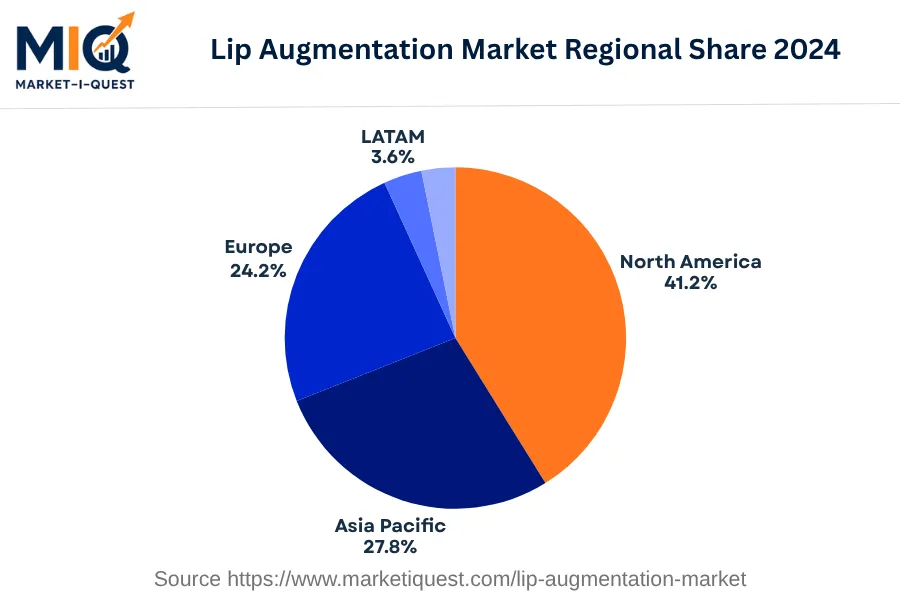
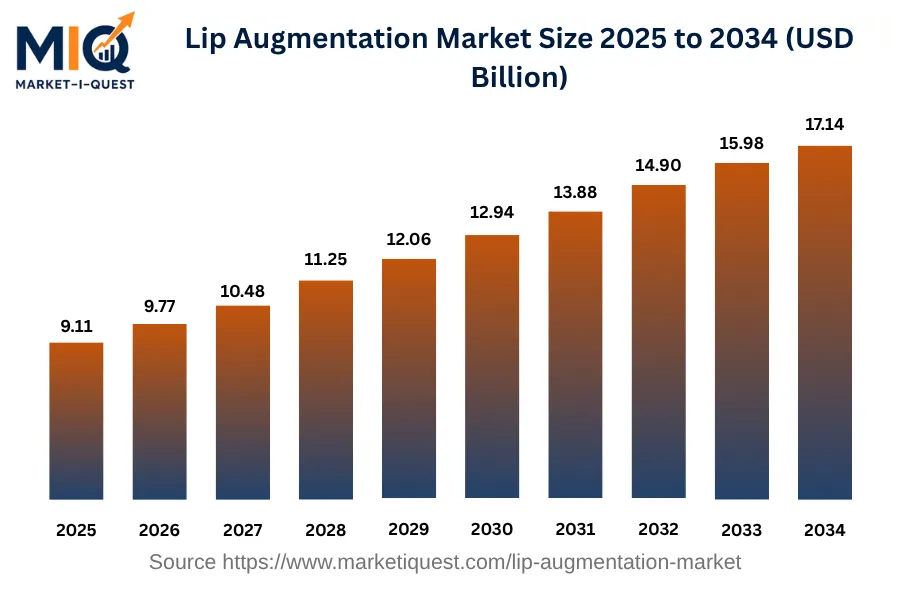
The Lip Augmentation Market was valued at $3.60 billion in 2024 and $3.75 billion in 2025. This market is expected to reach $5.60 billion by 2034, growing at a CAGR of 4.1% from 2025 to 2034. Notably, the market value increased by $0.15 billion from 2024 to 2025 indicating an upward, steady demand for lip augmentation procedures. This higher demand for cosmetic procedures underlies the market's overall growth, alongside advancements in augmentation techniques that render the procedure more reliable and safer. In terms of geographical distribution in 2024, North America held the largest share, followed by Europe, Asia Pacific, LATAM, and MEA. The regions accounted for shares of 38.7%, 22.3%, 18.8%, 11.5%, and 8.7% respectively. These shares describe the preference and adoption rate of lip augmentation procedures across these regions.

Key Takeaways

  • By Type of Procedure - Injectable Fillers led the Lip Augmentation Market accounting for a significant share in 2024.
  • By Material Used - Silicone held the top position contributing heavily to the market growth in 2024.
  • By Application - Cosmetic Enhancement emerged as the leading subsegment in the Lip Augmentation Market in 2024.
  • By End Use - Hospitals dominated the Lip Augmentation Market accounting for a notable share in 2024.
lip-augmentation-market market size

Key Driving Factors

Influence of Popular Culture

The lip augmentation market is significantly driven by the influence of popular culture. Media and public figures, particularly celebrities and influencers in the beauty and fashion industry, have a substantial impact on consumer perception of beauty norms. As fuller lips are increasingly portrayed as the ideal beauty standard, more individuals are seeking lip augmentation procedures to achieve the desired look. The trend is especially pronounced among younger demographics, with people in their 20s and 30s being more influenced by social media trends and celebrity culture. These individuals are an active segment of the lip augmentation market, contributing to its growth.

Improved Safety and Efficacy of Lip Augmentation Procedures

The safety and efficacy of lip augmentation procedures have improved significantly over the years due to advancements in medical aesthetics. The development of safer, more efficient injectable dermal fillers like hyaluronic acid products offer less side effects and longer-lasting results, making lip augmentation procedures more appealing to potential clients. They offer a non-invasive alternative for lip augmentation to risky, invasive surgical procedures, and have a fast recovery time with minimal discomfort. The availability of these tried-and-tested lip enhancement solutions is giving more confidence for clients to opt for these procedures, thus propelling the business in the lip augmentation market.

Market Evolution by Timeline

2019-2023
In this time frame, the demand for lip augmentation products and services emerged due to rising interest in aesthetic treatments amongst millennials, particularly in areas such as North America and Europe. On the supply side, the market saw companies rolling out hyaluronic acid-based fillers that provide a more natural look and feel. Lack of consistency in regulation across countries limited the adoption of these newly developed products. The pricing model was typically based on per syringe or per session, and most patients purchased treatments in packages. A major risk during this period was the side effects of lip fillers, causing consumers to hesitate before undergoing the procedure.
2024
In 2024, the lip augmentation market's primary buyer segement continued to be young adults striving for a youthful appearance. The Asian markets, primarily China and South Korea, saw a significant boost in demand driven by the social media and K-pop culture influence. Suppliers developed products offering a longer-lasting result, mitigating the need for frequent treatments. Regulations were strengthened, especially in Asia, to ensure product safety and procedural quality. Package deals continued to be the favourable commercial model. However, misinformation about lip fillers propagated on social media posed a significant risk in this year.
2025-2029
In these years, the 'zoom boom' effect unfolded as the demand for lip augmentation treatment surged due to constant virtual meetings and use of selfie filters, especially in the US, UK and India. The market saw the introduction of personalised fillers based on individual skin type and desired look. There was a rise in collaborations amongst companies to enhance research and increase distribution. The prices for treatments were largely influenced by the standard of the clinic and the experience of the practitioner. Legal implications related to malpractice and lack of information about the treatment's long-term effects remained a significant challenge during this period.
2030-2034
A trend of natural beauty started to gain momentum in this period, which balanced the demand for lip augmentation services. Technology advances allowed for fillers with fewer side effects, which were integrated into rejuvenation packages for overall facial aesthetics. Due to the shift towards a 'less is more' approach, policies were developed focusing on ethical marketing practices in the beauty industry. Providers experimented with subscription models, allowing patients to pay for their lip augmentation treatments over an extended period. Malpractice lawsuits remained a risk, with a growing focus on the necessary qualifications and expertise.

Future Market Outlook

Future Opportunities

Looking ahead, the lip augmentation market is poised for growth driven by evolving consumer desires and increasing awareness of aesthetic procedures. Social media influencers and platforms like Instagram have significantly impacted consumer perceptions, prompting younger demographics to explore lip augmentation. In 2023, a survey conducted by the American Academy of Facial Plastic and Reconstructive Surgery indicated that 54% of respondents aged 18-34 expressed interest in lip fillers, highlighting a promising demographic shift. Additionally, the rising trend of non-surgical procedures across Asia, particularly in South Korea and China, is creating new market opportunities, as local consumers seek effective, less invasive cosmetic solutions. Regulatory policies are also under review; for instance, the European Commission is currently assessing the Medical Device Regulation to enhance patient safety concerning aesthetic treatments. This could lead to increased demand for certified practitioners and high-quality products, fostering trust in the industry. Furthermore, partnerships between aesthetic clinics and technology companies focused on patient experience are likely to expand, enhancing service offerings with telehealth consultations and post-procedure support. As consumer education campaigns gain prominence, individuals are expected to make more informed decisions, potentially increasing the demand for lip augmentation services. This combination of factors suggests a broadening landscape for lip augmentation, primarily driven by innovation and consumer engagement in the aesthetic industry.

Segmentation Analysis

By Type of Procedure

The market is divided into subsegments including Injectable Fillers, Fat Grafting, and Implants. Among these, Injectable Fillers accounted for the largest revenue share, while Fat Grafting is expected to grow at the fastest CAGR during the forecast period.

Largest Revenue Share

Injectable Fillers

Market Share Leader

Injectable Fillers subsegment dominates the market due to its intrinsic advantages in terms of procedure and results. The preference for Injectable Fillers results from their non-invasive nature, minimizing the risk associated with surgical procedures. Since they can be administered without the need for any surgery, it's an attractive option for consumers seeking minor or subtle enhancements. Moreover, health regulations in many countries favor non-invasive procedures, adding to their popularity. Additionally, Injectable Fillers are favored for their robust supply chain. Manufacturers and suppliers have invested in established distribution channels that ensure a significant availability of the product, lowering any potential switching costs for the consumers. With regards to purchasing criteria, consumers tend to favor Injectable Fillers due to their cost-effectiveness and lower downtime, and thus, contributing to the largest revenue share.

Fastest CAGR

Fat Grafting

Forecast Period Growth Leader

The Fat Grafting subsegment is expected to see the fastest CAGR during the forecast period. Growth is primarily driven by technological advancements and shifting consumer preferences towards more natural procedures. Fat Grafting is increasingly seen as a more organic method compared to other procedures because it uses the patient's own body fat. Alongside, partnerships between healthcare service providers and insurance companies are also fuelling growth in this segment, making procedures like Fat Grafting more affordable and accessible for potential patients. However, adoption barriers still exist, such as the more complicated procedure and longer recovery times compared with non-invasive approaches. That said, continuous advancements in surgery and a growing acceptance of longer recovery periods for more natural-looking results are set to outweigh these barriers in the near term. The expected increase in capital expenditure in the healthcare sector also provides a positive outlook for this subsegment.

By Material Used

The market is divided into subsegments including Hyaluronic Acid, Collagen, Silicone, Autologous Fat, and PMMA, with Silicone accounting for the largest revenue share while Autologous Fat is expected to grow at the fastest CAGR during the forecast period.

Largest Revenue Share

Silicone

Market Share Leader

Silicone dominates the market in terms of revenue due to its wide acceptance and utility in the industries at a global level. The subsegment's popularity is driven by the material's versatility and longevity, as well as its relative ease of manipulation compared to other materials. Additionally, silicone is renowned for its excellent biocompatibility, contributing to its usage in diverse applications, ranging from cosmetic enhancements to medical devices. Its adaptability to various manufacturing processes also allows for the production of tailored solutions that can meet the varied needs of customers, creating a substantial competitive edge. Moreover, the industry ecosystem is well-versed with silicone and has well-established supply chains and regulatory frameworks, reducing switching costs and creating a strong demand pull. Geographically, the advanced economies and maturing markets of North America and Europe contribute significantly to the subsegment's high revenue.

Fastest CAGR

Autologous Fat

Forecast Period Growth Leader

Autologous Fat subsegment is predicted to witness the fastest growth on account of factors such as advancements in technologies, the shift toward natural and body-friendly materials, and increasing partnerships in the field. The adoption of autologous fat is being facilitated by the growing consciousness among customers about the potential risks of synthetic materials and a preference for options with reduced susceptibility to foreign body reactions. Additionally, technological innovations are enabling more efficient harvesting, processing and application of autologous fat, fuelling its demand. Adoption barriers to this segment, like higher costs, are being softened by evolving policies, capacity expansion, and strategic partnerships. Near-term risks to the subsegment's growth include strict regulations and potential supply chain disruptions. However, these are expected to be offset by the high growth potential presented by emerging markets and breakthroughs in regenerative therapies.

By Application

The market is divided into subsegments including Cosmetic Enhancement, Reconstructive Surgery, and Medical Treatments. In 2024, Cosmetic Enhancement had accounted for the largest revenue share while Medical Treatments are expected to grow at the fastest CAGR during the forecast period.

Largest Revenue Share

Cosmetic Enhancement

Market Share Leader

Cosmetic Enhancement emerged as the largest revenue-generating subsegment in 2024 mainly because of the increasing interest in body aesthetics and the advancements in cosmetic procedures. This market is largely driven by the desire of consumers to improve their physical appearance and boost self-confidence. Geographically, regions like North America and Europe have dominated the demand due to higher income levels and more prevalent beauty culture. Despite regulatory challenges in some parts of the world, the relentless innovation in non-invasive techniques keeps the segment buoyant. Moreover, new marketing channels, particularly through social media influencers, have widened the accessibility and acceptance of these treatments. The purchasing criteria have expanded beyond the traditional customer base, with a newer demographic of younger consumers now seeing cosmetic enhancements as a preventive measure against ageing.

Fastest CAGR

Medical Treatments

Forecast Period Growth Leader

However, the Medical Treatments subsegment is projected to grow at a higher CAGR in the coming years. The growth is fuelled predominantly by an aging population and an increase in medical conditions that require these treatments. Furthermore, ongoing technological innovations and the development of more efficient treatment methods are acting as catalysts for this growth. While the initial capital expenditure for these treatments may be high, partnerships between healthcare providers and insurance companies are easing the financial burden for patients, leading to increased adoption. Regardless, there is a noteworthy risk associated to potential policy changes that could alter insurance coverage for these treatments. Nevertheless, the need for these medical treatments and the constant improvement in delivery are expected to continue driving its ascent.

By End Use

The market is divided into subsegments including Clinics, Hospitals, Beauty Salons, and Home Care with the Hospitals subsegment accounting for the largest revenue share. Meanwhile, Beauty Salons is expected to grow at the fastest CAGR during the forecast period.

Largest Revenue Share

Hospitals

Market Share Leader

Hospitals make up the largest revenue share for various reasons. Hospitals are typically bigger institutions, handling a larger volume and a broader variety of procedures than other segments. Therefore, they require a more extensive range of products and services, leading to higher revenue generation. It’s also worth noting that hospitals often have a higher purchasing power and more stable financial resources compared to clinics or beauty salons, enabling frequent procurement and adoption of updated offerings. Furthermore, their need to cater to diverse patient needs, comply with stringent health regulations, and remain competitive translates into an ever-growing demand. Geographical location is another factor, as hospitals in urban areas tend to generate more revenue due to higher patient flow. All these factors combined give hospitals a significant edge in terms of market revenue share.

Fastest CAGR

Beauty Salons

Forecast Period Growth Leader

The Beauty Salons subsegment is projected to grow at the fastest rate. This growth is primarily driven by the increased consumer interest in personal grooming, beauty and wellness services. The adoption of new techniques and technologies to provide distinct services has made beauty salons a popular choice for consumers. Moreover, advancements like non-invasive procedures, aesthetic enhancements, and wellness therapies are now common in beauty salons, resulting in increased revenue. With the growing acceptance of such services and the ease of access to specialized beauty salons, this sector is likely to see an accelerated growth rate. However, beauty salons would need to overcome adoption barriers like regulatory compliance, investment in new equipment and training of professionals. Any potential rise in procedure costs could impact the adoption rate and should be considered a near-term risk. Thus, strategic investments, public-private partnerships, and attention to advancements could catalyze the growth of this segment.

Competitive Analysis

Key Market Players

Manufacturers / OEMs

Allergan
US
Galderma
Switzerland
Teva Pharmaceuticals
Israel

Key Suppliers & Raw Materials

Eastman Chemical Company
US
BASF SE
Germany
Dow Chemical Company
US

Distributors, Integrators & Channel Partners

McKesson Corporation
US
Cardinal Health
US
AmerisourceBergen Corporation
US

Porter’s Five Forces Analysis

This analysis provides insights into the competitive dynamics within the Lip Augmentation Market.

Supplier Bargaining Power

Medium

Suppliers have moderate control due to specialized equipment and materials needed for lip augmentation procedures.

Buyer Bargaining Power

Medium

Buyer power is moderate, as aesthetic choices and price sensitivity offer negotiation leverage.

Threat of Substitutes

High

High threat due to the availability of non-surgical procedures and natural alternatives.

Threat of New Entrants

Low

Entry barriers are high due to the need for specialized medical skills and high initial investment.

Competitive Rivalry

High

Rivalry is high due to numerous competitors offering diverse cosmetic procedures.

Regional Analysis

Geographic market dynamics and growth opportunities across key regions

Global Market Outlook

lip-augmentation-market market regional share

North America

In 2024, the North American lip augmentation market was primarily driven by increasing aesthetic consciousness, rising celebrity influences, and burgeoning technological advancements. The growing demand for minimally invasive cosmetic procedures among the general public, driven by a prevailing culture of mainstream beauty standards influenced by various media platforms especially social media capacitated the growth of the U.S market. Canadian regulations pushing for safer lip augmentation procedures helped improve public trust and subsequently drove an increase in procedures carried out. Similarly, Mexico saw an uptick in demand due to higher investments in dermatological and cosmetic clinics.

Shifts in buyer behavior manifested in 2024; younger demographics across the U.S, Canada, and Mexico prioritized non-surgical lip enhancement treatments, boosting the demand for hyaluronic acid-based fillers. Technological shifts were also felt with the introduction and adoption of innovative lip augmentation products with gradual results, aiming to cater to a consumer base seeking natural-looking outcomes. Furthermore, partnerships between manufacturers of dermal fillers and plastic surgeons were notable. These collaborations fostered the development and adoption of safer products with fewer complications. Lastly, increased policy enforcement on administering lip augmentation procedures defined the market in 2024, ensuring higher safety standards and crystallizing customers' trust in the overall industry.

Asia Pacific

In 2024, the Asia Pacific Lip Augmentation market garnered substantial attention as aesthetic consciousness amplified among consumers. An escalating demand, propelled by rising disposable incomes and shifting beauty standards, particularly in urban demographics in China and India, prompted marked investment in advanced dermal fillers and implant technology. Japan’s strict medical regulations necessitated crime-free manufacturing practices, enhancing market credibility. Meanwhile, innovative technology adoption thrived, indicated by South Korea's pioneering nanofiller-based lip augmentation procedures. Market trends revealed interesting dynamics. Social media and celebrity influence drove buyer behavior, essentially in China and Australia, while technological shifts were witnessed towards biocompatible and long-lasting fillers and implants.

Channel dynamics evolved towards online consultation and scheduling platforms, a response to the pandemic-influenced market landscape of 2024. The partnership between India-based Apollo Hospitals and Allergan Inc., featuring the first-ever lip augmentation clinic, underscored the potential of strategic alliances. Regulatory enforcement was tight in Japan and South Korea, ensuring the quality and safety of administered treatments. Seismic changes were observed in retail and healthcare sectors, with healthcare increasingly interfacing aesthetic services and retail platforms enabling easy access to lip care and augmentation products.

Europe

In 2024, the Lip Augmentation Market saw substantial growth across Europe, primarily driven by changing consumer perspectives and improving medical aesthetic technology. Rising consciousness about personal appearance, particularly in countries such as the United Kingdom, France, and Italy, significantly boosted market demand. Simultaneously, regulations ensuring safety and effectiveness of lip augmentation procedures in Germany, the Nordics, and Benelux, positively impacted consumer confidence, allowing for greater adoption of these procedures across these regions. Moreover, investment in research and development by major beauty enterprises facilitated the introduction of technically advanced, safer, and more effective lip fillers. This, coupled with an increasing number of skilled aesthetic practitioners in Central and Eastern Europe, diversified and secured the supply dynamics, aiding market growth.

Trending in the industry was the shift towards minimally invasive lip augmentation procedures, reaching a tipping point due to consumer preference for quick recovery time and less pain. Online retailing, as a channel for lip care products, proved fruitful in countries with advanced e-commerce infrastructures like the UK and Germany. Furthermore, partnerships between aesthetic procedures providers and healthcare facilities emerged as a strategic approach for broader service provision. Additionally, enforcement of stringent policy frameworks increased procedural transparency and reliability, setting comprehensive standards in lip augmentation practices. This proved most notable within healthcare sectors of France, Italy, and Spain.

Latin America

In 2024, the Lip Augmentation Market in Latin America (LATAM) showed significant growth, driven primarily by escalating cosmetic procedure demands, enhanced technology adoption, and regulatory support. A rise in disposable income levels in countries like Brazil and Mexico led to an increased demand for cosmetic procedures, with lip augmentation standing out. Once mainly accessible to upper-class consumers, they increasingly reached middle-income demographics, expanding the overall market. Buoying this trend, LATAM governments, particularly in Argentina and Colombia, implemented favorable regulations encouraging investments in cosmetic surgery infrastructure and technology advancements.

In this base year, changes in consumer preference trends significantly influenced the industry. A shift toward non-invasive techniques, epitomized by Hyaluronic Acid-based dermal fillers, redefined the lip augmentation market in the region. On a retail level, sales through digital platforms saw an upward trajectory, partially ignited by pandemic aftermaths impacting in-store retail experiences, notably in Chile and Peru. The year also marked an increased number of collaborations and strategic partnerships among local clinics and global manufacturers for exclusive product distributions, indicating an emerging market consolidation trend. The product standards and policy enforcement were progressively tightening to ensure the best results and patient safety, leading to an overall enhancement of the sector's reputation.

Middle East & Africa

In 2024, the Lip Augmentation Market in the Middle East and Africa experienced significant growth momentum. Key drivers included advancements in cosmetic technology and an increase in disposable income, particularly in countries such as Saudi Arabia, the United Arab Emirates, and Qatar. The adoption of lip augmentation procedures was also driven by a cultural shift towards accepting cosmetic enhancements and a surge in social media influence promoting beauty standards. The regulatory landscape, with countries like South Africa and Israel allowing these procedures with mild restrictions, positively influenced the market. Trends observed in this period showed an increasing preference for non-surgical lip augmentation procedures like fillers and fat transfer, primarily due to their minimal downtime. In addition, there was a significant increase in the number of medical tourism patients from Egypt and Nigeria, seeking cost-effective solutions in countries like the UAE. Partnerships between global brands and local clinics were prominent, aimed at expanding the treatment reach. Lastly, stringent standards in healthcare services and policy enforcement concerning patient safety were positively shaping the market dynamics.

The customer base for these procedures extended beyond the healthcare industry, reaching into the entertainment and media sector, where the demand was driven by public personality image enhancement. Retail outlets also saw an upswing as lip augmentation products became increasingly popular. The financial services sector supported consumer accessibility to these procedures through flexible payment solutions. Conclusively, 2024 marked an important growth milestone for the Lip Augmentation Market in this region.

Recent Industry Developments

Latest market innovations, product launches, and strategic initiatives

July 2026

The U.S. FDA granted clearance to Restylane for lip augmentation, marking the first time the hyaluronic acid filler received official approval for this specific use. Previously used off-label, the approval provides additional safety assurance and allows the manufacturer to market the product directly for lip enhancement.

December 2025

L'Oréal announced it would double its stake in Swiss skincare firm Galderma to 20%, securing a larger share of profits from the fast-growing injectable cosmetics market, which includes lip fillers. The deal, expected to close in Q1 2026, was driven by double-digit annual growth in the sector.

Frequently Asked Questions