
Medical Aesthetics Market Snapshot

Key Players

  • Allergan (Ireland)
  • Alma Lasers (Israel)
  • Sientra (United States)
  • Johnson & Johnson (United States)
  • Galderma (Switzerland)
  • Sinclair Pharma (United Kingdom)
  • Merz Pharma (Germany)
  • Cutera (United States)
  • Lumenis (Israel)
  • Valeant Pharmaceuticals (Canada)

Market Size

Base Year 2024
$18.83 Bn
CAGR
11.94%
Forecast 2034
$58.17 Bn

Market Segments

By Product
  • Facial Aesthetics
  • Body Contouring Devices
  • Cosmetic Implants
  • Hair Removal Devices
  • Skin Aesthetic Devices
  • Tattoo Removal Devices
  • Others
By Technology
  • Invasive
  • Non-Invasive
  • Minimally Invasive
By End User
  • Hospitals & Clinics
  • Dermatology & Cosmetic Centers
  • Others

Market Dynamics

Drivers
  • Rising beauty awareness
  • Increasing disposable income
Restraints
  • High treatment costs
  • Strict regulatory frameworks
Opportunities
  • Growing health tourism industry
  • Rapidly aging population

Market Size

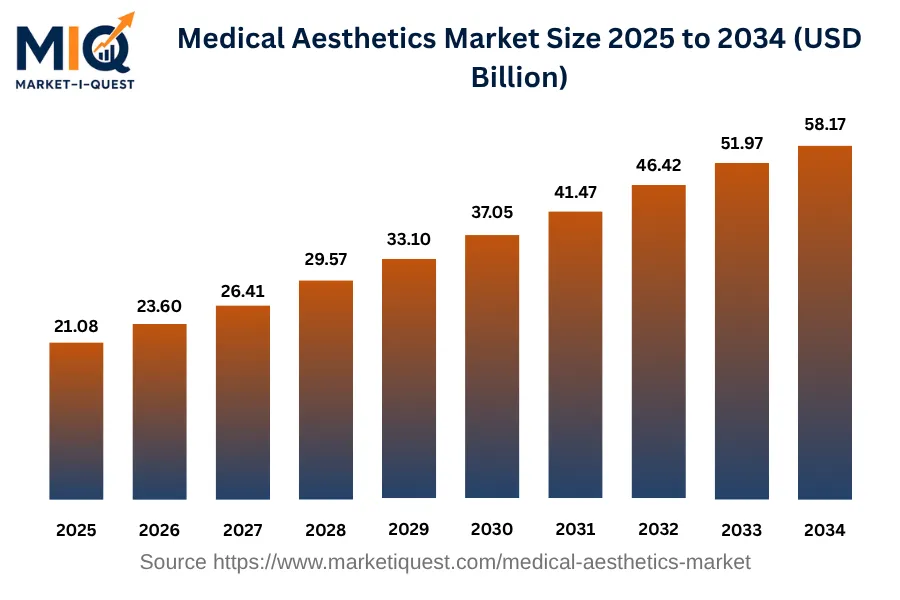
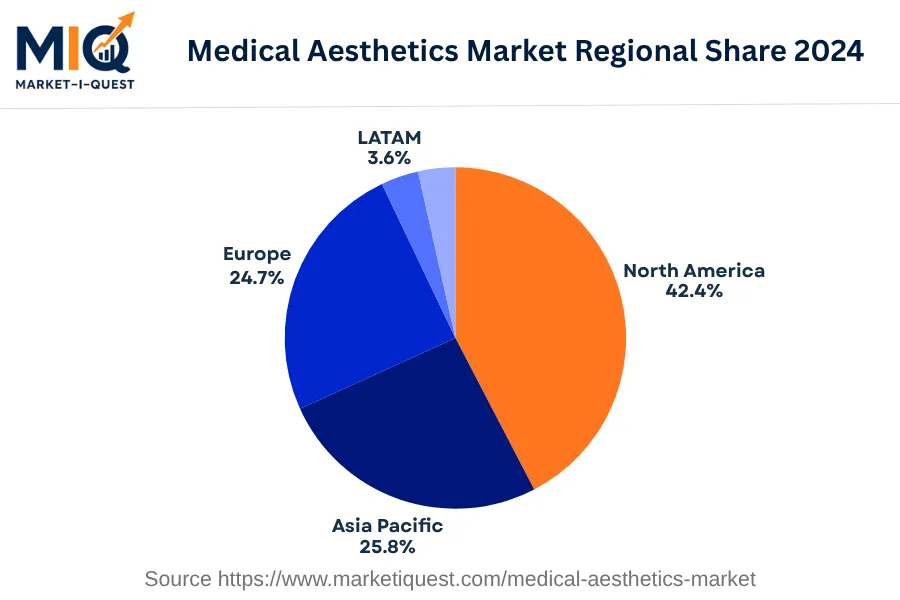
The Medical Aesthetics Market is set to experience considerable growth from 2025 to 2034. In 2025, the market's size is projected to be worth $21.08 billion, increasing significantly by 2034 to reach a massive value of $58.17 billion. It exhibits a Compound Annual Growth Rate (CAGR) of 11.9% during this period. The gradual climb in value over the decade indicates that the market will expand steadily, maintaining its upward trajectory. Regionally, as of 2024, North America commands the largest share of this market with 42.4% ownership. It is followed by the Asia Pacific and Europe, which hold 25.8% and 24.7% of the market respectively. Meanwhile, LATAM and MEA regions have the smallest market shares, each contributing just over 3.5%.

Key Takeaways

  • By Product - Cosmetic Implants led the market accounting for a notable position in the Medical Aesthetics market.
  • By Technology - Invasive expanded rapidly contributing significant growth in the Medical Aesthetics market.
  • By End User - Hospitals & Clinics held a leading role presenting a major share in the Medical Aesthetics market.
medical-aesthetics-market market size

Key Driving Factors

Rise in Engagement of Social Media and Reality Television

The upsurge in individuals' active engagement on social media platforms and frequent exposure to reality television shows have triggered an increased interest in the medical aesthetics market. These platforms frequently display extraordinarily perfect, even unrealistic beauty standards, influencing many individuals to consider medical aesthetics treatments to attain similar looks. This social media phenomenon, combined with the 'selfie' culture, where people often document and share their lives online, amplifies the desire for physical perfection. Similarly, reality TV shows often showcasing celebrity makeovers, have become a mainstream platform igniting interest in these treatments. These channels end up indirectly driving demand for non-invasive and less time-consuming treatments offered in the medical aesthetics market.
Expansion of Service Offering by Medical Tourism

The global healthcare market has witnessed a surge in medical tourism, principally driven by cost-effective treatments, state-of-the-art healthcare facilities, and highly skilled professionals primarily in Asian countries. Recently, medical tourism's scope has expanded to include medical aesthetics services, further bolstering the market's growth. Countries like South Korea, Thailand, and India are becoming popular destinations for aesthetic procedures. These countries usually offer treatments at a fraction of the cost compared to Western countries, enabling more people to afford such services. Furthermore, the improved perceived quality and trust in these countries' healthcare systems, backed by successful results, have essentially propelled more individuals toward opting for medical aesthetic treatments, aiding market growth.

Market Evolution by Timeline

2019-2023
During this period, North America saw a high demand for medical aesthetic treatments due to a surge in aging populations desiring youthful appearances. The supply side saw the introduction of minimally invasive surgeries and non-invasive procedures like Botox and fillers. In terms of regulations, the FDA implemented stricter rules for approving new treatments and devices. Commercially, pay-per-treatment and package deals became prevalent, industries partnered with beauty salons and fitness centers to promote their products. The expansion of medical aesthetic treatments into non-hospital settings faced viability risks due to lack of trained medical personnel.
2024
Throughout 2024, there was increased economic stability which boosted individual purchasing power, particularly in emerging markets in Asia and Africa, driving demand for aesthetic treatments. The implementation of 3D printing technology in medical aesthetics was seen as an innovative supply-side development. Europe strengthened its CE marking regulations to ensure the safety and performance of these devices. A pricing model of monthly subscriptions became more preferred than per-treatment charging. High cost of treatments and lack of insurance coverage continued to be crucial risks in this business.
2025-2029
In this timeframe, the demand base shifted, with younger individuals also seeking appearance improvement treatments. Med-tech companies shipped increasingly sophisticated devices, integrating AI and machine learning to personalised treatments. However, the high cost of cutting-edge technology was a constraint. Policy-wise, GDPR and HIPAA privacy rules impacted the storage of personal medical data. On the business aspect, the rise of medical aesthetic clinics, with attractive treatment packages, increased competition. Users started considering medical tourism to countries offering cheaper procedures, serving as a realistic business risk.
2030-2034
During 2030-2034, massive demand growth for medical aesthetics appeared in countries with rising disposable income like China and India. In terms of technology, teledermatology began to gain traction, although infrastructural constraints in rural regions acted as a challenge to its penetration. Regulations enforcing transparency in advertising pricing for cosmetic treatments were enforced globally. The commercial landscape saw the prominence of franchisee models for aesthetic clinics, with vertical integration in the supply chain for better cost control. The risk of subpar treatment outcomes due to proliferation of non-medical personnel remained an issue.

Future Market Outlook

Future Opportunities

The medical aesthetics market is poised for numerous opportunities that align with current trends and regulatory shifts. A notable prospect is the expanding market for home-use devices. In 2023, L'Oréal introduced a portable skin analysis device that allows consumers to monitor skin health from the comfort of their homes, signifying potential growth in self-administered aesthetics solutions. Furthermore, as global demographics shift, with a notable increase in aging populations, particularly in Europe and North America, demand for anti-aging solutions is expected to rise. This aligns with the increasing acceptance of aesthetic procedures among older adults, who are more likely to seek interventions like Botox and fillers. Additionally, the rise of social media platforms for beauty marketing has created opportunities for brands to engage directly with consumers, exemplifying how influencers in regions like Southeast Asia can shape purchasing decisions rapidly. Companies are also more focused on sustainability, responding to consumer demand for eco-friendly products. In 2022, the Clean Beauty Movement gained momentum, prompting brands to reformulate their offerings. As ongoing research continues to emphasize the connection between mental wellness and aesthetic procedures, there may be an emerging market for services that combine psychological support with aesthetic treatments. Thus, current trends indicate a landscape ripe for expansion, driven by consumer preferences and innovative product offerings.

Segmentation Analysis

By Product

The market is divided into subsegments including Facial Aesthetics, Body Contouring Devices, Cosmetic Implants, Hair Removal Devices, Skin Aesthetic Devices, Tattoo Removal Devices, and Others. Cosmetic Implants accounted for the largest revenue share while Skin Aesthetic Devices are expected to grow at the fastest CAGR during the forecast period.

Largest Revenue Share

Cosmetic Implants

Market Share Leader

Cosmetic Implants are currently leading the market revenue-wise, a position driven by several factors. Predominantly, the rise in disposable income and the ageing population are pushing the demand for this subsegment. With more disposable income, more individuals are investing in their physical appearance and turning to cosmetic surgery. Because ageing is a key driver of the requirement for cosmetic implants, regions with ageing populations, such as North America and Europe, are particularly significant markets. Furthermore, social media impact and celebrity culture have also played a significant role in driving this sector. The technological advancements in the cosmetic implants sector, leading to more safe and affordable procedures, have also worked as a catalyst to its recent popularity. Lastly, the strength and durability of these implants drastically reduce switching costs, with most procedures only needing occasional follow-ups.

Fastest CAGR

Skin Aesthetic Devices

Forecast Period Growth Leader

Skin Aesthetic Devices are on track to exhibit the fastest CAGR over the forecast period. The driving factor for this rapid growth is the surging awareness and obsession among the general public for maintaining healthy and youthful skin. Furthermore, technological advancements are continually lowering the barriers to adoption as these devices become more effective and affordable. Polices allowing these devices to be classified as consumer goods instead of medical equipment in certain regions have also hastened adoption. As far as near-term risks are concerned, the Covid-19 pandemic’s disruption to supply chains and general consumer spending has created a potential bottleneck for growth. However, the post-pandemic scenario, along with major corporations' capital expenditure into R&D for at-home skin aesthetic devices, is expected to create significant growth opportunities. We must note, however, that the fast-paced technological progress in this segment also represents a risk, given the ever-present chance of current technologies being rendered redundant.

By Technology

The market, by technology, is divided into three main subsegments: Invasive, Non-Invasive, and Minimally Invasive. In the base year 2024, the Invasive subsegment accounted for the largest revenue share, while the Non-Invasive subsegment is projected to grow at the fastest CAGR during the forecast period.

Largest Revenue Share

Invasive

Market Share Leader

The invasive technology segment leads in the market due to its widespread use in numerous medical procedures. It is highly regarded for its precision and accuracy, reducing the potential for error during operations. Moreover, invasive procedures have been proven to yield increased efficacy for various acute conditions, providing faster recovery for specific treatments when compared to their non-invasive counterparts. Geographically, developed regions tend to dominate this market due to their capacity for technological advancements and a ready market characterized by a large, aging populace. This segment has grown considerably because of robust investments in healthcare infrastructure, highlighting hospitals' focus on offering state-of-the-art treatments to their patients. Nonetheless, purchasing criteria, such as cost differences, are expected to change with regulation changes and the increase in insurance coverage. It's worth noting that any shift in the market due to these factors must overcome considerable switching costs, especially training healthcare staff to adopt new technologies.

Fastest CAGR

Non-Invasive

Forecast Period Growth Leader

High throughput, increased safety, and patient comfort are the primary growth drivers for the Non-Invasive technology segment. These technologies, often employed in diagnostics and monitoring, offer the potential to reduce the number of invasive procedures. Adoption barriers still exist due to comfort level and familiarity with invasive techniques. However, the increasing investment in research & development, partnerships between tech firms and healthcare providers, and policy support for more efficient medical processes are catalysts for the growth of non-invasive procedures. Additionally, the COVID-19 pandemic has acted as a catalyst for the segment, given the need to reduce the risk of infection through less physical contact. Capital expenditure in health tech is expected to surge, paving the way for more non-invasive procedures. While the short-term risks tied to technology adoption and regulatory adjustments remain, the long-term outlook for the non-invasive segment is promising.

By End User

The market is divided into subsegments including Hospitals & Clinics, Dermatology & Cosmetic Centers, and Others. In 2024, Hospitals & Clinics accounted for the largest revenue share while Dermatology & Cosmetic Centers is expected to grow at the fastest CAGR during the forecast period.

Largest Revenue Share

Hospitals & Clinics

Market Share Leader

The Hospitals & Clinics subsegment remains the most significant in terms of revenue generation based on year 2024. This is primarily due to their extensive footprint and the high volume of patients they cater to regularly. Hospitals and clinics serve as primary care providers for most people, especially in urban and suburban areas. In addition, they offer a comprehensively diverse range of treatments, services, and procedures, thereby ensuring a steady income stream. Regardless of emerging trends in healthcare, the significance of hospitals and clinics as main healthcare providers remains unchallenged. The broad array of services provided by hospitals and clinics, coupled with a large patient base, translates to a substantial demand for services or products related to this subsegment. This is the main reason they account for the largest revenue share in 2024.

Fastest CAGR

Dermatology & Cosmetic Centers

Forecast Period Growth Leader

Though not being the largest revenue contributor in 2024, Dermatology & Cosmetic Centers subsegment is projected to grow at the fastest rate. Factors such as increasing consumer consciousness about aesthetic appearance, growing prevalence of skin diseases, and technological advancements in cosmetic treatment are propelling this growth. Moreover, the rise in disposable income in developing economies is increasing the number of potential consumers who can afford cosmetic treatments. Ageing populations in developed markets are also a significant factor as they often seek cosmetic procedures. Furthermore, strategic alliances and partnerships among major players enhance service accessibility, contributing to the market growth. However, obstacles such as high cost of procedures and risk of side effects could potentially hinder adoption rates but not enough to overshadow the overall targeted growth outlook.

Competitive Analysis: Medical Aesthetics Market

Key Market Players

Manufacturers / OEMs

Allergan plc
Ireland
Johnson & Johnson
US
Galderma Laboratories
Switzerland

Key Suppliers & Raw Materials

Aurobindo Pharma Ltd
India
Merz Pharma GmbH & Co. KGaA
Germany
Valeant Pharmaceuticals International, Inc.
Canada

Distributors, Integrators & Channel Partners

Croma-Pharma GmbH
Austria
Sinclair Pharma
UK
Suneva Medical, Inc.
US

Porter’s Five Forces Analysis

The analysis evaluates the competitiveness and attractiveness of the Medical Aesthetics Market.

Supplier Bargaining Power

Low

Supplier's effect is limited due to multiple sourcing options for aesthetics equipment.

Buyer Bargaining Power

High

Variety of service providers and products gives patients high bargaining power.

Threat of Substitutes

Medium

Non-invasive therapies pose a moderate threat to traditional medical aesthetics.

Threat of New Entrants

Low

High capital investment and need for specialized knowledge pose barriers to entry.

Competitive Rivalry

High

Service providers compete fiercely on innovative treatments, technological advancements, and location.

Regional Analysis

Geographic market dynamics and growth opportunities across key regions

Global Market Outlook

medical-aesthetics-market market regional share

North America

In 2024, the Medical Aesthetics Market in North America was marked by robust growth driven by an array of factors. Aging populations, increasing awareness about appearance enhancement procedures, and favorable insurance coverage for reconstructive procedures fueled demand. Regulatory approval for new and advanced medical aesthetic devices encouraged manufacturers to invest in Research and Development activities, while rapid adoption of technologically-driven non-invasive procedures amplified market growth. Alterations in supply dynamics due to the entry of new niche device manufacturers affected the pricing of aesthetic devices in the U.S., Canada, and Mexico.

Trends underpinning the market included an escalated preference for at-home aesthetic devices by consumers wary of clinic or hospital visits amidst the ongoing pandemic. The acne treatment and hair removal sector witnessed increased consumer interest in high-tech devices offering home-bound solutions. There was a notable uptick in the use of telemedicine platforms by medical aesthetic service providers, spurred by partnerships and mergers & acquisitions among digital technology companies and aesthetic clinics. With the policy enforcement of the U.S’s 21st Century Cures Act, real-world evidence became a crucial part of the device approval process, marking a significant change in the ecosystem, beneficial for enterprises operating in healthcare & medical aesthetics sector.

Asia Pacific

In 2024, the Asia Pacific Medical Aesthetics Market experienced significant growth driven by various factors and revealed notable trends. Rising health consciousness and cosmetic care awareness propelled demand for aesthetic medical treatments, particularly in urbanized regions like China, Japan, and Australia. Governments' regulatory approvals for cosmetic procedures, as in India, accelerated market expansion, while heavy investment in health technologies favored the industry across key ASEAN markets. Evolving technology adoption, such as non-invasive treatments in South Korea, shaped supply dynamics, with manufacturers keen to meet growing demand. Competitive pricing strategies influenced market dynamics, particularly in cost-sensitive markets like India.

Several trends shaped the 2024 landscape. Customer preference shifted towards personalized care, impacting consumer behavior across the region. In digital-savvy markets like China and Japan, a growing trend for online consultations and telemedicine was observed, changing the channel dynamics. Partnerships and M&A activities were prominent, as companies strived to expand services and gain market share, especially in Australia and key ASEAN markets. Stricter implementation of cosmetic procedure standards evidenced in South Korea and Japan ensured patient safety and increased trust in service providers. Overall, 2024 was characterized by a strong demand for medical aesthetic services across Asia Pacific, fuelled by technological innovation, regulatory support, and changing consumer preferences. Various healthcare players, including medical spas, aesthetic clinics, and dermatology service providers, contributed significantly to this growth.

Europe

In 2024, Europe's medical aesthetics market experienced significant growth, driven by several key factors and trends. Surge in demand was observed due to an increased awareness of aesthetic procedures, particularly in Germany, the United Kingdom, and France, supported largely by advancements in non-invasive methods. Regulations by the European Union aimed at maintaining highest safety standards further heightened the market's development. Investment in technology adoption, specifically in Benelux and the Nordics, invigorated the supply chain while competitive pricing strategies fostered market competition and growth.

Trends in 2024 navigated towards a shift in client preferences towards personalized treatments and result-oriented procedures. Advances in technology such as AI-based applications were adopted by major enterprises, making procedures more precise and customizable. Channel dynamics were seen to shift non-surgically driven procedures to retail settings and standalone beauty clinics, especially obvious in Central and Eastern Europe. 2024 also noticed an increase in strategic partnerships, specifically between manufacturers and healthcare providers, for better distribution of products and services. Furthermore, the enforcement of stringent policies regarding aesthetics devices and procedures ensured quality control, as seen widely in Italy and Spain. The largest consumers of medical aesthetic services in 2024 were from healthcare and retail sectors.

Latin America

In 2024, the Medical Aesthetics Market in Latin America showed robust growth, largely driven by increased awareness towards wellness and personal grooming, advancements in technology, and heightened purchasing power of the middle class. Firstly, growing health consciousness in countries like Brazil and Mexico had a substantial impact on the market. Consumers sought premium aesthetic services, such as skin tightening and body contouring, thereby driving demand. Furthermore, rising technological adoption, such as the use of minimally invasive procedures in Argentina and Chile, contributed to the sector's momentum. Lastly, a bolstered middle class, particularly in Colombia and Peru, kindled a rise in discretionary spending on aesthetic services.

A notable trend was the shift towards non-surgical procedures, driven by the convenience and affordability they offer. There was also a significant increase in the prevalence of medical tourism in countries like Brazil, where superior delivery of aesthetic services attracted patients globally. Regulatory standards became more rigorous as governments prioritized healthcare welfare; an example is Mexico's stricter laws on aesthetic medical practices. In addition, major medical aesthetics manufacturers eyed the rapidly growing LATAM market for expansion, resulting in several partnerships and mergers. Primary sectors involved were healthcare and retail, catering to increased demand for cosmetic treatment products and services. Examples include enterprise-level clinics offering aesthetic medical procedures, and retail stores stocking home-based beauty and wellness products.

Middle East & Africa

In 2024, the Medical Aesthetics Market in the Middle East and Africa experienced variable growth due to several factors. Increased spending power and rising demand for non-surgical aesthetic treatments drove industries in affluent regions such as the United Arab Emirates and Saudi Arabia. Investments in advanced technologies, such as laser-based procedures, also contributed to the growth. In contrast, stringent regulations in regions like Israel limited the expansion of certain practices, while price sensitivity deterred market penetration in areas like Nigeria and Kenya.

Buyer behavior shifted considerably, with a trend toward minimally invasive procedures observed in regions like South Africa and Qatar. Partnerships and Mergers and Acquisitions were also common, with a notable example including healthcare companies in Egypt partnering with local retail chains to provide convenient locations for treatments. Increased policy enforcement was evident in Saudi Arabia where the Ministry of Health tightened rules around advertising medical aesthetic services. Finally, a focus on training and standardized qualifications for practitioners became apparent across all regions to maintain quality and ensure patient safety. Industries particularly influenced by these trends included healthcare, manufacturing of medical equipment, and retail, significantly shaping the dynamics of the Medical Aesthetics Market in 2024 in these regions.

Recent Industry Developments

Latest market innovations, product launches, and strategic initiatives

July 2026

India's body-contouring device market emerged as the fastest-growing aesthetics segment amid the "Ozempic effect," with the aesthetic devices market valued at around $870 million in 2026 and expected to nearly double to $1.73 billion by 2031. India's broader medical aesthetics market was worth around $650 million in 2025.

January 2026

Obagi Medical partnered with Alpha Aesthetic Partners for the Aesthetics Leadership with Obagi's Hyaluronic Acid (ALOHA) Program. The program conducts a structured, multi-site evaluation of Obagi® saypha® MagIQ™ across Alpha's network of practices to generate real-world evidence.

Frequently Asked Questions