
Intelligent Motor Control Centers Market Snapshot

Key Players

  • Eaton Corporation (United States)
  • ABB Ltd. (Switzerland)
  • Schneider Electric SE (France)
  • Siemens AG (Germany)
  • General Electric (United States)
  • Rockwell Automation Inc. (United States)
  • Technical Control Systems Limited (United Kingdom)
  • Mitsubishi Electric Corporation (Japan)
  • WEG (Brazil)
  • Fuji Electric Co. (Japan)

Market Size

Base Year 2024
$11.73 Bn
CAGR
9.6%
Forecast 2034
$29.34 Bn

Market Segments

By Type
Conventional, Intelligent
By Voltage Type
Low Voltage, Medium Voltage
By Component
Busbars, Circuit Breakers and Fuses, Overload Relays, Variable Speed Drives, Soft Starters, Others
By End User Industry
Automotive, Chemicals/Petrochemicals, Power Generation, Pulp and Paper, Food and Beverage, Mining and Metals, Cement Manufacturing, Others

Market Dynamics

Drivers
  • Increasing industrial automation
  • Growth in power sector
Restraints
  • High implementation costs
  • Technological complexities
Opportunities
  • Growing industrial automation
  • Increasing energy efficiency requirements

Market Size

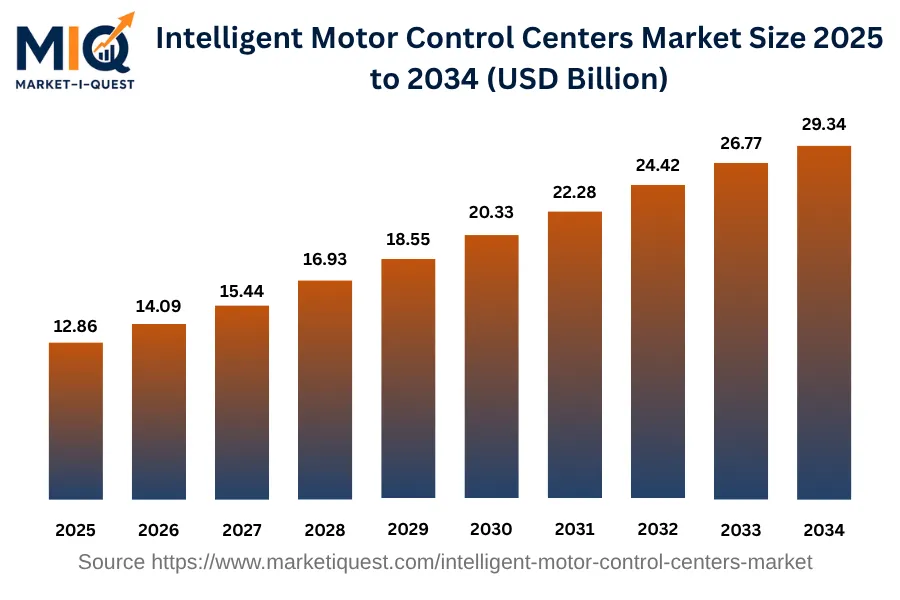
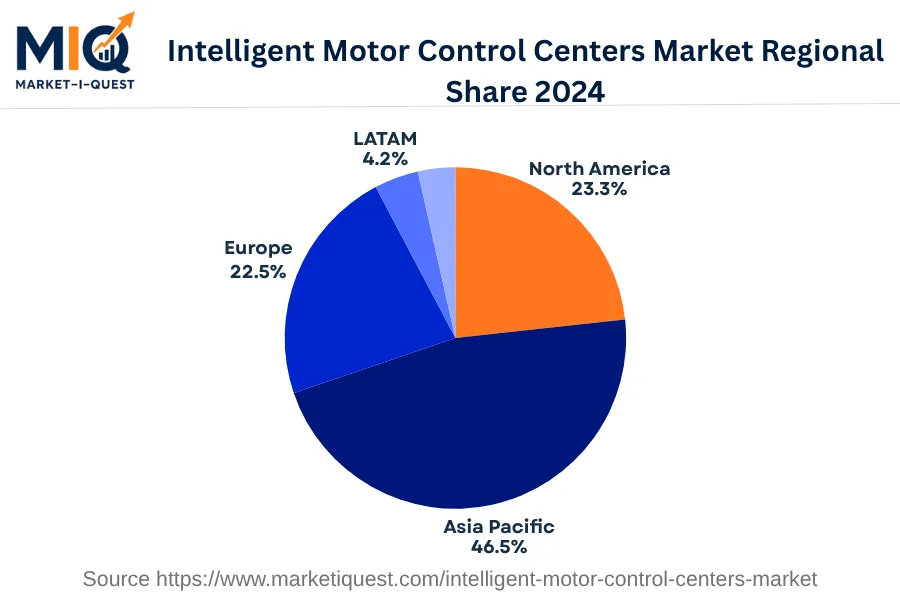
The Intelligent Motor Control Centers Market was valued at $12.86 billion in 2025 and is expected to grow to $29.34 billion by 2034, with a CAGR of 9.6%. This considerable increase in market size demonstrates a period of steady growth over those nine years. The robust growth rate is a reflection of the increase in market value, which begins in 2024 with a market size of $11.73 billion. It then climbs to $12.86 billion in 2025 before ultimately reaching $29.34 billion in 2034. On the geographical front in 2024, the Asia Pacific region had the largest share of the Intelligent Motor Control Centers Market, commanding 46.5% of the market. North America followed at 23.3%, while Europe held 22.5%. Less substantial market shares were held by LATAM at 4.2% and MEA at 3.5%. This shows the global outreach of the Intelligent Motor Control Centers Market and the varied distribution of its market shares.

Key Takeaways

  • By Type - Conventional subsegment held the foremost position in the Intelligent Motor Control Centers Market.
  • By Voltage Type - Low Voltage has led the market accounting for high significant share.
  • By Component - Circuit Breakers and Fuses led the market in the base year with dominant share.
  • By End User Industry - Power Generation sector leading rank in the Intelligent Motor Control Centers Market.
intelligent-motor-control-centers-market market size

Key Driving Factors

Implementation of Industrial Automation

In the field of manufacturing and heavy industries, there is an increasing shift towards industrial automation. This trend is fueled by the drive to enhance operational efficiency, lower manual errors, and improve safety standards. Intelligent Motor Control Centers (iMCCs) are a crucial part of this industrial automation as they provide centralized control, superior protection, and proficient management of motor functions. By integrating with the industrial automation systems, iMCCs can enable real-time data monitoring, predictive maintenance, and improved energy efficiency. Cities like Suzhou in China, known for its robust manufacturing industry, are showing accelerated adoption of automation technologies. This rising implementation of industrial automation across the globe is driving the Intelligent Motor Control Centers Market.
Strict Energy-Efficiency Regulations

Governments across the world are imposing stringent energy-efficiency regulations to combat environmental issues like global warming. For instance, the European Union's Energy Efficiency Directive (2012/27/EU) sets a target to improve energy efficiency by 20% by 2020. Such regulations compel industries to reduce their energy consumption. Intelligent Motor Control Centers play a fundamental role in this, as they can optimize motor start and stop processes, reduce electrical energy consumption during non-working hours, and facilitate energy-efficient operation of electric motors. Strategies for energy management, such as the ISO 50001 standard, further boost the adoption of iMCCs, thus propelling the Intelligent Motor Control Centers Market.

Market Evolution by Timeline

2019-2023
During 2019–2023, supply in the Intelligent Motor Control Centers market was driven primarily by large control and automation companies like Siemens and Rockwell. They had matured their integrated designs to include connectivity protocols like Ethernet/IP. Despite higher procurement costs, demand from industries such as oil and gas, and water and wastewater rose due to the promise of predictive maintenance and energy efficiency. Europe and North America were the dominant regions in adoption, driven by digitization policies and pressure to reduce energy consumption. While the commercial model typically favored direct purchase contracts, leasing agreements also started seeing some traction, especially in developing countries. Regulatory compliance, required to various national and international standards for safety and communications, including IEEE Standards, was a critical aspect. Market growth was constrained by the lack of properly trained personnel and concerns about cybersecurity.
2024
In 2024, transition to Industry 4.0 became more pronounced among buyers, with emerging markets like China and India showing notable adoption. Supply shifted towards pre-configured, standardized offerings from suppliers, as modularity and ease of integration with the existing architecture became key. Cloud-enabled motor control and monitoring solutions were increasingly launched in the market. However, these were met with skepticism due to potential risks associated with data security and the high cost of cloud-based solutions. Partnerships between automation companies and cloud service providers became common in order to offset these challenges, while procurement largely remained via direct contracts and leasing. Regulatory emphasis leaned towards ensuring data security, interoperability and energy efficiency.
2025-2029
Between 2025 and 2029, demand for Intelligent Motor Control Centers continued to grow significantly among energy-intensive industries such as manufacturing, oil and gas, and power generation, driven by the increasing need to reduce operational costs and improve process efficiency. Supply-side improvements included frameworks for seamless integration with legacy systems along with increased cybersecurity precautions. The commercial model shifted towards service-based contracts with pricing dependent on usage and outcomes, led primarily by companies offering cloud-based control centers. Policy changes favored energy-efficient technologies, which would drive adherence to standards such as ISO 50001. High initial costs and the absence of trained manpower were typical risks still present during this period.
2030-2034
From 2030 to 2034, the Intelligent Motor Control Centers market shifted towards more advanced technologies like AI and machine learning-enabled motor controllers which were more predictive than merely responsive. This move was fueled by companies such as GE and Honeywell, who invested heavily in this technology. Demand was prominent in developed countries due to policy support like the EU's 'Green Deal'. Commercial models during this time further enhanced the service component with predictive maintenance services being a common inclusion in procurement contracts. Federal policies, such as the US 'Energy Independence and Security Act of 2007' allowed for increased adoption of energy-efficient systems. However, cybersecurity risk kept being a serious concern.

Future Market Outlook

Future Opportunities

Looking ahead, the intelligent motor control centers market stands poised for transformative advancements driven by ongoing regulatory changes and technological innovations. With the European Union’s Green Deal initiating funding for sustainable industrial practices in 2021, there is a growing incentive for manufacturers to adopt energy-efficient technologies in their IMCCs. Companies such as Honeywell have proactively aligned their product offerings with these initiatives by promoting environmentally conscious motor control systems. The rise of autonomous technologies also opens new fronts, as demonstrated by the strategic partnership between Siemens and NVIDIA in 2023 to develop AI-driven industrial applications. The adoption of hybrid energy solutions, particularly in industries heavy with energy consumption, illustrates further opportunities; for instance, wind and solar energy integration has already been piloted by companies in Canada and Denmark. Moreover, the expansion of smart city initiatives presents a lucrative landscape for deploying IMCCs in urban settings, supported by infrastructure funding from governments evidenced in the United States' Bipartisan Infrastructure Law of 2021. Lastly, the focus on improving workplace safety continues to drive innovation, guided by standards from organizations like OSHA, which promotes the adoption of advanced safety features in motor control applications. Collectively, these factors signal a future where intelligent motor control centers can significantly improve operational efficiency and sustainability across diverse sectors.

Segmentation Analysis

By Type

The market is divided into subsegments including Conventional and Intelligent types. Conventional types accounted for the largest revenue share while Intelligent is expected to grow at the fastest CAGR during the forecast period.

Largest Revenue Share

Conventional

Market Share Leader

The Conventional type subsegment leads the market revenue-wise due to a range of key factors. This subsegment primarily includes traditional systems that have been in place for a long time and are thoroughly established within the industry. They have a robust consumer base thus the sizeable revenue share. These are trusted and widely adopted for their proven performance, reliability, and cost-effectiveness over many years. Their inclination towards low switching cost is another advantage that propels their wide-scale adoption. From a geographical perspective, developed markets like North America and Europe lead in their usage due to the maturity of the markets and developed infrastructure. The regulatory landscape also favors the conventional type, as these systems often meet rigorous safety and performance standards established by the industry, therefore leading to a largest revenue share in the market.

Fastest CAGR

Intelligent

Forecast Period Growth Leader

On the other hand, the Intelligent subsegment has the fastest growth outlook. This subsegment includes innovative systems that leverage artificial intelligence and advanced analytics to enhance their capabilities and offer comparative advantages over the conventional ones. There are several catalysts for this swift growth projection including an increase in capital expenditures by companies investing in technological advancements. These systems are more adaptable, flexible and they provide more insights as compared to conventional setups. The partnerships within tech industries for incorporating these intelligent systems also add to the growth spectrum. However, the major barriers remain around adoption due to high setup costs and the lack of technical understanding required to operate these systems. Thus, near-term risks mainly rely upon the adoption rate and scale-up challenges faced by the Intelligent subsegment.

By Voltage Type

The market for Voltage Type is divided into sub-segments including Low Voltage and Medium Voltage, with Low Voltage accounting for the largest revenue share while Medium Voltage is expected to grow at the fastest CAGR during the forecast period.

Largest Revenue Share

Low Voltage

Market Share Leader

In 2024, the Low Voltage segment held the largest revenue share in the Voltage Type market. This can be attributed to various factors. Predominantly, the increasing demand from residential and small-scale commercial customers drives this segment. The rise in new housing construction, renovation of older properties, and growing requirements of small-sized industries significantly contribute to the growth of this segment. Adoption of low voltage systems is particularly high in developed regions like North America and Europe, owing to well-established infrastructure and regulatory support. Besides, low voltage systems are easily manageable, cost-efficient, and meet the power needs of smaller settings, making them popular among customers. Ease of installation, product innovations, and increased penetration of electricity in rural areas further fuel the demand. However, the segment is also becoming attractive due to increasing focus on power optimization and energy efficiency. Regulation on energy consumption in many countries has made Low Voltage systems an ideal option.

Fastest CAGR

Medium Voltage

Forecast Period Growth Leader

The Medium Voltage segment is projected to grow at the fastest pace. The demand is coming from a variety of industries including the heavy machinery, energy, and manufacturing sector, where medium voltage is required for their heavy power transmission and distribution needs. Rapid industrialization in emerging economies, expansion of existing facilities in mature markets, and technological advancements are providing a major thrust to this segment. Moreover, a rise in renewable energy projects requiring medium voltage lines for grid connections is creating significant growth opportunities. Regulatory policies encouraging energy efficiency and reliability are also helping this segment. However, the high cost can be a barrier, making partnerships crucial among equipment manufacturers, solution providers, and end-users. On the flip side, fluctuating commodity prices and regulatory compliance could pose near-term risks to this burgeoning segment.

By Component

The market is divided into subsegments including Busbars, Circuit Breakers and Fuses, Overload Relays, Variable Speed Drives, Soft Starters, and Others. The Circuit Breakers and Fuses subsegment accounted for the largest revenue share whilst Variable Speed Drives is expected to grow at the fastest CAGR during the forecast period.

Largest Revenue Share

Circuit Breakers and Fuses

Market Share Leader

In 2024, Circuit Breakers and Fuses lead the component market, and the key driver behind their dominance is the crucial role they play in maintaining circuit safety in industrial, commercial, and residential applications. Circuit breakers are highly preferred due to their reusability, a feature not all other components offer. Their demands are driven by established electrical infrastructure that requires safety devices. The frequent need for replacement and upgrading of these components in developed economies such as the US and Europe also contributed significantly to its revenue. Fuses, on the other hand, provide a cost-effective solution for overcurrent protection in electronic devices and domestic appliances, thus enjoying a widespread customer base.

Fastest CAGR

Variable Speed Drives

Forecast Period Growth Leader

Variable Speed Drives (VSDs) are projected to witness the fastest growth rate. Some primary growth catalysts include the global drive to enhance energy efficiency and the increasing automation across industries. The adoption of VSDs brings down energy consumption by ensuring motors work at optimal speeds. Such drives are commonly used in pumps, compressors, and fans, increasing their functionality and efficiency. Furthermore, continuous technological advancements are making these drives more reliable and efficient. However, high initial investment and lack of trained professionals for the installation and maintenance of these devices could be potential barriers. To overcome these, companies are forming partnerships with local vendors and providing essential training, which could stimulate the adoption rate.

By End User Industry

The market is divided into subsegments including Automotive, Chemicals/Petrochemicals, Power Generation, Pulp and Paper, Food and Beverage, Mining and Metals, Cement Manufacturing, and Others. The Power Generation subsegment accounted for the largest revenue share, while the Automotive segment is expected to grow at the fastest CAGR during the forecast period.

Largest Revenue Share

Power Generation

Market Share Leader

The Power Generation subsegment leads the market in terms of revenue in the base year 2024. This industry's significant revenue generation can be attributed to the increasing global energy demand and the continuous need for generators and turbines in power plants. Geographically, developing countries are heavily investing in power generation infrastructure, fostering growth in this market. Moreover, stringent environmental regulations are driving the replacement of old equipment with newer, more efficient technologies, leading to additional demand. The high purchasing cost of these power generation equipment, combined with considerable switching costs, further solidify this subsegment's revenue leadership. Lastly, the industry's customers range from government agencies to private-sector corporations, all of whom have a perpetual requirement for power generation equipment, providing consistent demand.

Fastest CAGR

Automotive

Forecast Period Growth Leader

The Automotive subsegment is projected to exhibit the highest growth in terms of CAGR. This growth could be driven by various factors such as technological advancements, increasing customer preference for advanced technology, and upcoming stringent emission standards. Technological innovation, such as the shift towards electric and autonomous vehicles, will require a new set of resources and equipment, acting as a major growth driver in this segment. A partnership with technology providers will potentially become a catalyst for faster growth. However, high capital investment as well as adoption barriers due to customers' comfort with traditional vehicles might restrict the growth in the near term. Nevertheless, with supportive government policies and increasing environmental awareness among consumers, the future looks bright for this subsegment.

Competitive Analysis of Intelligent Motor Control Centers Market

Key Market Players

Manufacturers / OEMs

Rockwell Automation, Inc.
US
ABB Ltd
Switzerland
Eaton Corporation Plc
Ireland

Key Suppliers & Raw Materials

General Electric Co
US
Siemens AG
Germany
Schneider Electric SE
France

Distributors, Integrators & Channel Partners

Hallmark Motor Centre
UK
Industrial Control Direct
US
Direct Drives & Controls
US

Porter’s Five Forces Analysis

An analysis of the competitive dynamics for the Intelligent Motor Control Centers Market.

Supplier Bargaining Power

Medium

Suppliers exert moderate influence due to production complexity and expertise requirements.

Buyer Bargaining Power

High

Buyers have high bargaining power due to the presence of various vendors and low switching costs.

Threat of Substitutes

Low

Low substitution threat due to the specific technology and performance requirements.

Threat of New Entrants

Low

High R&D investments, expertise, and regulatory compliance needed decreases new entrant threat.

Competitive Rivalry

High

High rivalry due to large players with significant resources dominating the market.

Regional Analysis

Geographic market dynamics and growth opportunities across key regions

Global Market Outlook

intelligent-motor-control-centers-market market regional share

North America

In 2024, the Intelligent Motor Control Centers (iMCCs) market in North America was defined by technological adoption within the manufacturing and utilities sectors and enforced regulatory standards. The demand for energy optimization and electric motor efficiency, mainly in industries like manufacturing, drove the adoption of iMCCs. The adoption wasn't only demand-induced, but also propelled by US and Canadian regulations on energy conservation, which mandated industries to implement energy-efficient mechanisms. Additionally, the expansion of manufacturing units and utilities in Mexico led to increased investments in motor control technologies, escalating the demand for iMCCs.

Shifts were observed in buyer preferences towards advanced technologies for machine control and protection. The introduction of iMCCs integrated with Industrial Internet of Things (IIoT) trended across the manufacturing sector for improved process efficiency. Regulatory bodies in North America began stricter enforcement of North American Product Standards (NAPS) pertaining to electric motor control. Merger and Acquisition activities were prevalent among leading iMCC manufacturing companies to consolidate their market positioning. Digital channels started gaining prominence for sales and customer service for iMCC products, in response to increased technological familiarity across sectors. Significant customer sectors included manufacturing, energy and utilities, with noteworthy uptake in large manufacturing enterprises due to the large scale deployment of electric motors and their subsequent need for efficient controls.

Asia Pacific

In 2024, the Intelligent Motor Control Centers (IMCC) market in the Asia Pacific region was fueled by robust industrialization and technological advancements. Rapid industrialization in countries like China, India, and Japan led to substantial demand for electricity with automated systems, driving investment in efficient power distribution and control systems like IMCC. Similarly, strict government regulations regarding energy consumption in industrial units in these countries stimulated the adoption of IMCCs. For instance, China's implementation of the 'Made in China 2025' policy accelerated the adoption of intelligent equipment, impacting the IMCC market positively.

Changing buyer behavior added a new dimension to the market trends, with various sectors such as manufacturing and utilities showing a predilection for smart, energy-efficient machinery. Enterprises extensively adopted IMCCs for their ability to reduce maintenance cost and downtime, and prevent equipment failures. Developments in technology were especially noticeable in Japan and South Korea, where Industry 4.0, incorporating artificial intelligence and IoT, were increasingly integrated into motor control centers. Market consolidation via mergers and acquisitions was also a prominent trend in 2024, with key players leveraging these strategies to expand their footprint and strengthen their offerings. Furthermore, policy enforcement for stringent regulatory compliances, particularly in China and Australia, continued to shape the IMCC market dynamics.

Europe

In 2024, the Intelligent Motor Control Centers (IMCCs) market in Europe witnessed robust growth and transitioning dynamics in the manufacturing sector. Key demand factors included an increase in automation adoption in industries across Germany, the United Kingdom, France, Italy, Spain, the Nordics, Benelux, and Central and Eastern Europe. Rising energy costs and stringent regulations targeting energy efficiency further drove the market. Investments in smart grid infrastructure amplified the need for IMCCs in utilities.

Unfolding trends manifested in the shift of enterprise customers towards predictive maintenance - enabled by intelligent motor systems. Product-development focus moved towards modular, scalable designs meeting diverse customer needs. Distribution channels broadened, with a rise in online platform sales among small and medium-sized businesses. Also, partnerships flourished across the value chain, especially in the UK and Germany. Increased standardization sought to boost reliability and interoperability of IMCCs in healthcare and retail sectors.

Prominently, in Spain and Italy, government initiatives promoting smart manufacturing and digitalization of the industrial sector influenced the adoption of IMCCs. Non-trivial advancements in artificial intelligence and machine learning algorithms formed the technological underpinning of this market in Europe during 2024. These drivers and trends carved a distinct landscape for IMCCs usage across various sectors in Europe, reflecting the market's vitality.

Latin America

In 2024, Latin America's Intelligent Motor Control Centers (iMCCs) market registered significant activity due to evolving industrial dynamics. Proliferating industrial sector investments in Brazil and Mexico amplified the demand for iMCCs, with enhancements in technology embracing factors like IoT creating a positive shift in supply dynamics. In Argentina, stringent government regulatory measures towards energy-efficient motors propelled the uptake of iMCCs in the manufacturing sector.

In the same year, distinct trends shaped the iMCCs market in LATAM. The rising preference for energy-efficient and automated solutions led to increased adoption of iMCCs in industries such as utilities and manufacturing, especially in Chile and Peru. A distinct shift in buyer behavior was observed towards advanced motor control systems with real-time monitoring capabilities. The industry also witnessed notable partnerships between iMCC suppliers and local entities aimed at bolstering regional product reach, as seen in Colombia.

Sustainable policies around industrial energy efficiency were strictly enforced in LATAM, necessitating enterprises to opt for green solutions. Consequently, iMCCs, credited with improving energy efficiency and reducing operational costs, witnessed a surge in demand in various sectors, including government-backed utilities and private manufacturing firms. Finally, the rise in e-commerce presented a new avenue for the distribution of iMCCs, demonstrating a gradual shift in channel dynamics from traditional to online sales platforms.

Middle East & Africa

In 2024, the Intelligent Motor Control Centers Market in the Middle East and Africa showed a significant upsurge. The primary drivers included increased investment in infrastructure development, particularly in Saudi Arabia, United Arab Emirates, and Qatar, providing an impetus to the implementation of intelligent motor control centers. Strict energy efficiency regulations in countries such as South Africa and Israel, compelled industries to adopt these centers, enhancing energy optimization. Also, accelerated technological adoption in sectors like oil and gas, utilities, and manufacturing stimulated market growth.

The market witnessed several trends in 2024. A noticeable shift in buyer behavior was observed towards advanced models equipped with predictive maintenance capabilities, especially in the manufacturing and utilities sectors in Nigeria and Egypt. The rise in strategic partnerships and mergers and acquisitions between key global corporations and regional entities underscored market dynamics. For instance, agreements between multinational conglomerates and Saudi-based companies facilitated technological transfer and local industry development. Enforcement of strict safety standards was notable, particularly in the United Arab Emirates and Israel, promoting quality enhancement in product offerings. The healthcare and telecom sectors in Kenya signified the rapid acceptance of intelligent motor control centers, owing to the surge in digitalization and the need for efficient power management systems.

Recent Industry Developments

Latest market innovations, product launches, and strategic initiatives

February 2026

Engineers developed and released a system-level framework designed to solve power loss issues for large electrified motor systems operating on weak power grids. The research proves that specific battery support configurations allow heavy motor centers to survive severe power disruptions without halting production.

October 2025

An applied architecture was published demonstrating a successful cloud-connected monitoring system for industrial motor control. This development uses a network analyzer connected to internet dashboards, allowing engineers to remotely monitor motor health and prevent unexpected system shutdowns.

March 2025

Researchers published an industry-level framework detailing the integration of advanced hardware components and adaptable control software into motor startup systems. This development drastically limits power surges when motors are turned on, protecting the equipment and extending the lifespan of industrial motor networks.

Frequently Asked Questions