Industrial Insulation Market Snapshot

Key Players

  • Rockwool International A/S (Denmark)
  • Owens Corning (United States)
  • Knauf Insulation (Germany)
  • Saint-Gobain (France)
  • Armacell International S.A. (Luxembourg)
  • Johns Manville (United States)
  • Paroc Group Oy (Finland)
  • Recticel (Belgium)
  • Kingspan Group (Ireland)
  • Nichias Corporation (Japan)

Market Size

Base Year 2024
$8.53 Bn
CAGR
6.4%
Forecast 2034
$15.86 Bn

Market Segments

By Product
  • Wraps/Sheets
  • Coatings
  • Adhesive & Sealants
By Application
  • Chemical Processes
  • LNG
  • Power Generation
  • Heat Exchangers
  • Storage Tanks
  • Boilers
  • Others

Market Dynamics

Drivers
  • Rising energy efficiency standards
  • Increasing industrialization in developing economies
Restraints
  • High raw material costs
  • Stringent regulations on production
Opportunities
  • Emerging industrial sectors
  • Increasing adoption of green building measures

Market Size

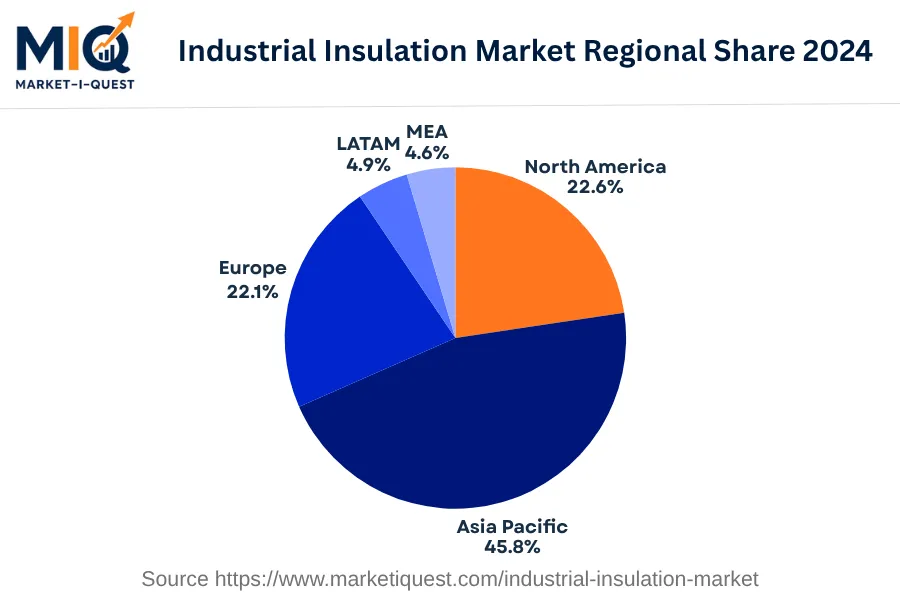
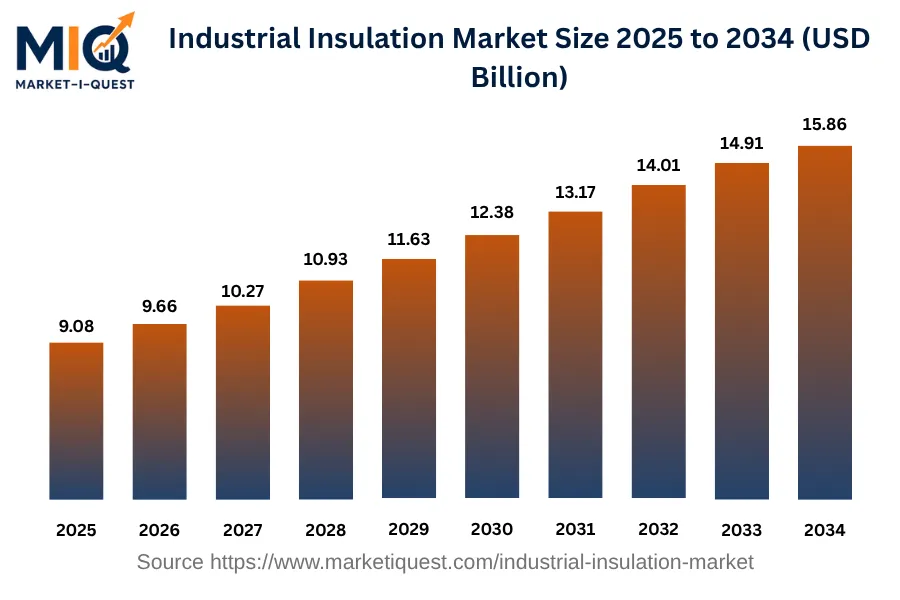
The Industrial Insulation Market size in 2025 stands at $9.08 billion, up from $8.53 billion in the prior year. From 2025 to 2034, the market increases to $15.86 billion, highlighting a compound annual growth rate of 6.4%. This nearly double increase over the decade illustrates the continued expansion and demand within the sector. Regional market share in 2024 displays a varied distribution of the industrial insulation sector: Asia Pacific leads significantly, accounting for 45.8% of the market. This is followed by North America and Europe, with 22.63% and 22.14% respectively. The markets in LATAM and the MEA regions were smaller with 4.85% and 4.6% shares respectively. This information reflects upon the global interest and diverse geographical bases of the industrial insulation market.

Key Takeaways

  • By Product - Adhesive & Sealants led the Industrial Insulation Market accounting for a significant share in the base year.
  • By Application - Power Generation segment held the prominent position in the market due to increasing demand.
industrial-insulation-market market size

Key Driving Factors

Implementation of Stringent Energy Efficiency Regulations

Many regions globally, are enforcing stringent energy efficiency regulations on industries to limit carbon emissions. Industries are required to follow the implemented codes and regulations, such as the Energy Efficiency Directive in the EU and Industrial Decarbonization strategy in the UK, concerning energy usage and conservation. Failure to comply could lead to fines and penalties, prompting industries to improve their processes and operations. In this regard, the industrial insulation market is gaining a boost as these materials play a significant role in improving energy efficiency. Insulation reduces energy consumption by preventing heat loss or gain in industrial processes, therefore meeting regulatory standards.

Shift Towards Using Low-Conductivity Materials in Industries

Industries such as petrochemicals, manufacturing and power generation are increasingly moving towards the use of low-conductivity materials to reduce energy loss and protect equipment from heat damage. Traditional materials fail to protect machinery from recurring heat cycles, leading to frequent equipment failure and inflated maintenance costs. Industrial insulation materials, such as aerogel and polyurethane foam, offer a low thermal conductivity solution, ensuring equipment longevity and operational efficiency. In these conditions, there's an escalated need for effective insulation solutions, providing a direct impetus to the industrial insulation market.

Market Evolution by Timeline

2019-2023
During this period, demand rose in North America and Asia-pacific due to an increase in industrial activities. Simultaneously, this led to a rise in supply of insulation materials such as mineral wool and fiberglass. However, there were some constraints caused by environmental concerns and high product costs. Policies such as ISO 9001 quality management system impacted the industry positively. Collaborations between manufacturers and local distribution networks became prevalent. Although the high cost involved in the procurement of raw materials and the volatile prices of these products presented risks, manufacturers adapted by continuing to search for cost-effective and environment-friendly raw materials.
2024
In 2024, demand for industrial insulation increased significantly in the Middle East due to expansion in oil and gas facilities. Aerogel insulation material witnessed a remarkable uptake due to its superior performance despite its high price. The regulatory environment stayed stable, with a continued emphasis on ISO 9001 standards. Commercially, long-term contracts were most common. However, high transportation costs due to unstable fuel prices constituted a significant risk in supply-chain logistics. The industry responded by optimizing transportation routes where possible.
2025-2029
From 2025 to 2029, rapid industrialization in countries including India and China led to an increasing demand. On the supply end, manufacturers are expected to adopt advanced technologies for improving product properties. Regulatory policies, such as the thermal insulation performance standard BS EN 12664, might become important. We will likely witness a shift in pricing tendencies, with more contracts having fixed price clauses for tackling against volatile raw material prices. Risks might include unsteady prices of raw materials and technological changes. Yet manufacturers may address this by investing in research and development.
2030-2034
By 2030, emerging markets in Africa are expected to start contributing significantly to the global demand. Manufacturers might start exploring new areas of application such as insulation in data centers which will likely drive innovation in product technology. The creation of the ISO 14001 environmental management standards in 2031 might further impose restrictions while driving companies towards sustainable alternatives. The commercial model might shift towards strategic alliances between manufacturers and end-users, reinforcing supply chain reliability. The rise of e-commerce channels may also allowed manufacturers for reducing distribution costs. The significant risk will expectedly involve will likely be managing waste from insulation materials. A strategy would adopt in response was recycling and reusing waste materials.

Future Market Outlook

Future Opportunities

As the industrial insulation market evolves, opportunities are emerging linked to the growing emphasis on energy efficiency and sustainability. In 2023, the European Union's Green Deal is pushing for stricter energy-saving regulations, creating a demand for advanced insulation solutions across multiple industrial sectors. Companies like Johns Manville are developing high-performance products that align with these emerging standards, particularly in sectors like manufacturing and logistics. Furthermore, the heating, ventilation, and air conditioning (HVAC) industry is increasingly recognizing the value of insulation in enhancing system efficiency, leading to collaborative efforts such as those observed between Carrier Global and insulation manufacturers. The focus on retrofitting existing buildings in urban centers is also driving demand, especially in regions such as North America, where renewable energy initiatives take precedence. Regulatory incentives for energy-efficient upgrades, such as the U.S. federal tax credits established for building improvements, are expected to stimulate investments in insulation technologies. Additionally, the trend toward digitalization in supply chain management offers opportunities for manufacturers to implement advanced logistics systems that can optimize insulation distribution. As stakeholders react to these regulatory pressures and market dynamics, the potential for enhanced product offerings and market expansion will likely shape the strategies of leading companies within this evolving landscape.

Segmentation Analysis

By Product

The market is divided into subsegments including Wraps/Sheets, Coatings, and Adhesive & Sealants. Adhesive & Sealants accounted for the largest revenue share, while Coatings is expected to grow at the fastest CAGR during the forecast period.

Largest Revenue Share

Adhesive & Sealants

Market Share Leader

Adhesive & Sealants remain the leading subsegment in terms of revenue generation in 2024, largely driven by its wide applications across various industries including construction, automotive, and packaging. The construction industry, in particular, has witnessed an increased usage of adhesives and sealants owing to their superior bonding capabilities, durability, and resistance to harsh environmental conditions. Additionally, evolving standards and regulations have propelled the demand for high-quality and eco-friendly adhesives and sealants, which have fertilizer high sales. On a geographical scale, Asia Pacific possesses a key market share due to the proliferating construction activities, chiefly in emerging economies like China and India. The cost of switching to other products is also high as it requires changes in manufacturing processes. The market is largely supplied through direct channels and the growing e-commerce platform, which further fuels the global demand.

Fastest CAGR

Coatings

Forecast Period Growth Leader

Despite not accounting for the most substantial revenue share, the Coatings subsegment is projected to register the fastest growth. The increasing demand for sustainable, durable, and high-performance coatings in multiple verticals such as automotive, construction, and marine is propelling this growth. Technological advancements and innovation in the sector have led to the development of new coating solutions capable of offering resistance to corrosion and harsh environmental conditions, extending the lifespans of products. Moreover, governments' norms and regulations to minimize VOC emissions have driven companies to invest in R&D for eco-friendly coatings. It is anticipated that strategic partnerships and collaborations in the market, particularly to enhance technical capabilities and extend regional reach, will provide further momentum. However, uncertainties relating to raw material prices and supply chain disruptions pose near-term risks to growth.

By Application

The market is divided into subsegments including Chemical Processes, LNG, Power Generation, Heat Exchangers, Storage Tanks, Boilers, and Others. Among these, Power Generation accounted for the largest revenue share while LNG is expected to grow at the fastest CAGR during the forecast period.

Largest Revenue Share

Power Generation

Market Share Leader

The Power Generation subsegment takes the lead on revenue primarily due to its essential role in virtually every industry, making it a pivotal driver for this market segment. Its dominance is largely due to an ongoing demand for electricity and thermal power across residential, commercial, and industrial sectors globally. In line with industrialization growth and urban migration, power plants continue to multiply, needing comprehensive and efficient solutions to manage generation processes. The Power Generation segment is also beneficial in environmental regulation compliance, with many companies employing innovative technologies to reduce carbon emissions from power plants. Additionally, government policies favoring the modernization of existing power infrastructures also augment investment and growth in this subsegment. The high switching cost, coupled with the robust distribution and marketing network by prominent players, further bolsters the revenue of Power Generation.

Fastest CAGR

LNG

Forecast Period Growth Leader

Despite not being the highest revenue earner, the LNG subsegment is projected to exhibit the fastest growth during the forecast period. The predicted expansion is instigated by the rising global demand for cleaner and efficient energy sources. Natural gas, notably LNG, is slowly gaining favor due to its lower emission rate compared to conventional fossil fuels. This trend is catalyzed further by tightening environmental regulations and policies supporting the transition to a low carbon economy. The surge of infrastructure development in the LNG industry, including LNG terminals and transport capacities, is paving the way for growth. However, the high initial capital expenditure and the complexity of LNG technologies may pose challenges in the adoption rate. Strategic partnerships and government incentives are essential for overcoming these barriers to fully unlock the growth potential of this subsegment.

Competitive Analysis

Key Market Players

Manufacturers / OEMs

Owens Corning
US
Rockwool International
Denmark
Knauf Insulation
Germany

Key Suppliers & Raw Materials

ArcelorMittal
Luxembourg
Baowu Steel Group
China
JFE Steel Corporation
Japan

Distributors, Integrators & Channel Partners

Fastenal
US
Würth Group
Germany
Sonepar
France

Porter’s Five Forces Analysis

The industrial insulation market analysis highlighting bargaining powers, threats and competitive rivalry.

Supplier Bargaining Power

Medium

Moderate control due to the presence of various vendors supplying insulating materials.

Buyer Bargaining Power

High

Buyers have high power due to plenty of suppliers, low switching costs and comparable products.

Threat of Substitutes

Low

Limited threat due to the specific performance requirements of industrial insulation materials.

Threat of New Entrants

Medium

Some barriers like investment costs and regulatory compliance limit new entrants, but not considerably.

Competitive Rivalry

High

Intense due to presence of numerous established players with similar product offerings.

Regional Analysis

Geographic market dynamics and growth opportunities across key regions

Global Market Outlook

industrial-insulation-market market regional share

North America

In 2024, the North American industrial insulation market was characterized by robust activity due to an array of demand factors and dynamic trends. Enhanced regulatory standards in the U.S., Canada, and Mexico drove demand upward, pushing businesses to upgrade their existing insulation to reduce energy consumption and conform to guidelines. Concurrently, large-scale investment in industrial development in all three countries bolstered the market uptake significantly. Technological advancements only added momentum, as organizations increasingly adopted innovative solutions like high-temperature insulation to improve efficiency.

Market trends reflected an evolving landscape dominated by conscious consumer behavior. Prioritization of energy-efficient solutions became more prevalent among customers, spurred by the U.S. Department of Energy's stringent measures on energy wastage. Shifting product preferences also marked a key trend, with a clear move towards insulation made from bio-sourced materials. Channel dynamics saw a focus on enhancing distributor partnerships to increase market penetration, especially in servicing the utilities and manufacturing sectors. Policy enforcement reached new heights, as all three governments intensified their efforts to ensure compliance with energy regulations. In summary, the 2024 North American industrial insulation market was underpinned by vigorous demand and rapidly evolving preferences, catalyzed by regulatory mandates, technological adoption, and an increased focus on sustainability.

Asia Pacific

In 2024, the Industrial Insulation Market in the Asia Pacific registered noticeable activity, driven primarily by regulatory mandates and investments in infrastructure development. Implementation of stringent government regulations towards energy conservation and GHG emissions reduction, particularly in China and India, become a crucial market driver. The Indian government's 'Perform, Achieve, Trade' (PAT) scheme incentivized industries to improve energy efficiency, fueling demand for high-quality insulation materials. Concurrently, massive infrastructure investment in ASEAN countries, to adhere to 'ASEAN Plan of Action for Energy Cooperation 2016-2025,' bolstered the market expansion.

Key trends include a remarkable shift towards sustainable and technologically advanced insulation materials, exemplified by the increasing popularity of aerogel and vacuum insulated panels. Changing buyer behavior towards eco-friendly products impacted market dynamics significantly, with considerable demand from utilities and manufacturing sectors prioritizing efficiency and sustainability. Partnerships and M&A activities flourished, especially in Japan and South Korea, due to the policy enforcement to upgrade existing infrastructure with modern insulation systems. In terms of sectors, manufacturing facilities and power plants emerged as the major consumers of insulation materials due to their requirements for high thermal efficiency and safety norms. To summarize, government initiatives, infrastructural investments, coupled with technology advancement and sustainability concerns, predominantly shape the industrial insulation market in the Asia Pacific in the year 2024.

Europe

In 2024, Europe's Industrial Insulation Market was characterized by robust demand and stringent regulations. The rapid globalization of manufacturing industries, coupled with stringent government regulations toward energy conservation, drove the demand for industrial insulation. Investment in sectors such as construction, oil & gas, chemical and power generation fostered the market growth. Technology adoption, especially in thermally efficient materials like calcium silicate, enhanced the market profitability as it led to cost savings for industrial operations.

A significant trend seen in the market was the shift towards environmentally friendly and sustainable products. Complementing these shifts were increased government policy enforcement for energy conservation and emission control, particularly in Germany, France, and the UK. This sparked consolidation in the form of partnerships and mergers within the market, resulting in improved product technologies and customer service. Furthermore, the growing preference for online distribution channels pointed to evolutions in buyer behavior. Key sectors that significantly influenced the European Industrial Insulation market in 2024 were manufacturing, government, utilities, and healthcare. Particularly, regulatory policies like the Energy Efficiency Directive in the EU and the focus on sustainable products in industries had a profound impact on the market's overall performance.

Latin America

The Industrial Insulation Market in Latin America experienced a significant evolution in 2024, driven by several factors. Stringent regulations enforcing energy efficiency, particularly in Brazil and Mexico, have escalated the demand for industrial insulation. Similarly, investments in the expansion of industrial sectors such as oil & gas in Argentina and manufacturing in Peru, necessitating insulation, have amplified the market growth. Adopting advanced insulating technologies in Chile's mining sector, driven by the need to resist high temperatures and corrosive environments further fuelled expansion.

Buyer behavior noticeably shifted towards sustainable insulation options as heightened environmental consciousness prevails in countries like Colombia. In Mexico, substantial commitments towards digitalization boosted the market for technologically advanced insulation options that ensure industrial safety and energy savings. Remarkable were the channel dynamics that saw a surge in online retail due to the accelerated digitization during the Pandemic. Partnerships and M&A dominated Colombia, where domestic manufacturers paired with global entities to capture the market share. Lastly, the enforcement of industrial safety standards in Brazil mandated the use of high-quality insulation to protect workers from excessive heat exposure in manufacturing plants, influencing business behavior. Consequently, the LATAM industrial insulation market has experienced transformations in 2024.

Middle East & Africa

In 2024, the industrial insulation market in the Middle East and Africa experienced a robust performance due to several driving factors and trends. Key drivers in this market included the increasing industrialization in countries like Saudi Arabia, UAE, and Nigeria, augmenting demand for industrial insulations. Governmental initiatives, such as Saudi Vision 2030, aiming towards a non-petroleum dependent economy, were encouraging the growth of energy-efficient industrial sectors, fostering demand for insulation products. Additionally, large-scale investments in infrastructure projects in Qatar and Egypt stimulated market growth, specifically within manufacturing and utilities sectors.

On the other hand, prevalent trends in the market were driven by technology shifts, as companies predominantly in South Africa and Israel started adopting advanced insulation materials such as aerogel and vacuum insulated panels (VIPs). Growing consumer concerns towards energy efficiency resulted in an increased demand for these high-end insulating materials in various sectors including oil and gas, and telecoms. Merger and acquisitions between key players also became more common, further consolidifying the market structure. Lastly, enforced policies aiming to reduce greenhouse emissions in Kenya played a role in bolstering the market as companies sought energy-efficient insulation products to achieve compliance. Overall, 2024 represented a pivotal time for the industrial insulation market in the mentioned regions, driven by enhanced industrial capacities, regulatory policies, technology adoption, and market consolidation.

Recent Industry Developments

Latest market innovations, product launches, and strategic initiatives

April 2026

The Indian government notified updated SWM Rules, which mandate that industrial units—including cement plants that use solid fuel—must substitute traditional fuels with Refuse Derived Fuel (RDF). This regulation creates a new compliance-driven demand for high-performance industrial insulation, as facilities modernize their thermal systems to accommodate higher-efficiency RDF combustion technologies.

March 2026

NUTEC Bickley, a prominent member of Group NUTEC, completed the acquisition of ETS Schaefer, LLC. This acquisition is a strategic move to consolidate expertise in monolithic ceramic fiber linings, significantly strengthening the company’s portfolio for high-temperature thermal insulation in industrial furnaces and kilns.

Frequently Asked Questions