In-Vitro Colorectal Cancer Screening Tests Market Snapshot

Key Players

  • Exact Sciences Corporation (US)
  • Epigenomics AG (Germany)
  • BioGenex (US)
  • Sysmex Corporation (Japan)
  • Abbott Laboratories (US)
  • Danaher Corporation (US)
  • Eiken Chemical Co. Ltd. (Japan)
  • Siemens Healthcare GmbH (Germany)

Market Size

Base Year 2024
$1.67 Bn
CAGR
7.84%
Forecast 2034
$3.55 Bn

Market Segments

By Test
  • Fecal Occult Blood Tests
  • Biomarker Tests
By End Use
  • Hospitals & Clinics
  • Diagnostic Laboratories

Market Dynamics

Drivers
  • Increasing colorectal cancer incidences
  • Expanding geriatric population
Restraints
  • High screening costs
  • Limited awareness in developing regions
Opportunities
  • Rising colorectal cancer prevalence
  • Increased awareness for early detection

Market Size

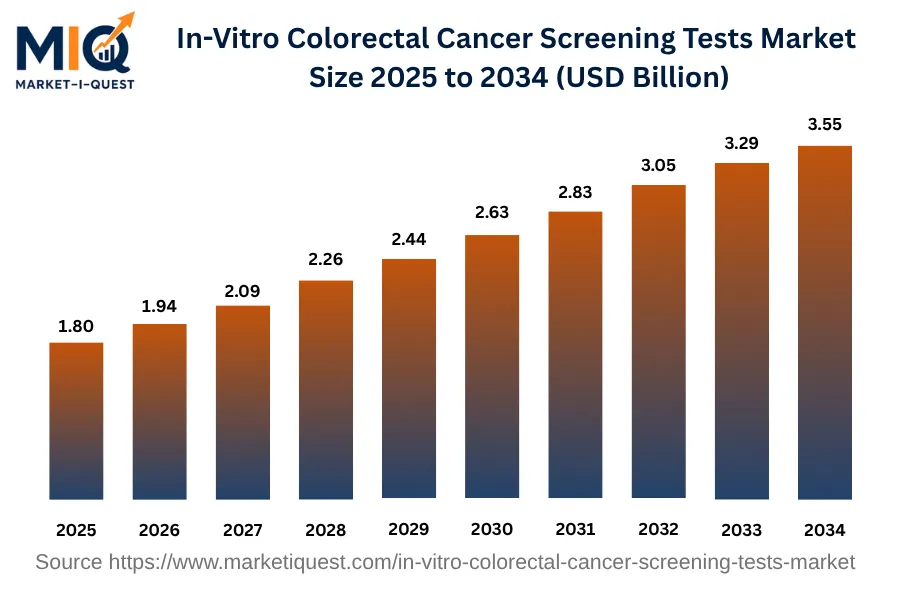
The In-Vitro Colorectal Cancer Screening Tests market is projected to increase from USD 1.67 billion in 2024 to USD 1.80 billion in 2025. Rapid expansion is forecast to continue over the next decade, with the market size reaching USD 3.55 billion by 2034. Growth is driven by Compound Annual Growth Rate (CAGR) of 7.84% between 2025 and 2034. The reasons for this growth include increased demand for early detection methods, advancements in technology providing better screening tests, and the prevalence of colorectal cancer all contributing. A geographic breakdown of the market’s 2024 regional shares reveals North America accounting for 40.16%, Asia Pacific at 28.43%, Europe making up 24.62%, while Latin America and Middle East and Africa hold smaller shares of 3.58% and 3.21% respectively.

Key Takeaways

  • By Test - Biomarker Tests led the In-Vitro Colorectal Cancer Screening Tests Market with a significant share in the base year.
  • By End Use - Hospitals & Clinics held the majority stake symbolizing the key role of healthcare institutions in the market.
in-vitro-colorectal-cancer-screening-tests-market market size

Key Driving Factors

Adoption of Minimally Invasive Procedures

In recent years, there has been a significant shift in the healthcare sector towards minimally invasive procedures like in-vitro colorectal cancer screening tests. This trend is driven by patient preference; these procedures are generally less painful, lower-risk, and have quicker recovery times than traditional surgical methods. Simultaneously, physicians and healthcare providers are increasingly recommending these tests due to the high precision and reliable results they offer. Moreover, insurance providers are showing preference towards these screening methods because they tend to be more cost-effective in the long run, reducing overall treatment costs.

Implementation of Cancer Screening Guidelines

Healthcare organizations worldwide, like the American Cancer Society, have implemented guidelines that recommend regular colorectal cancer screening for individuals over a certain age or with higher risk factors. These guidelines have been a major driving factor for the uptake of in-vitro colorectal cancer screening tests. They have resulted in a steady increase in the number of people, particularly in the aging population, who undertake regular screenings. Furthermore, governments in many developing and developed countries are initiating awareness campaigns to encourage adherence to these guidelines, due to the high morbidity associated with colorectal cancer. These combined efforts are substantially driving the demand for these screening tests.

Market Evolution by Timeline

2019-2023
During this period, buyers mainly consisted of hospitals, diagnostic centers, and individual practitioners in developed regions like North America and Europe. Due to higher healthcare expenditure and growing awareness about colorectal cancer, these regions accounted for highest demand. The major supply came from medical device manufacturers that introduced non-invasive stool DNA tests. However, low integration maturity resulted in moderate consumption. Strict FDA regulatory norms controlled the market propagation. There was a common commercial model wherein suppliers offered package pricing inclusive of test kits and subsequent laboratory procedures. The high-cost barrier was a significant risk involving concerns on affordability among the less affluent population.
2024
Typically in 2024, emerging markets, such as Asia and Africa, witnessed increased demand due to rising colorectal cancer cases. The technological landscape saw the emergence of liquid biopsy tests, however, these were primarily in pilot stages and faced high development cost issues, limiting their widespread adoption. Policy-wise, the UN's Universal Health Coverage program brought about an upward trend in cancer screening tests accessibility. Generally, volume-based procurement contracts were practiced by large hospitals to ensure cost efficiency. A possible risk was inaccurate results from preliminary tests that required investigation.
2025-2029
By this stage, the demand was relatively high across regions due to a growing geriatric population. Easy-to-use home test kits started gaining popularity. Multiplex PCR technology was widely adopted, portraying increased integration maturity, despite high manufacturing costs. Changes in regulation policies were observed with relaxed approval pathways for breakthrough technologies directed by recognized bodies like the National Cancer Institute. The pricing model transitioned to a service-based approach, where companies offered comprehensive service packages. However, the associated risk of false-negative results was a significant concern often raised.
2030-2034
Demand grew with an upward trend in colorectal cancer cases worldwide and a strong preference for early diagnosis. The supply chain mainly incorporated diagnostic retail chains that sold FDA-approved home-based colorectal cancer screening kits. AI-based diagnostic tests started shipping, albeit slowly due to stringent regulatory standards, such as HIPAA in the US for sensitive patient data. Partnerships between diagnostic centers and retail chains were typical for volume procurement. The kit pricing became competitive due to high market saturation. The major risk remained in the computational errors in AI systems leading to misdiagnosis.

Future Market Outlook

Future Opportunities

Moving forward, the in-vitro colorectal cancer screening tests market is poised for various growth opportunities rooted in current technological and regulatory trends. As of September 2023, the World Health Organization announced a new initiative targeting the elimination of colorectal cancer as a public health threat by 2040. This initiative is expected to drive increased investments in effective screening solutions across multiple countries. Countries such as Japan and Australia are already prioritizing screening programs, which may lead to potential partnerships with diagnostic companies to enhance test accessibility. Furthermore, the gradual emergence of value-based healthcare frameworks encourages payers and providers to seek highly effective and efficient screening strategies. For instance, in 2022, the United Kingdom's National Health Service expanded its screening program to include non-invasive tests, thereby paving the way for wider adoption. At the same time, the rising incidence of colorectal cancer in younger populations, highlighted by studies published in journals like The Lancet Gastroenterology & Hepatology, urges healthcare systems to rethink existing screening ages and methods. The impending advancements in genomic profiling and personalized medicine are expected to bring tailored testing options to the forefront, thus creating further opportunities for companies focusing on next-generation screening technologies. This evolving landscape illustrates a promising future for the in-vitro colorectal cancer screening tests sector, fueled by a solid foundation of current developments.

Segmentation Analysis

By Test

The market is divided into subsegments including Fecal Occult Blood Tests and Biomarker Tests. Biomarker Tests accounted for the largest revenue share while Fecal Occult Blood Tests are expected to grow at the fastest CAGR during the forecast period.

Largest Revenue Share

Biomarker Tests

Market Share Leader

Biomarker tests are leading the market in revenue. Their dominance is primarily driven by their broad application in various diseases diagnosis coupled with their proven efficiency in disease detection. Biomarker tests offer high sensitivity and specificity, making them more reliable. Their vital role in predicting disease progression and therapeutic response further boosts their demand. These factors enhance their adoption among healthcare professionals. Furthermore, biomarker tests have a robust presence in developed regions such as North America and Europe, which boast advanced healthcare infrastructure and high patient awareness levels. Regulatory bodies in these regions endorse the use of biomarker tests given their ability to facilitate early disease diagnosis. The purchasing criteria for these tests hinge on their performance accuracy, regulatory approval status, and compatibility with existing lab systems. The cost of switching from these tests is substantial, influencing customer loyalty. Lastly, these tests are widely available across numerous distribution channels, including hospital pharmacies and medical stores, enhancing their accessibility.

Fastest CAGR

Fecal Occult Blood Tests

Forecast Period Growth Leader

Fecal Occult Blood Tests (FOBTs) represents the segment with the fastest growth. This can be attributed primarily to the increasing prevalence of gastrointestinal (GI) diseases and the early disease detection advantages of FOBTs. As GI disorders are becoming more common due to changing diets and lifestyles associated with urbanization and industrialization, the demand for FOBTs has grown substantially. In addition, technological advancements and investment in research and development are driving the creation of more accurate and reliable FOBTs. The future of this segment is tied to health policies promoting early disease diagnosis and scaled screening programs. Current barriers to adoption often stem from a lack of awareness about FOBTs and their benefits. Misconceptions about the complexity and discomfort of the test could pose near-term growth risks. However, partnerships with healthcare organizations and improved patient education can catalyze market growth.

By End Use

The market is divided into subsegments including Hospitals & Clinics and Diagnostic Laboratories. In 2024, Hospitals & Clinics accounted for the largest revenue share while Diagnostic Laboratories is expected to grow at the fastest CAGR during the forecast period.

Largest Revenue Share

Hospitals & Clinics

Market Share Leader

Hospitals and clinics demonstrated the largest revenue share given their critical role in the healthcare ecosystem serving a majority of the patient population. Their dominance in revenue is driven by sheer volume and variety of treatments and diagnostic services offered, supported by multifaceted medical specialties and large patient flow. The procurement of high-end technologies and equipment are commonplace in these settings, stimulating market revenue. Moreover, increased government funding in public healthcare and robust expansion of private healthcare facilities have underpinned this growth. Geographically, mature markets with established healthcare systems generate significant revenue. However, developing nations contribute to the growth due to increased healthcare spending and health infrastructure development. This segment's dominance is also shaped by regulations that promote state-of-the-art medical facilities, making sophisticated technology and equipment almost indispensable for these establishments.

Fastest CAGR

Diagnostic Laboratories

Forecast Period Growth Leader

The Diagnostic Laboratories subsegment is projected to grow at the fastest CAGR during the forecast period. A number of factors are propelling this growth. Firstly, technological advancements in diagnostic tools and methodologies are fueling this pace. Innovations in genetic testing, precision medicine, molecular diagnostics, and automation have dramatically enhanced laboratory functionality and efficiency, consequently intensifying adoption rates. Secondly, the current global emphasis on early detection and prevention as a healthcare approach is a major growth driver. Diagnostic labs play a pivotal role in this paradigm shift, leading to amplified demand. Moreover, policy initiatives promoting regular health screenings are catalyzing the heightened use of diagnostic laboratories. However, near-term risks could lie in potential regulatory changes, budget constraints, and the high initial cost of cutting-edge diagnostic technology. Despite the challenges, strategic partnerships, and targeted capital investments could mitigate these risks and fuel faster growth.

Competitive Analysis

Key Market Players

Manufacturers / OEMs

Exact Sciences Corporation
US
Beckman Coulter, Inc.
US
Siemens Healthineers
Germany

Key Suppliers & Raw Materials

Thermo Fisher Scientific Inc.
US
BD
US
F. Hoffmann-La Roche Ltd
Switzerland

Distributors, Integrators & Channel Partners

Henry Schein Medical
US
Medline Industries Inc.
US
McKesson Medical-Surgical Inc.
US

Porter’s Five Forces Analysis

Analysis of the competitive forces affecting the in-vitro colorectal cancer screening tests market.

Supplier Bargaining Power

Low

Supplier power is low due to numerous suppliers and low differentiation of inputs.

Buyer Bargaining Power

High

Buyers, primarily healthcare providers, possess strong negotiation powers due to the availability of alternatives.

Threat of Substitutes

Medium

In-vivo tests, digital rectal tests, and fecal occult blood tests pose medium substitution threats.

Threat of New Entrants

Medium

Medium entry barriers due to regulatory constraints, high research requirements but growing demand provides opportunities.

Competitive Rivalry

High

High rivalry due to the presence of several well-established competitors with similar offerings.

Regional Analysis

Geographic market dynamics and growth opportunities across key regions

Global Market Outlook

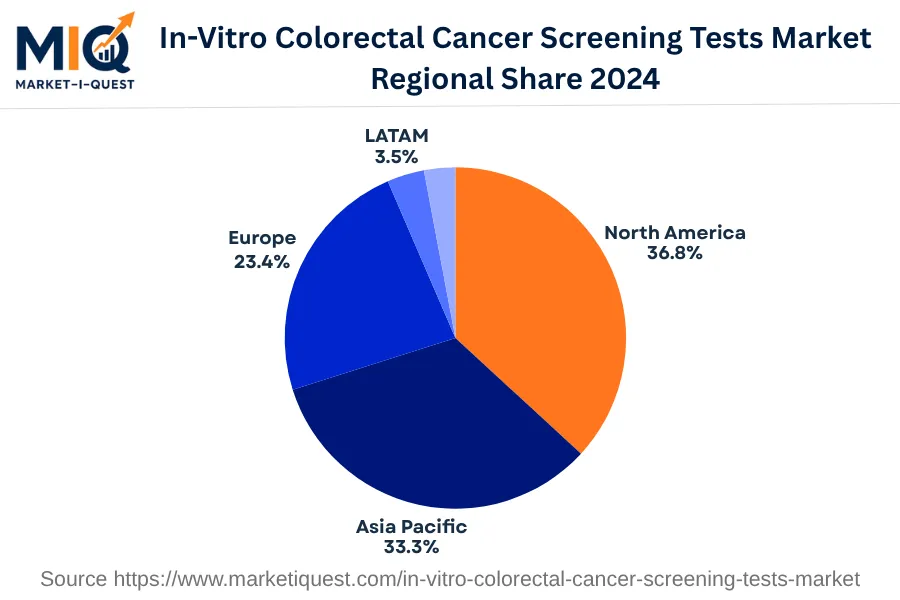
in-vitro-colorectal-cancer-screening-tests-market market regional share

North America

In 2024, the North American in-vitro colorectal cancer screening tests market exhibited iterative growth, spurred by a combination of regulatory dynamics, technology adoption and increased consumer awareness. Key drivers were led by the United States' health organizations increased emphasis on early detection policies, which spurred demand for screening tests and facilitated the increased public investment towards these initiatives. In addition, technology adoption was rampant, with non-invasive stool-based DNA tests gaining traction due to their efficacy and ease of use. Moreover, the affordable pricing of these tests in countries like Canada and the United States increased an accessibility effect, enhancing the market's expansion.

On the trend aspect, buyer behavior showed a significant shift towards preventive healthcare, increasing the reliance on in-vitro colorectal cancer screening tests. Partnerships between diagnostic labs and insurance companies in the United States grew, making the tests more affordable and accessible. Digitization emerged as a strong trend, with Mexico's healthcare sector incorporating digital methods for disseminating information regarding colorectal cancer and screening methods. Regulatory bodies also enforced stricter standards for the manufacturing and marketing of these tests, ensuring public safety and trust. These trends and drivers mostly affected the healthcare sector, with diagnostic labs, insurance companies, and hospitals in the United States, Canada, and Mexico being the key stakeholders.

Asia Pacific

In 2024, the In-Vitro Colorectal Cancer Screening Tests market in Asia Pacific witnessed substantial growth. Driving this expansion were various factors, including increased investments in the healthcare sector, heightened awareness of early detection's importance, and rising adoption of advanced screening technologies. Specifically, countries like China, Japan, and Australia led in implementing preventive healthcare regulations that pushed the demand. India and South Korea showcased a surge in private sector investment in healthcare, stimulating supply dynamics. Changing trends also complemented the drivers. There was a marked shift in buyer behavior towards non-invasive screening methods, reflecting in the market. Technological innovation, particularly in molecular diagnostics, received a boost, reshaping product choices across the region. Significant M&A activities occurred among healthcare providers and diagnostic companies, further consolidating the market. Regulatory bodies, like Australia's Therapeutic Goods Administration and China's National Medical Products Administration, tightened quality standards, impacting policy enforcement in this sector.

Primarily, the demand was strongest among government healthcare bodies and private hospitals. Simultaneously, enterprises in the pharmaceutical and biotech sector acted as crucial supply-side players. Overall, the dynamics of Asia Pacific's In-Vitro Colorectal Cancer Screening Tests market in 2024 were shaped by intricate interplays of regulatory changes, technological progress, and evolving customer preferences.

Europe

In 2024, the European In-Vitro Colorectal Cancer Screening Tests market experienced noteworthy dynamics. A surge in colorectal cancer incidence, coupled with increased public awareness and healthcare funding, drove significant demand for early detection. Technological advancements—specifically in noninvasive, biomarker-based tests—on the supply side facilitated market growth. Moreover, increased governmental regulation for population-based screening programs, especially in Germany, France, and the United Kingdom has been a potential catalyst for adoption. Emerging trends in 2024 encompassed changing customer behaviors, technology shifts, and policy enforcement. A shift in customer preferences leaning towards non-invasive tests prompted healthcare providers to adopt advanced detection techniques. Collaboration among diagnostics companies and research institutes proliferated, underpinning the development of novel technologies, notable in Benelux and Nordic countries. The digitalization trend in healthcare allowed for efficient data management and facilitated telemedicine consultations for colorectal screening. As result, regulation enforcement increased, with Italy and Spain amplifying health policies for routine colorectal cancer screenings.

The market's primary stakeholders in 2024 included healthcare providers, governments, and regulatory bodies. The healthcare sector, with a significant emphasis on hospitals and diagnostic centers, remained the primary consumer of these tests, prioritizing early detection and improved patient care. Conclusively, the European In-Vitro Colorectal Cancer Screening Tests market’s dynamics were mainly framed by disease prevalence, technological adaption, governmental regulations, and evolving consumer behavior.
Latin America

In 2024, the In-Vitro Colorectal Cancer Screening Tests market in Latin America showed significant growth, heavily influenced by various factors across Brazil, Mexico, Argentina, Colombia, Chile, and Peru. Increased awareness about early detection of colorectal cancer significantly drove demand, particularly in healthcare sectors where the implementation of regular screenings became commonplace. Governmental backing in these countries also played a critical role as regulations facilitated greater investment in diagnostic technologies, heightening the adoption of advanced in-vitro tests. The supply dynamics further changed as competitive pricing strategies were adopted, making these tests more accessible to a broader populace.

Significant trends in 2024 revealed evolving buyer behavior with a visible shift towards non-invasive testing methods – thanks to growing understanding about their accuracy and efficiency. Additionally, partnerships and mergers were on the rise as companies sought to penetrate remote regions, escalating the market reach amidst the healthcare providers. Changes in policy, particularly in Brazil and Colombia, mandated regular screenings, enforcing a steady surge in demand. Another noticeable phenomenon was the shift towards digital health solutions, particularly in Argentina and Chile, where the focus was strengthening telediagnosis capabilities. This aligned the in-vitro colorectal cancer screening tests market in LATAM with the broader global tilt towards telehealth, contributing to its growth in 2024.

Middle East & Africa

In 2024, the In-Vitro Colorectal Cancer Screening Tests market in the Middle East and Africa was defined by active investment in healthcare infrastructure and growing awareness of early diagnosis. There was increased demand in countries like Saudi Arabia, UAE, Qatar, Egypt, South Africa, Nigeria, Kenya, and Israel primarily due to a higher incidence rate of colorectal cancer, increased government support for cancer diagnostic tests, rising number of healthcare facilities, and the introduction of advanced technologies. The initiation of national screening programmes in countries like Israel was also a driving factor.

The year witnessed certain shifts in buyer behavior with a stronger emphasis on preventive healthcare, hence the adoption of non-invasive procedures in screening tests became more prevalent. Technological advances such as stool-based tests and colonoscopies saw a higher adoption rate across private healthcare facilities and hospitals. Manufacturers formed strategic partnerships to expand distribution across major economies like Saudi Arabia and South Africa, illustrating a heightened focus on product accessibility. In response to the increased demand, a growth in the local manufacturing units, particularly in Egypt and Nigeria, was evident, thus reducing import dependency. Many countries implemented stringent regulations for product approval, ensuring the highest safety and quality standards.

Recent Industry Developments

Latest market innovations, product launches, and strategic initiatives

June 2026

At the Digestive Disease Week (DDW) 2026 in Chicago, Abbott shared new data highlighting the potential of emerging liver and esophageal tests, with CRC screening data further bolstering the effectiveness of Cologuard in driving better outcomes and getting more people screened. The American Cancer Society also updated its CRC screening guidelines, reaffirming Cologuard and Cologuard Plus as preferred non-invasive screening options for average-risk adults aged 45 and older.

November 2025

Abbott (NYSE: ABT) announced a definitive agreement to acquire Exact Sciences (NASDAQ: EXAS) for $105 per common share**, representing a total equity value of approximately **$21 billion. The acquisition aimed to position Abbott as a leader in the fast-growing $60 billion U.S. cancer screening and precision oncology diagnostics market. Exact Sciences' portfolio includes Cologuard®, Oncotype DX®, Oncodetect™, and Cancerguard™.

Frequently Asked Questions