
Healthcare Reimbursement Marke Snapshot

Key Players

  • UnitedHealth Group (US)
  • Aetna Inc. (US)
  • Boston Health Economics (US)
  • Zelis Healthcare (US)
  • Siemens Healthcare (Germany)
  • Roche Holding AG (Switzerland)
  • Sanofi (France)
  • Cerner Corporation (US)

Market Size

Base Year 2024
$28.53 Bn
CAGR
12.65%
Forecast 2034
$93.89 Bn

Market Segments

By Claim Type
  • Underpaid
  • Full Paid
By Payer
  • Private Payers
  • Public Payers
By Service Provider
  • Hospitals
  • Physician Office
  • Diagnostic Laboratories
  • Others

Market Dynamics

Drivers
  • Increasing healthcare costs
  • Rising insurance coverage
Restraints
  • Complex reimbursement structures
  • Regulatory constraint imposition
Opportunities
  • Increasing healthcare spending
  • Under-insured population growth

Market Size

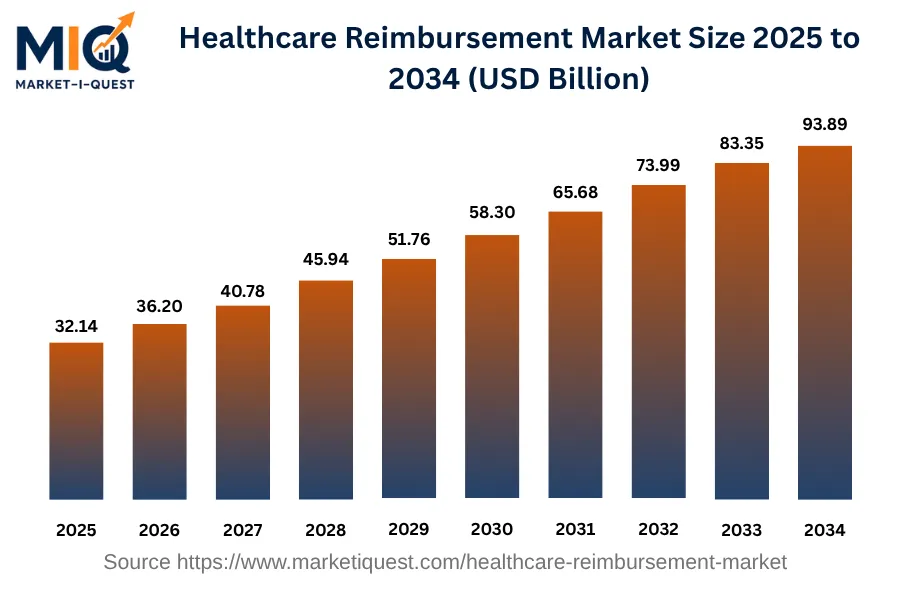
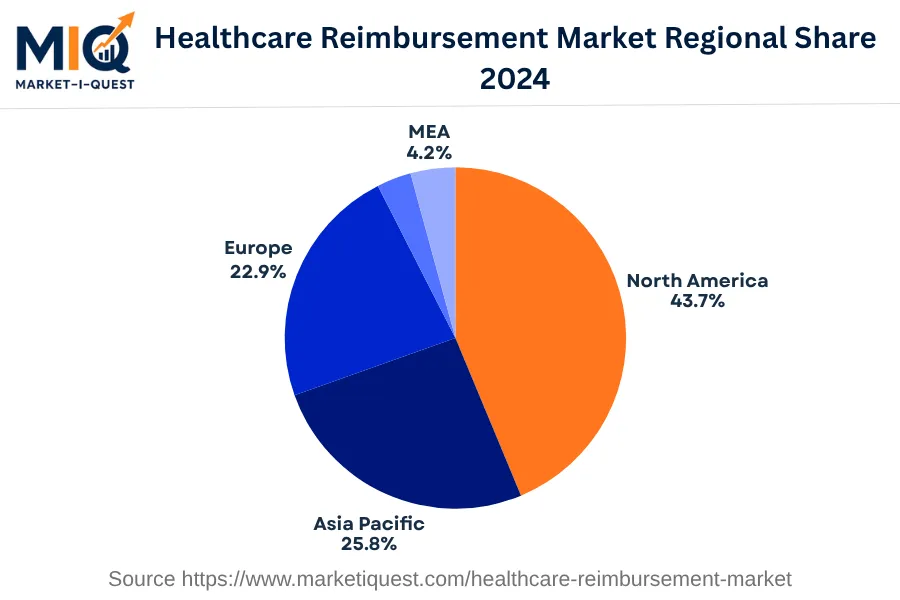
The Healthcare Reimbursement Market size is estimated at 32.14 billion USD in 2025, up from 28.53 billion USD in 2024. By 2034, the market is projected to increase substantially to 93.89 billion USD, showing a compound annual growth rate (CAGR) of 12.65%. The marked growth over the ten-year period reflects the progressive trajectory of the healthcare reimbursement industry. Regionally, the market was split in 2024, with North America accounting for 43.7%, Asia Pacific claiming 25.8%, Europe representing 22.9%, Latin America taking up 3.3%, and Middle East and Africa with a 4.2% share.

Key Takeaways

  • By Claim Type - Full Paid held a significant share in the Healthcare Reimbursement Market in the recent past.
  • By Payer - Private Payers led the market demonstrating the prevalence of private healthcare insurance.
  • By Service Provider - Hospitals accounted for the largest share offering an insight into the primary source of healthcare claims.
healthcare-reimbursement-market market size

Key Driving Factors

Implementation of Value-Based Reimbursement Models

A shift from the original fee-for-service model towards value-based reimbursement programs is currently taking place in the healthcare industry. This change is significantly impacting the healthcare reimbursement market, causing providers to adjust their operational strategies. The Centers for Medicare & Medicaid Services (CMS) has been at the forefront of promoting this system with a goal of improving the quality and efficiency of healthcare services. Rather than compensating providers for the volume of services, this model pays providers based on patient outcomes in an effort to incentivize better care. The adoption of this model by significant healthcare stakeholders such as CMS influences other participants in the healthcare sector, thus driving the healthcare reimbursement market.
Regulatory Changes Regarding Coverage of Telehealth Services

The pandemic has accelerated telehealth demand and the legislative adjustments related to reimbursement are affecting the healthcare reimbursement market. Particularly, the regulatory changes from government-run and private insurers have extended the coverage to include telehealth services. For instance, Medicare's temporary broadening of telehealth service coverage spans across various healthcare professionals and has no geographical restriction. This type of regulatory flexibility not only increases patient access to healthcare services, but also pushes healthcare providers to adjust, adopt, and invest in telemedicine capabilities. This expansion and increased coverage are prominent mechanisms driving the evolution of the healthcare reimbursement market.

Market Evolution by Timeline

2019-2023
During this period, there was a significant increase in healthcare utilization in emerging markets such as China and India, which resulted in greater demand for efficient reimbursement schemes. Concurrently, the Affordable Care Act (ACA) in the US aided private payers to embrace bundled payments. In technology, interoperable digital solutions like Electronic Health Records (EHR) were piloted to improve efficiency. However, issues such as data security and integration popped up. The update of International Classification of Diseases from ICD-9 to ICD-10, a medically comprehensive coding system increased administrative load but enabled precision in detection and billing. Commercially, Fee-for-Service models started losing their luster due to subjectivity in pricing. The major risk was payment delays due to complicated claim processes.
2024
In 2024, American patient demographics underwent a marked shift as baby boomers grew older, driving an uptick in Medicare reimbursement claims. Supply-side, Big Data and AI were increasingly used to develop predictive models for forecasting reimbursement scenarios, though scaling these technologies remained a challenge. Policy-wise, the Protecting Access to Medicare Act (PAMA) evolved, affecting laboratory fee schedules and diagnostic test reimbursements. Commercially, many healthcare providers formed partnerships with Health Maintenance Organizations (HMOs) to ensure prompt payment cycles. Instances of healthcare fraud from miscommunication or intentional deception were the prominent risks during this period.
2025-2029
Between 2025 and 2029, healthcare buyers notably shifted towards preventative care as chronic diseases rose worldwide, leading to an increase in the volume of reimbursement claims. Technologies like blockchain emerged to streamline the claim settlement process. Despite the promise, integration with existing systems invoked technical difficulties. Policymakers worldwide pushed for the adoption of a single-payer system with the hopes of streamlining disbursement and reducing fraud. Consequently, reimbursement rates started getting regulated by government entities, affecting the profitability of private players. The commercial risk during this period was under-reimbursement due to these regulations.
2030-2034
From 2030 to 2034, reimbursement pressure from an aging global population conveyed the need for evolving care models. Health Technology Assessment (HTA) tools were increasingly integrated into pharmaceutical and medical device reimbursement processes to assess economic value. Regulatory focus shifted to implementing the 'value-based' approach replacing old Fee-for-Service models. This led to changing contractual agreements between healthcare providers and insurance companies, emphasizing 'pay for performance'. Navigating these new rules resulted in a resource-intensive process, becoming a significant blocker. Overcoming this involved skilling staff and developing new information-sharing networks to handle value-based reimbursement systems.

Future Market Outlook

Future Opportunities

Future opportunities in the healthcare reimbursement market are closely tied to current legislative and technology dynamics. The ongoing push for value-based care models presents an enhanced focus on patient outcomes, driven by the CMS's initiatives implemented in the last few years. As more healthcare systems embrace these models, there will be greater demand for data analytics tools that help providers assess their performance against reimbursement benchmarks. For example, technology providers supporting value-based care initiatives, such as Optum and Quest Diagnostics, are well-positioned to expand their offerings. With advancements in telehealth established during the COVID-19 pandemic, ongoing changes in reimbursement policies from CMS and private insurers reflect a potential permanence of these services. Subsequently, years like 2024 will likely see an upsurge in hybrid care models that seamlessly integrate in-person visits with remote consultations, requiring advanced billing systems that can accommodate diverse service types. Moreover, regulatory bodies, including the National Committee for Quality Assurance, are now focusing on the quality of care metrics that can drive reimbursement policies. This regulatory emphasis will create opportunities for technology solutions that can streamline documentation processes and improve compliance. Additionally, as international markets look toward standardized reimbursement practices, firms with expertise in global compliance will find prospects to expand their activities into territories currently underserved by modern reimbursement technologies.

Segmentation Analysis

By Claim Type

The Claim Type segment is divided into subsegments including Underpaid and Full Paid. Among these, Full Paid claims accounted for the largest revenue share while Underpaid claims is expected to grow at the fastest CAGR during the forecast period.

Largest Revenue Share

Full Paid

Market Share Leader

While both subsegments are integral parts of the Claim Type market, Full Paid claims secure the leading position in terms of revenue generation. This can be attributed to several factors. Primarily, the simple and direct transaction involved in Full Paid claims appeals to many customers, as it provides certainty of payment with minimal bureaucracy. Additionally, this option often comes into play in well-regulated geographies with strong enforcement of laws, ensuring that claimants receive their full due. Moreover, this segment proliferates in cases where the purchasing criteria lean heavily on immediate liquidity and risk aversion. The switching costs are also traditionally high for Full Paid claims, contributing to the customer sticking to this option. Furthermore, robust and convenient channels ease the processing of such claims. It is, therefore, these cumulative elements that have led to Full Paid claims having a dominating presence in the revenue pie for year 2024.

Fastest CAGR

Underpaid

Forecast Period Growth Leader

On the other hand, Underpaid claims display a remarkable Compound Annual Growth Rate (CAGR). One of the key drivers for such proliferation is the gradual formation of regulations addressing claim underpayment. Tech-enabled tools are making it increasingly easier to detect instances of underpayment, aiding in higher recovery rates. There's also been an increase in partnerships among law firms and claim recovery consultants, thereby catalyzing growth in this subsegment. While such changes mark a positive trend, it is important to note that the near-term risks include resistant policy changes leading to longer recovery timelines, capital expenditure in intelligent tools and potential resistance from institutions unwilling to acknowledge underpayment. Nevertheless, growing awareness and policy improvements in the space is likely to stabilize and increase the growth rate of the Underpaid claims segment.

By Payer

The market is divided into subsegments including Private Payers and Public Payers, with Private Payers accounting for the largest revenue share, while Public Payers is expected to grow at the fastest CAGR during the forecast period.

Largest Revenue Share

Private Payers

Market Share Leader

Private Payers contribute maximum to the revenue amongst both the subsegments. This can be largely attributed to the vast consumer base that they possess. Presence of multiple private insurance providers with diversified plans provides consumers the freedom to choose based on their financial allowances and medical requirements. Also, private insurance often covers a broader range of medical expenses, including those not typically covered by public payers like cosmetic surgery, acupuncture, and other alternative treatments. Private payers usually have the advantage of shorter waiting periods for procedures compared to public payers. Geographically, regions with a larger portion of the population opting for private hospitals and health care services, provide a major boost to the revenue generated by private payers. However, stringency in governmental regulations across different regions could also influence the market dynamics.

Fastest CAGR

Public Payers

Forecast Period Growth Leader

Even though Public Payers currently have a smaller share in revenue compared to Private Payers, they exhibit a more rapid compound annual growth rate. Increased government initiatives to provide affordable healthcare solutions, especially to the economically weaker sections, are driving this growth. Regions where public healthcare programs are more predominant are witnessing a surge in the adoption of public payment options. Furthermore, technological advancements, collaborations, and public-private partnerships are creating an enabling environment to allow seamless interactions among patients, providers, and payers. This also mitigates procedural complexities often associated with public payers, thus promoting their acceptance. However, potential reforms to public healthcare policy could be a near-term risk affecting the stability and growth of this subsegment.

By Service Provider

The market is segmented by service providers, including Hospitals, Physician Offices, Diagnostic Laboratories, among others, with Hospitals generating the most revenue in 2024, while Diagnostic Laboratories are projected to see the fastest growth rate in the forecast period.

Largest Revenue Share

Hospitals

Market Share Leader

Hospitals accrued the highest revenue share in 2024, which can be attributed to several key drivers. Hospitals, being established healthcare centers, have high patient footfalls, providing a vast consumer base for revenue generation. They provide comprehensive services ranging from diagnosis to treatment, leading to an extensive utilization of resources contributing heavily to revenue. Geographically, hospitals are more widespread than other healthcare facilities, leading to better accessibility for patients. There is also a regulatory push towards centralization of healthcare services in hospitals for better regulation and maintenance of healthcare standards. Other purchasing criteria that contribute to the substantial revenue of hospitals include the trust and reputation associated with established hospitals. Regarding supply chain, many hospitals have integrated laboratories, pharmacies, diagnostic and imaging centers enhancing patient's journey and revenue inflow. The high switching costs associated with changing healthcare providers, as patients typically prefer staying with a trusted provider, also aid in maintaining substantial revenue generation.

Fastest CAGR

Diagnostic Laboratories

Forecast Period Growth Leader

Diagnostic Laboratories are anticipated to register the fastest Compound Annual Growth Rate in the forecast period. Medical testing is increasingly moving out of hospitals and into diagnostic laboratories due to advancements in technology and economies of scale. Diagnostic laboratories offer quicker turnaround times, as they are solely focused on tests and not on care delivery, which creates demand among patients and physicians. These laboratories also have a lower barrier to entry, allowing them to adopt newer technologies more rapidly. Partnerships between diagnostic labs and research institutions also serve as catalysts for growth. Such collaborations facilitate research and innovation, leading to the expansion of testing capabilities. Capital investment in diagnostic labs tends to focus on more sophisticated and efficient technology and better trained staff, which further fuels their growth. There are risks associated with this subsegment, however, such as regulatory uncertainty and potential disruption from novel testing methods.

Competitive Analysis: Healthcare Reimbursement Market

Key Market Players

Manufacturers / OEMs

UnitedHealth Group
US
Humana Inc.
US
Aviva
UK

Key Suppliers & Raw Materials

Cerner Corporation
US
McKesson Corporation
US
GE Healthcare
US

Distributors, Integrators & Channel Partners

CVS Health
US
Aetna Inc.
US
Express Scripts Holding Company
US

Porter’s Five Forces Analysis

The healthcare reimbursement market is characterized by governmental policy, market competition, and technological advancements.

Supplier Bargaining Power

Low

Government policies and insurance companies largely dictate reimbursement rates.

Buyer Bargaining Power

Medium

Buyers have some power through choice of insurer, but options may be limited by employer health plans.

Threat of Substitutes

Low

There are few substitutes for insurance-based healthcare reimbursement within the current healthcare system.

Threat of New Entrants

Low

High regulatory requirements and capital costs deter new entrants.

Competitive Rivalry

High

Competition is intense among existing providers, often driven by service offerings and insurer networks.

Regional Analysis

Geographic market dynamics and growth opportunities across key regions

Global Market Outlook

healthcare-reimbursement-market market regional share

North America

In 2024, the Healthcare Reimbursement Market in North America experienced significant shifts due to various drivers and trends. Factors such as an aging population, increased technological adoption in healthcare services, and governmental regulations heavily influenced market dynamics. Rising incidences of chronic diseases among the elderly significantly increased demand for healthcare services, ultimately impacting the reimbursement market. The increased adoption of Telehealth services, most notably in the U.S and Canada, also attributed to market changes. Furthermore, the enforcement of regulations like the Affordable Care Act (ACA) in the U.S. and Canada Health Act remained crucial, impacting reimbursements.

Simultaneously, trends also shaped the healthcare reimbursement space significantly. Healthcare consumerism in the U.S., characterized by patients' increasing knowledge and expectations for healthcare services, reflected in reimbursement claims for patient-centered care. The harmonization of electronic health records in Mexico's public healthcare sector fostered data-driven decision-making trends regarding healthcare reimbursements. Lastly, several partnerships and M&A activities, primarily between healthcare providers and insurance companies, shaped reimbursement strategies to increase efficiency and patient satisfaction. These critical drivers and developing trends were noted across all key sectors - enterprise, government, and healthcare.

Asia Pacific

In 2024, the Asia Pacific's healthcare reimbursement market witnessed significant dynamics. A surge in demand due to the aging population, chronic diseases, and a push towards universal health coverage mainly drove the market in China, India, and ASEAN countries. The Chinese government's welfare schemes aimed at rationalizing prices for healthcare services, coupled with India's ambitious Ayushman Bharat program, enhanced market growth. Moreover, technology adoption with electronic health records (EHR) implementation in Australia and South Korea bolstered the market complexity. Market trends revealed an increasing predilection for government-sponsored health coverage and a shift towards digitization in claim reimbursements, profoundly impacting regional mindsets. The collaborations and partnerships between healthcare providers and insurance companies, as seen in Japan and South Korea, fortified the trend. Moreover, stricter enforcement of healthcare policies, as in China and key ASEAN markets, contributed to shaping market behavior.

On the sector front, governmental and healthcare enterprises were top customers. Manufacturing industries also drove demand due to occupational health hazards resulting in an increased need for reimbursement mechanisms. The retail sector in Australia was a significant spender for health reimbursements under employee benefit schemes, aligning with the global shift towards employee healthcare. This comprehensive demand and supply-side dynamics identified in 2024 aptly defined the Asia Pacific market state for healthcare reimbursement.

Europe

In 2024, the European healthcare reimbursement market was characterized by notable advances and shifts. Regulatory changes emerged as a significant driver with Germany's Digitale Versorgung Gesetz (Digital Care Act) accelerating the adoption of digital health solutions. Demand heightened due to an aging population across countries such as Italy, France, and Spain, putting increased pressure on healthcare systems. The EU’s focus on investment in infrastructure and technology aimed to improve the general standard of healthcare, specifically in Central and Eastern Europe, also contributed to market growth. Noteworthy trends included a rise in private-public partnerships to enhance healthcare delivery across the UK and Benelux countries. A shift from fee-for-service to value-based models was observed, with the Nordics leading such efforts in response to their unique population health challenges. In Spain, digital transformation initiatives led to substantial investments in data-driven and AI technologies for claims processing, streamlining both the patient experience and administrative operations.

Health insurance companies and government health agencies were key customers in this market, leveraging new technologies to challenge traditional reimbursement processes. The enterprise sector, especially pharmaceutical and medical device manufacturers, shared this focus. Despite the absence of a unified European strategy, country-specific policies and regulations played defining roles in shaping the healthcare reimbursement market landscape in 2024.

Latin America

In 2024, the healthcare reimbursement market in Latin America showed a significant increase due to the rise in healthcare expenditure. Driving factors were the increased investment in healthcare infrastructure, particularly in Brazil and Mexico, as governments sought to improve access to high-quality medical services. Regulatory changes in Argentina and Colombia aimed at streamlining healthcare reimbursement processes fostered market growth by easing administrative burdens. Technological advancements, especially in electronic health record systems, also boosted the market by improving efficiency in reimbursement processes in Chile and Peru.

Trends observed in the market included a shift in buyer behavior, as healthcare institutions increasingly preferred cost-effective solutions for reimbursement management. Digitization in healthcare led to significant shifts in tech adoption, with software solutions gaining popularity for their ability to enhance efficiency and accuracy in reimbursement processes. In terms of channel dynamics, there was a noticeable increase in the use of online platforms for reimbursement transactions. Partnerships and M&A activities were prevalent, with leading companies expanding their footprint across the region. In terms of policy enforcement, governments across LATAM enforced stricter regulations ensuring transparency and accountability in healthcare reimbursement processes. These market circumstances mainly affected enterprises and the healthcare sector but also had ramifications on retail and government sectors, given their significant role in healthcare financing.

Middle East & Africa

In 2024, the Healthcare Reimbursement Market in the Middle East and Africa prominently represented a key segment of the region's healthcare sector. The market was majorly driven by increasing demands for improved health services, robust public-sector funding in countries like Saudi Arabia and UAE, and the adoption of cutting-edge health technologies. Regulatory reforms in countries like Egypt bolstered the market, with the implementation of the Universal Health Insurance Law significantly impacting healthcare reimbursement. Furthermore, persisting health challenges in countries like South Africa and Nigeria led to concerted investment in healthcare, with a resultant boost on the reimbursement front.

Trends that shaped the market in 2024 included a growing preference for private health insurance in countries like Kenya and Israel. Changes in health service delivery with the increased use of telemedicine owing to the advent of technologies like AI fundamentally altered reimbursement practices. Additionally, partnerships flourished amongst healthcare providers, insurers, and governments aimed at cost-effectiveness and efficient service delivery. On the policy front, the enforcement of regulations enhancing transparency and fairness in health service pricing was evident across the region. These trends, by and large, shaped the healthcare reimbursement market in the Middle East and Africa in 2024, with government, healthcare, and financial services sectors playing considerable roles.

Recent Industry Developments

Latest market innovations, product launches, and strategic initiatives

January 2026

CitiusTech and Ventra Health announced a strategic partnership to develop and deploy the vCision™ AI-powered revenue intelligence platform. The collaboration combines Ventra's revenue cycle expertise with CitiusTech's healthcare engineering, Gen AI, and Agentic AI capabilities.

October 2025

CMS released the Medicare Physician Fee Schedule final rule for 2026, setting separate conversion factors for qualified practitioners in advanced alternative payment models and non-qualified physicians. The 2026 final rule drew sharp criticism from several healthcare associations.

Frequently Asked Questions