Healthcare Mobility Solutions Market Snapshot

Key Players

  • Medtronic PLC (Ireland)
  • GE Healthcare (US)
  • Koninklijke Philips N.V. (Netherlands)
  • McKesson Corporation (US)
  • Cisco Systems Inc. (US)
  • Cerner Corporation (US)
  • Zebra Technologies Corporation (US)
  • Oracle Corporation (US)
  • AT&T Inc. (US)
  • Allscripts Healthcare Solutions Inc. (US)

Market Size

Base Year 2024
$185.43 Bn
CAGR
19.45%
Forecast 2034
$1096.58 Bn

Market Segments

By Device Type
Smartphones, Tablets, Wearable Devices, Laptops
By Technology
Cloud Computing, Mobile Applications, Wireless Communication, Internet of Things (IoT)
By Application
Remote Patient Monitoring, Telemedicine, Healthcare Workflow Management, Medication Management, Others
By End Use
Hospitals, Home Care, Healthcare Providers, Pharmacies

Market Dynamics

Drivers
  • Rising healthcare expenditures
  • Increasing geriatric population
Restraints
  • High implementation costs
  • Data security concerns
Opportunities
  • Emerging telehealth trends
  • Untapped rural healthcare sectors

Market Size

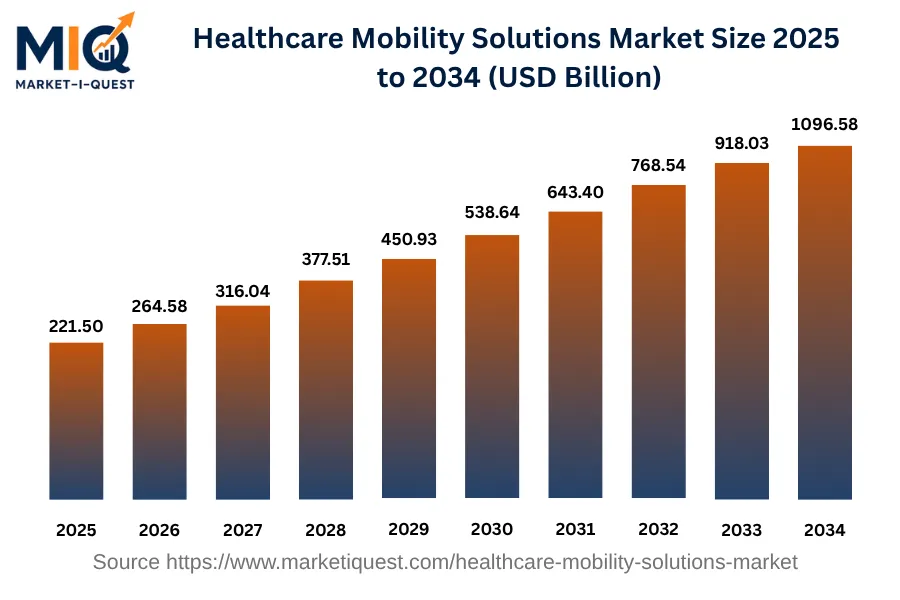
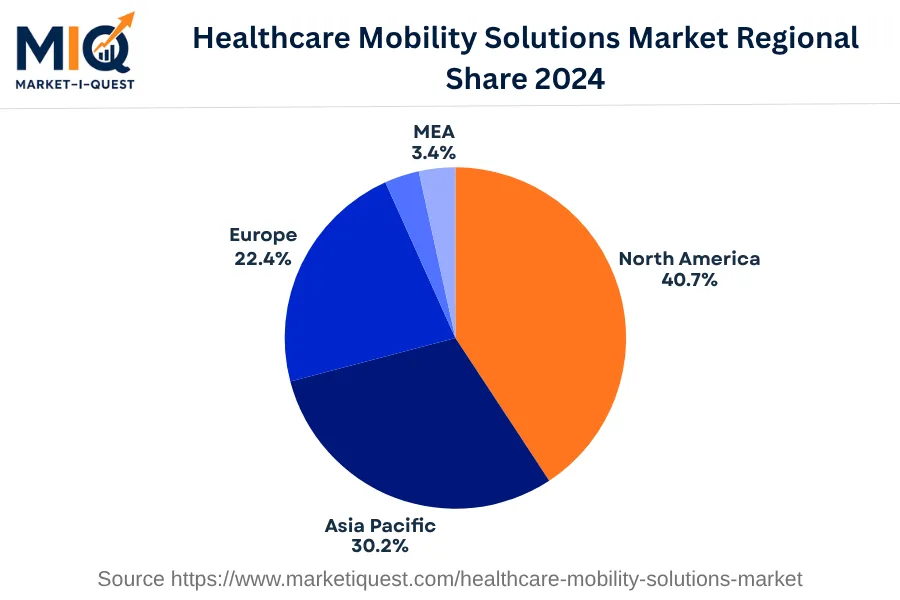
The Healthcare Mobility Solutions Market size was valued at $221.50 billion in 2025, starting from a size of $185.43 billion in 2024. By 2034, this figure is projected to reach $1096.58 billion, expanding at a compound annual growth rate (CAGR) of 19.45%. This marked increase over a ten-year period is a result of a consistent growth trajectory, likely due to increasing demand for these solutions over the time period. Regionally, in 2024, the market shares were distributed as follows: North America held the largest share at 40.7%, followed by the Asia Pacific with 30.2%, and Europe close behind at 22.4%. Lesser shares of the market were held by Latin America and the Middle East and Africa, at 3.3% and 3.4% respectively.

Key Takeaways

  • By Device Type - Smartphones held the leading position in the last base year.
  • By Technology - Internet of Things (IoT) was the fastest-growing segment in a recent period.
  • By Application - Telemedicine dominated accounting for a significant market share.
  • By End Use - Hospitals accounted for the major share in the last base year.
healthcare-mobility-solutions-market market size

Key Driving Factors

Implementation of Electronic Health Records (EHR)

The wide-scale adoption and implementation of Electronic Health Records (EHRs) is a prominent factor driving the healthcare mobility solutions market. EHRs are integral to modern healthcare where patient information such as medical history, diagnoses, medications, treatment plans, immunization dates, and radiology images is stored electronically. They facilitate the seamless exchange of patient data between physicians, hospitals, and labs, improving coordination and quality of care. The demand for efficient, quick, and error-free patient care has resulted in an increasing shift towards EHRs in hospitals and clinics globally. To support this transition, healthcare mobility solutions, allowing healthcare professionals to access and update EHRS from mobile devices, are proving indispensable, thus driving their market.
Accelerating Telehealth Adoption

The surge in telehealth adoption, particularly in response to the global health crisis precipitated by COVID-19, is also propelling the healthcare mobility solutions market. Telehealth facilitates remote patient monitoring, virtual appointments, and mobile health apps, necessitating the use of healthcare mobility solutions. Doctors and patients are leveraging these solutions to connect virtually, manage appointments, and share health data. The need for ongoing patient care while maintaining social distancing in the face of the pandemic is further intensifying this trend. Therefore, the accelerated adoption of telehealth practices directly contributes to the growth and expansion of the healthcare mobility solutions market.

Market Evolution by Timeline

2019-2023
The healthcare mobility solutions market saw increased usage across East Asia, North America, and Western Europe due to an aging population combined with the rise in chronic diseases. Providers focused on creating patient-centered experiences, integrating solutions such as mobile health apps, EHR systems, and pharmacy management systems. The Health Insurance Portability and Accountability Act (HIPAA) and General Data Protection Regulation (GDPR) considerably influenced product development and security measures. Most transactions were contractual, with bundled packages common in corporate engagements. Major suppliers included Epic Systems Corporation, Cisco Systems, and Allscripts Healthcare Solutions. The major constraint during this period was insufficient technological infrastructure, particularly in developing regions.
2024
Artificial Intelligence (AI) and predictive analytics became more integrated into healthcare mobility solutions in 2024, largely driven by the Western and Northern hemispheres' demand, for advanced diagnostics and patient care strategies. Cloud-based solutions gained prominence due to flexibility and cost-efficiency. The US government implementation of the 21st Century Cures Act largely impacted market sentiment, driving more providers towards interoperability. Companies offered freemium services, with premium features and packages under annual contracts. Widespread adoption was hindered by concerns of data breaches and the associated penalties for non-compliance with patient privacy regulations.
2025-2029
In this phase, adoption extended to lower-income markets, primarily in Asia and Africa, catalyzed by interest in disease prevention and lifestyle improvement programs. Solutions evolved into holistic health management systems incorporating wearables and smart gadgets. Government initiatives like India's National Digital Health Mission helped shape the direction of healthcare mobility solutions. The market moved towards a subscription model, with monthly or yearly payments encompassing software, services, and support. However, the lack of digital skills and connectivity issues represented significant obstacles for uptake in many low-resource settings.
2030-2034
The market's supply by this point drew heavily on IoT capabilities, connecting healthcare devices and sensors wirelessly across vast regions. Demand was particularly high in urban areas of the Middle East and Latin America due to the density of population and the accelerating rate of non-communicable disease incidence. Universal health coverage initiatives and the Sustainable Development Goals influenced data standards and interoperability requirements. The most common pricing structure transitioned to be pay-per-use, with partnerships forming across healthcare providers, tech companies, and insurers. The main barrier to overarching success was rural connectivity and language localization issues.

Future Market Outlook

Future Opportunities

The future of healthcare mobility solutions holds substantial opportunities for innovation and growth, especially driven by current trends and market dynamics. As telehealth adoption soared during the COVID-19 pandemic in 2020, healthcare systems worldwide implemented remote consultation solutions like Zoom for Healthcare and Doxy.me, reshaping how patients engage with providers. This accelerated adoption signals that the demand for integrated mobile solutions will persist as healthcare organizations seek to enhance virtual care options. Leading providers such as Teladoc Health are exploring partnerships with technology firms to develop more sophisticated patient engagement applications. The emergence of artificial intelligence in mobile healthcare applications offers a chance to improve diagnostic accuracy and patient outcomes, evidenced by collaborations between companies like IBM Watson Health and various healthcare institutions starting in 2021. Moreover, rural healthcare delivery systems are likely to leverage mobile solutions to address accessibility challenges, as highlighted by programs initiated by the National Rural Health Association. Regulatory bodies, such as the FDA, are already establishing clear frameworks for mobile health applications, opening doors for innovation within a compliant environment. Furthermore, patient data analytics derived from mobile apps could lead to more personalized healthcare experiences, a trend already being explored by firms like Epic Systems Corporation. As all these factors align, the future landscape for healthcare mobility is poised for significant enhancement, fostering improvements in patient care worldwide.

Segmentation Analysis

By Device Type

The market is divided into subsegments including Smartphones, Tablets, Wearable Devices, Laptops. Among these, Smartphones accounted for the largest revenue share while Wearable Devices are expected to grow at the fastest CAGR during the forecast period.

Largest Revenue Share

Smartphones

Market Share Leader

Smartphones as a subsegment currently lead the market in terms of revenue generation. This leadership position can be attributed to multiple factors. The ubiquity of smartphones is a significant driver, with people worldwide relying on them for communication, productivity, entertainment, and more. There's also the recurring revenue from app store purchases. Moreover, smartphones cater to a broad customer base encompassing individual consumers, businesses, and enterprises, thereby assuring stable sales volumes. Geographical regions such as Asia, North America, and Europe contribute significantly to the smartphone market's revenue, with increasing digitalization trends and high consumer spending. Regular technological advancements in smartphone features and capabilities also bolster product attractiveness and market performance. However, it's worthy of a note, that despite this dominance, the smartphone subsegment is maturing, and growth rates might stagnate in near future, opening opportunities for other upcoming technological devices.

Fastest CAGR

Wearable Devices

Forecast Period Growth Leader

The wearable devices subsegment is projected to have the fastest growth rate in the market. This forecast is driven by a combination of factors such as technological advancements, consumer adoption trends, and strategic partnerships between tech and fashion brands. Such devices include smartwatches, fitness trackers, and wearable health monitoring devices. Technological innovations are driving increased functionality, for instance, health tracking capabilities are attracting health-conscious consumer niches, further catalyzing growth. Adoption barriers such as high prices and privacy concerns are being overcome as companies invest in user-friendly designs and stringent data protection norms. A potential risk might be the rapid obsolescence and consequent need for frequent upgrades, which may deter certain consumer strata. Despite this, consistent technological advancement and expansion of use-cases are likely to sustain a high CAGR for wearable devices in the near term. Note that this assumption is based on typical market dynamics and trends prevalent in the tech industry.

By Technology

The market is divided into subsegments including Cloud Computing, Mobile Applications, Wireless Communication, and Internet of Things (IoT). Cloud Computing accounted for the largest revenue share while Internet of Things (IoT) is expected to grow at the fastest CAGR during the forecast period.

Largest Revenue Share

Cloud Computing

Market Share Leader

Cloud computing, in 2024, continues to demonstrate robust growth within the technology sector, accounting for the largest share of revenue in this segment. This subsegment's growth is fueled by a few critical factors. On the demand side, digital transformation of enterprises across industries is accelerating, rapidly driving the adoption of cloud solutions. More businesses are shifting their operations to the cloud to leverage its scalability, flexibility, and cost-saving benefits. Coupled with heightened demand, the supply side is also responding. Cloud service providers are diversifying their offerings and developing high performance, secure and regulated solutions to serve a wide range of industries. Regulation has also played a part in driving this subsegment’s growth, with policies increasingly favoring and promoting data security, privacy, and localization. Furthermore, the growing trust in cloud-based solutions among consumers and the decreasing switching costs have also boosted its leading position by revenue in 2024.

Fastest CAGR

Internet of Things (IoT)

Forecast Period Growth Leader

The forecasted period anticipates the Internet of Things (IoT) to grow at the fastest CAGR. IoT's expansion is driven by various catalysts that stimulate its widespread adoption. Technological advancements in wireless networks, such as the roll-out of 5G, provide the necessary infrastructure for IoT devices to operate more effectively, unlocking their full potential. In addition, government policy is increasingly supporting the implementation of IoT in sectors like manufacturing, healthcare, and transportation, thus accelerating its adoption. The capital expenditure into IoT is also escalating, with businesses investing heavily in IoT solutions to gain a competitive edge, foster innovation, and improve operational efficiencies. However, the growth of IoT also faces some near-term risks, particularly security issues and privacy concerns, which require continuous efforts to mitigate.

By Application

The market is divided into subsegments including Remote Patient Monitoring, Telemedicine, Healthcare Workflow Management, Medication Management, and Others. In 2024, Telemedicine accounted for the largest revenue share while Remote Patient Monitoring is expected to grow at the fastest CAGR during the forecast period.

Largest Revenue Share

Telemedicine

Market Share Leader

Telemedicine has emerged as the most revenue-generating segment in the healthcare application market. The rise in adoption of telemedicine can be attributed to the growing demand for accessible, cost-effective and high-quality healthcare services. Furthermore, the increasing penetration of internet and smartphones, especially in emerging economies, is broadening the reach of telemedicine. The digital transformation in healthcare, fueled by AI and IoT technologies, is enabling video consultations, telemonitoring, and e-prescriptions, making healthcare services more efficient. Tightening government regulations coupled with a push towards integrating information technology in healthcare is further boosting telemedicine. The impact of the COVID-19 pandemic has also substantially accelerated the adoption of telemedicine as a primary tool for consultation and diagnosis, increasing its contribution to market revenue.

Fastest CAGR

Remote Patient Monitoring

Forecast Period Growth Leader

Remote Patient Monitoring is expected to show the most rapid growth during the forecast period. It benefits from the rise in the aging population and chronic illnesses as it allows monitoring patients from distance and providing appropriate care promptly avoiding costly hospital stays or travel. Technological advancements and rising adoption of wearable devices are pushing its growth. Healthcare providers are increasingly acknowledging the benefits of RPM in improving patient outcome and satisfaction, whilst reducing healthcare delivery costs. Regulatory bodies worldwide show favorable policy environments and reimbursements for RPM, only accelerating its growth. Meanwhile, data security concerns and technological disparities in underdeveloped regions stand as potential growth barriers. Nevertheless, partnership between tech giants and healthcare entities for innovative solutions, COVID-19 pandemic impact, and the shift towards home healthcare are seen as catalysts for RPM's outlook.

By End Use

The market is divided into subsegments including Hospitals, Home Care, Healthcare Providers, and Pharmacies. Among these, Hospitals accounted for the largest revenue share, while the Home Care subsegment is anticipated to grow with the fastest CAGR during the forecast period.

Largest Revenue Share

Hospitals

Market Share Leader

Hospitals, as a subsegment, dominate the current market share due to factors including their high demand, extensive range of services, and the crucial role they play in healthcare. The nature of care provided by hospitals, which often involves complex procedures and acute treatments, corresponds to higher expenditure compared to other subsegments. This feature, combined with the large number of patients accessing services, propels revenue. Further, the regulatory scenario also favors hospitals as they are more able to comply with complex healthcare rules and regulations due to their size and organizational structure. Geographically, developed regions with established and advanced hospital sectors contribute greatly to the market's revenue. However, improving healthcare infrastructure in emerging economies also aids growth in this segment. The purchasing criterion in this subsegment is primarily dictated by the availability and proficiency of advanced medical services. Switching costs are high in this sub-segment, due to the high-risk nature of services, leading to patient preference for familiar and trusted hospital services.

Fastest CAGR

Home Care

Forecast Period Growth Leader

While presently not the largest, the Home Care subsegment is expected to witness the fastest growth rate in the forecast period. Key drivers include a growing preference among the aging population to stay in the comfort of their home while receiving care, which contributes to the demand for home healthcare services. This trend is underpinned by improvements in technology enabling remote healthcare, as well as policy shifts towards more cost-effective care models. Barriers to adoption that are gradually being overcome include initial resistance from patients to change, the learning curve associated with new technology, and regulations around at-home patient care. Near-term risks primarily center around potential hitches in implementation and patients' initial discomfort with remote care or in-home services. However, technological partnerships and investments in healthcare infrastructure are helping overcome these barriers, facilitating faster adoption of home care services and hence catalyzing growth of this subsegment.

Competitive Analysis

Key Market Players

Manufacturers / OEMs

Cisco Systems, Inc.
US
Oracle Corporation
US
Philips Healthcare
Netherlands

Key Suppliers & Raw Materials

Qualcomm Incorporated
US
Hewlett-Packard Company
US
Microsoft Corporation
US

Distributors, Integrators & Channel Partners

AT&T Inc.
US
IBM Corporation
US
Verizon Communications Inc.
US

Porter’s Five Forces Analysis

Mapping the forces affecting competitive dynamics in the Healthcare Mobility Solutions Market.

Supplier Bargaining Power

Medium

Software, device manufacturers, and service providers exercise competitive influence.

Buyer Bargaining Power

High

Buyers have multiple options due to an increase in vendors offering similar solutions.

Threat of Substitutes

Low

Technologically advanced mobility solutions are difficult to substitute due to their unique functionalities.

Threat of New Entrants

Medium

High capex, stringent regulations, and technologic know-how are barriers to entry.

Competitive Rivalry

High

Strong rivalry due to many prominent players aiming to innovate and capture market share.

Regional Analysis

Geographic market dynamics and growth opportunities across key regions

Global Market Outlook

healthcare-mobility-solutions-market market regional share

North America

During 2024, the North American Healthcare Mobility Solutions Market was influenced by several factors and trends in the United States, Canada, and Mexico. Key drivers included regulatory support for digital health solutions and advancements in mobile health technology, which boosted adoption across multiple sectors. Furthermore, substantial investments by healthcare industry stakeholders stimulated market growth. The Affordable Care Act in the U.S., and its protocols favoring electronic health records, served as a significant regulatory driver, encouraging the adoption of mobility solutions in the healthcare sector. Meanwhile, advancements in mobile and telecommunication technologies catalyzed market expansion as they improved the accessibility and affordability of mobility solutions. The inflow of significant investments from healthcare providers, insurance firms, and private investors further bolstered the market.

Key trends in 2024 included the widespread adoption of telemedicine, the emergence of software as a service (SaaS), and notable mergers and acquisitions. The ongoing COVID-19 pandemic made telemedicine an essential service, driving its broad adoption across North America and specifically propelling telehealth services. The increasing adoption of SaaS models for healthcare mobility solutions led to superior scalability and cost-effectiveness. Finally, strategic mergers and acquisitions, such as Cerner's acquisition of Kantar Health, shaped the competitive landscape by fostering innovation and expanding market presence.

Asia Pacific

The Asia Pacific Healthcare Mobility Solutions Market in 2024 was a dynamic environment characterized by substantial technological disruption. Key drivers included an increasing aging population in China and Japan, which pushed demand for remote patient monitoring and telehealth solutions. Additionally, Singapore's smart nation initiative resulted in significant investments into healthcare technology, spurring growth in mobility solutions across the commercial sector. Rising smartphone penetration and connectivity in India and ASEAN nations, such as Indonesia and Thailand, led to wider adoption of healthcare applications, increasing supply dynamics and user demand.

Notable trends consisted of a growing inclination amongst consumers towards self-diagnosis using mobile health applications, particularly in Australia where digital health literacy was high. Businesses saw a shift towards partnerships and mergers, such as the notable collaboration between South Korea's Samsung and India's Apollo Hospitals to develop advanced mobile health solutions. With most ASEAN countries enforcing strict data privacy regulations, businesses emphasized secure and compliant mobility solutions. This shift was especially apparent in government and healthcare sectors where customer data was at high risk. Overall, the market showed complexities resulting from these intertwined drivers and trends, spawning novel healthcare mobility solutions and business models across the region.

Europe

In 2024, the Healthcare Mobility Solutions Market in Europe gained traction, precipitated by various drivers and trends. A surge in digital health solutions adoption, an aging population, and harmonized regulations such as GDPR, which supports data protection and privacy, fostered increased market demand. High investments from countries like Germany and the United Kingdom in improving healthcare infrastructures propelled market growth. Simultaneously, advanced technologies like IoT and AI were widely adopted to enhance healthcare mobility solutions. User-friendly interfaces for both healthcare professionals and patients became an emerging trend, enhancing product adoption further. Data-driven healthcare services witnessed growth, backed by policies on treatment personalization in regions such as Benelux and France. There was a significant rise in M&A activities, notably in Central and Eastern Europe, aimed at expanding product portfolios. Stricter policy enforcement on data security complemented these trends.

The solutions remained integral to several sectors, including government initiatives, health institutions, and private enterprises, with noticeable adoption in already tech-integrated sectors like retail. For instance, NHS in the UK continued to catalyze the adoption of these solutions to enhance patient experience and service efficiency. Thus, 2024 marked significant strides in the European Healthcare Mobility Solutions Market, though specifics varied regionally.

Latin America

In 2024, the Latin American healthcare mobility solutions market showed robust expansion underpinned by the digitalization of healthcare systems. Several factors drove this growth, including government initiatives for health sector modernization in Brazil and Mexico which promoted the adoption of mobile health tools. Major healthcare providers in Argentina have further fueled market growth by investing heavily in mobile technologies to improve patient care efficiency. Moreover, the rise in telemedicine and remote patient monitoring due to restrictive physical interaction guidelines in the wake of COVID-19 across LATAM reinforced the demand for healthcare mobility solutions in Colombia and Peru.

Noteworthy trends included an increased emphasis on secure data sharing between healthcare professionals in Chile, increasing the demand for advanced mobile technology with high-level security features. With the enforcement of stricter data privacy regulations across LATAM, the need for applications capable of limiting data breaches gained traction. Additionally, integration of AI in healthcare mobility solutions was particularly emerging in Brazil with the rising need to process large amounts of health-related data effectively and quickly. Moreover, partnerships were forged between mainstream tech companies and healthcare facilities across Mexico, accelerating digital health technology's adoption rate. Meanwhile, considering the purchasing behavior exhibited in Peru and Argentina, a clear preference for solutions providing real-time monitoring and interactive user interfaces was evident.

Middle East & Africa

In 2024, the Healthcare Mobility Solutions Market landscape in the Middle East and Africa was significantly defined by various factors including digital transformation, favorable government policies, and increased healthcare expenditure. Drivers notably comprised government initiatives promoting digital healthcare across Saudi Arabia, United Arab Emirates, and Qatar, facilitating increased investment in IT healthcare infrastructure and the adoption of healthcare mobility solutions. In South Africa and Nigeria, heightened demand for efficient healthcare services due to rising disease incidences necessitated the adoption of these solutions. Pricing strategies also greatly impacted the market, with cost-effective solutions gaining traction especially in countries like Egypt and Kenya, where affordability was paramount.

Consumer trends showed a preference for solutions that offered immediate access to healthcare information while ensuring patients' data privacy. Notably, the South African and Israeli markets recorded higher adoption rates for telemedicine and remote patient monitoring services due to increased internet penetration. Concurrently, there was an observable shift towards cloud-based solutions for their scalability and accessibility. Strategic partnerships, such as collaborations between healthcare providers and technology companies to enhance digital health solutions, were also witnessed frequently. Policies favoring interoperability standards for efficient data sharing across different healthcare systems also influenced the market, with particular emphasis noticed in Egypt and Israel. Across all these nations, the primary sectors impacted included healthcare, telecom, and financial services.

Recent Industry Developments

Latest market innovations, product launches, and strategic initiatives

January 2026

Techstep ASA and Sykehuspartner entered a strategic service agreement to deliver an advanced Lifecycle Management Service for the South-Eastern Norway Regional Health Authority. The platform manages the full lifecycle of clinical mobile devices—from procurement, tracking, and distribution through secure deployment, operations, and end-of-life processes. The agreement went live from January 1, 2026, covering all four health regions in Norway.

July 2025

Knipper Health acquired eBlu Solutions, integrating eBlu's specialty provider network and digital platform to streamline therapy initiation and patient support through advanced mobile and digital services.

Frequently Asked Questions