
Healthcare Contract Research Organization Market Snapshot

Key Players

  • IQVIA (United States)
  • PRA Health Sciences (United States)
  • Syneos Health (United States)
  • Charles River Laboratories (United States)
  • Medpace Holdings (United States)
  • PAREXEL International (United States)
  • ICON plc (Ireland)
  • Pharmaceutical Product Development (United States)
  • WuXi AppTec (China)
  • Covance Inc. (United States)

Market Size

Base Year 2024
$64.93 Bn
CAGR
8.95%
Forecast 2034
$153.01 Bn

Market Segments

By Service Type
Clinical Research Services, Preclinical Services, Laboratory Services, Consulting Services
By Phase of Development
Preclinical, Phase I, Phase II, Phase III, Phase IV
By Therapeutic Area
Oncology, Cardiology, Neurology, Infectious Diseases, Endocrinology, Others
By End User
Pharmaceutical Companies, Biotechnology Companies, Medical Device Companies, Academic Institutions

Market Dynamics

Drivers
  • Rising clinical trial activities
  • Increasing outsourcing trend in healthcare
Restraints
  • High operational costs
  • Stringent regulatory compliance
Opportunities
  • Growing global pharmaceutical industry
  • Advancements in medical research technology

Market Size

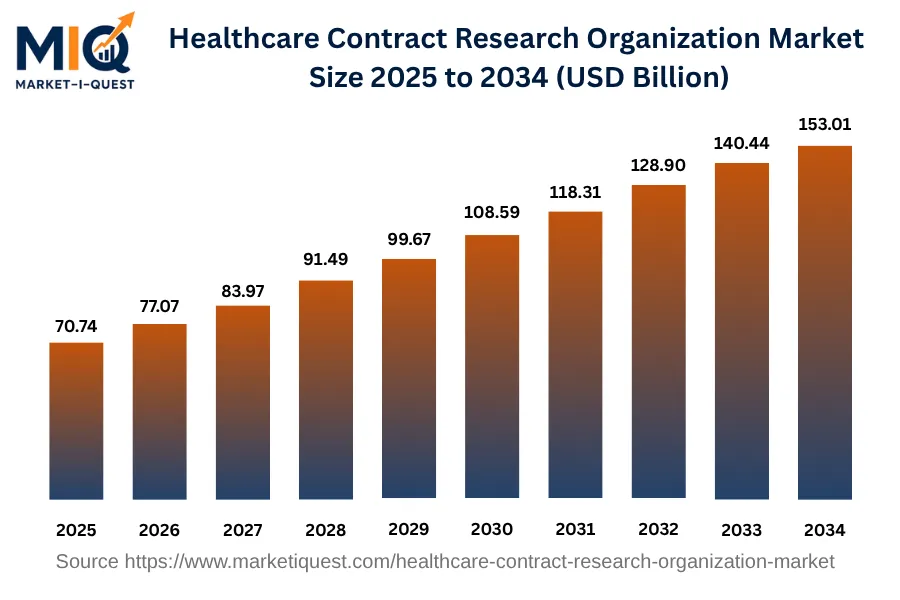
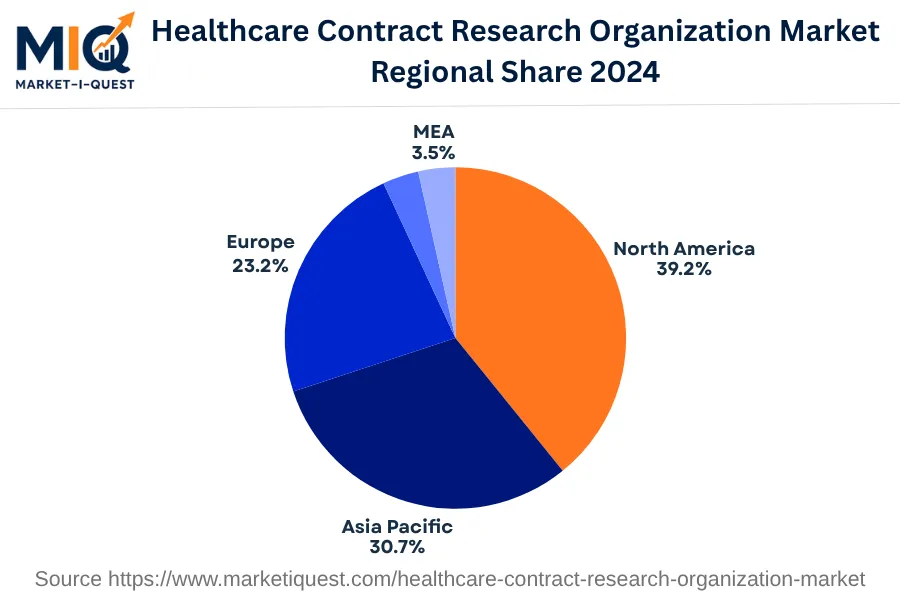
The Healthcare Contract Research Organization Market was valued at $70.74 billion in 2025, exhibiting a compound annual growth rate (CAGR) of 8.95% to reach an estimated value of $153.01 billion by 2034. The rising trajectory of the market from 2025 to 2034 is attributed to the steady compound annual growth. Regional data from 2024 showed North America possessed the largest market share at 39.2%, followed by Asia Pacific at 30.7%, and Europe at 23.2%. The remaining regions, LATAM and MEA, held similar shares of 3.4% and 3.5% respectively. The market is seen to grow uniformly across all regions, signifying a balanced global expansion. No further regional growth trajectory projections beyond 2024 were provided.

Key Takeaways

  • By Service Type - Clinical Research Services held the largest market share in this segment.
  • By Phase of Development - Phase III showed the highest growth in market.
  • By Therapeutic Area - Oncology led accounting for substantial market portion.
  • By End Users - Pharmaceutical Companies held a dominant position in driving healthcare research and innovations.
healthcare-contract-research-organization-market market size

Key Driving Factors

Increasing Regulatory Complexities in Clinical Trials

The healthcare contract research organization market is driven by increasing complexities in the regulation of clinical trials. Various global regulatory bodies such as the U.S. Food and Drug Administration (FDA) and European Medicines Agency (EMA) have been tightening and changing regulations to ensure patient safety and validity of results. Notably, the FDA's guideline on risk-based monitoring and the EMA's update on Good Clinical Practice have made conducting clinical trials more challenging. These changes increase the costs and skills needed to conduct trials in-house, pushing pharmaceutical and biotech companies to outsource clinical trials to contract research organizations (CROs). CROs have specialized knowledge and experience in dealing with regulatory complexities, providing a cost-effective and efficient solution.
Global Expansion of Pharmaceutical and Biotech Companies

Secondly, the global expansion of pharmaceutical and biotech companies is fueling the healthcare contract research organization market. There has been a significant movement of companies into emerging markets in Asia, Africa, and South America, driven by the potential of large patient populations for trials and lower operating costs. However, managing clinical trials across multiple geographies adds another layer of complexity as companies have to navigate various language, cultural, and regulatory differences. Therefore, these companies increasingly rely on the expertise of CROs, particularly those with a global presence and local understanding of the regions, to manage these multicultural and multi-regional trials.

Market Evolution by Timeline

2019-2023
In this phase, biotech firms and pharmaceutical companies from developed regions such as North America and Europe were the primary buyers of services from Contract Research Organizations (CROs). These businesses sought specialized clinical research services and regulatory consulting, mainly due to increased R&D investment in areas like oncology and diabetes. CROs offered integrated solutions involving early-phase development services and late-phase post-marketing studies. Integration maturity varied across suppliers, with larger CROs typically more equipped to provide end-to-end services. In terms of policy, the EU's Clinical Trials Regulation (536/2014), influencing trial transparency and reporting, impacted the CRO market in this period. Fixed pricing models prevailed, with contracts typically structured around specific project milestones. Risks involved were regulatory changes and talent shortages in the CRO sector.
2024
This year witnessed the rise of Asian regions like India and China as key demand centers partly because of expanded local pharmaceutical manufacturing. Customized project solutions became more common, catering to unique needs in areas like biostatistics and medical writing. Technology adoption saw advancements such as electronic data capture systems becoming mainstream among providers. Rising regulatory burdens saw a boost with enactments like China's Drug Administration Law. Value-based pricing marked a shift in business models, fostering long-term partnerships between CROs and buyers. The primary risk involved changing international rules related to clinical testing.
2025-2029
Continuing trends from 2024, the demand from Asia kept growing, driven especially by Chinese and Indian pharmaceutical companies. With rising complexity in clinical trials, demand for services like data management and patient recruitment rose. Technology saw a push toward automation with AI-based tools improving efficiencies in drug development processes. On regulatory fronts, the implementation of Asia-specific Good Clinical Practice guidelines standardised CRO practices in the region. Multi-contract models that involved several partners for a single project became more frequent. Risks included potential data privacy issues with increased reliance on technology-mediated solutions.
2030-2034
This period pointed to substantial growth in demand from smaller, niche pharmaceutical companies seeking to outsource R&D. Distinct service areas included adaptive trial designs and patient-centric study approaches. CROs struggled to integrate sophisticated technology like cloud-based real-time data analysis platforms, marking the period with varied technological maturity levels. No specific regulatory changes occurred in this period, but pre-existing regulations guided activities and partnerships. Complex structures marked commercial contracts, with risk-sharing agreements commonly signed alongside core contracts. Identified risks involved maintaining data security on cloud platforms and adhering to changing global data regulations.

Future Market Outlook

Future Opportunities

The Healthcare CRO market presents numerous opportunities amid ongoing technological and regulatory shifts. In 2023, the focus on patient-centric approaches is intensifying, with organizations such as Parexel introducing strategies that prioritize patient experience throughout clinical trials. Additionally, the increasing complexity of clinical trials highlights the need for specialized CRO services, particularly in therapeutic areas such as oncology and neurology, where companies must navigate stringent regulatory landscapes. Collaborations between CROs and biotech companies are becoming more common, as evidenced by recent partnerships involving ICON plc that aim to improve trial efficiency and accelerate drug development timelines. The trend towards regionalized trials responsive to local health needs is also emerging, driven by the increasing demand for personalized treatment solutions, especially in regions like Asia-Pacific that have seen a surge in clinical trial activity over the past few years. Furthermore, advancements in real-world evidence (RWE) capabilities enable CROs to provide comprehensive data analysis, which will play a critical role in addressing the concerns of regulators such as the Health Canada Modernization Strategy initiated in 2018. As patient data privacy regulations tighten globally, including the implementation of the GDPR in Europe, CROs that prioritize data security will likely find new avenues for growth. The combination of these evolving market dynamics can create significant value for agile CROs positioned to meet the demands of the modern research landscape.

Segmentation Analysis

By Service Type

The market is divided into subsegments including Clinical Research Services, Preclinical Services, Laboratory Services, and Consulting Services. Of these, Clinical Research Services accounted for the largest revenue share while Preclinical Services is projected to grow at the fastest CAGR during the forecast period.

Largest Revenue Share

Clinical Research Services

Market Share Leader

The dominating position of the Clinical Research Services segment can largely be ascribed to the high demand for their expertise, driven by the expanding pipeline of pharmaceuticals and the subsequent rising need for first-class trials and scrutiny. Such services provide integral support in producing the rigorous data required by regulatory bodies, an element critical to any successful drug launch. Furthermore, with an increasing focus on evidence-based medicine, their services have become crucial in ensuring therapies meet the efficacy and safety standards. Geographic contribution to this sector's revenue is significant particularly from developed regions like North America and Europe, with their advanced healthcare systems boasting a high level of research activity. However, it must be noted that developing regions are also a key revenue source, owing to the economical advantage of conducting clinical research, supported by improving clinical infrastructure. While the sector is inherently cost intensive, the substantial switching cost for clients drives a high retention rate, solidifying its current market position.

Fastest CAGR

Preclinical Services

Forecast Period Growth Leader

Preclinical Services is expected to display the swiftest growth in the coming years. This trend can be attributed to a multitude of factors, including technological advancements and evolving regulations over the years. Increasing use of technology in preclinical research, such as machine learning and AI, has allowed for more precise results and faster trial completion, which is driving demand. Simultaneously, tighter regulations by bodies like the FDA and EU's EMA, requiring more thorough preclinical studies before starting human trials, have spiked demand. Furthermore, the increasing strategic partnerships between pharmaceutical companies and CROs have catalyzed growth even further. The decline in in-house R&D for pharmaceutical companies has led to increased outsourcing of preclinical research. However, a crucial near-term risk lies in the high costs of preclinical studies which might impede adoption rates. High attrition rates in drug development phases also pose risks to growth prospects. These factors combined result in a favorable forecast for high CAGR within the Preclinical Services segment.

By Phase of Development

The market is divided into subsegments including Preclinical, Phase I, Phase II, Phase III, and Phase IV. Phase III accounted for the largest revenue share while the Preclinical phase is expected to grow at the fastest CAGR during the forecast period.

Largest Revenue Share

Phase III

Market Share Leader

Typically, Phase III trials inhabit the highest revenue-generating phase in the development process. At this stage, companies work to confirm and expand the efficacy and monitoring of side effects on numerous patients. It involves a large number of participants, often spanning multiple countries or continents, making it a significant cost driver. As pharmaceutical firms and biotechs charge premium fees for the drugs at this stage, it assists in raising a substantial amount of revenue. The customers in this segment mainly span regulatory entities, large hospitals, and end patient cohorts spread across major geographies. There is also a high switching cost associated as moving to a new untested drug exposes the user to the risk of ineffective treatment or unknown side effects. Strict regulation contributes to making this segment associated with high revenue, as the companies must adhere to extensive compliance and monitoring.

Fastest CAGR

Preclinical

Forecast Period Growth Leader

The Preclinical phase is expected to exhibit the fastest growth in the projected period owing to several factors. Rapid advancements in technology are enabling quicker lab testing of drug actions before it is administered to human trials. Also, the growing usage of bioinformatics and computational biology is accelerating the preclinical phase, reducing the early stage development time. Concurrently, government policies, funding, and partnerships are nourishing this acceleration, aiming at quicker drug launches for various ailments. However, this phase also faced significant barriers like ethical concerns around animal testing, which could slow down progress. In the short-term, these ethical and logistic considerations may present potential risks to the pace of growth in this segment.

By Therapeutic Area

The market is divided into subsegments including Oncology, Cardiology, Neurology, Infectious Diseases, Endocrinology, and Others. Among these, Oncology accounted for the largest revenue share while Infectious Diseases are expected to grow at the fastest CAGR during the forecast period.

Largest Revenue Share

Oncology

Market Share Leader

The oncology subsegment dominates the market due to the rising global prevalence of various types of cancers. This is further propelled by an aging population that is significantly more susceptible to the disease. Additionally, advancements in targeted therapies, immunotherapies, and personalized medicine, all contribute to the high revenue of this subsegment. The oncology market has benefited from the increased investment in oncological research and the development of new therapeutics, targeting an array of cancerous conditions. Furthermore, higher drug prices for oncology treatments compared to other therapeutic areas support the segment's dominant revenue share. Regulatory bodies like FDA have shown favorable disposition towards approving oncology drugs, creating a conducive business environment. Despite the challenges of high R&D costs, this market continues to witness substantial growth driven by rising healthcare spending, acceptance of new therapies, and unmet patient needs.

Fastest CAGR

Infectious Diseases

Forecast Period Growth Leader

The Infectious Diseases subsegment is set to register the fastest growth, mainly driven by the emergent need for novel treatments in the face of global pandemics and drug-resistant pathogens. Rapid urbanization, climate changes, and increased global travels are some factors contributing to the rise in infectious diseases. These conditions call for substantial spendings on R&D for newer treatments, acting as a key growth driver. Technology adoption is catalyzing the development of advanced diagnostic tools which leads to timely detection and treatment, hence driving the market growth. The increase in partnerships and collaborations among pharmaceutical companies for drug development also boost this segment. While inadequate access to healthcare and high treatment costs in developing economies remain barriers, governmental policies aiming at providing affordable healthcare solutions are expected to mitigate these challenges, hence fostering growth in the near-term.

By End User

The market is divided into subsegments including Pharmaceutical Companies, Biotechnology Companies, Medical Device Companies, and Academic Institutions. Pharmaceutical Companies accounted for the largest revenue share while Biotechnology Companies are expected to grow at the fastest CAGR during the forecast period.

Largest Revenue Share

Pharmaceutical Companies

Market Share Leader

Pharmaceutical Companies lead the way in revenue generation due to the critical role they play within the healthcare ecosystem. Their core business, producing and distributing drugs, is driven by globally increasing healthcare needs, aging population and rise in chronic diseases. Underpinned by strict regulations, it requires significant capital and time investment to develop and manufacture new drugs. The impact of this is a high barrier to entry, securing the market position for established players. Furthermore, the inelastic demand for medication and low sensitivity towards price changes help the sector maintain revenue stability. High switching costs, patents and exclusiveness of treatment options are crucial aspects, giving companies the authority to price their products high. Different channels manipulating their growth includes direct sales, collaborations, partnerships, and online pharmacy platforms.

Fastest CAGR

Biotechnology Companies

Forecast Period Growth Leader

Biotechnology Companies are set for the fastest growth, spurred by several factors. High potential for innovation and advancements, particularly in areas such as gene editing and personalized medicine, position these companies uniquely for growth. The intersection of biology and technology have driven unprecedented progress in healthcare delivery, providing new treatment options for previously untreatable conditions. Barriers to adoption exist in the form of high research and development costs, lengthy regulatory approval process, and ethical considerations linked to technologies like gene editing. However, this is mitigated by an increased allocation of capital towards biotech R&D, support from government initiatives, strategic partnerships, and investor interest in the sector. While the sector poses some risk due to regulatory changes and public acceptance, the outlook remains strong.

Competitive Analysis

Key Market Players

Manufacturers / OEMs

Quintiles IMS Holdings, Inc.
US
Charles River Laboratories, Inc.
US
Pharmaceutical Product Development, LLC
US

Key Suppliers & Raw Materials

Aurigene Discovery Technologies
India
ChemPartner
China
Evotec
Germany

Distributors, Integrators & Channel Partners

ICON Public Limited Company
Ireland
PRA Health Sciences, Inc.
US
Laboratory Corporation of America Holdings
US

Porter’s Five Forces Analysis

A detailed analysis of competitive forces in the Healthcare Contract Research Organization Market.

Supplier Bargaining Power

Medium

Suppliers possess moderate power due to the specialized nature of services and goods they provide.

Buyer Bargaining Power

High

Buyers, primarily healthcare institutions, have high purchasing power due to the availability of multiple service providers.

Threat of Substitutes

Low

Limited substitutes exist for contract research in healthcare, indicating a low threat level.

Threat of New Entrants

Medium

Regulatory hurdles and capex restrict market entry, but potential profitability attracts new ventures.

Competitive Rivalry

High

The market is highly competitive with many established players and constant technological advancements.

Regional Analysis

Geographic market dynamics and growth opportunities across key regions

Global Market Outlook

healthcare-contract-research-organization-market market regional share

North America

In 2024, North America's Healthcare Contract Research Organization (CRO) market showed spry dynamism. Key drivers included escalating demand for biopharmaceutical products, spurred by an aging population along with increases in chronic diseases, spurring pharmaceutical companies seek out CROs for help on research and development envisages. Regulatory climates in the region, particularly in the U.S and Canada, encouraged greater adoption of CRO services with favorable policies for outsourcing clinical research. Lastly, advanced technology adoptions, especially in data analytics and artificial intelligence platforms, also accelerated market growth by improving service quality and efficiency.

Notable trends were discerned in buyer behavior and product shifts. A propensity for larger healthcare and pharmaceutical corporations to outsource research to ensure cost-effective and accurate clinical trials was observed. The advent of technologies, such as machine learning for patient recruitment, diagnostic imaging, and genetic testing, fomented shifts in service offerings. On the channel front, companies demonstrated an increased reliance on digital platforms to streamline research and data collection procedures. Strategic partnerships and M&A were prevalent as companies sought to extend competitive advantage and diversify services. Lastly, stern policy enforcement around patient privacy and trial transparency stood as a defining regulatory frame for this market. The primary sectors included healthcare, pharmaceutical enterprises, and related government agencies.

Asia Pacific

In 2024, the Asia Pacific Healthcare Contract Research Organization (CRO) Market was characterized by robust demand for clinical trials and increased investment in healthcare research. Strong financial support from the governments of China and India drove significant expansion in these countries, supplementing the established markets of Japan and South Korea. Rapid digitization across the healthcare sector led to wider acceptance and adoption of advanced technologies such as AI and machine learning for facilitating research activities among CROs. Market trends in 2024 notably included shifts in buyer behavior towards CROs facilitating expedited drug approvals and optimized clinical trials. There was a noticeable upswing in partnerships and M&A activity among CROs and healthcare entities, as firms sought cost-effective ways to streamline operations and enhance expertise. The Australian market displayed strong compliance with Good Clinical Practice (GCP) guidelines, indicative of the region's focus on maintaining high research standards.

This market primarily served the healthcare sectors in China, India, Japan, South Korea, Australia, and key ASEAN markets, with government bodies, healthcare institutions, and pharmaceutical companies being the major clients. Specifically, enterprise-level clients in China and India were particularly active, reflecting their growing economic strength and investment in healthcare research and development.

Europe

In 2024, the European Healthcare Contract Research Organization (CRO) Market presented a consolidated landscape shaped by a vibrant clinical trial environment and the presence of various research-oriented healthcare establishments. Driving the market were regulatory pressures demanding a more robust clinical evidence for drug safety, necessitating pharmaceutical companies' reliance on CROs. Investment in advanced therapeutic areas such as oncology and neurology also accelerated the market growth. Additionally, rapid technology adoption like in big data analytics and artificial intelligence boosted efficiency and quality of CRO services. Supply dynamics were also essential, with the proliferation of specialized CROs meeting particular market needs and pricing competition promoting market dynamism.

Trends shaping the market included a shift towards decentralized trials, increasingly replacing traditional research methods, and reinforcing collaborations between pharmaceutical companies and CROs. There was a noted industry consolidation with several merger & acquisition activities, aimed at complementing service portfolios and extending geographical reach. Stricter adherence to Good Clinical Practice standards became apparent, strengthening the overall clinical trials framework. Key sectors leveraging European CROs were pharmaceuticals, biotechnology and medical device companies compelled to meet stringent approval processes and regulatory norms. The expansive research capabilities and strong regulatory frameworks across Germany, the United Kingdom, France, Italy, Spain, the Nordics, Benelux, and Central & Eastern Europe underpinned the market's dynamism.

Latin America

In 2024, the Healthcare Contract Research Organization (CRO) Market in Latin America (LATAM) was driven by several key factors. Increasing clinical trials compounded by rising disease prevalence in LATAM countries prompted higher demand and investment in healthcare CROs. Notably, regulatory bodies in Brazil and Mexico enacted policies promoting R&D in the pharmaceutical sector, bolstering the market’s expansion. Furthermore, Argentina, Chile, and Peru were quick adopters of advanced data analytics solutions, enhancing the efficiency and effectiveness of the R&D process in the CRO market.

Trends shaping the LATAM healthcare CRO market hinged on empathy for patient experience, driven by an increased focus on patient-centric trials. For example, a new emphasis on real-world data integration revolutionized research methods and protocols. In Colombia, innovative partnerships and mergers permeated the market, as healthcare enterprises aimed to strategically collaborate with CROs, expediting the process of drug development. Furthermore, LATAM witnessed a rigorous enforcement of Good Clinical Practice guidelines by regulatory bodies, reinforcing confidence in clinical trial data, and ensuring its accuracy, reliability, and ethical conduct. Therefore, the government sector, along with healthcare and pharmaceutical enterprises, served as significant patrons fostering market growth.

Middle East & Africa

In 2024, the Healthcare Contract Research Organization (CRO) market in the Middle East and Africa demonstrated sustained growth, driven primarily by increasing clinical trial activities, expanding healthcare infrastructure, and rising foreign investments. Demand for CRO services catapulted due to escalating clinical trial activities, especially in Saudi Arabia, Egypt, and South Africa. The advancement of healthcare infrastructure, particularly in the United Arab Emirates and Qatar, was a key stimulant for the industry. Furthermore, foreign investments poured into Nigeria and Kenya, primarily driven by the favourable regulatory policies that these nations offered. An influx of technology adoption, notably digital data management and telehealth, was observed across Israel, expanding the CRO market footprint.

Trends signifying the market dynamics included a shift towards patient-centric clinical trials and a rise in strategic partnerships between CROs and pharmaceutical companies. Moreover, increased adherence to international clinical trial standards was prevalent, particularly in countries like Israel and South Africa. In tandem, the enforcement of stricter policies on ethical guidelines for clinical research across the region, notably in Saudi Arabia and the United Arab Emirates, shaped the trend of the market. The demand surged significantly from sectors such as healthcare, government, and manufacturing, with the latter involving in-house clinical research for worker safety and efficiency.

Recent Industry Developments

Latest market innovations, product launches, and strategic initiatives

March 2026

The FDA's Bioresearch Monitoring Information System (BMIS) continued to maintain information on clinical investigators, CROs, and institutional review boards involved in FDA-regulated research.

February 2026

Bonasiasi, a Hangzhou-based clinical CRO focused on oncology and autoimmune diseases, filed its IPO prospectus with the Hong Kong Stock Exchange, with 2024 revenue of RMB 340 million and net profit of RMB 67 million.

Frequently Asked Questions