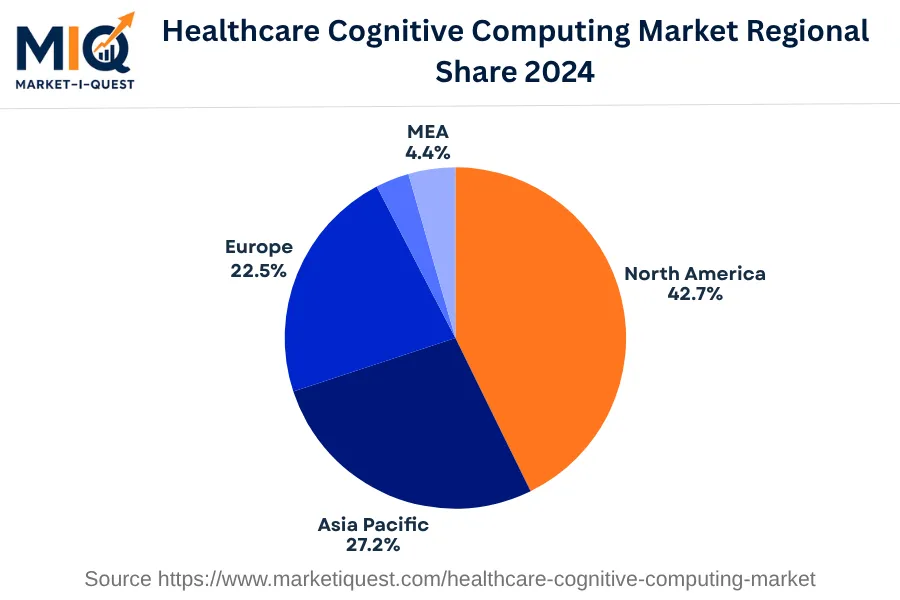
In 2024, Europe's healthcare cognitive computing market experienced substantial growth, driven in large part by increasing demand for personalized patient care and data-driven clinical decision making. The German, UK, French, Italian, Spanish, Nordics, Benelux, CE, and CEE governments have been focusing on the adoption of innovative technologies in Healthcare with regard to Diagnostics and Treatment planning, etc. Critical drivers included increased public and private sector investment in technological innovation in the healthcare industry, a rapid rise in volumes of healthcare data, and supportive regulatory policies geared towards digital transformation in healthcare. For instance, this Digital Health Care act of German Government allowed the huge adoption of artificial intelligent and machine learning technologies in health care sector.
Simultaneously, several key trends dominated the market landscape during this period. Enterprise and government customers expressed rising curiosity in taking part in or accessing cognitive services in the healthcare arena. Moreover, a surge in partnerships and M&A activities was noticed within the industry to combine resources and accelerate technology development. Enforcement of strict data protection laws, like GDPR, have encouraged companies to concentrate on improving data security and privacy in their cognitive computing solutions. Overall, the European healthcare cognitive computing market in 2024 demonstrated a changing landscape driven by a mix of demand dynamics, technological advancements, and policy support.