
Healthcare Biometrics Market Snapshot

Key Players

  • NEC Corporation (Japan)
  • Fujitsu (Japan)
  • 3M Cogent (United States)
  • M2SYS Technology (United States)
  • Suprema Inc. (South Korea)
  • Bio-Key International (United States)
  • ZKteco (China)
  • CrossMatch Technologies (United States)
  • Imprivata (United States)
  • IrisGuard (United Kingdom)

Market Size

Base Year 2024
$11.96 Bn
CAGR
18.95%
Forecast 2034
$67.82 Bn

Market Segments

By Technology
Fingerprint Recognition, Iris Recognition, Facial Recognition, Voice Recognition, Vein Recognition
By Deployment
On-Premise, Cloud-Based, Hybrid
By Application
Patient Identification, Access Control, Billing & Payments, Electronic Health Records (EHR), Telemedicine
By End Use
Hospitals, Clinics, Diagnostic Centers, Pharmaceutical Companies, Research Institutions

Market Dynamics

Drivers
  • Increasing cyber threats
  • Rising healthcare data breaches
Restraints
  • High implementation cost
  • Data security concerns
Opportunities
  • Rising cybersecurity concerns
  • Increasing healthcare IT adoption

Market Size

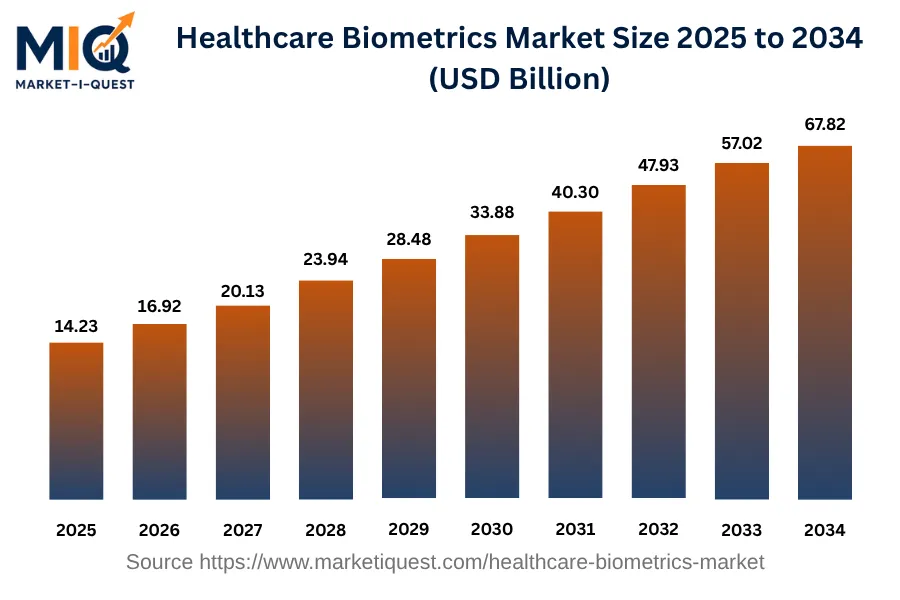
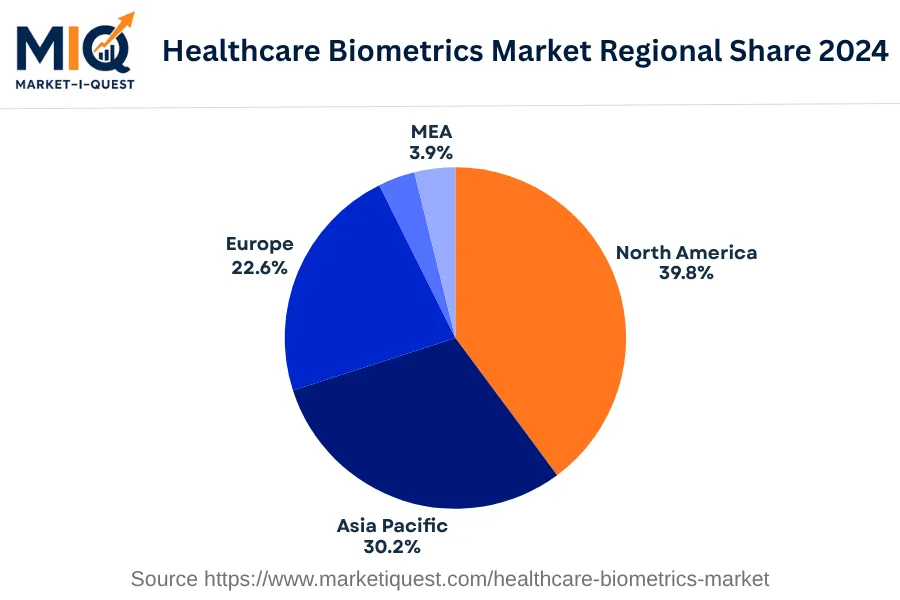
The Healthcare Biometrics market, valued at 14.23 billion US dollars in 2025, is projected to grow to 67.82 billion US dollars by 2034. This represents a Compounded Annual Growth Rate (CAGR) of 18.95% over the period. The market experienced a growth from a valuation of 11.96 billion US dollars in 2024 to 14.23 billion dollars in 2025. The consistent and significant rise in the market's value across the years indicates a continually increasing interest and investment in biometric technologies within the healthcare sector. This could be due to a rising need for secure and reliable patient identification mechanisms, as well as driving efficiency in healthcare operations globally. In the regional market share for the year 2024, North America accounted for 39.8%, followed by Asia Pacific at 30.2%, and Europe with 22.6%. The regions with the smallest share in the market were Latin America (LATAM) and the Middle East and Africa (MEA), with 3.5% and 3.9%, respectively.

Key Takeaways

  • By Technology - Fingerprint Recognition held the significant share in 2024.
  • By Deployment - Cloud-Based accounted for the major share in 2024.
  • By Application
  • Patient Identification was the leading segment in 2024.
  • By End Use - Billing & Payments were the predominant institutions utilizing healthcare biometrics in 2024.
healthcare-biometrics-market market size

Key Driving Factors

Implementation of HIPAA and HITECH Act

The enforcement of regulatory acts such as the Health Insurance Portability and Accountability Act (HIPAA) and the Health Information Technology for Economic and Clinical Health (HITECH) Act are significant forces driving the adoption of biometrics in healthcare. These pieces of legislation mandate strict measures to protect patient data. Given the penalties associated with non-compliance, healthcare organizations are turning towards biometric technologies as a means of improving data security. Biometric identification solutions, which rely on unique individual physical characteristics, ensure that only authorized individuals can access sensitive information. This not only helps in the prevention of data breaches but also enables healthcare providers to stay compliant with regulatory laws.
Incorporation of AI in Biometric Systems

The integration of artificial intelligence (AI) into biometric authentication systems is another factor contributing to the growth of the healthcare biometrics market. AI-enhanced biometric systems are capable of learning and adapting to data patterns, thereby improving the accuracy of identification over time. More precise identification means increased security, crucial in healthcare settings where the mishandling of patient data can lead to serious consequences. Additionally, the use of AI expedites the patient identification process, which can help improve workflows within healthcare organizations and reduce the waiting time for patients, contributing to more efficient delivery of care.

Market Evolution by Timeline

2019-2023
During this period, North American hospitals and clinics predominated in the adoption of biometrics for patient identity confirmation, often to reduce medical errors and fraud. Suppliers primarily provided fingerprint, facial recognition, and vascular biometrics technologies. Integration with current systems was a frequent obstacle, typically with Electronic Health Records (EHRs). The HITECH Act mandated widespread EHR use, indirectly stimulating biometrics demand. Most providers opted for subscription-based pricing models, and many partnered with EHR vendors for product compatibility. However, data privacy concerns, as typified by HIPAA regulations, constituted a major challenge, which healthcare facilities often addressed by encrypting biometric data.
2024
In 2024, the trend moved toward home healthcare providers in Europe who primarily used biometrics for remote patient monitoring. Technology adoption revolved around the iris recognition due to its reliability over distance. The integration into telemedicine platforms arose as the typical challenge. The GDPR regulations, which mandate strict data protection measures, influenced the landscape. Pay-per-use became a prominent pricing model due to the sporadic use of services by home healthcare patients. Major risks remained around personal data protection, stimulating suppliers to strengthen security features for risk mitigation.
2025-2029
Throughout this interval, Asian hospitals and clinics typically adopted voice biometrics driven by artificial intelligence, primarily for patient service automation. The major technological challenge involved reducing error rates in voice recognition. Both Chinese and Indian public health efforts, like Ayushman Bharat Pradhan Mantri Jan Arogya Yojana (AB-PMJAY), promoted digital identification, indirectly boosting biometrics. Contracts often involved shared-risk pricing models, sharing the technology's performance risks between producers and healthcare facilities. However, technology unreliability posed substantial commercial risks, leading suppliers to invest heavily in research and development during this period.
2030-2034
In these years, Latin American public health systems increasingly adopted biometrics, particularly for ensuring vaccination compliance. A shift towards multi-modal biometrics, combining various identification methods, sought to overcome the challenge of single-modality limitations. No single regional regulatory standard existed, though data privacy remained a universal concern. Outright purchases of technology, as opposed to subscription-based models, became more commonplace due to the perceived long-term cost benefits. The imitation and counterfeiting of biometric systems posed substantial risks, required ongoing investments in anti-counterfeiting measures from suppliers.

Future Market Outlook

Future Opportunities

The future opportunities in healthcare biometrics are closely tied to ongoing trends in regulatory compliance and technological advancements. In 2023, the U.S. Food and Drug Administration initiated discussions around digital health technologies, emphasizing the role of biometrics in ensuring patient safety and enhancing the drug approval process. Partnerships between tech companies and healthcare providers, such as the collaboration between Microsoft and the U.S.-based healthcare organization UnityPoint Health, reflect a collective push towards integrating biometric solutions for improved patient engagement. The growing adoption of telehealth services since the COVID-19 pandemic has created demand for remote biometric authentication tools, as seen in current offerings from companies like Thryv, which enables patient authentication for virtual consultations. Furthermore, data from the European Union’s General Data Protection Regulation emphasizes the importance of secure handling of biometric information, generating increased interest in compliant biometric solutions. Innovative applications, such as biometric symptom trackers, are being explored in clinical settings to improve disease monitoring and management, with trials being conducted across various hospitals in Australia. Additionally, the increasing focus on patient consent and privacy standards presents an avenue for developing solutions that both protect individual rights and enhance healthcare service delivery. As these trends converge, the healthcare biometrics market can expect substantial growth driven by a mixture of regulatory compliance and technological enhancement.

Segmentation Analysis

By Technology

The market is divided into subsegments including Fingerprint Recognition, Iris Recognition, Facial Recognition, Voice Recognition, and Vein Recognition, with Fingerprint Recognition accounting for the largest revenue share while Facial Recognition is expected to grow at the fastest CAGR during the forecast period.

Largest Revenue Share

Fingerprint Recognition

Market Share Leader

Despite the advancements in technology, Fingerprint Recognition remains the subsegment yielding the largest revenues in the market. Its wider acceptance and adoption can be attributed to its proven reliability, ease of use and low cost. It has become a ubiquitous feature in most devices, including smartphones, tablets, and laptops, due to its higher security guarantee compared to traditional passwords or PIN-based methods. Additionally, governments worldwide are instrumental in driving the growth of this subsegment by implementing biometric systems in law enforcement, border control, and civil identification. They trust this mature technology due to its high accuracy rates and the ease with which it integrates into existing security systems. Another key factor is the preference by financial institutions and corporations for fingerprint recognition to ensure enhanced business security. In terms of geographies, Asia-Pacific accounts for a significant portion of revenue, driven by large-scale biometric projects in countries like India. However, it's important to note that the longevity of this subsegment's revenue dominance could be affected by the rapid advancements in other technologies, especially Facial Recognition.

Fastest CAGR

Facial Recognition

Forecast Period Growth Leader

Facial Recognition is expected to be the fastest-growing subsegment. It can be attributed to several growth drivers, including significant advancements in artificial intelligence and machine learning technologies, which have greatly improved the accuracy and reliability of Facial Recognition systems. Furthermore, its contactless nature has resulted in increased adoption amid global health concerns. While adoption barriers exist in the form of privacy concerns, many governments and businesses are focusing on enforcing robust data protection laws and regulations to alleviate these concerns. Partnerships between software giants and hardware manufacturers are also acting as a catalyst, bolstering the subsegment by integrating Facial Recognition technology into various devices and applications. On the other hand, increased investment in research and development by key market players is also driving rapid improvements in this technology. Near-term risks to growth include potential regulatory hurdles and public sentiment against perceived invasions of privacy. The growth of Facial Recognition still largely depends on regulatory frameworks and public acceptance.

By Deployment

The market is divided into subsegments including On-Premise, Cloud-Based, and Hybrid, with Cloud-Based accounting for the largest revenue share while Hybrid is expected to grow at the fastest CAGR during the forecast period.

Largest Revenue Share

Cloud-Based

Market Share Leader

Cloud-based solutions stand out as the subsegment with the highest revenue. This dominance is predicated on several factors. First off, customers are increasingly opting for cloud-based services due to their cost-effectiveness. Businesses save on substantial capital expenditure as there's no need for physical infrastructure. Secondly, due to their flexibility and scalability, cloud-based services allow businesses to adjust resources based on their needs. This flexibility is particularly beneficial for growing companies with fluctuating demands. Furthermore, the cloud offers product accessibility, as services can be used anywhere, so long as there's internet connectivity. This has proven to be especially important with the onset of remote work. Notably, regulatory bodies have indicated broad acceptance of cloud-based solutions, further driving their adoption. Geographically, we have witnessed a widespread acceptance of these solutions, largely in developed economies where internet connectivity is robust. Switching costs from on-premise solutions to cloud are justifiable considering the long-term benefits offered by the latter.

Fastest CAGR

Hybrid

Forecast Period Growth Leader

Despite not leading in the revenue shares, the Hybrid solution is projected to grow at the fastest CAGR. This is primarily driven by its potential to offer businesses the best of both worlds - cloud and on-premise solutions. Companies are inclined towards Hybrid solutions because of their ability to integrate the flexibility and scalability of cloud-based solutions, while still allowing critical data to be stored on-premise for enhanced security. In sectors where data sensitivity is paramount, such as healthcare and finance, hybrid solutions are increasingly adopted. Adopting Hybrid does require substantial investment, which may deter smaller businesses. However, partnerships between these businesses and IT companies could pave the way for higher adoption rates. A risk factor to consider would be the technical complexity in maintaining both systems simultaneously. Nonetheless, as technological advancements progress, we anticipate the barriers of complexity and cost will lessen, providing a promising outlook for this subsegment.

By Application

The market is divided into subsegments including Patient Identification, Access Control, Billing & Payments, Electronic Health Records (EHR), and Telemedicine. Among these, Billing & Payments accounted for the largest revenue share while Telemedicine is expected to grow at the fastest CAGR during the forecast period.

Largest Revenue Share

Billing & Payments

Market Share Leader

Billing & Payments has become the most revenue-generating segment due to the complexities involved in healthcare billing procedures and the necessity to reduce potential errors in insurance claims. More so, the escalated necessity to streamline and automate administrative tasks in the healthcare sector has propelled the demand for this segment. With greater integration of technology and data in healthcare practices and the emphasis on value-based payments, the segment has seen steady revenue growth. Geographically, the adoption of advanced billing systems is higher in developed countries owing to robust healthcare infrastructure and higher spending capacity of healthcare institutions. Regulations are also playing a role in driving the demand for automated billing systems as they require healthcare providers to maintain transparency in patient billing.

Fastest CAGR

Telemedicine

Forecast Period Growth Leader

Telemedicine is projected to be the fastest-growing subsegment in the market. The swift rise in adoption is primarily driven by the growing need to cater to remote patient populations and the speed of technological advancement that has made such delivery methods possible. The outbreak of the Covid-19 pandemic has further created a sense of urgency in its adoption as social distancing mandates emerged. The shift towards remote consultation and treatment has been backed by policy changes that support reimbursement for telehealth services. Increased partnerships between technology firms and healthcare providers are simplifying the operational challenges of adopting telemedicine. However, barriers such as reliability of internet connections and patient hesitation to use digital platforms for medical consultation, particularly in emerging economies, could slow down the pace of growth in the near term.

By End Use

The market is divided into subsegments including Hospitals, Clinics, Diagnostic Centers, Pharmaceutical Companies, and Research Institutions, with Hospitals accounting for the largest revenue share, while Diagnostic Centers are expected to grow at the fastest CAGR during the forecast period.

Largest Revenue Share

Hospitals

Market Share Leader

Hospitals are projected to hold the largest revenue share in the market primarily due to the sheer volume and nature of services they provide. Being the primary healthcare providers, they have a colossal patient-base that drives demand for a wide range of medical consumables and services. Additionally, hospitals have extensive procurement capabilities, due to which they can deploy large-scale investments in advanced medical technologies. These institutions often focus on bulk procurement at regular intervals, providing steady revenue streams for manufacturers. Their regulatory compliance and standards also compel them to maintain stringent quality levels, ensuring continued demand. A considerable number of hospitals are also part of larger healthcare networks further amplifying their purchasing power. Geographically speaking, urban centers, with higher patient volumes and developed infrastructure, are key contributors to the revenue stream.

Fastest CAGR

Diagnostic Centers

Forecast Period Growth Leader

Diagnostic Centers are anticipated to exhibit the fastest growth rate, given their increasing role in disease prevention and early detection. They play a critical part in healthcare, providing services that range from simple blood tests to complex CT scans. The proliferation of such centers is catalyzed by the public's growing health consciousness and emphasis on preventive healthcare spurred by an aging population and the rise of chronic diseases. Technical advancements, such as minimally invasive diagnostic procedures, machine learning algorithms, and robotic process automation, are also fueling this growth by improving diagnostic accuracy and throughput. However, the heavily regulated nature of the sector and the high capital expenditure required for advanced machinery are potential growth barriers. Opportunities could be leveraged from partnerships with public health departments or hospitals to overcome such barriers.

Competitive Analysis

Key Market Players

Manufacturers / OEMs

Fujitsu
Japan
3M Cogent
US
BIO-key International
US

Key Suppliers & Raw Materials

Allegion
Ireland
Precise Biometrics
Sweden
Aware
US

Distributors, Integrators & Channel Partners

Crossmatch Technologies
US
Imprivata
US
NEC Corporation
Japan

Porter’s Five Forces Analysis

An analysis of competition and external factors influencing the Healthcare Biometrics market.

Supplier Bargaining Power

Medium

Dominated by a few suppliers, but kept in check by high demand and switching costs.

Buyer Bargaining Power

Low

High switching costs and product complexity reduce the bargaining power of buyers.

Threat of Substitutes

Low

The distinct, high-tech nature of biometric products limits substitute availability.

Threat of New Entrants

High

Rising healthcare spending and digital trends increase entry of tech-oriented companies.

Competitive Rivalry

High

Intense competition amongst established players, driving innovation and patent races.

Regional Analysis

Geographic market dynamics and growth opportunities across key regions

Global Market Outlook

healthcare-biometrics-market market regional share

North America

In 2024, the North American healthcare biometrics market experienced significant evolution due to several interplaying drivers and trends. Key growth drivers included escalating demand for reliable patient identification methods, stringent regulatory mandates surrounding data security, and substantial healthcare investment in biometric technology adoption. The Affordable Care Act in the U.S., for example, necessitated robust patient data protection mechanisms, prompting many healthcare providers to invest in biometric systems. In contrast, supply dynamics were characterized by high-tech biometric solutions, influenced by advancements in facial recognition and fingerprint technology. This, coupled with competitive pricing strategies, spurred market growth.

Simultaneously, several trends emerged. An observable shift towards cloud-based biometric solutions signaled product/technology change. The push for seamless interoperability led to increased partnerships and M&A, exemplified by the collaboration between Telos and Identos. A growing emphasis on policy enforcement was seen in the healthcare sector enforcing strict patient privacy and data security standards. This market activity reflected the needs of multiple sectors, including: government healthcare agencies seeking secure patient data management, healthcare providers aiming to reduce identity fraud, and the retail sector wanting to ensure secure and accurate patient record access. As such, the North American healthcare biometrics market in 2024 showed an upward developmental trajectory given these driving forces and emerging trends.

Asia Pacific

In 2024, the Asia Pacific healthcare biometrics market witnessed substantial growth owing to increasing demand for secure patient data handling and rising investments in healthcare infrastructure. China led the investment landscape, driven by government policies emphasizing healthcare digitization and data security. Comprehensive regulatory frameworks in Japan and South Korea accelerated the adoption of biometric systems, improving patient identification and data integrity procedures. In India, affordable pricing strategies and growing awareness about biometrics boosted the trend of technology integration in healthcare. Prominent market trends included a shift towards multi-modal biometrics systems, specifically in the Chinese and Australian markets. Customers displayed an increased preference for combined fingerprint and iris recognition solutions for high security exigencies. Interoperability and standardized technology were the focus mainly in Japan and key ASEAN markets, enhancing the consistency and performance of the systems across platforms. An uptick in partnerships, mostly between biometrics firms and healthcare technology providers, was seen in India and South Korea to develop tailored solutions.

The evident impact was felt across several sectors - most notably in hospitals, healthcare service providers, and insurance entities, with these institutions incorporating biometric solutions to enhance user authentication and streamline administrative workflows. Despite different regulatory landscapes and market maturity levels, the prevalence of sophisticated technology adoption confirmed the ongoing digital transformation in the region's healthcare sector.

Europe

In 2024, the healthcare biometrics market in Europe experienced significant growth and transformation. Major drivers include an increase in healthcare technology adoption across countries such as Germany and the United Kingdom, escalating cybersecurity threats, and growing regulatory pressure for secure data management. For example, regulations like the General Data Protection Regulation (GDPR) enforced stringent data privacy norms, creating a demand for advanced biometrics in healthcare. Additionally, investments from private and public sectors for securing digital health data led to increased supply dynamics. Pricing, however, remained a challenge due to the cost-prohibitive nature of advanced biometrics.

Trends included a shift towards integrated biometric systems among healthcare providers, primarily in Italy, Spain, and the Nordics. As a result, user-friendly and multifactor biometric authentications gained widespread popularity. Similarly, partnerships and M&A activities witnessed an uptick, especially in Central & Eastern Europe and Benelux, largely within the government and healthcare sectors aiming to consolidate resources and improve biometric capabilities. Notably, policy enforcement favoring telehealth services emerged as a trend that re-emphasized the need for secure patient identification methods. Therefore, evolving customer preferences towards advanced biometrics indicated a long-term shift, thereby changing the landscape for healthcare service delivery across Europe.

Latin America

In 2024, Healthcare Biometrics Market in Latin America demonstrated a progressive growth trajectory, spurred by a series of influencing factors. Notably, the demand for heightened security measures in healthcare facilities surged. The implementation of new governmental regulations requiring secure patient identification systems in countries such as Brazil, Mexico, and Argentina also played a significant role. Moreover, substantial investments by healthcare providers in secure data management systems to safeguard critical patient information was a key stimulant to market expansion. The market saw the introduction of next-gen technologies, with fingerprint recognition systems and facial recognition technologies gaining prominence among healthcare providers in Peru, Chile, and Colombia due to their accuracy and ease of use. Concerning trends, a marked shift toward digitization in the healthcare sector was observed, revolutionizing patient data management and disease monitoring. Private-public partnerships supporting technology adoption and the growing incidents of mergers and acquisitions further transformed the market landscape.

Business models continued to evolve, with many healthcare providers moving from a service-based to a tech-based model, incorporating advanced biometric solutions across their operations. Governmental bodies across the region also showed increased interest in deploying biometrics in public healthcare services. These drivers and trends underpin a vibrant Healthcare Biometrics Market in Latin America in 2024.

Middle East & Africa

In 2024, the healthcare biometrics market showed substantial growth in key Middle East and Africa regions. Drivers include a growing demand for innovative healthcare solutions, reinforced by Saudi Arabia's Vision 2030 healthcare reforms, coupled with increased governmental investments. UAE's adoption of biometric technology in healthcare establishments offered another boost, predominantly driven by its robust regulatory framework with regard to data security. In Nigeria and South Africa, the expanding telehealth and e-health sectors stimulated the market due to the need for efficient patient identification methods.

Key trends included an increasing preference for fingerprint recognition technology in Kenya's healthcare sector, mainly attributed to its relatively low cost and ease of integration. In Israel, secure authorisation in telemedicine was an emerging trend due to the growing cybersecurity concerns. Interoperability emerged as a critical concern in Egypt, leading to partnerships aimed at integrating biometric technology with existing healthcare systems. The need for enhanced patient security against fraud drove the adoption of biometric technology in key sectors, not limited to government healthcare institutions, private hospitals, and health insurance agencies. This market's expansion corresponded with the digital transformation policies and reflected the region's embracement of modern healthcare solutions.

Recent Industry Developments

Latest market innovations, product launches, and strategic initiatives

June 2026

Spanish biometrics startup Heuristik targeted the healthcare biometrics market with an AI-powered neural network designed to identify fingerprints in clinical environments where traditional systems fail — including wet, blood-stained, or dirty fingers. The company has secured €3.2 million ($3.7 million) through venture capital and research grants, including backing from Spain's Ministry for Digital Transformation. Twenty hospital groups across Europe, the U.S., and Mexico have adopted the platform.

March 2025

Oxurion NV signed a letter of intent to acquire a majority stake in a French Contract Research Organization (CRO) specializing in clinical data management and biometric analysis. The target company, active for over 15 years, operates across the entire clinical data lifecycle and supports more than 20 industrial and academic partners. It has developed a proprietary electronic Case Report Form (eCRF) platform and integrates AI mechanisms to enhance data quality.

Frequently Asked Questions