
Genitourinary Drugs Market Snapshot

Key Players

  • Johnson & Johnson (US)
  • Sanofi SA (France)
  • Bayer AG (Germany)
  • Astellas Pharma Inc. (Japan)
  • Allergan Plc (Ireland)
  • Pfizer Inc. (US)
  • GlaxoSmithKline plc (UK)
  • Novartis AG (Switzerland)
  • Merck & Co. Inc. (US)
  • AstraZeneca PLC (UK)

Market Size

Base Year 2024
$37.53 Bn
CAGR
6.38%
Forecast 2034
$69.66 Bn

Market Segments

By Disease
  • Urinary Tract Infections
  • Erectile Dysfunction
  • Hematuria
  • Others
By Product
  • Urological
  • Hormonal Therapy
  • Others
By End User
  • Hospitals
  • Super Specialty Clinics

Market Dynamics

Drivers
  • Increasing prevalence of genitourinary disorders
  • Advancements in genitourinary drug development
Restraints
  • Regulatory restrictions
  • Patent expiry risks
Opportunities
  • Increasing geriatric population
  • Advancements in drug development

Market Size

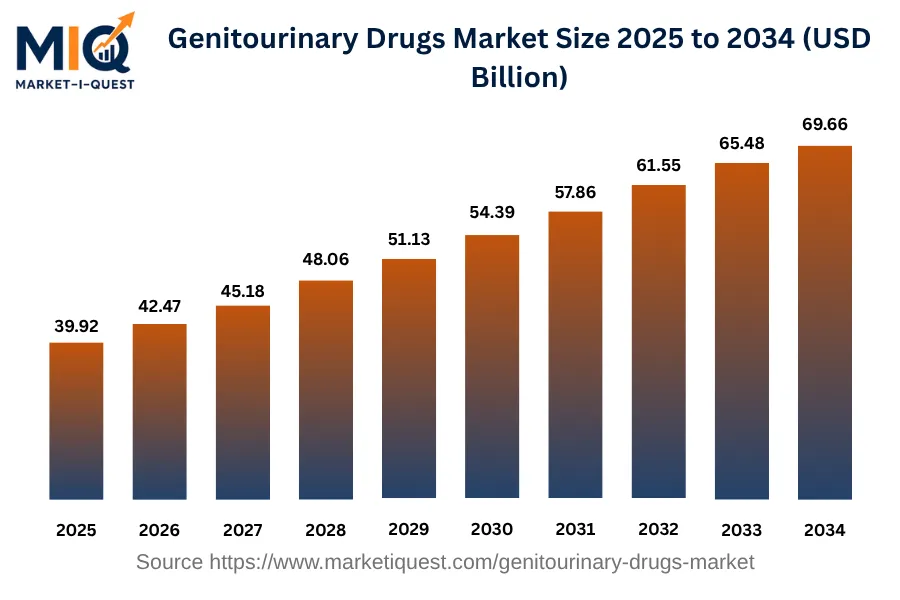
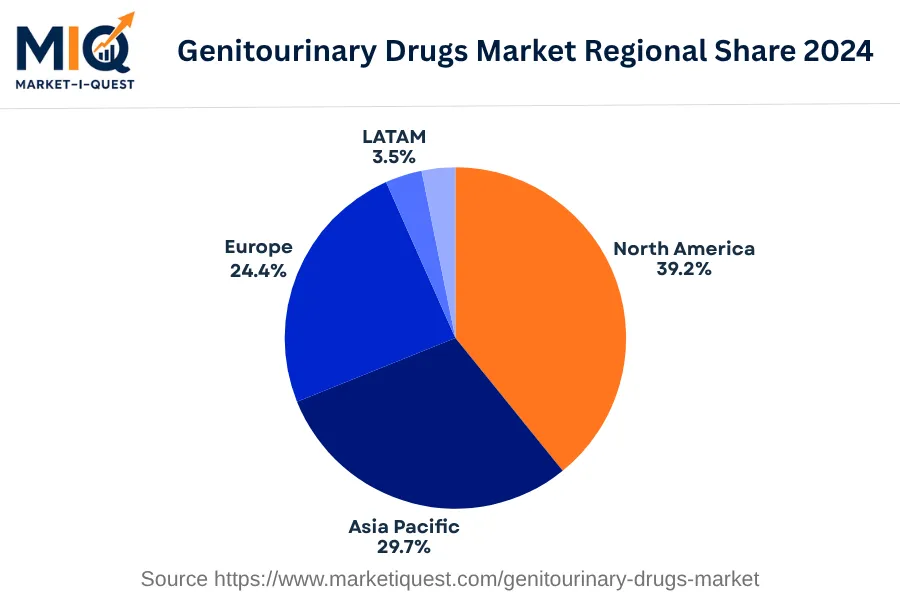
The Genitourinary Drugs Market was worth USD 39.92 billion in 2025 and it is projected to reach USD 69.66 billion by 2034, expanding at a CAGR of 6.38%. This implies that during the nine years from 2025 to 2034, the market’s value will rise by nearly USD 30 billion, with a steady growth trajectory observable throughout this period. The increase in market size over the years stems from factors such as the assays developed for detection, developments in genitourinary drugs, and the rise in the incidences needing genitourinary drugs. The regional share of the market in 2024 was divided with North America leading at 39.2%, followed by Asia Pacific at 29.7%, Europe at 24.4%, LATAM at 3.5%, and MEA at 3.2%.

Key Takeaways

  • By Disease - Urinary Tract Infections led the market accounting for a significant share in 2024.
  • By Product - Urological was the top subsegment in 2024 attributed to high demand in treating genitourinary disorders.
  • By End User - Hospitals held a dominant position in 2024 due to the frequent treatment of genitourinary diseases in these settings.
genitourinary-drugs-market market size

Key Driving Factors

Emergence of Personalized Medicine

In recent years, personalized medicine has seen a significant surge. This approach is based on the individual patient's genetic makeup, allowing for therapy tailored to specific genitourinary conditions, thereby increasing the effectiveness of treatments. The genitourinary drugs market is increasingly being driven by personalized medicines, especially in developed markets where genetic sequencing technologies are readily available. Pharmaceutical companies are investing heavily in research and development of such drugs aimed at specific genitourinary conditions. By targeting gene mutations causing disorders like kidney disease, bladder or urinary tract infections, treatment efficacy can be greatly enhanced, thus escalating demand for these drugs.
Increasing Incidence of Lifestyle Related Disorders

In the modern age, unhealthy lifestyles are leading to an increase in genitourinary disorders such as chronic kidney disease, urinary incontinence, and prostate issues. Sedentary behaviors, obesity, hypertension, and diabetes are known contributors to these conditions, proliferating across multiple nations great demand for genitourinary drugs. Health campaigns and public awareness about these disorders have also brought increased understanding and urgency to the problem, pressuring healthcare providers and pharmaceutical companies to provide effective treatments. This significant surge in patient volume necessitates higher production and availability of genitourinary drugs, pushing the market forward.

Market Evolution by Timeline

2019-2023
The demand for genitourinary drugs showed regional prominence, specifically in North America, due to the rising elderly population and a marked increase in urinary diseases. Most genitourinary drugs were integrated as therapeutics in broader treatments such as hormone replacement therapies for urinary incontinence. Even with the integration maturity remaining in its initial phase, the constraint remained the lack of advanced drugs. The Medicine and Healthcare industry mostly capitalized on volume-based contracts in this period. Regarding the regulatory landscape, the FDA approval for new genitourinary drugs remained stringent. Practical blockers like medication side effects and high prices remained with initiatives for common programming to overcome these.
2024
In 2024, developing nations also emerged as essential buyers for genitourinary drugs due to better healthcare access. Technology-wise, more companies were witnessing phase-II trials, but no significant improvements were seen in the drug's efficiency. As per the regulatory standpoint, the European Medicines Agency introduced Patient-focused Drug Development (PFDD) to increase genitourinary diseases understanding and treatment. Genitourinary drug manufacturers stuck to a volume-based commercial model. The year ushered in more partnerships leading to new drug developments. Risks of the year centered around regulatory changes and their uncertainties.
2025-2029
The market for genitourinary drugs expanded with an increased demand in Asian markets. Improved drugs were shipped out in this period with considerable advancements in integration maturity. However, insufficient funding to small-scale drug researchers was a constraint. Regarding policy and regulation, FDA's streamlined review to sign off genitourinary drugs impacted positively. The competitive bidding process saw a rise in this period, thus influencing the commercial model. From a risk perspective, the lack of comprehensive healthcare coverage in emerging markets was a major impediment.
2030-2034
The genitourinary drugs market saw robust growth in Africa, mostly due to expanded healthcare facilities in this region. The period also saw the arrival of advanced genitourinary drugs, as the integration of therapeutics matured. The WHO's initiative for improved quality of life (QOL) standards influenced adherence to genitourinary treatments, thus affecting market dynamics. Improved pricing transparency emerged as a new tendency in commercial trading, thus impacting the drug's procurement. Regulatory changes matched the pace of technological advances in the genitourinary drugs market, thereby alleviating some risk factors.

Future Market Outlook

Future Opportunities

The future opportunities within the genitourinary drugs market are closely aligned with existing regulatory and infrastructural developments. With the increasing incidence of urological disorders like urinary incontinence, healthcare systems, particularly in the United States and Europe, are prioritizing research funding for effective treatments. In 2023, the National Institutes of Health launched initiatives to boost funding for research into novel therapeutic pathways. Companies such as Pfizer are also investing in partnerships with biotech firms focused on developing localized therapies for regions with specific health needs. This strategic alignment suggests a dynamic opportunity for tailored solutions that effectively address the diverse genitourinary health challenges in different populations. Moreover, the push towards personalized medicine, evident from the FDA's 2023 guidance on targeted therapies, indicates an emerging market for personalized genitourinary treatments based on genetic profiling. Additionally, increased awareness and reduction of stigma regarding men's health issues, driven by campaigns from organizations like the Movember Foundation, are expected to foster demand for genitourinary drugs. In line with this, collaborative efforts between pharmaceutical companies and digital health platforms are expanding. For instance, in 2022, Roche partnered with a telehealth provider to enhance access to treatments, illustrating the potential of integrated healthcare solutions. As such, the alignment of technological advancements with regulatory support creates a fertile ground for growth in genitourinary drug therapies.

Segmentation Analysis

By Disease

The market is divided into subsegments including Urinary Tract Infections, Erectile Dysfunction, Hematuria, and others, with Urinary Tract Infections accounting for the largest revenue share, while Hematuria is expected to grow at the fastest CAGR during the forecast period.

Largest Revenue Share

Urinary Tract Infections

Market Share Leader

Urinary Tract Infections (UTIs) represent the largest share of revenue among these segments due to their high prevalence worldwide. Factors, such as aging population, rising rates of diabetes, and increased use of urinary catheters in hospitals and clinics, contribute to the high occurrence of UTIs contributing to their market dominance. UTIs are prevalent in both developed and developing countries, giving the segment geographically widespread revenue sources. Regulations encouraging proactive UTI screening and effective treatment plans further amplify the demand for UTI-related products and services. Additionally, healthcare practitioners around the globe are highly familiar with UTI diagnosis and treatment protocols, leading to a significant purchasing preference for UTI products. Lastly, the high cost of switching to alternative treatments and established distribution channels for UTI products make this subsegment a significant contributor to the total market revenue.

Fastest CAGR

Hematuria

Forecast Period Growth Leader

The Hematuria segment, while not the largest revenue generator, is projected to grow at the highest CAGR. This growth could be attributed to increasing awareness about the importance of early detection in preventing serious conditions like kidney diseases and bladder cancer, which could lead to Hematuria. This awareness is driving demand for diagnostic tests and treatment modalities, catalyzing growth in this segment. Technological advancements, like non-invasive diagnostic procedures, have significantly reduced adoption barriers. Future growth may be spurred by policy changes incentivizing preventative screening and early treatment, as well as private and public partnerships encouraging research and development. However, relative lack of awareness compared to other conditions and the lack of standardized treatment protocols pose near-term risks to the forecasted growth.

By Product

The market is divided into subsegments including Urological, Hormonal Therapy, and Others. In 2024, the Urological subsegment accounted for the largest revenue share while Hormonal Therapy is expected to grow at the fastest CAGR during the forecast period.

Largest Revenue Share

Urological

Market Share Leader

The Urological subsegment achieved the most revenue in 2024, a fact highly attributable to the ever-increasing prevalence of urological disorders. The commonality of conditions such as kidney disease, urinary tract infections, prostate disorders, and bladder issues acts as a significant revenue driver for this subsegment. It is largely due to the commonality of these disorders that patients seek treatment, creating demand. Moreover, advancements in urological treatments such as minimally invasive surgeries and the evolution of urological devices have attracted numerous patients to opt for these treatments, augmenting the revenue for this subsegment. Geographically, developed regions with higher healthcare facilities and reimbursement scenarios, like North America, substantially contribute to the revenue. Regulatory bodies have also played a pivotal role in impacting this subsegment’s revenue. Implementation of favorable guidelines regarding the treatment of urological disorders has resulted in an increased adoption of these treatments.

Fastest CAGR

Hormonal Therapy

Forecast Period Growth Leader

Hormonal Therapy has been identified as the fastest-growing subsegment. This forecasted growth is driven by several key factors such as technological innovations, supportive policies, and increasing partnerships. Newly developed hormonal therapies offer effective treatment options for various conditions, such as menopause, hormone imbalance, and gender transition. This exploration of new therapeutic avenues has sparked interest and spurred market growth. As for the barrier to adoption, fear of side effects like thromboembolic events and stroke from hormone therapies often inhibits some people. However, continuously improving safety profiles should help mitigate these concerns. Progressive policies are also catalyzing growth. Regulatory bodies adopting more flexible guidelines for hormonal therapy use are likely to boost market expansion. Besides, bolstered by increasing R&D investments and strategic collaborations among key players, the subsegment is likely to maintain a high CAGR. Notwithstanding, near-term risks could include potential shifts in regulatory allowances, or sudden changes within competitive landscapes.

By End User

The market is divided into subsegments, which include Hospitals and Super Specialty Clinics. In 2024, Hospitals accounted for the largest revenue share, while Super Specialty Clinics are expected to grow at the fastest CAGR during the forecast period.

Largest Revenue Share

Hospitals

Market Share Leader

In terms of end users, the Hospital segment has been gaining significant traction. This can be attributed to several factors. First, hospitals treat a large number of patients and a wide range of diseases thereby necessitating an extensive and diverse inventory of medical supplies and equipment. Moreover, the rising geriatric population worldwide is resulting in an increased number of hospital admissions. Second, government initiatives and funding in several countries towards healthcare infrastructure development have resulted in expansion and modernization of hospitals, further driving demand. Lastly, strict regulatory norms require hospitals to continuously update and maintain their equipment, further sustaining demand consistently. Although switching costs for hospitals can be high, this is offset by the necessity of remaining technologically up-to-date in order to provide the highest quality patient care.

Fastest CAGR

Super Specialty Clinics

Forecast Period Growth Leader

On the other hand, Super Specialty Clinics are expected to witness the fastest CAGR during the forecast period. This growth can be attributed to several factors. Firstly, the emergence of advanced technologies, such as telemedicine and AI-based solutions, has enabled these clinics to expand their service offerings and improve patient care. This, in turn, has resulted in increased patient preference for these clinics over traditional healthcare providers. Secondly, growing awareness and demand for personalized and specialty healthcare services are acting as major growth catalysts. However, barriers such as the high capital investment required for technologically advanced equipment may hinder growth to some extent. Nevertheless, strategic partnerships, alliances, and support from investors are expected to help overcome these obstacles, thereby fueling growth in the near term.

Competitive Analysis

Key Market Players

Manufacturers / OEMs

Pfizer Inc.
US
GlaxoSmithKline plc
UK
Bayer AG
Germany

Key Suppliers & Raw Materials

Novartis International AG
Switzerland
Teva Pharmaceutical Industries Ltd.
Israel
Sanofi S.A.
France

Distributors, Integrators & Channel Partners

McKesson Corporation
US
Cardinal Health, Inc.
US
AmerisourceBergen Corporation
US

Porter’s Five Forces Analysis

This analysis dives into the competitive dynamics within the genitourinary drugs market.

Supplier Bargaining Power

Medium

Controlled by few key pharmaceutical manufacturers with strong influence on prices.

Buyer Bargaining Power

Low

Customers, mainly hospitals and clinics, have little influence on the pricing due to specialized drug requirements.

Threat of Substitutes

Low

Substitute threat is low due to the high cost of switching and lack of equally effective alternatives.

Threat of New Entrants

Medium

Regulatory hurdles and high R&D expenses moderate the threat of new entrants.

Competitive Rivalry

High

Intense competition among established pharmaceutical brands with significant innovation and marketing budget.

Regional Analysis

Geographic market dynamics and growth opportunities across key regions

Global Market Outlook

genitourinary-drugs-market market regional share

North America

In 2024, the North American Genitourinary Drugs Market saw significant growth driven by various factors and shaped by key trends. Demand for these pharmaceutical products increased due to the rise of genitourinary diseases in the U.S., Canada, and Mexico. Adoption of advanced treatment options, coupled with strong investment in research and development from pharmaceutical companies, further spurred growth. Regulatory support, particularly from the U.S Food and Drug Administration with the accelerated approval of several drugs, acted as a critical market enhancer. Noteworthy market trends included heightened consumer awareness around genitourinary health which influenced purchase behaviors, the rise of e-pharmacy as a preferred purchase channel, and the growing focus on partnerships among key players for research and drug development.

Novel technologies like targeted therapies and immunotherapy treatments came to the forefront, further revolutionizing this healthcare sector. Key market players included pharmaceutical enterprises and healthcare providers, while principal customers ranged from hospitals and clinics to specialty care centers across North America. The market dynamics underlined in this study substantiate the productive state of the Genitourinary Drugs Market in the base year 2024 in North America.

Asia Pacific

In 2024, the Asia Pacific genitourinary drugs market reflected a strong growth trajectory especially in economies such as China, India, Japan, South Korea, Australia, and key ASEAN markets. Drivers behind this growth included increasing geriatric population and rising prevalence of genitourinary disorders, like urinary incontinence and prostate gland disorders. Additionally, governments across the region initiated robust health reforms to increase healthcare accessibility, thus stimulating the demand for these drugs. Advancements in medical technology, leading to more efficient drug variants, coupled with India's noteworthy strides in its pharmaceutical industry, further bolstered the supply. However, high drug pricing remained a hindrance to the market.

In terms of trends, increased patient awareness coupled with a rise in self-care trends led to higher patient-initiated consultations, shifting purchase patterns. Furthermore, pharmaceutical giants within the region, such as China's Fosun Pharmaceutical and India's Dr. Reddy's Laboratories, engaged in strategic partnerships cementing their market positions. Noteworthy, too, was the strictly enforced policy by Japan's regulatory authority promoting generic drugs use, which in turn, directed manufacturers to expand the production. The genitourinary drugs market significantly impacted sectors like Healthcare providers and Retail Pharmacies due to increased demand for therapies.

Europe

In 2024, the European genitourinary drugs market showcased significant developments. Concerning drivers, advances in medical technology in western europe, particularly the UK and Germany, increased the demand for genitourinary drugs, as it facilitated early diagnosis and effective treatment of disorders. Patient awareness initiatives by healthcare authorities in France and Spain increased the demand further. Likewise, government investment in the healthcare sector within Benelux and Central & Eastern Europe offered a conducive environment for market growth. Observing trends, the adoption of home-based dialysis treatments in Italy and Germany emerged due to the rising geriatric population struggling with chronic kidney diseases. The consent towards urinary incontinence products among women in France and the Nordics became pervasive due to the rising social acceptance. Moreover, strategic M&A activities were seen among pharmaceutical companies in the UK, aimed at enhancing research capabilities and drug pipelines.

Lastly, the enforcement of stricter regulations for drug approval and quality control by the European Union ensured the safety and efficacy of these products provided to patients. The prime sectors demanding genitourinary drugs across Europe were predominantly healthcare, retail, and certain quarters of the government engaged in public health issues. This was led by an increased prevalence of urological, kidney, and other related disorders within these regions in 2024.

Latin America

In 2024, the Genitourinary Drugs Market in LATAM experienced a surge in growth due to various factors. Increased demand was driven by changing lifestyle habits, prevalence of genitourinary diseases, and enhanced focus on healthcare in countries like Brazil, Mexico, Argentina, Colombia, Chile, and Peru. Government initiatives aimed at improving public health infrastructure and adoption of advanced diagnostic techniques supported market growth. However, high costs of treatment and inadequate insurance coverage hindered accessibility in some regions. Trends observed in 2024 include a growing preference for personalized drugs and therapies for genitourinary diseases in LATAM nations, indicating a shift in buyer behavior.

An increase in telemedicine and digital consultations due to the COVID-19 pandemic led to enhanced delivery channels for these drugs. Furthermore, several strategic partnerships and acquisitions were witnessed, including multi-national pharmaceutical companies partnering with local enterprises to expand their foothold. Key customer sectors were healthcare institutions, private practices, and government health bodies, providing services across both urban and rural areas. Overall, 2024 saw a dynamic Genitourinary Drugs Market in LATAM, powered by demographic shifts, regulatory focus, and evolving patient preferences. Future growth would largely depend on addressing market limitations and adopting innovative practices for the timely diagnosis and treatment of genitourinary diseases.

Middle East & Africa

In 2024, the Genitourinary Drugs market in the Middle East and Africa showed a notable growth trend. Drivers of this expansion included increased investment in the healthcare sector with emphasis on Saudi Arabia, UAE, and South Africa. Additionally, adoption of advanced medical technologies across these countries, particularly UAE and Israel, and increased focus on woman's health and geriatric care in countries like Egypt and Nigeria, all underpinned this market growth. Moreover, the growing prevalence of genitourinary diseases and the subsequent need for effective treatment options stimulated market demand. Trends shaping the market included a discernible shift towards innovative drugs offering fewer side effects and rapid recovery. For example, biologics became popular in several key regions including Saudi Arabia and Israel.

Newer distribution channels, such as online pharmacies, gained prominence due to ease of access and the ongoing digital transformation in countries like Qatar and Kenya. Furthermore, the market saw regulatory bodies enforcing stringent standards for the approval of genitourinary drugs, ensuring higher safety levels, especially in South Africa. Therefore, in the health and pharmaceutical sectors of the Middle East and Africa, the Genitourinary Drugs market played a significant role in 2024, led by increased demand and advances in drug development technologies. Key contributors included government healthcare bodies, manufacturing companies, and retail pharmacies.

Recent Industry Developments

Latest market innovations, product launches, and strategic initiatives

May 2026

Wockhardt’s Zaynich (cefepime and zidebactam) received U.S. FDA approval for complicated urinary tract infections (cUTI) including pyelonephritis—the first new chemical entity fully discovered and commercialized by an Indian company to receive FDA clearance. India’s CDSCO approved it on May 27, 2026.

December 2025

The U.S. FDA approved NUZOLVENCE® (zoliflodacin) , a first‑in‑class, single‑dose oral antibiotic developed exclusively for uncomplicated urogenital gonorrhoea in adults and pediatric patients (≥12 years, ≥35 kg)—the first new gonorrhoea‑specific treatment in decades.

Frequently Asked Questions