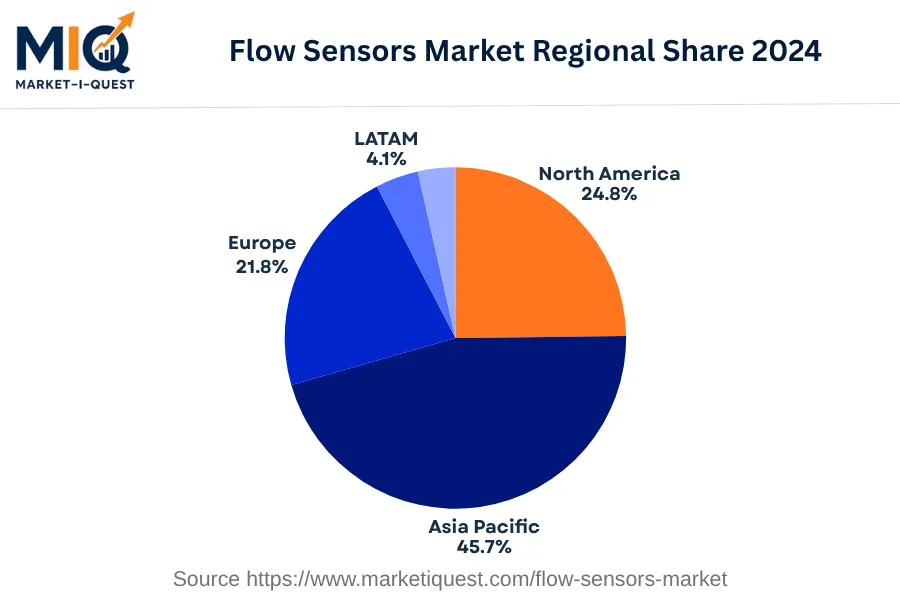
In the base year of 2024, the Flow Sensors Market in Latin America (LATAM) was mainly driven by the growing industrial and infrastructural development, particularly in countries like Brazil, Mexico, Argentina, Colombia, Chile, and Peru. Characterized by an increase in water and wastewater treatment plants, increased investment in automation across different industries such as manufacturing, utilities, healthcare, and retail often demanded high-precision flow sensors. Regulation in countries like Brazil and Argentina, which mandated utility providers to ensure accurate measurements, also acted as a pivotal driver for the market.
Meanwhile, the market witnessed impactful changes as technology adoption increased: IoT-integrated flow sensors grew popular due to their remote monitoring capability, and there was a gradual transition towards ultrasonic flow sensors from traditional mechanical flow sensors, primarily due to their non-intrusive and maintenance-free characteristics. Furthermore, increased adoption of flow sensors in agriculture for precise watering systems was noted, catalyzed by policies from the LATAM governments to conserve water resources in the region. Finally, numerous partnerships and M&A took place, as companies sought to strengthen their foothold in the competitive market landscape. For example, companies in the manufacturing sector partnered with sensor developers to integrate flow sensors into their production lines, enhancing operational efficiency.