Enterprise Key Management Market Snapshot

Key Players

  • Thales e-Security (France)
  • Gemalto (Netherlands)
  • Amazon Web Services (USA)
  • Oracle Corporation (USA)
  • Venafi (USA)
  • IBM Corporation (USA)
  • Google (USA)
  • Unbound Tech (Israel)
  • RSASecurity LLC (USA)
  • Futurex (USA)

Market Size

Base Year 2024
$4.75 Bn
CAGR
15.26%
Forecast 2034
$19.66 Bn

Market Segments

By Deployment Type
  • Cloud
  • On-Premises
By Application
  • Cloud Encryption
  • Disk Encryption
  • File and Folder Encryption
  • Others
By End-User Vertical
  • BFSI
  • Healthcare
  • Government & Defense
  • IT & Telecom
  • Retail
  • Others

Market Dynamics

Drivers
  • Stringent regulatory compliances
  • Increasing cyber security threats
Restraints
  • High implementation costs
  • Complexity in managing encryption keys
Opportunities
  • Rising cybersecurity threats
  • Cloud technology adoption growth

Market Size

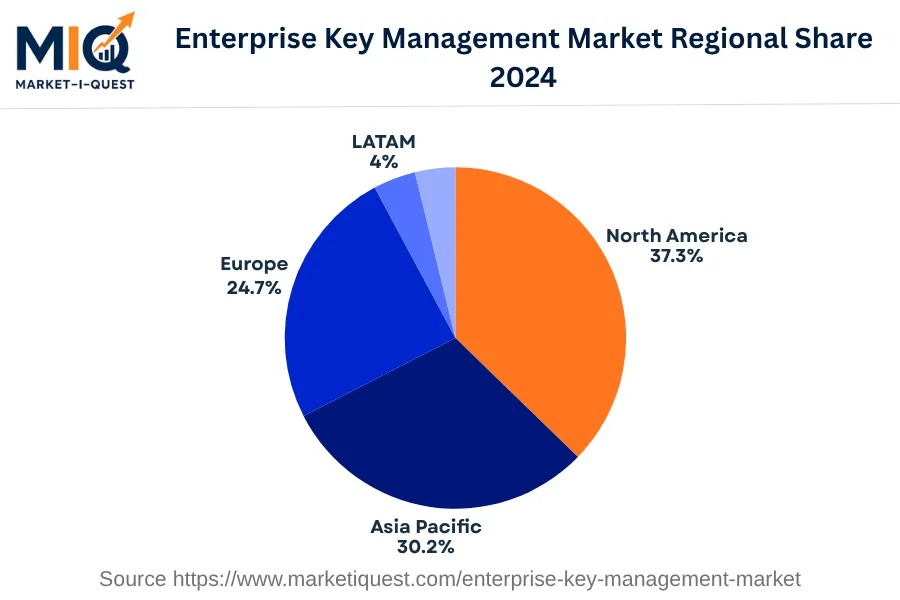
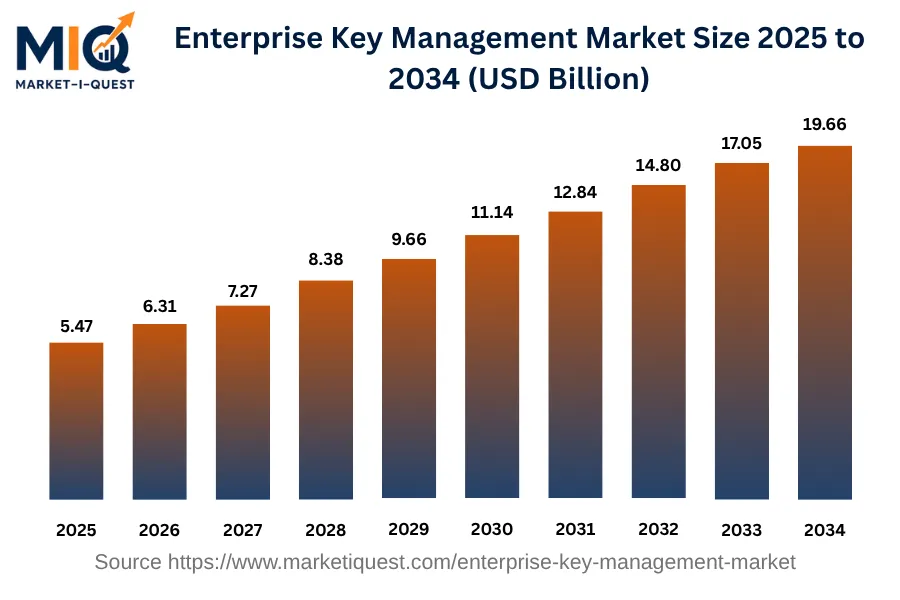
The Enterprise Key Management Market size was approximately USD 5.47 billion in 2025 and is anticipated to surpass USD 19.66 billion by 2034, representing a CAGR growth of 15.26%. The market size in 2024 was estimated to be USD 4.75 billion. This strong growth trajectory is attributable to various industry factors and developments. By 2034, the market is set to quadruple its size, further cementing its growth trend. In acknowledging the regional share, North America held the largest market share in 2024 with 37.3%, followed by Asia Pacific at 30.2%. Europe was close behind Asia Pacific with 24.7%. The remaining share of the Enterprise Key Management Market was covered by LATAM and MEA at 4.03% and 3.81% respectively. This paints a diverse picture on the global spread of the market, highlighting critical regions and their share of contribution.

Key Takeaways

  • By Deployment Type - On-Premises led the Enterprise Key Management Market with the highest share in the base year.
  • By Application - Disk Encryption was the leading segment in the Enterprise Key Management Market.
  • By End-User Vertical - BFSI held a predominant position in the Enterprise Key Management Market in the previous year.
enterprise-key-management-market market size

Key Driving Factors

Rising Instances of Data Breaches and Security Infringements

Companies across different sectors are experiencing a surge in data breaches and security infringements, a situation that drives the adoption of key management systems. Advanced hacking techniques have raised serious concerns about the security of corporate digital assets and risk-sensitive data. To protect these assets and fortify their security infrastructures, enterprises are increasingly deploying key management systems. With the implementation of these systems, they can effectively manage, control, and track their cryptographic keys, thereby minimizing the overall risk potential and shielding sensitive information.

Enforcement of Regulatory Compliance Standards

Numerous countries and industries have imposed stringent regulatory compliance standards around data protection, pressuring organizations to secure their sensitive information. For instance, standards such as the General Data Protection Regulation (GDPR) in Europe, the Health Insurance Portability and Accountability Act (HIPAA) in the US, and the Payment Card Industry Data Security Standard (PCI DSS) globally, require companies to manage secure encryption keys meticulously. Failure to adhere to these rules could result in hefty fines and damage the company's reputation. As a result, enterprises are adopting key management systems to maintain compliance, which in turn, stimulates the enterprise key management market.

Market Evolution by Timeline

2019-2023
In this phase, financial organizations and IT services were the main buyers, with regions like North America and Europe leading in adoption due to stringent data privacy regulations like GDPR. Vendors were mainly shipping hardware security modules (HSMs), with integration maturity relatively low due to lack of standards. However, the National Institute of Standards and Technology (NIST) started emerging as a standard guideline. The common purchasing model was primarily licensing with price based on number of keys managed. The main constraints were complexity of deployment and high cost of key management solutions.
2024
At this point, the demand for key management shifted to the cloud, fueled by the significant growth of cloud-based platforms within enterprises. Major vendors started offering cloud-native solutions. The European Cybersecurity Act impacted policy and positively influenced adoption. A trend of partnerships between prominent cloud services and EKM solution providers started to occur, enabling streamlined cloud integrations. The primary obstacle was the apprehension toward storing sensitive keys over the cloud.
2025-2029
In this period, healthcare and government sectors emerged as key buyers due to increased focus on secure data transmission. There was significant growth in the Asia-Pacific region due to developing IT infrastructure and data protection regulations. Federation standards like Key Management Interoperability Protocol (KMIP) improved integration. Pay-as-you-go emerged as the dominant model to accommodate the growing SME segment. The challenge remained to assure the advanced level of security and integrity of keys in the virtual environment.
2030-2034
With blockchain technology and IoT becoming pervasive, demand for key management spread across diverse sectors. Regions like Middle East and Latin America also came into play due to evolving digital infrastructure. Hardware-based solutions regained traction driven by quantum computing growth. The potential introduction of stricter data protection laws influenced adoption. The pricing dynamics involved competition-based pricing, and typical contract types included service-level agreements (SLAs). The main risk was ensuring management and protection of the growing number of digital keys in complex environments.

Future Market Outlook

Future Opportunities

As enterprises navigate the complex landscape of data privacy and security, opportunities within the enterprise key management market are expected to expand. The ongoing development of regulatory frameworks will likely create a compliance-driven demand for key management solutions. For example, the California Consumer Privacy Act (CCPA), which took effect in January 2020, has prompted organizations to review data handling practices, including key management. Collaboration between service providers and enterprises is likely to grow regarding key management services, as demonstrated by the partnership between IBM and Salesforce in June 2023 aimed at enriching their cloud security portfolios. This trend can open avenues for smaller vendors that provide specialized key management tools. Additionally, advancements in quantum computing may lead organizations to explore post-quantum cryptography techniques, necessitating updated key management systems as highlighted in a report by NIST in 2022. Integration of artificial intelligence in key management practices could optimize operational efficiency and security, further shaping the market landscape. This is evident as Cisco unveiled its AI-powered security offerings in March 2023, emphasizing automated responses to threats. As organizations increasingly shift towards hybrid and multi-cloud environments, there will be a heightened need for effective key management across various platforms. Thus, the convergence of regulatory requirements, technological advancements, and evolving security needs will create a fertile ground for innovation and investment in the enterprise key management market.

Segmentation Analysis

By Deployment Type

The market is divided into subsegments including Cloud and On-Premises. On-Premises accounted for the largest revenue share while Cloud is expected to grow at the fastest CAGR during the forecast period.

Largest Revenue Share

On-Premises

Market Share Leader

Within the deployment type segment of the market, On-Premises has historically accrued the largest revenue share. There are several reasons for this leading position. First, On-Premises solutions offer a high level of control and security. Since the resources are owned and managed directly by the company, they can control the performance, maintenance, and security parameters in their favor. Plus, On-Premises solutions can be tailor-made to fit unique business needs, satisfying specific requirements in a way that cloud solutions sometimes can’t. For companies in heavily regulated industries, which require in-depth privacy control and data sovereignty, this is a key purchasing criterion. Geographically, regions with strong regulations, like Europe and parts of Asia, might also contribute more towards this segment. The inherent switching costs associated with migrating from physical infrastructure to cloud also lends On-Premises solutions an advantage, and ensures customer retention. Additionally, traditional channel sales have an added edge in regions with less cloud familiarity.

Fastest CAGR

Cloud

Forecast Period Growth Leader

While On-Premises solutions currently garner the highest revenue share, Cloud is the fastest growing subsegment in the deployment type market. Cloud services are economically attractive to businesses, particularly small and medium-sized enterprises, because they eliminate the upfront capital expenditure in favor of a predictable subscription model, which expedites the return on investment. The cloud also appeals to businesses due to its scalability, adaptability, and accessibility from any geographic location. The increased adoption of cloud technologies is a growth driver that is predicted to overcome adoption barriers in the near term, given the accelerating pace of digital transformation globally. Over the coming years, advancements in technology, changes in policy around data, and increasing partnerships between cloud service providers and traditional businesses are expected to further fuel this growth. However, near-term risks such as data security and potential regulatory changes must be considered.

By Application

The market is divided into subsegments including Cloud Encryption, Disk Encryption, File and Folder Encryption, and Others. Disk Encryption accounted for the largest revenue share while Cloud Encryption is expected to grow at the fastest CAGR during the forecast period.

Largest Revenue Share

Disk Encryption

Market Share Leader

Disk Encryption has become the most revenue-generating subsegment due to multiple factors. An escalation in cyber threats and data breaches have urged organizations to employ disk encryption methods to safeguard their confidential data. The dominant consumers of disk encryption solutions are large enterprises, which continue striving for superior security measures to protect vast amounts of sensitive data. Governments as well are major users, as they deal with national security and citizens' personal information. Certain regions, like North America and Europe, are significant contributors to this segment's revenue due to their advanced IT infrastructure, strict regulations regarding data security, and the presence of many global corporations. The purchasing criteria for customers involve assessing the ease of integration with existing systems, overall security features, and pricing. Disk encryption also has high switching costs due to the technical hurdles and potential security risks involved in transition, which augments customer retention in this segment.

Fastest CAGR

Cloud Encryption

Forecast Period Growth Leader

Cloud Encryption is the fastest-growing segment due to the proliferation of cloud services across all industries. The shift towards cloud computing has amplified the need for impeccable security measures, which drives the adoption of cloud encryption solutions. The primary adoption barrier is the lack of awareness and understanding of encryption methods among small and medium enterprises (SMEs). However, continuous technological advancements, collaborative efforts from tech giants and cloud service providers, and capital investments in cybersecurity are catalyzing the growth in this segment. The potential near-term risks involve regulatory changes and the advent of new, complex cyber threats. With the growing trend towards remote work or 'work-from-home' setups due to global circumstances, the demand for cloud encryption solutions to ensure secure data transmission is expected to intensify, offering significant growth prospects.

By End-User Vertical

The market is divided into subsegments: BFSI, Healthcare, Government & Defense, IT & Telecom, Retail, and Others. BFSI accounted for the largest revenue share while Healthcare is projected to grow at the fastest pace by the base year 2024.

Largest Revenue Share

BFSI

Market Share Leader

The Banking, Financial Services, and Insurance (BFSI) sector's revenue dominance can be attributed to its extensive requirement of myriad services and systems to manage its operations efficiently. This sector is known for its significant investments in technology to enhance customer experience, risk management, and regulatory compliance. Additionally, BFSI's need to protect vast amounts of sensitive data increases their dependency on advanced solutions, boosting their spending in the market. In the global landscape, the emerging and mature markets have also led to a growth in BFSI spending. Mature markets like North America and Europe have a strong focus on innovation and security, whereas emerging economies are improving their banking infrastructure, thereby leading to higher spending.

Fastest CAGR

Healthcare

Forecast Period Growth Leader

The Healthcare segment is anticipated to witness the highest growth rate by 2024. Primary factors driving this growth are increased global healthcare spending, technology adoption in healthcare infrastructure, and escalating need for streamlined and efficient processes within the industry. Regulatory mandates for the use of certain technologies in healthcare and the shift towards digitization further accelerate this subsegment's growth rate. Healthcare providers are increasingly investing in advanced solutions to improve patient care, comply with changing regulations, and manage increasing costs. However, the speed and extent of technology adoption can vary widely depending on factors such as regulatory environment, economic conditions, and perceived benefits of the technology, among others.

Competitive Analysis

Key Market Players

Manufacturers / OEMs

Thales e-Security
France
Gemalto
Netherlands
IBM
US

Key Suppliers & Raw Materials

Intel
US
Microsoft Azure
US
Duo Security
US

Distributors, Integrators & Channel Partners

Tech Data Corporation
US
Ingram Micro Inc.
US
Arrow Electronics, Inc.
US

Porter’s Five Forces Analysis

This analysis overviews the competitive forces shaping the Enterprise Key Management Market.

Supplier Bargaining Power

Medium

Suppliers hold moderate power due to the technical complexity of key management solutions.

Buyer Bargaining Power

High

High buyer power due to abundance of providers and ease of switching suppliers.

Threat of Substitutes

Low

Low substitutes threat given the specialized nature of enterprise key management solutions.

Threat of New Entrants

Medium

Due to high developmental costs and technical expertise, threat from new entrants is medium.

Competitive Rivalry

High

High competition among existing players due to technological advancements and market saturation.

Regional Analysis

Geographic market dynamics and growth opportunities across key regions

Global Market Outlook

enterprise-key-management-market market regional share

North America

In 2024, the Enterprise Key Management (EKM) Market in North America was marked by heightened demand due to an increased focus on data security across several sectors. Deepening technological integration within industries, such as healthcare, retail, and manufacturing, drove demand for enhanced encryption systems, increasing the adoption of EKM solutions in these sectors. Regulatory requirements, like the Health Insurance Portability and Accountability Act (HIPAA) in the U.S., further boosted EKM usage. Significant investment in digital infrastructure by governments, notably in the U.S. and Canada, also facilitated market growth.

On the trend front, a significant network migration from traditional channels to cloud platforms was witnessed, resulting in collaborative partnerships between EKM service providers and Cloud Service Providers (CSPs). This strategic cooperation made it easier for enterprises to store and manage their encryption keys. Another noticeable trend was a heightened emphasis on policy enforcement, with companies demonstrating rigorous adherence to privacy standards via EKM systems. Simultaneously, a shift in buyer behavior was observed, with enterprises prioritizing suppliers offering robust support services along with EKM solutions as a means of fortifying their increasingly data-driven operations. These drivers and trends underscored the vigorous growth and dynamism of the EKM market in North American in 2024.

Asia Pacific

In 2024, the Enterprise Key Management (EKM) market in the Asia Pacific displayed growing dynamism. Regulatory reinforcement in data security, particularly in China's Personal Information Protection Law, fueled EKM adoption. Moreover, increased digital transformation initiatives across sectors like healthcare, utilities, and manufacturing spurred demand. India's expanding IT sector also contributed to intensified investment in EKM solutions. Noticeable trends encompassed changing buyer behavior and technological adjustments. Greater digitization among government entities from Australia to ASEAN markets increased their reliance on EKM solutions, manifesting changing procurement habits. Additionally, evolving standards towards enhancing cybersecurity resilience, such as Japan's national cybersecurity strategy, impacted technology development and preference.

Channel dynamics shifted as cloud-based EKM solutions gained predominance, reflecting the region's growing cloud uptake. As South Korea's advanced IT infrastructure enabled higher cloud EKM adoption, more partnerships and M&As transpired among major IT and cybersecurity firms, advancing market consolidation. These driving forces and ongoing trends signaled an increased emphasis on data security in the region's enterprises. EKM market in Asia Pacific evolved in response to the digital acceleration and progressive data protection regulations across prominent economies. As such, the region has become a significant stronghold for the EKM industry.

Europe

In 2024, the European Enterprise Key Management market witnessed substantial growth due to numerous drivers and emerging trends. Rising cyber-attacks prompted businesses from sectors such as enterprise, government, healthcare, utilities, manufacturing, and retail to adopt advanced security strategies including Enterprise Key Management. Furthermore, France's IN-01 Regulation mandated organizations to increase their investment in secure cryptographic keys, bolstering market growth. Adoption of cloud-based solutions, as seen particularly in Nordic countries and Germany, enhanced the need for robust Key Management solutions to protect sensitive data. Meanwhile, Central and Eastern Europe, supported by regulatory bodies, increasingly prioritized technology investments in key management systems leading to market expansion.

Trends in the market involved a shift in customer behavior towards solutions offering efficient, scalable, and flexible system controls. UK and Benelux companies, notably, showed a trend of forming partnerships and acquisitions to improve their key management capabilities. For instance, the merger of two prominent security service providers in the UK highlighted the growing interest in shared services for the reinforcement of global security posture. In Italy and Spain, substantial policy enforcement occurred to ensure data protection and privacy, further shaping preferences toward enterprise key management procedures. Both corporate and government bodies across Europe actively pursued standardized security protocols, making an evident impact on the Enterprise Key Management landscape in 2024.
Latin America

In 2024, the Enterprise Key Management Market in Latin America displayed noteworthy evolution. Contributive drivers included stringent data protection regulations pushing businesses to adopt these solutions, substantial IT investments from emerging economies like Brazil and Mexico, and an enhanced awareness about cyber threats among enterprises. Swift adoption of cloud-based services led to increased demand for security management systems in countries like Argentina, Colombia, Chile, and Peru. Simultaneously, falling prices made these solutions more accessible across various sectors, including government, healthcare, and retail.

Changes in technology and behavior delineated some key trends in 2024. An increased interest in Managed Security Services (MSS) was noted, primarily for lowering operational costs and outsourcing risk management, particularly in the manufacturing sector. Moreover, there was a palpable shift toward biometric technology for key management, seen predominantly in the financial sector. Partnerships and M&A activity were also prevalent; for example, multinational IT companies entered alliances with local enterprises to gain a foothold in LATAM markets. Lastly, standards and policy enforcement became more stringent, with the enactment of Comprehensive data protection laws, mirroring the likes of the European GDPR, which further intensified the requisition for advanced enterprise key management solutions.

Middle East & Africa

In 2024, the Enterprise Key Management (EKM) market in the Middle East and Africa showed a notable growth trajectory. Market drivers primarily included heightened cybersecurity concerns leading to increased adoption of encryption solutions, government regulations advocating data protection, and significant investments in technology infrastructure. For instance, in countries like Saudi Arabia and UAE, the digitization of sectors like healthcare and financial services necessitated robust key management solutions to safeguard sensitive information. Several trends emerged, with the rise in cloud-based EKM solutions being predominant. The shift towards cloud was visible in sectors like telecom in South Africa and Nigeria, which saw increased partnerships between local telecom companies and global cloud providers.

Additionally, the advent of IoT technology in Israel's manufacturing sector led to a surge in demand for EKM solutions, emphasizing hardware security modules. Lastly, policy enforcement for data protection grew intense in Egypt where new government regulations aimed at reinforcing cybersecurity measures across various sectors, including oil and gas, utilities, and retail. Thus, the EKM market in 2024 was characterized by a combination of evolving technology, regulatory pressures, and strategic alliances.

Recent Industry Developments

Latest market innovations, product launches, and strategic initiatives

December 2025

NIST published the initial draft of Special Publication 800-57 Part 1 Revision 6, "Recommendation for Key Management: Part 1 – General," available for comment through February 5, 2026. Proposed changes include separate discussions of keys used for key establishment and key storage.

Frequently Asked Questions