Duchenne Muscular Dystrophy Drugs Market Snapshot

Key Players

  • Sarepta Therapeutics (US)
  • Pfizer Inc. (United States)
  • Santhera Pharmaceuticals (Switzerland)
  • Solid Biosciences Inc. (US)
  • PTC Therapeutics (US)
  • Wave Life Sciences (Singapore)
  • Roche (Switzerland)
  • Daiichi Sankyo (Japan)
  • Italfarmaco S.p.A (Italy)

Market Size

Base Year 2024
$4.83 Bn
CAGR
26.42%
Forecast 2034
$50.36 Bn

Market Segments

By Treatment
  • Molecular-Based Therapies
  • Steroid-Based Therapies
  • Non-Steroidal Anti-Inflammatory Drugs (NSAIDs)
  • Others
By Distribution Channel
  • Hospital Pharmacies
  • Retail Pharmacies
  • Online Pharmacies

Market Dynamics

Drivers
  • Increasing prevalence of disease
  • Advancement in pharmacological research
Restraints
  • High treatment costs
  • Limited patient population
Opportunities
  • Unmet therapeutic needs
  • Emerging advanced therapies

Market Size

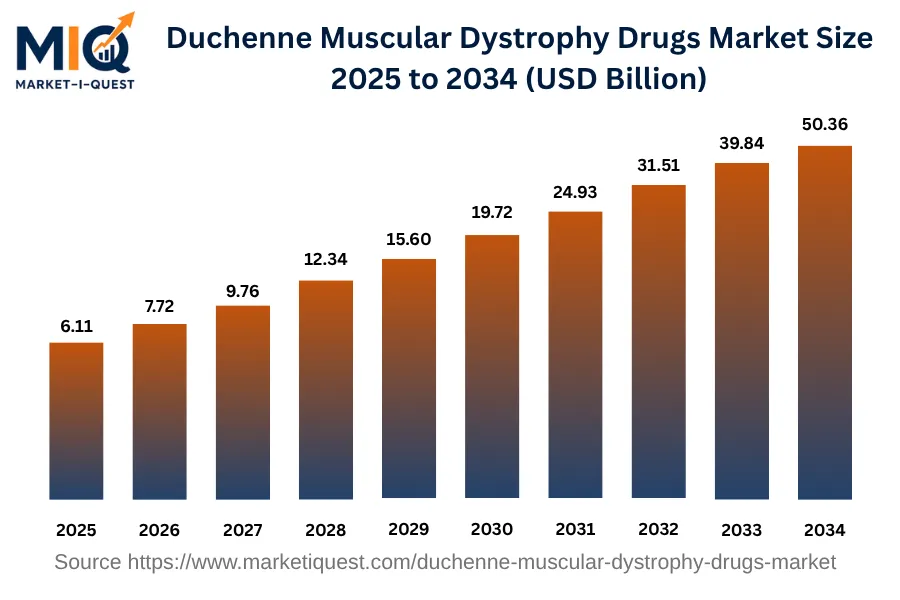
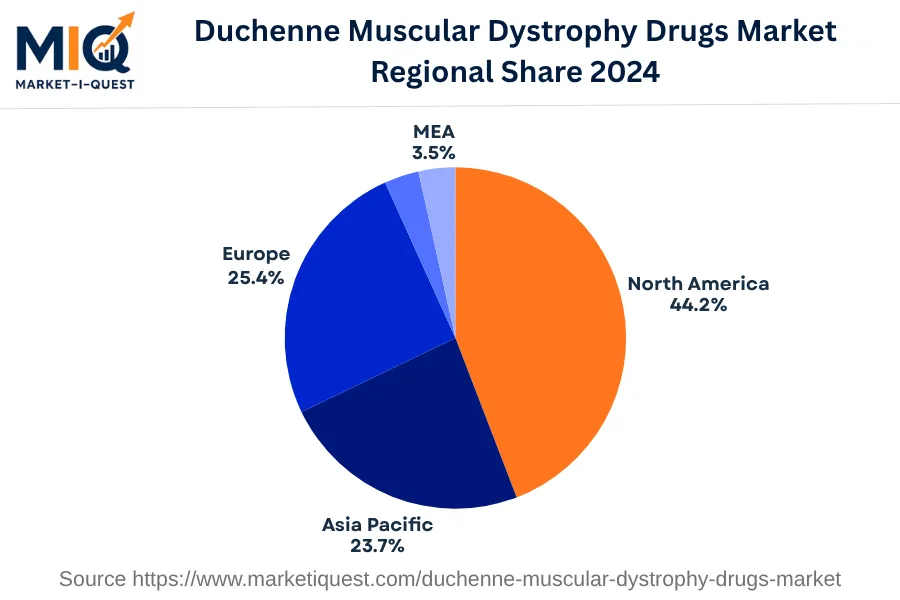
The Duchenne Muscular Dystrophy Drugs Market had a value of 6.11 billion USD in 2025 and is expected to expand significantly to 50.36 billion USD in 2034 at a CAGR of 26.42%. This increase in market size over a span of approximately a decade emphasises the growing demand and reliance on Duchenne Muscular Dystrophy drugs. This growth trend could be attributed to advances in medical research and pharmaceutical development, as well as higher incidence rates of Duchenne Muscular Dystrophy. As for regional share in 2024, North America held the largest share of 44.16%, while the Asia Pacific and Europe closely followed with 23.72% and 25.36% respectively. The remaining regions—Latin America and the Middle East & Africa—only accounted for more modest shares of 3.28% and 3.48%, respectively.

Key Takeaways

  • By Treatment - Steroid-Based Therapies led in Duchenne Muscular Dystrophy Drugs Market.
  • By Distribution Channel - Retail Pharmacies held a dominant presence in market.
duchenne-muscular-dystrophy-drugs-market market size

Key Driving Factors

Emergence of Novel Therapeutic Approaches

The Duchenne Muscular Dystrophy (DMD) drugs market is being propelled by the emergence of novel therapeutic approaches. Recent years have seen a shift from conventional therapies like corticosteroids to advanced techniques involving gene therapy and exon skipping. The advantages of these new methods include improved patient outcomes and fewer side effects, making them attractive options for both doctors and patients. Companies in the sector, like Sarepta Therapeutics and Pfizer, are investing heavily in research and development of such therapies, pushing the market forward. The introduction of first-of-kind treatments, such as the FDA-approved Vyondys 53 for specific mutations of the disease, further fosters this trend.
Increasing Parental Awareness and Patient Advocation

Another significant driver for the Duchenne Muscular Dystrophy drugs market has been the growth in parental awareness and patient advocacies. With many diseases, early diagnosis and treatment are critical. For rare diseases like DMD, this is even more pressing. Organizations such as the Duchenne Parent Project and the Muscular Dystrophy Association are working tirelessly to improve disease understanding, push for early diagnosis, and promote the necessity of urgent treatment. This increased awareness leads to more cases being diagnosed correctly and earlier, which in turn pushes demand for effective treatments. This patient activism and awareness-building is an essential catalyst in the DMD market, fostering growth and innovation.

Market Evolution by Timeline

2019-2023
The market for Duchenne Muscular Dystrophy (DMD) drugs witnessed a surge in pharmaceutical companies like Sarepta Therapeutics, PTC Therapeutics, and Santhera Pharmaceuticals catering to the global demand, dominated by North America and Europe due to higher disease prevalence. Most therapies were symptomatic, aimed at slowing disease progression. Regulatory bodies like FDA, EMA provided orphan drug designation, fast track status to promising therapies, facilitating drug development. Pricing strategies were premium due to the orphan nature of disease, insurance companies typically borne the cost. Exon-skipping technology became significant, though immature integration and high cost were recurring issues. The patent expiry of prednisone triggered concerns on market dynamics as generics entered at lower prices.
2024
In 2024, gene-therapy approaches like SRP-9001 by Sarepta Therapeutics went into late-phase trials, signalling a transition in treatment paradigm towards disease modification. Key buying regions remained North America and Europe. However, access in less developed countries still faced issues like affordability and low disease awareness. Regulatory support continued, but insistence on robust data for gene therapies resulted in rigorous trial protocols. Pricing challenges occurred as insurers pushed back on ultra-high gene therapy costs. The risk of manufacturing hurdles that impacted gene therapy timelines became evident.
2025-2029
Gene therapies witnessed a surge in demand due to their disease-modifying benefits. Emerging markets like Asia-Pacific started contributing significantly to the demand. New players like Solid Biosciences went beyond exon-skipping to deliver comprehensive solutions. Regulatory engagement tended towards conditional approvals for gene therapies based on interim data. Pricing models evolved towards pay-for-performance and annuity-based structures to mitigate affordability issues. Risks such as patient monitoring for long-term gene therapy effects and antigenic response emerged. The call for wider accessibility led to new partnerships between drug manufacturers, NGOs, and governments.
2030-2034
The DMD drugs market extended to gene editing and personalized medicine. Regions like Africa and Latin America saw increased buyer participation, thanks to increased disease awareness and better healthcare infrastructure. Industry collaborations to improve drug delivery by leveraging nanotechnology were notable. Regulatory focus shifted to setting standards for personalized treatments. Pricing models recognized the value of durable therapies, and drug procurement policies started favouring long-term outcomes over upfront costs. Risk mitigation strategies included multi-pronged gene-editing to address the mutating DMD gene.

Future Market Outlook

Future Opportunities

The landscape for Duchenne Muscular Dystrophy therapies offers several promising prospects, primarily driven by advancements in genetic medicine. Regulatory initiatives such as the FDA's Orphan Drug Designation promote the development of therapies for rare diseases like DMD, allowing companies to benefit from extended market exclusivity. Collaborative efforts, such as the 2022 partnership between Novartis and the University of California, have laid the groundwork for pooled data analytics to accelerate the development of more effective treatments. Another significant opportunity arises from the growth in patient advocacy groups globally, such as the Muscular Dystrophy Association, which play crucial roles in raising awareness and support for research funding. The increasing emphasis on real-world evidence from national registries enhances understanding of patient needs, leading to better-targeted therapies. Emerging technologies, such as CRISPR-Cas9 gene editing demonstrated in trials across Europe in 2023, also promise advancements in the ability to treat the underlying genetic causes of DMD. Additionally, advancements in telemedicine, which gained traction during the COVID-19 pandemic, could facilitate remote patient monitoring and improve access to clinical trials globally. The combination of regulatory encouragement, collaborative frameworks, and technological advancements sets the stage for transformative changes in the DMD therapeutic landscape, creating pathways to bring new solutions to affected patients while meeting their unique healthcare needs.

Segmentation Analysis

By Treatment

The market for treatment-related methods is divided into subsegments including Molecular-Based Therapies, Steroid-Based Therapies, Non-Steroidal Anti-Inflammatory Drugs (NSAIDs), and others. Here, Steroid-Based Therapies accounted for the largest revenue share while Molecular-Based Therapies are expected to grow at the fastest CAGR during the forecast period.

Largest Revenue Share

Steroid-Based Therapies

Market Share Leader

Steroid-Based Therapies dominant market share comes from their widespread adoption, the general understanding of their usage, availability and affordable cost. Steroids are typically used in common treatments for a variety of medical conditions, like inflammation and immunity disorders, making them an essential component in healthcare. In 2024, steroids have been prescribed as an effective solution to counteract severe illness symptoms, contributing to their robust demand. They are typically easy to distribute and require low switching costs, making them an attractive solution for both patients and healthcare providers. Their established track-record of efficiency and broad applications have solidified their position in the market. However, while they have firm hold as leaders of the segment, their growth is mostly stagnant due to market saturation.

Fastest CAGR

Molecular-Based Therapies

Forecast Period Growth Leader

Molecular-Based Therapies are forecasted to experience the fastest growth within this market segment, driven by increasing investments into research and development and advancements in technology. While they currently hold a smaller share of the market compared to others, large strides in personalized medicine and increasing knowledge on molecular mechanisms of diseases are rapidly contributing to their rise. The shift towards precision medicine is encouraging a transitioning focus from generic to targeted treatments, and Molecular-Based Therapies are receiving an influx of interest as they cater to this rise in demand. Barriers for adoption include a lack of understanding and high costs associated with new technologies and treatments, making these therapies less accessible and well-known. However, ongoing breakthroughs in the industry, outcomes of partnerships and alliances and increased investments in the field are likely to reduce these obstacles over the forecast period, thus enabling fast growth in this subsegment.

By Distribution Channel

The market is divided into subsegments including Hospital Pharmacies, Retail Pharmacies, and Online Pharmacies. In the base year of 2024, Retail Pharmacies accounted for the largest revenue share while Online Pharmacies are expected to grow at the fastest CAGR during the forecast period.

Largest Revenue Share

Retail Pharmacies

Market Share Leader

Retail pharmacies, as a subsegment, lead the market revenue in the year 2024, largely due to their widespread accessibility and established presence in the industry. They are often the first point of contact for patients after medical consultation. Most consumers turn to retail pharmacies for convenience and personalized service they offer. Moreover, they are ubiquitous, found in urban and rural settings, and offer a wide variety of prescription and non-prescription products, thereby catering to a broader customer base. Customer trust and rapport developed over years of operation add to their substantial revenue share. Also, regulatory support and the in-person assistance provided by pharmacists in understanding drug usage and handling potential drug interactions significantly contribute to the dominance of retail pharmacies in the market revenue share.

Fastest CAGR

Online Pharmacies

Forecast Period Growth Leader

Though trailing in terms of revenue generated in the base year, the Online Pharmacies subsegment is anticipated to grow at an accelerated pace during the forecast period. The rapid digitalization of services, propelled by technological advancements, serves as a significant catalyst for this fast-paced growth. Convenience, privacy, round-the-clock accessibility, and the option for consumers to compare prices across platforms provide a competitive edge over traditional brick-and-mortar pharmacies. However, it isn't without its challenges. Regulatory barriers, authenticity of drugs, and security concerns surrounding online transactions pose significant hurdles. To overcome these, online pharmacies are aggressively investing in user-friendly platforms, advanced cybersecurity measures, and partnering with credible drug manufacturers. Given this, the uptrend in growth is expected to continue, rendering it the fastest-growing subsegment.

Competitive Analysis

Key Market Players

Manufacturers / OEMs

Pfizer Inc.
US
Santhera Pharmaceuticals
Switzerland
Sarepta Therapeutics
US

Key Suppliers & Raw Materials

Roche Holding AG
Switzerland
AbbVie Inc.
US
Merck & Co., Inc.
US

Distributors, Integrators & Channel Partners

Cardinal Health, Inc.
US
AmerisourceBergen Corporation
US
McKesson Corporation
US

Porter’s Five Forces Analysis

Analysis of key forces influencing Duchenne Muscular Dystrophy Drugs Market competitive landscape.

Supplier Bargaining Power

Medium

Drug ingredients suppliers have moderate power due to the specialty of raw materials.

Buyer Bargaining Power

Low

Buyers' power is low due to the lack of substitute products and high switching costs.

Threat of Substitutes

Low

Few alternatives exist for Duchenne Muscular Dystrophy drugs, reducing the threat of substitutes.

Threat of New Entrants

Low

High R&D costs, strict regulatory approval processes limit the threat of new entrants.

Competitive Rivalry

High

Intense competition among leading pharmaceutical companies to discover effective drugs.

Regional Analysis

Geographic market dynamics and growth opportunities across key regions

Global Market Outlook

duchenne-muscular-dystrophy-drugs-market market regional share

North America

In 2024, the North American market for Duchenne Muscular Dystrophy (DMD) drugs witnessed significant dynamics driven by various factors. Key drivers included increased prevalence of DMD in the region, propelling healthcare sectors in the U.S., Canada, and Mexico to heighten investments, further accelerating the market. Medical advancements and adaptation of modern healthcare technologies also facilitated the development and commercialization of new drugs, which, coupled with supportive regulations and research funding, boosted the market growth. The U.S., a leading player in this market, saw a rise in the demand for cost-effective DMD drugs, enhancing competition among manufacturers.

Simultaneously, a shift was noticed towards patient-centric drug development approaches. Pharmaceutical companies, encouraged by efficiency outcomes, focused significantly on collaborations, mergers, and acquisitions to optimize their drug pipelines. There was also an increased emphasis on improving drug distribution, with manufacturers partnering with a range of healthcare providers and pharmacies. Notably, enforcement of standards by health authorities and policy bodies across North America ensured quality control and greater patient safety. The U.S. Food and Drug Administration (FDA), under its regulatory purview, played a crucial role in this regard, ensuring adherence to standards of drug safety, efficacy, and quality, shaping the market's landscape.

Asia Pacific

In 2024, the Duchenne Muscular Dystrophy (DMD) Drugs Market in the Asia Pacific region presented a significant growth sector within the pharmaceutical industry. The surge in DMD diagnoses, primarily in China and India, fuelled this growth. Enhanced investment in healthcare infrastructure in these nations, coupled with increased adoption of advanced therapeutics in Japan and South Korea, further pushed the market upwards. Conversely, pricing pressure and supply chain dynamics, particularly in the key ASEAN markets, posed challenges.

Transitions in the market primarily revolved around shifts in patient preferences towards personalised medicine, notably in Australia, leading to higher demand for gene therapies and RNA-based treatments. There was an apparent inflow of international pharmaceutical companies partnering with local entities across Asia - a strategy to breach regulatory barriers and tap into existing distribution channels. Reinforced policy enforcement also played a decisive role in market trends, especially in countries such as China, making the diagnosis and subsequent treatment of rare diseases, like DMD, more accessible. The pharmaceutical, healthcare and retail sectors stood as the primary customers, with government agencies playing a crucial role in promoting access and affordability. Significant investment from the enterprise sector, particularly in India, has further strengthened these links. The year was dominated by these larger inter-industry collaborations, striving to optimise the accessibility and efficacy of DMD drugs within the Asia Pacific market.

Europe

In 2024, the Duchenne Muscular Dystrophy (DMD) drugs market in Europe was marked by significant dynamics in both demand and supply fronts, with a heightened focus on treatment accessibility and technology adoption. Drivers for this market included an increased prevalence of DMD, escalating the necessity for effective curatives. Furthermore, the expansion of personalized medicine, influenced by technological advancements and regulatory support from entities like European Medicines Evaluation Agency (EMEA), fuelled the demand. Lastly, substantial investment in DMD research by countries such as the UK, Germany, and France instigated supply dynamics.

Trends in the market evolved around patient-centric treatment approaches, with manufacturers steadily shifting towards pharmacogenomics. Governments' measures to enforce policies like the EU5 Policy on Orphan Drugs significantly influenced market conduct. Notably, partnerships and Mergers & Acquisitions between biotechnological companies and healthcare providers was a prominent trend, as exemplified by Santhera Pharmaceuticals and ReveraGen BioPharma. Regulations concerning DMD drug pricing, particularly in the UK, Germany, and France, also shaped supply and demand. Customers in this market primarily comprised healthcare providers, including hospitals and clinics, along with government bodies managing public health policies. This market also demonstrated a relevance to the biotechnology manufacturing sector due to its research and development contributions.

Latin America

In 2024, the Duchenne Muscular Dystrophy (DMD) Drugs Market in Latin America was characterized by a renewed emphasis on enhanced treatment options and accessibility. High incidence rates of DMD, especially in Brazil and Mexico, drove the demand for effective therapeutic solutions, contributing to market growth. The LATAM governments, particularly in Argentina and Colombia, increased investments in healthcare infrastructure, fueling the uptake of advanced DMD drugs. Moreover, adoption of technologically advanced diagnostic methods in Chile allowed for early detection, resulting in an increased demand for DMD drugs. Volatile supply dynamics, due to a limited number of drug manufacturers, inspired a hike in drug pricing across the region.

While the market showed robust growth, several trends were shaping its evolution. The most prominent trend was the consumer shift towards personalized medicine for DMD treatment, which impacted traditional product offerings. In Peru, hospital channels notably led the demand due to high accessibility and availability of wide-ranging drugs. Partnerships between pharmaceutical companies and academic institutions were also observed, aiming at fostering drug innovation. Strict policy enforcement across all countries ensured adherence to approved clinical guidelines and quality standards in drug production. The DMD drugs market in LATAM, therefore, was majorly steered by healthcare providers, pharmaceutical manufacturers, and government healthcare bodies, marking an important year in the sector's development.

Middle East & Africa

In 2024, the Duchenne Muscular Dystrophy (DMD) Drugs Market in the Middle East and Africa saw a notable rise in market activity. Drivers of this expansion included increased demand resulting from heightened awareness campaigns in regions such as Saudi Arabia and South Africa. Regulatory approval of new medications and increased investment in pharmaceutical industry, especially in countries like Israel and United Arab Emirates, also fueled market growth. Additionally, adoption of advanced treatment methodologies in specialized healthcare sectors, along with favorable pricing trends, influenced the DMD drugs market positively.

Trends observed within this market included a noticeable shift in buyer behavior, with many favoring genetic therapies over traditional steroids in Egypt and Nigeria. Technological advancements led to the development of innovative drug options, contributing to market dynamism. Expansion strategies such as partnerships and M&A, as seen in Qatar’s market, had significant implications. Regulatory bodies in Kenya enforced stricter policies on drug approvals, thus shaping the market landscape.

Distinct sectors played varying roles in this market context. Government-sponsored healthcare programs in regions like Saudi Arabia made DMD drugs more accessible. Pharmaceutical manufacturing companies led the charge in technology adoption and drug development, and the healthcare sectors in several regions prioritized the procurement of innovative DMD drugs with progressive treatment methodologies. The increasing demand and market dynamics of DMD drugs in 2024 demonstrated an evolving market across the Middle East and Africa.

Recent Industry Developments

Latest market innovations, product launches, and strategic initiatives

January 2026

Nxera Pharma Co. Ltd signed an exclusive licensing agreement with Santhera Pharmaceuticals covering the development, manufacturing, and commercialization of vamorolone for the treatment of Duchenne muscular dystrophy in Japan, South Korea, Australia, and New Zealand.

October 2025

Novartis announced a proposed $12 billion acquisition of Avidity Biosciences on October 26, 2025. Avidity's late-stage programs, including those targeting Duchenne muscular dystrophy, are expected to benefit from Novartis' global development and commercialization expertise following the close, anticipated in the first half of 2026.

Frequently Asked Questions