Drilling Fluids Market Snapshot

Key Players

  • Schlumberger Limited (US)
  • Halliburton Company (US)
  • Baker Hughes Incorporated (US)
  • Newpark Resources Inc. (US)
  • Weatherford International plc (Ireland)
  • ChampionX Corporation (US)
  • Secure Energy Services Inc. (Canada)
  • CES Energy Solutions Corp. (Canada)
  • Gumpro Drilling Fluids Pvt. Ltd. (India)

Market Size

Base Year 2024
$11.85 Bn
CAGR
5.16%
Forecast 2034
$19.60 Bn

Market Segments

By Type
Water-Based Fluids, Oil-Based Fluids, Synthetic-Based Fluids, Gas-Based Fluids
By Function
Cooling, Lubrication, Cuttings Removal, Pressure Control
By Application
Onshore Drilling, Offshore Drilling, Geothermal Energy, Mining
By End Use
Oil and Gas, Construction, Environmental, Mining

Market Dynamics

Drivers
  • Rising global demand for oil
  • Advancements in drilling technologies
Restraints
  • Environmental regulations
  • High operation costs
Opportunities
  • Expanding oil & gas exploration
  • Innovative eco-friendly products demand

Market Size

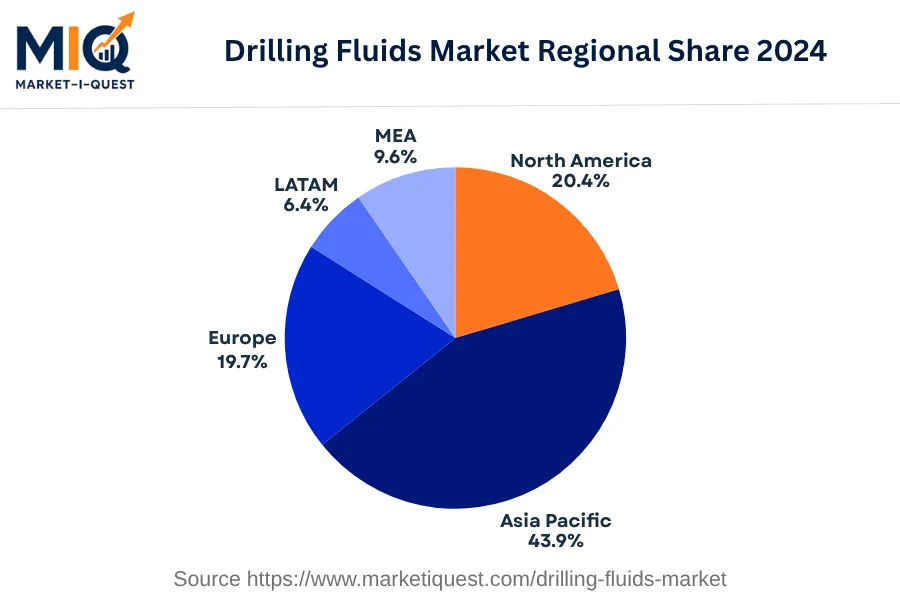
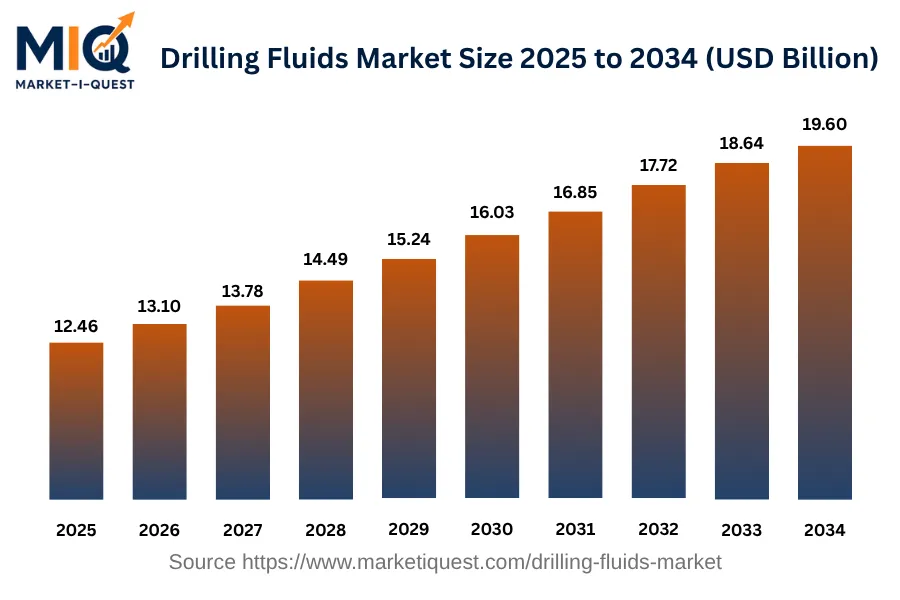
The Drilling Fluids Market size stood at 12.46 billion USD in 2025 and is expected to grow to 19.60 billion USD by 2034, with a CAGR of 5.16%. This continuous growth through the years is primarily attributed to the constant need for oil and gas exploration activities coupled with ongoing funding toward drilling projects globally. With such continuous growth anticipated, the market dynamics are expected to remain favorable with a steady uptick in figures year on year. In terms of regional shares in 2024, the largest market was the Asia Pacific with a 43.9% stake, followed by North America with a 20.4% share. Europe held a 19.7% market share, while Middle East & Africa (MEA) and Latin America (LATAM) accounted for 9.6% and 6.4% respectively. This diversity in regional shares further highlights the global demand for drilling fluids across different markets.

Key Takeaways

  • By Type - Oil-Based Fluids segment led by holding a dominant share of the Drilling Fluids market.
  • By Function - Cooling was the most significant action having a considerable impact on overall performance in 2024.
  • By Application - Offshore Drilling notably led the market accounting for the most volume in drilling operations.
  • By End Use - Oil and Gas remained in the leading position in market.
drilling-fluids-market market size

Key Driving Factors

Increased Exploration in Deepwater and Ultra-Deepwater Wells

The increased focus on exploration and production of oil and gas from deepwater and ultra-deepwater wells is significantly driving the demand for drilling fluids. In these harsh environments, drilling fluids play a vital role in maintaining the equipment's operational efficiency by controlling pressure, maintaining borehole stability, and ensuring the continuous extraction of drill cuttings. Major international and national oil companies are investing heavily in digging deepwater and ultra-deepwater wells, particularly in regions like Gulf of Mexico and the North Sea, hence stimulating the growth of the drilling fluids market.

Regulatory Mandates for Environmentally Friendly Drilling Fluids

Increasing environmental concerns regarding the harmful effects of oil-based and synthetic drilling fluids have led to stringent regulations. Regulatory bodies like the United States Environmental Protection Agency (EPA) are mandating the use of environmentally friendly drilling fluids to minimize pollution in drilling sites. These regulatory requirements are pressing oil and gas companies to switch to water-based drilling fluids, which are less toxic and more biodegradable compared to traditional oil-based or synthetic drilling fluids. This trend of switching to environmentally sustainable drilling fluids due to regulatory mandates is a key driver in the growth of the drilling fluids market.

Market Evolution by Timeline

2019-2023
In this period, oil and gas companies, particularly those in the Middle East (such as Saudi Aramco) and North America, were the main buyers in the Drilling Fluids Market. They sought these fluids primarily to maintain the functionality and efficiency of drilling rigs. However, environmental concerns over the disposal of drilling fluids posed a challenge, prompting producers to innovate towards 'green' solutions. Technologies were integrated to manufacture 'low toxicity' oil-based drilling fluids. Regulatory bodies like the U.S. Environmental Protection Agency enforced policies like the Resource Conservation and Recovery Act (RCRA) to prevent hazardous waste disposal. In pricing models, suppliers typically adopted a long-term contract approach to retain customers, leading to relative stability in prices.
2024
In 2024, the demand for drilling fluids persisted in the Middle East and North America. Buyers expanded into renewable energy sectors, seeking geothermal drilling fluids. Pilot projects for enhanced oil recovery (EOR) methods likely led to an increase in demand for specialized drilling fluids. Constraints remained in the integration of greener production techniques, with regulatory pressures like the Offshore Waste Treatment Guidelines (OWTG) pushing for compliance. The pricing landscape remained steady, with long-term contract agreements being the norm. Price volatility was a notable risk, typically associated with fluctuations in crude oil prices.
2025-2029
During this period, demand diversified as companies in geothermal and shale gas sectors sought drilling fluids. Regions like Australia and South-East Asia considerably increased their purchasing. Innovations in nanotechnology-enhanced drilling fluids were introduced to the supply chain and regular usage expected due to their superior properties. Policies like the Directive 2000/60/EC stressed onIntegrated Water Resources Management, affecting the drilling fluids market. Long-term contract models continued to dominate, although some suppliers explored partnership models for better market penetration. The risk of an oil price crash negatively affecting the market continued to pose a significant threat.
2030-2034
Forward to this period, shale gas companies in Canada and the U.S have become prominent buyers, focusing on sustainable solutions. Regions like Latin America also showed an increased interest in drilling fluids. Technology-wise, further enhancements in biodegradable drilling fluids were expected. Various policies—like the EU's Green Deal—pressured manufacturers for environmental-friendly practices. Fixed price models temporarily surfaced, but long-term contract types remained prevalent. As a response to previous oil price shock risks, suppliers diversified their offerings, venturing into renewable energy markets to remain competitive.

Future Market Outlook

Future Opportunities

In light of the ongoing energy transition, opportunities in the drilling fluids market are expanding beyond conventional oil and gas applications. The global push for renewable energy sources, notably wind and solar, is prompting exploration of geothermal resources, which require specialized drilling fluids for enhanced thermal stability. Companies such as Baker Hughes are already investing in R&D to tailor their offerings for geothermal applications, particularly in Iceland and Indonesia. Furthermore, as offshore drilling projects escalate, especially along the coasts of Brazil and Norway, demand for high-performance drilling fluids that withstand challenging underwater conditions is set to rise. Regulatory frameworks established in 2021, such as the EU's REACH regulations, are expected to stimulate innovation, as firms strive to create eco-friendly fluids that meet stringent legislative requirements. The increasing importance of shale gas extraction is also driving companies to refine their fracturing fluids, with firms like Chevron continuously improving their formulations to enhance recovery rates. Moreover, collaborations and partnerships are likely to grow, seen in the 2022 alliance formed between TotalEnergies and National Oilwell Varco, allowing for the exchange of technology and expertise. With these shifts in focus, the drilling fluids market is poised for diverse applications that align with both environmental standards and evolving energy demands.

Segmentation Analysis

By Type

The market is divided into subsegments including Water-Based Fluids, Oil-Based Fluids, Synthetic-Based Fluids, and Gas-Based Fluids. Oil-Based Fluids accounted for the largest revenue share while Gas-Based Fluids is expected to grow at the fastest CAGR during the forecast period.

Largest Revenue Share

Oil-Based Fluids

Market Share Leader

In base year 2024, Oil-Based Fluids continued to dominate the market driven by its inherent operational benefits. It's commonly observed in the industry that oil-based fluids offer a superior degree of lubrication, resulting in less wear and tear on machinery and equipment. This quality not only maximizes operational efficiency but also reduces maintenance costs, making it a preferred choice across various sectors. Oil-based fluids also exhibit excellent thermal stability and are resistant to the absorption of water, both key considerations in harsh climates and complex operations. Oil-based fluids' customers include heavy industry and manufacturing sectors, where reliable operation is key and downtime costly. Geographically, these fluids are most in demand where industry dominates, such as North America and China. The segment enjoys relative regulatory stability, with potential supply disruptions mitigated by the availability of global resources. These characteristics position oil-based fluids at the top of the revenue chart in the market landscape.

Fastest CAGR

Gas-Based Fluids

Forecast Period Growth Leader

While not the current revenue leader, Gas-Based Fluids is poised to register the fastest growth due to multiple factors. Firstly, there is an increasing demand for cleaner and more energy-efficient alternatives. This demand is driven by the escalating regulatory pressures and society's growing impetus for environmental sustainability. Gas-based fluids, primarily air, have low pollution potential and are therefore being widely adopted, especially in sectors like food and pharmaceutical manufacturing. Secondly, advancements in technology are bringing down the cost thresholds and are improving the operational efficiency of gas-based equipment. Thirdly, investments from big players and increasing partnerships are pushing for mainstream adoption of gas-based fluids. With these catalysts in play, the only near-term risks are associated with the volatility in gas prices and the readiness of sectors to switch from traditional fluid types. Despite these, industry outlook strongly points towards the rapid growth of gas-based fluids in the coming years.

By Function

The market is divided into subsegments including Cooling, Lubrication, Cuttings Removal, and Pressure Control. Of these, the Cooling subsegment accounted for the largest revenue share while the Cuttings Removal is expected to grow at the fastest CAGR during the forecast period.

Largest Revenue Share

Cooling

Market Share Leader

In 2024, the Cooling subsegment recorded the highest revenue among all subsegments. This positions it as a critical function in the industrial machinery market, primarily because efficient cooling is fundamental to all machine operations. It is crucial for the maintenance of machine performance and longevity as it prevents overheating and the resultant risk of machinery damage. Cooling is a prerequisite not just for the efficient functioning but also for the safety of the machinery. The functionality extends across markets and the demand is steady across geographies making it an inherent part of the industrial manufacturing process globally. Regulations mandating the installation of cooling systems to safeguard machinery and personnel further drive this subsegment. The purchasing criteria typically revolve around reliability, efficiency, and compatibility with various types of machines across different industrial applications. Furthermore, switching costs for cooling systems are substantial given the integration with the overall machinery set-up, which underlines the customer retention in this subsegment.

Fastest CAGR

Cuttings Removal

Forecast Period Growth Leader

Projected to grow at the fastest CAGR, the Cuttings Removal subsegment shows promising potential. The market is being catalyzed by a shift towards more efficient and environmentally-friendly ways of cuttings disposal. The need for effective cuttings removal during drilling operations, whether for manufacturing goods or oil/gas extraction, is of paramount importance for ensuring smoother, more productive operations. Companies are investing heavily in technologies that enable seamless cuttings removal and reduce the environmental impact by reusing or recycling cuttings. Growth in sectors relying on heavy drilling, such as automotive, aerospace, and oil and gas, is providing further impetus to the demand for efficient cuttings removal solutions. However, high capital expenditure and technical complexities pose adoption barriers, and short-term economic uncertainties may risk investment returns. Strategic partnerships can be a way forward for companies to overcome these challenges and tap into this fast-growing market.

By Application

The market is divided into subsegments including Onshore Drilling, Offshore Drilling, Geothermal Energy, and Mining. In base year 2024, Offshore Drilling accounted for the largest revenue share while Geothermal Energy is expected to grow at the fastest CAGR during the forecast period.

Largest Revenue Share

Offshore Drilling

Market Share Leader

Offshore Drilling accounted for the largest revenue share in the base year 2024. This can be attributed to its significant return on investments and the lucrative nature of offshore reserves. Offshore fields tend to have larger reserves than onshore ones and produce oil at a higher rate, which makes them an attractive investment for companies despite the high initial costs. Moreover, strides in technology have led to safer, more efficient drilling practices, thus further bolstering its demand. Additionally, the strategic location of wells near points of high demand, such as in the Middle East and North Sea regions, makes offshore drilling considerably profitable. However, it's worth noting environmental regulations and safety concerns remain a pertinent issue in this segment. Nonetheless, the attractiveness of offshore fields in terms of reserve size and production rate is expected to keep the segment dominant in terms of revenue.

Fastest CAGR

Geothermal Energy

Forecast Period Growth Leader

Geothermal Energy is predicted to grow at the fastest CAGR during the forecast period. Its accelerated growth is primarily driven by the rising global interest in renewable energy. The adoption of geothermal energy is gaining traction due to its low carbon footprint and the increasing demand for energy-efficient heating and cooling systems. Government incentives for sustainable practices, as well as technological advancements in geothermal extraction, will likely further fuel its growth. Furthermore, capacity expansion at existing sites and innovative partnerships may lead to increased market penetration. Geothermal energy's continuous availability, irrespective of weather conditions and time, is another crucial factor accelerating its adoption. However, the initial high capital investment and risks associated with drilling and exploration could pose challenges to the sector's growth. Despite these barriers, the shift towards clean energy is expected to drive the demand for this segment.

By End Use

The market is divided into subsegments including Oil and Gas, Construction, Environmental, and Mining. The Oil and Gas sector accounted for the largest revenue share, whereas the Environmental sector is expected to grow at the fastest CAGR during the forecast period.

Largest Revenue Share

Oil and Gas

Market Share Leader

The Oil and Gas subsegment dominates market revenues due to continuous global demand for fuels, lubricants and petrochemicals. This sector is driven by a variety of factors including technological advancements in drilling, extraction, and refining processes, as well as significant investments in infrastructure to support the transportation and distribution of these commodities. Geographically, this sector’s revenue is heavily concentrated in regions with rich oil and gas reserves like the Middle East, Russia, and North America. The purchasing criteria in this segment revolve around efficiency of resource extraction and refining, regulatory compliance for environmental impact, and cost-effectiveness. The high switching costs to alternative energy sources alongside the need for constant supply limit competition in this segment, while regulation continues to play a significant role in shaping its structure and operations.

Fastest CAGR

Environmental

Forecast Period Growth Leader

The Environmental sector is expected to witness the fastest growth. Primarily driven by urgent needs to transition towards sustainable practices, this subsegment's growth is fueled by factors such as strict regulatory policies, increased public awareness, and significant capital investments into green solutions. The major growth drivers in this sector include the adoption of clean energy, waste management, and water purification systems. Tech innovations and partnerships between corporations and environmental startups serve as catalysts for growth in this sector. However, adoption barriers exist in the form of high initial capital expenditure and the challenge of integrating such solutions into existing infrastructures. Risks, in the near term, revolve around changes in regulatory policies and economic downturns that may reduce capital expenditure in sustainability initiatives.

Competitive Analysis

Key Market Players

Manufacturers / OEMs

Halliburton Company
US
Schlumberger Limited
US
Baker Hughes, a GE company
US

Key Suppliers & Raw Materials

Ashland Inc.
US
BASF SE
Germany
Akzo Nobel N.V.
Netherlands

Distributors, Integrators & Channel Partners

NOV (National Oilwell Varco)
US
Fluid Systems, Inc.
US
Aquaterra Energy Ltd.
UK

Porter’s Five Forces Analysis

This analysis assesses the competitive landscape and attractiveness of the Drilling Fluids Market.

Supplier Bargaining Power

Medium

Supplier power is moderate due to the availability of many raw material providers, but concentration among a few top providers.

Buyer Bargaining Power

High

Buyers possess high power due to multiple suppliers and diverse product options in the drilling fluids market.

Threat of Substitutes

Low

Threat from substitutes is low as high performance alternatives for drilling fluids are scarce and usually more expensive.

Threat of New Entrants

Medium

Medium entry barriers are due to substantial capex requirements and regulatory compliance, balanced by high market growth rates.

Competitive Rivalry

High

Intense rivalry with many players and little product differentiation, placing a premium on innovation and pricing competitiveness.

Regional Analysis

Geographic market dynamics and growth opportunities across key regions

Global Market Outlook

drilling-fluids-market market regional share

North America

In 2024, North America's drilling fluids market experienced distinct growth owing to several drivers and trends. Rising demand for drilling fluids, particularly in unconventional reserves, spurred growth in the U.S., fueled by increasing domestic energy production efforts. In Canada, government environmental policies regulated the use and disposal of certain drilling fluids, pressing the industry toward greener fluids. High investment in shale gas exploration in Mexico further enhanced market performance, driving specific demand for synthetic-based fluids.

Simultaneously, trends in buyer behavior and product shifts impacted the market significantly. In the U.S., oil and gas companies increasingly adopted high-performance, water-based drilling fluids to reduce environmental impact, setting a notable shift in product preference. Changes within the retail sector in Mexico led to the proliferation of local manufacturers, altering channel dynamics and increasing competitiveness. In Canada, a marked trend was the rise in partnerships and M&A activity between drilling fluid manufacturers and oil extraction firms. Key sectors underpinning these drivers and trends were primarily the energy sector, including oil and gas companies, as well as the environmental protection agencies. Various government policies in Canada and the United States were also pivotal in shaping the drilling fluids market in 2024.

Asia Pacific

In 2024, the Drilling Fluids Market in the Asia Pacific presented a dynamic landscape influenced largely by the sectors of oil exploration and drilling activities. Drivers for this market were fueled by China's ardent focus on shale gas exploration, India's heavy investments in offshore drilling, and Japan's robust technological adoption in drilling operations. Additionally, enhanced exploration in Australia and key ASEAN markets promoted an increase in supply dynamics, whilst escalating crude oil prices encouraged graver consideration of drilling fluid alternatives.

The market trend leaned towards environmentally friendly drilling fluids, spearheaded by China's strict environmental regulations, followed by South Korea and Japan's regulatory compliances. Increased awareness among consumers regarding sustainable drilling practices further influenced this trend. Technology shift was noticeable where digitalization in drilling operations was observed in various countries, including Australia, heralding a new age for drilling fluid management. In terms of channel dynamics, partnerships and M&A activities between major fuel players were seen, particularly in India, which supported the transfer of technology and resources. The rigidity in policy enforcement across major players, such as China and Japan, underlined the adherence to safety and environmental standards in the drilling fluids industry. The principal customer sectors impacted were predominantly manufacturing and utilities, with large-scale factories in China and India observing these market shifts closely.

Europe

In 2024, Europe's drilling fluids market was defined by several strategic drivers and evolving trends. Key drivers included rigorous environmental regulations such as the European Union's Offshore Safety Directive, which prompted firms to upgrade their drilling fluids to more eco-friendly alternatives. Demand also rose due to the resurgence in drilling activities in the North Sea, especially in the UK and Norway. Significant investments in technology, particularly in Germany and France, spurred the use of synthetic-based fluids, improving drilling efficiency and environmental compliance.

Emerging trends shaping the market involved shifts in buyer behavior and strategic partnerships. Companies increasingly prioritized sustainable practices, prompting a transition towards bio-based drilling fluids, especially in the Central & Eastern European region. Technological advancements played a substantial role in product development, particularly in the Nordics and the UK markets. The dynamic was also influenced by strategic collaborations between major oil companies and drilling fluids providers. For instance, Italy saw significant activity in this space. These drivers and trends across sectors such as utility, manufacturing, and government indicated a steady growth in the demand for advanced and sustainable drilling fluids. The market landscape in the base year was thus characterized by robust dynamism driven by regulatory compliance, technology adoption, and strategic industry partnerships.

Latin America

In 2024, the Latin American drilling fluids market witnessed dynamic fluctuations primarily owing to significant sectoral developments and regulations. Rising demand in the oil & gas industries in key countries such as Brazil and Mexico, coupled with increased investments in exploration activities, propelled the market growth. Simultaneously, strict environmental regulations, especially in Argentina and Chile, encouraged the adoption of water-based and synthetic-based drilling fluids over conventional oil-based fluids, impacting supply dynamics.

Market trends were shaped by a discernible shift towards the use of advanced drilling fluid solutions. In Colombia and Peru, the evolution of shale gas and thermal recovery projects led to a surge in demand for more technologically advanced fluid systems. Additionally, growing awareness of environmental sustainability influenced buyer behavior, resulting in the wider use of biodegradable fluids. The year saw several strategic partnerships and mergers, primarily aimed at boosting efficiency and reducing operational costs. Strict policy enforcement towards reducing environmental footprint further catalyzed the trend towards eco-friendly drilling fluid alternatives. The market catered to several sectors, with oil & gas production companies and offshore drilling entities being the primary consumers of drilling fluids. Meanwhile, demand from utilities and manufacturing sectors remained steady, whereas government projects also contributed to the market momentum. Overall, 2024 marked a robust growth period for the drilling fluids market in Latin America, driven by both demand-supply factors and evolving trends.

Middle East & Africa

In 2024, the drilling fluids market in the Middle East and Africa gained considerable traction, propelled by several key factors and trends. Major drivers comprised satellite nations' demand for oil and gas, mainly from Saudi Arabia, United Arab Emirates, and Qatar, which keyed up drilling activities in these regions. Strategic investments from Nigeria and South Africa to boost their hydrocarbon reserves further stimulated demand. Additionally, increased adoption of advanced drilling fluid technologies in Kenya and Israel showed a significant surge, enhancing exploration efficiency and minimizing environmental impacts.

In terms of market trends, a pronounced shift could be observed towards water-based drilling fluids in Egypt, complying with stringent environmental regulations. Furthermore, the oil and gas sector marked a rise in partnership activities and mergers & acquisitions, especially in Nigeria and South Africa, aiming to advance the market's scope. Simultaneously, there was an uptick in in-country value (ICV) enforcement across UAE's upstream sector, influencing procurement dynamics for drilling fluid suppliers. However, conscious consumer inclination towards sustainable drilling practices and eco-friendly exploration technology started transforming the market landscape in Kenya and Israel. Thus, the drilling fluid market’s health in the mentioned geography in 2024 was a cohesive product of evolved demand patterns, regulatory adherence, technology adoption, and environmental considerations.
Recent Industry Developments

Latest market innovations, product launches, and strategic initiatives

January 2026

The American Petroleum Institute (API) published API RP 13B-1:2026 (Sixth Edition), providing updated standard procedures for testing water-based drilling fluids, including determination of drilling fluid density (mud weight) and other key characteristics.

June 2025

Newpark Fluids Systems, a leading global independent provider of drilling and completion fluids solutions, announced several key additions to its executive leadership and Board of Directors, along with significant capital investments including the development of a liquid mud facility in West Texas and a new technology center of excellence in Saudi Arabia, reinforcing its commitment to accelerated global growth following its acquisition in 2024.

Frequently Asked Questions