
Dental Bonding Agents Market Snapshot

Key Players

  • 3M (United States)
  • Dentsply Sirona (United States)
  • Ivoclar Vivadent AG (Liechtenstein)
  • VOCO GmbH (Germany)
  • Kerr Corporation (United States)
  • GC Corporation (Japan)
  • Danaher Corporation (United States)
  • SDI Limited (Australia)
  • Kuraray Co. Ltd. (Japan)
  • Coltène/Whaledent AG (Switzerland)

Market Size

Base Year 2024
$4.37 Bn
CAGR
4.96%
Forecast 2034
$7.09 Bn

Market Segments

By Generation
Total-Etch, Self-Etch, Universal
By Application
Direct Restoration, Indirect Restoration
By Curing Type
Light Cure, Self Cure, Dual Cure
By Distribution Channel
Dental Dealers, Direct Sales
By End User
Dental Clinics, Hospitals

Market Dynamics

Drivers
  • Growing dental diseases incidence
  • Increased cosmetic dentistry demand
Restraints
  • High procedure costs
  • Rising competition
Opportunities
  • Rising dental care awareness
  • Technological advancements in bonding agents

Market Size

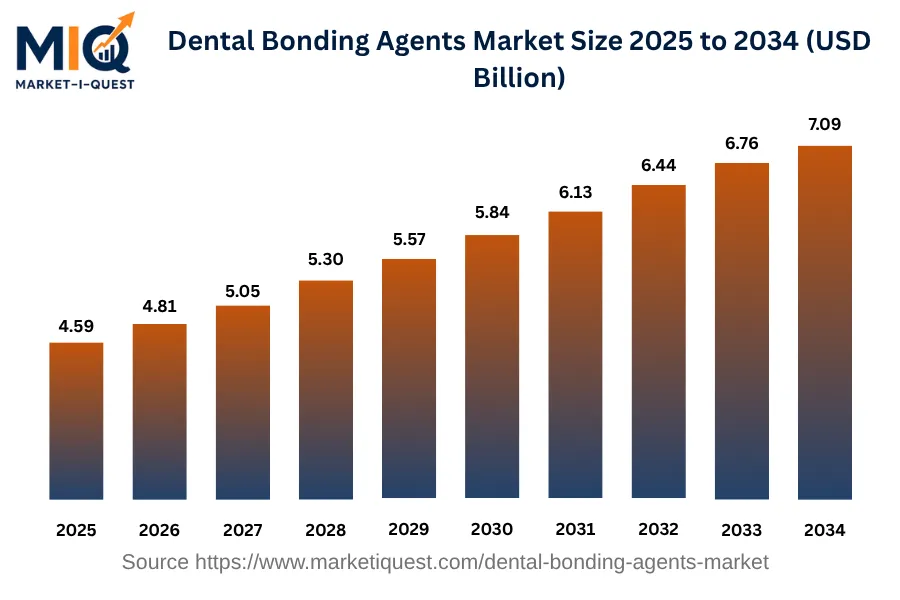
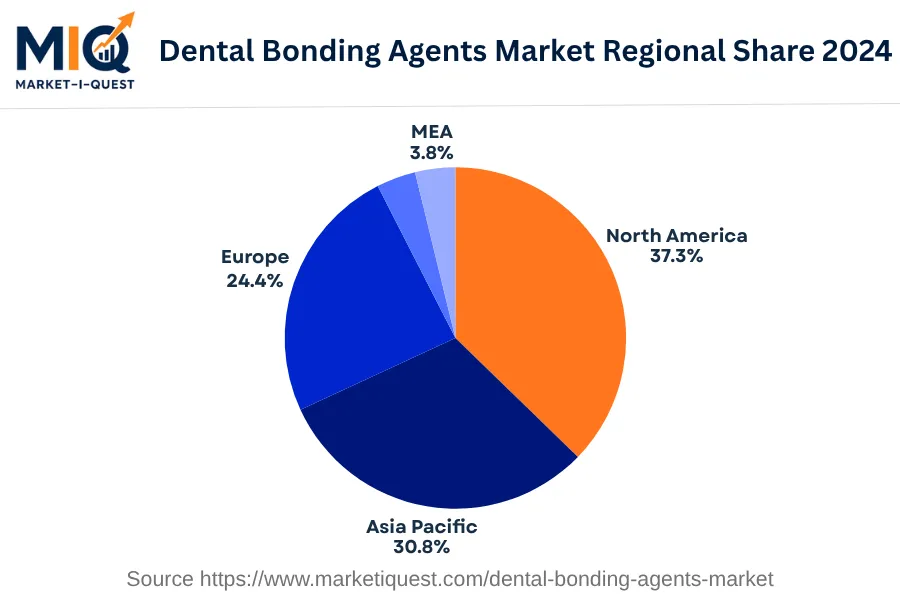
The Dental Bonding Agents Market size is projected to grow from USD 4.59 billion in 2025 to USD 7.09 billion in 2034, recording a CAGR of 4.96%. The market size as of 2024 stood at USD 4.37 billion and saw a slight hike to reach a value of 4.59 billion in 2025. A marked growth of over USD 2.5 billion is anticipated over the span from 2025 to 2034, signaling an upwards trajectory in the Dental Bonding Agents Market. The North American region led the market share in 2024 with 37.3%, followed by the Asia Pacific at 30.8% and Europe at 24.4%. The remaining market share was occupied by the LATAM and MEA regions, with minimal stakes of 3.7% and 3.8%, respectively.

Key Takeaways

  • By Generation - Total-Etch led the market in 2024 principally due to its broad adoption.
  • By Application - Indirect Restoration subsegment is predicted to record the fastest CAGR.
  • By Curing Type - Self Cure subsegment outsold all others in the market to attain the largest revenue share in 2024.
  • By Distribution Channel - Direct Sales subsegment emerged as the revenue leader in 2024.
  • By End User - Hospitals are anticipated to grow at a faster rate during the forecasted period.
dental-bonding-agents-market market size

Key Driving Factors

Prevalence of Dental Disorders

With the increasing severity global dental health, as many individuals ignore dental hygiene and regular check-ups. Due to poor oral hygiene, diseases such as caries and periodontal conditions are growing. Dental practitioners form the primary decision-making body in purchasing dental bonding agents under this trigger, as a response to the anticipated rise in dental procedures. The dental bonding agents aid in restorative procedures, offering enhanced bonding properties and longevity to dental fillings. Neglecting the procurement of suitable bonding agents significantly leads to built-in patient outcomes and thereby will likely weaken the clinic's reputation. Hence, the increase in oral complications necessitates immediate investment in quality dental bonding agents, leading to an upsurge in the market demand.
Introduction to Cosmetic Dentistry

The rise in aesthetic consciousness among consumers has spurred the growth of cosmetic dentistry globally. However, dentists are the primary purchasers of dental bonding agents. The dental bonding agents played a crucial role major due to imperfections in teeth, such as discoloration and gaps, are addressed using cosmetic dentistry procedures. The fear of social rejection due to aesthetically unappealing teeth drives immediate action, and thus delay of these procedures is rarely considered an option. As a result, the demand for dental bonding agents in cosmetic dentistry is on the rise, inflating the market's demand.

Market Evolution by Timeline

2019-2023
During the 2019-2023 period, purchasing decisions for dental bonding agents predominantly took place by healthcare institutions, particularly dental hospitals and clinics. The steady rise of dental accessory procedures globally and North America led this activity. Manufacturers addressed this by expanding manufacturing capacities and diversified supplier networks to serve to growing demand. The most common product was the total-etch adhesive system due to its ease of use and effectiveness. Regulatory bodies such as the FDA played a significant role in influencing buyer behavior as approvals were required for these products. Standard procurement processes were mainly followed with some of the largest manufacturers offering long-term supply agreements.
2024
In 2024, market saw a shift in purchasing behavior to primarily individual consumers due to increasing awareness of oral health and the introduction of easy-to-use, at-home dental bonding agent kits. The Asia-Pacific region highlighted significant buying activity due to increased healthcare expenditures and a considerable rise in e-commerce platforms facilitating easy customer accessibility. Suppliers met this rising demand by integrating digital sales channels and focusing more on at-home bonding kits. These kits were available on subscription pricing models, making them a more affordable option. Thus, 2024 made significant developments within the market.
2025-2029
In this period, the global dental bonding agents market marked an evolution in terms of supply as most manufacturers shifted their production facilities to Asia, particularly China and India, due to cost-effective labor and raw materials. The noticeable influence of e-commerce platforms became a commonplace, and the buyer groups included individual consumers and practitioner bodies in balanced shares. Longer procurement cycles and the demand for high-volume supply drove the usage of 'just in time' practices across the supply chain. This period saw disciplined pricing due to stringent local regulations around dental healthcare supplies. Thus, it stimulated long-term purchase agreements aimed at ensuring steady supply and fixed pricing.
2030-2034
During the 2030-2034 period, the market is likely to experience significant digitization of sales and procurement processes. Suppliers are expected to benefit from Artificial Intelligence and Machine Learning technologies that could streamline supply chain operations and make procurement faster. Manufacturers will likely have a bigger role in product education as buyers become more selective with product types such as Selective-etch, Self-etch, and Total-etch bonding agents. This might lead to increased investment in research and development efforts to create cost-effective dental bonding products. The distribution model may evolve towards an OEM model with hospitals and other healthcare institutions.

Future Market Outlook

Future Opportunities

The market presents a range of future opportunities driven by ongoing trends and demands from dental practitioners. There is a noticeable shift toward expanding product offerings tailored to underserved demographics, such as pediatric and geriatric patients, who require specialized bonding solutions. Compliance with shifting regulatory frameworks, such as the EU MDR, is becoming essential as companies seek for introducing new products that align with stringent safety standards. An increase in the adoption of clinical digital impression systems offers excellent prospects for manufacturers for developing bonding agents designed for specific digital workflows. Moreover, partnerships between bonding agent manufacturers and dental supply distributors are crucial for improving access to products in emerging markets, where demand for dental services is rising. Opportunities in contract manufacturing are becoming prominent, as smaller companies collaborate with established manufacturers to scale production and distribution. Additionally, lifecycle management emerges as a focus area, giving rise to aftermarket services that cater to continuous education for practitioners and optimal product usage.

Segmentation Analysis

By Generation

The market is segmented by By Generation into Total-Etch, Self-Etch, and Universal. Total-Etch accounted for the largest revenue share in 2024, while Universal is expected to register the fastest CAGR during the forecast period.

Largest Revenue Share

Total-Etch

Market Share Leader

Total-Etch held the largest revenue share of the market majorly due to its broad adoption across customer groups and its compatibility with pre-existing infrastructures, which ensured a steady demand. Moreover, the qualification requirements for this segment were well-established and predictable for purchasing entities, a factor that further encouraged its adoption. Total-Etch had a mature distribution network and benefited from a streamlined procurement process. Regulatory acceptance was also high, leading to consistent customer confidence in this subsegment. The installation base was ample, contributing to the revenue in replacement components and routine usage supplies, while its pricing position as the base technology also fostered uptake across different price-sensitive markets.

Fastest CAGR

Universal

Forecast Period Growth Leader

Universal is projected to record the fastest CAGR over the forecast period, driven by its upcoming commercialization developments and increasing market penetration. Technological improvements have led to greater efficiency and performance, making Universal a competitive alternative to the established subsegments. Achieving regulatory milestones is another factor anticipated to support its future growth. Additionally, partnerships with local distributors are expected to expedite its market entry and accelerate customer adoption, combined with an expansion in reimbursement pathways offering financial incentives for its adoption. Thus, coupled these factors significantly makes it a fastest growing subsegment of this segment.

By Application

The market is segmented by Application into Direct Restoration and Indirect Restoration. Direct Restoration accounted for the largest revenue share in 2024, while Indirect Restoration is expected to register the fastest CAGR during the forecast period.

Largest Revenue Share

Direct Restoration

Market Share Leader

Direct Restoration subsegment led in revenue generation in the market. This dominance was largely attributed to its wider acceptance and implementation in the market due to its immediate commercial potential and regulatory acceptance. Additionally, its compatibility with existing infrastructure significantly reduce the demand for any additional investments, boosted its popularity to a broad customer base. This subsegment also had a sophisticated distribution network, ensuring ample product offerings and serving to high-volume demands. Key customers indicated a preference for Direct Restoration due to its operational advantages, including shorter and predictable delivery times aligning with their tight operational schedules. The commercial availability of Direct Restoration and the maturity of deployment mechanisms also increased its revenue.

Fastest CAGR

Indirect Restoration

Forecast Period Growth Leader

During the forecast period, the Indirect Restoration subsegment is predicted to record the fastest CAGR. This subsegment is experiencing technological advancements, boosting its performance, adoption and hence, the market penetration. Continuous regulatory shifts supporting the subsegment’s deployment are also developing, leading to increased product acceptance. Furthermore, a rise in emerging customer demand for a more versatile solution and rapidly evolving buying behaviour is expected to maintain Indirect Restoration's swift commercialization. The expanding distribution channels serving to a broader regional landscape and improved supply and manufacturing mechanisms further solidify the subsegment's robust growth trajectory. Thus, these factors collectively position Indirect Restoration to register the fastest CAGR.

By Curing Type

The market is segmented by Curing Type into Light Cure, Self Cure, and Dual Cure. The Self Cure subsegment accounted for the largest revenue share in 2024, while the Light Cure is expected to register the fastest CAGR during the forecast period.

Largest Revenue Share

Self Cure

Market Share Leader

The Self Cure subsegment held the largest revenue share of the market. Self Cure products were readily adopted due to their operational advantages, including user-friendly application procedures and minimal dependability on external light sources for curing. High customer preference for these products was driven by their broad market acceptance as they are compatible with existing infrastructures across various businesses. With a mature distribution network and extensive regulatory acceptance, the Self Cure market experienced high growth in 2024. Essential factors such as a well-established customer base and heavy implementation maturity, combined with low switching costs, introduced a steady and reliable revenue stream. Additionally, the procurement process, subscription decisions, contracting models, and purchasing behavior of customers significantly favored the Self Cure market.

Fastest CAGR

Light Cure

Forecast Period Growth Leader

Light Cure is projected to register the fastest growth rate during the forecast period. The expected rise in its CAGR is primarily due to evolving customer requirements, regulatory changes, and technological improvements in the curing process that minimize barriers to adoption. significant advances in product performance effectively increase curing reliability and speed, making it an appealing potential for new customers and existing ones seeking to upgrade from the Self Cure segment. Furthermore, product innovation, capacity expansion and new deployment models are expected to drive the adoption of Light Cure products. It is forecasted that the reduced switching costs coupled with a expansion in distribution networks will significantly accelerate the subsegment's market penetration. These developments assume a sustained commercial evolution of the market, and hence, it is projected that the Light Cure subsegment will experience the fastest CAGR during the forecast period.

By Distribution Channel

The market is segmented by Distribution Channel into Dental Dealers and Direct Sales. Direct Sales accounted for the largest revenue share in 2024, while Dental Dealers is expected to register the fastest CAGR during the forecast period.

Largest Revenue Share

Direct Sales

Market Share Leader

The Direct Sales subsegment emerged as the revenue leader in 2024, due to a combination of factors such as broad market adoption and customer preference significantly contributed to its leadership. Direct Sales represent an immediate and quick approach to commercialization, which was widely appreciated by customers. With the installed customer base for Direct Sales was vast in 2024, majorly due to the efficiency and instant access to products or services it provides. Furthermore, factors such as commercial availability and deployment maturity, significantly contributed to the dominance of this subsegment. The regularity acceptance associated with Direct Sales was high due to its transparent nature. This subsegment also showed a high level of ecosystem compatibility, making it easy to incorporate into existing industry structures.

Fastest CAGR

Dental Dealers

Forecast Period Growth Leader

Expected to register the fastest growth during the forecasted period is the Dental Dealers subsegment. Quick to adapt to the evolving customer requirements and technology improvements, Dental Dealers have positioned themselves as the subsegment with the highest potential for growth. This growth is also supported by emerging customer demand for specialized services offered by Dental Dealers. In addition to this, commercialization progress and distribution expansion of Dental Dealers is impressive, thereby rising its growth potential. During the forecast period, the entry of new players and the broadening of product portfolios are believed to considerably increase the penetration of this subsegment. Regulatory shifts, expanding reimbursement coverage and apparent capacity expansion are expected to additionally stimulate growth.

By End User

The market is segmented by End User into Dental Clinics and Hospitals. Dental Clinics accounted for the largest revenue share in 2024, while Hospitals are expected to register the fastest CAGR during the forecast period.

Largest Revenue Share

Dental Clinics

Market Share Leader

In 2024, Dental Clinics led the market in revenue generation due to several commercial factors. Primarily, the high density of dental clinics, especially in developed economies, contributed to a larger installed customer base, thus leading to a significant number of dental procedures being performed in these settings. Furthermore, the frequency of purchasing dental supplies and equipment is higher in Dental Clinics as compared to Hospitals, which often have procurement cycles for longer periods. However, these purchases made at regular intervals, the Dental Clinics generated higher revenue. Another factor to consider is customer preference, however many patients prefer to visit Dental Clinics due to their specialized nature and often quicker turnaround times compared to Hospitals. Additionally, regulatory acceptance had a considerable influence in this segment regulations often support the installation of certain essential dental equipment in clinics making these necessary purchases. Deployment maturity of advanced dental equipment might be higher in Dental Clinics as they are more focused on dental care and make necessary investments to stay competitive in the market.

Fastest CAGR

Hospitals

Forecast Period Growth Leader

Hospitals are anticipated to grow at a faster rate during the forecasted period. This is due to several emerging factors specific to this market. Hospitals are better prepared to serve to complex dental cases due to their multidisciplinary approach, thus emerging customer demand for complex procedures is likely to drive growth in this segment. Technical advances are another solid reason as hospitals, due to their larger size and funding, can adopt advanced dental equipment faster than standalone dental clinics. This adoption provides better treatment and diagnosis, leading more customers to prefer hospitals for their dental care. Hospitals can also scale up the deployment of the dental services significantly, allowing a quicker distribution expansion. Along with this, with evolving healthcare policies worldwide, regulatory shifts might favor dental services at hospitals, further accelerating their growth. Increased partnership with equipment providers for bulk procurement might reduce the cost of procedures, driving more demand towards hospitals.

Competitive Analysis - Dental Bonding Agents Market

Key Market Players

Manufacturers / OEMs

3M Company
US
Dentsply Sirona
US
Kuraray Co., Ltd
Japan

Key Suppliers & Raw Materials

BASF SE
Germany
Evonik Industries AG
Germany
DuPont de Nemours, Inc
US

Distributors, Integrators & Channel Partners

Patterson Dental Supply, Inc
US
Henry Schein, Inc.
US
Dental Creations, Ltd
US

Porter’s Five Forces Analysis

A synthesized insight into the competitive forces shaping the Dental Bonding Agents Market.

Supplier Bargaining Power

Medium

Driven by the concentration of producers and the unique formulation of dental bonding agents.

Buyer Bargaining Power

High

Given the availability of numerous vendors and the capability to negotiate prices.

Threat of Substitutes

Low

Demand is tightly tied to dental treatments, reducing the potential for substitutes.

Threat of New Entrants

Medium

Potential barriers include high R&D costs and regulatory approvals.

Competitive Rivalry

High

High competition due to the presence of both international and local companies.

Regional Analysis

Geographic market dynamics and growth opportunities across key regions

Global Market Outlook

dental-bonding-agents-market market regional share

North America

In 2024, North America, primarily driven by the United States, saw indispensable advancements in the market, majorly highlighting influences utilized by commercial shifts, technological deployment and customer-specific developments. The year was characterized by a increasing of bioactive dental bonding agents in response to the high frequency of dental caries and the growing focus on oral hygiene, witnessed by noticeable increases in procurement from dental clinics and hospitals. Manufacturers, including prominent US-based entities, adapted their operational workflows to prioritize the production of these high-demand bioactive agents, hence influencing the market trends noticeably.

Meanwhile, in Canada and Mexico, changes in the regulatory landscape slightly changed the demand for bonding agents, requiring adherence to evolving certification requirements concerning dental product safety. The effective commercialization of new dental bonding agents by leading companies highlighted the role of technological innovation in shaping the market. For instance, the introduction of fluoride-releasing bonding agents significantly impacted buyer groups procurement behavior, indicating a preference for these innovative products that offer enhanced tooth protection. Thus, technological deployment, customer-specific developments, and changing commercial dynamics notably shaped North America's market in 2024.

Asia Pacific

The Asia Pacific market in 2024 was shaped primarily by the increasing prevalence of dental diseases and a growing number of dental practitioners. China, India and Australia led the regional demand due to rapid urbanization and augmented awareness on oral health resulting from government initiatives. Important developments included the rise of dental tourism in markets such as Thailand and Singapore, combined with a rise in DIY dental procedures allowed by digital platforms, influencing both product distribution and consumer purchasing.

Key business drivers included the operational demand for quicker and less invasive treatments to meet increased patient expectations, along with regulatory requirement for conforming to uniform healthcare standards. Investment in innovative dental materials, with an focus on strength and durability, played a crucial role in adopting market activity, with cross-industrial partnerships between healthcare and material science sectors being at the forefront. Suppliers tailored their offerings to serve to specific buyer groups such as dental hospitals, clinics and individual practitioners. Evolving patient preferences necessitated shifts in product portfolio offerings, mainly shifting towards light-cure over self-cure dental bonding agents. Furthermore, digital platforms allowed broader reach for manufacturers to both end-users and distributors in the region, significantly impacting procurement and delivery models while introducing more competitive pricing dynamics.

Europe

In 2024, the market in Europe was significantly influenced by a collection of specific developments. Major European dental manufacturers strengthen their operations, observing emerging buyer groups of younger adults seeking aesthetic dentistry. However, with Germany's dominant dental manufacturers utilized new combinations, aligning their products with user preference for single-component bonding agents, which streamlined procurement and operational workflows in dental clinics. The UK's concentrated dental industry reflected this rise towards workflow simplification evident in its adoption of all-in-one dental bonding agents. France's dental bonding agents market saw a boost from its robust healthcare system.

Simultaneously, Italian manufacturers aimed for strategic partnerships with Dutch and Polish distributors, influencing clear of gray markets while complying with the EU's stringent MDR and IVDR regulations. Additionally, the Nordic countries and Switzerland saw increased rise of tech-based dental bonding solutions serving to growing customer demand for digitalized and less invasive dental procedures. Meanwhile, Spain's patient-focused dental policies led to the accelerated affordable offering of dental bonding agents through Spanish dental clinics, indicating the localized purchasing trend. Compliance with strict REACH and RoHS guidelines on chemical safety became critical for players in the market, highlighting the deployment of safer and eco-friendlier dental bonding products across Europe in 2024.

Latin America

In 2024, the market in Latin America was significantly influenced by government initiatives promoting oral health across the region, with the Ministries of Health in countries such as Brazil, Mexico and Argentina launching awareness campaigns to prevent oral diseases and enhance oral hygiene. This was increased by the actions of regulatory bodies such as ANVISA, INVIMA and ANMAT, which implemented and enforced quality standards to ensure the safety and efficacy of dental bonding agents, resulting in an rise in consumer trust and therefore affecting purchasing decisions. The supply chain for dental bonding agents witnessed considerable activity, especially in Brazil and Mexico, with established companies investing in local manufacturing strategies to reduce import dependence and cater more effectively to the demand driven by the government campaigns.

Dental practitioners were primary players involved in implementing these products, making use of established distributor networks for procurement. Concurrently, Mercosur and Pacific Alliance’s role in facilitating intra-region trade led to an increase in the circulation of dental bonding agents across member countries, enhancing the market’s interconnectedness. The market also saw mergers and acquisitions among regional players seeking to expand their foothold and attain a competitive advantage. Argentina, with its significant dentist population, emerged as a key market, influencing the regional dynamics through its procurement behavior and service models.

Middle East & Africa

In 2024, the market within the Middle East & Africa witnessed significant transformations. A key development was the offering of operational guidelines by regulatory authorities such as the South African Health Products Regulatory Authority (SAHPRA) and the Saudi Food and Drug Authority (SFDA). Dental practitioners proactively addressed, adapting their procurement and usage behaviors accordingly. Manufacturers in this market advanced their efforts in producing bonding agents that complied with these guidelines. This resulted in an surge of regulatory-compliant products dominating the market.

Furthermore, dental infrastructure projects such as the opening of several state-of-the-art hospitals in United Arab Emirates, served to the demand of advanced dental bonding solutions, adopting an increase in the implementation of these products. Alongside this, initiatives such as Saudi Vision 2030 and UAE Operation 300bn that were aimed at improving healthcare standards, significantly increased the demand for quality dental bonding agents. Distributors in countries such as Egypt, Saudi Arabia and South Africa strategically expanded their networks to make these products available and accessible across the region. Mergers between local and international manufacturing companies led to the spread of advanced technology in the production of dental bonding agents, aligning with customer demands and regional guidelines. However, the import-export landscape was boosted with the African Continental Free Trade Area (AfCFTA) agreement, encouraging cross-continental trade in dental bonding agents.

Recent Industry Developments

Latest market innovations, product launches, and strategic initiatives

January 2026

Solventum (formerly 3M Health Care) and Kuraray Noritake Dental Inc. expanded global distribution of 8th-generation universal bonding systems. These multi-modal monomer formulations integrate 10-MDP chemistry to establish high bond strength across tooth enamel, dentin, zirconia, and ceramic substrates without requiring separate surface-specific primers.

Frequently Asked Questions