Caprolactam Market Snapshot

Key Players

  • BASF SE (Germany)
  • Capro Corporation (South Korea)
  • DOMO Chemicals (Belgium)
  • Fibrant BV (Netherlands)
  • Honeywell International Inc. (US)
  • KuibyshevAzot OJSC (Russia)
  • Lanxess AG (Germany)
  • Shandong Haili Chemical Industry Co. Ltd. (China)
  • UBE Industries Ltd. (Japan)

Market Size

Base Year 2024
$18.02 Bn
CAGR
5.38%
Forecast 2034
$30.43 Bn

Market Segments

By Application
  • Nylon 6 Fibers
  • Nylon 6 Resins
By End Use
  • Textile Yarn
  • Industrial Yarn
  • Engineering Plastics
  • Others

Market Dynamics

Drivers
  • Rising demand in textile industry
  • Increased nylon 6 production
Restraints
  • Stringent environmental regulations
  • Fluctuating raw material cost
Opportunities
  • Increased nylon 6 production demand
  • Growing apparel industry

Market Size

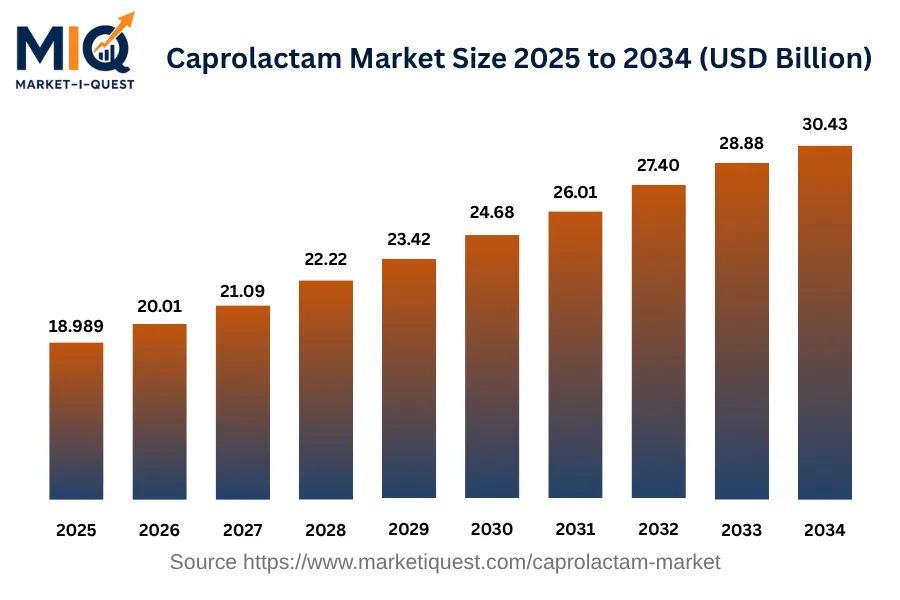
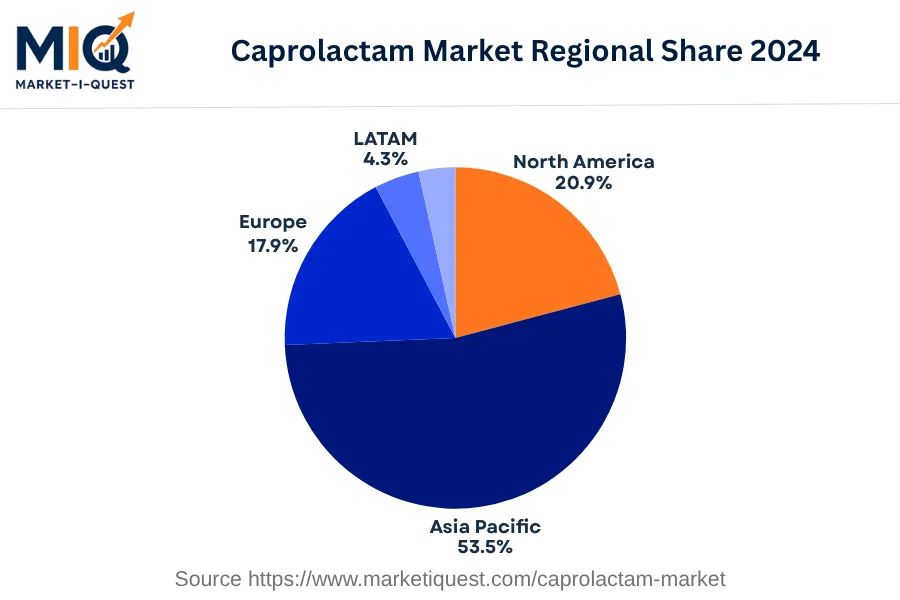
The Caprolactam Market was valued at 18.99 billion USD in 2025 and is anticipated to grow to reach 30.43 billion USD by 2034, exhibiting a CAGR of 5.38%. The sequential year-on-year growth indicates an upward trajectory right from the baseline year of 2024 when the market size was 18.02 billion USD. The consistent growth over the decade is largely attributable to increasing industrial applications of caprolactam and rising demand across key consumer sectors. Examining the regional share data from the 2024 baseline, Asia Pacific held the highest share at 53.48%, while North America followed with a 20.86% share. Europe accounted for 17.92%, while Latin America and the Middle East & Africa held lesser shares at 4.26% and 3.48% respectively. This share mix illuminates the global distribution and regional predilections within the caprolactam market.

Key Takeaways

  • By Application - Nylon 6 Fibers held the major share in the market base year.
  • By End Use - Industrial Yarn led the market accounting for a leading position in the base year.
caprolactam-market market size

Key Driving Factors

Implementation of Stringent Environmental Regulations

There are increasing concerns about the environmental impacts resulting from the production and disposal of synthetic materials, including caprolactam. Authorities worldwide have been implementing stringent environmental regulations to ensure sustainable business operations. The European Union Regulation (EC) No 1907/2006 concerning the Registration, Evaluation, Authorization, and Restriction of Chemicals (REACH) includes caprolactam in its scope. These legislations demand manufacturers to modify their production processes to reduce environmental pollution, thus shaping the caprolactam market. Manufacturers are responding to these regulations by searching for cleaner production methods and efficient waste management strategies. It's restructuring the caprolactam market, driving significant investments in research and development for eco-friendly technology and the redesign of production processes.
Fluctuation in Raw Material Prices

Caprolactam, a key ingredient of Nylon 6, is primarily derived from petroleum compounds. Therefore, the costs and availability of the raw materials inherently depend on the global oil and gas market. In phases of price volatility in the global petroleum market, the cost of producing caprolactam also varies significantly affecting both the profit margins of producers and the price for consumers. This, in turn, has a substantial impact on the investment decisions at different levels of the caprolactam market and influences the strategies of major market players. Hence, the unpredictable nature of raw material costs serves as a critical factor shaping the dynamics of the caprolactam market.

Market Evolution by Timeline

2019-2023
During 2019-2023, automotive and textile industries rose as key buyers of Caprolactam due to its use in producing nylon 6. Industries across Asia, particularly China and India, increased their procurement for meeting domestic needs. On the supply side, companies expanded operations through enhanced production units, especially in mainland China and Thailand. However, environmental concerns over Caprolactam production impacted its adoption. Regulations such as REACH in Europe induced producers to consider alternative safer production methodologies, though at higher cost. Commercially, long-term contracts with fixed pricing became a popular model between suppliers and manufacturers, enabling stability. A potential risk during this period was the dependency on cyclohexane as a raw material, which could result in supply chain disruptions.
2024
In 2024, demand for Caprolactam continued to rise from automotive, textile, and electronics in the Asian and Latin American markets. New use cases emerged in the electronics industry, specifically for production of insulating materials. On the supply side, production processes made gradual shift to bio-based methods prompted by environmental constraints. Policy-wise, introduction of stricter environmental standards and regulations globally shaped adoption trends of Caprolactam. The market saw a rise in partnerships between raw material suppliers and manufacturers, leading to shared risks and profits. The global Caprolactam market, however, was likely to endure volatility as raw material prices fluctuated.
2025-2029
From 2025 to 2029, the demand for Caprolactam remained strong in emerging economies, especially where local manufacturing sectors were expanding. Asia continued to drive the global demand due to its vast industrial base. Innovation in the production processes, largely towards more green and sustainable methods became a norm. However, managing carbon emissions during these processes was a major concern. Various policies and regulations, like the EU Green Deal, nudged the market towards adopting cleaner production processes. Pricing dynamics shifted with environmental costs factored into production costs. The challenge of raw material availability persisted, with fluctuations in prices continuing to impact the market.
2030-2034
In the period of 2030-2034, Caprolactam's use in recyclable and green products increased owing to its versatility. Demand soared specifically in Europe as it championed the adoption of sustainable products. Further advancements in bio-based production processes reduced reliance on cyclohexane, reducing supply chain risks. Policy-wise, the emphasis on circular economy across regions influenced industry practices causing green manufacturing to be mandatory. Commercially, contracts leaned more towards a cost-plus pricing model, factoring in the environmental costs. Supply risks decreased as biodiversity-based production gained popularity, though the challenge of scaling bio-based production still remained.

Future Market Outlook

Future Opportunities

In the context of current industry dynamics, there exists significant potential for caprolactam applications in emerging markets, particularly within Asia-Pacific regions such as China and India. The increasing demand for nylon products, driven by sectors like automotive and textiles, necessitates enhanced caprolactam production capabilities. Companies such as Toray Industries are expanding their nylon manufacturing facilities in Asia to cater to this burgeoning demand, positioning themselves strategically for future growth. Additionally, advancements in recycling technologies present new opportunities for the caprolactam market. The development of chemical recycling methods is gaining traction, with firms like Aquafil working on converting used nylon back into caprolactam. This aligns with global sustainability trends and circular economy practices. Regulatory frameworks are also evolving to support this movement, with the European Commission's 2023 Green Deal emphasizing the importance of recycling initiatives. Global partnerships are critical in paving the way for innovation; in 2023, the collaboration between companies like AdvanSix and academic institutions aims to accelerate research and development for novel caprolactam applications. Furthermore, as e-commerce continues to rise, so does the demand for packaging solutions that incorporate caprolactam-derived materials, thereby expanding market avenues. Investment in process improvements, compliance with regulations, and embracing sustainability will characterize the future landscape of the caprolactam market, highlighting a shift towards responsible and adaptive business strategies.

Segmentation Analysis

By Application

The market is divided into subsegments including Nylon 6 Fibers and Nylon 6 Resins. Of these, Nylon 6 Fibers accounted for the largest revenue share, while Nylon 6 Resins is forecasted to grow at the fastest CAGR during the projected period.

Largest Revenue Share

Nylon 6 Fibers

Market Share Leader

Nylon 6 Fibers dominated the market in terms of revenue in 2024. This dominance could be attributed to the wide array of applications of these fibers across various industries like textiles, automotive, and more. Textile industry represents a significant share, driven by the procurement of nylon 6 fibers for manufacturing products such as apparels, home furnishings, and carpets. The attributes of the fibers like strength, resilience, and abrasion-resistance have boosted their demand in the automotive industry for tyre reinforcement. Additionally, the geographically diverse production and consumption locales, especially high production in Asia, coupled with comparatively stable regulations have propelled the segment growth. The purchasing decisions are predominantly dictated by the product quality and cost-effectiveness. The established distribution channels have further facilitated easy access and market penetration. Note that there could be variations based on specific supply-demand dynamics and microeconomic factors.

Fastest CAGR

Nylon 6 Resins

Forecast Period Growth Leader

Nylon 6 Resins are expected to register the fastest growth during the forecast period. Key growth drivers include increasing adoption in plastic industry due to its excellent high heat distortion temperature, chemical resistance, and impact resistance. This makes it a preferred choice for diverse applications like packaging, consumer goods, and automotive components. The technological advancements and indeed, the R&D investments are fueling the rise in applications that leverage the exclusive properties of Nylon 6 Resins. Still, the growth could be hindered by factors like fluctuating raw material prices and the environmental concerns associated with the production and disposal of such resins. In terms of potential risks, stricter environmental regulations could pose a challenge. The faster growth compared to its counterpart is based on forecasted trends and assumes that current market dynamics continue to influence the segment.

By End Use

The market is divided into subsegments including Textile Yarn, Industrial Yarn, Engineering Plastics, and Others, in which Industrial Yarn accounted for the largest revenue share while Engineering Plastics is expected to grow at the fastest CAGR during the forecast period.

Largest Revenue Share

Industrial Yarn

Market Share Leader

Industrial yarn has emerged as the subsegment with the highest revenue in 2024, largely driven by its widespread use across numerous industries, such as automotive, construction, and home textiles. Its versatile applications, ranging from heavy-duty sewing threads to special high-tech fabrics, have supported its sales volumes and revenue growth. Furthermore, specific properties of industrial yarn, such as high tensile strength and superior durability, induced a substantial demand from high-stress application areas. Developed markets in North America and Europe contribute a significant portion of the revenue due to advanced industrial sectors and high purchasing power. Regulatory standards requiring certain safety parameters also stimulate demand, maintaining revenue flow. Supply capabilities have been relatively stable, and most purchasing tends to happen through direct channels, minimizing switching costs that would otherwise hinder customer acquisition.

Fastest CAGR

Engineering Plastics

Forecast Period Growth Leader

Despite not being the largest revenue contributor, Engineering Plastics is anticipated to exhibit the fastest CAGR among the other subsegments. This growth surge is attributable to the expanding applications of engineering plastics across various fast-evolving sectors including automotive, electrical & electronics, and construction, due to its desirable characteristics such as light weight, excellent strength-to-weight ratio, and high chemical resistance. The transitioning trends towards more sustainable and efficient materials act as a catalyst for this subsegment's growth. Despite initial adoption barriers such as higher costs, the increasing realization of long-term benefits and promising return on investment is driving wider acceptance. Governments' stringent environment regulations pushing for lighter and more fuel-efficient vehicles also favor this transition. However, factors like fluctuating raw material prices and competition from other materials present near-term risks.

Competitive Analysis

Key Market Players

Manufacturers / OEMs

BASF SE
Germany
Honeywell International Inc.
US
Koninklijke DSM N.V.
Netherlands

Key Suppliers & Raw Materials

UBE Industries Ltd.
Japan
Capro Corporation
South Korea
LANXESS AG
Germany

Distributors, Integrators & Channel Partners

Sumitomo Corporation
Japan
Mitsui & Co., Ltd.
Japan
SABIC
Saudi Arabia

Porter’s Five Forces Analysis

This is an analysis of the competitive forces affecting the caprolactam market.

Supplier Bargaining Power

Medium

Dominated by few players, but fluctuations in raw material prices affect bargaining power.

Buyer Bargaining Power

High

Numerous buyers with large-scale needs, enabling higher negotiation power.

Threat of Substitutes

Low

Caprolactam is the primary raw material for nylon-6, low threat from substitutes.

Threat of New Entrants

Low

High capital expenditure and technical know-how create barriers for new entrants.

Competitive Rivalry

High

Heavily competitive market with established players and high industry growth.

Regional Analysis

Geographic market dynamics and growth opportunities across key regions

Global Market Outlook

caprolactam-market market regional share

North America

In 2024, the North American caprolactam market displayed significant dynamism rooted in several influential factors. The robust growth in the automotive and textile sectors drove demand for Nylon 6, a key derivative of caprolactam, primarily in the U.S. and Mexico. In parallel, stringent environmental regulations in Canada catalyzed the adoption of green production technology, fostering market diversification and resilience. Market participants also benefited from heightened investment in performance polymers by key industry players pushing the availability and affordable pricing of caprolactam in the region.

Trends observed within 2024 pointed towards a shift in buyer preference towards recyclable and lightweight materials, particularly in the U.S. automotive sector, accentuating the usage of caprolactam-derived products. A noticeable surge in partnerships and M&A activity was seen, with a focus on value-chain integration and maximizing resource efficiency, exemplified by the agreement between AdvanSix and Chemours. Market dynamics were also influenced by enforcement of the Clean Air Act in the U.S., promoting lower emissions and sustainable practices in caprolactam production. Demand for caprolactam from the healthcare and utility sector in North America steadily amplified, revealing its pivotal role in manufacturing sterilizable medical devices and corrosion-resistant utility products. In essence, the caprolactam market in North America in 2024 responded to an amalgamation of demand vectors, regulatory conditions, and sector-specific needs, shaping its landscape profoundly.

Asia Pacific

In 2024, the Caprolactam market in the Asia Pacific region posed a significant cogwheel in the manufacturing and industrial sectors, largely fueled by countries such as China, India, Japan, South Korea, Australia and crucial ASEAN markets. Growing demand for nylon 6 - a derivative of Caprolactam - in the automobile and textile industries was a key driver, alongside aggressive investment strategies in technological advancements to ensure efficient manufacturing processes. A substantial increase in Caprolactam pricing, caused by a tightening supply, significantly affected the market dynamics.

Notable trends included a shift in buyer behavior towards embracing eco-friendly products, thereby boosting demand for Caprolactam, known for its recyclability. Strong policy enforcement regarding plastic waste management across China, South Korea, and Japan created a conducive environment for growth. In China, for example, the implementation of the plastic ban spurred the adoption of Caprolactam-based products. Technology shifts towards energy-efficient manufacturing processes were evident, with prime focus on reducing environmental impact. We also witnessed an increase in strategic partnerships and Mergers & Acquisitions aimed at exploring untapped markets and strengthening supply chains, especially notable within the manufacturing sectors in India and ASEAN countries. Lastly, evolving standards in the textile industry, primarily in India and Australia, were steering Caprolactam usage, providing fertile ground for market development in 2024.

Europe

In 2024, the Caprolactam market in Europe evidenced substantial growth fostered by multiple dynamic factors. Demand surge was witnessed on accounts of its wide applications in nylon 6 production, primarily for manufacturing automotive components, fabrics, and packaging in countries like Germany, UK, France, and Italy. The tightening environment regulations promoted the adoption of Caprolactam over traditional petrochemicals, especially in Benelux and the Nordics. Investment in advanced technology by major players to increase production efficiency and minimize carbon footprints greatly influenced the supply dynamics across the region, adjusting the pricing accordingly, more noticeably in Central and Eastern Europe.

Trends noticeable in this market included significant shift towards bio-based Caprolactam, with players like France’s Arkema introducing sustainable and renewable solutions. E-commerce emerged as a dominant distribution channel, catering to industries such as manufacturing, retail, and utilities, predominantly in Spain and the UK. Mergers, acquisitions, and strategic partnerships to harness R&D capabilities were commonplace, with Germany’s BASF showcasing notable engagements. Moreover, the enforcement of EU’s circular economy action plan further urged companies to innovate in production methods, shifting towards more sustainable variants. Such policy enforcement in the Caprolactam market continued shaping the business landscape in diverse sectors, thus maintaining the market's momentum during 2024.

Latin America

In 2024, the Caprolactam market in Latin America (LATAM) predominantly thrived on the region's increasing investment in nylon production and expanding textile and automotive industries. The escalating demand for lightweight automotive components in Argentina and Brazil invigorated the market, with Caprolactam being a vital raw material for nylon used in the manufacturing process. Furthermore, regulatory guidelines and policies favoring eco-friendly synthetic fibers triggered increased production in Colombia and Peru. Also, advancements in processing technology in Chile and Mexico enhanced Caprolactam supply dynamics and stabilized market pricing.

On the trends front, the fashion industry’s shift towards synthetic fibers created a surge in buyer interest, particularly in Brazil and Argentina- the largest textile markets in the region. LATAM enterprises increasingly preferred nylon over natural fibers due to its durability, driving the demand for Caprolactam. Partnerships and M&As became common among Caprolactam manufacturers in Mexico and Colombia aiming for expansion and cost-effectiveness. The implementation of a new policy, compelling textile manufacturers to partially integrate synthetic fibers into production, further fueled the growth of the Caprolactam market in this region. Amidst all sectors, manufacturing and retail continuously exhibited immense usage of Caprolactam for producing various goods such as clothes and furniture, thereby reinforcing market prosperity in LATAM during 2024.

Middle East & Africa

In 2024, the Caprolactam Market in the Middle East and Africa was marked by steady dynamics primarily influenced by ongoing industrialisation and economic diversification policies in nations like Saudi Arabia, UAE, and Nigeria. Caprolactam demand was driven by escalating nylon production in the manufacturing sector, with growing demands for high-quality textiles and resilient packaging materials playing significant roles. Regulatory actions in Egypt and Kenya, geared towards reducing pollution, influenced global suppliers to invest in cleaner production technologies, thereby indirectly fostering market growth. The market trend leaned towards advanced Caprolactam production processes with reduced environmental impact. Israel saw significant progress in technological adoption, fuelling a shift towards greener and more efficient production methods. Increased construction activities, especially in Qatar and UAE, fuelled by government infrastructural initiatives, led to a surge in demand for nylon-6, a derivative of Caprolactam, primarily in its application of producing carpet fibers and plasticizers.

Mergers and acquisitions were on the rise, as companies aimed at expanding their market presence and increasing production capacities. A noticeable trend was the stringent policy enforcement across the region, primarily in South Africa and Saudi Arabia, aiming to incorporate sustainable and environmentally-friendly manufacturing practices. This further impacted the Caprolactam product standards and drove companies to seek innovative solutions. Anchored by these factors, the Caprolactam market in the Middle East and Africa saw a robust 2024, with productive changes advocating sustainability.

Recent Industry Developments

Latest market innovations, product launches, and strategic initiatives

July 2025

Yankuang Lunan Chemical Co., Ltd., a subsidiary of Shandong Energy Group, successfully passed the preliminary completion inspection for its 300,000-ton-per-year caprolactam project, signaling imminent commissioning. The project adopts the Ammonium Oxime Process (TSO process), a state-of-the-art, environmentally friendly technology with feedstock from a hybrid route combining coal and petrochemicals.

Frequently Asked Questions