Building Thermal Insulation Market Snapshot

Key Players

  • Rockwool International A/S (Denmark)
  • Owens Corning (United States)
  • Knauf Insulation (Germany)
  • Johns Manville (United States)
  • BASF SE (Germany)
  • Recticel NV/SA (Belgium)
  • L'ISOLANTE K-FLEX S.P.A. (Italy)
  • KCC Corporation (South Korea)
  • Cellofoam North America Inc. (United States)
  • Kingspan Group (Ireland)

Market Size

Base Year 2024
$27.58 Bn
CAGR
5.8%
Forecast 2034
$48.47 Bn

Market Segments

By Material Type
Fiberglass, Foam Board, Mineral Wool, Cellulose, Reflective Insulation
By Form
Batts and Rolls, Foam Boards, Spray Foam, Rigid Boards
By Application
Exterior Insulation, Interior Insulation, Roof Insulation, Floor Insulation, Cavity Wall Insulation
By End Use
Residential, Commercial, Industrial

Market Dynamics

Drivers
  • Rising energy efficiency regulations
  • Increasing construction activities
Restraints
  • High installation cost
  • Strict government regulations
Opportunities
  • Increasing energy efficiency demand
  • Climate change concerns

Market Size

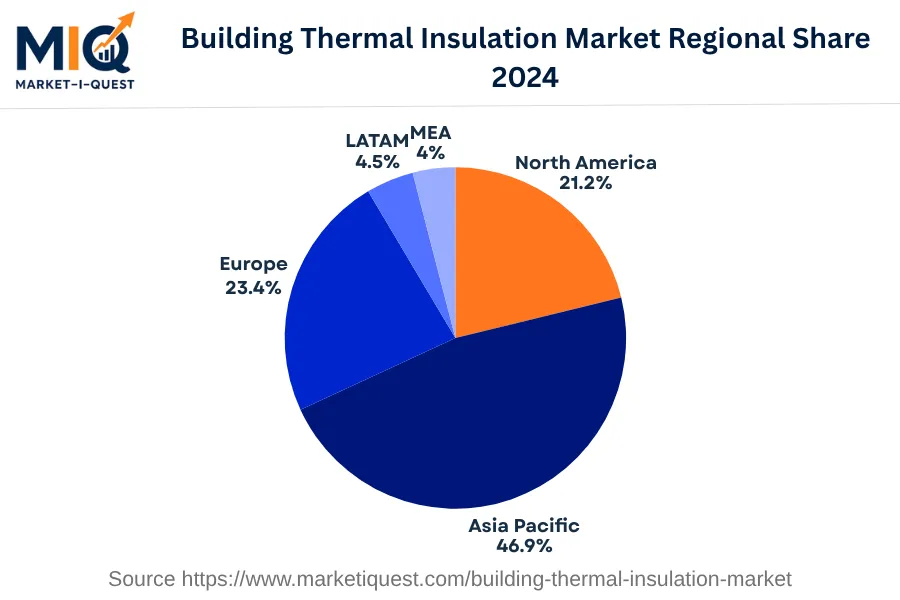
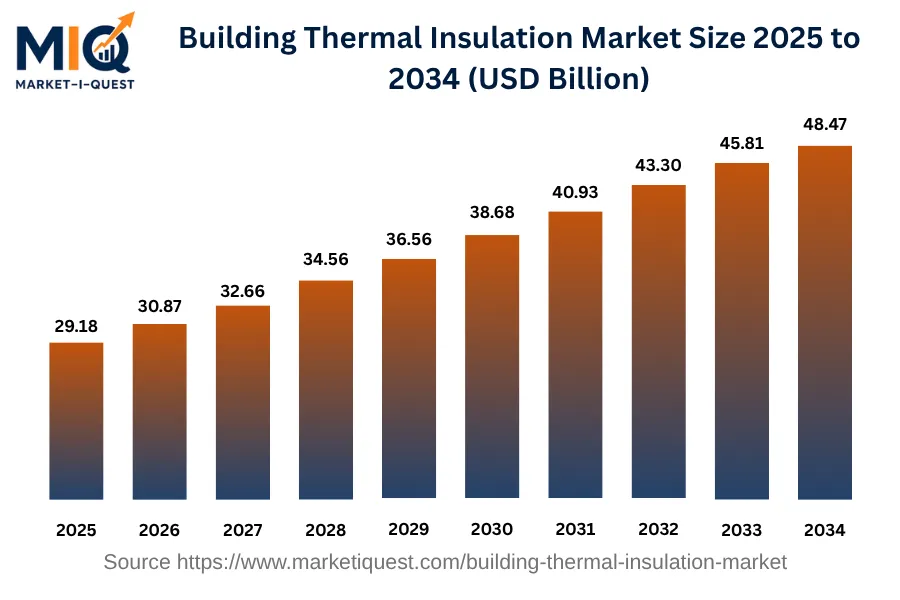
The Building Thermal Insulation Market was valued at 29.18 billion USD in 2025 and is predicted to grow to 48.47 billion USD by 2034, resulting in a CAGR of 5.8%. This steady growth in market size, emerging from 27.58 billion USD in 2024, indicates an increasing demand for thermal insulation in the building sector. There are several reasons behind this growth. Firstly, the rising focus on energy efficiency and sustainability, which necessitates effective insulation to reduce energy consumption. Secondly, a growing construction sector, particularly in developing regions, is expected to raise the demand for building thermal insulation materials. As for the regional market shares in 2024, Asia Pacific stood out with 46.9%, followed by Europe and North America with 23.4% and 21.2% respectively. LATAM and MEA held lesser shares at 4.5% and 4.03% respectively. Taken together, these figures underscore the global appeal of products and services within the Building Thermal Insulation Market. Kindly note that these trends may vary as per the respective growth and development in these regions.

Key Takeaways

  • By Material Type - Fiberglass held the largest market presence as most used material for thermal insulation.
  • By Form - Spray Foam experienced rapid growth due to its ease of installation and high-insulating properties.
  • By Application - Roof Insulation took a leading position due to its effectiveness in heat regulation.
  • By End Use - Industrial sector led the market driven by increasing construction of energy-efficient homes.
building-thermal-insulation-market market size

Key Driving Factors

Implementation of Stringent Energy Saving Regulations

Globally, governments are enforcing strict regulations to cut down energy consumption in both commercial and residential buildings. A notable example is the European Union's Energy Performance of Buildings Directive, compelling EU member countries to upgrade their building codes and improve the energy efficiency of buildings. This involves improving insulation in new constructions and retrofits. Within these jurisdictions, builders must comply with the enhanced codes for their projects to receive certification. The enforcement of such regulations spurs the demand for thermal insulation, consequently driving growth within the building thermal insulation market.

High Prevalence of Extreme Weather Conditions

Increasing incidents of extreme weather conditions such as harsh winters and scorching summers across various regions compel homeowners and builders to seek efficient ways of maintaining indoor comfort. Thermal insulation proves a crucial solution, enhancing a building's resistance to heat flow, thereby reducing heating and cooling costs, and improving comfort. It predominantly helps maintain a desirable temperature indoors regardless of the exterior weather conditions. These rising incidents of extreme climatic conditions have led to an intensified need for rigorous insulation in homes and commercial buildings, thereby pushing the growth in the building thermal insulation market.

Market Evolution by Timeline

2019-2023
During this period, North America dominated the building thermal insulation market due to their strong focus on energy efficiency and strict regulations regarding energy conservation. Residential and commercial building developments also contributed to this trend. Reflective insulation and spray foam technologies were prominent in supplier offerings, but faced limitations due to cost and skilled labor deficit. Policies in place included the US Department of Energy's Weatherization Assistance Program which increased adoption among low-income households. Mostly, fixed-price contracts were favored over variable pricing. However, a significant risk was fluctuating raw material prices, impacting final product pricing and market stability.
2024
In 2024, Asia-Pacific saw an upsurge in the demand for building thermal insulation, thanks to increased infrastructure development and growing awareness about energy efficiency. Moreover, adoption of glass-wool and stone-wool technology escalated across both residential and commercial buildings. This progress, however, was not without challenges, including a need for more workforce training. The integration of the products into existing buildings often posed difficulties. Standards became stricter, with particular emphasis on enhancing fire resistance. The upfront cost remained prohibitive to some extent, signaling room for more competitive pricing strategies. The risk of non-compliance with evolving standards loomed large.
2025-2029
This period was marked by technological advancements in thermal insulation materials. Recycled materials started being widely used in insulation production, creating a balance between sustainability and energy efficiency. Demand surged in regions with extreme weather conditions like Scandinavia for residential use and Middle East for commercial use. The main challenge in this period was integration of these advanced materials into traditional construction procedures. Government Green Building initiatives played an essential role in promoting these advancements. Fixed rate contracts continued as the preferred commercial model. However, price volatility of raw materials remained a crucial market risk.
2030-2034
Sustainable building practices became ubiquitous across the global construction industry impacting thermal insulation market favorably. Recycled and bio-based insulation materials witnessed a surge in demand as they became more integrated and widely accepted in major construction practices. Europe led this trend, due to its stringent green building regulations. Technological innovations also allowed for production of better quality materials, though high production cost remained a constraint. Partnerships began to form between insulation companies and tech startups to develop smarter insulation solutions. The primary risk continued to be high production cost, and its impact on pricing and profitability.

Future Market Outlook

Future Opportunities

Future opportunities within the building thermal insulation market are closely tied to emerging regulatory trends and evolving construction practices as of late 2023. With the United Nations Climate Change Conference in 2021 establishing increased commitments to reduce greenhouse gas emissions, many countries are now moving toward more stringent building energy efficiency regulations. In the United States, the Department of Energy is actively promoting energy-efficient building practices, which underscores a growing opportunity for insulation products that meet or exceed these performance standards. Also, in regions like the European Union, future directives focus on achieving net-zero emissions by 2050, leading to increased demand for high-performance insulation solutions. Innovatively, companies like BASF are investing in research and development to create more efficient, bio-based insulation materials, recognizing a consumer shift toward sustainability. In 2023, several pilot projects in Nordic countries are testing out organic insulation materials, showcasing an opportunity to educate the market on their performance benefits. Furthermore, trends toward prefabricated construction methods, which gained momentum in recent years, open avenues for insulation manufacturers to provide customized, ready-to-install solutions that align with modern building practices. Collectively, these factors imply significant market potential for manufacturers who can adapt their offerings to meet the evolving landscape driven by regulations and consumer preferences.

Segmentation Analysis

By Material Type

The market is divided into subsegments including Fiberglass, Foam Board, Mineral Wool, Cellulose, and Reflective Insulation. Among these, Fiberglass accounted for the largest revenue share while Cellulose is expected to grow at the fastest CAGR during the forecast period.

Largest Revenue Share

Fiberglass

Market Share Leader

The dominance of the fiberglass subsegment can be attributed to several key factors. Foremost, fiberglass is the most conventional type of insulation, widely recognized for its cost-efficiency and effective thermal performance. It remains a staple choice in both the residential and commercial sectors, in varied geographic contexts. Fiberglass' flexibility to mold into various shapes and sizes without losing its insulating properties makes it an ideal choice for different installation needs. Also, from a supply perspective, fiberglass insulation is produced using abundant and readily available raw materials such as sand and recycled glass, ensuring stable supply dynamics. Furthermore, the ability of fiberglass to resist fire, absorb noise, and control condensation has contributed to its wide acceptance. However, customer buying decisions are often influenced by the product's durability and low maintenance, which fiberglass typically delivers. The sustained preference for fiberglass in insulation installation naturally sets higher switching costs for alternatives. The sales primarily happen via builder and contractor channels, further solidifying its market position due to long-established relationships between manufacturers, distributors, and these channel members.

Fastest CAGR

Cellulose

Forecast Period Growth Leader

Cellulose insulation is expected to record the highest growth rate in the coming years. This growth momentum is primarily driven by a rising global emphasis on environmental sustainability and energy efficiency. As an insulation material, cellulose is predominantly composed of recycled paper, positioning it as a significantly eco-friendly option, and hence it resonates well with the increasing demand for green building materials. Advances in processing technologies aiding cellulose's thermal performance are likely to act as growth catalysts, encouraging greater adoption. Public policies around environmental protection and energy conservation also endorse materials such as cellulose, thereby creating favorable market conditions for growth. However, the installation process for cellulose can be somewhat more complex than other materials, posing an adoption barrier. Overcoming this will likely necessitate investments in worker training or specialized installation equipment. Also, any potential supply uncertainties due to paper recycling capacities might pose short-term risks, but such risks can be mitigated via strategic partnerships with waste management companies or paper mills.

By Form

The market is divided into subsegments including Batts and Rolls, Foam Boards, Spray Foam, and Rigid Boards. Foam Boards accounted for the largest revenue share while Spray Foam is expected to grow at the fastest CAGR during the forecast period.

Largest Revenue Share

Foam Boards

Market Share Leader

In the insulation industry, Foam Boards are leading the way in terms of revenue generation. Foam Boards, known for their high thermal resistance, low moisture absorption, and durable nature, have seen increased usage in building and construction projects. They are particularly beneficial in areas with extremely cold or hot climates as they provide excellent insulation capabilities. The demand for energy-efficient buildings is another strong driver for this segment. As more stringent energy codes are implemented, the use of foam boards becomes more vital in achieving these energy efficiencies. The comparatively low cost and ease of installation have made foam boards a staple in the construction industry, predominantly in developed markets like North America and Europe. However, the adoption of these boards is also gradually increasing in developing markets as education about energy efficiency improves. This broad customer base underlines the Foam Boards' segment dominance in revenue terms, a trend anticipated to continue in the foreseeable future.

Fastest CAGR

Spray Foam

Forecast Period Growth Leader

While Foam Boards hold the largest market share, Spray Foam is the fastest-growing sub-segment. Spray foam insulation's versatility contributes to its swift growth. This product can be used in both new construction and remodeling projects, filling gaps and crevices that other insulation types can't easily reach. Technological advancements have resulted in spray foam insulation that offers superior energy efficiency, thereby reducing energy costs. This product is increasingly being adopted in residential buildings, especially in the retrofit market for older homes that lack adequate insulation. Additionally, partnerships with home improvement companies have made spray foam more accessible to the consumer market. Despite higher upfront costs, the long-term energy savings often justify the investment for many homeowners. However, on the flip side, the technical skill required for installation and potential health risks if not installed correctly could act as barriers to adoption. Nonetheless, with ongoing improvements and increased awareness of its benefits, the spray foam segment is poised for significant growth in the coming years.

By Application

The market by application is divided into subsegments including Exterior Insulation, Interior Insulation, Roof Insulation, Floor Insulation and Cavity Wall Insulation. In 2024, Roof Insulation accounted for the largest revenue share while Floor Insulation is projected to grow at the fastest CAGR during the forecast period.

Largest Revenue Share

Roof Insulation

Market Share Leader

Roof Insulation has been leading the market in terms of revenue. Its prominence can be attributed to several factors. In most structures, a significant portion of heat is lost through the roof, making its insulation a crucial process to increase energy efficiency. To lower energy costs, businesses and households are increasingly adopting roof insulation. In addition, regulators are setting stringent guidelines concerning energy conservation leading to increased use of roof insulation materials. Roof insulation materials also aid in maintaining an optimal temperature within structures, providing comfort in varying weather conditions. Various types of roof insulation materials are available in the market to cater to the diverse climate and building requirements. Furthermore, roofs are easier to access and insulate, compared to walls or floors. Hence, for insulation service providers, the roof insulation segment often provides a steady source of revenue.

Fastest CAGR

Floor Insulation

Forecast Period Growth Leader

Floor Insulation is anticipated to show the highest CAGR in upcoming years. This rapid growth is expected due to rising awareness about energy conservation, reducing heat loss, and minimizing energy bills, especially in colder geographies. Undeniably, poorly insulated floors can contribute to a significant amount of heat loss from a building, thus insulating floors has increasingly become a priority. With advancements in technology, more efficient and easier to install floor insulation products have come into the market. Moreover, government policies and initiatives promoting energy efficiency are propelling the adoption of floor insulation. However, the high cost of installation can act as a barrier to adoption in price-sensitive markets. Nonetheless, in the long run, the benefits of reduced energy bills and improved thermal comfort overcome this challenge. Furthermore, collaborations between manufacturers and distribution channels can increase the accessibility of these products, thus aiding the segment growth.

By End Use

The market is divided into subsegments including Residential, Commercial, and Industrial, with the Industrial subsegment accounting for the largest revenue share, but the Residential sector is predicted to grow at the fastest CAGR during the forecast period.

Largest Revenue Share

Industrial

Market Share Leader

As per baseline data from 2024 and general industry dynamics, the Industrial domain takes the lead in terms of revenue generation. A few key reasons driving this outcome include steady global industrial growth, high demand for efficiency and productivity, and increasing automation trends. The escalating requirement of highly advanced machinery and equipment across sectors such as manufacturing, logistics, and automotive has been a major revenue-generating factor. In addition, factors such as favorable government initiatives encouraging industrialization, particularly in developing regions, and progressive technological advancements in machinery have contributed to the segment's large revenue share. At its core, industrial requirements are often complex and high-value, which leads to significant revenues. Notably, strict environmental regulations are also pushing industries to upgrade and maintain their equipment regularly. These factors combine to make the Industrial segment the one with the largest revenue in this market.

Fastest CAGR

Residential

Forecast Period Growth Leader

While the industrial segment may lead in terms of revenue, the Residential sub-segment promises the fastest compounded annual growth rate. This growth can be attributed to several interconnected factors. Urbanization and the associated rise in housing demand, combined with growing consumer awareness about smart home technologies, are essential boosters. Secondly, the trend of adoption of energy-efficient solutions in residential areas is expected to fuel growth. Many homeowners are now investing in innovative and environmental-friendly solutions to save on long-term costs. Additionally, attractive financing structures and government incentives to install residential solutions, especially in developed economies, are catalyzing market growth. However, the high up-front cost could still act as an adoption barrier that may slightly hinder market growth. Despite this, partnerships between solution providers and financing companies are likely to mitigate this risk. Capital investment often leads to accelerated adoption, and this segment is poised to benefit from such trends.

Competitive Analysis

Key Market Players

Manufacturers / OEMs

Saint-Gobain
France
BASF SE
Germany
Johns Manville
US

Key Suppliers & Raw Materials

Owens Corning
US
Paroc Group Oy
Finland
GAF Materials Corporation
US

Distributors, Integrators & Channel Partners

Knauf Insulation
US
Atlas Roofing Corporation
US
Bechtel Corporation
US

Porter’s Five Forces Analysis

Assessment of the competitive position and profitability in the Building Thermal Insulation Market.

Supplier Bargaining Power

Medium

Most materials are generic but specialized insulation types can offer suppliers more influence.

Buyer Bargaining Power

High

Buyers have multiple suppliers to choose from, driving prices down.

Threat of Substitutes

Low

Few substitutes available due to regulatory standards for thermal efficiency in construction.

Threat of New Entrants

Medium

High startup costs limit entry, though sustainable insulation products offer unique opportunities.

Competitive Rivalry

High

Numerous players in the market compete on price, quality, and technological advancement.

Regional Analysis

Geographic market dynamics and growth opportunities across key regions

Global Market Outlook

building-thermal-insulation-market market regional share

North America

In 2024, the North American building thermal insulation market represented a significant segment of the construction industry. Primary drivers of this market included stringent government regulations in the U.S., Canada, and Mexico focusing on energy conservation in buildings such as Canada's National Energy Code. Also, a surge in construction activities coupled with escalating refurbishment of existing structures triggered demand for thermal insulation. To meet this demand, there was a noticeable increase in R&D investment to enhance insulation properties while keeping the cost manageable. A shift to sustainable materials catalyzed technology adoption in the industry.

Prominent market trends encompassed green building certifications like LEED and ENERGY STAR heavily influencing buyer behavior. Rising involvement of utilities companies in retrofitting projects to enhance energy efficiency marked a key trend. Additionally, a wave of consolidation emerged in the industry, indicated by several partnerships and M&A activities among key players to strengthen product portfolios and geographical coverage. There was an increased policy permit enforcement, especially in the manufacturing sector, contributing to market dynamics in 2024. In conclusion, stringent regulatory frameworks, construction industry boom, and technology adoption primarily drove the North American building thermal insulation market in 2024, while green certifications, utilities sector participation, and policy enforcement were discernible trends.

Asia Pacific

In 2024, the Building Thermal Insulation Market in Asia Pacific experienced a seismic shift spurred by stringent energy regulations, increased investments, and enhanced technology adoption. Increasing energy costs and worsening climatic conditions spurred demands for advanced insulation solutions, particularly in burgeoning economies like China and India which tightened building codes aiming for energy efficiency. Japan's cutting-edge aerogel technology adoption underscored the drive for technologically advanced insulation materials, with similar trends observed in South Korea and Australia.

Trends in this market revolved around sustainability and product innovation. Amid escalating ecological concerns, preference pivoted towards insulation materials with lower environmental impact, such as sheep wool and cellulose. Regulatory influence, as illustrated by ASEAN's push towards green building standards, hastened this shift. Moreover, significant M&A activities indicated a leaning towards consolidation of key players to leverage resources and technology. Digital sales channels grew in prominence, particularly in Australia, as buyer behavior adapted to pandemic-induced changes.

Key customers ranged across sectors such as construction, utilities, and government bodies, underscoring the market's diversity. Increased uptake in public infrastructure by government bodies was particularly notable, whilst retail giants like IKEA leveraged the trend for energy-efficient designs in India. Across sectors, the adoption of sustainable, technologically-advanced products underpinned the growth of the Building Thermal Insulation Market in Asia Pacific in 2024.

Europe

In 2024, the European building thermal insulation market was largely stimulated by increasing energy prices, stringent governmental regulations, and heightened consumer awareness. The rising cost of energy induced an uptick in demand for energy-efficient solutions, including thermal insulation in buildings. Strict regulation from the European Union, such as the Energy Performance of Buildings Directive (EPBD) also propelled the market growth, obliging member states to adopt comprehensive energy-saving measures. Increased investment in residential developments and a noticeable trend in the refurbishment of both commercial and residential buildings set an example of how the need for thermal insulation was becoming a necessity rather than a choice. In terms of supply dynamics, innovative and environmentally-friendly insulation solutions became popular as sustainability overtook the market.

On the trend side, the shift towards green building and eco-friendly construction designs began to dominate. This led to partnerships between insulation manufacturers and construction companies, strengthening the promotion of thermally-insulated buildings. Authorities started strictly enforcing building codes in relation to thermal performance, pushing both the demand and supply sides to adapt. Most prominently, the trend was observed in government, utilities, and enterprise sectors, where a significant portion of investments and research was made to promote the usage of thermal insulation in buildings. The overall sentiment towards the market in this year was clearly focused on energy efficiency, sustainability, and regulatory compliance.

Latin America

In 2024, the building thermal insulation market in Latin America, particularly in countries such as Brazil, Mexico, Argentina, Colombia, Chile, and Peru, has shown significant growth due to various drivers and trends. Drivers include increasing construction activities across the region, particularly in Brazil and Mexico, creating heightened demand for thermal insulation materials. Furthermore, governments' regulation enforcement geared towards energy conservation in the residential and commercial construction segment has boosted market growth. There has been significant technology adoption, with suppliers increasingly integrating technologically advanced insulation materials for improved thermal performance.

Market trends in LATAM building thermal insulation included shifts in buyers preferences towards eco-friendly, recycled insulation materials due to growing environmental consciousness. Furthermore, certain product shifts were noticeable, with increased use of mineral wool and expanded polystyrene for both, residential and commercial construction, due to their better insulation properties. Channel dynamics have seen e-commerce emerge as an important sales platform for insulation material suppliers, aiding in expanding their reach to remote regions. The market also experienced an increase in partnerships and M&A, for instance, between local manufacturers and international firms, to ramp up production capabilities and improve market penetration. Government sectors across the region have actively sought better thermal insulation in public buildings, driving the demand in this sector. Overall, the LATAM building thermal insulation market in 2024 was shaped by a complex interplay of increased construction, technology adoption, regulation enforcement, e-commerce penetration, and strategical partnerships.

Middle East & Africa

In 2024, the Building Thermal Insulation market in the Middle East and Africa displayed a significant consumer demand and technological transition. Key market drivers were diverse. Regulatory guidelines promoted energy efficiency in Saudi Arabia, Qatar and UAE, endorsing the adoption of thermal insulation in new buildings and renovation projects. Increased infrastructure investment by governments and private sector in Egypt, South Africa and Nigeria bolstered demand. Increased awareness of energy conservation and cost reduction in the region’s industrial segment, notably oil, gas and manufacturing, also led to increased penetration of thermal insulation.

Trends demonstrated an equally dynamic market. A shift in buyer behavior towards sustainable and energy-efficient products noticeably increased thermal insulation adoption in Kenya and Israel. Innovation in insulation materials like aerogels and vacuum insulated panels was a notable technology shift. Suppliers altered channel dynamics, leveraging digital platforms for marketing, and engagement, reflected in the increased online sales across sectors, including telecom, and healthcare. The market saw policy enforcement as a critical trend, especially in the UAE and Saudi Arabia, as governments introduced tighter regulations for building insulation. Lastly, partnerships were common, usually between regional manufacturers and international firms supplying advanced insulation materials. As a result, the building thermal insulation market in the Middle East and Africa showed considerable dynamism in 2024.

Recent Industry Developments

Latest market innovations, product launches, and strategic initiatives

March 2025

Kingspan Group launched Therma TA41, an advanced polyisocyanurate (PIR) insulation board designed for flat roofing systems. The rigid foam panel features optimized thermal resistance and enhanced moisture control, targeting strict green building energy codes and structural envelope longevity.

Frequently Asked Questions