
Bio-based Polyurethane Market Snapshot

Key Players

  • BASF SE (Germany)
  • Covestro AG (Germany)
  • Dow Inc. (United States)
  • Huntsman Corporation (United States)
  • Mitsui Chemicals (Japan)
  • Lubrizol Corporation (United States)
  • TSE Industries Inc. (United States)
  • Rampf Holding GmbH & Co. KG (Germany)
  • Johnson Controls Inc. (United States)
  • SNP Inc. (United States)

Market Size

Base Year 2024
$0.12 Bn
CAGR
11.56%
Forecast 2034
$0.36 Bn

Market Segments

By Type
Bio-based Polyols, Bio-based Isocyanates
By Raw Material Source
Soybeans, Corn, Palm Oil, Sugarcane, Others
By Processing Technology
Direct Substitution, Chemical Modification, Biocatalysis
By End Use Industry
Automotive & Transportation, Construction, Furniture & Interiors, Consumer Products, Packaging, Others

Market Dynamics

Drivers
  • Increasing environmental concerns
  • Advancements in green chemistry
Restraints
  • High production cost
  • Limited product availability
Opportunities
  • Increasing environmental concerns
  • Growing sustainable material demand

Market Size

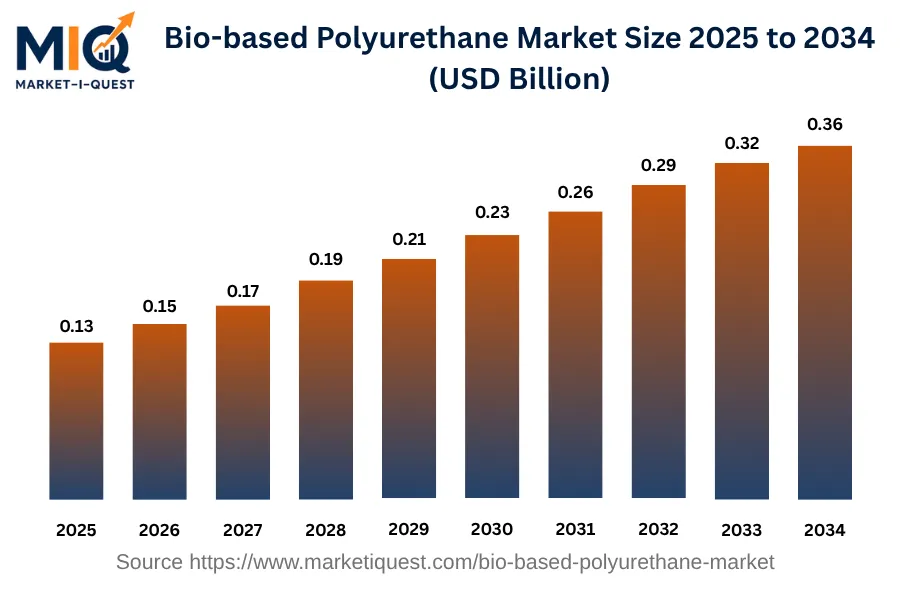
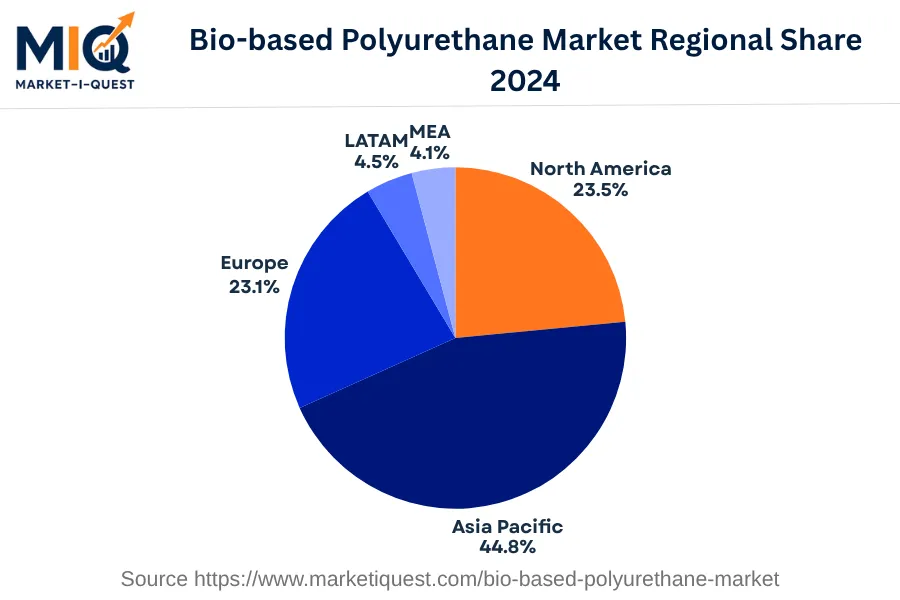
The Bio-based Polyurethane Market is projected to grow from USD 0.13 Billion in 2025 to around USD 0.36 Billion by the year 2034, demonstrating a Compound Annual Growth Rate (CAGR) of 11.56%. The year 2024 saw the market at approximately USD 0.12 Billion, hinting a visible growth in just a year's time to 2025. As the decade advanced, the continual appreciation in the market cap indicates a consistent expansion in the Bio-based Polyurethane Market. Enhancing this value, the regional share in 2024 was distributed as Asia Pacific holding the highest at 44.82%, followed by North America and Europe with shares of 23.47% and 23.12% respectively. The contribution from Latin America and the Middle East and Africa (MEA) region was comparably lesser, with shares of 4.46% and 4.13% respectively. This states Asia Pacific region as a significant contributor to the global Bio-based Polyurethane Market whereas both Latin America and MEA regions represent smaller shares of the market. This gives a comprehensive view of market's global presence and its regional distribution.

Key Takeaways

  • By Type - Bio-based Polyols led in the Bio-based Polyurethane Market accounting for an impressive share in the base year.
  • By Raw Material Source - Soybeans held a dominant position accounting for a significant share during the base year.
  • By Processing Technology - Direct Substitution grew fastest leading to a drastic increase in market share within the period.
  • By End Use Industry - Construction segment dominated the market share in the base year.
bio-based-polyurethane-market market size

Key Driving Factors

Implementation of Stricter Environmental Regulations

A key factor stimulating the bio-based polyurethane market is the enforcement of stringent environmental laws and obligations by governments worldwide. In the United States for instance, The Environmental Protection Agency (EPA), has initiated policies that cap emissions for volatile organic compounds which are often found in petroleum-based polyurethane products. In Europe, the Registration, Evaluation, Authorization and Restriction of Chemicals (REACH) regulation is promoting the use of eco-friendly alternatives such as bio-based polyurethane. These regulated limits on harmful emissions and waste products from petrochemicals are compelling manufacturers to transition towards greener materials like bio-based polyurethane, shaping the market's development.
Swinging Consumer Preferences towards Sustainable Products

Another driving factor for the growth of the bio-based polyurethane market is the shifting buying preferences of consumers towards sustainable and green products. This trend is prominent in sectors like automotive, where manufacturers are under pressure to design vehicles with environmentally friendly interiors. Use of bio-based polyurethanes in vehicle seats, steering covers, and insulation meet these demands while ensuring high-quality end-products. Similarly, in the construction industry, there's a growing demand for green buildings where bio-based polyurethane serves purposes in insulation, reducing energy consumption. Thus, consumer demand for environmentally responsible choices in various sectors is leading to increased adoption of bio-based polyurethane.

Market Evolution by Timeline

2019-2023
Within this period, the Bio-based Polyurethane Market saw increased demand from buyers in industries such as electronics, automotive, and furniture, predominantly in the Asia-Pacific region due to shift towards sustainability. The technology showed maturation as repeat supply orders increased, and pilot programs established its viability for mass production. EU's Bio-based Industries Consortium (BIC) influenced market dynamics, supporting the development of bio-based industries. The high cost of bio-polyurethane compared to petroleum-based products dictated the pricing model, although research and development aimed at reducing these costs. Constraints included the limited availability of bio-based raw materials, which led to inflated prices. The primary risk was the reliance on agricultural waste as a primary raw material, which introduced unpredictability and potential supply chain disruptions.
2024
In 2024, the Bio-based Polyurethane Market witnessed significant interest from construction and textile industries globally due to rising environmental concerns. Product shipment increased despite the scarcity of bio-based feedstocks, with focus on integration with other biodegradable materials to maximize resource potential. New norms were introduced in several countries, promoting bio-based materials usage. Pricing was driven by reduced production costs and increased competition in the market. Partnerships emerged where larger corporations collaborated with bio-formulation companies for better access to technology and supply. The chief risk was deforestation linked with increased demand for bio-feedstocks, leading to criticism and calls for stricter regulations.
2025-2029
Over this fidve-year period, the Bio-based Polyurethane Market expanded driven by factors including green-building trends, especially in Europe, and heavy expenditure in infrastructure. This time witnessed the integration of new technologies leading to efficient bio-feedstock use and reduction in production costs. Environmental policies like EU's Renewable Energy Directive boosted market growth, facilitating wider adoption. Pricing tended to become lower with economies of scale and technological advancement. A typical contract during this period involved both parties sharing risks and benefits. Despite commercial success, the dependency on a limited range of bio-feedstocks and fluctuating prices contributed to uncertainty.
2030-2034
The Bio-based Polyurethane Market saw a surge in demand from emerging economies including the Middle-East and Africa. Technology reached a stage of maturity where biopolymers could be synthesized according to supplier and consumer specifications. Efforts to diversify bio-feedstock sources reduced the pressure on a single type of feedstock. Policy-wise, the UN Sustainable Development Goals promoted further investment in sustainable and bio-based solutions. The commercial model saw a shift towards long-term contracts to counter price volatility. Increasing demand led to a rising pressure on feedstock sources, necessitating the exploration of new, sustainable substitutes.

Future Market Outlook

Future Opportunities

Future opportunities in the bio-based polyurethane market are closely linked to evolving consumer preferences and legislative initiatives. With global awareness of environmental issues on the rise, businesses are actively seeking bio-based alternatives; for instance, the European Union's Green Deal, established in 2019, has set ambitious targets for sustainability, influencing market dynamics significantly. Companies like Johnson Controls are developing bio-based foam solutions for automotive applications in response to stricter emissions regulations. The demand for low-emission materials in construction is also gaining traction, with the U.S. Green Building Council emphasizing the need for sustainable building materials in their LEED certification criteria. Emerging startups are entering the bio-based polyurethane sector, addressing niche applications such as footwear and insulation, as seen with companies like Allbirds, which introduced a line of bio-based soles in 2022. Furthermore, collaboration between academia and industry is expected to drive research and innovation, particularly in improving the performance and cost-efficiency of bio-based materials. In 2023, the partnership between the University of Cambridge and multiple industry stakeholders aims to pioneer advancements in bio-polyurethanes. Moreover, companies could explore partnerships with agro-industrial sectors to secure sustainable feedstock sources, evident in earlier collaborations between petrochemical firms and agricultural producers. These future opportunities indicate an evolving landscape that is increasingly favoring bio-based polyurethane solutions, ensuring competitive advantages for stakeholders actively involved in sustainability initiatives.

Segmentation Analysis

By Type

The market is divided into subsegments including Bio-based Polyols and Bio-based Isocyanates. Bio-based Polyols accounted for the largest revenue share while Bio-based Isocyanates is expected to grow at the fastest CAGR during the forecast period.

Largest Revenue Share

Bio-based Polyols

Market Share Leader

Bio-based Polyols is the lead subsegment by revenue in the current market scenario. This predominance can be attributed to higher adoption rates owing to its eco-friendly and sustainable characteristics. Industries are shifting towards Bio-based Polyols due to their favorable impact on the environment as well as their superior performance attributes in comparison to their traditional counterparts. Furthermore, regulation favoring environment friendly products and the rising demand from end-use industries such as automotive, construction, and furniture are further aiding in the high revenue generation from Bio-based Polyols. Lastly, the higher cost of Bio-based Polyols doesn’t appear to discourage customers, indicating a high value placed on the environmental sustainability and performance of this product. This insight assumes no major changes in current purchasing behavior or product regulations.

Fastest CAGR

Bio-based Isocyanates

Forecast Period Growth Leader

The subsegment expected to display the fastest growth, in terms of CAGR, are Bio-based Isocyanates. Primarily, this subsegment benefits from a combination of technological advancements, and market dynamics. Increased R&D in the field is paving the way for high-performance Bio-based Isocyanates, which are expected to penetrate the market rapidly. Furthermore, collaborations and partnerships among key players are anticipated to boost market growth. Bio-based Isocyanates have potential hurdles, such as price and performance comparison with petroleum-based counterparts, but the commitment to sustainable growth among major economies, and the resulting climate policies, will likely mitigate these concerns. Near-term risks include potential supply chain disruptions. This outlook assumes that the level of interest and investment in bio-based products continues to increase, boosting demand for Bio-based Isocyanates.

By Raw Material Source

The market is divided into subsegments including Soybeans, Corn, Palm Oil, Sugarcane and Others. Soybeans accounted for the largest revenue share while Sugarcane is expected to grow at the fastest CAGR during the forecast period.

Largest Revenue Share

Soybeans

Market Share Leader

As of 2024, Soybeans are leading the market in terms of revenue. This dominance is supported by a wide range of applications in industries such as food, feed, and industrial commodities. The high protein content in soybeans caters to the increasing demand for protein-rich food products among health-conscious consumers. Its use in animal feed also contributes to such a large revenue due to the expansion of animal husbandry practices. Additionally, the vast availability and lower cost of soybean cultivation, particularly in major producing regions like Americas and Asia, further enhance its positioning in the market. Regulatory support for biofuel production also backs up the prominence of soybean subsegment. Despite the high switching costs, its versatile application in various industries maintains the investment attractiveness.

Fastest CAGR

Sugarcane

Forecast Period Growth Leader

Sugarcane subsegment is projected to have the fastest growth in the forecasted period. A significant catalyst for this trend is the global shift towards sustainable and green energy solutions, where sugarcane biofuel plays a pivotal role. This biofuel is recognized for its capacity to reduce carbon footprints and to contribute to energy security, which triggers legislative support in many countries. Moreover, technology advancements allow the expansion of sugarcane uses beyond biofuel and sweeteners, which opens up new market opportunities. Notably, the decrease in the initial capital expenditure required for sugarcane cultivation and processing is also factored in the municipal decisions to invest in sugarcane projects. However, the risks tied to this growth include the potential price volatility of sugarcane and its susceptibility to climate changes and pests.

By Processing Technology

The market is divided into subsegments including Direct Substitution, Chemical Modification, and Biocatalysis, where Direct Substitution accounted for the largest revenue share while Biocatalysis is expected to have the fastest CAGR during the forecast period.

Largest Revenue Share

Direct Substitution

Market Share Leader

In 2024, the 'Direct Substitution' subsegment dominated the processing technology market in terms of revenue generation, mainly driven by established and proven processes, high scalability, and extensive usage in numerous industries. This technology has a prominent role in several industries such as the automotive, construction, and consumer goods industries due to its efficiency and cost-effective nature. Moreover, its market share is bolstered by its universal compatibility with various raw materials, which subsequently increases its demand among manufacturers. Regulatory compliance also plays a pivotal role in its dominance, as many companies gravitate to direct substitution rather than investing in new, potentially non-compliant technologies. This wide adoption is propelled by the ease of application, low switching costs, and substantial potential for reducing energy consumption.

Fastest CAGR

Biocatalysis

Forecast Period Growth Leader

The 'Biocatalysis' subsegment, despite not being the revenue leader in 2024, is expected to grow at the fastest CAGR in the forecast period. The anticipated growth can be attributed to a number of factors such as technological advancements, environmental concerns, and regulatory support. Firstly, the increasingly rigorous environmental regulations are encouraging industries to shift towards greener, more sustainable processing techniques, thus positioning Biocatalysis as a likely candidate. As a bio-based process, it has significant potential to reduce the environmental footprint of production processes. Secondly, partnerships and collaborations among key market players are expected to provide impetus to the market growth. However, high initial capital expenditure and lack of awareness may act as barriers to the adoption of this technology. Despite these challenges, the growth potential remains significant, fueled by the expanding palate of commercially available biocatalysts and the integration of biocatalysis into chemical production roadmaps.

By End Use Industry

The market is divided into subsegments including Automotive & Transportation, Construction, Furniture & Interiors, Consumer Products, Packaging, and Others. In the base year 2024, the Construction subsegment accounted for the largest revenue share while Automotive & Transportation is expected to grow at the fastest CAGR during the forecast period.

Largest Revenue Share

Construction

Market Share Leader

The construction industry, in this context, encompasses an array of applications within it, contributing to a largest chunk in the revenue stream. Its diverse uses demand massive volumes, hence contributing to significant revenues. An increasing population coupled with the rapidly urbanizing cities have led to an elevated need for the housing and infrastructure projects across the globe. This, in turn, boosts the segment's contribution to revenues. Moreover, the sector enjoys a relatively steady demand, keeping the fluctuations at bay. At the level of individual buying criteria, durability and performance play a crucial role which this segment caters to. Further, in terms of regulation, the stringent policies promoting eco-friendly usage have tapped into the segment's potential. The segment enjoys a wide sales channel network reaching out to a diversified consumer base. Notwithstanding, the steady demand from both developed and developing regions, notably Asia-Pacific owing to its burgeoning construction sector contributes to the predominant share of construction in the revenue.

Fastest CAGR

Automotive & Transportation

Forecast Period Growth Leader

The Automotive & Transportation segment is projected to witness the fastest growth rates. This comes on the back of significant technological advancements and increasing commitments by countries to adopt cleaner fuels, thereby promoting the usage of more environment-friendly, lighter and efficient materials. Moreover, the rise of electric and autonomous vehicles serves as a significant catalyst to this growth. Despite potential upfront costs, opportunities offered by emerging markets are noteworthy. Partnerships with local suppliers and assembly units could be crucial steps in this direction. Near-term risks may be presented by economic uncertainty in key markets and sometimes stringent regulatory environment. However, the overall positive outlook on the global economy and automotive industry, in particular, substantiates the potential. Note, however, that the adoption phases could vary with regions with developed regions being the early adopters. Over the forecast period, this segment thus shows a remarkable growth prognosis.

Competitive Analysis - Bio-based Polyurethane Market

Key Market Players

Manufacturers / OEMs

Cargill Incorporated
US
BASF SE
Germany
The Dow Chemical Company
US

Key Suppliers & Raw Materials

Mitsui Chemicals, Inc.
Japan
Covestro AG
Germany
Huntsman Corporation
US

Distributors, Integrators & Channel Partners

RP Global Energy Services Ltd.
UK
Biesterfeld Spezialchemie GmbH
Germany
Tri-iso Tryline LLC
US

Porter’s Five Forces Analysis

An assessment of the bio-based polyurethane market's competitive intensity and attractiveness.

Supplier Bargaining Power

High

Dependency on limited raw material suppliers increases their bargaining power.

Buyer Bargaining Power

Medium

With increasing alternatives, buyer power is moderate, balanced by product differentiation.

Threat of Substitutes

Medium

Synthetic polyurethane products pose a considerable threat, but environmental concerns may mitigate this.

Threat of New Entrants

Low

High capital investments and stringent regulations keep the barrier to entry high.

Competitive Rivalry

High

Strong competition from established players with similar products enhances market rivalry.

Regional Analysis

Geographic market dynamics and growth opportunities across key regions

Global Market Outlook

bio-based-polyurethane-market market regional share

North America

In 2024, the North American bio-based polyurethane market emerged as a key player in sustainable material economy driven by an increased emphasis on green alternatives across sectors. Regional regulatory bodies uniformly imposed stringent emission norms, pushing key industries including automotive, construction, and furniture toward the adoption of bio-based polyurethanes. Significant investments in research and development, especially in the United States, catalyzed technological advancements enhancing performance and cost-effectiveness of these materials, thereby stimulating supply dynamics and pricing structures.

A substantial shift in consumer preferences for environmentally-friendly products delineated buyer behavior trends. The adoption of bio-based polyurethanes significantly increased in the footwear industry, supported by established American brands, as customers gravitated toward sustainability. In parallel, shifting manufacturing processes to leverage bio-based polyurethanes became a norm in furniture production in Canada, with several partnerships forming to expand capacity and capitalize on the market. Enforcement of bio-content policies by respective government bodies in Mexico also fostered the adoption of bio-based polyurethane in insulation applications within the construction sector. Thus, the bio-based polyurethane market gained significant traction in North America in 2024 due to regulatory measures, technological advancements, and sustainable consumer trends.

Asia Pacific

In 2024, the Asia Pacific bio-based polyurethane market developed significantly due to progressive factors within key regions. Increased environmental awareness and stringent government regulations drove the demand for sustainable alternatives, such as bio-based polyurethane, especially in China and India, enhancing investments in this sector. The adoption of advanced technology in Japan and South Korea ramped up production efficiency, thereby further energizing supply dynamics. Simultaneously, favorable pricing scenarios in Australia and key ASEAN markets like Indonesia and Thailand, owing to abundant feedstock availability, unanimously catapulted regional market growth. Organic growth in the footwear sector witnessed remarkable customer uptake of bio-based polyurethane products, a trend predominantly driven by robust manufacturing industries in China and India.

Additionally, the rise of e-commerce channels significantly altered the distribution network favoring a wider reach of these products across the Asia Pacific region. Multinational partnerships and M&A activities, such as those seen in the Japanese market, augmented the landscape and consolidated market shares. Strict policy enforcement on environment conservation and sustainability standards in Australia resulted in a surge in bio-based polyurethane adoption within its residential and commercial construction sectors. China’s automobile industry, concurrently, leveraged these policies, invigorating industry excitement for bio-based polyurethane in manufacturing vehicle interiors.

Europe

In 2024, the European bio-based polyurethane market experienced considerable activity driven by a mixture of regulatory, investment, and technological factors. Strict environmental regulations that drive the demand for reducing toxicity in manufacturing processes have propelled the industry forward within Germany, the United Kingdom, and France. Italy, Spain, and the Nordics also witnessed increased investment in green technologies, driving up the production of bio-based polyurethane. In addition, supply dynamics in Benelux, coupled with favorable pricing, expanded the market's reach.

Consumer behaviour shifted towards eco-friendliness, affecting product and technology trends in the market across Europe. There was a noticeable spike in partnerships and mergers amongst bio-based polyurethane companies, especially within the enterprise sector. The manufacturing sector, on the other hand, saw a rise in the application of bio-based polyurethane, reflective of the policy enforcement in favor of sustainable materials. In Central and Eastern Europe, the demand from retail and utilities highlighted the shift towards bio-based polyurethane, influenced by consumer consciousness of its lower environmental impact compared to its conventional counterparts. With strong investment in green technology and an increase in environmentally-friendly policies, the bio-based polyurethane market in Europe made significant strides during 2024.

Latin America

In 2024, the bio-based polyurethane market in Latin America (LATAM) flourished, with significant progress observed in countries such as Brazil, Mexico, Argentina, Colombia, Chile, and Peru. Among the key drivers of growth was the mounting demand for green and sustainable materials in various sectors including manufacturing, construction, and retail. Major policy pushes, like Brazil's National Biofuels Policy, also steered the market towards bio-based solutions. Investment poured into green technology adoption witnessing an increase, particularly in Mexico and Argentina where state-led initiatives promoted clean manufacturing.

Market trends in the region closely reflected the growing consumption of bio-based polyurethane. An observable shift in buyer behavior leaned towards eco-friendly products, bolstered by information campaigns. Traditional manufacturing companies expanded their product lines to include bio-based products, with major players forming strategic partnerships to leverage shared expertise. In industries like furniture and automotive, eco-conscious norms drove a significant change in material usage. Moreover, stringent enforcement of environmental policies, like the Law for the Promotion of Biofuels in Peru, steered the market towards sustainability. Compliance requirements led to a rise in demand for bio-based polyurethane, primarily within the Government and Utilities sectors. These combined elements allowed LATAM's bio-based polyurethane market to experience an uncommon growth trajectory in 2024.

Middle East & Africa

In 2024, the bio-based polyurethane market in the Middle East and Africa underwent significant evolution. Drivers included increased government measures in regions like Saudi Arabia and Israel, promoting sustainable and eco-friendly products. Further, technology adoption in the polymer industry spurred market growth integrated by investment in research and development. Egypt's robust manufacturing sector also catalyzed the demand for bio-based polyurethane. High crude oil prices influenced costs and supply dynamics, particularly in oil-rich economies like UAE and Qatar. Furthermore, prevalent regulatory measures designed to reduce carbon footprints in countries, including South Africa and Nigeria, significantly boosted the bio-based polyurethane market due to its lesser environmental impact compared to fossil-based counterparts.

Trends in 2024 illustrated a shift in buyer behavior, driven by increasing awareness to lower carbon emissions, primarily noticeable in Kenya's retail and manufacturing sectors. There was a visible move towards partnerships and M&A, particularly in the healthcare and utilities area in regions like Saudi Arabia and UAE. The standardization of bio-based feebates policy was observed across several countries, including Israel, which helped in enforcing policy, enabling a favorable environment for the market. Overall, the market was characterized by strategic responses to changing supply, demand, regulation, and pricing considering the ongoing push toward sustainable business practices.

Recent Industry Developments

Latest market innovations, product launches, and strategic initiatives

August 2025

Algenesis Labs commissioned its Bio-Iso pilot plant, launching the world’s first fully biogenic, plant-based isocyanate and advancing bio-based polyurethane feedstock development.

July 2025

Mitsui Chemicals, Inc. finalized the capacity expansion of toluene diisocyanate (TDI) at its Omuta Works plant. The strategic milestone ensures a steady upstream feedstock infrastructure required to manufacture high-volume bio-based polyurethane solutions across Asia-Pacific networks.

Frequently Asked Questions