Barrier Resins Market Snapshot

Key Players

  • Dow Chemical (United States)
  • BASF SE (Germany)
  • Kuraray Co. Ltd. (Japan)
  • Arkema Group (France)
  • Evolv (United States)
  • LG Chem (South Korea)
  • CLOEREN INCORPORATED (United States)
  • GCR Group (Spain)
  • Honeywell International Inc. (United States)
  • 3M (United States)

Market Size

Base Year 2024
$16.39 Bn
CAGR
6.26%
Forecast 2034
$30.08 Bn

Market Segments

By Type
  • Polyamide Resin
  • Polyethylene Resin
  • Polyvinyl Chloride (PVC) Resin
  • Polyurethane Resin
By Formulation
  • Water-Based
  • Solvent-Based
  • Powder-Based
By Application
  • Food Packaging
  • Pharmaceutical Packaging
  • Consumer Goods Packaging
  • Industrial Packaging
  • Others

Market Dynamics

Drivers
  • Increasing demand for packaged food
  • Advancements in packaging technology
Restraints
  • High production cost
  • Strict environmental regulations
Opportunities
  • Increasing sustainable packaging demand
  • Rising environmental concerns

Market Size

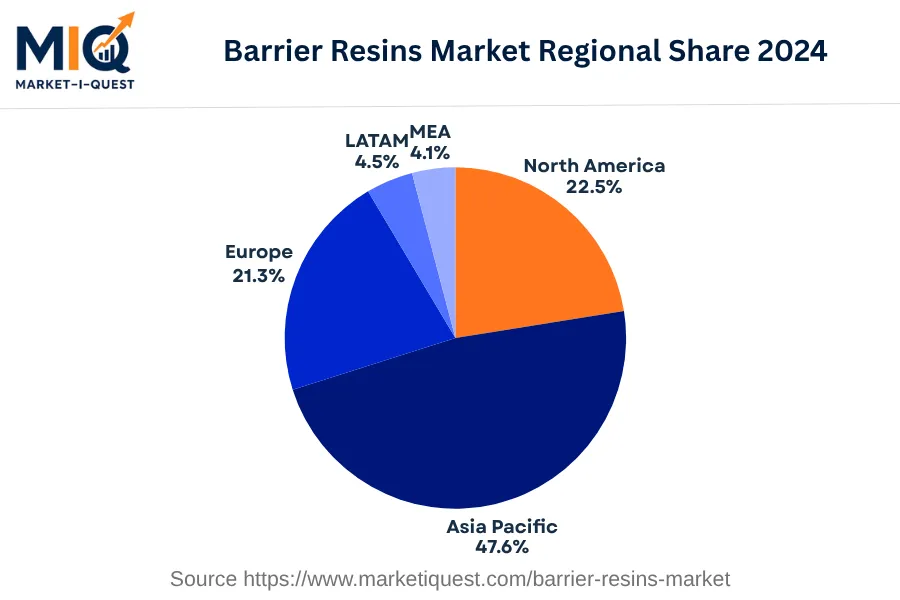
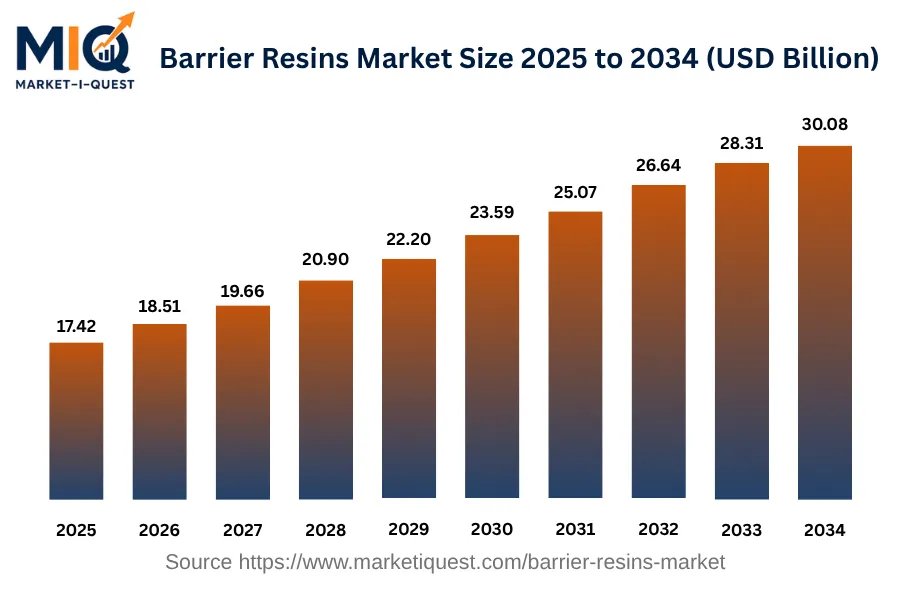
The Barrier Resins Market was valued at $17.42 billion in 2025, and by 2034, it is expected to reach $30.08 billion, growing at a compound annual growth rate (CAGR) of 6.3%. This increase accounts for nearly a doubling of the market value within a span of nine years. Several key milestones marked this growth trajectory; the market value exceeded $20 billion by the late 2020s, and it approached $30 billion by the early 2030s. The global distribution of the Barrier Resins Market in 2024 was marked by a substantial skew towards the Asia Pacific region, which held a market share of 47.6%. North America and Europe followed with 22.5% and 21.3% share, respectively. The remaining regions, Latin America and Middle East and Africa (MEA), had smaller shares in comparison, contributing 4.5% and 4.1% to the total market, respectively.

Key Takeaways

  • By Type - Polyvinyl Chloride (PVC) Resin led the Barrier Resins Market accounting for a significant share in the base year.
  • By Formulation - Solvent-Based products took lead in the Barrier Resins Market in the base year.
  • By Application - Food Packaging dominated holding a substantial portion in the Barrier Resins Market during the past year.
barrier-resins-market market size

Key Driving Factors

Stricter Food Packaging Regulations

As concern rises globally for food safety and preservation, governments are enacting tighter regulations concerning the packaging of food products. These laws often require food packaging materials to have higher barrier properties, guaranteeing better shelf life and preventing contamination. Barrier resins, being materials known for their high resistance to gas and moisture permeation, emerge as an excellent solution to meet these stringent requirements. Several industries in the food sector, such as dairy, confectionery, and ready-meals, are subsequently escalating their use of barrier resins to conform to these regulations, contributing to the substantial expansion of the barrier resins market.

Influence of the Electric Vehicle (EV) Market Growth

The surge in the electric vehicle market is also a significant factor driving the growth of the barrier resins market. Many electric and hybrid vehicles utilize high-voltage lithium-ion batteries, which require particular types of packaging materials to maintain the battery's functionality and safety over extended periods. Barrier resins, with their properties of high resistance to harsh chemicals, are being increasingly used in the creation of these battery packs. As the commitment to electric vehicles intensifies across major countries, automakers' need for barrier resins continues to rise, pushing the barrier resins market forward.

Market Evolution by Timeline

2019-2023
The predominant demand for barrier resins came from food packaging industry in Asia, specifically in China and India, driven by need for extending product shelf-life. Major suppliers including Kuraray Co. Ltd and Asahi Kasei Corporation primarily focused on ethylene vinyl alcohol (EVOH) resins, with the United States, China and Japan dominating the supply side. The market operated under regulations set by the FDA and European Food Safety Authority, pertaining to food packaging material safety. Commercially, price increase trend was evident, owing to higher R&D costs and rising crude oil prices. However, a key issue was contamination of recyclable plastic waste with barrier resin components, which posed recycling challenges.
2024
By 2024, North American market, particularly United States and Canada, saw increased demand for barrier resins in pharmaceutical packaging, driven by increasing population health concerns. Supply mainly incorporated polyethylene terephthalate (PET) barrier resins, due to its suitability for drug packaging. Regulatory pressure strengthened, with European Union's Packaging and Packaging Waste Directive advocating reduction of packaging waste. This provoked commercial suppliers such as DuPont to engage in partnerships for advancing recycling techniques. Emerging risk was potential PET resin shortages due to supply chain disruptions.
2025-2029
From 2025–2029, rise in demand for barrier resins came from South America, for use in agricultural chemical packaging, to avoid product degradation. Major suppliers like INEOS Group shifted towards polyvinyl chloride (PVC) barrier resins, due to its moderate gas barrier properties suitable for agrochemical packaging. The framework of the Circular Economy Action Plan by the European Commission encouraged the supply side to design easy to recycle barrier resins. Pricing model involved long-term contracts with raw material suppliers to curtail price fluctuations. Risk factor included dealing with hazardous waste leaks caused by substandard PVC resin containers.
2030-2034
In 2030-2034, demand for barrier resins grew in Europe, predominantly catering to cosmetic packaging, due to customers' shift towards premium products. Supply focused on advanced multilayer barrier resins, geared by Mitsui Chemicals Inc, effectively preserving product color and aroma. New regulatory guidelines by the Cosmetic Product Safety Report (CPSR) influenced packaging safety standards. Commercial models saw a shift to performance-based contracts, where suppliers were rewarded based on products' barrier performance. The prevalent risk was avoiding potential regulatory penalties for a failure to meet the CPSR standards.

Future Market Outlook

Future Opportunities

Future opportunities in the barrier resins market appear promising as companies respond to evolving consumer demands and regulatory changes. The rise of e-commerce in Asia-Pacific regions has created a notable demand for packaging that ensures product integrity during shipment, driving innovation in barrier materials. In July 2023, a collaboration between PepsiCo and a bioplastic manufacturer was initiated to explore barrier resins derived from renewable resources for snack packaging. This partnership exemplifies how industries are adapting to sustainability challenges while catering to new market dynamics. Furthermore, advancements in recycling technologies and circular economy practices are leading manufacturers to rethink design approaches, integrating recyclability into barrier resin products. The European Commission’s 2022 policy initiatives aimed at plastic waste reduction are likely to accelerate interest in closed-loop systems. Additionally, the growth of plant-based food products, particularly in North America, is placing increased pressure on the packaging sector to develop barrier solutions that maintain product freshness and extend shelf life. As companies prioritize eco-friendly packaging options, opportunities in the development and commercialization of innovative barrier resins could expand, especially in regions like Latin America, where sustainability initiatives are gaining traction. This combination of consumer trends and regulatory frameworks will likely shape the trajectory of the barrier resins market.

Segmentation Analysis

By Type

The market is divided into subsegments including Polyamide Resin, Polyethylene Resin, Polyvinyl Chloride (PVC) Resin, and Polyurethane Resin. The Polyvinyl Chloride (PVC) Resin subsegment accounted for the largest revenue share while Polyurethane Resin is expected to grow at the fastest CAGR during the forecast period.

Largest Revenue Share

Polyvinyl Chloride (PVC) Resin

Market Share Leader

The Polyvinyl Chloride (PVC) Resin subsegment dominates the market today, mainly due to its wide range of applications ranging from construction and packaging to health care industries. As an essential ingredient in a broad spectrum of consumer products, PVC resin has an extensive global reach, contributing to its dominating revenue position. PVC is preferred due to its high resistance to environmental degradation, which comes from its strong molecular bonds. This attribute renders it highly durable, enabling its use in long-lasting applications such as window frames, pipes, and other construction components. Regulation, too, comes into play here as manufacturers tend to prioritize materials that adhere to safety norms. PVC’s fire-resistant property complements this need, bolstering its demand in the market. The purchasing decision also typically revolves around cost effectiveness and PVC, being significantly cheaper than its alternatives, meets this criterion. Owing to these reasons, its market stronghold is expected to continue.

Fastest CAGR

Polyurethane Resin

Forecast Period Growth Leader

Polyurethane Resin, despite not being the largest contributor to revenue, is projected to experience the fastest growth over the forecast period. This growth will be mainly driven by the versatility and flexibility of Polyurethane Resin, which enables its use in a diverse range of applications from automotive, furniture, to footwear industries. Technological advancements have led to increased performance qualities like durability and resistance to wear and tear, making it a desirable choice across various industries. A barrier to adoption could be the relative complexity of processing this material, but it's widely expected that ongoing R&D initiatives will overcome this hurdle. Potential near-term risks include fluctuating raw material prices and regulatory concerns related to environmental impact of Polyurethane Resin. However, the rise in usage of sustainable and bio-based Polyurethane Resins and partnerships for collaborative innovations are set to buoy its rapid ascent in the market.

By Formulation

The market is divided into subsegments including Water-Based, Solvent-Based, and Powder-Based formulations. In 2024, the Solvent-Based subsegment accounted for the largest revenue share, while the Powder-Based segment is expected to grow at the fastest CAGR during the forecast period.

Largest Revenue Share

Solvent-Based

Market Share Leader

In 2024, solvent-based formulations claim the maximum market share. Solvent-based products hold a prime place in several industries, including automotive and industrial applications, due to their superior performance characteristics such as strong adhesive properties, high corrosion resistance, and long-lasting finishes. Their robust demand is particularly marked in emerging economies where industries are growing at a swift pace. Regulation on solvent-based coatings can sometimes be stringent due to environmental concerns; however, their application scope, coupled with research and development into less harmful solvents, continues to solidify their market position. Customers often favor solvent-based products for their high-quality finish and durability, despite the availability of other options. As geographic markets become more diverse and expansive, solvent-based formulations continue to lead in revenue generation due to their widespread application and consistent performance.

Fastest CAGR

Powder-Based

Forecast Period Growth Leader

Even though the solvent-based segment holds a strong position, the powder-based formulation segment is projected to grow rapidly. This growth can be attributed to numerous factors. Firstly, there are increasing environmental concerns and stringent regulation policies regarding VOC emissions, prompting companies to invest in eco-friendly alternatives. Powder-based coatings emit almost no VOCs, positioning them as an environmentally friendly solution. Secondly, technological advancements are enhancing powder coating capabilities, enabling them to meet diverse industry specifications while providing an opportunity for market expansion. However, higher initial investment costs and technical expertise required for powder-based coatings might act as adoption barriers. Although partnerships and strategic alliances with technology providers may serve as catalysts for growth, near-term risks such as variability in raw material prices and the ongoing COVID-19 pandemic can potentially impact the segment’s growth potential.

By Application

The market is divided into subsegments including Food Packaging, Pharmaceutical Packaging, Consumer Goods Packaging, Industrial Packaging, and Others. Of these, Food Packaging accounted for the largest revenue share while Consumer Goods Packaging is expected to grow at the fastest CAGR during the forecast period.

Largest Revenue Share

Food Packaging

Market Share Leader

The Food Packaging subsegment commanded the largest market share in 2024. This can be accredited to several factors that are driving the growth within this sector. The primary driver is the rising consumer demand for packaged foods. Due to the convenience, longevity, and safety it offers, consumers are increasingly leaning towards packaged foods over fresh produce. This trend is particularly prevalent among urban populations with busy lifestyles. In addition, regulations around the world are getting stricter regarding food safety and hygiene, contributing to the surge in demand for food packaging. Factors such as supply chain efficiency and reduction in food waste also play significant roles. High switching costs and limited substitutes in the market further solidify Food Packaging's dominance in the market. The domain's growth is further fueled by various channels including super markets, online retail, and convenience stores.

Fastest CAGR

Consumer Goods Packaging

Forecast Period Growth Leader

Consumer Goods Packaging is projected to be the fastest growing subsegment in the coming years. The growth in this market is driven largely by changing consumer behaviors and technological advancements in packaging solutions. As an increasingly health-conscious consumer base seeks sustainable and environment-friendly packaging, companies are responding with innovative solutions that are both appealing and functional. Moreover, the rise of e-commerce has created a massive demand for packaging solutions that can withstand the rigors of transportation and handling. These catalysts along with supportive policies and significant capital expenditures in packaging technology are poised to accelerate growth in this subsegment. However, this upward trajectory is not without risks as regulations, material prices, and any slowdown in global consumer spending could complicate the market dynamics.

Competitive Analysis

Key Market Players

Manufacturers / OEMs

The Dow Chemical Company
US
Kuraray Co. Ltd.
Japan
Ineos Group Holdings
Switzerland

Key Suppliers & Raw Materials

ExxonMobil Chemical
US
DuPont
US
Royal Dutch Shell
Netherlands

Distributors, Integrators & Channel Partners

Evonik Industries
Germany
Mitsui Chemicals
Japan
LG Chem
South Korea

Porter’s Five Forces Analysis

This analysis assesses the competitive landscape and attractiveness of the Barrier Resins market

Supplier Bargaining Power

Medium

Suppliers' power is moderate due to the balance between few large suppliers and several smaller ones.

Buyer Bargaining Power

High

Multitude of alternatives and low switching costs give buyers significant power.

Threat of Substitutes

Low

Low threat due to unique properties of barrier resins and lack of viable substitutes.

Threat of New Entrants

Low

High setup costs, technical know-how, and regulatory barriers limit new entrants.

Competitive Rivalry

High

High rivalry stemming from the competition between large players and emerging market entrants.

Regional Analysis

Geographic market dynamics and growth opportunities across key regions

Global Market Outlook

barrier-resins-market market regional share

North America

In 2024, the North American barrier resins market experienced significant activity due primarily to demand stimulation, technology adoption, and regulatory influences. Drivers within the market were multi-fold. The increased demand for durable, sustainable packaging solutions in sectors such as food & beverage, pharmaceutical, and industrial propelled growth. This was linked to the regulations around waste management and the necessity of contamination-free packaging. Technological progress in manufacturing processes led to enhanced efficiencies and cost-effective resin productions, fostering industry growth. Market supply dynamics, notably from increasing local production capacities in the U.S., Canada, and Mexico, also reshaped the market's landscape.

Meanwhile, market trends revolved around shifts in consumer preferences and technology. There was a clear inclination towards eco-friendly and recyclable barrier resins, reflecting deep-rooted environmental consciousness among North American consumers. Technological shifts, including advances in barrier resin formulation and processing techniques, facilitated the production of high-performance materials to satisfy diverse sector needs. Furthermore, significant channel dynamics were observed, with the direct manufacturer-to-consumer channel gaining popularity due to improved logistics infrastructure. Lastly, the market was also influenced by partnerships and M&A activities, leading to market consolidation and broadened product portfolios.

Asia Pacific

In 2024, the Barrier Resins market in the Asia Pacific demonstrated maturity with an overall increased demand, primarily driven by the pharmaceutical, food, and beverage sectors. Increasing stringent packaging requirements, particularly in China and India, spurred a demand rise to maintain product integrity and extend product shelf life. The introduction of innovative biodegradable barrier resins in Japan and Australia also energized market activity, due to their superior barrier properties and environmental friendliness. Meanwhile, significant investments from South Korea into barrier resin manufacturing underscored the region's growing production capabilities.

Consumer preference trends reinforced the market dynamics, with growing interest for sustainable and recyclable packaging in ASEAN markets. E-commerce and online retail channels significantly influenced these changes, given their reliance on durable packaging solutions. The adoption of barrier resins increased in healthcare sectors, particularly relevant in India and China, as they sought advanced material solutions to maintain the potency of drugs. Similarly, high performance demand in the food and beverage sectors influenced shifts towards higher-grade barrier resins, impacting supply chain dynamics throughout the region. Importantly, regulatory controls concerning plastic waste disposal heightened demand for biodegradable solutions, reinforcing Japan's trajectory within the sector. Overall, 2024 witnessed an integrated push towards advanced, sustainable solutions reshaping the barrier resins market across the Asia Pacific.

Europe

In 2024, the European barrier resins market saw substantial development due to varied influences. Regulatory directives like the European Union's Circular Economy Action Plan accelerated demand by necessitating enhanced resource efficiency and waste reduction, fueling adoption in manufacturing and retail industries. Significant investment in technology adoption, particularly in Germany and the United Kingdom, bestowed the supply-side with greater production capabilities, consequently reducing costs and inversely influencing market uptake. Conversely, challenging pricing dynamics in Eastern and Central Europe constrained market growth due to economic instability and subdued local demand.

Market trends indicated significant shifts in buyer behavior, most notably in Italy and Spain, where end consumers displayed increasing preference for eco-friendly packaging solutions. Technological advances, particularly in the Nordics, triggered a market drift toward advanced Bio-Barrier resins, incorporating major stakeholder partnerships and M&A activities in the region. There was a marked reinforcement of policy enforcement across Benelux with stricter adherence to EU-wide standards. Europe's barrier resin market in 2024 was largely influenced by government directives; however, enterprise-scale consumption in manufacturing and retail sectors played an equally significant role, propelled by their collective strive for efficient resource utilization. Overall, direct market influences and evolving trends delineated a transformative landscape for the European barrier resins market in 2024.

Latin America

The Barrier Resins Market in Latin America registered significant growth in 2024, with Brazil, Mexico, Argentina, Colombia, Chile, and Peru as key contributors. Increased demand from the food & beverage and pharmaceutical industries, stringent government regulations for food safety, and technological advancements in barrier resins production were key market drivers. The surge in online retail sales across LATAM further escalated the need for quality packaging materials, particularly barrier resins.

Market trends observed in 2024 predominantly centered around sustainability and innovation. Companies invested heavily in R&D to develop bio-based, recyclable barrier resins, in response to increasingly eco-conscious consumers and stringent environmental regulations. The adoption of advanced technologies, notably nanotechnology, in barrier resin production also marked a major shift, enhancing product features while reducing production costs. Partnerships and mergers & acquisitions remained commonplace as market players sought to expand market reach, strengthen product portfolios, and maintain competitive edges.

Customers from the healthcare sector demonstrated appreciable uptake due to the need for more secure and efficient packaging solutions. Similarly, manufacturers in the food & beverage sector increasingly favored barrier resins given their superior protective properties, thereby aiding in maintaining product freshness and extending shelf life. Moreover, digital transformation in government operations also provided tailwinds, with barrier resins being employed for preserving important documents and material.
Middle East & Africa

In 2024, the Barrier Resins Market in the Middle East and Africa (MEA) region experienced an incremental growth, spearheaded by robust demand and favorable regulatory environments. The key drivers are the demand from the food and beverage packaging sectors, like Almarai Company in Saudi Arabia; investments poured by Zamil Plastic Industries Ltd in Saudi Arabia; the adoption of new technology in the plastic industry in UAE; the positive effect of Egypt's trade regulations on resin imports, and the competitive pricing triggered by the development in the polymer technological sector in Nigeria.

Trending transformations included shifting buyer behaviors in South Africa due to eco-friendly initiatives, resulting in a preference for recyclable barrier resins. Increased product innovation in Israel, as evidenced by the activities of specialty chemical companies such as Tosaf, drove advancements in resin technologies. Meanwhile, enhanced policy enforcement in Saudi Arabia reinforced standards that skew towards using high-performing resins in critical sectors like telecom, utilities, and healthcare. Noteworthy ties witnessed include a strategic partnership between First Quality Chemicals and SI Group to expand the distribution of resins in Egypt, emphasizing the increasing value of collaborations within this market.

Recent Industry Developments

Latest market innovations, product launches, and strategic initiatives

February 2026

Renewable chemistry pioneer Avantium partnered with major packaging stakeholders to scale the commercial pipeline for Polyethylene Furanoate (PEF) barrier resins. PEF is a 100% bio-based, fully recyclable resin engineered specifically for premium beverage bottles and multi-layer film packaging. It delivers up to ten times the oxygen barrier performance and twice the carbon dioxide barrier performance of traditional petroleum-based PET.

October 2025

LOG Pharma Primary Packaging partnered with Dow to introduce its specialized Barrier Eco Line at CPHI Frankfurt. The product utilizes Dow’s pharma-grade HEALTH+ HDPE resins to manufacture medical bottles that are 30% lighter than standard options. The lightweight design cuts secondary supply chain emissions while doubling the moisture barrier efficiency to safeguard sensitive drug formulations.

Frequently Asked Questions