
Bare Metal Cloud Market Snapshot

Key Players

  • IBM Corporation (United States)
  • Oracle Corporation (United States)
  • Rackspace Inc. (United States)
  • Internap Corporation (United States)
  • CenturyLink Inc. (United States)
  • Packet (United States)
  • Scaleway (France)
  • Joyent Inc. (United States)
  • Bigstep (United Kingdom)
  • Zenlayer Inc. (China)

Market Size

Base Year 2024
$9.58 Bn
CAGR
23.85%
Forecast 2034
$81.34 Bn

Market Segments

By Services Type
  • Compute Services
  • Networking Services
  • Database Services
  • Security Services
  • Storage Services
  • Managed Services
By Organization Size
  • Small and Medium-Sized Enterprises (SMEs)
  • Large Enterprises
By Vertical
  • BFSI
  • IT & ITES
  • Manufacturing
  • Healthcare & Life Sciences
  • Retail & Consumer Goods
  • Telecom
  • Media & Entertainment
  • Government
  • Others

Market Dynamics

Drivers
  • Increasing demand for flexible cloud services
  • Growth in data center technology
Restraints
  • High migration costs
  • Limited workload compatibility
Opportunities
  • Increasing demand for high-performance computing
  • Expanding big data and analytics sector

Market Size

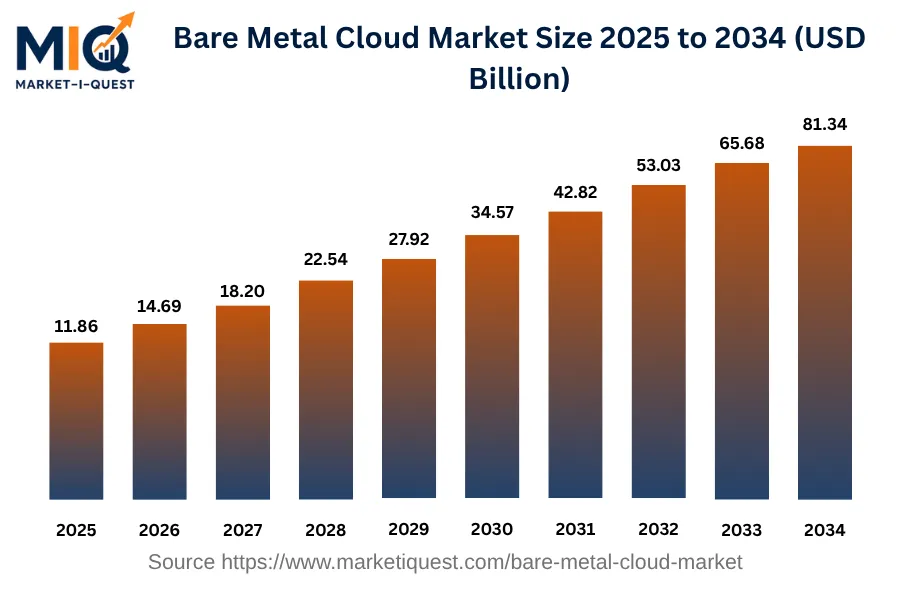
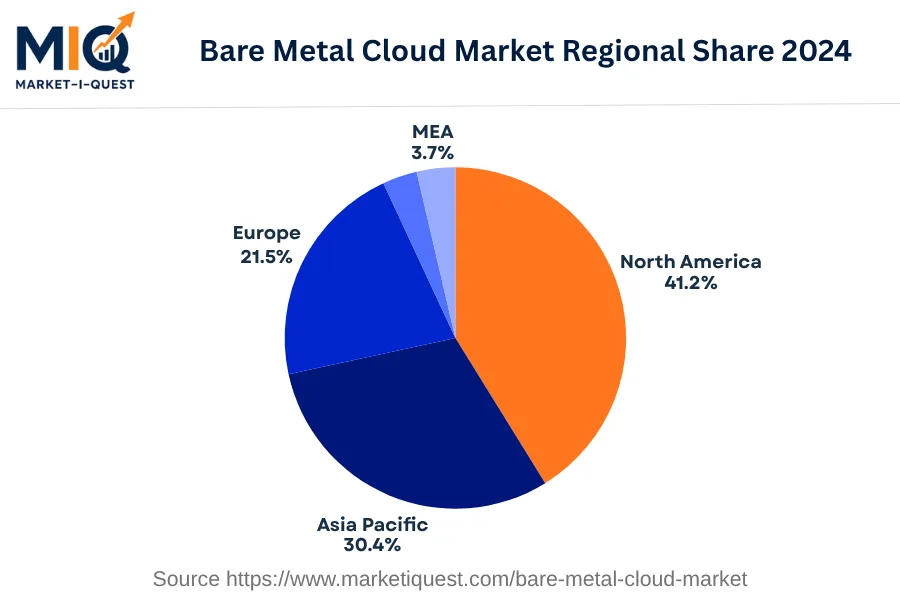
The Bare Metal Cloud Market is projected to increase from 11.86 billion USD in 2025 to 81.34 billion USD by 2034, with a Compound Annual Growth Rate (CAGR) of 23.85%. The market size in 2024 is 9.58 billion USD, which illustrates an upward trajectory in growth leading up to 2025 and continuing through to 2034. This exponential growth from 2025 to 2034 indicates a vibrant and expanding market. Crucial to the ascension of the Bare Metal Cloud Market are the transformations in technology and evolving consumer trends that increase reliance on cloud-based services. Regional market share data in 2024 identifies North America as having the highest share at 41.18%, followed by Asia Pacific at 30.42%, Europe at 21.47%, and smaller market shares in LATAM and MEA at 3.28% and 3.65% respectively. This distribution suggests a more significant utilization and adoption of Bare Metal Cloud technologies in North America, Asia Pacific, and Europe compared to other regions.

Key Takeaways

  • By Services Type - Compute Services held a dominant position accounting for a significant share.
  • By Organization Size - Large Enterprises firmly led the market accounting for a majority share.
  • By Vertical - IT & ITES sustained a leading presence accounting for a large market share.
bare-metal-cloud-market market size

Key Driving Factors

Securing Data Sovereignty Concerns in the BFSI Sector

The growing need to secure data sovereignty in the banking, financial services, and insurance (BFSI) sector is a key driving factor in the bare metal cloud market. Due to increasing regulatory scrutiny like GDPR in Europe and CCPA in California, financial enterprises are required to ensure that their customers' data stays within certain geographical borders to prevent unauthorized access. Bare metal cloud solutions can effectively tackle this issue, providing robust and location-specific cloud infrastructure that ensures data sovereignty. The flexibility to choose a particular region for your cloud infrastructure makes it an attractive solution for these heavily regulated industries.
Need for High-Performance Computing in Media and Entertainment Industry

Another significant influence on the bare metal cloud market is the increasing demand for high-performance computing (HPC) in the media and entertainment industry. This industry requires immense computational power for tasks such as rendering high-quality digital content, live streaming, and handling large volumes of user traffic. Bare metal cloud provides dedicated server resources that improve the performance and latency issues associated with shared cloud resources. Given that one major challenge in media content production and distribution is speed, the adoption of bare metal cloud technology ensures that these businesses can operate more efficiently, resulting in a direct, observable push towards these solutions in the wider sector.

Market Evolution by Timeline

2019-2023
During this period, enterprises, primarily in North America and Europe, constitute the major buyers in the Bare Metal Cloud Market to leverage benefits like improved performance and security. Providers such as Oracle and IBM started to offer BaaS (Bare Metal as a Service) models, with greater integration of AI and machine learning technologies. The GDPR and other stringent data regulations heavily influence the market, as they necessitate superior security measures, favoring bare metal cloud solutions. The typical commercial model sees a subscription-based pricing scheme with contracts generally spanning 1-3 years. The key risk is the lack of sophisticated technical skills to operate and manage these solutions, which is mitigated by targeted training programs.
2024
Providers broadened bare metal offerings in 2024 to encompass features like serverless computing and containerization. Demand shifted from conventional buyers, as sectors including finance, e-commerce, and healthcare sought such services to handle data-sensitive operations, leading to a global expansion of the market beyond North America and Europe. Regulations, such as the CCPA in the United States, continued to prompt demand for more secure cloud options. Pay-as-you-use models gained popularity amid flexible contractual terms. The risk remained associated with the complexity of these solutions, yet became less prominent due to advanced training programs and the advent of more user-friendly interfaces.
2025-2029
The Bare Metal Cloud Market saw strong uptake by SMEs and startups during this period, particularly in the Asia Pacific region. Multicloud strategies became common, with providers such as AWS and Alibaba launching bare metal services to support this use case. Regulations in developing economies championed the adoption of secure cloud services, notably bare metal cloud. The trend of consumption-based pricing continued, shaped by increasingly short-term contracts. While the market faced risks from vulnerabilities of data breaches, providers countered through enhanced security features like intrusion detection systems and robust encryption methodologies.
2030-2034
By this stage, bare metal cloud computing was gaining adoption in governmental and public sector institutions globally, mainly for data-intensive and mission-critical applications. Edge computing surged as a critical technology alongside bare metal cloud services. Policy changes like the Indian Data Protection Bill 2031, stressing on superior data security, augmented the demand for bare metal cloud. Pricing transitioned towards metered billing, with custom and flexible contracts becoming common. The associated risk of high cost of operations was typically mitigated by economies of scale, resulting from widespread adoption of the technology.

Future Market Outlook

Future Opportunities

Future opportunities in the bare metal cloud market are closely tied to current developments in technology, infrastructure, and regulatory environments. As of 2023, enterprises are increasingly exploring hybrid models that combine both bare metal and virtualized cloud environments, providing greater scalability and flexibility. This trend aligns with initiatives from companies like DigitalOcean, which offers simplified bare metal options alongside traditional cloud services. At the same time, regulations such as the General Data Protection Regulation have heightened the need for compliant data handling solutions, driving organizations towards bare metal environments that ensure data privacy and security. In the U.S., the ongoing emphasis on cloud-native applications is creating demand for dedicated bare metal servers. Furthermore, the rise of edge computing is expected to stimulate the need for bare metal deployments closer to data sources, as identified in reports by the International Data Corporation from 2022. Cloud service providers can capitalize on partnerships with telecommunications companies to deliver robust edge solutions. Additionally, industries such as healthcare are exploring bare metal for data-intensive applications, particularly in light of increased scrutiny on data governance and compliance standards. The continued evolution of technologies, such as artificial intelligence and machine learning, can enhance the performance of bare metal environments, offering opportunities for growth. Collectively, these factors present a fertile landscape for innovation and expansion within the bare metal cloud market.

Segmentation Analysis

By Services Type

The market is divided into subsegments including Compute Services, Networking Services, Database Services, Security Services, Storage Services, and Managed Services. Compute Services accounted for the largest revenue share while Security Services is expected to grow at the fastest CAGR during the forecast period.

Largest Revenue Share

Compute Services

Market Share Leader

Compute services, as a subsegment, have consistently shown to lead the pack in service type market revenue. Dominating the market, this can be attributed to its fundamental role in delivering computing power needed for executing tasks. It plays a crucial role for businesses as it offers scalable computing resources promptly thereby enabling businesses to expand without stressing about the procurement and management of physical servers. High adoption among businesses who seek to harness data-driven insights and its role in high-growth areas such as AI and machine learning underscore the revenue leadership of compute services. The current business landscape continues to bolster compute services demand as companies hasten their digital transformation strategies. Businesses in various geographies, particularly in regions with advanced technological infrastructure like North America and Asia, heavily rely on these services. Moreover, the pragmatic shift towards cloud computing continues to promote the persistent demand for compute services. Therefore, based on these driving factors, it can be inferred that compute services subsegment would maintain a larger revenue share.

Fastest CAGR

Security Services

Forecast Period Growth Leader

Contrarily, security services subsegment is projected to register the fastest growth over the forecast period. This growth can be primarily attributed to increasing cybersecurity threats and the rising awareness about the importance of having robust security measures in place. High-profile security breaches and cyber-attacks have served as a catalyst, motivating businesses to invest in advanced security services. Beyond the existing demand, factors like compliance regulations, data privacy laws, and enterprise risk management have additionally emphasized the criticality of security services. Moreover, the advent of technologies such as AI-based threat intelligence, predictive analytics, and cyber robotics is further intensifying the growth dynamic of this segment. Nonetheless, adoption barriers like lack of skilled cybersecurity professionals and budget constraints could slightly hinder the pace but will not overshadow the overall growth trajectory. Partnerships with cybersecurity firms and increased investments in R&D are anticipated to mitigate these barriers and bolster segment growth.

By Organization Size

The market is divided into subsegments including Small and Medium-Sized Enterprises (SMEs) and Large Enterprises, with Large Enterprises accounting for the largest revenue share while Small and Medium-Sized Enterprises (SMEs) is expected to grow at the fastest CAGR during the forecast period.

Largest Revenue Share

Large Enterprises

Market Share Leader

Large enterprises have the ability to invest heavily in top quality systems and services, which drives their dominant share in the market revenue. Their business operations often span multiple geographies, increasing their need for comprehensive solutions. These organisations typically have a broader customer base and larger supply chains, which requires more robust systems and services. They also face stricter regulatory scrutiny, driving their demand for comprehensive, secure, and compliant solutions. Larger enterprises often purchase through direct sales or large resellers, favoring vendors able to support global coverage, complex features, and full-service capabilities. The cost of switching systems can be high in terms of time, resources, and potential disruption, which furthers the customer loyalty and longevity of their contracts.

Fastest CAGR

Small and Medium-Sized Enterprises (SMEs)

Forecast Period Growth Leader

The Small and Medium-Sized Enterprises (SMEs) segment shows a fast terrain of growth. This can be attributed to technological advancements and decreasing barriers to adoption. Digital transformation initiatives among these enterprises are increasing, leading to the growth of spending on new systems and services. Moreover, SMEs are agile and can adapt to new technologies faster compared to large organizations. Our assumption is that the policy incentives, grants, and subsidies offered by government bodies globally to encourage SMEs to adopt advanced solutions also contribute to the increased growth rate. However, smaller budgets and lack of resources may potentially limit this growth. Availability of cheaper but robust solutions and partnership between vendors and SMEs present a significant opportunity for market growth in this segment.

By Vertical

The market is divided into subsegments including BFSI, IT & ITES, Manufacturing, Healthcare & Life Sciences, Retail & Consumer Goods, Telecom, Media & Entertainment, Government, Others. The IT & ITES subsegment accounted for the largest revenue share, while the Healthcare & Life Sciences is expected to grow at the fastest CAGR during the forecast period beyond 2024.

Largest Revenue Share

IT & ITES

Market Share Leader

The IT & ITES subsegment emerges as the leading revenue generator. This can be attributed to various contributing factors. With the digital revolution affecting all industries and sectors globally, the demand for IT services and IT enabled services has seen an exponential rise. Companies are increasingly moving towards automation, relying on data analytics for decision making and incorporating AI and machine learning into their operational strategies. This increases the need for IT services and solutions, thereby driving revenue for this subsegment. Geographic regions like North America and Asia Pacific underpin this growth, with their swift adoption of digital technologies. Regulatory compliance requirements further advance the demand for IT services, especially in sectors like BFSI. Lastly, the short-term costs of transitioning to digital platforms and services are overshadowed by the long-term advantages of operational efficiency, giving the IT & ITES segment a steady stream of revenue.

Fastest CAGR

Healthcare & Life Sciences

Forecast Period Growth Leader

The Healthcare & Life Sciences subsegment is expected to register the fastest CAGR in the coming years. This can be traced back to some strong growth drivers. Technological advancements such as telemedicine, AI diagnostics, and personalized medicine are transforming the landscape of healthcare and life sciences. These innovations enable better patient outcomes and cost efficiency which accelerates their adoption rate. Regulatory bodies are also warming up to these technologies, introducing guidelines that allow for their wider use. However, barriers like privacy concerns and high implementation costs pose challenges. To alleviate these, companies are partnering with tech providers and leveraging their capital expenditures wisely to ensure a smooth transition into advanced healthcare services. Keeping abreast of policies and regulations is crucial, as these pose near-term risks to adoption. Despite these challenges, the potential for growth in this subsegment remains high, fueled by the persistent demand for improved healthcare services.

Competitive Analysis

Key Market Players

Manufacturers / OEMs

IBM
US
Dell Technologies
US
Oracle
US

Key Suppliers & Raw Materials

Intel
US
AMD
US
Qualcomm
US

Distributors, Integrators & Channel Partners

CDW
US
Insight
US
Tech Data
US

Porter’s Five Forces Analysis

This analysis investigates the competitive pressure in the Bare Metal Cloud Market.

Supplier Bargaining Power

Medium

Multiple key leaders exist, but high infrastructure investment reduces players' fluidity.

Buyer Bargaining Power

Low

Limited choice and customization options, coupled with high switching costs decrease buyer power.

Threat of Substitutes

Low

Other cloud services don't ensure the same single-tenant privacy and performance.

Threat of New Entrants

Low

High capitals costs, technical knowledge, and resource requirements create entry barriers.

Competitive Rivalry

High

Dominant companies continually innovate to maintain their market positions.

Regional Analysis

Geographic market dynamics and growth opportunities across key regions

Global Market Outlook

bare-metal-cloud-market market regional share

North America

In 2024, the Bare Metal Cloud market in North America maintained a dynamic presence due to several driving factors and trends. Digitization across sectors such as healthcare, utilities, and manufacturing, called for increased cloud infrastructure demand. U.S. cybersecurity regulations also pushed public sectors and enterprises towards adopting bare metal cloud solutions, given its direct hardware control offering enhanced security. Investments in smart city projects in both the U.S. and Canada also influenced the uptake of this technology, which allowed for enhanced data processing and storage efficiency.

Simultaneously, several trends shaped the North American bare metal cloud landscape. Customers, notably in retail, began prioritizing cloud service providers offering extensive customization options. There was a shift towards Artificial Intelligence (AI) and Machine Learning (ML) integration into bare metal cloud solutions for increased predictive analysis and automation capabilities. Moreover, partnerships prospered between traditional IT companies and cloud service providers, mainly to leverage the latter’s infrastructure-as-a-service offerings. Policymakers' focus on data localization norms, primarily in the U.S. and Canada, led to the rise of region-specific cloud data centers. The North American Bare Metal Cloud market in 2024 was thus shaped by these driving forces and trends, influencing its continued adoption across varied industries. From government ventures to manufacturing industries, the tailored flexibility and enhanced efficiency of bare metal cloud solutions imprinted a significant shift in the region’s tech dynamics.

Asia Pacific

In 2024, the Bare Metal Cloud Market in Asia Pacific experienced significant growth, driven by several key factors. The increased demand for high-performance, cost-effective compute resources spurred growth, especially among large enterprises and government entities that manage extensive data. The liberalization of data regulation across China, India, and key ASEAN markets further provided an impetus, enhancing market competitiveness and technology adoption. Major investments in advanced IT infrastructure solutions in countries like Japan and Australia also escalated the market's growth trajectory.

Notable trends shaping the market included a shift towards consumption-based pricing models, especially apparent in sectors like retail and manufacturing, seeking better scalability and cost predictability. The adoption of artificial intelligence and machine learning technologies to stratify workloads and enhance performance was prevalent, particularly in South Korea. Rapidly evolving cybersecurity standards compelled partnerships and M&A activities as service providers sought to offer robust, compliant solutions. The Bare Metal Cloud market witnessed increased uptake from sectors like healthcare and utilities that required high computation power and data management capabilities. However, despite the growing interest, policy enforcement continued to pose challenges, particularly in markets with deeply ingrained legacy systems and stringent data sovereignty laws, such as China. Overall, 2024 served as a pivotal year for the Bare Metal Cloud market in the Asia Pacific, shaped by a finely balanced interplay of drivers and trends.

Europe

In 2024, the Bare Metal Cloud Market in Europe began to draw distinct significance among diverse market sectors. There was an increasing adoption of the technology in light of heightened demands for data security and performance optimization, specifically observed in Germany, United Kingdom, France and the Nordics. Regulatory compliance requirements were shaping up as another driver fueling this shift, more so in sensitive sectors like healthcare and government operations.

The immediate availability of servers in Bare Metal Cloud services prompted enterprises to make capital investments in this field, primarily in Italy and Spain, where manufacturing industries were undergoing substantial digitization. Cost-effectiveness also emerged as an appealing factor with solutions providers in Benelux and Central & Eastern Europe deriving competitive pricing models.

Buyer behavior exhibited a leaning towards native, integrated solutions, reflecting a shift in the product landscape in the Bare Metal Cloud Market. Collaboration or merger between technology companies was a notable trend observed, particularly in the United Kingdom and France, aiming to enhance application performance. Enforcement of GDPR did seem to play a role in the general push towards these solutions, specifically from the retail sector. This was accompanied by an explicit trust in these systems' warranty of direct control over physical servers, reinforcing the boom in the Bare Metal Cloud market across Europe.

Latin America

In 2024, the Bare Metal Cloud market in Latin America witnessed significant evolution, driven by increasing demand for flexible, high-efficiency, and high-performance computing in sectors such as enterprise, government, and healthcare. Rapid digitalization saw businesses in larger economies like Brazil and Mexico, along with growing markets like Argentina, Colombia, Chile, and Peru, turning to bare metal cloud services. The increasing need for data privacy and compliance with regulations such as Brazil’s General Data Protection Law (LGPD) fuelled this shift towards Bare Metal Cloud, which offers dedicated servers ensuring data isolation.

Consumer trend focused on improving operational agility while guaranteeing sensitive data security. Furthermore, advancements in technology facilitated the adoption of bare metal cloud services - particularly in enterprise and government sectors where high data volumes and intensive applications necessitate effective infrastructural support. Partnerships and mergers among key providers increased, aiming to consolidate market position and expand service portfolios.

The deployment preference was towards utility-focused industries and manufacturing, where the mission-critical application's performance directly impacts the business's effectiveness. Retail sectors used bare metal cloud services for handling peak loads during sales events, proving its reliability and scalability. The 2024 Bare Metal Cloud market in Latin America thus experienced robust growth influenced by technological adoption and bespoke requirements across various sectors.

Middle East & Africa

In 2024, the Bare Metal Cloud Market in the Middle East and Africa experienced solid growth, driven mainly by demand factors, regulatory frameworks, technological adoption, and investments. The significant drivers included the robust demand from the telecom sector, particularly in Saudi Arabia, UAE, and Qatar, due to the need for robust data processing and storage capabilities. Further, proactive regulatory support in countries like Israel fostered a wholesome ecosystem for market growth. Lastly, consistent investment in tightening cybersecurity, notably in the financial services sector across Nigeria and South Africa, intrinsically drove market expansion.

Shifting trends saw increased product adoption by healthcare institutions in Egypt and Kenya, capitalizing on the technological advancements in Bare Metal Cloud services. Additionally, customer behavior indicated a preference for service providers offering integrated cloud solutions, leading to strategic partnerships in the market. Particularly, the oil and gas sector in UAE and Saudi Arabia enhanced its digital operations based on this preference. Lastly, policy enforcement related to data sovereignty and protection, especially in Israel and South Africa, instigated an obligatory shift to Bare Metal Cloud services.

Recent Industry Developments

Latest market innovations, product launches, and strategic initiatives

May 2025

OVHcloud officially expanded its enterprise portfolio by introducing next-generation, water-cooled bare metal servers. The launch focuses on utilizing innovative liquid cooling loops directly at the chassis layer to reduce data center power usage effectiveness (PUE) metrics and optimize energy efficiency for dense server configurations.

March 2025

IBM Corporation unveiled its updated line of IBM Cloud Bare Metal Servers equipped with Intel Sapphire Rapids processors. The infrastructure update delivers specialized single-tenant physical computing hardware engineered to accelerate heavy corporate AI inference workloads and secure data-intensive processing without hypervisor lag.

Frequently Asked Questions