Advanced Energy Market Snapshot

Key Players

  • Tesla Inc. (United States)
  • Siemens AG (Germany)
  • ABB Ltd. (Switzerland)
  • General Electric Company (United States)
  • Electrolux AB (Sweden)
  • Thermax Limited (India)
  • Sharp Corporation (Japan)
  • Panasonic Corporation (Japan)

Market Size

Base Year 2024
$1015.84 Bn
CAGR
7.9%
Forecast 2034
$2172.90 Bn

Market Segments

By Application
  • On-Grid
  • Off-Grid
By End User
  • Residential
  • Non-Residential

Market Dynamics

Drivers
  • Rising environmental concerns
  • Enhanced technological innovation
Restraints
  • High development costs
  • Regulatory compliance challenges
Opportunities
  • Rising environmental consciousness
  • Increasing government initiatives

Market Size

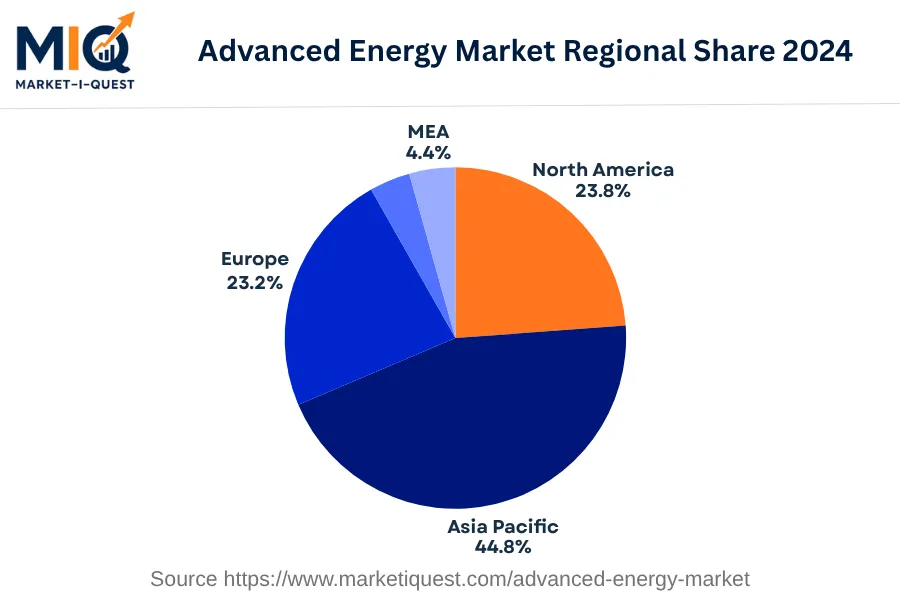
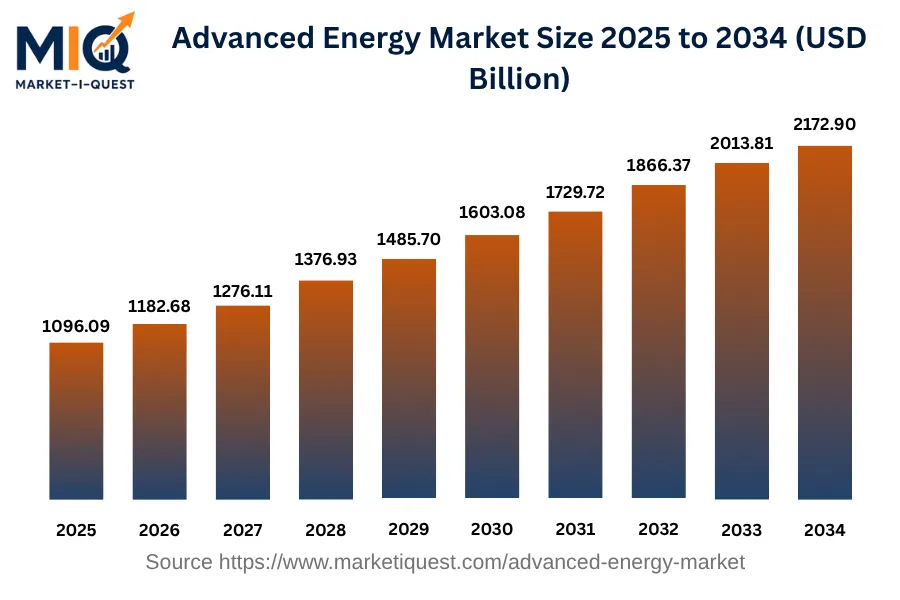
The Advanced Energy Market was sized at 1096.09 billion USD in 2025, and is projected to expand to 2172.9 billion USD by 2034, growing at a compound annual growth rate (CAGR) of 7.9%. Moving from 2025 to 2034, the market more than doubled its worth, solidifying its rapid and continual expansion throughout this period. This progression in monetary size is a testament to the growing demand for advanced energy solutions in a society where sustainable, efficient, and high-quality energy sources are increasingly prioritized. Turning to regional distribution in 2024, the Asia Pacific held the majority of the market share at 44.76%, followed by North America and Europe at 23.84% and 23.18% respectively. Meanwhile, the Middle East and Africa (MEA) along with Latin America (LATAM) made up a smaller portion of the market, at 4.36% and 3.86% respectively.

Key Takeaways

  • By Application - On-Grid segment held the leading position accounting for a considerable market share.
  • By End User - Residential segment demonstrated substantial market leadership in 2024.
advanced-energy-market market size

Key Driving Factors

Shift to Decarbonization Policies by Governments

With respect to the advanced energy market, a significant driving factor is the global shift towards decarbonization policies by governments. Countries across the globe are setting ambitious targets to reduce their carbon emissions, enhancing demand for cleaner alternatives like advanced energy solutions. Specific legislations such as the European Green Deal, which aims to make the EU climate-neutral by 2050, and China's pledge to reach carbon neutrality by 2060, are pushing businesses and consumers towards using advanced energy sources. This replacement of traditional energy sources with low-carbon and renewable energy resources is a critical push for the advanced energy market.

Integration of Energy Storage Systems

Another driving factor in the advanced energy market is the increasing integration of energy storage systems into power grids. The unreliable nature of numerous renewable energy sources, such as wind and solar power, can be mitigated by storing excess energy during periods of high generation and using it during periods of low production. Lithium-ion batteries are now widely used for this purpose, due to their high energy density and advancing efficiency. The trend towards smart grids, which utilize advanced energy storage to stabilize power supply, is actively supporting the adoption of such advanced energy solutions, creating a more resilient and flexible energy system.

Market Evolution by Timeline

2019-2023
In the first phase, Europe and North America represented major buying regions due to high awareness and substantial commercial funding. In Asia, China, India, and Japan witnessed increased traction due to government initiatives to reduce carbon emissions. Geothermal and Solar power technologies dominated the supply side with the integration into national grids becoming more reliable. Yet, intermittency issues remained a significant challenge. Policies like European Green Deal in EU and Renewable Portfolio Standards (RPS) in USA accelerated adoption. Auction-based procurement models, typically Power Purchase Agreements (PPAs), prevailed with downward pricing pressure. Nevertheless, the lack of robust supply chains and grid instability posed risks.
2024
In 2024, Middle East and Africa emerged as new buyer segments due to growing awareness and falling technology costs. Solar photovoltaic and wind technologies saw significant growth, yet integration was constrained by inadequate grid infrastructure. Carbon pricing policies, such as the Carbon Offsetting and Reduction Scheme for International Aviation (CORSIA), influenced buying decisions. Solar-as-a-Service commercial models grew in prominence, providing a less capital-intensive option for buyers. However, the high initial cost and installation challenges were typical risks faced by buyers.
2025-2029
Between 2025 and 2029, the residential sector emerged as a significant buyer segment due to the advancement in storage technologies and increased availability of residential solar panels. Tidal and wave energy technologies made their entry, but their integration had yet to mature. The Paris Agreement further spurred global interest despite the absence of enforcement mechanisms. Joint venturing became more common as price-based competition intensified. However, lack of technology standardization and uncertain ROI on newer technologies were potential risks.
2030-2034
Leading upto 2034, Latin America showed potential as a new buyer region, driven by aggressive national decarbonization policies. Fusion power saw experimental shipping, but integration into grids was still in nascent stages. The Global Methane Pledge significantly influenced market dynamics. Peer-to-peer energy trading models leveraging blockchain technology started to become prevalent. While this period saw technological breakthroughs, issues around energy security and regulatory harmony across nations formed obvious risks.

Future Market Outlook

Future Opportunities

The current regulatory environment and technological progress present numerous opportunities in the Advanced Energy Market. The U.S. government, through the Infrastructure Investment and Jobs Act of 2021, is funneling resources into clean energy projects, emphasizing a substantial push towards electric vehicle infrastructure over the next decade. Concurrently, global interest in carbon capture technology is accelerating, with companies like Occidental Petroleum investing significantly in direct air capture projects in the Permian Basin since 2022. In the realm of renewable energy, countries like India are setting ambitious targets for solar energy generation, creating demand for advanced photovoltaic materials and systems; for instance, in May 2023, India announced plans to boost solar manufacturing capacity. As international collaboration intensifies, initiatives such as the Global Hydrogen Alliance, formed in 2022, signal a commitment to develop hydrogen technologies across multiple countries, including Australia and Germany. These trends suggest significant potential for companies focused on developing innovative storage solutions, as battery technologies must evolve to complement renewable energy generation effectively. Energy-as-a-Service (EaaS) models are likely to gain traction as corporations seek bespoke solutions for energy procurement and management, anticipating evolving consumption patterns. As such developments unfold, companies with a strategic focus on integrated renewable solutions and partnerships will likely find themselves well-positioned to capitalize on this rapidly evolving landscape.

Segmentation Analysis

By Application

The market is divided into subsegments including On-Grid and Off-Grid. On-Grid accounted for the largest revenue share while Off-Grid is expected to grow at the fastest CAGR during the forecast period.

Largest Revenue Share

On-Grid

Market Share Leader

The On-Grid application subsegment holds the largest revenue share due to its established presence and sustained demand. In base year 2024, utilities and end-users predominantly rely on grid-connected systems for a steadfast supply of power. The growing number of residential, commercial, and industrial setups inevitably require an expansive and stable energy network, thus propelling revenue for the On-Grid market. These applications are particularly prevalent in developed regions where grid accessibility and stability are higher. Additionally, regulatory policies and frameworks at federal and state levels often favor grid-tied systems, providing incentives for their adoption. The initial purchasing criteria tend to lean toward reliability, scalability, and return on investment, all of which On-Grid systems satisfy impressively. While alternative energy sources are gaining traction, the widespread and high switching cost of transitioning to off-grid systems adds to the attractiveness of the On-Grid system. Established sales channels and service networks further solidify the leading position of this subsegment.

Fastest CAGR

Off-Grid

Forecast Period Growth Leader

As for the fastest growing subsegment, Off-Grid energy solutions are setting the pace, boosted by a combination of technological innovations, policy support, and capital investments. Although starting from a smaller base, the recent years have seen an accelerating shift towards these systems, particularly in remote and rural areas where grid connection may not be feasible or cost-effective. Also, the increasing efficiency and declining costs of renewable energy resources such as solar and wind, are enabling the viability of Off-Grid solutions. The market still faces barriers, mainly high upfront costs and regional regulatory hurdles. However, strategic partnerships and government initiatives focused on energy inclusivity are acting as vital catalysts, reducing adoption barriers and motivating investments. As technologies mature and economies of scale kick in, the affordability and efficiency of Off-Grid solutions will further improve, making them an increasingly attractive alternative in the near-term.

By End User

The market is divided into subsegments including Residential and Non-Residential. The Non-Residential subsegment accounted for the largest revenue share, while the Residential subsegment is expected to grow at the fastest CAGR during the forecast period.

Largest Revenue Share

Non-Residential

Market Share Leader

The Non-Residential subsegment is expected to continue to lead the market in terms of revenue generation. This can be attributed to a few reasons. First, businesses, especially multinationals and big enterprises, have a higher purchasing power compared to individual households. This allows them to invest in better quality or higher quantity of products or services. Furthermore, the variety of sectors in the non-residential segment like hospitality, retail, corporates and others, each has unique needs, thereby requiring a wider range of products and services. Geographically, urban areas contribute significantly to this sector's success, given the high concentration of commercial establishments in these localities. Regulations may also favor non-residential consumers due to the perceived economic benefits of supporting businesses. All these factors combine to give non-residential consumers a significant edge over their residential counterparts.

Fastest CAGR

Residential

Forecast Period Growth Leader

Although the Non-Residential subsegment currently dominates the market, the Residential subsegment is anticipated to exhibit the fastest growth. This growth can be attributed mainly to the increasing disposable income of individuals and urbanization. As consumers' income increases, their ability and willingness to pay for higher-quality products improve. Furthermore, efforts to improve living standards have increased demand for advanced services. There's also a significant growth in the adoption of smart home technologies, which is a promising sign for segments which are inclined towards it. However, there are still challenges such as a lower awareness of the benefits of some products and services, and a lower willingness to pay compared to businesses. With improving economic conditions, increasing consumer awareness, and more user-friendly technology, the residential segment has the potential to outpace the non-residential in terms of growth rate.

Competitive Analysis

Key Market Players

Manufacturers / OEMs

Siemens
Germany
General Electric
US
ABB
Switzerland

Key Suppliers & Raw Materials

Exxon Mobil
US
BASF SE
Germany
Schlumberger
US

Distributors, Integrators & Channel Partners

Siemens Energy
Germany
Chevron Energy Solutions
US
Schneider Electric
France

Porter’s Five Forces Analysis

This is an analysis of the competitive forces affecting the Advanced Energy Market.

Supplier Bargaining Power

High

High capital expenditures and exclusive contracts give suppliers significant power.

Buyer Bargaining Power

Medium

Buyers have moderate power due to the availability of energy alternatives.

Threat of Substitutes

Medium

Potential for renewable energy technologies to serve as alternatives.

Threat of New Entrants

Low

Entry barriers are high due to regulatory constraints and large initial investment required.

Competitive Rivalry

High

Rivalry is intense due to the presence of numerous established competitors and price competition.

Regional Analysis

Geographic market dynamics and growth opportunities across key regions

Global Market Outlook

advanced-energy-market market regional share

North America

In 2024, the Advanced Energy Market in North America, encompassing the U.S., Canada, and Mexico, is shaped by increasing end-user demand, evolving regulations, and timely investments. The shift to clean energy technologies is driven partly by substantial consumer demand and business interest across sectors including utilities, manufacturing, and enterprise. Further, regulatory incentives such as tax rebates in the U.S. and Canada's commitment to phasing out coal power have fostered investment in renewables and energy storage.

An influx of private capital has invigorated the advanced energy sector, especially wind and solar technologies. Simultaneously, technological adoption is accelerated by falling equipment prices and enhanced grid connectivity. In terms of supply, stable pricing due to more efficient production is stimulating the market. Prevailing trends center on behavioral shifts in consumption and technological advancements. Big businesses, government entities, and end-users are actively seeking energy-efficient solutions. Concurrent product shifts reveal a strong preference for decentralized energy solutions like microgrids. Channel dynamics now favor online platforms for sales and support, enhancing accessibility. The sector has attracted substantial M&A activity, with larger entities absorbing smaller innovators to attain market dominance. There is also a surge in adherence to energy efficiency standards and policy enforcement, evoking a profound impact on the market landscape.
Asia Pacific

In 2024, the Advanced Energy Market in Asia Pacific was marked by a surge in clean energy investments, particularly in key economies. Driving factors included increasing electricity demand in rapidly urbanizing economies like India and China that necessitated a greater emphasis on renewable energy sources. Stringent government regulations, notably China's "Blue Sky" policy and India's National Clean Air Programme, significantly expedited the transition towards clean energy sources. Meanwhile, technological advancements in energy storage, particularly in Japan and South Korea, prompted a faster adoption of renewable energy systems. Pricing dynamics in Australia tilted in favor of renewables due to robust government investment in energy transition initiatives.

In terms of trends, China's increasing dominance in the solar panel manufacturing market significantly impacted buying behavior, with more Asia Pacific countries purchasing domestically manufactured panels. Additionally, a notable shift towards smart grid technology was observed in advanced markets, like Japan and South Korea. In the ASEAN region, escalating investments in renewable energy created momentum for significant M&As. Policy enforcement gained momentum, such as the Renewable Energy Standards in South Korea. Key sectors impacting this landscape included utilities and manufacturing, which aimed to lessen reliance on fossil fuels. Governments served as essential customers via their ambitious climate commitments, boosting advanced energy adoption across region. Through this blending of drivers and trends, the Asia Pacific Advanced Energy Market presented robust dynamism in 2024.

Europe

In 2024, the Advanced Energy Market in Europe witnessed significant dynamics shaped by various factors and trends. On the drivers' side, robust regulations such as the European Green Deal exerted a profound effect, necessitating aggressive decarbonization for sectors including manufacturing and utilities, thereby boosting demand for advanced energy services and technologies. Increased technological adoption, particularly in the UK and Germany, further drove the market, this was coupled with burgeoning investment infusions, notably in the solar and wind sectors. Demand surges in Spain and Italy due to their favorable climate conditions for renewable energy sources made a notable contribution as well.

In terms of trends, buyer behavior clearly leaned towards sustainable and cost-efficient solutions, with the retail sector showing pronounced interest. There was notable activity in the M&A sphere, with key players in the Nordics and Benelux regions acquiring innovative startups, a measure aimed at bolstering their advanced energy portfolios. There was a noticeable shift towards digital energy services and more efficient energy storage technologies. Standards and policy enforcement remained strict, with governments, particularly in France and Central & Eastern Europe, employing rigorous measures to ensure all stakeholders comply with environmental and energy efficiency standards. This ensured a conducive environment for the Advanced Energy Market in Europe in 2024.

Latin America

In 2024, the Advanced Energy Market in Latin America exhibited robust growth propelled by diverse drivers and significant trends. Key drivers included government regulations promoting renewable energy adoption—such as Brazil's RenovaBio program and Mexico's Energy Transition Law—alongside investments in technology intensifying across countries like Argentina, Colombia, Chile, and Peru. Demand for green energy solutions soared especially among enterprises and utilities, urged by the population's growing environmental concerns and the compelling benefits of reduced operational costs. Notably, the pricing dynamic, veering towards cost-efficiency of renewable energy, further stimulated countries to explore and expand their use of advanced energy technologies.

At the same time, several trends were apparent across the LATAM Advanced Energy Market. There was a noticeable shift in buyer behavior as businesses, governments, and even homeowners increasingly preferred renewable over fossil-based energy. This preference manifested itself in increased solar and wind installations across the region. Coupled with technological advancements, it gave rise to partnerships and mergers amongst key players seeking to consolidate their market presence and influence. In terms of policy enforcement, countries like Chile and Colombia rigorously implemented standards to endorse sustainable energy. Meanwhile, the retail and manufacturing sectors typified the increased integration of advanced energy systems within their operations, marking an essential progression within the Advanced Energy Market in 2024.

Middle East & Africa

In 2024, the advanced energy market in the Middle East and Africa saw significant growth due to increased industrialisation and rapid urbanisation. The market's key driver was escalating demand in countries like Saudi Arabia, United Arab Emirates, Egypt and South Africa, where governments were investing heavily in renewable energy sources. The push towards decarbonisation and stringent environmental regulations, particularly in Saudi Arabia and the UAE, spurred the growth of solar and wind energy sectors, compelling other countries like Qatar and Egypt to follow suit.

On the supply side, Nigeria and Kenya saw an upsurge in local technology adoption driven by investments in digitalisation. This led to increased production of advanced energy systems, bringing down prices and making it affordable for utilities and manufacturing sectors predominantly. A noticeable trend was increased collaboration between governments and private entities, especially in Israel, a hub for technological advancements. Mergers and acquisitions were predominantly seen in the telecom and healthcare sectors in efforts to incorporate advanced energy systems into their operations. The other trend was the strict enforcement of energy-efficiency standards by governments across the region. This was particularly observed in Saudi Arabia and UAE, where it led to changes in buyer behavior, with a marked shift towards energy-efficient appliances in the retail sector. Significant product and technology shifts were also observed in these countries due to this policy enforcement.

Recent Industry Developments

Latest market innovations, product launches, and strategic initiatives

July 2026

GE Vernova and Blue Energy entered into a strategic co-development collaboration to design the world's first hybrid gas-plus-nuclear power plant. The advanced infrastructure project combines GE Vernova Hitachi BWRX-300 small modular reactors (SMRs) with high-efficiency gas turbines to supply dedicated clean electricity to a hyperscale AI data center campus in Texas.

June 2026

Advanced Energy Industries, Inc. officially introduced the ADH Series of high-voltage DC-DC converters. The 800 V system is custom-engineered to support next-generation megawatt rack power architectures within artificial intelligence (AI) data centers, optimizing peak power density and thermal efficiency.

Frequently Asked Questions