Adhesion Promoter Market Snapshot

Key Players

  • Eastman Chemical Company (United States)
  • Evonik Industries (Germany)
  • Elantas (Germany)
  • Momentive Performance Materials Inc. (United States)
  • 3M (United States)
  • Shin-Etsu Chemical Co. Ltd. (Japan)
  • RPM International Inc. (United States)
  • Henkel AG & Co. KGaA (Germany)
  • DowDuPont (United States)
  • Sartomer (France)

Market Size

Base Year 2024
$4.38 Bn
CAGR
4.8%
Forecast 2034
$7.00 Bn

Market Segments

By Type
  • Silane
  • Maleic Anhydride
  • Chlorinated Polyolefins
  • Titanate & Zirconate
  • Others
By Application
  • Plastics & Composites
  • Paints & Coatings
  • Rubber
  • Adhesives
  • Metals
  • Others

Market Dynamics

Drivers
  • Growing construction industry
  • Innovative product development
Restraints
  • Stringent environmental regulations
  • Fluctuating raw material prices
Opportunities
  • Increasing demand in paint industry
  • Rapid industrialization in developing economies

Market Size

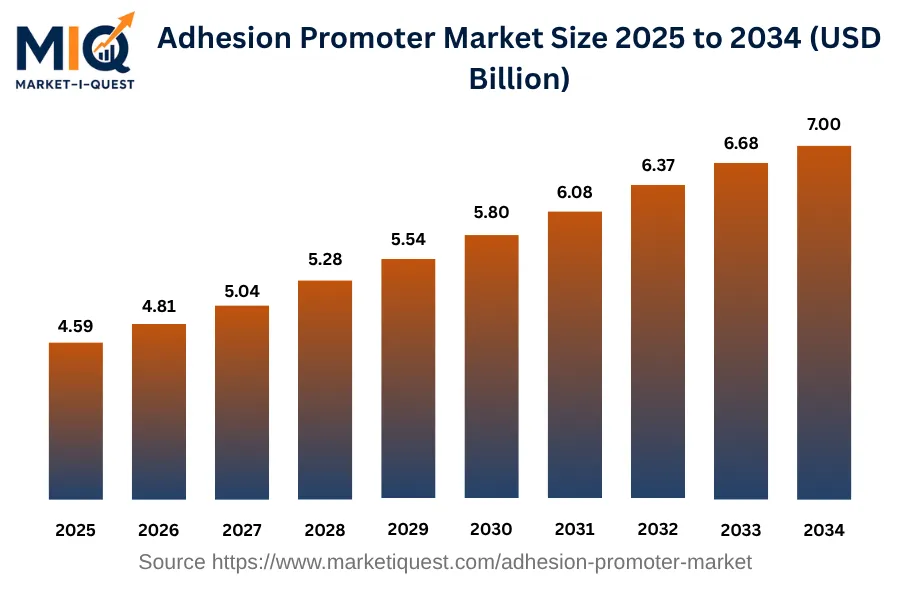
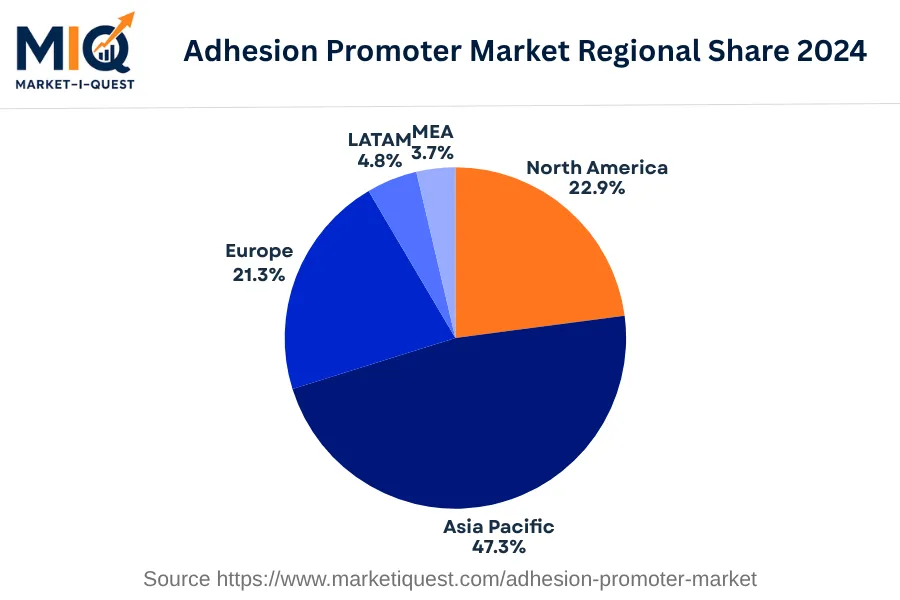
The Adhesion Promoter Market was valued at $4.59 billion in 2025, and by 2034, it is expected to reach $6.99 billion, growing at a CAGR of 4.8%. The market showed a steady growth from the previous year's value of $4.38 billion in 2024. The increase in market size over these years can be attributed to various factors. Developments in industry verticals that use these promoters and an uptick in demand for durable and reliable adhesion products drove the market's expansion. Technological advancements and innovative product launches might have also contributed to the market's overall growth throughout the decade. Region-wise, as of 2024, the Adhesion Promoter market was dominated by the Asia Pacific region with a share of 47.3%. North America and Europe held 22.9% and 21.3% of the market share respectively. The remaining regions, Latin America and Middle East & Africa, represented 4.8% and 3.7% shares respectively.

Key Takeaways

  • By Type - Maleic Anhydride held a significant portion leading amongst others in the last year.
  • By Application - Plastics & Composites had the major share reflecting its widespread use in various industries.
adhesion-promoter-market market size

Key Driving Factors

Expansion of Automotive Paint Industry

The size of the adhesion promoter market is strongly linked to the expansion of the automotive paint industry. Adhesion promoters, essentially, provide enhanced bonding between surfaces, and are key ingredients in automotive primers. As manufacturers continue to increase production to meet the growing global demand for personal and commercial vehicles, they are subsequently driving the need for more automotive paint. This thereby propels the adoption of adhesion promoters in these paint systems. Moreover, the shift towards electric and hybrid vehicles is triggering novel coating requirements to combat harsher operating environments. Such evolving technical specifications further spur the demand for adhesion promoters to ensure robust paint adhesion and durability.
Ramping Up of Plastic and Composites Production

Another dynamic pushing the adhesion promoter market is the ramping up of plastic and composite material production worldwide. Industries ranging from packaging and consumer goods to aerospace and medical devices rely more and more on these materials for lighter weight, design flexibility, and superior performance. However, problems like poor adhesion to inks, coatings, and adhesives hinder their wider application. That's where adhesion promoters come in, solving these issues and enhancing compatibility. Therefore, as businesses escalate the manufacturing and use of these advanced materials, they are concurrently escalating the use of adhesion promoters to ensure best performance. And this cycling trend actively fuels the expansion of the adhesion promoter market.

Market Evolution by Timeline

2019-2023
In this period, the Adhesion Promoter market was primarily driven by automotive and electronic manufacturing sectors, particularly in regions such as Asia-Pacific and Western Europe. With the prevalent use of adhesion promoters in the production of anti-corrosion coatings and integrated circuits, the supply in these regions increased. Limitations existed due to a lack of advanced material research and infrastructural constraints, leading to issues with the overall product quality. The period witnessed stricter environmental regulations such as EU's Volatile Organic Compound Directive, prompting manufacturers to invest in research for environmentally friendly adhesion promoters. Price variations were common, often influenced by raw material costs, affecting the commercial model in these regions. Risks during this era included dependency on crude oil prices and dealing with environmental issues.
2024
In 2024, the demand increased from the construction industry with the proliferating interest of governments in sustainable infrastructure. Nanotechnology-based adhesion promoters gained traction in this year due to their inherent properties of enhancing the adhesion strength and resistance to weathering. However, the processes for integrating nanotech-based products were still immature in their development. There were no significant policy changes in 2024, but a general regulatory push towards sustainable and less toxic variants continued. Unfortunately, the higher cost of producing nanotechnology-based adhesion promoters led to their limited access in certain regions. Furthermore, there were risks associated with the need for the rapid evolution of technology and adaptability of industry participants.
2025-2029
During these years, the demand for adhesion promoters extended to diverse industries like packaging, agriculture, and textiles, mainly in the North America and Asia-Pacific regions. The integration of nano-based and bio-based adhesion promoters saw advanced maturity, with an array of adhesion promoters delivering diverse functional benefits. Despite the technological constraints experienced due to complex processes, notable advancements occurred in the material research field. The formation of partnerships between manufacturers and raw material suppliers emerged as a successful commercial model to manage cost fluctuations. The potential risks were primarily organization-based constraints in adopting the latest technological advancements.
2030-2034
The final period was marked by a surge in demand for bio-based adhesion promoters, driven by the increasing adoption of eco-friendly alternatives worldwide. Green product advancements led to improved quality and performance of promoters. Policy wise, restrictions on carbon emissions, such as China's carbon neutrality target, began to influence market dynamics significantly. The commercial model evolved to accommodate extended producer responsibility contracts in line with increasing environmental consciousness worldwide. The main risk during this period was the challenge presented by technology transfers and the integration of green technologies into existing production lines.

Future Market Outlook

Future Opportunities

As manufacturers respond to shifting regulatory landscapes, new opportunities are emerging within the adhesion promoter market for specialized sectors like electronics and renewable energy. For example, the implementation of the EU’s REACH regulation has pushed firms such as Chemtura to refine their product offerings, promoting non-toxic alternatives for various applications. Simultaneously, the booming electric vehicle market has created demand for adhesion products that endure high temperatures and resist harsh chemicals, opening avenues for companies like Henkel, which is currently developing advanced adhesives specifically for battery assembly. Additionally, the growth in the construction industry, particularly in Asia-Pacific regions, is stimulating interest in adhesion promoters that enhance the longevity and durability of materials. In September 2023, Sika introduced a new line of adhesives formulated to meet stringent construction standards in countries such as China, showcasing the regional shifts in product demand. Similarly, the trend toward biocompatibility in medical devices is a promising opportunity, with companies like H.B. Fuller pursuing bio-based adhesion solutions to cater to healthcare applications. These evolving dynamics highlight an expanding landscape for adhesion promoters, where responsiveness to regulations, technological advancements, and application-specific demands can drive future growth and diversification in product offerings.

Segmentation Analysis

By Type

The market is divided into subsegments including Silane, Maleic Anhydride, Chlorinated Polyolefins, Titanate & Zirconate, and Others. Maleic Anhydride accounted for the largest revenue share while Titanate & Zirconate is expected to grow at the fastest CAGR during the forecast period.

Largest Revenue Share

Maleic Anhydride

Market Share Leader

The Maleic Anhydride subsegment has the highest revenue due to its pervasive use across various industries, including plastics, resins, and coatings, among others. It plays a pivotal role in the production of unsaturated polyester resins, which constitute an extensive application base. The continued expansion of these industries, particularly in emerging economies, directly correlates with the demand for Maleic Anhydride, thereby driving its market share. In addition, the versatility of Maleic Anhydride in facilitating manufacturing processes, coupled with advancements in industrial chemical technology, has solidified its position among purchasing priorities. Moreover, regulation and supply influence this segment as Maleic Anhydride is a petrochemical intermediate and its accessibility and price are affected by crude oil market fluctuations. High switching costs due to the implementation-specific usage of Maleic Anhydride also contribute to its revenue dominance.

Fastest CAGR

Titanate & Zirconate

Forecast Period Growth Leader

The Titanate & Zirconate subsegment is anticipated to be the fastest growing. Although apparent barriers such as high initial costs may challenge adoption, the unique benefits that these compounds offer in terms of adhesion and dispersion are set to accelerate their acceptance. Technological advancements are propelling their utilization in ceramics, polymers, and coatings, among others, signaling a prosperous growth trajectory. Policies favoring greener and efficient materials are also encouraging the use of Titanate & Zirconate due to their environmentally friendly characteristics. Furthermore, continued investments into research and development may unlock additional applications and partnerships, providing more robust growth engines. However, price volatility and supply chain disruptions pose potential near-term risks that could dampen the growth pace of this subsegment. It remains to be seen how the subsegment navigates these challenges as it takes strides onto the path of rapid growth.

By Application

By application, the market is divided into subsegments including Plastics & Composites, Paints & Coatings, Rubber, Adhesives, Metals, and Others. The Plastics & Composites subsegment accounted for the largest revenue share in 2024, while the Paints & Coatings subsegment is expected to grow at the fastest CAGR during the forecast period.

Largest Revenue Share

Plastics & Composites

Market Share Leader

The Plastics & Composites segment has dominated the market revenue in 2024 due to its extensive application in various industries. The versatility, cost-effectiveness, and unique properties of plastic and composite materials have fueled their demand in automotive, construction, and consumer goods sectors. These sectors have exhibited a consistent demand and have maintained a steady revenue stream for plastic and composite products. Regulations promoting the use of environmentally friendly products and recycling further boost the market. Geographically, Asia-Pacific held a significant share due to rapid industrialization and the presence of a robust manufacturing base in the region. Consumer preferences, supply-side factors, and the high switching cost associated with changing to alternative products have also contributed to the dominance of this segment.

Fastest CAGR

Paints & Coatings

Forecast Period Growth Leader

Paints & Coatings is projected to be the fastest-growing subsegment due to the increasing demand from several end-user industries such as automotive, construction, and marine. As these industries thrive, so does the demand for paints and coatings. Alongside, technological advancements and product innovations, such as eco-friendly and low-VOC paints, are acting as catalysts for growth. Governments' policy supporting these advancements, significant capital investments, and strong partnerships within the industry are other growth drivers. However, fluctuating raw material costs and stringent environmental regulations may pose as near-term risks. Overcoming these barriers, particularly in developing countries, will be crucial for sustained growth in this subsegment.

Competitive Analysis

Key Market Players

Manufacturers / OEMs

Akzo Nobel N.V.
Netherlands
3M
US
Evonik Industries AG
Germany

Key Suppliers & Raw Materials

BASF SE
Germany
Eastman Chemical Company
US
Sartomer (Arkema Group)
France

Distributors, Integrators & Channel Partners

Huntsman Corporation
US
Momentive Performance Materials Inc.
US
Dow Corning Corporation
US

Porter’s Five Forces Analysis

This analysis examines the competitive dynamics within the Adhesion Promoter market.

Supplier Bargaining Power

Low

Competition among suppliers and accessible raw materials reduces supplier bargaining power.

Buyer Bargaining Power

Medium

Buyers have moderate power due to the availability of diverse adhesion promoters in the market.

Threat of Substitutes

Low

Few substitutes for adhesion promoters exist due to their unique chemical properties.

Threat of New Entrants

High

Low entry barriers hence new players can easily penetrate and compete in this market.

Competitive Rivalry

High

Intense competition among well-established companies imposes significant market rivalry.

Regional Analysis

Geographic market dynamics and growth opportunities across key regions

Global Market Outlook

adhesion-promoter-market market regional share

North America

In 2024, the adhesion promoters market in North America experienced considerable activity, primarily driven by a growth in demand in key sectors such as automotive, construction, and packaging.

The market saw increased usage of adhesion promoters in automotive paint application, given their ability to enhance paint adhesion and durability dramatically. Regulatory shifts in the construction industry, emphasizing the usage of low-VOC adhesion promoters, was another crucial driver. Also, significant investments in R&D led to the adoption of advanced technologies in manufacturing, contributing to higher production efficiencies and lower costs.

In terms of trends, buyer behavior showed a clear inclination towards environment-friendly adhesion promoters, leading manufacturers to shift to green technologies. The market witnessed dynamic channel changes as digital platforms became a popular marketplace for adhesion promoters due to the COVID-19 pandemic. Numerous partnerships and mergers also took place, indicating consolidation trends within the industry. The standards for adhesion promoters became stringent, with the North American governments enforcing stricter policies regarding safety and performance.

Sectors like healthcare and retail also emerged as key customers for adhesion promoters, especially in applications such as medical devices and packaging materials. This growing market activity across different sectors illustrates the broadening scope of adhesion promoters in North America during 2024.

Asia Pacific

In 2024, the Adhesion Promoter market in the Asia Pacific experienced a substantial surge primarily due to growing demand in industries like automotive, packaging, and electronics. Key drivers included escalating automotive manufacturing in China and India, which required these promoters to enhance the functionality of coatings and paints. Government incentives for electronics industry in South Korea and Japan led to increased adoption of adhesion promoters to improve durability and adhesion of electronic components. In Australia and key ASEAN nations, enriched investment in packaging industries invoked supply dynamics, elevating the demand for adhesion promoters for printing inks and adhesives.

Prevailing trends in the market demonstrated a shift towards eco-friendly adhesion promoters, driven by stricter environmental regulations in China and Japan. Customers, particularly in the automotive and electronics sectors, were prioritizing suppliers who provide sustainable solutions. In India and Australia, the rise in e-commerce gave birth to new packaging requirements, favoring adhesion promoters that can withstand harsh transportation conditions. Tech advancements in South Korea led to development of advanced, application-specific promoters, distinguishing it as a market trendsetter. Simultaneously, the ASEAN region saw increased intra-regional partnerships to share technology and optimize production costs, shaping the commercial landscape of the adhesion promoter market in 2024.

Europe

In 2024, the European Adhesion Promoter market demonstrated a robust performance due to various driving factors and ongoing market trends. Demand saw strong impetus from industries like automotive, pharma healthcare, electronics, and construction in countries like Germany, the United Kingdom, and France, primarily due to their integration of technology and innovation in manufacturing processes. Regulatory initiatives across Europe drove higher adoption of environmentally friendly adhesion promoters, sparking interest in research and development. Italy and Spain showed increased investment in the sustainability and resilience of their manufacturing sectors.

The market saw a shift in customer preference towards multi-functional adhesion promoters due to their versatility and cost-effectiveness. France and the Benelux countries evidenced a considerable rise in collaborations, partnerships, and mergers between major domestic and foreign manufacturers, securing supply chain efficiencies. In the United Kingdom and the Nordics, stricter enforcement of EU material standards led to a surge in demand for high-quality adhesion promoters. Central and Eastern Europe saw an uptick in the adoption of advanced technology in manufacturing practices, emphasizing the use of automation in the application of adhesion promoters. This fostered a more competitive and dynamic market environment across Europe in the base year of 2024.

Latin America

In 2024, LATAM's Adhesion Promoter Market was characterized by robust growth, driven by a wide range of factors including increased demand in key sectors, regulatory changes, and significant technological adoption. Notably, Brazil and Mexico led the way, reporting high demand in the automotive and construction industries. Moreover, Argentina's stringent quality standards in manufacturing drove notable uptake in versatile adhesion promoter products.

Trends in the market emerged from evolving buyer behavior and technology shifts. In Colombia, for instance, a rise in eco-conscious consumer behavior led to a surge in demand for bio-based adhesion promoters. Furthermore, advancements in the digital channel dynamics in Chile, characterized by the prevalence of online sales platforms, enabled a noticeable expansion in the retail sector. In Peru, increased partnerships and M&A activities became a key market feature, improving industry consolidation.

Across sectors, government policies greatly influenced the market. Mexico's automotive sector regulations, for instance, compelled an increase in the adoption of adhesion promoters for better product quality. Similarly, in Brazil, green building codes increased the usage of adhesion promoters in the construction sector. The healthcare sector in Argentina also experienced increased demand due to government policies encouraging the use of biomedical devices made with improved adhesion properties. The LATAM Adhesion Promoter Market in 2024 demonstrated a dynamic interplay between regulatory dynamics, advancing technologies, and shifting consumer behaviors.

Middle East & Africa

In 2024, the Adhesion Promoter Market in the Middle East and Africa displayed distinct growth dynamics. Rising demand from the automotive and construction sectors, particularly in countries like Saudi Arabia, United Arab Emirates, and Qatar drove the market. Increased investment in technology adoption within the paints and coatings industry in South Africa and Israel also stimulated market growth. Furthermore, regulations promoting sustainable and environmentally friendly products contributed to increased use of adhesion promoters in Nigeria and Kenya.

Trends in 2024 showed a shift towards the use of multipurpose adhesion promoters, especially in the packaging industry in Egypt and Israel. Digital transformation in the manufacturing sector influenced the adoption of advanced adhesion technologies in Saudi Arabia, United Arab Emirates, and South Africa. Partnerships and M&A activities among key players became evident, aimed at enhancing product portfolio and geographical reach. Lastly, enforcement of strict quality and safety standards dictated the demand for high-performance adhesion promoters in industries such as healthcare and retail in Nigeria, Kenya, and Qatar.

Recent Industry Developments

Latest market innovations, product launches, and strategic initiatives

October 2025

3M released the VHB Tape Max Promoter to pair with its new industrial tape line. This liquid primer maximizes how strongly the tape bonds to difficult surfaces, and it was specifically reformulated to remove toxic health hazard classifications to protect factory workers.

June 2025

Boston Industrial Solutions launched the Natron LX5 Adhesion Promoter. This product was created to solve a specific problem in the printing industry: making eco-friendly latex inks stick securely to acrylic and metal without peeling off in harsh outdoor weather.

March 2025

Evonik released ORTEGOL AP 100 during the European Coatings Show. This adhesion promoter is built specifically for electric vehicle (EV) battery manufacturing, ensuring that protective coatings bond tightly to the metal battery casings to prevent mechanical failure.

Frequently Asked Questions