Zoonotic Disease Treatment Market Snapshot

Key Players

  • Johnson & Johnson (United States)
  • Sanofi-Aventis (France)
  • Novartis AG (Switzerland)
  • GlaxoSmithKline (United Kingdom)
  • Boehringer Ingelheim (Germany)
  • AstraZeneca (United Kingdom)
  • Merck & Co (United States)
  • Gilead Sciences (United States)
  • Abbott Laboratories (United States)
  • Shionogi & Co. Ltd. (Japan)

Market Size

Base Year 2024
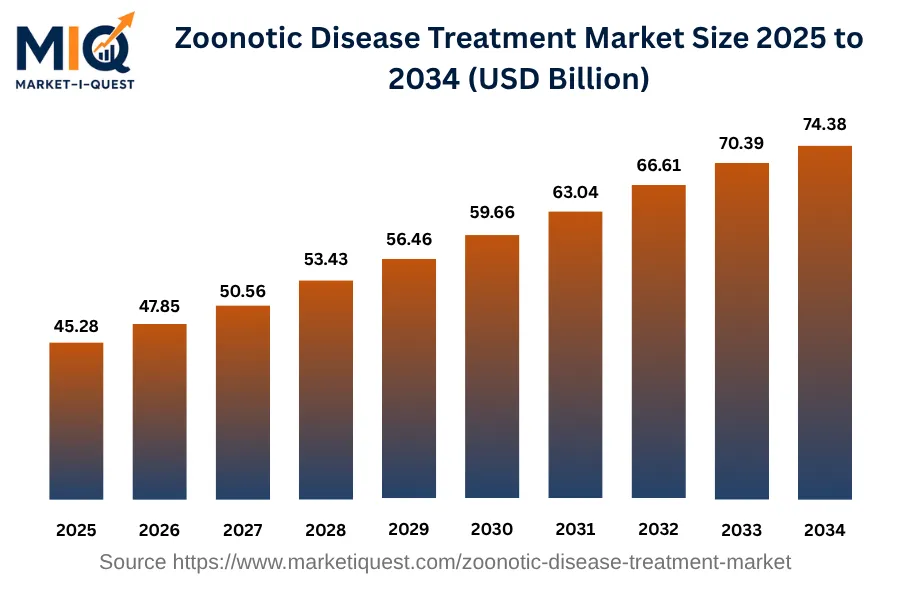
$42.85 Bn
CAGR
5.67%
Forecast 2034
$74.38 Bn

Market Segments

By Disease Type
  • Rabies
  • Malaria
  • Animal Flu
  • Ebola
  • Dengue
  • and Others
By Drug Class
  • Antibiotics
  • Antifungal
  • Anti-parasitic
  • Anti-bacterial
  • and Others
By Distribution Channel
  • Hospital Pharmacy
  • Retail Pharmacy
  • and Online Pharmacy

Market Dynamics

Drivers
  • Increasing Prevalence of Zoonotic Diseases
  • Advancements in Disease Treatment Technologies
Restraints
  • Limited public awareness
  • Regulatory challenges
Opportunities
  • Rising global biosecurity concerns
  • Advancements in disease treatment methods

Market Size

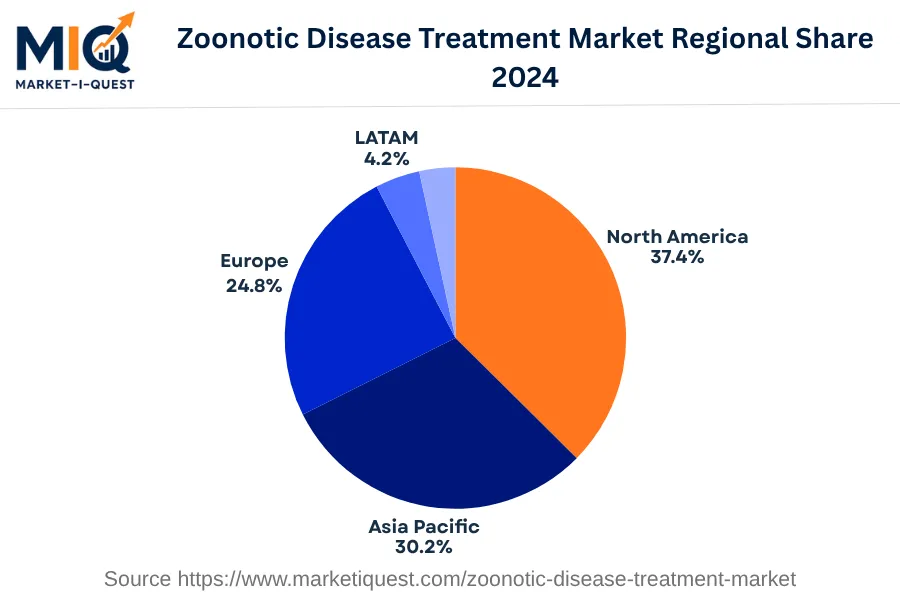
The Zoonotic Disease Treatment market was valued at $45.28 billion in 2025 and is anticipated to reach $74.38 billion in 2034, with a CAGR of 5.67%. The market exhibited steady growth increasing from $42.85 billion in 2024. The rise in market value from 2025 to 2034 can be attributed to increased prevalence of zoonotic diseases globally, leading to a higher demand for their treatments. Additionally, advancements in healthcare infrastructure and a rise in awareness regarding zoonotic diseases have contributed to the expansion of the market. In terms of regional share in 2024, North America accounted for the largest portion at 37.42%, followed by Asia Pacific at 30.18%. Europe held 24.76% of the market, while Latin America and the Middle East and Africa contributed with smaller shares of 4.23% and 3.41% respectively.

Key Takeaways

  • By Disease Type - Malaria held the largest share of the segment in 2025.
  • By Drug Class - Antibiotics accounted for a major share in the Zoonotic Disease Treatment Market in 2025.
  • By Distribution Channel- Retail Pharmacy led the segment serving to a majority of the market demand in 2025.
zoonotic-disease-treatment-market market size

Key Driving Factors

Increasing Incidence of Zoonotic Diseases

One major driver of the zoonotic disease treatment market is the increasing number of zoonotic disease cases globally. Zoonotic diseases, diseases transmitted from animals to humans, can lead to serious health conditions. For instance, diseases like rabies, Lyme disease, and avian influenza are all examples of zoonotic diseases. These illnesses continue to rise, mainly due to human encroachment into wildlife habitats, closer interaction with domestic animals, and climate change that alters disease vectors' habitats. This uptick fundamentally induces a greater demand for treatments, thereby driving the market.

Government Initiatives and Funding

Another crucial driver of the zoonotic disease treatment market is the increasing government initiatives and funding towards the prevention and control of such diseases. Governments worldwide are paying increased attention to zoonotic diseases due to their massive public health and economic impacts. In response, they initiate various programs and policies aimed at controlling the spread of these diseases, often involving investment in research and development of new treatments. For instance, the United States' CDC launched the 'One Health' initiative, aimed at improving collaboration across various disciplines for better public health outcomes related to zoonotic diseases. Such initiatives positively influence the zoonotic disease treatment market growth.

Market Evolution by Timeline

2019-2023
Africa, South East Asia, and Latin America were primary buyer regions due to high incidence of zoonotic diseases. The emergence of epidemics like Ebola fueled demand. Key treatment solutions included vaccines and antiviral agents. Supply was constrained by research development times and approval processes. The World Health Organization initiated 'One Health', to improve approaches to zoonotic threat management. Philanthropy-funded programs, such as the Gates Foundation, supported market growth through public-private alliances. Pricing depended on disease, patient demography, and epidemic status, often subsidized for low-income communities. Veterinary-Pharmaceutical company partnerships were standard. The primary hindrance was ensuring timely, sufficient, and affordable vaccine supplies.
2024
COVID-19 expanded market focus, dramatically increasing global demand. Treatment landscape shifted with the development of mRNA-based vaccines from suppliers like Pfizer and Moderna. Matured integrations with computational bio-modeling were used to expedite vaccine trials. EUA (Emergency Use Authorization) policies played a pivotal role, accelerating market entry of new treatments. Commercial models adopted pandemic-day pricing, subsidized by governments. Heavy reliance on few suppliers reflected an imbalance in the procurement model. Larger pharmaceutical companies entered partnerships, while smaller companies struggled. Risks included treatment inequity due to logistics, accessibility, and affordability concerns, leading to widened healthcare disparities.
2025-2029
Europe and North America became significant buyer regions. Aging population, increased pet ownership, and climate change effects contributed to demand. Advanced biologics and gene-therapies emerged as efficient treatment methods. High integration maturity with digital platforms improved treatment accessibility. There were stricter policies around bio-safety and bio-security, effectively adopting WHO's 'One Health Approach'. More widespread and affordable pricing strategies typical, enabled by more balanced supply-demand dynamics. The trend of mergers and acquisitions continued among pharmaceutical companies. Main risks included new types of zoonotic pathogen emergence and potential bio-terrorism threats.
2030-2034
Demand continued to rise globally due to urbanization and increased wildlife-human interaction. Next-generation treatments, aimed at pro-active disease management, were expected. Advancements in technology made room for AI and ML-based predictive modeling for early identification and treatment. Robust policy structures, emphasizing on early warning systems and swift epidemic responses, were likely. Decentralizing supply chain and regional production began playing a vital role in the commercial model. With growing westernization, partnerships focusing on plant-based vaccines proliferated. The risk of accelerated mutation rates and viral resistance against existing treatments was a concern.

Future Market Outlook

Future Opportunities

The zoonotic disease treatment market is positioned for expanded opportunities due to growing governmental and global health initiatives. Following the COVID-19 pandemic, many countries have prioritized zoonotic disease preparedness, with the European Commission implementing the One Health Action Plan in 2021 to streamline efforts between human, animal, and environmental health. This multi-sectoral strategy is anticipated to drive demand for integrated therapeutic solutions. Companies like GSK and Merck are already exploring vaccine candidates against zoonotic threats, evident from GSK's announcement in March 2023 of a new vaccine targeting Rift Valley fever. Partnerships between technology firms and healthcare providers are also likely to deepen; for example, in December 2022, IBM partnered with the CDC to utilize blockchain for enhancing traceability in zoonotic disease outbreaks. The rise of personalized medicine, supported by genetic sequencing technologies, creates opportunities for tailored therapies, as seen in ongoing research by Illumina, which reported progress in metabolic genomics for such treatments in 2023. Additionally, the use of artificial intelligence to predict zoonotic spillovers is gaining traction, with a study published in October 2023 identifying parameters that trigger zoonotic transmission from wildlife. Altogether, these efforts signify a proactive approach to zoonotic diseases, creating an environment ripe for innovative solutions aimed at prevention and treatment.

Segmentation Analysis

By Disease Type

The disease type market is divided into subsegments including Rabies, Malaria, Animal Flu, Ebola, Dengue and Others. Of these, Malaria accounted for the largest revenue share while Dengue is expected to grow at the fastest CAGR during the forecast period.

Largest Revenue Share

Malaria

Market Share Leader

Malaria leads the revenue share in the disease type market primarily due to the widespread prevalence of malaria, especially in developing countries of sub-Saharan Africa and South Asia. The disease's vast scope necessitates broad programs for prevention and control, driving demand for related products and services. The malaria market segment benefits from consistent funding from international organizations and governments keen to eliminate the malaria burden. Additionally, the pharmaceutical industry's robust participation, with a plethora of antimalarial drugs under development or in the pipeline, contributes to the segment's revenue. Furthermore, rapid diagnostics and treatments, which are increasingly being prioritized in malaria-ridden regions, offer increasing revenue streams. The demand for comprehensive disease management options for malaria is consequently high, making it the largest revenue-generating subsegment.

Fastest CAGR

Dengue

Forecast Period Growth Leader

Dengue is expected to be the fastest-growing segment within the disease type market. This can be attributed to the increasing incidence of dengue globally, coupled with climate change-related issues that exacerbate dengue prevalence. Geographical expansion of the disease and urbanisation's unintended consequences, such as poor water management and waste disposal, are driving the greater demand for dengue diagnosis and treatment solutions. Moreover, partnerships among global health agencies, governments, and pharmaceutical companies to expedite vaccine development are acting as catalysts for market growth. That said, barriers to mass vaccination still exist, including regulatory hurdles and issues of vaccine efficacy and safety. While these challenges may curtail growth in the short term, the critical need for dengue control solutions and ongoing research should propel this segment's growth in the long run.

By Drug Class

The market is divided into subsegments including Antibiotics, Antifungal, Anti-parasitic, Anti-bacterial, and Others. For the base year of 2024, the Antibiotics subsegment accounts for the largest revenue share while the Anti-parasitic sector is expected to grow at the fastest CAGR during the forecast period.

Largest Revenue Share

Antibiotics

Market Share Leader

In 2024, the Antibiotics subsegment leads the Drug Class market in terms of revenue generation. This can be attributed to the persistent prevalence of bacterial infections and their growing resistance to existing antibiotics—the main drivers behind the continuous demand and high sales volumes. The key consumers are predominantly healthcare institutions, comprising of hospitals and clinics, but also include pharmacies and individual consumers. Meanwhile, the global span of bacterial diseases, along with the WHO's endorsement for the responsible use of antibiotics, broadens the market reach across various geographies, with high-income countries being the principal revenue contributors. Government regulations to ensure the availability and affordability of antibiotics further stimulate market growth. To ensure an uninterrupted supply chain, manufacturers and distributors rely on well-established channels, such as wholesalers and direct sales to healthcare providers. The purchasing criteria often revolve around the drug efficacy, safety profile, cost-effectiveness and ease of administration.

Fastest CAGR

Anti-parasitic

Forecast Period Growth Leader

The Anti-parasitic drugs subsegment stands out as the fastest-growing, driven by several factors. Firstly, the increasing occurrences of parasitic infections, compounded by climate change and global travel, is escalating the demand for effective anti-parasitic treatments. Secondly, novel drug development endeavours and innovations are offering substantial growth opportunities. The development of new entities and formulations, along with partnerships between pharmaceutical companies and research institutions for drug development, are key catalysts for this growth. Capital expenditure towards the development of affordable, easy to administer and highly effective drugs is another major driver of growth. However, the adoption barriers such as the high cost of novel drugs, emergence of drug resistance and lack of awareness may impede the growth tempo in the near term. Also, unfavourable policies and regulatory challenges pose potential risks.

By Distribution Channel

The market is classified into subsegments including Hospital Pharmacy, Retail Pharmacy, and Online Pharmacy, among which Retail Pharmacy holds the largest revenue share while Online Pharmacy is projected to grow at the fastest rate in the upcoming years.

Largest Revenue Share

Retail Pharmacy

Market Share Leader

The Retail Pharmacy segment accounts for the highest revenue in the year 2024, primarily owing to its widespread access and deep-rooted consumer trust. Retail Pharmacies have been historically significant in providing medications to consumers, a trend that continues today, despite the emergence of other distribution channels. The segment is bolstered by factors such as the rising demand for over-the-counter drugs, an array of medications available, and personalized customer service. Furthermore, the ability to offer immediate medication access in emergencies plays a pivotal role in retail pharmacies' market dominance. Customers' longstanding relationships with their local pharmacies, barriers for new entrants, and the high costs allied with switching primary pharmacies also contribute to the major revenue. The convenience and accessibility of retail pharmacies in both urban and rural regions additionally sustain their market supremacy.

Fastest CAGR

Online Pharmacy

Forecast Period Growth Leader

Anticipated to witness the fastest Compound Annual Growth Rate (CAGR), the Online Pharmacy segment's growth stems from increasing technology adoption, rising internet penetration, and surges in e-commerce. The prevailing COVID-19 pandemic's social distancing mandates have further expedited this growth, as consumers seek contactless medication acquiring methods. Despite facing initial adoption barriers, primarily trust and regulatory hurdles, online pharmacies' mitigation strategies have heralded a turn. Increasing partnerships with health insurers and robust prescription verification processes contribute to surmounting these barriers. Providing a wider range of medications, often at lower costs compared to their brick-and-mortar counterparts, online pharmacies attract cost-conscious consumers, essentially driving growth. However, near-term risks include regulatory changes and the potential backlash from traditional pharmacies. Despite these, the segment holds a promising growth outlook.

Competitive Analysis

Key Market Players

Manufacturers / OEMs

Gilead Sciences, Inc.
US
GlaxoSmithKline plc
UK
Novartis AG
Switzerland

Key Suppliers & Raw Materials

Lonza Group Ltd
Switzerland
Merck KGaA
Germany
Thermo Fisher Scientific Inc.
US

Distributors, Integrators & Channel Partners

McKesson Corporation
US
AmerisourceBergen Corporation
US
Cardinal Health, Inc.
US

Porter’s Five Forces Analysis

The following analysis provides insights into the competitive environment of the Zoonotic Disease Treatment Market.

Supplier Bargaining Power

Medium

Powered by limited suppliers due to specialisation needs; however, government regulations can impact dynamics.

Buyer Bargaining Power

Low

Given the seriousness of zoonotic diseases, patients have little bargaining power.

Threat of Substitutes

Low

Limited substitutes due to the market's specialized nature and demand for specific treatments.

Threat of New Entrants

Medium

While high entry barriers exist due to regulation, growing demand and lucrative returns can attract new entrants.

Competitive Rivalry

High

Many players are investing in advanced therapies, leading to intense competitive rivalry.

Regional Analysis

Geographic market dynamics and growth opportunities across key regions

Global Market Outlook

zoonotic-disease-treatment-market market regional share

North America

In 2024, the North American zoonotic disease treatment market experienced high demand due to increasing incidence rates, environmental factors and regulatory changes. Demand surged in Canada and the U.S. as numerous cases of zoonotic diseases like avian influenza and Lyme disease were reported, necessitating treatment drugs. Growth was further fueled by widespread adoption of early detection technologies in these countries, and investments in R&D by pharmaceutical companies like Merck and Novartis. The market also benefited from Mexico's regulatory changes that mandated domestic animals' routine health screening.

A noticeable trend in the North American market was shifting buyer behavior. As consumers became more aware of zoonotic diseases, demand for preventive vaccines increased, especially in Mexico and the U.S. Healthcare professionals displayed a preference for antiviral drugs in treating these diseases, with these products registering high sale volumes in U.S. pharmaceutical retail. Collaborations between pharmaceutical companies and research institutions were prevalent, aiming to develop advanced treatment options. Moreover, rigorous enforcement of CDC’s One Health policy in the U.S. had a profound impact on the market, reinforcing the coordinated approach to prevent and treat zoonotic diseases across the veterinary, environmental, and human healthcare sectors.

Asia Pacific

In 2024, the Zoonotic Disease Treatment Market in the Asia Pacific region presented a dynamic healthcare and investment landscape. Significant drivers included increasing zoonotic disease outbreaks, amplified by urban development in China and India, prompting heavy government investment in healthcare infrastructure. Rapid technology adoption in Japan and South Korea aided efficient diagnosis, contributing to treatment demand. Australia's robust veterinary practices proactively dealt with zoonotic diseases, while ASEAN adopted stringent regulatory measures to control their spread.

Consumer behavior trended towards preventative measures, with the uptake of vaccinations in China and India para-mounting. In tandem, governments enforced policy concerning scheduled immunizations, bolstering this trend. The use of digital tools for remote diagnosis soared in Japan and Korea, marking a technology shift. Mergers and acquisitions were noticeable in the pharmaceutical sector. Australian manufacturers partnered with regional players, tapping into Vietnam and Indonesia markets. Regulatory norms tightened, with China imposing strict guidelines on zoonotic disease management.

Key sectors impacted included healthcare, government, veterinary care, pharmaceuticals, and connected technology providers. The interplay between these sectors dictated the supply chain of the Zoonotic Disease Treatment Market, with government policies playing a major role across the region. The market dynamics for the year encapsulated an amalgamation of preventive and curative demand, driven by significant changes in consumer behavior and governmental policies.

Europe

In 2024, Europe's Zoonotic Disease Treatment Market was principally driven by heightened demand, regulatory changes, investment escalation, technological adoption, and dynamic supply. A surge in zoonotic diseases like Lyme disease, Rabies, Salmonellosis and Avian Influenza catalysed demand, and in response nations such as Germany, France and the United Kingdom increased their healthcare budgets. Concurrently, the European Union bolstered regulations to hinder disease spread, prompting pharmaceutical and biotech companies to invest in research and development. A notable driver was technology adoption; Spain and Italy notably espoused digital health solutions for faster diagnosis and treatment organization. Additionally, enhanced supply chain management across Europe streamlined the distribution of necessary drugs.

Trends observed included shifts in buyer behavior, product development, channel dynamics and policy enforcement. Patients across Europe were inclined towards preventive healthcare, driving demand for vaccines and prophylactics. Major pharmaceutical enterprises (e.g. GlaxoSmithKline and Novartis), expanded their product portfolios to include newer zoonotic disease treatments. Notably, e-commerce gained traction in countries like Benelux and Eastern Europe, augmenting the accessibility of treatment options. Cross-border partnerships in the Nordics enhanced the distribution network of novel treatments. Finally, stricter policy enforcement led to consistent adoption of best practices in animal healthcare and food production sectors, effectively controlling the spread of zoonotic diseases.

Latin America

In the base year of 2024, Zoonotic Disease Treatment Market in Latin America witnessed significant developments. Drivers of this sector can be traced to the growing understanding of zoonotic diseases, increasing public health initiatives by governments in Brazil, Mexico, Argentina, Colombia, Chile, and Peru, and higher investment in the healthcare sector. New technologies and treatments adopted for zoonotic diseases greatly influenced the market dynamics. Changing supply trends in response to the demand, alongside the pricing strategies, also drove the market significantly.

Prominent trends in 2024 included the rise in awareness among customers regarding zoonotic diseases in the healthcare sector and a shift towards tech-driven solutions in diagnosing and treating these diseases. Market channel dynamics also experienced changes as online healthcare services and telemedicine gained traction. Increased collaboration for research and development activities further defined the market trends, with substantial policy enforcement in healthcare regulations.

The impact sectors include government bodies initiating public health policies, healthcare institutions, and research and development sectors. Enterprises involved in developing tech-driven solutions for disease treatments and online healthcare services constitute significant customers. The market's trajectory in Latin America in 2024 reflects these driving forces and trends, illustrating a dynamic growth phase for the Zoonotic Disease Treatment Market.

Middle East & Africa

In 2020, the Zoonotic Disease Treatment Market in the Middle East and Africa was primarily driven by an increase in zoonotic diseases, heightened public awareness, advancement in healthcare technology, and robust investment in research and development. Countries like Saudi Arabia, United Arab Emirates, Qatar, Egypt, South Africa, Nigeria, Kenya and Israel were particularly active regions due to their heavy government involvement in healthcare services.

Key drivers included the escalating prevalence of zoonotic diseases such as rabies, leptospirosis and Lyme disease, compounded by population expansion and ease of disease transmission in densely populated areas. The implementation of strict regulations by governmental bodies to control these diseases, such as the Saudi Arabian Ministry of Health's zoonotic disease surveillance system, also acted as a demand factor.

Trends characterizing this market in 2024 included increased technological adoption in healthcare, with advanced diagnostic procedures and treatments becoming accessible across all sectors. Notable was the marked increase in partnerships among key players for improved disease treatment in both public and private healthcare sectors. For instance, a distinct trend of policy enforcement through a unified approach was seen in the United Arab Emirates and Israel, where the governments collaborated with veterinary and environmental authorities to control zoonotic diseases. Finally, a trend of increasing consumer awareness and education about these diseases was also prevalent in these regions.

Recent Industry Developments

Latest market innovations, product launches, and strategic initiatives

June 2026

The U.S. FDA officially approved the company's new in-house testing laboratory. This brings advanced anti-rabies testing directly under company control, which speeds up the manufacturing and final release of major rabies treatments like KEDRAB to the market.

December 2025

A major global partnership, funded by the European Commission, was launched to build a next-generation malaria vaccine. Current vaccines only target one phase of the disease, but this new development focuses on attacking the parasite in both the liver and the bloodstream to establish complete protection.

November 2025

The Brazilian health regulatory agency approved Butantan-DV, the world's first single-dose dengue vaccine. A single-dose format solves the major problem of patients failing to return for a second shot, making large-scale government vaccine rollouts much more viable.

Frequently Asked Questions