Wood Adhesives Market Snapshot

Key Players

  • Henkel AG & Co. KGaA (Germany)
  • 3M (United States)
  • H.B. Fuller (United States)
  • Sika AG (Switzerland)
  • DowDuPont Inc. (United States)
  • Bostik (France)
  • Ashland Inc. (United States)
  • Avery Dennison Corporation (United States)
  • Pidilite Industries (India)
  • Royal Adhesives & Sealants (United States)

Market Size

Base Year 2024
$7.38 Bn
CAGR
8.51%
Forecast 2034
$16.70 Bn

Market Segments

By Resin Type
Polyurethane, Polyvinyl Acetate (PVAc), Formaldehyde-Based Adhesives, Epoxy Adhesives, Hot Melt Adhesives
By Form
Polyurethane, Polyvinyl Acetate (PVAc), Formaldehyde-Based Adhesives, Epoxy Adhesives, Hot Melt Adhesives
By Substrate
Wood-to-Wood, Wood-to-Metal, Wood-to-Plastic, Wood-to-Glass
By Application
Construction and Building, Furniture and Fixtures, Packaging, Automotive and Transportation, Industrial

Market Dynamics

Drivers
  • Rising demand in furniture industry
  • Increasing woodworking applications
Restraints
  • Stringent environmental regulations
  • Volatile raw material prices
Opportunities
  • Increased DIY home improvement projects
  • Growth in furniture industry

Market Size

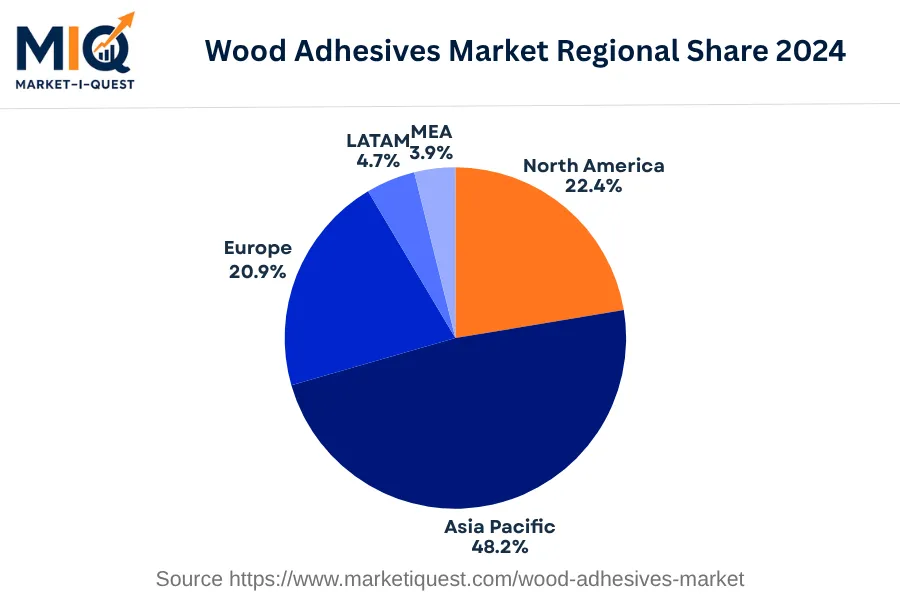
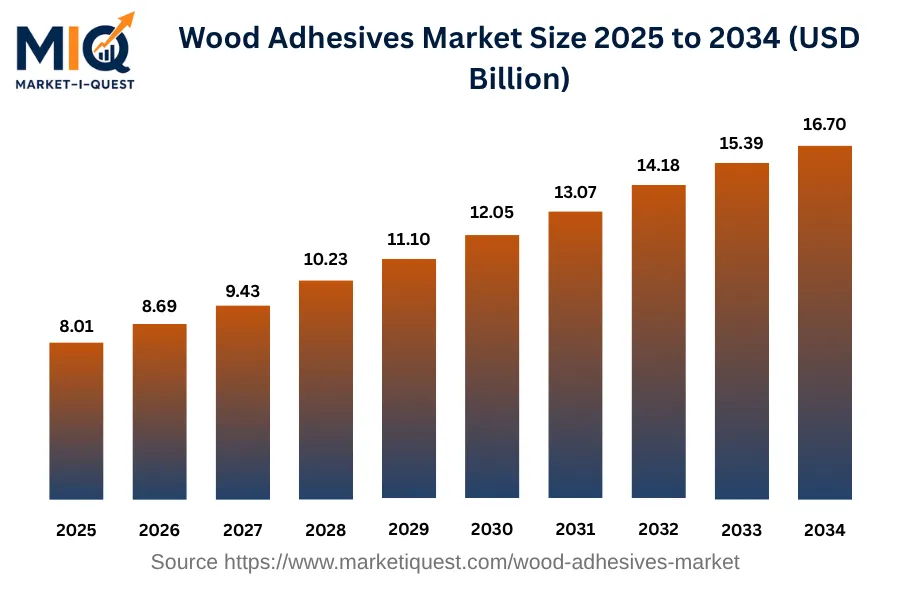
The Wood Adhesives Market was valued at $8.01 billion in 2025, and it is projected to grow to $16.70 billion by 2034, with a CAGR of 8.51% during this period. The continuous growth journey began in 2024 with a base size of $7.38 billion. The upward trend in the market size demonstrates a steady increase with substantial growth being especially noticeable between 2025 and 2034. The proliferation in market size is understood to be mainly due to escalating demand and market advancement that ground the projected surge over the decades. On a regional scale, the highest share of Wood Adhesives market was seen in Asia Pacific with 48.16% in 2024, followed by North America and Europe with 22.38% and 20.91% respectively, then followed by LATAM and MEA regions accounting for 4.67% and 3.88% respectively.

Key Takeaways

  • By Resin Type - Polyvinyl Acetate (PVAc) led with a significant majority of the market in the base year.
  • By Form - Polyurethane held the largest share of the segment.
  • By Substrate - Wood-to-Metal held the leading position in terms of usage and preference.
  • By Application- Construction and Building held the majority share in the market in base year.
wood-adhesives-market market size

Key Driving Factors

Increased Construction of Sustainable Buildings

An emerging trend in the construction industry is the focus on building green, sustainable structures. The goal is to reduce carbon footprints and promote environmental conservation. To achieve this, industry players worldwide are leaning towards the use of eco-friendly materials in building design. Wood adhesives play a crucial role in such a context. They help in bonding wood materials in the construction process, thereby eliminating the need for metal nails or screws, which significantly reduces the carbon footprint. Moreover, wood adhesives aid in maintaining the aesthetic appeal of wood elements, highly required in modern sustainable designs. This increasing trend to construct sustainable buildings globally drives the demand for wood adhesives.

Implementation of Stringent VOC Regulations

Various environmental agencies like the U.S. Environmental Protection Agency and the European Chemicals Agency are implementing stringent regulations to limit Volatile Organic Compounds (VOCs) emissions attributable to health and environmental concerns. Traditional wood adhesives are high in VOC content, forcing manufacturers to reformulate their products into low-VOC or VOC-free alternatives. Manufacturers are now striving to innovate effective and efficient wood adhesives that conform to these regulations, thereby expanding the market for wood adhesives. For instance, water-based and hot-melt adhesives are gaining popularity owing to their low or nil VOC content. Thus, the strict regulations on VOC emissions act as a significant driver in transforming the wood adhesives market into a more sustainable one.

Market Evolution by Timeline

2019-2023
Between 2019-2023, the wood adhesives market was mainly driven by the flourishing construction industry and rising furniture demand, especially in Asia and Africa due to urbanization. Urea-formaldehyde, polyvinyl acetate and polyurethane remained key product segments, although natural wood adhesives carved out a modest share due to eco-conscious initiatives. The market dynamics were further impacted by regulations such as Europe's EU7 and China's HJ/T 272-2007 for formaldehyde emission standards posing constraints on traditional adhesive types. Owing to this, R&D for low-formaldehyde urea-formaldehyde adhesives gained prominence. Pricing of traditional adhesives remained largely stable given enough supplies, whereas natural wood adhesives saw a price hike due to limited suppliers. In terms of risk, inconsistency in wood quality and type, typically sourced from different geographical locations, affected the adhesive's performance leading to a shift in focus towards R&D for more universal adhesive types.
2024
In 2024, the wood adhesives market saw a continuing demand from the residential construction and furniture sectors, with a marked shift towards green building practices adding an impetus to eco-friendly adhesive growth. Nanotechnology-based wood adhesives were introduced providing higher strength and durability whilst being environmentally friendly. However, these remained limited in use due to high prices. To comply with stringent emission regulations, manufacturers started adopting ISO 14000 environmental management standards that focused on emission reduction and waste management. Contract manufacturing became popular where brands outsourced adhesive manufacturing to third-party firms. A significant risk was overdependency on outsourced manufacturing, which could potentially affect supply chains and thus the overall market stability.
2025-2029
During 2025-2029, the primary buyers in the wood adhesives market continued to be constructors and furniture manufacturers. However, an increase in DIY home projects registered a significant demand rise from retailers and individual buyers. In-sync with this demand, adhesive manufacturers focused on user-friendly packaging and application methods. Products like adhesive strips and pre-applied adhesives found an upsurge in sales. While technologically superior nanotechnology-based wood adhesives were on an ascent, their pricing remained a challenge due to the premium involved making them unaffordable to some customers. Concurrently, toxicity-related regulations like the California Proposition 65 caused an increased investment in research for the development of non-toxic wood adhesives. The risk of counterfeit products surfaced during this period mandating regulatory intervention.
2030-2034
Between 2030-2034, a significant shift towards sustainable living created a new buyer segment for wood adhesives - green construction projects and eco-design firms. To meet this demand, the supply pivoted towards Bio-based wood adhesives. Their commercial production however faced challenges due to lack of proven large-scale production processes. Regulatory bodies introduced stricter emission norms for wood adhesive manufacturing. The Leadership in Energy and Environmental Design's (LEED) revised standards drove market adoption of bio-based adhesives. Contract renegotiations between brands and manufacturers reflected these shifts, building in clauses to ensure sustainable practices. Market risks included price volatility due to changing inputs for bio-based adhesives, and potential lack of investor confidence in new, untried supply chains.

Future Market Outlook

Future Opportunities

As the wood adhesives market evolves, multiple opportunities are emerging rooted in current industry practices. The increasing focus on sustainable construction materials presents significant avenues for innovation. Regulatory frameworks being adopted worldwide, particularly the European Union's revised Construction Products Regulation, prioritize performance and environmental impact, urging companies to develop greener adhesive solutions in alignment. Emerging markets in Southeast Asia are also capitalizing on the demand for eco-conscious building materials, with partnerships between local companies and multinationals being formed to enhance product offerings. For instance, in 2023, a collaboration between Sika AG and local distributors aims to penetrate markets like Vietnam, providing sustainable adhesive solutions tailored to regional needs. The rise of prefabricated wood structures is creating demand for high-performance adhesives that endure varying climates, particularly in North American markets. Additionally, the expansion of 3D printing technology is presenting opportunities for specialized adhesives designed for additive manufacturing processes, as observed in companies like Momentive, which launched a product range for this sector. Furthermore, as carbon neutrality goals become more integral to business models, the wood adhesives sector can leverage its potential to create formulations that minimize carbon footprints, directly responding to consumer and regulatory pressures. These factors illustrate that the wood adhesives market has a promising landscape shaped by innovation, collaboration, and sustainability.

Segmentation Analysis

By Resin Type

The market is divided into subsegments including Polyurethane, Polyvinyl Acetate (PVAc), Formaldehyde-Based Adhesives, Epoxy Adhesives, and Hot Melt Adhesives. Polyvinyl Acetate (PVAc) accounted for the largest revenue share while Epoxy Adhesives is expected to grow at the fastest CAGR during the forecast period.

Largest Revenue Share

Polyvinyl Acetate (PVAc)

Market Share Leader

The subsegment with the largest revenue share in 2024 is Polyvinyl Acetate (PVAc). This is driven by numerous factors. Firstly, PVAc is renowned for its excellent adhesion to a variety of surfaces, thus it is widely used in woodworking, packaging, and craft applications among others. Its eco-friendliness, non-toxicity, and easy application make it a preferred choice in consumer markets and industrial applications over other resin types. Secondly, PVAc's consumption is driven by its wide adoption in emerging economies like Asia and Africa, where continued urbanization and demand from construction and furniture industries run high. Regulations also favor PVAc considering its water-based nature, with governments promoting the use of such environmentally-friendly adhesives. Customer's preference for a hassle-free application and low switching costs have led to a higher share of PVC compared to other resin types.

Fastest CAGR

Epoxy Adhesives

Forecast Period Growth Leader

Contrarily to PVC, the fastest-growing sub-segment in terms of CAGR within the forecast period is Epoxy Adhesives. This rapid growth is fuelled by the high durability, superior resistance to heat and chemicals, and excellent bonding properties of Epoxy Adhesives, which make them ideal for a wide range of industrial applications like automotive, aerospace, and electronics. Their adaptability to different climatic conditions and compatibility with various materials is spurring their wider adoption. However, this growth is not without its hurdles. The primary challenge is the relatively high cost of these adhesives compared to others like PVAc. Furthermore, regulatory scrutiny regarding emissions during their manufacturing process pose an adoption barrier. Yet, recent innovations and advancements in sustainable manufacturing practices of epoxy adhesives, along with strategic partnerships within the industry, are acting as catalysts in overcoming these obstacles and driving growth.

By Form

The market is divided into subsegments including Polyurethane, Polyvinyl Acetate (PVAc), Formaldehyde-Based Adhesives, Epoxy Adhesives, and Hot Melt Adhesives. Among these, Polyurethane accounted for the largest revenue share while Hot Melt Adhesives are expected to grow at the fastest CAGR during the forecast period.

Largest Revenue Share

Polyurethane

Market Share Leader

Polyurethanes, owing to their versatility, resilience, and robustness, have emerged as the dominant adhesive form commanding the lion's share of revenues. Their superior binding capacities across a range of substrate materials, including plastics, metals, and wood, make them a foundational asset in multiple areas, from transportation and construction to footwear and furniture industries. A major contributing factor to their dominance is the increasing construction activities worldwide, with industries relying heavily on polyurethane adhesives for structural and non-structural applications. Additionally, regulatory environment favoring eco-friendly and low volatile organic compound adhesives have also propped up the growth of this segment. Rigorous R&D, the pushing off of innovation boundaries, manufacture of high performance polyurethane variants and continued expansion of end-user industries, all contribute to the strong revenue position of the polyurethane adhesives.

Fastest CAGR

Hot Melt Adhesives

Forecast Period Growth Leader

Hot Melt Adhesives are projected to witness the fastest growth rate during the forecast period. The growth of this segment is primarily driven by its superior advantages including fast setting speed, capability to bind diverse materials, and enhanced thermal stability. These advantages make this adhesive type ideal for use in industries like packaging, where swift production lines are integral to operations. Moreover, its eco-friendly properties and compliance with diverse environmental regulations have accelerated its adoption further, with industries increasingly shifting to hot melt adhesives. Emerging economies are expected to be the key growth drivers, sprouting opportunities due to rapid industrialization and rising rules on workplace safety. Though the initial capital expense may pose a barrier in adopting these adhesives, the long-term operational benefits and positive environmental footprint are likely to counterbalance this, ensuring robust growth in the near term.

By Substrate

The market is divided into subsegments including Wood-to-Wood, Wood-to-Metal, Wood-to-Plastic, and Wood-to-Glass. Of these, the Wood-to-Metal subsegment accounted for the largest revenue share, while Wood-to-Glass is expected to grow at the fastest CAGR during the forecast period.

Largest Revenue Share

Wood-to-Metal

Market Share Leader

The Wood-to-Metal segment dominated the market in terms of revenue in 2024 due to several key factors. First, the large-scale construction and renovation projects generally require strong and durable connections that Wood-to-Metal bonds can offer, beyond the capabilities of other substrates. Secondly, new technologies and improved bonding solutions for metal materials have driven the adoption of Wood-to-Metal bonds in various industries such as furniture, automotive, and industrial applications. Geographically speaking, regions with advanced industrial sectors have contributed significantly to this subsegment. Furthermore, demanding and sophisticated customers in these regions are increasingly adopting Wood-to-Metal bonds for their superior performance characteristics, creating a highly favorable market environment. While the regulatory environment hasn't significantly impeded progress, it's worth noting that any stricter guidelines regarding emissions and toxicity will likely affect the Wood-to-Metal market proportionally. The primary purchasing criteria include strength, durability, and cost-effectiveness—traits which Wood-to-Metal bonds reliably provide.

Fastest CAGR

Wood-to-Glass

Forecast Period Growth Leader

The Wood-to-Glass sub-segment is projected to experience the fastest growth, though it does not currently possess the largest market share. The primary drivers of this growth include advancements in adhesive technology, making it easier and more efficient to bond wood and glass together. As urbanization and modern architectural trends favor the marriage of wood and glass for aesthetic appeal, this segment is expected to grow substantially. Key barriers to adoption include higher initial costs and retrofitting issues in older infrastructures. However, these barriers are expected to mitigate over time as new construction favor these combinations and retrofitting technologies improve. Also, strategic partnerships between adhesive manufacturers and construction firms can further boost this segment's growth. Despite short-term market volatility and potential regulatory hiccups, the industry's shift towards more sustainable and innovative building materials and practices signals a promising long-term market growth for Wood-to-Glass segment.

By Application

The market is divided into subsegments including Construction and Building, Furniture and Fixtures, Packaging, Automotive and Transportation, and Industrial. In 2024, the Construction and Building subsegment accounted for the largest revenue share while the Automotive and Transportation subsegment is expected to grow at the fastest CAGR during the forecast period.

Largest Revenue Share

Construction and Building

Market Share Leader

The Construction and Building subsegment retains the largest share in revenue, driven by the increasing investments in infrastructure developments and need for residential and commercial spaces globally. Robust urbanization and a growing population have led to a surge in construction activities, especially in emerging economies. The high demand for durable and cost-effective materials in the construction sector contributes greatly to the revenue of this segment. Moreover, regulatory requirements for energy-efficient and green buildings are driving the need for more sophisticated solutions in construction and building, presenting considerable opportunities for growth. The purchasing decisions are influenced by multiple factors, such as cost, durability, and the environmental impact of materials, which have further solidified the market position of this segment.

Fastest CAGR

Automotive and Transportation

Forecast Period Growth Leader

The Automotive and Transportation subsegment is projected to grow at the fastest pace, influenced by the ongoing advancements in automotive materials and growing demand for fuel-efficient vehicles. Manufacturers are increasingly investing in R&D activities to develop lightweight and durable materials for vehicles to reduce fuel consumption and emissions. These developments, combined with tight regulatory policies focused on reducing carbon footprints, are pushing the growth of this subsegment. However, challenges in terms of high capital costs and adoption rates due to changes in manufacturing processes impede the growth. In the near-term, strategic partnerships between manufacturers and automotive companies can act as a catalyst to overcome these barriers, driving the subsegment's expansion.

Competitive Analysis for Wood Adhesives Market

Key Market Players

Manufacturers / OEMs

3M
US
Henkel AG
Germany
Arkema
France

Key Suppliers & Raw Materials

Eastman Chemical Company
US
BASF SE
Germany
Dow Inc.
US

Distributors, Integrators & Channel Partners

Carpenter Co.
US
Konish
Japan
Pidilite Industries Limited
India

Porter’s Five Forces Analysis

An analysis of the competitive dynamics in the wood adhesives market.

Supplier Bargaining Power

Medium

Suppliers are dominated by large chemical companies, leading to moderate bargaining power.

Buyer Bargaining Power

High

Buyers, primarily construction companies, often negotiate prices due to bulk purchases.

Threat of Substitutes

Low

Substitutes like metal and plastic fasteners are less effective, leading to low threat.

Threat of New Entrants

Medium

Barriers like high capex and technical know-how marginally restrict new entrants.

Competitive Rivalry

High

The market is competitive with many established enterprises vying for market share.

Regional Analysis

Geographic market dynamics and growth opportunities across key regions

Global Market Outlook

wood-adhesives-market market regional share

North America

In 2024, the North American Wood Adhesives Market displayed distinct growth and development dynamics shaped by various factors. Critical drivers for this market included robust demand from the burgeoning furniture and construction sectors, coupled with stricter environmental regulations encouraging the use of eco-friendly wood adhesives. Investments in advanced technology for producing sustainable and high-performance adhesives surged. An increase in DIY home improvement projects also stimulated market growth. Furthermore, the volatile pricing of petrochemical-based raw materials led to a preference for bio-based adhesives.

Trends witnessed in the market highlighted consumer inclination towards sustainable and green adhesives, especially in the U.S and Canada. Advances in adhesive technology, such as heat resistant and water-resistant adhesives, gained traction. Channel dynamics saw a considerable shift towards online purchase owing to the convenience and variety offered. There was a notable increase in collaborations and strategic partnerships among key players to consolidate their market positions. Enforcement of standards such as the Volatile Organic Compounds (VOC) emissions standards influenced product development strategies significantly. Key sectors propelling the market included enterprises in the construction, furniture manufacturing, and retail sectors, while government and utilities also contributed through various infrastructural projects.

Asia Pacific

In 2024, the Wood Adhesives Market in the Asia Pacific demonstrated a robust growth trajectory. Driving this surge were a burgeoning construction sector, particularly in India and China, and a rising demand for furniture in Japan and Australia. In China and ASEAN markets, regulations favoring environmentally friendly wood adhesives further stimulated the market, while South Korea saw significant technology adoption improving production efficiency.

Trends in the market revealed a distinct shift towards bio-based adhesives across sectors, including enterprise and manufacturing. Buyers showed a preference for low VOC adhesives that are sustainable and safe. In terms of product shifts, Polyvinyl Acetate (PVA) based adhesives saw increased demand in China and India, largely due to their wide usability in the manufacturing sector. Channel dynamics indicated a strong lean towards online sale platforms, particularly in China and Japan, further boosted by COVID-19 protocols. Lastly, in terms of partnerships and M&A, several Chinese and Indian wood adhesive manufacturers joined forces with international players to expand their market reach.

The implications of these trends bore significantly on the demand for wood adhesives in the furniture manufacturing sector as well as in the construction industry, which accounted for a significant portion of the demand in the Asia Pacific region. These trends point towards the market's mature dynamics and consumer preferences for high-quality, eco-friendly products.

Europe

In 2024, the European wood adhesives market witnessed significant stimulation due to specific demand and supply dynamics. Regulatory constraints on formaldehyde emissions heightened the requirement for low-VOC adhesive solutions, particularly from manufacturing industries in Germany and the United Kingdom. Growing investment in sustainable housing projects across France, Italy, and Spain substantially contributed to the escalating demand for wood adhesives. In the Nordics, widespread adoption of adhesive bonding technology in the furniture sector amplified the growth trajectory of the market.

Rising consumer preference for DIY furniture refurbishments was a notable trend across the United Kingdom and Benelux. In response to changing buyer behavior, manufacturers shifted towards developing easy-to-use wood adhesives catering to the domestic sector. Furthermore, the expansion of e-commerce platforms immensely shaped the distribution channel, with online sales gaining momentum across Europe. In terms of partnerships, French habitat retailer Leroy Merlin moved towards collaborations with adhesive manufacturers to enhance their wood-based product offerings. Regulatory bodies across Central and Eastern Europe also showed increased policy enforcement around wood adhesive standards, ultimately contributing to market dynamics.

Latin America

In 2024, the Wood Adhesives Market in Latin America (LATAM) constituted a key segment within the construction and furniture industries. Factors driving growth included regulatory support for sustainable and eco-friendly adhesives, the expanding furniture industry in Brazil and Mexico due to increasing consumer spending, and investment in technology for efficient and environmentally friendly adhesives. Pricing dynamics also played a role, with a notable rise in demand for lower-priced, quality adhesives from Argentina and Chile's small and medium scale manufacturers.

Trends shaping the market in LATAM were predominantly revolving around customer preference towards non-hazardous adhesive solutions. The increased adoption of formaldehyde-free adhesives in Colombia’s furniture industry, for example, attested to this trend. Furthermore, digital transformations in retail channels allowed for broader customer reach and deeper penetration in the market. There was a surge in partnerships and acquisitions, notably among Brazilian companies, which sought to consolidate market presence and increase competitive advantage. Lastly, strict enforcement of environmental and safety regulations in Peru propelled the shift towards safer adhesive solutions in the manufacturing sector.

The customers predominantly driving these market changes originated from sectors like construction, retail, and manufacturing. For instance, the retail furniture businesses in Mexico and Argentina played a significant role in shaping the market's demand patterns.

Middle East & Africa

In 2024, the Wood Adhesives market in the Middle East and Africa remained notably robust. Driving the market was a surge in demand for furniture and interior decoration attributed to urbanization and growing middle class, particularly in countries like Nigeria and South Africa. Steady investment in advanced technology facilitated enhanced product attributes and manufacturing efficiency boosting market attractiveness. Strict environmental regulations in nations such as Israel and Egypt compelled stakeholders to focus on sustainable products, encouraging the production of eco-friendly wood adhesives. Price volatility of raw materials, however, posed significant challenges.

Trends in the market predominantly consisted of shifting consumer preferences towards innovative, high-quality products that offer durability and resistance to heat and water. Adoption of bio-based wood adhesives was noticeable, reflecting increased consumer consciousness for sustainability. In segments like retail and manufacturing, key players formed strategic partnerships to gain a competitive edge, evident via conglomerations in Saudi Arabia and UAE. The push for local standards enforcement and consistency in policy implementation were witnessed across Kenya and Qatar as part of a bid to ensure adherence to environmental and safety norms. Overall, the market demonstrated remarkable resilience and adaptability in response to consumer demands and regulatory stipulations.

Recent Industry Developments

Latest market innovations, product launches, and strategic initiatives

November 2025

BASF commenced production at its new manufacturing site to supply water-based binders directly to the Asian furniture market.

May 2025

H.B. Fuller expanded its regional facility to increase production capacity for woodworking adhesives.

February 2025

Henkel launched a new fire-resistant adhesive for mass timber construction to meet updated building safety standards.

Frequently Asked Questions