
Volumetric Display Market Snapshot

Key Players

  • LightSpace Technologies (Latvia)
  • Holografika (Hungary)
  • Zebra Imaging (United States)
  • Voxon Photonics (Australia)
  • Holoxica Limited (United Kingdom)
  • SeeReal Technologies (Germany)
  • Leia Inc (United States)
  • Alioscopy (France)
  • Burton Inc. (Japan)
  • Displair (Russia)

Market Size

Base Year 2024
$0.587 Bn
CAGR
27.65%
Forecast 2034
$6.74 Bn

Market Segments

By Technology
Multiview Display, Light Field Display, Holographic Display, 3D Display
By Display Size
Small, Medium, Large
By Application
Medical Imaging, Educational Visualization, Entertainment, Architectural Visualization, Telecommunications
By End Use
Commercial, Industrial, Healthcare, Education, Others

Market Dynamics

Drivers
  • Increasing demand for 3D visualization
  • Technological advancements in display technology
Restraints
  • High production cost
  • Technology complexity
Opportunities
  • Growing entertainment industry
  • Advancements in imaging technology

Market Size

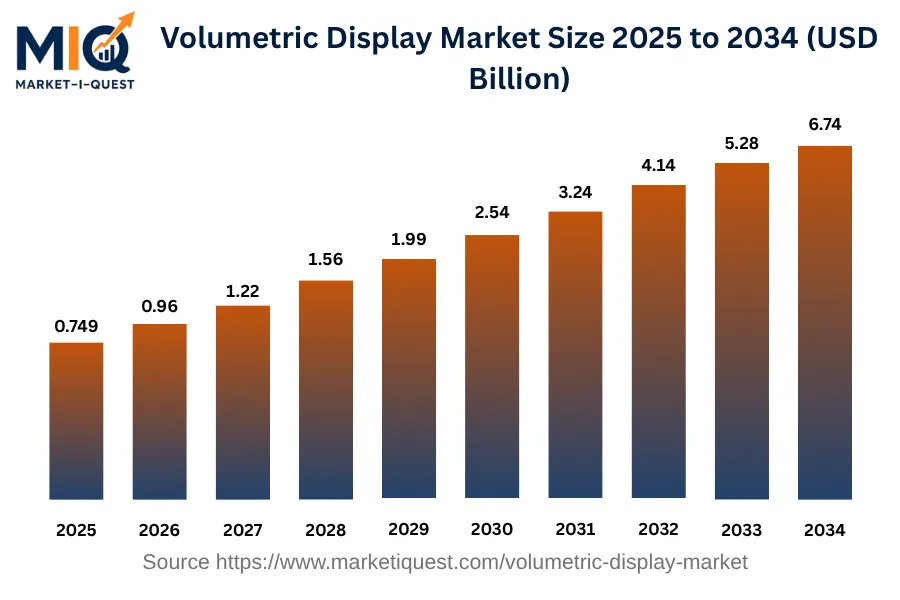
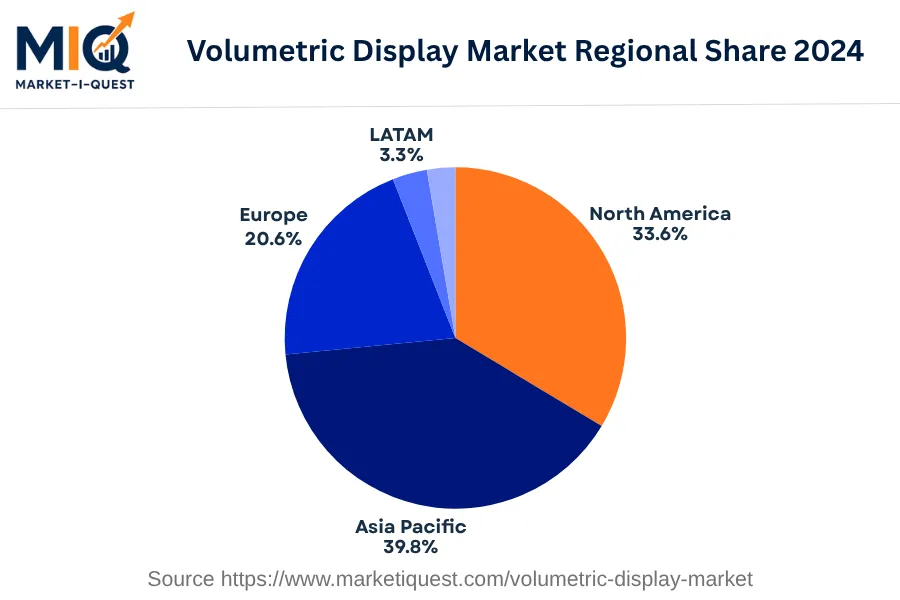
The Volumetric Display Market will grow from a size of 0.75 billion USD in 2025 to reach 6.74 billion USD in 2034, marking a Compound Annual Growth Rate (CAGR) of 27.7%. Prior to this projected growth period, the market stood at a value of 0.59 billion USD in 2024, which means it is set to experience consistent growth over the ten-year span. This growth can be attributed to several factors, including technological advancements within the sector and an increased demand for Volumetric Display technologies from certain industries across the globe. To break down the market share distribution by region in 2024: North America held 33.6% of the market share, the highest share was recorded in Asia Pacific with 39.8%, Europe followed with a share of 20.6%, while LATAM and MEA held smaller shares of 3.3% and 2.7% respectively.

Key Takeaways

  • By Technology - 3D Display led the Volumetric Display Market accounting for significant share in 2024.
  • By Display Size - Large segment held the leading position in the market in the base year.
  • By Application - Medical Imaging dominated the market signifying the healthcare techniques leverage in Volumetric Display.
  • By End User - Commercial establishments held the predominant position in 2024.
volumetric-display-market market size

Key Driving Factors

Application in Medical Visualization

In the current era, digitization and visualization have taken center stage in almost every industry, with the healthcare industry being no exception. Healthcare practitioners and patients alike are demanding more efficient forms of information representation, such as 3D, which is a driving factor in the volumetric display market. This technology allows doctors and medical students to see and interact with three-dimensional human anatomy models, thus helping them to improve surgical planning and medical education. Real-time 3D representations can help surgeons view the patient's anatomy from every angle, thus aiding accurate diagnosis and precision in surgery. Increasing use of volumetric displays in medical schools for teaching intricate anatomical structures can also drive the popularity of this technology.
Use in Defense Training and Simulation

The volumetric display market is also seeing growth fuelled by its increasing usage in military and defense training and simulation exercises. These displays offer a realistic, immersive visualization of battlefields or other key tactical areas, thus providing an effective training tool for military personnel. It allows soldiers and strategic planners to analyze situations, plan strategies, and execute mock manoeuvres in a controlled and safe environment before implementing them in real-life military operations. With the trend of modernizing military training tools and the rising need for improved preparedness in an unpredictable global political climate, the volumetric display market is expected to continue its upward trajectory in the defense sector.

Market Evolution by Timeline

2019-2023
Beginning in 2019, the North American market experienced a surge in demand for volumetric displays primarily from the entertainment, healthcare and military sectors. Volumetric displays began receiving broader recognition for their potential to visualize complex information. The year 2019 also saw the rise of small and medium enterprises becoming significant contributors to the market supply. However, high manufacturing costs and the complex integration procedure remained constraints to scaling up. No known policy or regulation had a significant impact on the adoption of volumetric displays. The standard commercial model typically revolved around direct purchase contracts with warranties. Market risks included the high replacement costs and need for specialist maintenance.
2024
In 2024, it was the Asia-Pacific region that showed significant uptake in volumetric displays, both in terms of demand as well as supply. Countries like China and South Korea dominated usage, due to rapid advancements in their domestic technological sectors and burgeoning digital spaces. Commercial models experienced a shift, with leasing agreements becoming more popular to counteract high initial investment costs. Another key risk in this market, namely the physical size of volumetric displays and the space they consumed, remained a critical issue for many potential buyers.
2025-2029
Further into this period, Europe started bolstering its digital transition across various sectors, leading to a rise in demand for volumetric displays. Display units shifted towards compact models, mitigating space constraints. Despite advancements, high energy consumption and limited portability continued to act as obstacles. No major regulations or standards were reported. Commercial models further evolved to include pay-per-use or subscription models, decreasing financial barriers to adoption. The increasing emergence of portable and energy-efficient display units were identified as key responses to existing market risks.
2030-2034
By 2030, the global focus had shifted towards innovations in volumetric display models. Demand from the education sector, for creating immersive learning environments, increased notably. Supply-side challenges surrounding energy efficiency and device portability saw significant R&D funding and focus. There were indications of the development of international standards for volumetric displays, but nothing concrete had been enacted till 2034. Partnerships with technology solution providers and forward contracts became common in commercial models. Undue reliance on technology and the risk of falling behind in technological advancements remained critical challenges in the market.

Future Market Outlook

Future Opportunities

The future of the volumetric display market appears promising, particularly due to its applications in various sectors. In 2023, the healthcare industry has begun adopting these displays for surgical simulations and training, as demonstrated by a collaboration between EON Reality and the University of California, which aims to enhance medical education. The retail sector is also exploring volumetric displays to create immersive shopping experiences, as exemplified by a pilot project launched by IKEA in its 2022 store in Germany. Additionally, governments are investing in smart city initiatives that incorporate volumetric displays for urban planning. Singapore's Smart Nation initiative has trials involving public space visualizations that support citizen engagement. From an educational perspective, institutions across the United States are implementing volumetric displays in STEM curricula to foster interactive learning environments, as seen in Massachusetts Institute of Technology labs as of late 2022. As augmented reality technologies mature, partnerships between software developers and hardware manufacturers are inevitable, leading to enhanced user experiences and content richness. The entertainment industry is also poised for disruption, with companies like Disney Research experimenting with volumetric displays for theme park attractions, while the film industry is exploring their use in presentations. These developments indicate a robust future landscape, with diverse applications emerging as these technologies continue to mature and regulatory support increases across various global markets.

Segmentation Analysis

By Technology

The market is divided into subsegments including Multiview Display, Light Field Display, Holographic Display, and 3D Display, among which 3D Display accounted for the largest revenue share while Light Field Display is expected to grow at the fastest CAGR during the forecast period.

Largest Revenue Share

3D Display

Market Share Leader

3D Display has seen substantial market dominance due to its greater market penetration and adoption across a variety of sectors. As an established technology, 3D Display caters to a wide array of applications such as television, gaming, mobile devices, cinema, and others, hence accounting for the highest revenue generation. Also, the presence of key market players who extensively invest in 3D technology research and development significantly pushes the revenue generated from this subsegment. A pivotal factor that aided the increased revenue of 3D Display sector is the ongoing demand for an enhanced viewing experience among consumers, cemented by regulatory guidelines in various countries that promote 3D technology. Lastly, relatively lesser switching costs and diverse sales channels for 3D Display technologies in comparison with the newer display technologies also contribute to its larger revenue share.

Fastest CAGR

Light Field Display

Forecast Period Growth Leader

The Light Field Display technology, while currently commanding a smaller market share, is projected to grow at the fastest pace. This can be attributed to its potential for near-eye applications like AR/VR/MR devices, where it provides realistic 3D visualization without the need for special glasses, unlike conventional display methods. Such technology is seeing increasing research and development efforts, which act as growth drivers. Moreover, increasing partnerships between manufacturers and companies that leverage capital investments on innovative Light Field Display technologies also catalyze market growth. Key players have acknowledged the future relevance of this technology leading to newer and larger streams of investment. Nevertheless, certain barriers like high production cost and need for intensive research slow down the growth rate. Assuming continued tech advancements and favorable policy environment over the long term, Light Field Display could overcome these issues, making it poised for rapid growth in the coming years.

By Display Size

The market is divided into subsegments including Small, Medium, and Large display sizes. The Large display size accounted for the largest revenue share, while the Medium display is expected to grow at the fastest CAGR during the forecast period.

Largest Revenue Share

Large

Market Share Leader

The Large display size segment has been a dominant player in terms of revenue generation in the base year 2024, given the prevailing market trends. It must be noted that the increase in demand for high-definition viewing experience, graphic-intensive games, and high-resolution content from consumers drives the high revenue for the Large displays. Dominance has been further intensified by a shift in consumer preference towards larger displays as they offer enhanced user experience for media consumption and gaming applications. Geographically, developed nations, with a higher disposable income, contribute significantly to the demand for Large displays. Furthermore, the presence of significant players in these regions who continuously innovate and offer advanced large display products can not be neglected. The regulatory environment is favorable as well as there are no considerable inhibitions regarding the production and sale of large display products. The distributors have adopted various channels such as online and offline stores giving consumers an option to physically examine products before purchase thus driving sales.

Fastest CAGR

Medium

Forecast Period Growth Leader

On the contrary, the Medium display segment is projected towards the fastest CAGR during the forecast period. Medium displays balance cost-effectiveness with product quality, making them increasingly appealing to a broader consumer base, especially in developing regions. Technological breakthroughs and innovations in display technologies, such as advancements in LED and OLED screens, are stimulating growth within this segment. Partnerships with tech-giants to integrate medium-sized displays in their devices have further stimulated growth. Moreover, Medium displays' feasibility and adaptability in a wide range of consumer electronics increase market penetration. Capital expenditure on technological advancements and innovative designs tends to be low, further enticing manufacturer interest. However, near-term risks to this growth encompass unforeseen technological disruption and fluctuating consumer behaviour. This segment is positioned for robust growth, given the correct strategy implementation focusing on innovation, competitive pricing, and geographical expansion.

By Application

The market is divided into subsegments including Medical Imaging, Educational Visualization, Entertainment, Architectural Visualization, and Telecommunications. Medical Imaging accounted for the largest revenue share, while the Entertainment sector is expected to grow at the fastest CAGR during the forecast period.

Largest Revenue Share

Medical Imaging

Market Share Leader

Medical Imaging has become a significant player in the market due to various key factors. The increasing prevalence of chronic diseases and the subsequent necessity for early diagnosis has propelled the demand for advanced imaging techniques, leading to significant revenue for this subsegment. Additionally, the aging population, who have a higher tendency for chronic illnesses, continues to drive the need for medical imaging. Furthermore, technological advancements have led to the advent of modern, high-resolution imaging systems, providing accurate, fast, and non-invasive diagnostic methods. Geographically, developed regions with high technological adoption, like North America and Europe, have been significant contributors to revenue. However, emerging markets in Asia-Pacific also show potential due to growing healthcare infrastructures and increasing medical tourism.

Fastest CAGR

Entertainment

Forecast Period Growth Leader

The Entertainment sector is the subsegment expected to witness the fastest growth. The increasing popularity and accessibility of various modes of entertainment such as virtual reality (VR), augmented reality (AR), and video games have influenced this growth. The constant innovation and development of new entertainment technologies have enabled the industry to constantly evolve and attract new consumers, thus catalyzing its growth. Additionally, partnerships between tech companies and entertainment providers are driving the adoption of high-end technology in mass entertainment, contributing to its fast growth. However, barriers such as high initial setup and maintenance costs of advanced entertainment systems might enforce a drag on swift market adoption. Nevertheless, the increasing consumer disposable income and the shift towards digitized entertainment offer a positive outlook for this subsegment's CAGR.

By End Use

The market is divided into subsegments including Commercial, Industrial, Healthcare, Education, and Others. In the base year 2024, the Commercial subsegment accounted for the largest revenue share, while the Healthcare subsegment is expected to grow at the fastest CAGR during the forecast period.

Largest Revenue Share

Commercial

Market Share Leader

The Commercial subsegment led the market in revenue terms in 2024. This trend is primarily driven by multiple factors. Commercial enterprises being the significant economic drivers, generally have the financial resources to invest in premium products and services, contributing to this subsegment's high revenue. They are driven by a need to optimize their operations, streamline processes and enhance productivity, thus augmenting their purchasing criteria towards high-end products. Meanwhile, the availability of multiple distribution channels, including direct sales and online channels, has improved product accessibility and amplified the sales volume, further adding to the subsegment's revenue. Regulatory policies in certain geographies that mandate the use of specific product types in commercial establishments may also spur this subsegment's earnings. One should note that switching costs for commercial users can be high, making this subsegment more valuable due to the sticky nature of its customer base.

Fastest CAGR

Healthcare

Forecast Period Growth Leader

The Healthcare subsegment is set to witness the fastest growth during the forecast period. Growth is likely to be catalyzed by technological advances that facilitate the development of more efficient, effective products tailored for healthcare applications. Rapid digitalization and availability of funding for capital expenditure in the healthcare sector can further fuel growth in this subsegment. Moreover, strategic partnerships between product manufacturers and healthcare institutions can help to overcome adoption barriers by providing customized solutions, thus boosting adoption rates. However, near-term risks to this promising growth trajectory include potential regulatory changes that could slow the pace of digital health adoption, as well as the continued challenge of cybersecurity in the health tech sector.

Competitive Analysis

Key Market Players

Manufacturers / OEMs

LightSpace Technologies
US
Holoxica Limited
UK
Alioscopy
France

Key Suppliers & Raw Materials

Leia Inc.
US
Coretronic Corp.
Taiwan
Zebra Imaging Inc.
US

Distributors, Integrators & Channel Partners

Emissive Energy Corp.
US
RealView Imaging Ltd.
Israel
EON Reality Inc.
US

Porter’s Five Forces Analysis

This report underscores the competitiveness of the Volumetric Display Market based on Porter's Five Forces Analysis

Supplier Bargaining Power

Medium

Suppliers exert influence by controlling the cost of unique materials and technology needed for production.

Buyer Bargaining Power

Low

Limited number of suppliers and high switching costs reduce buyer bargaining power.

Threat of Substitutes

Medium

Innovations in other display technologies pose a moderate substitute threat.

Threat of New Entrants

Low

High regulatory barriers, intellectual property rights and high capital investment impede new entrants.

Competitive Rivalry

High

Fierce competition due to rapid technological advancements and wide application scope.

Regional Analysis

Geographic market dynamics and growth opportunities across key regions

Global Market Outlook

volumetric-display-market market regional share

North America

In 2024, North America's Volumetric Display Market experienced significant growth fueled by increased demand and technological advancements. Drivers for growth included growing demand from sectors such as healthcare for more advanced imaging techniques, greater investment in augmented reality (AR) technology by enterprises and educational institutions, and policy changes like the U.S. Food and Drug Administration's approval of volumetric displays for clinical use. Widespread adoption of this technology across companies, signifying a notable shift towards virtual reality (VR), also played a key role. Furthermore, price reductions resulting from competition among top manufacturers lured budget-conscious customers. Developed supply chain dynamics in the United States and Mexico catered well to this demand, giving a positive thrust to the market.

Consequent trends this year revolved around heightened buyer interest, technological shifts, and innovations in digital screen technology. The growth in e-commerce prompted consumers to try out products in 3D before buying, triggering a rise in volumetric displays. An increased focus on user convenience saw volumetric displays finding usage in public spaces and retail outlets. Partnerships and mergers within the sector accounted for localization of manufacturing units. Adoption of these displays across sectors, including government for data visualization and military planning, cemented the technology's utility across numerous industries. New standards were set by policymakers for product safety, further influencing the market landscape.

Asia Pacific

In 2024, the Asia Pacific Volumetric Display Market experienced significant growth due to various driving factors and prevailing trends. The market's growth was primarily driven by the rapid adoption of advanced technology across several sectors, the broadening investment in augmented and virtual reality technologies, and governmental regulations promoting digitization in countries like China, India, Japan, and South Korea. Governments in these nations encouraged digitization in sectors like healthcare, retail, and enterprises, leading to increased demand for volumetric displays.

An emerging trend was the behavioral shift among buyers towards compact and portable volumetric displays, aiding the market growth. Partnerships, mergers, and acquisitions also shaped the market landscape, facilitating the sharing of technology and business expansion. For instance, Australia and key ASEAN markets saw a significant rise in collaborations between local enterprises and global volumetric display manufacturers. There was also a clear move towards policy enforcement in line with international standards to ensure product quality and sustain market competitiveness. The healthcare and manufacturing sectors emerged as prominent customers, primarily in China and India, owing to the integration of volumetric displays in advanced medical imaging and complex manufacturing processes. Notably, Japan and South Korea led in adopting this technology in the utilities sector, thereby contributing to the overall growth of the Volumetric Display Market in Asia Pacific in 2024.

Europe

In 2024, the Volumetric Display market in Europe showed a dynamic growth powered by various demand factors and technological advancements. Regulatory support played a vital role in driving the adoption of volumetric displays, especially in the healthcare sector, where they are used for complex surgeries and diagnostics. Investors identified the potential of these displays and pumped significant capital into the industry, particularly within globally influential markets such as the UK, Germany and France. Notably, the supply dynamics also changed due to the mass production capabilities of manufacturers in Italy and Spain, leading to more competitive pricing. Advanced technologies were adopted rapidly in the enterprise sector in the Nordics and Benelux, driving further growth.

Trends observed in 2024 included change in buyer behavior as enterprises shifted towards more immersive and interactive display solutions. The proliferation of partnerships and M&A activities was another trend, particularly in Central and Eastern Europe, where firms sought to better position themselves in the marketplace. Enforced policy standards, mainly in the UK and Germany, resounded across the sectors, including government, utilities, and manufacturing. This enforcement stimulated more demand, consolidating the position of volumetric displays as a mainstay in the European display market. In essence, the Volumetric Display Market in Europe experienced a transformation, shaped by diverse drivers and significant trends.

Latin America

In 2024, the Volumetric Display Market in Latin America witnessed significant progression with key underpinnings in Brazil, Mexico, Colombia, Argentina, Chile, and Peru. Market drivers were primarily technology integration, increased investment, and price modulation. Implementation of advanced tech in sectors such as healthcare and manufacturing boosted demand for volumetric displays. Greater investment in research and development from multinationals in Argentina and Brazil stimulated market growth. Moreover, price reductions due to economies of scale and increased competition in Mexico and Colombia positively affected supply dynamics.

Notable trends included shifts in consumer behavior, tech transitions, and policy enforcement. The rise of virtual and augmented reality influenced consumer behavior towards volumetric displays, specifically in the entertainment and retail sectors. There was an evident product shift towards eco-friendly materials in the manufacturing process, driven by stringent environmental policies. Partnerships and mergers between large-scale manufacturers and tech firms, especially in Brazil and Chile, were a common sight. Enforcement of stricter product quality standards in Peru and Argentina signaled a maturing market and the potential for growth in the near term. In summary, the performance and dynamics of the 2024 LATAM Volumetric Display Market were influenced by technology adoption, investment levels, supply pricing, consumer behavior, product trends, partnerships, and policy enforcement across market-specific sectors.

Middle East & Africa

In 2024, the Volumetric Display Market in the Middle East and Africa was characterized by a rising adoption of technologically advanced display systems. Market drivers included increasing public-sector investments in technology infrastructure, particularly in Saudi Arabia and the United Arab Emirates; heightened demand for sophisticated display solutions in healthcare and retail sectors; and progression in technology adoption due to the digitization strategies, like Saudi Vision 2030. The cost of volumetric displays, though high, didn't deter their uptake given the emphasis on quality and efficiency.

Market trends noticed were a shift towards holography-based designs for better visual experience, particularly in Qatar and Israel. Intricate partnerships were seen, like South Africa's retail chains partnering with tech firms for bespoke display solutions. An increased emphasis on local manufacturing to drive economic diversity was also noted, especially in Nigeria and Egypt. Buyers, largely from Government, telecom, and oil and gas sectors, favoured displays with enhanced interactivity and energy efficiency. The use in healthcare for 3D visualizations in diagnoses and surgical planning was significantly growing, particularly in Kenya. Standards in several jurisdictions, such as the Emirates Standardisation and Metrology Authority's guidelines, drove product safety and performance, reinforcing consumer trust. Overall, the market was shaped by technology adoption, pricing, and standards set by policy enforcement.

Recent Industry Developments

Latest market innovations, product launches, and strategic initiatives

April 2026

Samsung Electronics launched a new 32-inch glasses-free 3D display called "Spatial Signage," featuring Samsung's proprietary "3D Plate" technology with FHD resolution, a 9:16 aspect ratio, and a slim 49.4mm profile. The device is available in Germany from Q3 2026.

January 2025

Leia Inc disclosed a licensing partnership with Samsung Electronics to bring Leia's autostereoscopic 3D display technology to selected consumer devices.

Frequently Asked Questions