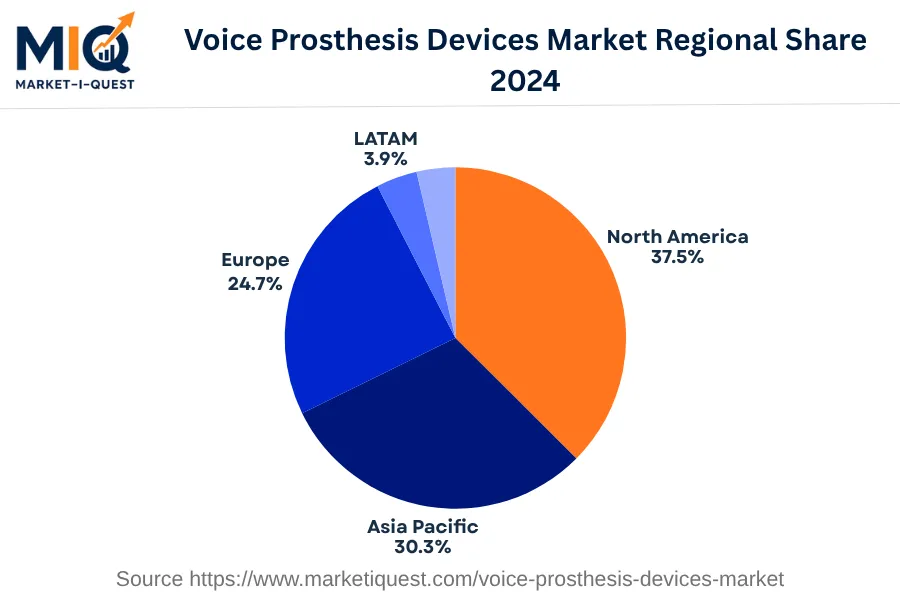
In 2024, the Voice Prosthesis Devices Market in Asia Pacific continued its steady growth, notably driven by increasing prevalence of laryngeal cancer and expanding healthcare infrastructure. Healthcare institutions from China to Australia speedily adopted high-end voice prosthesis technologies, propelled by government funding and reinvestment of robust profits. The advanced biocompatible materials used to produce these devices saw price depreciation, fuelling the procurement rates in notable markets of India, South Korea, and key ASEAN countries.
Trends-wise, buyer preferences veered toward impeccably-finished products providing optimal vocal quality. This prompted device manufacturers such as Japan's Atos Medical to optimize their product lines. Channel dynamics saw a tilt towards online platforms which fueled accessibility, particularly in densely populated urban areas. Transformative partnerships bubbled up, like the one between China's Leadman Technology and India's Juvaplus, aiding the exchange of manufacturing expertise and market access. Governments initiated stringent policy enforcement, ensuring product reliability, with China's Medical Device Regulation taking the lead in setting safety and quality standards in the region. The adoption of these devices extended beyond healthcare institutions, penetrating sectors like enterprise and retail, establishing its benefits for individuals with voice impairments. Thus, in 2024, the Asia Pacific Voice Prosthesis Devices market moved on the strength of technological upgrading, affordability, accessibility, and rigorous policy adherence.