
Veterinary Vaccines Market Snapshot

Key Players

  • Zoetis Inc. (United States)
  • Merck & Co. Inc. (United States)
  • Boehringer Ingelheim Vetmedika Inc. (Germany)
  • Bayer Animal Health (Germany)
  • Ceva Animal Health LLC (France)
  • Elanco Animal Health Incorporated (United States)
  • Hester Biosciences Ltd. (India)
  • Virbac Group (France)
  • Phibro Animal Health Corporation (United States)
  • Hipra (Spain)

Market Size

Base Year 2024
$15.94 Bn
CAGR
8.17%
Forecast 2034
$34.96 Bn

Market Segments

By Type
  • Livestock Vaccines
  • Porcine Vaccines
By Technology
  • Live Attenuated Vaccines
  • Inactivated Vaccines

Market Dynamics

Drivers
  • Rising pet ownership rates
  • Increasing awareness about animals' health
Restraints
  • High cost of vaccines
  • Regulatory compliance hurdles
Opportunities
  • Increasing pet adoption trends
  • Advancements in biotechnological vaccines

Market Size

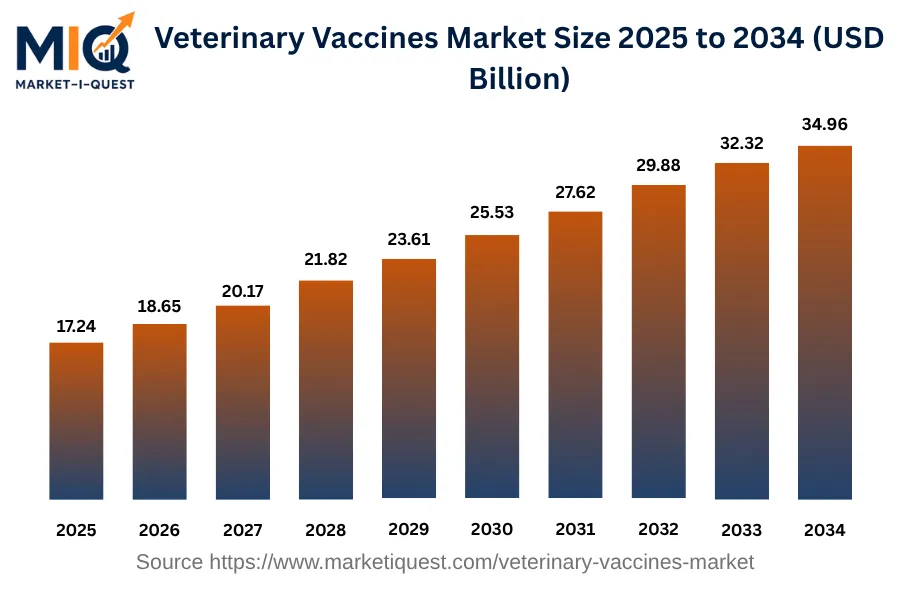
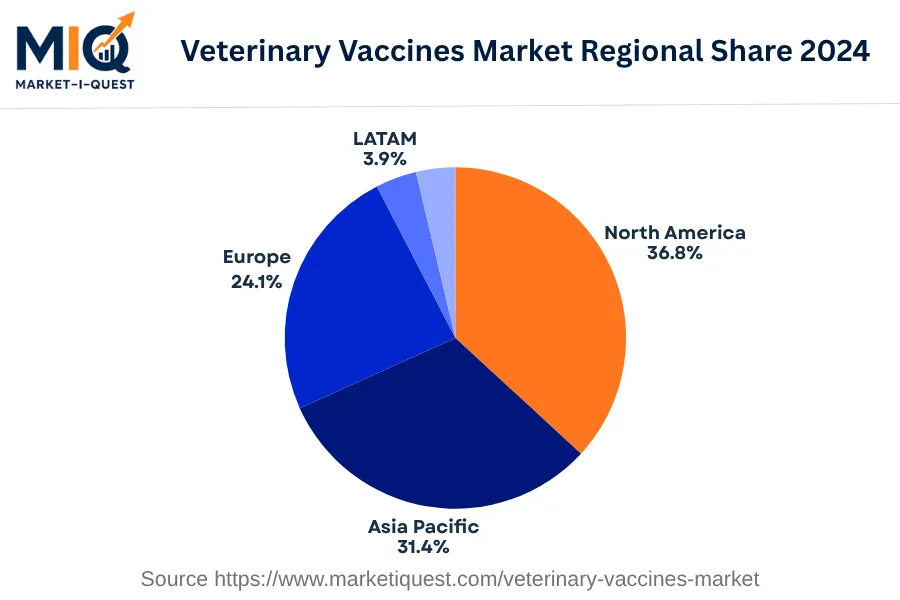
The Veterinary Vaccines Market was worth USD 15.94 Billion in 2024 and increased to USD 17.24 Billion in 2025, and by 2034, it reached a value of USD 34.96 Billion, with a Compound Annual Growth Rate (CAGR) of 8.17%. The steady growth of the market within this period is primarily driven by urgent efforts in animal healthcare, steady technological advancements, and persistent demand for safe and effective vaccine administration methods for animals. It is also worth noting that the market witnesses constant fluctuations due to the integration of informatics and system biology, urging the need for a more diverse set of interventions to maintain market stability regularly. Regarding market distribution in 2024, North America had the largest share at 36.8%, followed by the Asia Pacific at 31.4%, Europe at 24.1%, Latin America at 3.9%, and the Middle East and Africa at 3.7%. This geographical share mix directly indicates the dominant influence regions have on the overall size of the Veterinary Vaccines Market.

Key Takeaways

  • By Type - Livestock Vaccines held the dominant position in 2024 accounting for a significant market share.
  • By Type - Porcine Vaccines represented the fastest-growing segment expanding swiftly from 2025 to 2034.
  • By Technology - Inactivated Vaccines led the market in 2024 holding a prominent market share.
veterinary-vaccines-market market size

Key Driving Factors

Increasing Incidences of Zoonotic Diseases

One of the key drivers for the veterinary vaccines market is the rising incidence of zoonotic diseases. Zoonotic diseases are those that can be transmitted from animals to humans. The World Health Organization (WHO) estimates over 60% of known infectious diseases in humans are zoonotic in nature. High-profile outbreaks over recent years, such as Avian Influenza and Swine Flu, have highlighted, globally, the significant health risks posed by these zoonotic diseases. These events have triggered an increase in demand for veterinary vaccines as countries strive to control disease outbreaks in animals, and in turn, safeguard public health. Notably, the agricultural industry and regulatory bodies are emphasizing preventive healthcare measures for livestock and pets, augmenting demand for efficacious veterinary vaccines.
Increase in Pet Ownership and Spending on Pet Healthcare

The second driver propelling the veterinary vaccines market forward is the surge in pet ownership and a corresponding increase in spending on pet healthcare. In recent years, the perception of pets has significantly transitioned from animals to family members in many parts of the world. This shift in perception is resulting in greater attention to the health and wellness of pets, including preventative care such as regular vaccinations. Pet parents are willing to invest in comprehensive healthcare for their pets to prolong their lifespan and enhance their quality of life. Concurrently, veterinarians are increasingly advocating for routine immunizations to prevent various pet diseases. These combined factors are creating substantial demand for veterinary vaccines across the globe.

Market Evolution by Timeline

2019-2023
Within this period, the main buyer segment was predominantly private pet owners, in regions of Europe and North America. A sharp increase in pet adoption in these regions fueled demand for routine vaccinations. Suppliers integrated production and distribution processes around companion animals, under the constraint of supply chains affected by global political scenarios. European Union regulation 429/2016 enforced higher vaccination needs for livestock, driving demand. Commercial models typically saw vaccines sold directly through veterinarian practices. Slight price increases were observed, with resistance to longer-term contracts. Major practical block was anti-vaccination sentiment among pet owners, countered by extensive education campaigns.
2024
In 2024, a disease outbreak in Asia increased the demand for livestock vaccines, especially in countries like China, India, and Japan. Due to this, distributors expanded their policies towards Asian markets. The technology provided vaccines with longer shelf life and higher resistance to environment changes. Governments initiated mandatory vaccination programs stimulating the rapid adoption of vaccines. Prices for the vaccines experienced a temporary surge due to the sudden outbreak. Market-shared risk approach started, with farmers, insurers, and governments sharing the costs and risks of vaccinations.
2025-2029
Throughout this period, a shift towards aquaculture vaccinations occurred, primarily in Southeast Asia and Western Europe. Advancements in biotechnology led to the launch of DNA-based vaccines for fish, contributing to the matured integration of aquaculture into the market. Standards such as the OIE Aquatic Animal Health Code influenced adoption. Pricing models often included bundle-packages of vaccines for diversified farm systems. A rise in fish disease outbreaks posed a risk to this segment, necessitating quick responses from manufacturers and regulatory bodies.
2030-2034
In this era, the focus remains on livestock health management in the United States, Australia and Brazil - countries with large cattle industries. Newer technologies introduced rapid vaccinations and streamlined the supply chain enabling wider vaccine distribution. The World Organization for Animal Health (OIE) introduced regulations bolstering the adoption of routine vaccinations. Fluctuations in meat consumption and animal diseases influenced pricing. A major risk this period lies in the possibility of new disease strains resistant to existing vaccinations; public-private partnerships emerged as a common response to such threats.

Future Market Outlook

Future Opportunities

The veterinary vaccines market presents significant future opportunities tied to evolving consumer demands and regulatory trends. In 2023, the American Animal Hospital Association published guidelines promoting preventive healthcare in pets, which could heighten the demand for vaccines. As pet ownership increases globally, particularly in regions like Asia-Pacific, where pet populations are surging, there is a clear opportunity for vaccine manufacturers to capture this growing market. Additionally, partnerships between pharmaceutical companies, such as the collaboration between Merck Animal Health and the University of Georgia in 2022, focus on developing vaccines for emerging diseases in companion animals, showcasing a targeted approach to address urgent health threats. Furthermore, the trend towards personalized medicine in human healthcare is influencing veterinary practices; in 2023, the American Veterinary Medical Association called for more individualized vaccination protocols based on genetic testing. With increasing awareness regarding zoonotic diseases, governments and global organizations may intensify initiatives aimed at vaccinating animals to mitigate transmission risks. As regulatory environments adapt, such as the proposed updates to the Veterinary Feed Directive in the US, companies can explore innovations in delivery methods, such as intranasal and oral vaccines, that may encourage better compliance. These factors collectively suggest that strategic partnerships, aligned health initiatives, and advancements in vaccine delivery technology can shape a proactive landscape for the veterinary vaccines market over the coming years.

Segmentation Analysis

By Type

The market is classified into sub-segments including Livestock Vaccines and Porcine Vaccines. In base year 2024, Livestock Vaccines garnered the most revenue, while Porcine Vaccines is projected to experience the fastest annual growth rate during the forecast period.

Largest Revenue Share

Livestock Vaccines

Market Share Leader

Livestock Vaccines are currently leading the market in terms of revenue. This is largely due to their broad application in the agribusiness sector all over the world. Livestock vaccines provide a crucial line of defense against a host of diseases that can compromise animal health and productivity, affecting not only individual farmers but the economies of entire regions. From cattle and sheep to poultry and fish, all kinds of livestock are susceptible to various diseases and hence are targeted by a comprehensive range of vaccines. Moreover, localized outbreaks of diseases such as avian flu, swine flu, and foot-and-mouth disease particularly drive up the demand for livestock vaccines. Higher vaccination levels lower the risk of disease outbreak, loss from mortality, and reduce the economic and labor costs of disease control. This, in turn, makes livestock vaccines a standard purchasing criterion for farmers aiming to protect their revenues.

Fastest CAGR

Porcine Vaccines

Forecast Period Growth Leader

Porcine Vaccines are forecasted to grow at the fastest rate over the next few years. Economic development, rapid urbanization, and dietary changes have resulted in increased pork consumption worldwide, especially in emerging Asian markets. This has driven a marked increase in the demand for porcine vaccines to safeguard the health of the swine population from an expanding list of diseases. Technological advancements and increased capital expenditure in veterinary healthcare have led to new vaccine development, enhancing herd immunity. A potential barrier to adoption is regulatory challenges given the strict regulations for animal vaccines. However, proactive policies are increasingly facilitating easier market entry for new vaccine variants. Collaborations and partnerships with regional swine producers could provide an additional catalyst for growth. Despite the ongoing risks of disease outbreaks, the porcine vaccine industry offers strong prospects for swift expansion in the near term.

By Technology

The market technology segment is divided into subsegments including Live Attenuated Vaccines and Inactivated Vaccines. Among these, Inactivated Vaccines accounted for the largest revenue share while the Live Attenuated Vaccines subsegment is projected to grow at the fastest CAGR during the forecast period.

Largest Revenue Share

Inactivated Vaccines

Market Share Leader

Inactivated vaccines hold the largest share of the market, driven by their broad spectrum of applications and proven efficiency in a variety of health contexts. This type of vaccines, having been made from microorganisms that have been killed or otherwise inactivated, are safe, stable, and capable of providing robust immunity, which drives their strong continued demand. Furthermore, they have a lower risk of causing an unnecessary immune response, enhancing their popularity among healthcare providers. Regulatory agencies worldwide also gravitate towards these vaccines, influenced by their long track record of safety and efficacy. Another key contributing factor is that inactivated vaccines can be stored and transported without stringent refrigeration requirements that live vaccines typically require, making it possible for greater distribution, especially in developing countries. Purchasing patterns in the healthcare segment have recognized these advantages, leading to this subsegment’s growth.

Fastest CAGR

Live Attenuated Vaccines

Forecast Period Growth Leader

While the Live Attenuated Vaccines subsegment does not have the biggest share, it is exhibiting the fastest growth, with a strong trajectory expected in the coming years. These vaccines are formulated from virus or bacteria that has been weakened under laboratory conditions. They are typically very effective, often providing lifelong immunity with just one or two doses. However, some adoption barriers need to be overcome. For instance, these vaccines require careful handling and cannot be given to people with weakened immune systems. Also, developments in technology could be potential catalysts for bettering the efficiency of these vaccines. Changes in regulatory policies supporting faster approval of such vaccines, increased capital expenditures on vaccine research, and new partnerships between vaccine developers and manufacturers can help mitigate these drawbacks. Yet, near-term risks, including stringent regulatory hurdles and handling challenges, need to be navigated.

Competitive Analysis

Key Market Players

Manufacturers / OEMs

Zoetis
US
Merck Animal Health
US
Boehringer Ingelheim Vetmedica
Germany

Key Suppliers & Raw Materials

Thermo Fisher Scientific
US
BioChek
Netherlands
IDvet
France

Distributors, Integrators & Channel Partners

Henry Schein
US
Patterson Companies
US
MWI Veterinary Supply
US

Porter’s Five Forces Analysis

This analysis evaluates the competitiveness and attractiveness of the Veterinary Vaccines Market.

Supplier Bargaining Power

Medium

Influence of suppliers is moderate due to the availability of multiple vaccine manufacturers.

Buyer Bargaining Power

Medium

Buyers have moderate power due to price sensitivity and availability of different vaccine types.

Threat of Substitutes

Low

Low threat as there are no effective alternatives to vaccines for preventing animal diseases.

Threat of New Entrants

High

Entry barriers are low with increasing investment and rising demand for animal health services.

Competitive Rivalry

High

Intense competition due to the presence of several large-scale and small-scale enterprises.

Regional Analysis

Geographic market dynamics and growth opportunities across key regions

Global Market Outlook

veterinary-vaccines-market market regional share

North America

In 2024, the North American veterinary vaccines market was largely influenced by factors including health concerns, regulatory norms, and livestock management. Several drivers of demand were noticeable. The prevalence of zoonotic diseases created heightened awareness of animal health, leading to an increase in preventive healthcare like vaccinations. Government regulations, particularly the United States Department of Agriculture's heightened measures for animal welfare, drove the compliance to vaccination protocols. Further, intensified livestock farming in Mexico and Canada necessitated regular vaccinations for disease prevention, adding to the market demand.

Noticeable trends included technological advances, heightened adoption, and consolidation of manufacturers. The shift from live attenuated vaccines to DNA and recombinant vaccines exemplified the impact of evolving technology. End users including pet owners, livestock farmers, and government animal healthcare agencies showed a higher adoption rate for technologically advanced vaccines due to their proven efficacy. Manufacturing also saw consolidation, with companies like Zoetis and Merck Animal Health in the U.S. leading the acquisitions to streamline market control and distribution. Policy enforcement remained strict with regulators like the Canadian Food Inspection Agency ensuring vaccination authenticity and safety standards. Hence, the North American veterinary vaccines market in 2024 demonstrated strong growth factors through regulation, technological evolution, and consolidating manufacturing.

Asia Pacific

In 2024, the Veterinary Vaccines Market in Asia Pacific exhibited dynamic growth reflecting demand stimuli and evolutionary trends. Key drivers included increasing investment in animal health in China and India, coupled with more stringent regulatory frameworks to enhance farm biosecurity in Australia. The adoption of recombinant vaccines technology in Japan and South Korea propelled supply dynamics, while competitive pricing strategies prevailed across key ASEAN markets.

The market witnessed several pivotal trends. In China, escalating buyer preference for livestock vaccines spurred the market, underpinned by the surge in swine farming. Australia saw a marked shift towards companion animal vaccines, influenced by rising pet ownership. Technological advancements led to the emergence of DNA vaccines, especially in the Japanese market. In South Korea and India, government initiatives to control zoonotic diseases influenced procurement channels, driving policy enforcement. Moreover, active partnerships and M&As flavored the market landscape, such as those observed in the ASEAN regions between local exporters and global pharmaceutical companies. Across sectors, manufacturing and healthcare establishments remained dominant consumers, with enterprises playing a significant role. The increased strain on food-supply chains led governments to invest in vaccine development in a bid to secure the region's food resources, which underscored the significance of the Veterinary Vaccines Market in the Asia Pacific region in 2024.

Europe

In 2024, the veterinary vaccines market in Europe demonstrated considerable growth influenced by several market drivers and trends. The escalating pet ownership and increased awareness about zoonotic diseases drove demand. Stricter animal health regulations enforced by governments, such as the UK's Animal Health Law, necessitated the regular vaccination of pets, boosting market operations. Technological advancement in vaccine development, evident in Spain's deployment of innovative DNA vaccines, further spurred the market. A significant trend observed in 2024 was the rising preference for combination vaccines, especially in markets like Germany and France. Consumer focus shifted towards customized and individualized vaccines for pets, with Italy leading this trend. There was a substantial increase in partnerships and collaborations among vaccine manufacturers in the Nordics and Benelux regions, contributing to market consolidation. An increasing e-commerce presence was notable in the UK, with online channels becoming a major platform for vaccine purchase.

Enterprise and healthcare sectors primarily contributed to market growth in Central and Eastern Europe, due to the high demand for livestock vaccines. The livestock sector, particularly, manifested a pressing need for effective and long-lasting vaccines to prevent the outbreak of diseases, positively impacting the overall market outlook. Practices carried out in 2024 showed a standardization trend in the veterinary vaccines market across Europe.

Latin America

In 2024, the Veterinary Vaccines Market in Latin America experienced notable activity primarily due to known animal health concerns and increased investment in the sector. Drivers of this market included accelerated adoption of advanced vaccines in countries such as Brazil, Mexico, Argentina, Peru, Colombia, and Chile. Governments boosted investment in healthcare infrastructure for animals, while private entities amplified R&D spending to tackle diseases like Foot and Mouth and Avian Influenza. Clarity in pricing policies also positively influenced market dynamics. Market trends included a substantial shift towards technologically advanced vaccines coupled with an increasing awareness of animal healthcare in rural and urban areas. Pharmaceutical companies focused on partnerships and mergers in pursuit of new vaccine production. Chile and Argentina observed strict enforcement of policies related to vaccine quality and distribution.

The key customers for the veterinary vaccine market included enterprises, farms, ranches, and public healthcare providers. The swine and poultry sectors, which have a huge economic impact in Brazil and Peru, showed great demand for vaccines. At the same time, the companion animal sector, flourishing in urban spaces across LATAM, amplified the need for preventive healthcare, bolstering the vaccine market. In summary, the pronounced demand for high-quality veterinary vaccines, along with supportive infrastructure and policy dynamics, marked the landscape of the LATAM Veterinary Vaccines Market in 2024.

Middle East & Africa

In the base year 2024, the Veterinary Vaccines Market within the Middle East and Africa demonstrated significant dynamism. Drivers include effective regulations from governments encouraging mandatory vaccination, especially in countries like Saudi Arabia and Israel, and increased investments in healthcare infrastructure that targeted pet services in regions such as the United Arab Emirates and Qatar. Rising disposable income led to an increased adoption of pets and a higher demand for their wellness in countries like South Africa and Nigeria, thereby boosting the veterinary vaccine market. Concurrently, technological advances in vaccine production and vaccination methods played a pivotal role in enhancing the supply dynamics. Widening insurance coverage for pet health in Kenya provided a significant stimulus to market growth. Pricing was another factor that impacted the market, especially given the declining cost of vaccines due to mass manufacturing and widespread accessibility in Egypt.

Trends observed include a growing preference for vector-based and DNA vaccines over traditional inactivated vaccines. Teleconsultation services for veterinary care gained popularity due to ease of accessibility in Qatar and the UAE, while major multinational pharmaceutical companies expanded their product lines in anticipation of increasing demand. Mergers and acquisitions were prominent, particularly in South Africa and Israel, aimed at achieving higher market penetration. Lastly, enforcement of strict animal transportation policies by governments necessitated systematic vaccination and documentation, further bolstering the market.

Recent Industry Developments

Latest market innovations, product launches, and strategic initiatives

June 2025

Dechra Pharmaceuticals sold its Avishield® poultry vaccines portfolio to Vaxxinova (part of the EW Group). The portfolio consists of eight products sold into 29 countries. The deal includes the transfer of Dechra's poultry vaccine R&D team of 24 people based in Zagreb, Croatia, along with the corresponding product pipeline. Dechra will continue manufacturing and distributing Avishield products for a two-year transitional period.

October 2025

The U.S. Congress passed the Foreign Animal Disease Prevention, Surveillance, and Rapid Response Act of 2025, reauthorizing animal disease prevention and management programs.

Frequently Asked Questions