Veterinary Anesthesia Equipment Market Snapshot

Key Players

  • Midmark Corporation (United States)
  • Dispomed Ltd. (Canada)
  • DRE Veterinary (United States)
  • Supera Anesthesia Innovations (United States)
  • Smiths Group plc (United Kingdom)
  • Shenzhen Mindray Bio-Medical Electronics Co. Ltd. (China)
  • Jorgensen Laboratories (United States)
  • Beijing Wondcon Technology Limited (China)
  • A.M. Bickford Inc. (United States)
  • Hallowell EMC (United States)

Market Size

Base Year 2024
$0.894 Bn
CAGR
6.87%
Forecast 2034
$1.74 Bn

Market Segments

By Type of Animal
Large Animals, Small Animals, Exotic Animals
By Type of Anesthesia
Inhalant Anesthetics, Injectable Anesthetics, Local Anesthetics
By Application
Surgical Procedures, Diagnostic Imaging, Pain Management, Emergency Care
By End User
Veterinary Clinics, Veterinary Hospitals, Research Institutions, Zoos

Market Dynamics

Drivers
  • Growing pet healthcare expenditure
  • Increased pet surgeries demand
Restraints
  • High equipment cost
  • Lack of skilled professionals
Opportunities
  • Emerging markets expansion
  • Technological advancements in anesthesia equipment

Market Size

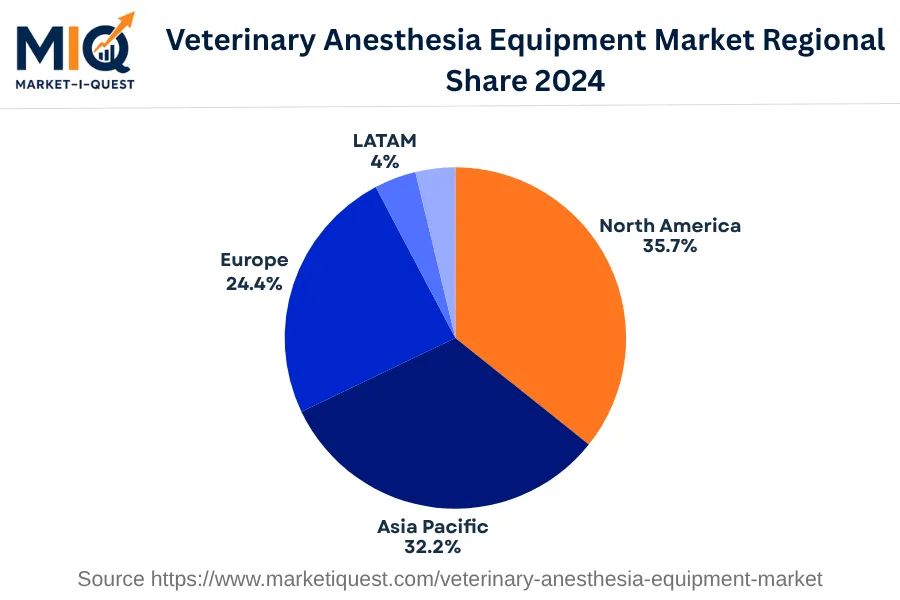
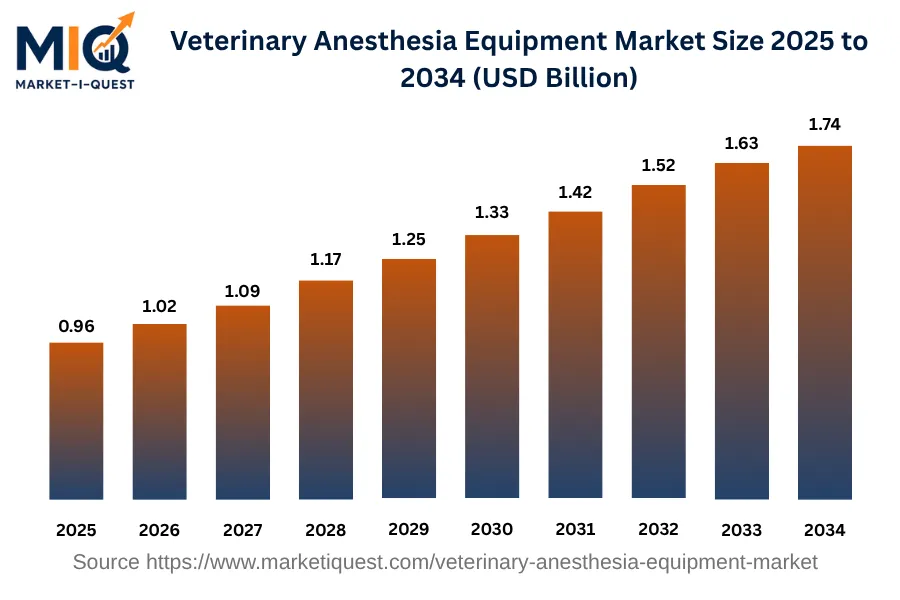
The Veterinary Anesthesia Equipment Market was valued at USD 0.95 billion in 2025 and is projected to reach a size of USD 1.74 billion by 2034, registering a CAGR of 6.9%. The market size has followed an upward trend, escalating from a valuation of USD 0.89 billion in 2024 to USD 1.74 billion in 2034. The growth trajectory over this decade reflects an increase in the adoption and application of veterinary anesthesia equipment. Notably, the demand for such equipment has burgeoned, buoying the market's expansion over the years. The regional market shares in 2024 were divided as follows: North America represented 35.7% of the market, Asia Pacific stood at 32.2%, Europe constituted 24.4%, LatAm held 4.0%, and MEA accounted for 3.8%.

Key Takeaways

  • By Type of Animal - Large Animals led the market accounting for highest share in the base year.
  • By Type of Anesthesia - Injectable Anesthetics held a dominant position in market share during the base period.
  • By Application - Diagnostic Imaging expanded the fastest reflecting the high usage of veterinary anesthesia equipment.
  • By End User- Veterinary Hospitals accounted for the majority share in the base year dominating other users in the market.
veterinary-anesthesia-equipment-market market size

Key Driving Factors

Increasing Surge in Pet Ownership

A significant factor driving the veterinary anesthesia equipment market is the worldwide surge in pet ownership. With rise in disposable income and changing lifestyle patterns, people nowadays are more inclined towards pet ownership. As pets effectively serve as stress relievers while also providing companionship, an increase in their numbers equates to an equally expanded need for veterinary care to ensure their welfare and longevity. This tendency has led to a rise in the utilization of veterinary anesthesia equipment when these pets undergo procedures that require anaesthesia such as surgeries and diagnostic imaging. Thus, higher pet ownership growth rates are indirectly enhancing the demand for this specialized equipment.

Shift Towards Minimally Invasive Veterinary Procedures

Another factor stimulating the growth of the veterinary anesthesia equipment market is the shift towards minimally invasive veterinary procedures. Modern veterinary medicine has discerned a notable shift from traditional, open surgeries to less invasive alternatives such as laparoscopic surgery or endoscopy. These sophisticated procedures deliver superior outcomes but request specialized anesthesia management to ensure patient safety during the process. Hence, the drift towards these advanced procedures is driving the need for quality veterinary anesthesia equipment, fostering the growth of the market.

Market Evolution by Timeline

2019-2023
Between 2019–2023, North America primarily contributed to the demand for veterinary anesthesia equipment, with primary buyers being animal hospitals, clinics, and research institutions. These buyers sought safer anesthesia delivery, with demand being met by the integration of advanced technology such as efficient vaporizers and oxygen generators into the equipment. Manufacturing constraints existed due to high production costs. In terms of policies, the AVMA Guidelines for Anesthesia in Animals influenced the adoption of these new technologies. Common commercial models observed were straight purchases and capital leases, with recurring revenue models through maintenance contracts. The main risk during this period was the high cost of advanced equipment. Manufacturers typically responded by offering various financing options.
2024
By 2024, there was increased demand from Asia, particularly China, for veterinary anesthesia equipment. The purchasers were veterinaries and animal research facilities aiming to improve surgical outcomes. Equipment supplemented with monitor screens exhibited a high level of integration maturity. Constraints were mainly due to regulatory restrictions on the sourcing of key components. There weren't major changes in regulation. However, regional standards such as the Chinese Veterinary Anesthesia Standards were influencing purchasing decisions. Pricing was heavily influenced by competition, leading to the emergence of affordable veterinary anesthesia equipment. The supply shortage of key components raised liability concerns, which often saw suppliers engaging in contractual relationships with multiple manufacturers.
2025-2029
During 2025–2029, sustainable practices and tech upgrades influenced the market. With more countries focusing on better animal healthcare, Latin America and Middle East became new buyer regions. There was a rise in portable veterinary anesthesia equipment, enabled by powerful compact battery systems. On the regulation front, the Humane Standards of Animal Anesthesia Act in several countries drove the adoption of more humane anesthesia practices. Innovative pricing models began to emerge, with suppliers offering equipment as a service. The primary risk during this time was the disruption of the global supply chain, due primarily to escalating geopolitical tensions. Mitigation methods involved diversifying supply sources.
2030-2034
From 2030-2034, Africa emerged as a new demand region, with a focus from institutional buyers on mobile clinics. Cloud technology integration became prevalent, allowing real-time data analysis and better monitoring of the animals' vitals. Supply constraints were due to a global shortage of electronic components, leading to uncertainty in the production timeline. The International Animal Anesthesia Standards (IAAS) came into effect globally, setting strict guidelines on anesthesia equipment. The commercial model evolved toward service agreements, involving maintenance and software updates within the package. Manufacturers responded to risks of product recall due to faulty components by collaborating closely with suppliers and strengthening their quality control.

Future Market Outlook

Future Opportunities

The veterinary anesthesia equipment market is poised for significant opportunities driven by evolving industry dynamics. Following the 2021 One Health Initiative emphasizing the interconnectedness of human, animal, and environmental health, veterinary practices are increasingly integrating advanced anesthesia technologies to enhance patient care across various species. This trend creates demand for broader product portfolios that cater to a diverse clientele, particularly in regions like Europe where pet ownership reached unprecedented levels in 2023. Additionally, as telemedicine becomes more commonplace, veterinary practices are seeking portable anesthesia equipment that enables remote monitoring and consultation, illustrated by initiatives from companies like Vetary in North America, which focus on developing imaging systems compatible with telehealth consultations. Another area of growth lies in the increased awareness and regulation surrounding animal welfare; the World Organization for Animal Health has advocated for humane treatment practices, including the implementation of modern anesthesia techniques in 2022. This regulatory backing encourages equipment manufacturers to invest in research and development for safer, more effective anesthesia solutions. Furthermore, the consistent advancements in data analytics and AI are opening new pathways for personalized anesthesia based on individual patient needs, as seen in recent collaborations between software developers and veterinary schools. These opportunities align closely with the ongoing emphasis on improving veterinary practices and outcomes on a global scale.

Segmentation Analysis

By Type of Animal

The market is divided into subsegments including Large Animals, Small Animals, and Exotic Animals, with Large Animals accounting for the largest revenue share while Exotic Animals are expected to grow at the fastest CAGR during the forecast period.

Largest Revenue Share

Large Animals

Market Share Leader

The Large Animals subsegment holds the largest share in the sector's revenue owing to several reasons. Larger animals such as cattle and horses are often multi-purpose, being used for labor, companionship, and even for their products. This variety of uses creates a large, diverse, and stable demand. From an economic standpoint, the maintenance cost and the investment for large animals are significantly higher than those for small or exotic animals. This results in higher prices and consequently larger revenue for this subsegment. Moreover, in certain geographies like rural and farming communities, the demand for large animals is prominent due to their roles in agriculture and transportation. However, the dependency on large animals is not geographically limited. For instance, the horse racing industry in developed countries also contributes significantly to the large animals' market. The regulatory framework in most regions further supports the large animal sector by providing subsidies and grants to maintain livestock, preserving it as the subsegment with largest revenue.

Fastest CAGR

Exotic Animals

Forecast Period Growth Leader

Despite having a smaller share compared to the other subsegments, Exotic Animals is expected to register the highest CAGR during the forecast period. The increasing interest and willingness of individuals to own unique and rare species is driving this subsegment. Furthermore, technological advancement, such as the ability to create suitable environments artificially, has facilitated the housing and care of these animals, accelerating growth in this sub-segment. Policy changes allowing or restricting ownership of certain types of animals can influence this subsegment significantly. Partnerships between breeders and transportation companies have also played a role in making it easier for customers to acquire exotic pets from different parts of the world. However, barriers such as high maintenance costs and the need for specialized knowledge provide a significant risk to the future growth of this market. Careful regulation and increased awareness amongst potential owners will be crucial to sustain this growth.

By Type of Anesthesia

The market is divided into subsegments including Inhalant Anesthetics, Injectable Anesthetics, and Local Anesthetics. In 2024, Injectable Anesthetics accounted for the largest revenue share while Inhalant Anesthetics is expected to grow at the fastest CAGR during the forecast period.

Largest Revenue Share

Injectable Anesthetics

Market Share Leader

The dominance of Injectable Anesthetics in the anesthesia market can be primarily attributed to their universal application and efficacy. These agents are usually preferred due to their rapid onset, high certainty of successful induction, better control, and execution in relation to dose adjustment. Also, injectable anesthetics present a smaller risk of pollution for the operating room environment as compared to inhalant anesthetics. Additionally, certain geopolitical regions with higher surgical procedure rates contribute significantly to the revenue share of injectable anesthetics. This segment also enjoys a stable supply and broad distribution channels. Regulatory support, coupled with the purchasing preference of healthcare providers for medicines with a predictable and controlled action underpin its high market value.

Fastest CAGR

Inhalant Anesthetics

Forecast Period Growth Leader

Inhalant Anesthetics is projected to be the fastest-growing subsegment in the anesthesia market. Major drivers for this growth include technological advancements in anesthetic devices and the development of more efficient and safer inhalant agents. Breathable anesthetics are becoming increasingly popular due to their non-invasive nature and the ability to quickly adjust the depth of anesthesia based on patient conditions. However, barriers to adoption include the resistance from the traditional use of injectable anesthetics and the perception of ambient pollution in operation theatres. Increasing collaborations between pharmaceutical companies and anesthesia device manufacturers, along with higher healthcare spending in emerging economies, serve as significant catalysts for this subsegment's growth. Yet, high initial costs and stringent regulations pose near-term risks to the rapid adoption of inhalant anesthetics.

By Application

The market is divided into subsegments including Surgical Procedures, Diagnostic Imaging, Pain Management, and Emergency Care. Among these, Diagnostic Imaging accounted for the largest revenue share while Pain Management is projected to grow at a remarkable pace in the forthcoming years.

Largest Revenue Share

Diagnostic Imaging

Market Share Leader

Diagnostic imaging as a market subsegment in 2024 earned the largest revenue share, a pattern that can be attributed to a variety of factors. Foremost among these is the increasing prevalence of chronic diseases worldwide, which raises the demand for early diagnosis and regular monitoring. Additionally, it can be noted that technological advancements in imaging techniques have improved the accuracy and usability of these systems, bolstering their adoption in varied healthcare settings. Geographically, the matured healthcare infrastructure, coupled with higher healthcare spending in developed countries, significantly contribute to the subsegment’s revenue share. Furthermore, the stringent regulatory landscape has somewhat streamlined the operation in the market segment, pushing the scales towards more compliant and hence larger market players, thereby focusing revenue into a select group of establishments.

Fastest CAGR

Pain Management

Forecast Period Growth Leader

Projecting into the future, the subsegment expected to witness the highest compound annual growth rate (CAGR) is Pain Management. The factors that potentially could drive this growth include a marked increase in the global geriatric population, coupled with the rising incidence of chronic pain among this demographic. Additionally, the sustained focus on the development of drugs and devices specifically designed for pain management should further bolster this subsegment’s market growth. Some challenges such as high cost of advanced pain management devices and skepticism towards opioid-based pain killers may initially impede growth but are likely to be overcome with continued innovation and regulatory backing. Also, partnerships with tech companies to enhance delivery systems and corresponding investors are expected to facilitate the subsegment's growth in the near future. It is important to acknowledge, however, the inherent risks presented by potential policy shifts in healthcare and rapidly evolving consumer expectations.

By End User

The market is divided into subsegments including Veterinary Clinics, Veterinary Hospitals, Research Institutions, and Zoos with Veterinary Hospitals accounting for the largest revenue share while Veterinary Clinics are expected to grow at the fastest CAGR during the forecast period

Largest Revenue Share

Veterinary Hospitals

Market Share Leader

Veterinary Hospitals, within the given subsegments, command the largest revenue share due to a number of factors. Key among these is the wide range of services offered. Veterinary hospitals typically offer extensive healthcare services, including emergency care, surgeries, and complex diagnostic services that are expected to drive market growth in 2024. Their ability to tackle critical cases, deal with a variety of conditions, and accommodate more patients also differentiates them from smaller clinics. Additionally, recent advancements in veterinary equipment and medical supplies have resulted in enhanced treatment outcomes, making them the preferred choice for pet owners. They are able to afford more specialized technology and trained staff which contributes to higher revenues. Moreover, most veterinary hospitals operate on a 24/7 basis, which allows for a consistent revenue stream. This aspect is of particular importance considering the unpredictability of animal health emergencies. The role of government regulation is also significant as stringent animal healthcare norms necessitate an adequate number of these institutions.

Fastest CAGR

Veterinary Clinics

Forecast Period Growth Leader

Veterinary clinics are expected to grow at the fastest rate because they provide essential, routine, and preventative care which results in higher patient turnover and more frequent visits than hospitals. The lower cost of services in these clinics as compared to hospitals makes them more accessible to a wider clientele, enhancing their potential for growth. Additionally, the increasing trend of pet adoption and growing awareness about animal health is likely to boost their demand. Their smaller size and focus on localized services also allow them to establish strong relationships with the community, essentially creating a solid customer base. Furthermore, the increasing partnerships with local pharmacies and online platforms for the delivery of prescription medications and pet supplies offer a unique growth opportunity for these clinics. Their quick turnaround time and focus on specific treatments rather than a variety of services can potentially lead to increased market share in the coming years. However, potential risks include regulatory changes and intense competition from larger hospitals and online services.

Competitive Analysis

Key Market Players

Manufacturers / OEMs

Smiths Medical
US
Midmark Corp.
US
JD Medical
US

Key Suppliers & Raw Materials

3M
US
Henry Schein, Inc.
US
B. Braun Melsungen AG
Germany

Distributors, Integrators & Channel Partners

Patterson Vet
US
Vetco
US
IDEXX Laboratories
US

Porter’s Five Forces Analysis

An overview of competitive dynamics in the Veterinary Anesthesia Equipment Market.

Supplier Bargaining Power

Medium

Limited suppliers create moderate bargaining power, offset by range in equipment qualities.

Buyer Bargaining Power

High

Many choices and low switching costs increase buyer power.

Threat of Substitutes

Low

Few effective substitute products exist for Veterinary Anesthesia Equipment.

Threat of New Entrants

Medium

Start-up costs and regulatory barriers impose moderate threat from new entrants.

Competitive Rivalry

High

Rivalry is high due to numerous established players competing on quality and price.

Regional Analysis

Geographic market dynamics and growth opportunities across key regions

Global Market Outlook

veterinary-anesthesia-equipment-market market regional share

North America

In 2024, the North American Veterinary Anesthesia Equipment Market demonstrated a strong demand due to several key drivers. Notably, the advancement and wide adoption of technology improved the safety and reliability of veterinary anesthesia delivery, exerting a significant positive influence on the market. Regulatory compliances, such as the Animal Welfare Act in the U.S. and Canada's Health of Animals Act, propelled investment in higher quality equipment. Additionally, increasing pet ownership across North America intensified the need for specialized veterinary services, thereby driving the sales of anesthesia equipment.

During this period, several trends shaped the market. First, veterinary clinics and hospitals became the primary buyers due to burgeoning service expansion efforts. Telehealth also made inroads in veterinary care, making remote pre-anesthetic assessment feasible and prompting the medical community to adopt more portable, digitally-integrated anesthesia devices. In the context of product shift, non-rebreathing systems gained popularity due to their suitability for small patients. An increasing number of partnerships and mergers among manufacturers aimed at equipment enhancement were observed, such as the strategic collaboration between DRE Veterinary and Avante Health Solutions. Lastly, stricter enforcement of animal health policies underscored the need for safer and more efficient anesthesia equipment, solidifying the market's ground in North America.

Asia Pacific

The Veterinary Anesthesia Equipment Market in Asia Pacific portrayed a dynamic tableau in 2024. Key drivers included increased pet ownership and growing demand for animal healthcare, particularly in developing nations like India and China, stimulating the need for advanced veterinary anesthesia equipment. Stringent regulations, like Australia's standard for veterinary anesthesia machines (AS 2896-2011), underpinned market growth by mandating high-quality supplies, thus inviting greater investment. Rapid technology adoption in Japan and South Korea, well-known for their robust healthcare solutions, transformed supply dynamics with improved devices penetrating the market.

Emerging trends signposted a significant shift in buyer behavior towards mobile anesthesia machines due to their efficiency and convenience, especially in rural parts of China and ASEAN nations. The implementation of digital touch-screen technology added to product enhancement, driving the acceptance rate. Distribution channels primarily involved direct selling, but gradual growth in online retail hinted at a new commercial pathway. In terms of partnerships, Indian pharmaceutical heavyweight, Jurox's collaboration with Chinese distributor, Kyoritsu, exemplified the escalating M&A activity in the market. Lastly, stringent policy enforcement - particularly in Australia and Japan – held manufacturers to higher standards, thereby ensuring quality equipment sustained market growth. This dynamic market influenced not just the veterinary sector but also extended its impact on the broader healthcare, retail, and manufacturing industries across the Asia Pacific region.

Europe

In 2024, Europe’s veterinary anesthesia equipment market experienced heightened activity. A rise in pet ownership and animal adoption across countries such as Germany, the UK, France, and Spain increased demand for veterinary services, stimulating the need for advanced anesthesia equipment. Regulatory changes across the region heightened quality standards, encouraging clinics and hospitals to upgrade existing infrastructure. The market also saw increased investment from large medical enterprises aiming at expansion into animal healthcare. Emerging trends in the market were shaped by the adoption of new technologies and shifting consumer behaviors. Digitalization played a prominent role, with market players increasingly integrating digital monitoring systems into anesthetic equipment to maximize precision and minimize risks. High demand contributed to stiff competition, prompting a move towards diversifying product offerings.

There was a noted shift in partnerships and M&A activity, with global companies seeking collaboration with European firms to gain access to the region's burgeoning market. Enforcement of stricter regulations and norms had a noteworthy impact on the market, driving vendors towards producing more compliant and higher standard equipment. Key sectors observing these changes included enterprise-owned animal clinics, government-backed animal healthcare initiatives, and utility providers offering medical equipment maintenance.

Latin America

In 2024, the veterinary anesthesia equipment market in Latin America was characterized by increasing pet ownership and high demand for quality veterinary services. Key drivers included rapidly evolving pet healthcare norms in countries like Brazil and Mexico, which saw increased investment in state-of-the-art veterinary facilities and advanced anesthesia equipment. The market also benefitted from government initiatives in Argentina promoting animal welfare, leading to more frequent veterinary check-ups and procedures requiring anesthesia. Technology adoption was another crucial driver, with a noticeable trend in Colombia towards digitally controlled anesthesia delivery systems to ensure precision and reduce risk.

Simultaneously, changing buyer behavior was evident in Chile, with a clear preference for portable and easy-to-use veterinary anesthesia equipment among small-scale veterinary clinics. More significant clinics and hospitals in Peru were undergoing modernization, leading to the replacement of traditional equipment with modern systems, thus buoying the market. In terms of policy enforcement, LATAM countries were tightening regulations related to animal surgeries, indirectly increasing the need for high-quality anesthesia equipment. Partnerships and M&A between local and international companies, particularly in Mexico's veterinary space, also positively impacted the equipment market. Overall, 2024 saw a robust veterinary anesthesia equipment market in LATAM, largely driven by quality-conscious customers and stringent regulatory scenarios.

Middle East & Africa

In 2024, the Veterinary Anesthesia Equipment Market in the Middle East and Africa exhibited a significant growth trajectory. Driving forces included increased pet adoption in countries like Saudi Arabia and the United Arab Emirates, leading to greater demand for veterinary anesthesia equipment. Moreover, advancements in technology made such equipment more efficient and appealing to veterinary practices. Additionally, availability of funds from Qatar and South Africa for healthcare infrastructure development positively impacted the market.

The prevailing trend of awareness and concern for animal health among the populace was on the rise, with Nigeria and Egypt demonstrating notable growth in veterinary healthcare awareness programs. Investment in modern veterinary technologies and services by countries like Israel and Kenya was a predominant trend as well. Regulatory bodies, particularly in Saudi Arabia and UAE, implemented strict policies enforcing high standards of animal care in veterinary practices, influencing the adoption of high-quality anesthesia equipment. Sectors contributing to this market growth included healthcare, due to increased pet medical insurance coverage, and retail, due to the sale of veterinary anesthesia equipment through online and offline channels. Large-scale veterinary hospitals, as well as small-scale clinics, significantly contributed to purchases. The market continued to thrive due to well-designed strategies, adoption of advanced technologies, and the influence of stringent regulatory mandates.

Recent Industry Developments

Latest market innovations, product launches, and strategic initiatives

June 2026

Parnell launched Sevoflurane Inhalation Anesthetic, indicated for induction and maintenance of general anesthesia in dogs, available in 250 mL bottles, providing clinics with a reliable, cost-effective inhalant anesthetic option. The product received FDA approval under ANADA #200-830 on January 30, 2026.

January 2026

Parnell launched Isoflurane Inhalation Anesthetic, a nonflammable and nonexplosive solution for induction and maintenance of general anesthesia in horses and dogs, available in 250 mL bottles.

Frequently Asked Questions