Vascular Graft Market Snapshot

Key Players

  • Medtronic (Ireland)
  • Terumo Corporation (Japan)
  • C.R. Bard (United States)
  • Cook Medical (United States)
  • MAQUET Holding (Germany)
  • Cardinal Health (United States)
  • LeMaitre Vascular (United States)
  • Endologix (United States)
  • Braile Biomédica (Brazil)
  • Jotec (Germany)

Market Size

Base Year 2024
$3.86 Bn
CAGR
6.78%
Forecast 2034
$7.44 Bn

Market Segments

By Type
Endovascular Grafts, Hemodialysis Grafts, Surgical Grafts, Biosynthetic Grafts
By Material
Polyester, Polytetrafluoroethylene (PTFE), Biological Tissue, Composite Materials
By Application
Coronary Artery Bypass, Peripheral Vascular Disease, Aortic Aneurysm Repair, Dialysis
By End Use
Hospitals, Ambulatory Surgical Centers, Specialty Clinics

Market Dynamics

Drivers
  • Increased prevalence of vascular disorders
  • Advancements in graft materials
Restraints
  • Stringent regulatory scenarios
  • High procedure costs
Opportunities
  • Rising cardiovascular disease prevalence
  • Increasing vascular surgeries

Market Size

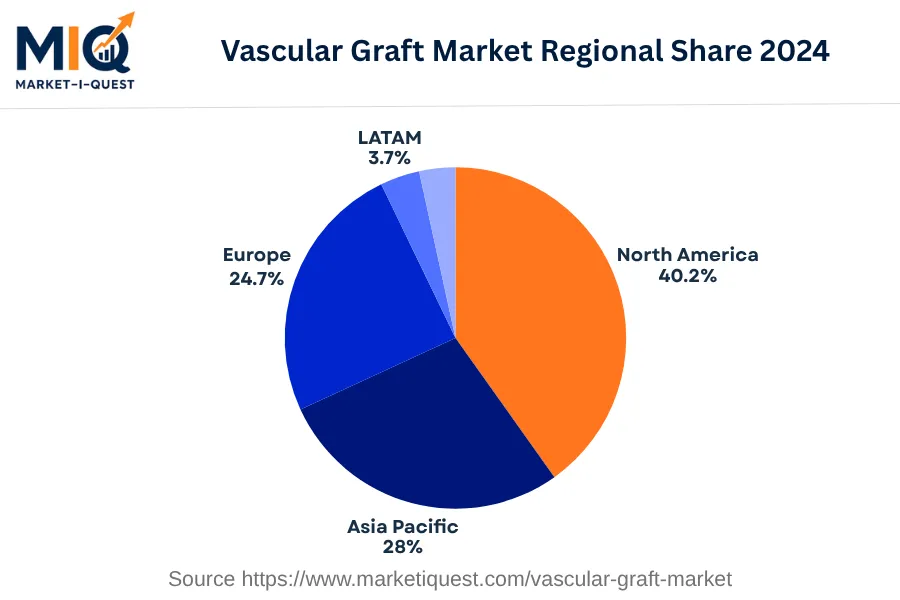
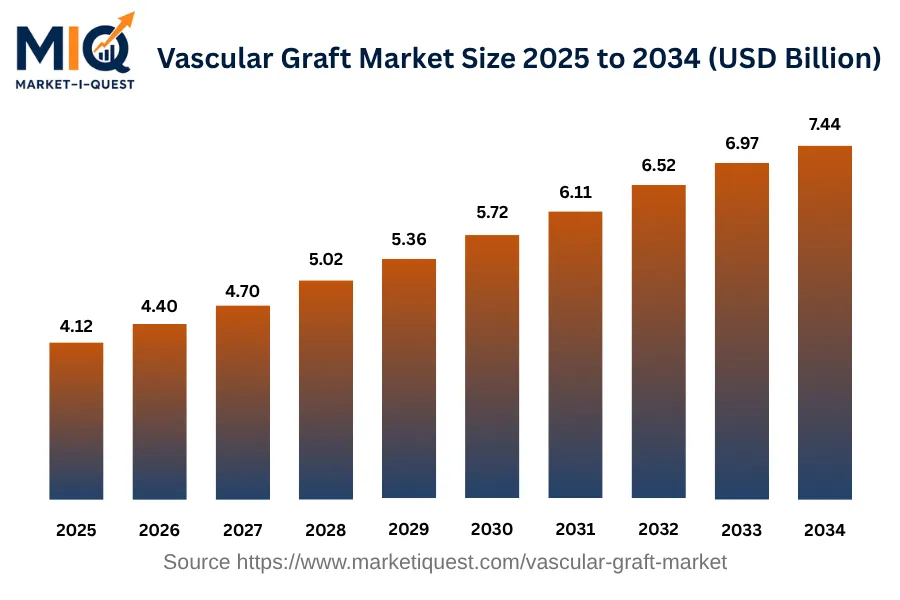
The Vascular Graft Market size was worth USD 4.12 billion in 2025, and it is forecast to grow to a value of USD 7.44 billion by 2034. The market demonstrated a Compound Annual Growth Rate (CAGR) of 6.78% from 2025 to 2034. Market growth was steady throughout this period, reflective of the vascular graft market's steady demand and increasing prevalence, and resulting in this significant increase in total value. The regional distribution of this market in 2024, just as the forecast period began, saw North America with the largest share at 40.16%, followed by Asia Pacific at 27.96%, Europe at 24.72%, Latin America at 3.74%, and the Middle East and Africa at 3.42%. The share of the market across these regions gives a sense of the geographical distribution of demand and activity within the vascular graft market.

Key Takeaways

  • By Type - Surgical Grafts held a dominant position in the Vascular Graft Market.
  • By Material - Polytetrafluoroethylene (PTFE) led the market accounting for the highest share in the base year.
  • By Application - Dialysis was the leading subsegment in the base year.
  • By End Use - Hospitals accounted for the largest market share in the given period.
vascular-graft-market market size

Key Driving Factors

Adoption of Bioengineered Vascular Grafts

A specific factor driving the vascular graft market is the increasing adoption of bioengineered grafts. Bioengineered grafts, derived from the human or animal tissue and then treated to become non-reactive, have grown in popularity due to the low incidence of infection and decreased risk of graft rejection compared to synthetic grafts. Vascular graft surgeries, particularly for conditions like aneurysms and peripheral artery disease, are thus experiencing a shift from synthetic to bioengineered grafts. Healthcare providers are recognizing the advantages of these grafts based on clinical evidence and patient outcomes, which is fueling the bioengineered graft industry and subsequently pushing the broader vascular graft market.

Introduction of Medicare Severity Diagnosis Related Group (MS-DRG) System

A second distinctive factor pushing the vascular graft market is the implementation of the Medicare Severity Diagnosis Related Group (MS-DRG) system in the United States. This payment structure includes vascular procedures that require vascular grafts. The MS-DRG system, which replaces the earlier Diagnostic Related Group (DRG) system, assigns every patient to a specific category based on their diagnosis, procedures undertaken and other clinical data. Payments are then determined by the assigned category, encouraging hospitals to optimize costs. This financial structure has prompted hospitals to seek cost-effective and efficient vascular grafts, thereby stimulating the vascular graft market. Additionally, the increasing aging population, most prone to vascular diseases necessitating graft transplant, enhances the impact of MS-DRG on the market.

Market Evolution by Timeline

2019-2023
During this period, most demand in the Vascular Graft Market was due to the growing incidence of cardiovascular diseases and an aging population particularly in developed regions including North America and Europe. On the supply side, a variety of products from synthetic to biological vascular grafts were shipped, with the former maintaining a higher market share. As for policy, the FDA standards for vascular grafts continued to play a significant role in influencing adoption. Commercially, manufacturers focused on partnerships with hospitals and medical clinics. Major risks included product failure and post-surgical complications.
2024
The Vascular Graft Market in 2024 was characterized by a surge in demand from developing countries like China and India due to increasing awareness about vascular grafts and improving healthcare infrastructure. Supply-wise, manufacturers piloted new products like antimicrobial grafts. Regarding policy, stricter EU Medical Device Regulations (MDR) presented adoption challenges. Commercially, manufacturers started partnerships with local distributors in developing countries to expand their market reach. Risks prevalent during this year included the threat of blood-borne infections from grafts.
2025-2029
The demand for vascular grafts increased worldwide as cardiovascular diseases grew in prevalence with urbanization and lifestyle changes. Simultaneously, technological improvements led to the production and shipment of more efficient and safer grafts. Regulatory bodies like the FDA introduced more rigorous testing methods in response to the rising incidences of graft failures. In terms of commercial model, the pricing model was shifted towards value-based. The main risks involved were rejection of grafts and non-compatibility issues with patients' physiology.
2030-2034
During this period, the demand for vascular grafts escalated due to heightened healthcare standards and investments in emerging economies. Production-wise, companies started supplying personalized grafts manufactured through 3D printing. Policy-wise, novel ISO regulations focused on vascular grafts' safety and efficiency. Commercially, the increasing demand led to competitive pricing, with manufacturers offering discounts on bulk orders. Risks shifted to potential inaccuracy in manufacturing personalized grafts, which could have fatal consequences.

Future Market Outlook

Future Opportunities

The future landscape of the vascular graft market is being shaped by significant strides in regenerative medicine and personalized healthcare. A promising avenue is the increasing research efforts directed towards bioengineered grafts, with institutions like Massachusetts Institute of Technology actively exploring this field since 2020. These innovations aim to enhance vascular graft integration by utilizing stem cell technologies and natural scaffolding materials, fostering growth and repair in vascular tissues. Additionally, regulatory changes aimed at expediting approval processes for advanced medical technologies are emerging. The FDA, for example, has initiated a series of pilot programs to facilitate the review of regenerative medicine therapies, which may positively influence market dynamics. Partnerships are also on the rise; collaborations between biotech firms such as Aorato and established medical device manufacturers have been established to exchange insights and share resources, accelerating product development timelines. Furthermore, the global surge in cardiovascular diseases continues to create demand for effective treatment solutions, particularly in regions with high healthcare expenditure like North America and Western Europe. The push for outpatient procedures is likely to heighten the interest in vascular grafts that promote quicker recovery times. Overall, the intersection of advanced materials science, regulatory support, and collaborative innovation will likely set the stage for new applications and improved devices, paving the way for a dynamic trajectory in the vascular graft sector.

Segmentation Analysis

By Type

The market is divided into subsegments including Endovascular Grafts, Hemodialysis Grafts, Surgical Grafts, and Biosynthetic Grafts. Among these, Surgical Grafts accounted for the largest revenue share, while Biosynthetic Grafts is expected to grow at the fastest CAGR during the forecast period.

Largest Revenue Share

Surgical Grafts

Market Share Leader

Surgical Grafts lead the market in terms of revenue generation, largely due to the high volume of surgeries conducted globally. This is attributed to the ever-increasing necessity of replacing or repairing damaged or diseased tissues and blood vessels during surgery. Surgical Grafts are often employed in cardiovascular surgeries, where they are crucial in bypass surgeries and have a high demand in developed countries with a high burden of heart diseases. They're also frequently used in reconstructive surgeries. Consumer preference for these grafts is driven by their reliability and time-tested results. A stable supply chain, strong hospital networks, and well-established reimbursement policies in these markets have also contributed to their dominance in terms of revenue generation. However, it is important to note the assumption that higher-cost surgeries are resulting in higher revenue, in the absence of specific market data.

Fastest CAGR

Biosynthetic Grafts

Forecast Period Growth Leader

On the other hand, Biosynthetic Grafts are expected to witness the fastest growth, largely driven by their biocompatibility and the reduced risk of complications like graft infections or rejection. They are increasingly being used in a variety of procedures, including cardiovascular, vascular, and reconstructive surgeries, contributing to the growth of this subsegment. The technology in biosynthetics is also advancing at a faster pace, with a focus on reducing the potential for graft failure and improving patient outcomes. The development of novel materials and deployment techniques represents significant market potential, attracting capital investment and strategic partnerships within the industry. However, there are barriers to adoption such as high costs, the need for specialized surgeons and potential regulatory hurdles in certain jurisdictions. Despite these challenges, the demand for Biosynthetic Grafts is anticipated to surge owing to their advantages and technological advancements.

By Material

The market is divided into subsegments including Polyester, Polytetrafluoroethylene (PTFE), Biological Tissue, and Composite Materials. Polytetrafluoroethylene (PTFE) accounted for the largest revenue share while Composite Materials is expected to grow at the fastest CAGR during the forecast period.

Largest Revenue Share

Polytetrafluoroethylene (PTFE)

Market Share Leader

Polytetrafluoroethylene (PTFE) has dominated the market revenue, primarily due to its versatile applicability across an array of sectors, particularly the automotive, electrical, and industrial. Its high resistance to heat, electrical and chemical damage, and its exceptional non-stick properties set it apart from other material types. These factors make it an ideal choice for producing parts for a range of machines from cars to heavy equipment. Additionally, increases in automobile production and industrial expansions have leveraged the demand for PTFE across geographies. Moreover, PTFE's raw material availability and production do not face significant regulation. These factors complement its purchasing criteria and continue to fuel its market stronghold. Switching to alternative materials presents substantial costs, foregone investment benefits and the risk of underperformance—all further deterring companies from moving away from PTFE.

Fastest CAGR

Composite Materials

Forecast Period Growth Leader

On the other hand, Composite Materials is presumed to witness the fastest growth over the projected period. Driven by enhanced strength-to-weight ratios and superior durability, composite materials are increasingly being adopted in numerous industries such as construction, aerospace, and sports goods. In recent years, technological advancements have greatly improved their quality and lowered production costs, driving adoption. Companies are increasingly investing in research and development for composite material applications. This, coupled with government policy shifts that encourage the use of lightweight, energy-efficient materials, offers a promising future for the subsegment. Nevertheless, high initial investments and potential challenges in sourcing could be barriers. To overcome this, strategic partnerships between manufacturers and raw material suppliers, combined with a consistent increase in capital expenditure, are expected to catalyze growth despite near-term risks associated with market volatility.

By Application

The market is divided into subsegments including Coronary Artery Bypass, Peripheral Vascular Disease, Aortic Aneurysm Repair, and Dialysis. Of these, Dialysis has accounted for the largest revenue share, while Peripheral Vascular Disease is pegged to grow at the fastest CAGR during the forecast period.

Largest Revenue Share

Dialysis

Market Share Leader

Dialysis, a clinical procedure that replaces functions of the kidney in cases of renal failure, generated the most significant revenue share in 2024. Several factors align to drive this segment's dominance. The first is the growing prevalence of chronic kidney diseases and end-stage renal diseases worldwide. This surge in demand is arguably fuelled by the increasing incidence of diabetes and hypertension, two dominant risk factors for kidney disease. In addition, an aging global population, especially in developed geographies, also contributes to this trend. The second driver is healthcare infrastructure, which directly impacts the accessibility and affordability of dialysis. Countries with sound healthcare facilities and reimbursement policies, particularly the U.S., have seen higher dialysis use. Lastly, technological advancements in dialysis machines and consumables have significantly enhanced treatment outcomes. These improvements have heightened patient acceptance and willingness to opt for dialysis over other treatment alternatives, further bolstering this segment.

Fastest CAGR

Peripheral Vascular Disease

Forecast Period Growth Leader

The Peripheral Vascular Disease subsegment is expected to post the highest growth rate. The primary driver for this fast-paced growth is the rising prevalence coupled with low diagnosis rates, rendering a large potential patient pool. Aging populations and increasing lifestyle-associated risk factors, such as diabetes, obesity, and sedentary habits, have led to a heightened incidence of peripheral vascular diseases worldwide. On the technological front, advancements in imaging technologies and minimally invasive surgical techniques have improved disease detection and treatment success rates, contributing to the growing adoption. But there are barriers too: the availability and high cost of advanced treatment options, and the lack of awareness and skilled professionals in emerging economies. These hold back full potential. However, investments and strategic partnerships to expand product portfolio, and infiltrate emerging markets, seem set to propel future growth of this subsegment.

By End Use

The market is divided into subsegments including Hospitals, Ambulatory Surgical Centers, and Specialty Clinics. Among these, Hospitals accounted for the largest revenue share while Ambulatory Surgical Centers is expected to grow at the fastest CAGR during the forecast period.

Largest Revenue Share

Hospitals

Market Share Leader

Hospitals, as a subsegment, lead in generating the largest revenue owing to several reasons. Predominantly, the high patient flow in hospitals globally plays a significant role in maximizing the revenue base. They provide a comprehensive range of medical services, which makes them a preferred choice for many. A majority of complicated procedures and surgeries happen in hospitals, thereby leading to more revenue generation than other subsegments. Another factor contributing to this surge in revenue includes the integration of advanced technology and the implementation of electronic health records, intensifying the operational efficiency. Additionally, hospitals typically have more resources and capacity which allows them to invest in high-quality equipment. This enables them to offer a wider range of services, expanding their customer base and resulting in increased revenue. Moreover, coverage of hospital care services under public and private insurance policies also drives the revenue of this subsegment significantly.

Fastest CAGR

Ambulatory Surgical Centers

Forecast Period Growth Leader

The subsegment of Ambulatory Surgical Centers (ASCs) is forecasted to grow at an impressive CAGR. This stems from a shift in trend where an increasing number of surgeries are performed in ASCs due to the shorter recovery time, lower cost, and greater convenience they offer compared to hospitals. Moreover, the expansion of ASCs is fuelled by the growth in minimally invasive treatments, which has made it possible to perform more complex procedures outside of a traditional hospital setting. Furthermore, an active push towards outpatient surgery by insurance companies, due to lower costs associated, helps catalyze the growth of this subsegment. However, stringent regulations and licensing norms pose a potential barrier to the rapid expansion of ASCs. In conclusion, while the adoption of ASCs may face initial challenges, strategic partnerships and advancements in surgical and diagnostic technologies are expected to fuel its rapid growth over the forecast period.

Competitive Analysis of the Vascular Graft Market

Key Market Players

Manufacturers / OEMs

Getinge AB
Sweden
Terumo Corporation
Japan
Medtronic Plc
Ireland

Key Suppliers & Raw Materials

DSM Biomedical
Netherlands
Ashahi Kasei Corporation
Japan
Arkema S.A.
France

Distributors, Integrators & Channel Partners

TechNavio
UK
Boston Scientific Corporation
US
Cardinal Health Inc.
US

Porter’s Five Forces Analysis

This analysis outlines the competitive landscape and market forces impacting the Vascular Graft market.

Supplier Bargaining Power

Medium

Suppliers possess bargaining power due to the specific requirements and complexity of production.

Buyer Bargaining Power

Low

Hospitals have low bargaining power due to the critical nature and specificity of vascular grafts.

Threat of Substitutes

Low

Low threat due to the absence of viable substitutes for vascular grafts in most procedures.

Threat of New Entrants

Medium

Entering the market requires significant capital investment and regulatory approvals, creating a medium barrier.

Competitive Rivalry

High

High competitive rivalry due to the presence of several key players and constant technological advancements.

Regional Analysis

Geographic market dynamics and growth opportunities across key regions

Global Market Outlook

vascular-graft-market market regional share

North America

The base year 2024 displayed a solid Vascular Graft Market in North America, backed by the increasing prevalence of vascular disorders. Advancements in technology and substantial investment in healthcare research propelled the development and adoption of vascular grafts. Regulatory support for the production of synthetic grafts and patient preference for minimally invasive procedures stimulated its market growth in the US, while pricing played a critical role in the Canadian and Mexican market.

A prominent trend observed was the shift towards advanced biosynthetic vascular grafts due to its increased effectiveness and satisfactory patient outcomes. Buyer behavior leaned towards individualized prosthetics that provide accurate matches and fewer complications. Channel dynamics witnessed a growing reliance on e-Commerce platforms for product distribution due to its efficient logistics, enhancing accessibility for healthcare providers. Furthermore, strategic M&A became common in this sector as companies sought partnerships for technology sharing and co-development of products. The surge in demand came predominantly from the healthcare sector, particularly from cardiac and vascular centers. Governments across the regions heightened policy enforcement with stringent standards for product approval to ensure safety and efficiency. Thus, the North American market saw bolstered growth, primarily driven by advancements in technology, supportive regulatory environment, and evolving buyer preferences.

Asia Pacific

In 2024, the Vascular Graft Market in the Asia Pacific experienced significant growth due to various factors. One primary driver was the increasing prevalence of vascular diseases coupled with the aging population in China and Japan, prompting a surge in demand for vascular grafts. Moreover, the expansion of advanced healthcare facilities in India and the ASEAN countries, fueled by government investment, played an influential role in making these grafts more accessible. Greater technology adoption in Australia and South Korea's healthcare sector, too, stimulated market growth by facilitating access to high-quality vascular grafts.

Consumer trends also shaped the market landscape in 2024. There was a notable shift of patients towards bioengineered grafts and endovascular aneurysm repair (EVAR), predominantly in Australia, Japan, and South Korea. A visible trend in South Korea and China was the rise in private-public partnerships, aimed at accelerating the provision and affordability of vascular grafts. Simultaneously, policy enforcement strengthened across India and ASEAN markets, with tougher regulations put in place for graft manufacturing to ensure patient safety and product efficiency. Traditional surgical procedures began to be replaced gradually by minimally invasive procedures across all covered regions. These transformations in the market signaling evolving customer preferences and advancements in vascular graft technologies, underpinned the growth witnessed in 2024.

Europe

In 2024, the Vascular Graft Market in Europe continued its focus in serving the healthcare needs amidst a swiftly rising mandate for new grafting technologies. Driving this was a potent blend of demographic shifts, technological advancements, and disease prevalence. Aging populations across Germany, the United Kingdom, Italy, and Spain escalated the demand for vascular grafts, significantly pushing market growth. Moreover, the broadening availability remodeled synthetic grafts and tissue-engineering technologies — particularly in France and Nordic nations — fostered increased adoption rates. However, heightened regulatory scrutiny from EU bodies tempered swift market expansion, fostering a supply environment centered on quality assurance and compliance.

The distinctive trends in 2024 shaped the evolving landscape of the European Vascular Graft Market. Patient’s increasing preference for minimally invasive procedures led to a heightened demand for endovascular grafts. Robust partnerships flourished across the region, with key players from Germany's healthcare manufacturing sector forming alliances with technology firms in the United Kingdom and Benelux, for product innovation and development. Moreover, the Central and Eastern Europe regions saw strict policy enforcement on surgical graft use, precipitating a shift towards conservative and preventive treatment. In this delicate equilibrium, the varying customer focus ranged from government-backed healthcare institutions to independent private clinics, manifesting a rich scope for market growth and product diversification.

Latin America

In 2024, the Vascular Graft Market in Latin America saw a consistent expansion influenced by the increasing prevalence of vascular diseases. Among the key drivers were the growing aging population across countries such as Brazil and Mexico, coupled with an increasing rate of vascular disorders. Governmental intervention, such as Colombia's national health insurance expansion, boosted access to essential treatments, bolstering the demand for vascular grafts. Argentina's investments in healthcare facilities improved the availability of advanced, minimally invasive procedures involving grafts, while technology adoption was accelerated by telehealth initiatives in countries like Chile.

Market trends included a shift towards Polytetrafluoroethylene (PTFE) grafts, largely due to their demonstrated patency and low complications, as seen in healthcare institutions across Peru and Mexico. Partnerships and M&A were on the rise; for example, Medtronic's acquisition of Covidien strengthened its position in the LATAM vascular graft landscape. The enforcement of more stringent quality standards by regulatory bodies bolstered client trust. The market's principal customers included healthcare providers, with a growing involvement of the private sector. The shift towards endovascular repair over conventional open surgeries was notably seen in the retail sector, where patients sought quicker, more efficient procedures, enhancing the use of vascular grafts across Latin America in 2024.

Middle East & Africa

In 2024, the Vascular Graft Market in the Middle East and Africa prospered, predominantly attributable to the rising prevalence of cardiovascular diseases, an aging population experiencing vascular disorders, and heightened healthcare expenditure, particularly in Saudi Arabia, United Arab Emirates, and South Africa. The market binder was the advent of technological advancements in graft production and an increase in proactive health monitoring, which spiked the demand. Israel led in investments in medical research and technology adoption, propelling market expansion. Conversely, scarcity of skilled professionals and high cost of grafts posed a challenge in countries like Kenya and Nigeria.

The market trend witnessed a rotational shift towards synthetic grafts due to their improved compatibility and reduced infection rates. The healthcare sector demonstrated increased proclivity towards bioengineered vascular grafts for their long-term effectiveness. Governmental health insurance policies in the UAE and Qatar augmented patient's accessibility to these grafts. Telemedicine's rise in Egypt created a channel for wider demographic reach. Middle Eastern countries pursued partnerships with key global players, fortifying their supply chain. However, strict policy enforcement in some countries constrained product development due to extensive approval processes. Overall, the vascular graft market in 2024 saw surging growth driven by technological advancements and adoption, amid challenges related to resources and policy constraints.

Recent Industry Developments

Latest market innovations, product launches, and strategic initiatives

July 2026

Xeltis announced that patient enrollment in the U.S. pivotal trial for its aXess device for hemodialysis has exceeded 50%.

April 2026

Humacyte amended its distribution agreement with Fresenius Medical Care, regaining global exclusive development and commercialization rights for its Symvess vascular graft.

Frequently Asked Questions