
Vaginitis Therapeutics Market Snapshot

Key Players

  • Pfizer Inc. (United States)
  • Bausch Health Companies Inc (Canada)
  • Sanofi (France)
  • Bayer AG (Germany)
  • Teva Pharmaceutical Industries Ltd (Israel)
  • Lupin Limited (India)
  • Novartis AG (Switzerland)
  • Dr. Reddy's Laboratories Ltd (India)
  • GlaxoSmithKline Plc (United Kingdom)
  • Allergan plc (Ireland)

Market Size

Base Year 2024
$4.73 Bn
CAGR
6.48%
Forecast 2034
$8.86 Bn

Market Segments

By Disease
  • Anti-fungal
  • Anti-bacterial
  • Hormone
By Product
  • Over-the-Counter (OTC)
  • Prescription
By Distribution Channel
  • Hospital Pharmacies
  • Retail Pharmacies
  • Online Pharmacies

Market Dynamics

Drivers
  • Increasing female geriatric population
  • Growing awareness about women's health
Restraints
  • Lack of awareness
  • Misdiagnosis frequency
Opportunities
  • Rising public awareness
  • Advancements in diagnosing techniques

Market Size

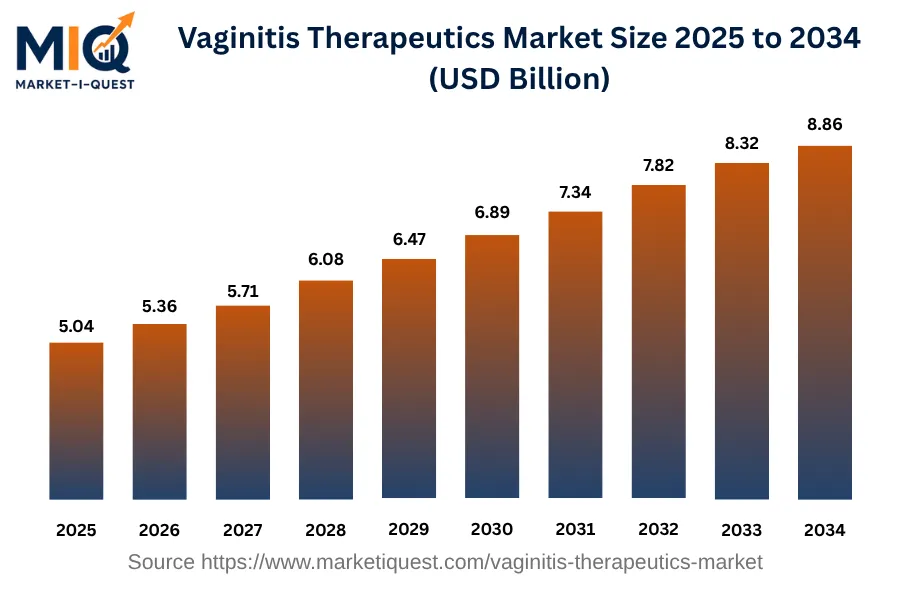
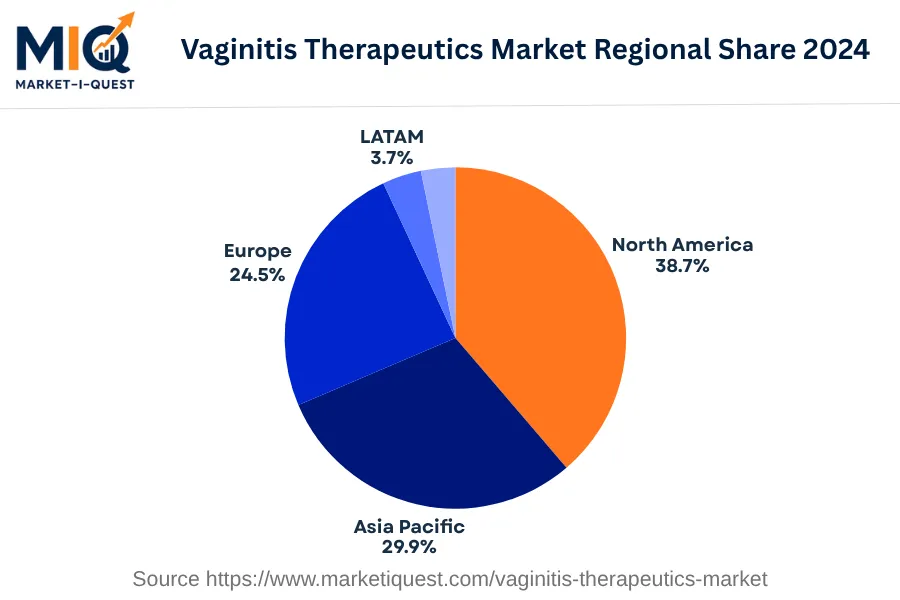
The Vaginitis Therapeutics Market, valued at USD 5.04 billion in 2025, is projected to grow to USD 8.86 billion in 2034, showing a CAGR (compound annual growth rate) of 6.48%. In this nearly decade-long period, the market shows a consistent increase brought about by various factors. Some factors influencing this escalation include growing awareness about women's health, increased accessibility to healthcare facilities and advanced treatments. Regarding regional share data in 2024, North America led at 38.7%, followed by Asia Pacific at 29.9%, and Europe at 24.5%. Regions with a smaller market share included Latin America with 3.7%, and the Middle East and Africa, which accounted for 3.3% of the total market share. This distribution shows the geographic trends in the Vaginitis Therapeutics Market and reflects the degree to which each region contributes to the overall market growth.

Key Takeaways

  • By Disease - Anti-bacterial led the market accounting for a significant share in the base year.
  • By Product - Prescription medicines held dominance in the market in the base year.
  • By Distribution Channel - Hospital Pharmacies held the highest share in the base year.
vaginitis-therapeutics-market market size

Key Driving Factors

Changes in Consumer Perception Towards Personal Hygiene

Recent shifts in societal norms have made discussions and attention towards personal health and hygiene more mainstream. Particularly, female health and personal hygiene have received increased focus internationally. This has, in turn, led to a surge in demand for relevant therapeutic solutions including those for vaginitis. The market is seeing uptake driven by end consumers who are becoming more educated about their health, hygiene and the potential risk factors associated with lack of proper care. These consumers are actively seeking out preventive therapies and treatments and are willing to invest in quality care. This proactive taken by the end consumer segment is boosting the vaginitis therapeutics market.
Increased Prevalence of Antibiotic-Resistant Bacterial Vaginitis

Emerging healthcare challenges such as the rise in antibiotic-resistant bacterial vaginitis is driving the market for innovative solutions in the sector. Medical researchers and pharmaceutical companies are increasingly focusing on the development of new drugs to address this growing concern. The rising rate of antibiotic resistance has made traditional treatments less effective, driving the need for alternative therapeutics. This has been identified as a significant driver for the vaginitis therapeutics market, pushing investment and research towards the development and commercialization of new therapeutic drugs and treatment mechanisms. The healthcare sector's necessary response to tackle antibiotic resistance is, thus, driving growth in the vaginitis therapeutics market.

Market Evolution by Timeline

2019-2023
In the last five years, North America dominated the vaginitis therapeutics market due to increased awareness about women's health globally, combined with strong healthcare infrastructure. Demand was majorly driven by women of reproductive age, drawn in by effective over-the-counter solutions and increasing preference for self-medication. Surgical-applications availability is limited yet, with pilot programs in some European markets. Key suppliers in this period included Bayer AG, Janssen Pharmaceuticals, and Lupin. Legislation like the Affordable Care Act (ACA) in the USA bolstered the market by making women's preventive services more accessible and affordable. Costing was based mainly on dosage with higher prices for stronger prescriptions. The prevalent risk was potential side-effects, handled by clear labeling and documentation.
2024
This year was marked by the increased interest in Asia-Pacific region, mainly India, China, and Japan, due to the rapid improvement in healthcare infrastructure and increased awareness of women health. Emerging markets are moving towards over-the-counter solutions, while mature markets like the USA and Europe are pushing for effective prescription-based solutions. Novasecta was among key suppliers providing effective solutions during this time. A noteworthy policy is China's 'Healthy China 2030' initiative, which amplified the provision of women's health services. In terms of commercial arrangements, partnerships between local providers and international pharmaceutical companies are increasingly common. Risk involved the continuation of side effects.
2025-2029
Over these five years, online platforms emerged as a key purchasing channel, catered primarily towards women of reproductive age. Demand surged in the middle-east due to improved healthcare facilities. In terms of supply, leading players included Perrigo Company, Teva Pharmaceutical, and Pfizer, focusing extensively on research and development for innovative vaginitis solutions. On the policy front, the U.S. FDA implemented strict regulations concerning the safety and efficacy of these therapeutics. The commercial model evolved to include telemedicine consultations, with digital prescriptions gaining traction. Major risks comprised counterfeit products sold online and dealing with them involved enhancing security measures on online platforms.
2030-2034
In this period, market consolidation is apparent, with a focus on improving existing therapies while endeavoring to introduce new treatments. The buyers remain consistent – women of reproductive age, with a tendency towards self-medication. Important regions vary, with Africa becoming a significant market due to the expansion of healthcare infrastructure and increasing women health awareness. Named programs like South Africa's National Department of Health's Strategic Plan for Maternal, Newborn, Child and Women's Health influenced adoption of vaginitis therapeutics. More suppliers are leveraging digital channels, enabling teleconsultation and direct-to-consumer delivery. Risks involve maintaining privacy and security in the era of digital health.

Future Market Outlook

Future Opportunities

Current trends indicate significant opportunities for growth in the vaginitis therapeutics market, particularly as research into microbiome therapies advances. Recent studies published in medical journals have highlighted the correlation between the vaginal microbiome and vaginitis, setting a research agenda for biotech companies such as Evive Biotech in 2024. This focus on microbial ecosystems suggests potential pathways for developing new classes of therapeutics that are less reliant on traditional antibiotics, which are prone to resistance. Meanwhile, increasing awareness of women's health issues globally is driving demand for better treatments; campaigns conducted by WHO since 2022 aim to improve knowledge about gynecological health. Regulatory bodies are also supporting innovation; for example, the European Medicines Agency has streamlined approval processes for novel therapeutic approaches, tapping into the urgent need for effective treatments. Additionally, strategic partnerships between pharmaceutical companies and research institutions are on the rise. In early 2023, a collaboration between Pfizer and the University of California aimed at exploring RNA-based therapies for vaginitis came to fruition, exemplifying how joint efforts can expedite the development of next-generation treatments. As these collaborations and research initiatives grow, they create fertile ground for the introduction of innovative therapeutic solutions targeting various forms of vaginitis.

Segmentation Analysis

By Disease

The market is divided into subsegments including Anti-fungal, Anti-bacterial, and Hormone treatments. Among these, Anti-bacterial treatments accounted for the largest revenue share while Anti-fungal medications are expected to grow at the fastest CAGR during the forecast period.

Largest Revenue Share

Anti-bacterial

Market Share Leader

The Anti-bacterial subsegment leads the disease treatment market, primarily driven by the consistently high global incidence of bacterial infections such as pneumonia, urinary tract infections, and MRSA, among others. These diseases, common across all demographics and geographies, ensure a broad customer base for anti-bacterial treatments, boosting the revenue in this segment. Furthermore, regulatory bodies worldwide necessitate vaccinations that protect against bacterial diseases, adding to the demand. The buying criteria for anti-bacterial treatments are predominantly shaped by efficacy, cost, and regulatory approval. In terms of supply and purchasing, the presence of major pharmaceutical companies deeply involved in the production and distribution of these treatments ensures a well-established channel, thereby incurring low switching costs for hospitals and pharmacies.

Fastest CAGR

Anti-fungal

Forecast Period Growth Leader

The Anti-fungal subsegment is forecasted to grow at the fastest CAGR, spurred on by several catalysts, chief among which is the rise in fungal infections associated with increased use of antibiotics. This rapid growth faces certain barriers, such as resistance to anti-fungal therapy, which must be overcome to fully tap into potential growth. Advances in technology, including the development of more effective drug formulations and improved diagnostic tools, have broadened the reach of anti-fungal treatments. Additionally, global health partnerships and sizable investments in R&D are improving access to and development of these therapeutics. While positive, this rapid growth may face near-term risks such as the variability of regulatory policies across regions and the fluctuating cost of raw materials.

By Product

In terms of product, the market is divided into Over-the-Counter (OTC) and Prescription subsegments. In the base year 2024, Prescription medicines accounted for the largest revenue share while the Over-the-Counter (OTC) segment is anticipated to grow at the quickest pace during the forecast period.

Largest Revenue Share

Prescription medicines

Market Share Leader

Prescription medicines lead the market in revenue due to their critical role in managing complex, chronic conditions that require in-depth consultation and treatment planning from healthcare providers. With an aging population and increasing chronic diseases, demand for prescription drugs continues to grow. Moreover, these medications often have higher prices than their over-the-counter counterparts due to the costs associated with research, development, and getting regulatory approval. This leads to substantial revenues for players in the prescription drugs sector. Geographically, developed countries like the United States, Japan, and European nations contribute significantly to the prescription medicines market owing to their access to advanced healthcare infrastructures and high spending power. Furthermore, the stringent regulatory environment favors the prescription segment as self-medication risks are minimized. The purchasing patterns also favor this segment as patients generally prioritize prescribed medicines over OTC drugs for serious health conditions.

Fastest CAGR

Over-the-Counter (OTC)

Forecast Period Growth Leader

The Over-the-Counter (OTC) segment is projected to grow at the fastest pace. This growth is primarily driven by the increasing trend towards self-medication for minor health issues, technological advancements leading to innovative formulations, and streamlined supply chains ensuring easy availability. Government policies supporting the transition of certain medicines from prescription status to OTC also serve as catalysts for growth. Additionally, partnerships among pharmaceutical companies for the development and marketing of OTC drugs provide growth opportunities. Despite the positive outlook, there are near-term risks associated with the potential misuse or overuse of OTC drugs, and regulatory changes might impose stringency. Nevertheless, the affordability and convenience associated with OTC medicines, along with rising health awareness among consumers, will continue to fuel growth.

By Distribution Channel

The market is divided into subsegments including Hospital Pharmacies, Retail Pharmacies, and Online Pharmacies. Among these, Hospital Pharmacies accounted for the largest revenue share, while Online Pharmacies are expected to grow at the fastest CAGR during the forecast period.

Largest Revenue Share

Hospital Pharmacies

Market Share Leader

Hospital pharmacies retain the highest revenue share due to certain inherent factors. These include the continuous and immediate availability of life-saving drugs and emergency medicines, usually unpredictable in terms of demand. Moreover, hospital pharmacies typically hold a vast and diverse stock of medications to cater to various patient needs in different departments of the hospital. This comprehensive range and immediate availability present a competitive advantage, driving the revenue share of this subsegment. Additionally, some patient treatments warrant medications that are specifically available or manufactured at hospital pharmacies, thereby bolstering revenue. The steady flow of prescriptions from in-house doctors also ensures high turnover, creating a steady revenue stream. Lastly, hospitals in many regions are subject to stringent regulations that mandate the presence of an on-site pharmacy, creating a near-guaranteed demand for hospital pharmacy services.

Fastest CAGR

Online Pharmacies

Forecast Period Growth Leader

Online pharmacies are projected to exhibit the fastest growth rate, capitalizing on the increasing internet penetration and e-commerce growth worldwide. The convenience offered through home deliveries, privacy, round the clock availability, and the ability to compare medicine prices across various platforms are the main attraction for customers. Digital literacy and the rise in smartphone usage are other factors propelling this subsegment's growth. Moreover, online pharmacies are a boon for patients residing in remote areas with limited access to physical pharmacy stores or for those with mobility constraints. However, it’s worth noting that this subsegment is not devoid of challenges. The existence of rogue pharmacies selling counterfeit medicines poses a significant threat to consumer safety. In the absence of stricter regulations and regular monitoring, this issue remains a significant barrier to growth.

Competitive Analysis

Key Market Players

Manufacturers / OEMs

Pfizer Inc
US
Bayer AG
Germany
Novartis AG
Switzerland

Key Suppliers & Raw Materials

DowDuPont
US
BASF
Germany
Evonik Industries
Germany

Distributors, Integrators & Channel Partners

AmerisourceBergen Corporation
US
Cardinal Health
US
McKesson Corporation
US

Porter’s Five Forces Analysis

This analysis outlines the competiveness and attractiveness of the Vaginitis Therapeutics Market.

Supplier Bargaining Power

Medium

Driven by the limited number of pharmaceutical companies and API suppliers.

Buyer Bargaining Power

Low

Owing to a lack of alternative treatments and the necessity of the drugs.

Threat of Substitutes

Low

Limited availability of substitutes due to high entry barriers and R&D cost.

Threat of New Entrants

Low

High entry barriers due to large capex, strict regulations, and patent protections.

Competitive Rivalry

Medium

Fuelled by several established players competing on formulation, pricing, and distribution.

Regional Analysis

Geographic market dynamics and growth opportunities across key regions

Global Market Outlook

vaginitis-therapeutics-market market regional share

North America

In 2024, the North American market for vaginitis therapeutics experienced significant dynamism due to various drivers and trends. Demand soared with an increasing emphasis on women's healthcare, as reflected by greater investment from both private and governmental entities in the U.S., Canada, and Mexico. Regulations came into sharper focus as public health bodies advocated for wider access to these therapeutics. Technology adoption accelerated with several pharmaceutical companies incorporating advanced research and development techniques, contributing to supply expansion.

Trends during this period indicated buyer inclination towards over-the-counter options, triggering shifts in product availability and retail strategies among manufacturers and healthcare providers. The expansion of e-commerce channels in North America proved beneficial for the distribution of these therapeutics. Major pharmaceutical players in the U.S. formed alliances to boost accessibility, while in Canada and Mexico, the government strengthened standards and enforced policy changes to ensure quality control. Customers in the healthcare sector, notably hospital networks and clinics, noticed an increased need for these therapeutics, while the retail sector, particularly pharmacies and drug stores, benefitted from elevated consumer interest. The scenario culminated in 2024 with a robust environment for the vaginitis therapeutics market in North America, underpinned by a calculated interplay of demand factors, technology, regulation, and strategic partnerships.

Asia Pacific

In 2024, the Vaginitis Therapeutics Market in the Asia Pacific proved significant owing to myriad driving factors. Added investments in healthcare infrastructure, rising health awareness, stress on women's reproductive health, and increased prevalence of vaginitis facilitated its growth, particularly in populous economies like China and India. Technological adoption of advanced diagnostic and treatment options, further spurred growth in affluent markets like Australia and Japan. However, variations in pricing mechanisms across the region also influenced supply dynamics.

Trend-wise, an enhanced focus on personalized medicine shaped buyer behavior in key markets. Revenues sprung from the uptake of novel therapeutics, especially in countries with robust healthcare systems and aging population like Japan and South Korea. A rise in e-health platforms providing vaginitis therapeutics further expanded the accessibility and reach of treatments. ASEAN markets also exhibited steady growth due to partnerships and M&As between regional and global pharmaceutical companies. However, regional variances in product standards and policy enforcement in the healthcare sector led to a varied market scenario across the Asia Pacific. In general, the demand was largely driven by regular customers, comprised mostly of patients from healthcare establishments, and to some extent, from the retail consumer health sector.

Europe

In 2024, the European Vaginitis Therapeutics Market displayed a solid growth trajectory driven by various forces. Increasing awareness of vaginal infections due to educational campaigns in countries like Germany, the United Kingdom, France, and Spain played a significant role in the market expansion. Moreover, government interventions instigated the provision of women's health services, further pushing the demand for vaginitis therapeutics. Availability and adoption of advanced diagnostic technology contributed to the accelerated detection of vaginitis cases, consequently boosting the market.

Market trends in 2024 were chiefly characterized by evolving consumer behavior towards personal healthcare, witnessed in the rise of self-testing kits sales in Italy, the Nordics, and Benelux. Increasing R&D investments, particularly in Central and Eastern Europe, signaled a shift towards new therapeutics development, promoting market vitality. Furthermore, the expansion of online pharmacy services in Europe facilitated consumers' access to over-the-counter therapeutics for vaginitis treatment, altering the traditional drug distribution channels. Regulatory policies particularly emphasized product safety and efficacy, shaping the standardization of therapies within the market. Overall, the European healthcare sector, with a primary focus on women health services, remained the largest consumer of vaginitis therapeutics in 2024, assisted by government and enterprise initiatives targeted at women's health improvement.

Latin America

In 2024, the Vaginitis Therapeutics Market in Latin America (LATAM) presented a critical segment in healthcare due to increased prevalence and growing awareness. This market's growth drivers included stronger investment in women's health by governments such as Brazil and Argentina, leading to better regulatory environments for therapeutics approval. Introduction and adoption of advanced diagnostic technologies in urban healthcare facilities, particularly in Mexico and Chile, raised the detection rate and subsequent demand for vaginitis therapeutics. Reduced pricing of certain therapeutics in Colombia and Peru, made possible by local manufacturing and bulk import agreements, fostered increased availability.

Consumer healthcare awareness campaigns on vaginitis, especially in Brazil and Argentina, shifted patient preference towards early diagnosis and specialized treatment thus energizing market dynamics. A trend in the formation of strategic alliances and partnerships was observed among pharmaceutical companies, aiming to launch cost-effective therapeutic products. This trend was especially visible in the Mexico market. A shift toward digital health platforms for information, diagnosis, and treatment advice in LATAM countries like Chile was another key trend, underpinned by the smart device proliferation. Compliance with the Pan American Health Organization (PAHO)'s vaginitis treatment guidelines became a standard in LATAM, and strengthened the policy enforcement in the region. Furthermore, government sector campaigns increased the demand for vaginitis therapeutics, particularly in urban healthcare facilities.

Middle East & Africa

In 2024, the Vaginitis Therapeutics Market in the Middle East and Africa showed notable growth. Key drivers included increased awareness and investment in women's sexual health by governments in countries like Saudi Arabia, UAE, and South Africa. Furthermore, improved diagnostic infrastructure and rapid urbanization in Egypt and Nigeria increased demand for effective vaginitis treatment options. Technological adoption also soared in Kenya and Israel, introducing advanced therapeutics into the market. However, despite the beneficial circumstances, high costs of advanced therapeutics deterred some potential buyers, affecting the overall market growth.

Concerning trends, a notable shift was observed towards telemedicine and online platforms in regions like Saudi Arabia and the UAE. This shift elevated the accessibility of therapeutics for remote areas. Many pharmaceutical companies started partnerships aiming to boost production and reach of their products. For instance, in South Africa, prominent players in the healthcare sector actively engaged in collaboration, stimulating the volume and value of the market. Enforcement of women's health policies by governments, particularly in Qatar and Egypt, also positively influenced the market. Customers predominantly belonged to the healthcare and retail sectors, underlining the consumer-side dynamics of the Vaginitis Therapeutics Market in this region during the base year.

Recent Industry Developments

Latest market innovations, product launches, and strategic initiatives

June 2026

bioMérieux submitted a combined 510(k) clearance and CLIA waiver application to the FDA for its BIOFIRE® SPOTFIRE® Vaginitis Panel, a rapid multiplex PCR test delivering 8 results including bacterial vaginosis, yeast pathogens, and parasites from a single swab with a 20-minute turnaround time.

January 2026

Gedea Biotech announced the start of clinical trial BV2025 following approval from the Swedish Medical Products Agency (Läkemedelsverket) for the treatment of bacterial vaginosis.

Frequently Asked Questions