Transdermal Adhesives Market Snapshot

Key Players

  • 3M Company (United States)
  • Scapa Group (United Kingdom)
  • Adhesives Research Inc. (United States)
  • Medtronic PLC (Ireland)
  • Johnson & Johnson (United States)
  • Avery Dennison (United States)
  • Lohmann GmbH & Co.KG (Germany)
  • Nitto Denko Corporation (Japan)
  • Henkel AG & Company (Germany)
  • Essity Aktiebolag (SE) (Sweden)

Market Size

Base Year 2024
$7.39 Bn
CAGR
4.87%
Forecast 2034
$11.89 Bn

Market Segments

By Chemistry
Acrylic, Silicone, Polyisobutylene
By Patch Type
Matrix Patch, Reservoir Patch, Drug-in-Adhesive Patch
By Drug Type
Nicotine, Hormonal, Pain Relief, Cardiovascular, Others
By Distribution Channel
Pharmaceutical Companies, Direct Sales
By End User
Hospitals, Homecare

Market Dynamics

Drivers
  • Rising chronic disease prevalence
  • Advancements in adhesive technology
Restraints
  • Skin sensitivity issues
  • High production costs
Opportunities
  • Rising geriatric population
  • Increasing consumer health awareness

Market Size

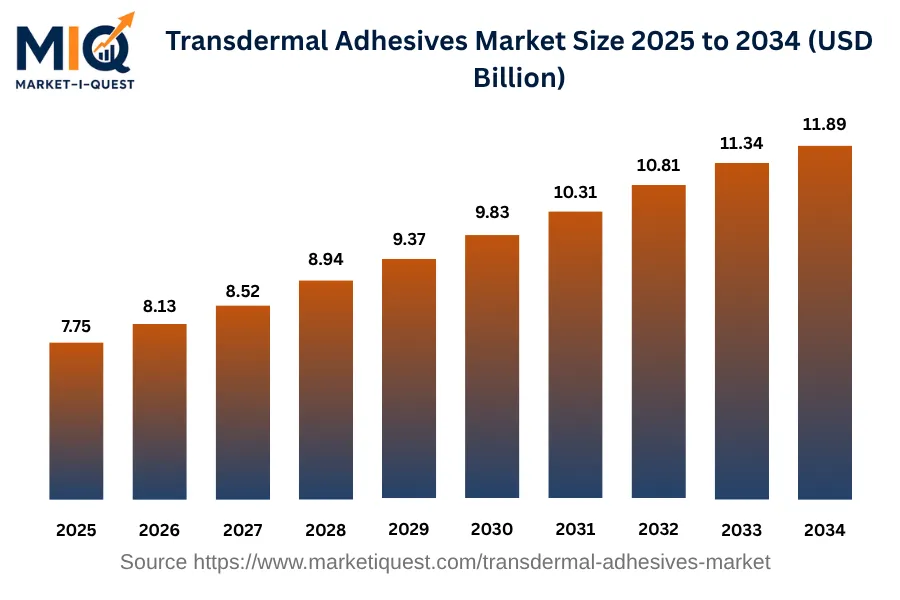
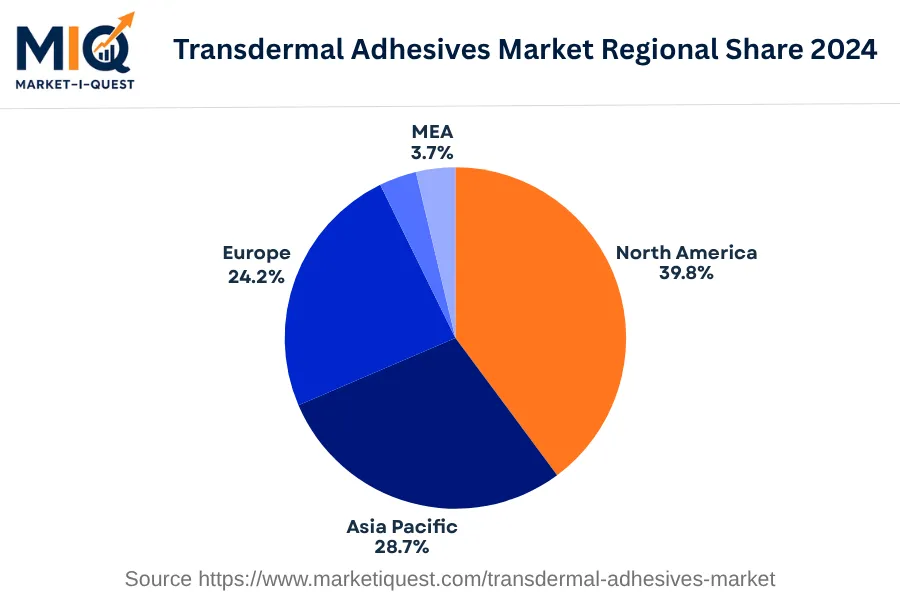
The Transdermal Adhesives Market valued at 7.75 billion USD in 2025, and it is projected to grow to a size of 11.89 billion USD by 2034. This represents a CAGR of 4.87% over the period from 2025 to 2034. This growth trajectory reflects a consistent upward trend, with the market value intensifying year over year as demonstrated by the market size of 7.39 billion USD in 2024. However, the regional share distribution indicated North America holding 39.8% of the total market, followed by the Asia Pacific with a share of 28.7%, Europe with 24.2%, the Latin America region with 3.5%, and the Middle East and Africa region contributing 3.7% to the overall market. The distribution among regions is a clear indicator of the global prominence and utilization of transdermal adhesives and underlines the universal growth of this market.

Key Takeaways

  • By Chemistry - Acrylic held the largest revenue share of the market.
  • By Patch Type - Drug-in-Adhesive Patch is projected to grow at the fastest growth rate within the forecasted period.
  • By Drug Type - Cardiovascular was seen as the largest revenue share of the segment.
  • By Distribution Channel - Pharmaceutical Companies was the leading subsegment in terms of revenue.
  • By End User - Homecare subsegment is predicted to have the fastest CAGR during the forecast period.
transdermal-adhesives-market market size

Key Driving Factors

Increased Demand for Non-invasive Drug Delivery

Transdermal adhesives deliver medications directly through the skin in a non-invasive manner, eliminating the need for injections, needles, and other more conventional, invasive methods. This has pitched interest of pharmaceutical manufacturers looking to improve their drug delivery systems. The perceived benefit for patients is ease of use, reduced pain, and the potential for increased medication adherence. The simplicity of the method generates a higher acceptance rate among patients of all ages, especially the elderly, who often require long-term medication. As patient satisfaction and outcome are primary service metrics for healthcare operators, they are increasingly demanding transdermal adhesives from pharmaceutical manufacturers. This increased demand from hospitals and healthcare facilities against the backdrop of improved patient comfort is a powerful driver for the expansion of the transdermal adhesives market.
Pressure from Regulatory Bodies to Improve Drug Delivery

Regulatory authorities such as the FDA and EMA are constantly driving pharmaceutical businesses for enhancing their drug delivery system for better patient outcomes. Transdermal adhesives are witnessed as an evolution in drug delivery technology with their potential to provide controlled release of drugs for an extended period. This addresses the compliance issue, a key concern for healthcare providers, as it ensures the correct dosage at the prescribed frequency, thereby improving the overall effectiveness of the medication. To meet the compliance issue and the regulatory push, pharmaceutical manufacturers are adamant about switching to transdermal adhesives. The purchases made by these manufacturers for meeting regulatory standards and enhance patient compliance provide a significant boost to the transdermal adhesives market demand.

Market Evolution by Timeline

2019-2023
During this period, the pivotal role of transdermal adhesives in the pharmaceutical industry started to gain significant attention. Prominent healthcare providers recognized the potential of transdermal adhesives for drug delivery and pain management. This resulted in increased purchases by both hospitals and pharmacies, particularly in technologically advanced regions such as North America and Europe. Manufacturers responded by improving production techniques and ensuring quality control for these adhesives, often in collaboration with distributors. However, the complexity of regulatory approval and the high cost of research and development created challenges for lower-end market players. Policies such as the EU's Medicinal Products Directive heavily influenced the manufacturing and marketing of these adhesives.
2024
In 2024, the transdermal adhesives market saw a rise in strategic collaborations with R&D-focused institutions and companies. This shift allowed for further exploration of transdermal delivery applications beyond pain management, with many Asia-Pacific pharmaceutical companies joining in. The surge in demand highlighted the need for streamlined manufacturing processes and robust supply chains, prompting manufacturers to optimize operations. While considerable strides were made in product integration and deployment, the lack of uniform standards across countries presented a hurdle. Regulatory changes also necessitated firms to adapt their commercial models to comply with health and safety standards that varied worldwide.
2025-2029
In this period, the maturing transdermal adhesive market is expected to begin to transition towards personalised medication systems. A shift in purchasing decisions will likely be observed as companies from wellness and fitness industries also might become prominent buyers of these adhesives. Alongside ongoing R&D efforts, innovation in manufacturing technologies, such as 3D printing, may allow for the production of customised adhesive systems. This might prompt suppliers to diversify and expand production capabilities. However, securing long-term supply agreements will likely emerge as a challenge due to market uncertainties. Simultaneously, the absence of universal adhesive standards highlighted the need for international consensus and regulation.
2030-2034
By 2030–2034, the transdermal adhesives market might transform significantly, with a particular increase in purchases from consumer tech companies for wearable devices. Suppliers and manufacturers, especially in developing regions such as India and China, are likely to begin focusing on building localized production facilities. They are expected to strove to maintain competitive pricing and delivery strategies among supply chain complexities. Furthermore, regional regulations will likely remain a major influence, despite attempts to standardize international handling and usage protocols. Uncertain market forces is likely to lead to the adoption of flexible commercial models, including subscription pricing and distributor partnerships.

Future Market Outlook

Future Opportunities

Several future opportunities in the transdermal adhesives market align with current industry dynamics. Regulatory changes, such as the recent updates to the FDA's combination product regulations, create avenues for more innovative adhesive solutions in therapeutic areas like chronic pain management. Moreover, growing interest from emerging markets necessitates localization of manufacturing; companies such as Medtronic are exploring partnerships to establish regional facilities. There is also an increasing focus on sustainable materials, presenting opportunities to create eco-friendly transdermal patches that align with global consumer trends. Furthermore, addressing the needs of aging populations with long-term medication adherence solutions will open new buyer segments. Companies can expand their portfolio through contract manufacturing agreements, which can streamline the development process for new adhesive products. As healthcare providers emphasize patient compliance, investing in education and training services on effective usage will also be essential. Consequently, variations in consumer preferences and regulatory pressures can facilitate the introduction of tailored adhesive systems that better meet specific market needs.

Segmentation Analysis

By Chemistry

The market is segmented by Chemistry into Acrylic, Silicone, and Polyisobutylene. Acrylic accounted for the largest revenue share in 2024, while Silicone is expected to register the fastest CAGR during the forecast period.

Largest Revenue Share

Acrylic

Market Share Leader

The acrylic subsegment was the largest revenue generator in the market in 2024. Its predominance is primarily due to a large installed base and a wide market adoption that spanned across different geographical areas. Customers prefer acrylic because of its compatibility with existing infrastructure and its unique features, such as its resistance to heat, oil, and weather. These characteristics not only make the substance durable but also reduce replacement demand, which subsequently incentivizes clients' purchasing tendency. Acrylic is also widely available and has reached a level of commercial maturity which has fostered its acceptance in regulatory circles. Its pricing position and ecosystem support have entrenched the subsegment as the preferred choice for buyers. The acrylic market has robust distribution channels, ensuring ready availability of the product, thereby augmenting its demand. Moreover, the requirements for qualification are stringent, maintaining high industry standards and, by extension, customer preference for acrylic.

Fastest CAGR

Silicone

Forecast Period Growth Leader

Silicone, is poised to record the fastest CAGR during the forecast period. As a new trend in the market, there is a growing customer demand for silicone due to its multi-functional features and its adaptability in changing temperatures and conditions. While currently lagging behind Acrylic, changes in purchasing behavior and evolving customer requirements are anticipated to propel Silicone's growth. Improvements in technology have facilitated the commercialization of Silicone, making it more accessible. The subsegment is also projected to benefit from distribution expansion and changes in regulations which streamline and promote its use. The advent of product innovation centered around Silicone is expected to trigger further growth in the market. Silicone's versatility also lends itself to new deployment models and adjacent applications within the market, thereby hastening its adoption rate relative to the base year.

By Patch Type

The market is segmented by Patch Type into Matrix Patch, Reservoir Patch, and Drug-in-Adhesive Patch. The Reservoir Patch accounted for the largest revenue share in 2024, while the Drug-in-Adhesive Patch is expected to register the fastest CAGR during the forecast period.

Largest Revenue Share

Reservoir Patch

Market Share Leader

The Reservoir Patch subsegment's dominance in 2024 can be attributed to several commercial mechanisms. By design, Reservoir Patches are known for their measured release of medication, providing consistent therapeutic levels over an extended period appealing to a large existing customer base. The established manufacturing and distribution networks for reservoir patches have ensured broad market adoption as well as high purchasing frequency, thereby contributing significantly to this subsegment's revenue generation. Also, the regulatory acceptance of this type of patch is higher due to its deployment maturity, further fueling its commercial strengths. The compatibility of Reservoir Patches with other treatment equipment positively influences customer preference as well. Additionally, the high replacement demand due to the nature of the usage of these patches plays a substantial role in maintaining market share. Reservoir Patches' pricing position adds to its revenue leadership with a focus on premium pricing that balances affordability with profitability.

Fastest CAGR

Drug-in-Adhesive Patch

Forecast Period Growth Leader

Drug-in-Adhesive Patch subsegment is anticipated to record the fastest CAGR due to several market changes. Current penetration is lower for Drug-in-Adhesive Patches due to the relatively recent advancements in this technology. As such, there is a larger potential customer base yet to adopt this solution, representing a major growth opportunity. This subsegment is supported by emerging customer demand driven by the simplicity and easiness in its usage, thereby evolving purchasing behavior that favors this type of patch. Production innovation is also incremental for this subsegment as substantial improvements have been made in drug delivery mechanisms, facilitating more efficient and user-friendly products. Further, with declining implementation barriers and expanding distribution networks, this type of patch is more accessible than ever, supporting an influx in customer adoption. Moreover, the progressive commercialization of Drug-in-Adhesive Patches marks their potential to claim a larger market share in the forecast period.

By Drug Type

The market is segmented by Drug Type into Nicotine, Hormonal, Pain Relief, Cardiovascular and Others. The Cardiovascular subsegment accounted for the largest revenue share in 2024, while the Pain Relief subsegment is expected to register the fastest CAGR during the forecast period.

Largest Revenue Share

Cardiovascular

Market Share Leader

In 2024, the Cardiovascular subsegment dominated the market in terms of revenue. Its leadership status can be attributed to the widespread prevalence of cardiovascular diseases, which has led to a high demand for effective cardiovascular drugs. This escalating demand has been met with an established supply chain that optimizes the distribution and availability of these drugs. In addition, due to the nature of cardiovascular diseases, the purchasing frequency is high, creating a consistent, recurrent revenue stream. Regulatory acceptance of numerous cardiovascular drugs has also facilitated their dominance in the market. Furthermore, customer preference leans towards established and trusted drugs that have shown effective results, thereby favoring the cardiovascular segment. The compatibility of the said drugs with existing treatment systems is another factor for their large revenue share. The stringent qualification requirement for cardiovascular drug manufacturers ensures that only high-quality drugs penetrate the market, adding to the subsegment's predominant position.

Fastest CAGR

Pain Relief

Forecast Period Growth Leader

The Pain Relief subsegment is anticipated to achieve the fastest CAGR during the forecast period. This expected growth is based on the forecasted alterations in the market. Pain relief drugs are becoming increasingly popular due to their lower side effects and fewer complications compared with other drug types, leading to heightened demand. The reduction in implementation barriers, such as limited awareness about side effects and advancements in deployment models, has had a positive impact on this subsegment's growth. Emerging developments in technology have also facilitated commercialization and expansion of distribution channels. Additionally, adaptation to evolving customer requirements has fostered expansion of the pain relief market. Apart from these, anticipated regulatory changes that favor the reduction of opioid prescription in pain management, as well as reimbursement policy modifications, are expected to provide a notable boost to the Pain Relief subsegment's growth. This rapid growth trajectory indicates a prospective shift in the market's commercial dynamics during the forecast period.

By Distribution Channel

The market is segmented by Distribution Channel into Pharmaceutical Companies and Direct Sales. Pharmaceutical Companies accounted for the largest revenue share in 2024, while Direct Sales is expected to register the fastest CAGR during the forecast period.

Largest Revenue Share

Pharmaceutical Companies

Market Share Leader

Pharmaceutical Companies managed to secure the largest revenue share within the market in 2024 owing to a combination of factors. One pivotal factor was the well-established distribution network, which ensured wider accessibility to end-users. The installed customer base of pharmaceutical companies was vast, considering their historically entrenched position in the market. Additionally, their offerings are more closely aligned with regulatory acceptance and certification requirements, hence facilitating procurement. Their localized operations and mature manufacturing units ensured the uninterrupted supply and fulfilment of market demand, consolidating their leadership position. Customers exhibited a strong preference towards pharmaceutical companies because of their well-structured service networks providing after-sales support. Furthermore, pharmaceutical companies have strong purchasing relationships, robust partner ecosystem and flexible pricing models which provides them with a formidable competitive edge. Moreover, customers were encouraged to continue purchasing from these companies due to the high engagement and commitment they show towards their clients, thereby solidifying their revenue leadership within the market in 2024.

Fastest CAGR

Direct Sales

Forecast Period Growth Leader

Direct Sales subsegment is anticipated to register the fastest CAGR during the forecast period, despite not leading in 2024. Direct sales offer a personal and streamlined purchasing experience, which appeals to a growing number of customers. This approach often removes barriers to entry for customers who may be thrown off by the complexity associated with traditional pharmaceutical purchase procedures. As the market evolves, it is expected that there will be a shift in customer requirements and purchasing behavior, favoring more direct interaction with the sellers. This shift is seen as a major driving force behind the growth of this subsegment. Additionally, technological improvements such as advancements in AI and chatbots are expected to enhance the efficiency and effectiveness of direct sales, thus attracting more clientele. As commercialization progresses, more potential buyers may gravitate towards these platforms, leading to expansion in the customer base and increased market uptake. It is also noteworthy that advancements in manufacturing processes and supply chain improvements may lead to better product availability, which is key in driving the growth rate of this subsegment in the coming years.

By End User

The market is segmented by End User into Hospitals and Homecare. Hospitals accounted for the largest revenue share in 2024, while Homecare is expected to register the fastest CAGR during the forecast period.

Largest Revenue Share

Hospitals

Market Share Leader

In 2024, the Hospitals subsegment generated the largest revenue within the market. This can be attributed to several factors. Hospitals generally have a higher purchasing power and a wider breadth of adoption compared to home care setups. Moreover, hospitals require full-scale, robust systems to manage their operations, often investing heavily in technology and tool upgrades to provide efficient care. The procurement process in hospitals is streamlined and regularly revised to accommodate market changes and new technologies. Regulatory acceptance is also higher in hospitals as they prioritize established, proven solutions that meet stringent certification requirements and support their high patient volumes. Additionally, hospitals have a vast installed base, hence creating a steady demand for system replacements due to wear and tear. The commercial availability and service support for hospital-based solutions are typically more evident, with manufacturers and vendors often offering dedicated service networks. All these factors collectively make hospitals the subsegment with the highest revenue within the market in 2024.

Fastest CAGR

Homecare

Forecast Period Growth Leader

The Homecare subsegment is predicted to have the fastest CAGR during the forecast period. This growth can be attributed to several evolving market dynamics. As technology improves, homecare solutions are becoming more commercially available and convenient for users, driving new customer adoption. Furthermore, regulatory developments are encouraging home-based care by making reimbursements more accessible. The improving commercialization, aided by manufacturing and supply improvements, has also led to more affordable and diverse homecare solutions hitting the market. Changing patient preferences for home-based care, due to comfort and convenience, are likely to further drive this trend. Despite being slower to adopt compared to Hospitals, home care setups benefit from lower initial penetration, hence having a larger growth trajectory. Lastly, partnerships between home care service providers and health tech companies are expected to facilitate product innovation and distribution expansion and further boost the uptake of home care solutions. This combination of factors is expected to result in a higher CAGR for the Homecare subsegment during the forecast period.

Competitive Analysis

Key Market Players

Manufacturers/OEMs

3M Company
US
DSM
Netherlands
Johnson & Johnson
US

Key Suppliers & Raw Materials

Dow Corning Corporation
US
BASF SE
Germany
Evonik Industries AG
Germany

Distributors, Integrators & Channel Partners

Medline Industries, Inc.
US
Cardinal Health
US
McKesson Corporation
US

Porter’s Five Forces Analysis

This analysis reveals the competitive landscape and market dynamics of the Transdermal Adhesives Market.

Supplier Bargaining Power

Medium

Suppliers’ power is moderated by the availability of multiple raw material sources.

Buyer Bargaining Power

High

Buyers in this market, primarily healthcare providers, have high power due to availability of various brands.

Threat of Substitutes

Low

Substitutes threat is low due to the complexity and regulatory approvals involved in producing transdermal products.

Threat of New Entrants

Medium

High R&D cost and stringent regulations slightly hinder new entrants, but growing market draws interest.

Competitive Rivalry

High

Several globally recognized firms making high-quality products creates significant competition.

Regional Analysis

Geographic market dynamics and growth opportunities across key regions

Global Market Outlook

transdermal-adhesives-market market regional share

North America

In 2024, the North American Transdermal Adhesives Market experienced noteworthy developments, critically influenced by regulatory, technological, and customer-specific adjustments. The US emerged as a key player following the Food and Drug Administration's (FDA) approval of its first generic transdermal patch adhesive, stimulating a competitive pricing behavior among manufacturers. SureStick Inc.'s strategic acquisition of BioBond Co., a Canada-based specialty adhesives firm, expanded its product categories and distribution channels, widening the buyer group access across North America. Meanwhile, in Mexico, a pronounced increase in diabetic patient demographics initiated a shift in procurement behavior towards cost-efficient, long-lasting transdermal adhesives, pressuring suppliers to cater to economic durability.

Consequently, the Canadian company GloStik innovatively enhanced its manufacturing activity, releasing a new adhesive capable of extended wear without compromising skin integrity. This enterprise purchasing inclination, reinforced by insurance reimbursement policies favoring extended-wear adhesives, significantly impacted market dynamics. Furthermore, advancements in technology implementation, specifically within nanofabrication processes, emerged as a driving force in the market. This boosted the development of smart transdermal patches offering controlled drug delivery, requiring companies to stay abreast of technological standards and advancements. These collective actions, primarily driven by distinctive regional healthcare needs and shifting regulatory frameworks, greatly influenced the depth, expansion, and competitive field of North America's Transdermal Adhesives Market over the course of 2024.

Asia Pacific

During 2024, the Transdermal Adhesives Market in Asia Pacific witnessed substantial changes due to a dynamic interplay of consumer needs, healthcare policies, and innovation in product offerings. A high prevalence of chronic diseases across populous countries like China and India propelled the need for innovative medical solutions, of which transdermal adhesives became an integral part. Industries primarily involved in the pharmaceutical and medical devices sector actively sought these adhesives as a convenient and non-invasive alternative to traditional drug administration methods. Regulatory bodies in these nations streamlined processes, allowing expedited approval of these adhesives, leading manufacturers to increase production to meet growing demand.

Significantly, businesses invested in transdermal adhesives due to their cost-effectiveness, ease of application, and the ability to augment patient compliance. Hospitals, clinics, and home-based patients purchased these products largely because they offered therapeutic advantages and convenience in drug administration. Key stakeholders, including manufacturers, suppliers, retailers, and healthcare providers, coordinated closely to ensure streamlined supply, timely distribution, and adherence to compliance standards. Consequently, an emerging trend of strategic partnerships between manufacturers and healthcare providers gained momentum, facilitating broader market penetration and making the transdermal adhesive products more accessible. The narrative of the Asia Pacific Transdermal Adhesives Market in 2024 thus closely intertwined business necessity, regulatory support, and evolving consumer healthcare needs.

Europe

The European Transdermal Adhesives Market experienced significant transformation in 2024 due to regulatory changes, price adjustments, and technological integration. The implementation of the EU Medical Device Regulation (MDR) required manufacturers to demonstrate increased biocompatibility of their adhesive products, prompting extensive product redevelopment among key players, including 3M and Johnson & Johnson. Concurrently, producers adapted to shifting procurement behaviours, most noticeable in the German healthcare sector, where price-sensitive purchasing practices necessitated a shift to cost-effective solutions in adhesive production, introducing downward pricing pressure within the market.

Rampant digitalisation affected the manufacturing and distribution pathways with companies implementing advanced automation and IoT solutions to streamline their operational workflows, influencing the redistribution of supply chains. Manufacturers responded by developing efficient manufacturing practices and adopting innovative technologies. Telecommunication giants, such as Telefónica and Deutsche Telekom, played a pivotal role in enabling IoHT solutions for remote patient care, directly impacting the deployment practices across buyer groups. The heightened focus on data privacy, following the GDPR regulations, incited the sector to fortify data security measures in connected adhesive devices. As the intersection of healthcare and technology continues to strengthen, ethical and responsible digitization became a critical focus for companies competing in this market. Market participants who calibrated their strategies in time, considering these pivotal developments, held steady in the dynamic landscape of the European Transdermal Adhesives Market in 2024.

Latin America

In 2024, ANVISA's enhanced regulatory scrutiny in Brazil led to a marked elevation in standards for transdermal adhesives, mandating manufacturers to pivot towards more clinically validated and patient-friendly products. Argentina, facing a similar scenario with the ANMAT, prominently escalated the market for high-grade adhesive manufacturing. COFEPRIS in Mexico attracted attention by strictly stipulating procurement practices for local hospitals, requiring them to source these adhesives only from licensed distributors, thereby streamlining Mexico's distribution channels. Regulatory developments also shaped Colombia's market, with INVIMA's directive to control import dependencies. Consequently, domestic manufacturing activity ramped up, supported by robust enterprise purchasing behavior, affecting procurement from other South American nations.

Moreover, Chile's regulatory requirements for certification led to widespread implementation of advanced technologies to ensure standard compliance, thereby indirectly impacting the manufacturing scenario. Notable regional organizations like Mercosur and Pacific Alliance fostered localized production capacity, providing impetus to countries like Peru and Ecuador. Amid these regulatory-driven dynamics, transdermal adhesives manufacturers realigned their commercialization strategies, responding by enhancing their operational workflows and improving product categories. Companies consolidated their distributor networks, prompted by progressive regulatory environments and collective initiatives. Despite the region witnessing minimal mergers and acquisitions, distributor expansion, propelled by the above-mentioned regional shifts, significantly influenced the transdermal adhesive market scenario in Latin America for 2024.

Middle East & Africa

In 2024, the Transdermal Adhesives Market in the Middle East & Africa showed noticeable changes, majorly shaped by regulatory changes and increasing consumer health consciousness. With Saudi Arabia's Vision 2030 in motion, the nation embraced the diversification of healthcare, leading other countries like UAE, Qatar and Oman to pattern same. Healthcare regulatory bodies like Saudi Food and Drug Authority (SFDA) and Dubai Health Authority (DHA) played a crucial role by imposing stringent rules to ensure the safety and efficacy of medical devices, including transdermal patches. Consequently, pharmaceutical companies and adhesive manufacturers responded by modifying their product specifications and operational workflows.

Furthermore, pressure to meet these requirements forced the integration of advanced manufacturing technologies to accelerate the commercialization of safer, high-quality, and reliable products. Public procurement initiatives from regional governments aimed at improving healthcare services played a significant role in accelerating product demand, leading to substantial changes in procurement behavior. The free trade agreement within the African Continental Free Trade Area (AfCFTA) impacted the supply chain, making it favorable for companies to import raw materials for production at a reduced cost, thereby influencing pricing behavior. Meanwhile, prominent African markets like South Africa, Egypt, and Nigeria were influenced by the market dynamics, adopting localization in the production of transdermal adhesives to minimize imports and maximize domestic production capacity.

Frequently Asked Questions