Transcatheter Pulmonary Valve Market Snapshot

Key Players

  • Medtronic (Ireland)
  • Edwards Lifesciences Corporation (USA)
  • Abbott Laboratories (USA)
  • Boston Scientific Corporation (USA)
  • LivaNova PLC (UK)
  • CryoLife Inc. (USA)
  • Jenavalve Technology Inc. (Germany)
  • Symetis SA (Switzerland)
  • Direct Flow Medical Inc. (USA)
  • Colibri Heart Valve LLC (USA)

Market Size

Base Year 2024
$0.103 Bn
CAGR
5.96%
Forecast 2034
$0.18 Bn

Market Segments

By Type
Ballon Expanded Transcatheter Valve, Self Expanded Transcatheter Valve
By Raw Material
Synthetic, Tissue Engineered
By Application
Pulmonary Stenosis, Pulmonary Regurgitation, Pulmonary Atresia, Others
By End User
Adult, Pediatric

Market Dynamics

Drivers
  • Rising prevalence of pulmonary valve diseases
  • Technological advancements in transcatheter valves
Restraints
  • High procedural costs
  • Lack of skilled professionals
Opportunities
  • Technological advancements in pulmonary valve treatment
  • Untapped emerging markets

Market Size

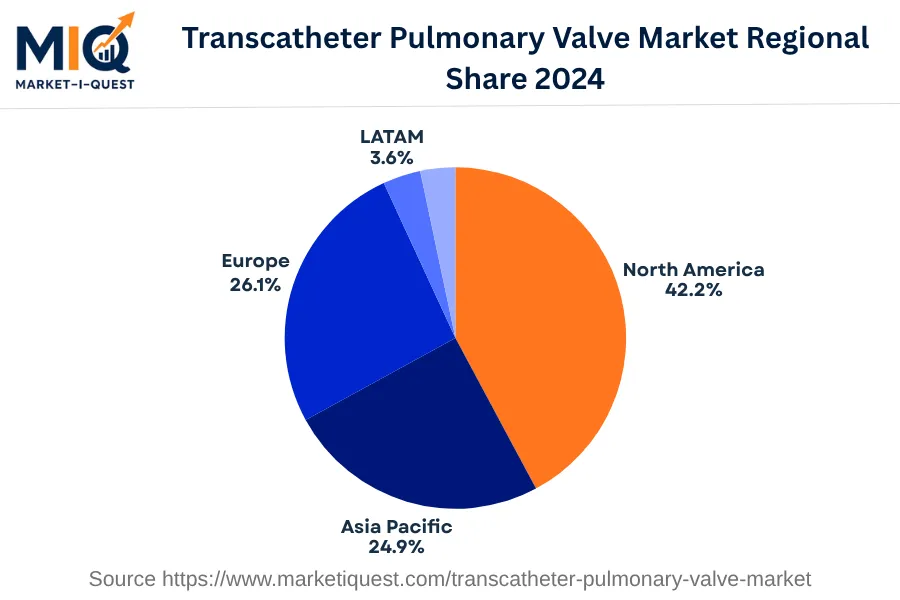
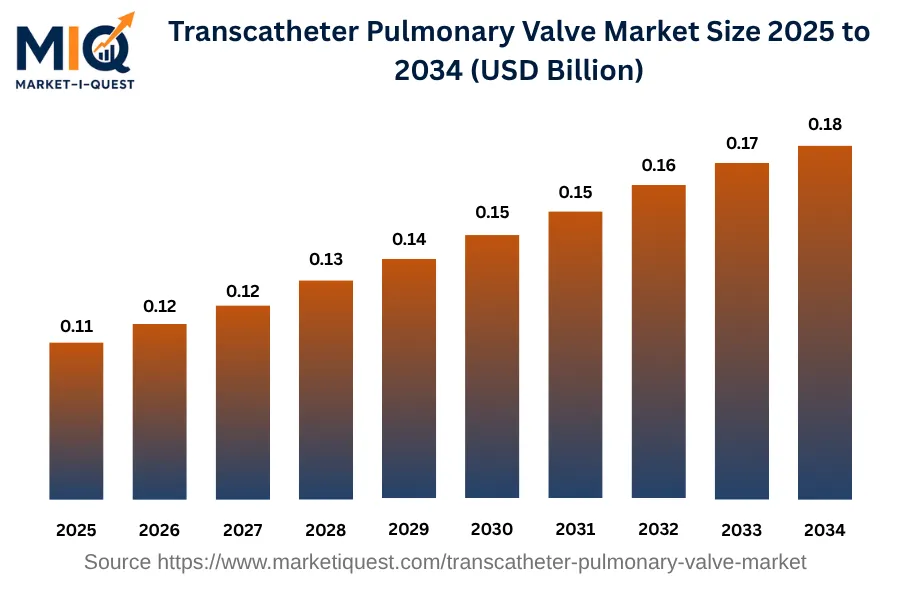
The Transcatheter Pulmonary Valve Market was valued at 0.11 billion USD in 2025 and is expected to reach 0.18 billion USD by 2034, growing at a CAGR of 5.96%. This market saw modest growth from 0.10 billion USD in 2024, reflecting the increasing demand and adoption of these devices over the 10-year period. This growth path indicates a steady and reliable increase in the market size over the years, with an evident trend of expansion in the healthcare sector. As for regional distribution, North America held the largest market share of 42.2% in 2024. The second and third highest shares were held by Europe and Asia Pacific, claiming 26.1% and 24.9% of the market respectively. The regions with the smallest market shares were Latin America and the Middle East & Africa, each having approximately 3.6% and 3.3% respectively.

Key Takeaways

  • By Type - Balloon Expanded Transcatheter Valve held the leading position in market share in 2024.
  • By Raw Material - Synthetic materials accounted for the dominant position in 2024.
  • By Application - Pulmonary Stenosis led the market share in 2024.
  • By End User - Adult segment held the major market share in 2024.
transcatheter-pulmonary-valve-market market size

Key Driving Factors

Prevalence of Pulmonary Valve Disorders

A key driver for the transcatheter pulmonary valve market is the increasing occurrence of pulmonary valve disorders. This severe health concern can be congenital or developed over time due to diseases such as rheumatic fever or endocarditis. The prevalence primarily among the aging population adds weight to the importance and demand for effective treatment options, enhancing market growth. Further, diseases such as Pulmonary Atresia and Pulmonary Stenosis that require valve replacement therapy also contribute to this demand for Transcatheter Pulmonary Valve therapies.

Adoption of Minimally Invasive Procedures

The increasing adoption of minimally invasive procedures in the medical field is a significant driving factor for the transcatheter pulmonary valve market. Transcatheter Pulmonary Valve Replacement (TPVR) is recognized as a minimally invasive procedure that has been gaining acceptance among physicians and surgeons due to its benefits such as lower risk of infection, faster recovery times, and less physical trauma when compared to traditional open surgery methods. These advantages have led to a shift in preference towards these procedures, subsequently fueling the demand for transcatheter pulmonary valves.

Market Evolution by Timeline

2019-2023
In the United States, Centers for Medicare & Medicaid Services (CMS) recognized transcatheter pulmonary valve replacement in their July 2019 ICD-10 procedure codes update. This influenced widespread adoption in the country. Europe, on the other hand, introduced CE-marked devices earlier. Main buyers were large hospitals and specialized cardiovascular facilities. For supply, Edwards Lifesciences and Medtronic were predominant participants. Constraint was limited awareness among healthcare professionals outside of specialized centers in middle and high-income countries. Regarding commercial models, the industry preferred bundled-payment methods since it ensures comprehensive care. Risks included the skill barrier in performing the procedure and the need for well-coordinated teams.
2024
On the demand side, Asia-Pacific (primarily India and China) began to observe growth due to rising awareness and incidence of heart diseases. Manufacturers improved the technology ensuring better patient outcomes and minimally invasive procedures. Constraint then was the stiff regulatory environment in these countries. In terms of the policy, China followed Europe's CE mark approval process as a standard. The pricing trend favoured per-procedure payments. However, negotiation between manufacturers and healthcare institutions were common depending on volumes. The major risk was the cost-competitive market conditions, especially in developing economies.
2025-2029
The global demand was driven by countries' increasing healthcare expenditure on evolved technologies like 3D printing for valve production. Bioprosthetic valves were primary supplies during this period. Regulatory guidelines from the World Health Organization (WHO) took center stage, outlining safety protocols and procedural standards. Contractual models leaned more towards risk-sharing agreements between healthcare providers and manufacturers. The main blockade was the challenge posed by bio-compatibility and durability of the bioprosthetic valves. The response was increased R&D funding in this direction from manufacturers and public grants.
2030-2034
The emerging market in Africa showed promise with improved access to healthcare facilities and government efforts towards reduction of cardiovascular disorders. A shift in supply was noted with smaller players using AI-assisted surgery tools to improve outcomes. There were discussions of adopting ISO 5840-3 norm for bioprosthetic heart valves necessitating enhanced safety and efficacy. Commercially, partnerships between companies and R&D institutions became dominant aiming to achieve innovation and affordability. Despite the evident progress, barriers like cost and access to these specialized technology remained.

Future Market Outlook

Future Opportunities

The future of the transcatheter pulmonary valve market is set to expand through the integration of regenerative medicine approaches into valve treatments. In 2023, a study published by the Journal of the American College of Cardiology highlighted the potential of utilizing stem cells to enhance valve repair, showcasing pathways that could significantly alter patient management strategies. A notable initiative includes the exploration of hybrid approaches involving both transcatheter and surgical techniques, as executed in a clinical trial conducted at Stanford University in 2022, aiming to improve outcomes for complex cases. Additionally, the growing emphasis on patient-centric care will likely drive innovation in valve personalization, tailoring devices to individual patient anatomy, influenced by research from the University of Michigan showing improved results with customized devices. Collaborations among key industry players, such as Edwards Lifesciences and the University of California, have initiated projects focused on developing smaller, less invasive valves to expand treatment eligibility to a larger patient population. Furthermore, as healthcare systems worldwide emphasize value-based care, the adoption of cost-effective and outcome-driven transcatheter interventions will gain traction. Regulatory incentives supporting evidence-based practices will facilitate the commercialization of these innovations. Robust post-market surveillance systems implemented by authorities like the FDA are expected to play a vital role in tracking the long-term efficacy and safety of new valve technologies, fostering greater confidence among healthcare providers and patients alike.

Segmentation Analysis

By Type

The market is divided into subsegments including Ballon Expanded Transcatheter Valve and Self Expanded Transcatheter Valve. The Ballon Expanded Transcatheter Valve subsegment accounted for the largest revenue share while Self Expanded Transcatheter Valve is expected to grow at the fastest CAGR during the forecast period.

Largest Revenue Share

Ballon Expanded Transcatheter Valve

Market Share Leader

The Ballon Expanded Transcatheter Valve segment holds a sizable revenue share due to several factors. Primarily, this is due to the widespread adoption of these valves in the healthcare industry, particularly in surgeries involved in the treatment of heart diseases. These valves have been recognized for their operational efficiency, reliability, and superior performance. Moreover, they have found significant application in minimally invasive surgeries, an area that has seen significant growth in recent years. These valves are also preferred by doctors due to their ease of operation and minimal recovery time for patients. Key markets for Ballon Expanded Transcatheter Valves include North America and Europe due to robust healthcare infrastructure, high precision in surgical operations, and strict regulatory compliance. Another crucial aspect that contributes to their market share includes their affordable pricing compared to alternatives. However, it is also important to note that while the Ballon Expanded Transcatheter Valve segment holds the highest revenue share, changes in medical advancements and patient preferences can affect this share in the future.

Fastest CAGR

Self Expanded Transcatheter Valve

Forecast Period Growth Leader

Self Expanded Transcatheter Valve is projected to be the fastest growing subsegment in the market. The key growth driver for this segment is the advanced technology it employs, allowing for less invasive procedures and shorter hospital stays. This technology also provides greater comfort and improved health outcomes for patients, which is leading to increased adoption by healthcare providers. However, barriers to adoption include high costs and the need for highly skilled surgeons to perform the procedure. Additionally, potential regulatory challenges may limit growth in some regions. Partnering with technology companies and investing in training for healthcare professionals could serve as a catalyst for growth. Therefore, despite the higher initial costs, the return on investment could be substantial. While there are noticeable risks associated with the emerging technology, such as product recalls or negative patient outcomes, these can be mitigated by maintaining strict quality control and continuously improving the product based on user feedback. In conclusion, due to these growth drivers and potential mitigants of risks, the Self Expanded Transcatheter Valve segment is likely to experience robust growth in the coming years.

By Raw Material

The market by raw material is bifurcated into two major subsegments - Synthetic and Tissue Engineered. In the base year of 2024, Synthetic accounted for the largest revenue share while Tissue Engineered is projected to experience the fastest CAGR during the forecast period.

Largest Revenue Share

Synthetic

Market Share Leader

The Synthetic subsegment in 2024 generated most of its revenue due to several considerable advantages it holds over other raw materials. First, Synthetic products offer substantial cost and manufacturing advantages, being comparatively cheaper to produce on a large scale. Synthetic raw materials, often engineered to deliver desirable properties, could offer enhanced performance for certain applications, adding to their demand. Second, from the customer's perspective, synthetic products often demonstrate superior durability and reliability under various conditions, making them a preferred choice. Further, important geography markets like North America and Europe show a stronger demand for synthetic products, largely driven by industries requiring high performance materials. Regulatory factors pose no significant obstacles to synthetic adoption; instead, in some cases, the available policies might favor synthetic products' commercialization. Due to this combination of factors, synthetic raw materials are currently leading in revenue generation.

Fastest CAGR

Tissue Engineered

Forecast Period Growth Leader

The Tissue Engineered subsegment, despite not being the current revenue leader, exhibits the most robust growth potential. The catalyst for Tissue Engineered products' fast-paced growth lies in their application versatility and the emergence of new biotechnologies. Today's technologies have managed to harness tissue engineering's potential to create customizable and advanced solutions, rousing a wave of innovation and development. However, significant capex requirements and limited scalability act as barriers, providing challenges for wide-scale adoption. On the brighter side, the recent upsurge in strategic partnerships between biotech companies and research institutions is helping oversome these obstacles. Meanwhile, near-term risks primarily involve potential regulatory changes and the ever-evolving dynamics of the healthcare industry. Despite these challenges, Tissue Engineered products are forecasted to record the fastest CAGR during the projection period.

By Application

The market is divided into subsegments including Pulmonary Stenosis, Pulmonary Regurgitation, Pulmonary Atresia, and Others. In 2024, Pulmonary Stenosis accounted for the largest revenue share while Pulmonary Regurgitation is expected to grow at the fastest CAGR during the forecast period.

Largest Revenue Share

Pulmonary Stenosis

Market Share Leader

Pulmonary Stenosis was the predominant subsegment in 2024 as it is one of the most common types of pulmonary heart diseases. Its high prevalence leads to an increased demand for innovative treatment and diagnostic alternatives which subsequently is driving the revenue growth. There are several key factors behind its dominance, including the increasing availability of advanced therapeutic solutions and an upsurge in the number of research activities in key geographies. Regulatory bodies across the globe have also contributed to the growth with their support in the form of swift product approvals and the introduction of favorable reimbursement policies. Healthcare providers heavily rely on this subsegment due to its diagnostic accuracy. Rapid adoption in developing countries is also a crucial factor behind the high revenue generated by this subsegment.

Fastest CAGR

Pulmonary Regurgitation

Forecast Period Growth Leader

Considered second to Pulmonary Stenosis, Pulmonary Regurgitation is expected to show rapid growth compared to the other subsegments. It's seeing an increase in research focus, leading to promising therapeutic breakthroughs. New treatments are undergoing clinical trials, with several advanced interventions already gaining regulatory approval. This growth is facilitated by healthcare providers and investors recognizing Pulmonary Regurgitation's increasing prevalence, especially in the geriatric population, and seeing the potential for increased patient outcomes with novel treatments. Challenges still remain, such as making these novel treatments widely available and affordable, and ensuring they are part of healthcare programs worldwide. Therefore, partnerships and creative financing models between companies and health systems could be key to unlocking the growth potential of this subsegment.

By End User

The market is divided into subsegments including Adult and Pediatric, with Adult accounting for the largest revenue share, while Pediatric is expected to grow at the fastest CAGR during the forecast period.

Largest Revenue Share

Adult

Market Share Leader

Within the scope of end users, the Adult segment leads in revenue generation as of the base year 2024. This is primarily due to the larger population of adult consumers in comparison to pediatric users, hence the higher purchasing power and potential for revenue. Adults, compared to children, tend to have broader and diverse needs and applications for the market's offerings, thereby increasing consumption rates. Geography also plays a significant role, with regions possessing larger adult populations contributing substantially to revenue. Equally important is the regulatory landscape that often favors products and services designed for adults owing to well-established standards and guidelines. Finally, the majority of channels, both traditional and digital, cater primarily to adults, further enhancing their reach and subsequent revenue generation.

Fastest CAGR

Pediatric

Forecast Period Growth Leader

Despite being smaller in terms of revenue, the Pediatric subsegment is forecasted to grow at the fastest rate. This promising outlook is driven by several substantial factors. For one, societal and policy emphasis on child health and wellbeing is catalyzing growth in this market. Increased capital expenditure in pediatric research and innovation is expected to fuel the acceleration. Additionally, strategic partnerships between institutions, providers and innovators are establishing a robust foundation for the expansion. However, there are barriers to adoption, predominantly the tighter regulations and stricter quality standards required for products and services targeting children. Near-term risks include fluctuating allocation in healthcare budgets across different regions, and potential delay in approval for pediatric-specific innovations and practices. Despite these challenges, the Pediatric subsegment is paramount for market penetration and expansion.

Competitive Analysis

Key Market Players

Manufacturers / OEMs

Medtronic
Ireland
Edwards Lifesciences
US
Abbott
US

Key Suppliers & Raw Materials

CR Bard
US
Boston Scientific Corporation
US
Lepu Medical Technology
China

Distributors, Integrators & Channel Partners

Johnson & Johnson
US
Becton Dickinson
US
Smith & Nephew
UK

Porter’s Five Forces Analysis

An in-depth analysis of the competitive dynamics shaping the Transcatheter Pulmonary Valve Market.

Supplier Bargaining Power

High

Limited providers of specialized components increase suppliers' influence over prices.

Buyer Bargaining Power

Low

High switching costs and profound medical need minimize patient negotiation power.

Threat of Substitutes

Low

Few alternatives exist for transcatheter pulmonary valve therapies, reducing substitution threat.

Threat of New Entrants

Low

High costs for R&D and regulatory approvals act as significant barriers to entry.

Competitive Rivalry

Medium

Existing firms aggressively compete for market share despite limited participation.

Regional Analysis

Geographic market dynamics and growth opportunities across key regions

Global Market Outlook

transcatheter-pulmonary-valve-market market regional share

North America

In 2024, the North American transcatheter pulmonary valve market was integral to the healthcare sector's heart disease management aspect. Key drivers included rising demand for minimally invasive procedures, patient awareness, and innovation in medical technologies. The aging demographic in the U.S. and prevalence of congenital heart diseases increased the demand for transcatheter pulmonary valve implantations. Policy mandates, such as the Affordable Care Act, contributed to better access to healthcare services, indirectly favoring market growth. However, the high cost remained a hindrance, even as investment in medical technology escalated.

Trends revealed a shift towards patient-centric healthcare, with a spotlight on quality of life. This led to an emphasis on better post-operative care and the rise of telehealth in Canada and the U.S. In Canada, adoption of comprehensive healthcare partnerships, like digital twin technology in cardiology, enhanced the efficacy of complex surgeries, influencing the market positively. In the U.S., medical insurance reforms coupled with stringent FDA regulations impacted utilization and standardization of these procedures. In Mexico, with relatively limited resources, efforts were focused on improving healthcare infrastructure and accessibility, affecting the reach of advanced treatments. Overall, these trends significantly shaped the North American transcatheter pulmonary valve market in 2024.

Asia Pacific

In 2024, Asia Pacific's transcatheter pulmonary valve (TPV) market was characterized by rising patient awareness and advancements in healthcare infrastructure. Key drivers included China's increasing investment in cardiovascular disease management, India's regulatory push for reducing the disease burden, and Japan's rapid adoption of minimally invasive procedures. High prevalence of congenital heart diseases boosted demand, especially in China and India. Furthermore, technological advancements in Australia and Japan, supported by favourable pricing dynamics in key ASEAN markets, spurred supply in the region.

Market trends reflected new patient behaviours as well as technological changes. The growing preference for TPV over open heart surgery has increased the market demand. Product innovation, led by China and Japan, played a crucial role in shaping the market. Meanwhile, channel dynamics revealed a heightened demand in urban healthcare facilities over rural counterparts, compelling distributors to focus their efforts in these areas. Partnerships and M&A activities were concentrated in Australia and South Korea, with multinational companies collaborating with local firms for technology transfers. Strict enforcement of quality standards and regulatory compliances became evident in countries like India, thereby ensuring patient safety and improved clinical outcomes.

Europe

In 2024, the European Transcatheter Pulmonary Valve (TPV) market showed significant growth due to several key drivers. Increased cardiovascular disease prevalence fueled demand, with Germany and the United Kingdom observing the highest needs. Updated EU Medical Device Regulation highlighted the requirement for robust clinical evidence, leading to heavy investment in R&D, particularly in France and Italy. A surge in the adoption of minimally invasive procedures provided an impetus, as seen in Spain's rapidly increasing TPV surgeries. Simultaneously, sophisticated healthcare infrastructure in the Nordics and Benelux facilitated advanced TPV supply dynamics, ensuring market stability. However, high procedural costs remained a constraint, particularly in Central and Eastern Europe.

Observed trends included a shift towards telemedicine consultations for pre-procedural assessment, especially prevalent in the United Kingdom. Further, escalating competition led to strategic partnerships and M&As, as evidenced by the consolidation in Germany’s med-tech sector. Novel TPV technologies became increasingly standard, with Italy leading in proprietary valve designs. Lastly, stricter policy enforcement was evident, strengthening the regulatory framework across the EU, significantly impacting manufacturers and healthcare providers alike. This dynamic landscape showcased the versatility and resilience of the European TPV market in the face of changing demand, regulations, and health policies, particularly in the fields of cardiology and cardiac surgery.

Latin America

In 2024, the transcatheter pulmonary valve market in Latin America was fueled by increasing incidences of cardiovascular diseases and an aging population prone to heart disorders. Methodist Hospital’s investment in advanced heart care infrastructure and the advent of minimally invasive transcatheter pulmonary valve replacement techniques drove increased demand in Brazil. Similarly, Mexico's Social Protection in Health Program helped finance the uptake of these treatments, leading to more widespread adoption across the healthcare sectors of these countries. A new wave of public-private partnerships also emerged in Argentina and Colombia, with multinationals providing needed funding for local hospitals to update relevant treatment capabilities.

Simultaneously, a shift towards hybrid operating rooms was witnessed, offering benefits like low radiation and efficient valve positioning. Patient preference moved towards bioprosthesis valves, especially in Chile and Peru, owing to their longer durability and reduced need for anticoagulation therapy. An increase in robust training programs for cardiologists in the use of transcatheter technologies was seen across LATAM. Furthermore, clear and enforced transparency and pricing policies eased the negotiation of hospital-procurement contracts, reducing variability in prices. The growth of the market in these countries relied greatly on government healthcare institutions and private enterprises investing in advanced cardiac treatment options.

Middle East & Africa

In 2024, the transcatheter pulmonary valve market in the Middle East and Africa exhibited significant growth primarily driven by escalating cases of heart diseases and technological advancements. Increased heart-related health issues, particularly in populous countries like Nigeria, Egypt, and South Africa, prompted heightened demand for effective and minimally invasive heart valve replacement procedures, including transcatheter pulmonary valves. Regulatory relaxations and incentives in Saudi Arabia and the United Arab Emirates accelerated investments in various healthcare infrastructures, positively influencing technological adoption in the concerned market. In Israel, cutting-edge research endeavors in the healthcare sector contributed to advancements in transcatheter pulmonary valve technology, impacting supply dynamics favorably.

In buyers' behavior trends, health-conscious consumers, especially from affluent regions such as Qatar and the United Arab Emirates, showed noteworthy inclination towards minimally invasive procedures due to quicker recovery times. In terms of technology shifts, an inclination toward the development of expandable and repositionable transcatheter valves was observed. Partnerships, such as between manufacturers and healthcare service providers, were notable for enhancing the reach of these life-saving devices. While policy enforcement was observed to focus on maintaining the quality and safety of these valves, particularly in advanced economies like Israel. Sectors involved chiefly include healthcare providers, medical technology manufacturers, and government bodies undertaking policy decisions and providing health services.

Recent Industry Developments

Latest market innovations, product launches, and strategic initiatives

June 2026

The FDA granted approval for another supplement (S035) concerning the Melody valve system. This update officially cleared changes to the product's labeling, instructions for use, and extended the approved shelf life of the device.

February 2026

The FDA approved a regulatory supplement (S033) for the Melody Transcatheter Pulmonary Valve. This clearance established a standardized plan for the manufacturer to source new animal tissue for the valves, securing the supply chain without needing to alter the actual device.

January 2025

Medtronic received CE Mark approval for its Harmony Transcatheter Pulmonary Valve system. This clearance is significant because it expands minimally invasive treatment options for congenital heart disease patients across Europe who would otherwise require open-heart surgery.

Frequently Asked Questions