
Thermoform Packaging Market Snapshot

Key Players

  • Amcor Limited (Australia)
  • Sonoco Products Company (United States)
  • Bemis Company Inc. (United States)
  • DS Smith Plc. (United Kingdom)
  • Display Pack Inc. (United States)
  • Pactiv LLC (United States)
  • Reynolds Group Holdings (New Zealand)
  • WestRock Company (United States)
  • Anchor Packaging Inc. (United States)
  • E.I. Du Pont Nemours and Company (United States)

Market Size

Base Year 2024
$54.73 Bn
CAGR
6.23%
Forecast 2034
$100.16 Bn

Market Segments

By Type
  • Blister Packaging
  • Skin Packaging
  • Clamshell Packaging
  • Others
By Material
  • Plastic
  • Paper & Paperboard
  • Aluminum
By Heat Seal Coating
  • Water-Based
  • Solvent-Based
  • Hot Melt-Based

Market Dynamics

Drivers
  • Expanding food & beverage sector
  • Rising pharmaceutical industry trends
Restraints
  • High production cost
  • Stringent environmental regulations
Opportunities
  • Increased consumer demands
  • Sustainable packaging innovations

Market Size

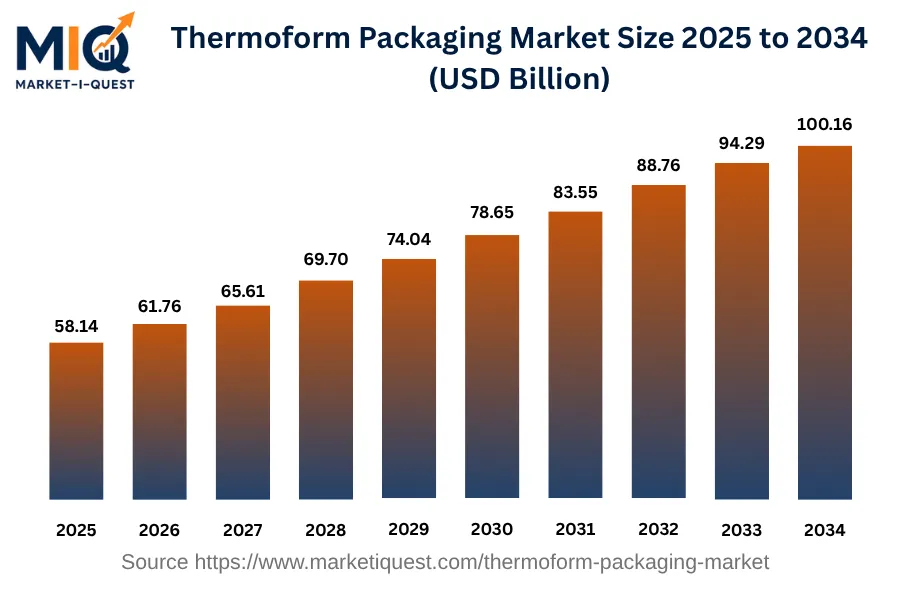
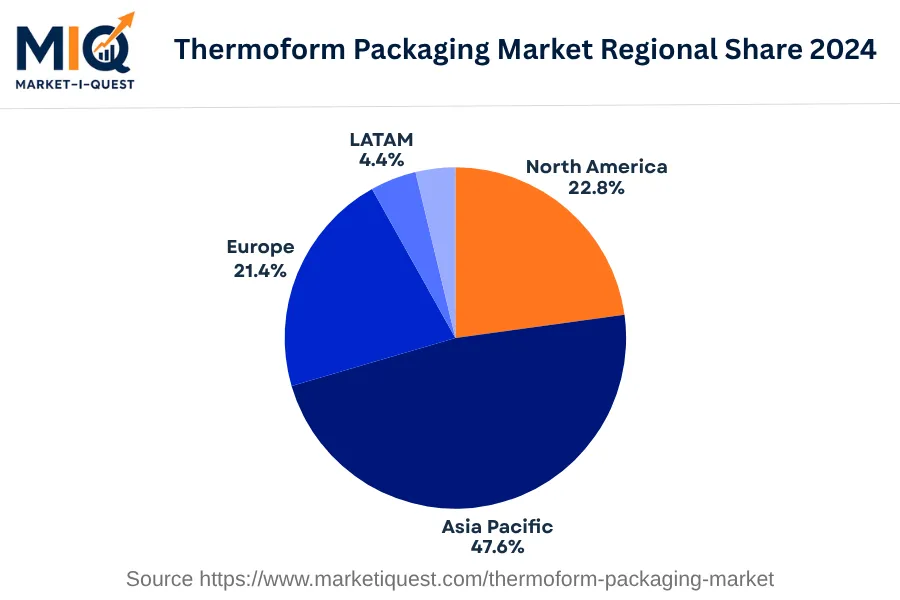
The Thermoform Packaging Market size in 2025 is projected to be $58.14 billion, up from $54.73 billion in 2024. By 2034, the market size is forecasted to grow to $100.16 billion, representing a compound annual growth rate of 6.23%. This significant expansion over the nine-year period can be traced back to several reasons. The consistent rising demand across diverse industries such as food & beverages, pharmaceuticals, and electronics indicates robust growth in the adoption of Thermoform Packaging. The much-needed longevity and protection of products, coupled with its cost-effectiveness, have made Thermoform Packaging a preferred choice among several industries. Regionally, in 2024, the Thermoform Packaging Market was most prominent in Asia Pacific, with 47.6% of the market share, followed by North America and Europe with 22.8% and 21.4% shares, respectively. Regions such as Latin America and Middle East & Africa recorded significantly lower shares of 4.4% and 3.8% accordingly, representing less-dominant markets.

Key Takeaways

  • By Type - Blister Packaging held a significant portion of the Thermoform Packaging Market in the base year.
  • By Material - Plastic led with a substantial share in the Thermoform Packaging Market during the base year.
  • By Heat Seal Coating - Solvent-Based were the leading subsegment in the Thermoform Packaging Market as of base year.
thermoform-packaging-market market size

Key Driving Factors

Stricter Environmental Regulations

Significant influence on the thermoform packaging market is exerted by the introduction of stricter environmental regulations worldwide. Governments globally are imposing regulations that mandate the reduction of harmful, non-biodegradable waste, and promote the use of recyclable materials. The Europe Union's Circular Economy Action Plan, for instance, calls for all packaging in the EU market to be reusable or recyclable in an economically viable manner by 2030. As a result, thermoformed packaging manufacturers are increasingly utilizing sustainable and recyclable materials such as PLA (Polylactic Acid), a biodegradable polymer, in their production processes. This regulatory push toward environmentally friendly practices indirectly grows the market for thermoform packaging.
Transition to E-Commerce in the Retail Sector

Transition to e-commerce in the retail sector has been a concrete driving factor in the thermoform packaging market. Businesses across industries are shifting to an online model of operation, where the protection and visual appeal of products for delivery become paramount. Thermoform packaging plays a vital role in this aspect, ensuring secure handling and minimization of damage in transit. Moreover, they offer customization opportunities, such as tailored mold designs and branding, which hold significant appeal for businesses looking to enhance their product presentation. As more businesses pivot to e-commerce amidst changing consumer behaviors, the demand for innovative, dependable, and visually appealing thermoform packaging solutions is expected to surge.

Market Evolution by Timeline

2019-2023
During this period, thermoform packaging found increased use in food and beverage industries, particularly in the European and North American markets. Technical growth was observed in the forms of PET, PVC, and PS packaging variants. The industry was majorly unrestricted, experiencing fluidity due to the lack of stringent regulations. The commercial model was predominantly based on_bulk procurement models, which proved favorable for both buyers and sellers. However, the industry faced potential risks due to environmental concerns and recycling challenges.
2024
In 2024, the thermoform packaging market saw an increase in the demand from the pharmaceutical industry, especially in the Asia-Pacific region. Innovation in medical-grade thermoform packaging technology became prominent. Directives such as EU MDR in Europe started influencing market adoption. In terms of the commercial model, long-term service contracts were prevalent among major market players. However, the risk of non-compliance to changing regulations posed a significant challenge.
2025-2029
During this period, the thermoform packaging demand shifted towards more robust applications such as electronics packaging. Developments in custom thermoform packaging solutions were distinct in regions like the Middle East. Adoption standards influenced by 'Green Packaging Guidelines' began to shape the industry. Nevertheless, economic fluctuations and subsequent impacts on raw material prices posed a potential risk. Changes in typical deal structures, leaning more towards contractual supply, marked the commercial evolution.
2030-2034
This era is likely to observe a surge in the demand of thermoform packaging in the consumer goods industry across the Americas. Biodegradable thermoform packaging technology is expected to mature significantly. Stringent enforcement of regulations such as End of Life Vehicle (ELV) Directive and WEEE Directive globally would influence adoption rates. Pricing dynamics might shift towards competitive pricing strategies aiding smaller players in the market to gain ground. Raw material supply shortages are potential risks in this period.

Future Market Outlook

Future Opportunities

The future of the thermoform packaging market is poised to expand due to various emerging consumer trends and regulatory frameworks. As of 2021, e-commerce growth has dramatically accelerated, highlighting the need for efficient and protective packaging solutions. Consequently, companies like Sealed Air have emphasized their commitment to developing sustainable thermoformed packaging tailored for online retail to meet the demands of packaging food and consumer goods more safely and efficiently. The environmental policies implemented by governments, such as the US Plastic Pollution Reduction Act proposed in 2023, underscore a commitment to reducing plastic usage and may lead to increased investments in sustainable packaging technologies. Additionally, as the demand for shelf-stable foods rises, manufacturers are likely to explore advanced barrier technologies that extend the shelf life of products. This trend is supported by a 2022 study from the Food & Drug Administration, which recommended packaging innovations as crucial for food safety. Regions like Asia-Pacific are also experiencing heightened demand, driven by rapid urbanization and changing consumer lifestyles. The increasing focus on circular economy initiatives globally, mandated by recent guidelines from entities like the OECD, ensures that the thermoform packaging industry must adapt to these intersections of sustainability and consumer needs, ultimately paving the way for further growth.

Segmentation Analysis

By Type

The market is divided into subsegments including Blister Packaging, Skin Packaging, Clamshell Packaging, Others, with Blister Packaging accounting for the largest revenue share while Skin Packaging is expected to grow at the fastest CAGR during the forecast period.

Largest Revenue Share

Blister Packaging

Market Share Leader

Blister Packaging holds the dominant position in terms of market revenue, a situation largely driven by its prime advantages - durability, protection capabilities, cost-effectiveness, and flexibility of design. These characteristics provide maximum product protection for a long time, making the packaging suitable for a wide range of goods across various sectors, primarily pharmaceuticals, consumer goods, and food industries. This broad application spectrum is a significant factor propelling its revenue generation. Geography wise, high-income regions such as North America and Europe contribute significantly to Blister Packaging market revenue due to the prevalence of major market players and high consumer demand for sophisticated, safe, and convenient packaging solutions in these regions. On the other hand, regulatory measures promoting sustainable packaging modalities can also spur the demand. Furthermore, the bulk purchasing tendencies of consumers and industries contribute to its growth, while the established distribution channels are an additional factor bolstering the segment's revenue.

Fastest CAGR

Skin Packaging

Forecast Period Growth Leader

Albeit not leading in terms of current market share, Skin Packaging presents the fastest growth trajectory with its CAGR expected to soar in the upcoming years. Several reasons underscore this growth. Main among these is the increasing demand driven by its aesthetic appeal, which significantly enhances product visibility, a key purchasing criterion in retail scenarios across sectors, notably in food and consumer goods. Technology has played a pivotal role in revolutionizing the packaging industry, and the advancements in Skin Packaging technology have helped in reducing the capex while improving the output quality. The growing partnerships between packaging firms and tech companies are anticipated to fuel this growth further. However, potential regulatory changes concerning plastic use pose a near-term risk to this high-growth outlook, as Skin Packaging traditionally relies on plastic materials. This aspect should be closely monitored by stakeholders looking to capitalize on this segment's rapid growth.

By Material

The market is divided into subsegments including Plastic, Paper & Paperboard, and Aluminum, where the Plastic subsegment represented the largest revenue share in the base year 2024. However, the Aluminum subsegment is forecasted for the fastest CAGR during the future period.

Largest Revenue Share

Plastic

Market Share Leader

In 2024, the Plastic subsegment dominated the material segment in terms of revenue. This can be ascribed to its widespread applicability in various industries such as packaging, construction, automotive, and electrical & electronics, owing to properties like versatility, durability, and cost-effectiveness. Regulatory pressures around the globe to reduce carbon footprint have boosted the demand for plastic materials, as lightweight plastic applications in automobiles contribute to enhanced fuel efficiency. The growth of e-commerce activities have also propelled the demand for plastic packaging materials. Moreover, customers tend to lean towards plastic materials due to their water and chemical resistant properties as well as their longevity. The increasing construction activities in developing economies has also hiked the demand for plastic materials for insulation, piping, and window frames among others. However, environmental concerns related to plastic usage have been influencing restrictions on plastic production and use, which may affect its dominant position.

Fastest CAGR

Aluminum

Forecast Period Growth Leader

The Aluminum subsegment is projected to witness the fastest growth in the market. Aluminum is increasingly being adopted in the automotive and construction industry due to its properties such as lightweight, corrosion resistance, and durability. The demand for lightweight vehicles to meet fuel efficiency and reduce carbon emissions is driving the adoption of aluminum materials. In addition, innovations like advanced aluminum alloys are opening new opportunities for the use of aluminum in various applications. In the construction sector, aluminum is favored due to its aesthetic appeal and resistance to weather conditions. Stringent regulations relating to carbon emissions are acting as a catalyst for the quick adoption of aluminum. However, the higher cost of aluminum compared to plastic may pose a barrier to its growth rate. The untapped potential in the emerging markets and the focus towards renewable energy (like solar panel installations where aluminum frames are used) serves as an opportunity for future market expansion of this subsegment.

By Heat Seal Coating

The Heat Seal Coating market is categorized into subsegments including Water-Based, Solvent-Based, and Hot Melt-Based Coatings. In the year 2024, Solvent-Based Coatings accounted for the largest revenue share while Water-Based Coatings are projected to exhibit the fastest growth during the forecast period.

Largest Revenue Share

Solvent-Based

Market Share Leader

In 2024, Solvent-Based Coating emerged as the segment with the most revenue in the Heat Seal Coatings market. This can likely be attributed to its effectiveness and versatility across a wide range of applications. These coatings offer excellent adhesion and fast drying times, catering to the need for speed and efficiency in industrial sectors. Solvent-Based Coatings are also known to provide superior performance in terms of durability and resistance to environmental conditions, making them a preferred choice for a wide range of end-use industries such as packaging, construction, and automotive. Furthermore, these coatings are compatible with diverse substrate materials, thus allowing them to cast a wider net in terms of potential customers. Regulatory frameworks also play a role, with certain geographies having more relaxed standards regarding the use of solvent-based products.

Fastest CAGR

Water-Based

Forecast Period Growth Leader

Water-Based Coatings are projected to record the fastest CAGR in the Heat Seal Coatings market. The main factors fuelling this growth are their environmental benefits and changing regulatory climate. As industries and consumers alike search for environmentally friendly alternatives to traditional products, Water-Based Coatings come to the fore. They have minimal volatile organic compound emissions and are non-flammable, which not only meets regulatory standards but also appeals to the increasing consumer demand for safer, more sustainable products. The introduction of improved water-based technologies that do not compromise on performance or durability is acting as a catalyst for growth in this segment. However, the higher upfront costs and perceived lower performance compared to traditional solvent-based coatings might pose challenges to adoption rates. Partnerships and innovations within the industry could aid in overcoming these hurdles and ensure continued robust growth for this subsegment in the future.

Competitive Analysis

Key Market Players

Manufacturers / OEMs

Amcor Limited
Australia
Sonoco Products Company
US
Bemis Company Inc.
US

Key Suppliers & Raw Materials

Dow Chemical Company
US
Eastman Chemical Company
US
BASF SE
Germany

Distributors, Integrators & Channel Partners

DS Smith Plc
UK
Sealed Air Corporation
US
WestRock Company
US

Porter’s Five Forces Analysis

The thermoform packaging market is assessed in terms of supplier power, buyer power, rivalry, substitutes, and entry threat.

Supplier Bargaining Power

Medium

Presence of numerous raw materials suppliers but high dependence on quality and price.

Buyer Bargaining Power

High

Increased demand by buyers, with options to switch due to presence of multiple vendors.

Threat of Substitutes

Low

Limited substitutes due to its unique characteristics like lightweight, lower cost and resistance.

Threat of New Entrants

Low

Technical expertise and significant initial capital investment serve as barriers.

Competitive Rivalry

High

Intense rivalry due to presence of numerous established brands with similar offerings.

Regional Analysis

Geographic market dynamics and growth opportunities across key regions

Global Market Outlook

thermoform-packaging-market market regional share

North America

In 2024, the North American thermoform packaging market was shaped by dynamic drivers and evolving trends. Market growth was primarily propelled by increased consumer demand for packaged food and pharmaceutical products, both in retail and e-commerce. Regulatory obligations around sustainable and recyclable packaging, especially the U.S. Circular Economy Action Plan, leveraged investment in eco-friendly plastic alternatives. Mass adoption of automation technology in the manufacturing sector, facilitated by Industry 4.0, augmented supply dynamics and optimized production costs.

Prevailing trends moreover exhibited a shift in buyer behavior towards convenient and portable packaging solutions, spurred on by the fast-paced lifestyle of North America's urban populace. In the retail sector, visually engaging, yet cost-effective, packaging grew in product differentiation significance. An upswing in strategic alliances and M&A activities across key manufacturers, like Sonoco's acquisition of Thermoform Engineered Quality, enabled service expansion and enhanced capability. Implementation of stringent safety standards across food and healthcare sectors further influenced packaging protocols. The retail, healthcare, and food & beverage sectors emerged as prime customers, with pharmaceuticals noticing a steep demand for blister packaging. Market participants in the U.S., Canada, and Mexico navigated these drivers and trends to procure competitive advantage, subsequently influencing the trajectory of the 2024 North American thermoform packaging market.

Asia Pacific

In 2024, the Thermoform Packaging Market in the Asia Pacific was defined by the confluence of environmental regulations, e-commerce growth, and technological advancements. Drivers such as China's aggressive push for sustainable packaging material due to environmental regulations and India's burgeoning e-commerce sector demanding efficient, lightweight packaging significantly stimulated the market. In Japan and South Korea, the increasing investments in technology adaptation resulted in advanced, eco-friendly Thermoform packaging solutions. Simultaneously, high-frequency of online purchase habits in Australia led to a rise in demand for transport-safe and durable packaging. ASEAN markets showcased an increase in local manufacturers' demand for cost-effective Thermoform packaging, further amplifying the market dynamics.

Prevailing trends downstream involved a shift towards personalized packaging in the retail sector, primarily in China and India due to growing consumer expectations. Manufacturer partnerships with technology providers for streamlining production processes were common, particularly in Japan and South Korea. Product adaptation was significant in the healthcare sector across the region for safe medicine distribution amidst growing COVID-19 concerns. In response to these trends, major sectors such as consumer goods manufacturing, food & beverages, and pharmaceuticals increasingly leveraged thermoform packaging, contributing to market expansion in the Asia Pacific region throughout 2024.

Europe

In 2024, the Thermoform Packaging Market in Europe exhibits substantial dynamism driven by various factors and trends. Key market drivers include stringent regulations in countries like Germany and the United Kingdom that champion environmentally-friendly packaging solutions, which promotes the adoption of thermoform packaging. This is further influenced by substantial investments in technology uptake, particularly in France and Italy, leading to innovation in thermoform packaging solutions. High demand from retail, manufacturing, and healthcare sectors across European locales such as Spain, the Nordics, and Benelux also fuel the market growth. This is owing to the cost-effectiveness of thermoform packaging in these sectors with specific applications like blister packaging. Reduction in raw material prices additionally influences supply dynamics favorably.

Trends shaping this landscape majorly include sustainability focus, with central and eastern European countries adopting recyclable thermoform packaging. The market is also seeing a transition to biodegradable options, driven by changing consumer preferences and stringent ecological regulations. There is an evident shift in purchasing channels, with online platforms increasingly becoming a key sales avenue. Furthermore, prolific partnerships and acquisitions are shaping the competitive landscape, for instance, the cross-border collaborations in technology exchange and resource sharing that allow market predominance. Policy enforcement for waste reduction, such as the EU’s Circular Economy Action Plan, influences material usage and disposal, pushing the market towards a sustainable framework.

Latin America

In 2024, the Thermoform Packaging Market in Latin America (LATAM) displayed significant growth, primarily fueled by increased demand from sectors such as food & beverages and pharmaceuticals. The key drivers included the rise of convenience food consumption in countries like Brazil and Mexico, leading to increased demand for effective and lightweight packaging solutions. In Argentina, regulatory mandates for child-resistant packaging in the pharmaceutical industry propelled the market. Furthermore, increased adoption of advanced packaging solutions in retail in countries such as Chile and Peru significantly enhanced market dynamics.

Trend-wise, in the LATAM region, eco-friendly and sustainable packaging became a strong focus area, with companies such as those in Colombia shifting towards renewable materials for thermoform packaging. Technological innovation, especially in high-speed packaging machinery, facilitated growth in sectors such as manufacturing and utilities. Meanwhile, the pharmaceutical sector in Mexico saw increased use of blister packs due to their efficacy in product protection. Moreover, strategic partnerships between packaging providers and retail industry giants in Brazil also defined the region’s thermoform packaging market trends in 2024. Finally, waste management policies enforced by governments across LATAM led to a preference for recyclable and reusable thermoform packaging among consumers.

Middle East & Africa

In 2024, the Thermoform Packaging Market in the Middle East and Africa observed significant traction. Drivers included an escalation in demand due to the growing food and beverage sector, particularly in countries like Egypt and South Africa. Increased investment in sustainable packaging solutions by manufacturing giants in Saudi Arabia and UAE also greatly influenced the market growth. Regulatory compliance requirements in nations such as Qatar and Kenya also motivated businesses to adopt thermoform packaging; it is often considered more environmentally friendly.

The year’s major trends were predominantly shaped by customer preferences and technology use. A shift towards easy-to-use, portable packaging was noticeable among buyers in Nigeria and Israel, prompting manufacturers to prioritize thermoform solutions. A notable advancement in technology was the increasing use of 3D printing in creating thermoform molds, especially visible within the Israeli tech industry. Meanwhile, in UAE and Saudi Arabia, companies actively sought partnerships for technology transfer and capacity enhancement in thermoform packaging, boosting intra-regional collaborations. Enforcement of stringent environmental policies also spurred an embracement of sustainable thermoform packaging options in countries like Egypt and South Africa. As such, the Thermoform Packaging Market in the Middle East and Africa in 2024 was driven by sector changes and innovation, responding to both commercial and regulatory needs.

Recent Industry Developments

Latest market innovations, product launches, and strategic initiatives

June 2026

British thermoformer Macpac acquired domestic competitor Hamilton Plastic Packaging for an undisclosed sum, consolidating its position in the UK market.

April 2026

Ringmetall SE strengthened its U.S. liner business by acquiring the thermoforming business unit from New England Plastics, an established supplier of rigid and form liners, tote liners, and other thermoforming products for industrial packaging solutions. The company indicated further attractive acquisition opportunities in the liner business later in 2026.

Frequently Asked Questions