Thermochromic Materials Market Snapshot

Key Players

  • OliKrom (France)
  • LCR Hallcrest LLC (United States)
  • Chromatic Technologies Inc. (United States)
  • Kolortek Co. Ltd. (China)
  • Indestructible Paint Ltd. (United Kingdom)
  • Fenzi S.p.A. (Italy)
  • GEM'INNOV (France)
  • Hali Industrial Co. Ltd.(China)
  • TOYOCOLOR CO. LTD. (Japan)
  • Hali Pigment (China)

Market Size

Base Year 2024
$2.15 Bn
CAGR
8.54%
Forecast 2034
$4.88 Bn

Market Segments

By Material Type
Organic Thermochromic Materials, Inorganic Thermochromic Materials, Liquid Crystalline Thermochromic Materials
By Formulation
Powder, Liquid, Granules
By Application
Textiles, Packaging, Coatings, Plastics, Inks
By End Use Industry
Consumer Goods, Automotive, Construction, Healthcare, Electronics, Others

Market Dynamics

Drivers
  • Increasing demand in smart packaging
  • Advancements in thermochromic technology
Restraints
  • High Production Costs
  • Limited Color Range
Opportunities
  • Emerging smart textiles industry
  • Rising product innovation potential

Market Size

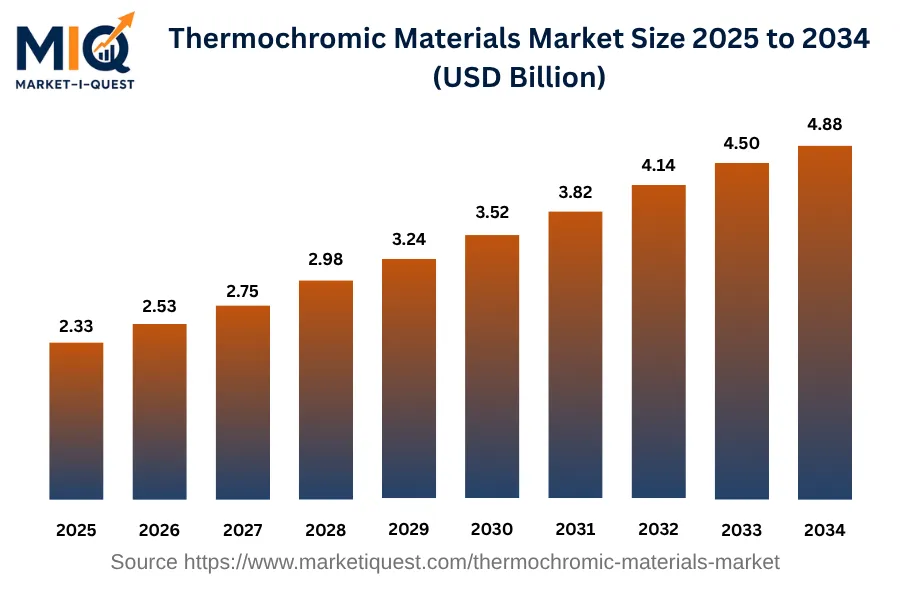
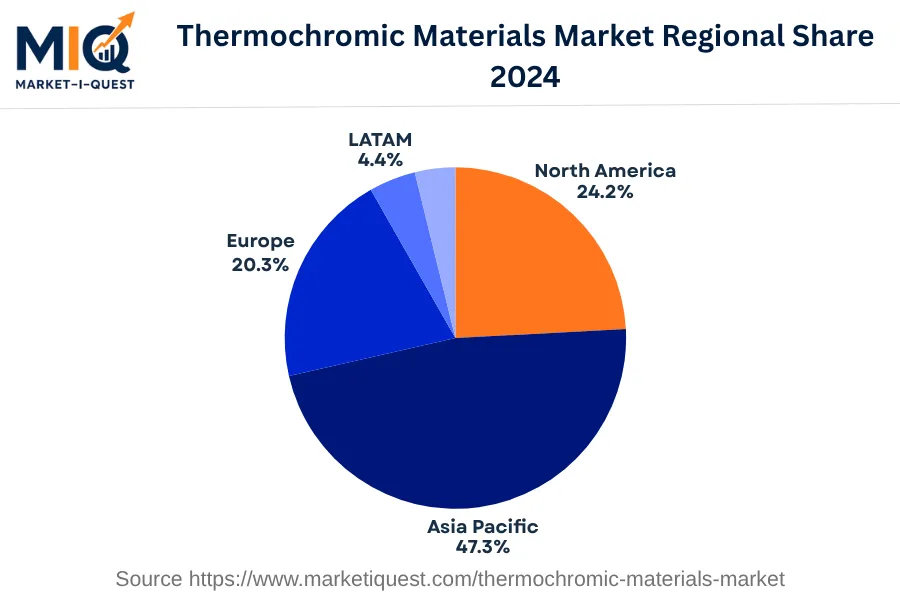
The Thermochromic Materials Market size in 2025 is valued at $2.33 billion, growing from $2.15 billion in 2024. By the close of 2034, it is expected to burgeon to $4.88 billion, resulting in a CAGR of 8.54% over this period. The expansion over these years arises from increases in both demand and use. However, the regional share distribution indicated Asia Pacific holding the largest share in the market accounting for 47.3% followed by North America with 24.2% and Europe at 20.3%. On the other side of the scale, Latin America held a 4.4% thermochromic materials market share, while the Middle East and Africa accounted for 3.8% of the total market.

Key Takeaways

  • By Material Type - Organic Thermochromic Materials led the market accounting for a dominant share in 2024.
  • By Formulation - Powder held a significant position in 2024.
  • By Application -Plastics grew largest in the Thermochromic Materials Market in 2024.
  • By End Use Industry - Electronics held the top standing having the lion's share in 2024.
thermochromic-materials-market market size

Key Driving Factors

Standardization of Packaging Safety Measures across Industries

The thermochromic materials market is finding a significant growth lever in the strict standardization of packaging safety regulations across multiple industries. For instance, the pharmaceutical industry is highly regulated and requires stringent adherence to safety measures in its packaging. Thermochromic materials, changing their appearance in response to changes in temperature, are used to create temperature-sensitive labels. These labels signal consumers if the contents of the package have been subject to unsuitable conditions, potentially compromising their safety or efficacy. This visibility enhances consumer confidence and safety, driving the market adoption of thermochromic materials in this industry.
Surge in Interactive Products Demand in Printing and Retail

Another key driver for the thermochromic materials market is the rising demand for interactive products in the printing and retail sectors. Thermochromic materials are increasingly being used to create interactive marketing pieces and packaging that engage customers. These materials change color with temperature variation, creating an element of surprise and interactivity. It is perceived as added value which can enhance the product's brand image and encourage higher customer engagement. Recently, a trend of applying thermochromic inks to beverage containers or food packaging is being observed, which changes color to indicate the correct serving temperature. This application is driving a particularly strong demand in the food & beverage industry.

Market Evolution by Timeline

2019-2023
During this period, thermochromic materials became popular in novel applications such as baby diapers and thermal mugs. The primary buyers were from textiles, printing and packaging industries, primarily in the United States and Western Europe. With a rise in the supply of reversible thermochromic materials. Regulations such as the European EN71 toy safety standards influenced the market, providing a safety benchmark for products. The commercial model typically involved a contract manufacturing agreement with the thermochromic material suppliers. Pricing varied depending on the type of thermochromic material.
2024
This year witnessed a shift toward the usage of thermochromic materials in automotive and electronics industries. China became an significant market due to growing industries. There were trials of integrating these materials in electronic displays. New standards such as the International Standard ISO 12405 for electric road vehicles influenced thermochromic materials' adoption in electric vehicles. Pricing witnessed an rise due to the rise in raw material prices. Major challenges included difficulties in achieving consistent color change and the demand for protecting the materials from external factors affecting their thermochromic properties.
2025-2029
This span will likely mark thermochromic materials' broadening scope in the healthcare and architecture industries. Developed Asian nations such as Japan and South Korea might also emerge as significant buyers. Thermochromic glasses and medical devices will likely emerge, enhancing visual diagnosing in healthcare. The ASTM E2151-01 standard that specifies thermochromic liquid crystal materials is expected to be significant in their adoption in architecture. In terms of commercialization, long-term partnership agreements between suppliers and manufacturing companies might become typical. Thermochromic material prices may began stabilizing, matching industry expectations. However, reproducibility of the colour change might remain an issue, leading to quality control challenges in manufacturing end products.
2030-2034
The aerospace sector might start exploring the usage of thermochromic materials during this period, particularly in developed economies such as the United States, Canada, and European Union countries. The technology matured to an extent where thermochromic paints on aircraft could provide real-time surface temperature visualization. Regulating bodies such as the Federal Aviation Administration (FAA) in the U.S. might start for analyzing how the use of thermochromic materials on aircraft met safety standards such as 14 CFR § 1.1 and 14 CFR § 23.603. Preferred commercial agreements will likely involve a mix of licensing and partnership with core aerospace companies. Despite a stable market, potential safety risks of thermochromic materials' reaction under the extreme conditions confronted in aerospace may remain a concern.

Future Market Outlook

Future Opportunities

As the demand for responsive materials continues to rise, the thermochromic materials market is projected for growth in several key areas. One potential opportunity exists in the automotive sector, where major manufacturers such as Ford and General Motors are researching how thermochromic coatings can enhance vehicle aesthetics and energy efficiency. The 2024 introduced of ISO 14001 standards is likely to compel more businesses to adopt eco-conscious materials, thereby opening avenues for thermochromic applications in packaging that offer both visual cues and compliance with sustainability initiatives. Another promising area is the HVAC industry, where companies such as Honeywell are exploring the integration of thermochromic technologies in smart ventilation systems, potentially enhancing energy savings in residential and commercial buildings. Moreover, the healthcare sector presents a unique opportunity, as thermochromic materials can be used in medical devices to indicate temperature changes, thus enhancing patient safety. Collaborative efforts among research institutions, like the partnership between the University of California and Johnson & Johnson, are expected to spur the development of novel thermochromic applications in pharmaceutical packaging.

Segmentation Analysis

By Material Type

The market is divided into subsegments including Organic Thermochromic Materials, Inorganic Thermochromic Materials, and Liquid Crystalline Thermochromic Materials. Among these, Organic Thermochromic Materials accounted for the largest revenue share while Liquid Crystalline Thermochromic Materials is projected to grow at the fastest CAGR during the forecast period.

Largest Revenue Share

Organic Thermochromic Materials

Market Share Leader

The overall dominance of the Organic Thermochromic Materials subsegment can be largely attributed to their excellent light and heat management properties, and environmental safety considerations. These materials have found widespread adoption in several sectors owing to their lower cost and versatile characteristics. Additionally, these materials have seen a surge in popularity as a result of their inherent environmental friendliness, appealing to businesses that aim to reduce their carbon footprint. The demand is particularly strong in geographies where regulatory bodies enforce stringent environmental standards. Moreover, the acquisition process of these materials implicates lower switching costs, and the purchasing process enjoys a rather established channel, particularly in mature markets. This ease and accessibility are instrumental in driving the revenue for this subsegment.

Fastest CAGR

Liquid Crystalline Thermochromic Materials

Forecast Period Growth Leader

Forecasted as the fastest-growing segment, Liquid Crystalline Thermochromic Materials are on the verge of redefining the market landscape. The growth drivers primarily include substantial technological advancements and the versatility of applications. These materials offer dynamic responses to temperature changes, thus gaining popularity in sectors such as consumer electronics and industrial applications. Yet, the widespread adoption is not without barries, mainly the higher initial capital expenditure required to switch from conventional material types. However, strategic partnerships among manufacturers and suppliers aim to minimise these adoption barriers. Despite the concern of high initial investment, the extensive benefits offered by these materials-including energy efficiency and superior performance parameters-are serving as strong catalysts for its expected growth. It's important to note, however, that potential regulatory challenges and the volatility of raw material prices pose near-term risks to this growth trajectory.

By Formulation

The market is divided into subsegments including Powder, Liquid, and Granules, with Powder accounting for the largest revenue share while Granules is expected to grow at the fastest CAGR during the forecast period.

Largest Revenue Share

Powder

Market Share Leader

In the base year of 2024, the powder formulation led the market in generating the highest revenue. This prominence can be attributed to the versatility and ease of use associated with powder formulations. Due to their solid state, they tend to have a long shelf life and can resist environmental changes such as temperature and humidity compared to liquid and granular formulations. Also, they are easy to transport and store, making them more appealing to suppliers and users alike. The supply chain efficiency is enhanced with the durability and compact nature of powder formulations. There's also a clear customer preference towards powder due to its simple mixing procedures and flexibility in adjusting the dosage. Key markets like North America and Europe prefer powders because of their utility and ease in their integration into various industrial processes.

Fastest CAGR

Granules

Forecast Period Growth Leader

Although the granular formulation holds a smaller revenue share compared to powder and liquid, it is expected to witness the fastest growth in the upcoming years. The growth is likely to be fueled by the unique advantages granules offer. They offer ease of handling and minimal dust exposure, contributing to operational safety. Additionally, granules can be engineered to control release timing, improving effectiveness in various applications. Technological advancements are also playing a key role in boosting the demand for granular formulation. Research and development initiatives focused on enhancing the granulation process can further drive adoption. However, key risks include the potential for higher production costs relative to other forms and the need for specialized application equipment. Successful partnerships between raw material providers, producers, and end-use industries can help overcome these barriers and accelerate the segment's growth.

By Application

The market is divided into subsegments including Textiles, Packaging, Coatings, Plastics, and Inks. In the 2024 base year, Plastics accounted for the largest revenue share while Textiles is expected to grow at the fastest CAGR during the forecast period.

Largest Revenue Share

Plastics

Market Share Leader

The Plastics segment accounted for the most significant revenue share in 2024. This outcome can be attributed to its enormous demand in different industry sectors, such as construction, packaging, and automotive. Across various geographies, plastics are essential in our daily lives, from food storage to transportation. The regulatory landscape also supports the plastics sector, with international policies promoting the use of durable, lightweight, and cost-efficient materials, thereby propelling the market growth of plastics. Customer preferences have swung towards plastics due to their long lifespan and adaptability to a wide array of applications. Moreover, the purchasing criteria are largely driven by the search for economically efficient solutions offering optimal performance. The high switching costs associated with alternative materials and the established distribution channels in the plastics industry also make it the segment with the highest revenue in 2024.

Fastest CAGR

Textiles

Forecast Period Growth Leader

Textiles is projected to grow at the fastest CAGR during the forecast period. This growth can be traced back to several factors such as technology advancements, governmental policies, and strategic partnerships. Technological developments in textiles production and materials are leading to more sustainable and efficient products, attracting a new wave of consumers and industries. Policies promoting local textile industries and handicraft sectors are acting as catalysts for the growth of this segment. The role of strategic partnerships and collaborations in advancing market growth cannot be underestimated, assisting in capacity expansion and tech transfer. Capital investments in the textiles domain are also facilitating the modernization of equipment and techniques. Nonetheless, barriers to adoption, such as the high costs associated with advanced textile materials and potential risks related to supply chain disruptions, should be closely monitored.

By End Use Industry

The market is segmented into Consumer Goods, Automotive, Construction, Healthcare, Electronics, and Others. Among these segments, the Electronics segment accounted for the largest revenue share in 2024, while the Healthcare segment is predicted to grow at the fastest compound annual growth rate during the forecast period.

Largest Revenue Share

Electronics

Market Share Leader

The Electronics segment was the main driver of revenue for the end-use industry in the base year of 2024. This is primarily due to the rapidly evolving technology and increasing adoption of electronic devices worldwide. The segment encompasses a wide variety of products, ranging from consumer electronics like smartphones, laptops, and televisions to more complex industrial and commercial electronic systems. The soaring demand, particularly in developing regions, has greatly contributed to the overall revenue. Additionally, innovation and constant upgrades in electronic devices have led to frequent purchases, further reinforcing the segment's dominance. It is essential to consider the massive impact broadband and internet growth have had on the electronics sector by facilitating the emergence of connected devices and smart homes, which considerably drive electronics consumption. Additionally, governmental support in many countries for the electronics manufacturing industry, alongside favorable policies, has aided in the segment's growth.

Fastest CAGR

Healthcare

Forecast Period Growth Leader

The Healthcare segment is expected to witness the fastest growth rate during the forecast period. This increase is likely propelled by the global health crises and a heightened awareness and investment in healthcare infrastructure. The ongoing pandemics have demonstrated the critical necessity for advanced medical equipment, robust health systems, and efficient and effective health solutions, driving significant growth in this sector. Furthermore, continuous advancements in medical technology, including the advent of cutting-edge diagnostic and therapeutic devices, are pivotal in the increasing demand. Coupled with the aging population and the rising prevalence of chronic diseases worldwide, these factors catalyze the rapid expansion of the healthcare industry. Nevertheless, the regulatory constraints for approval, high costs associated with medical technology, and data security concerns in digital health solutions could pose significant challenges to the segment's growth pace.

Competitive Analysis for the Thermochromic Materials Market

Key Market Players

Manufacturers / OEMs

OliKrom
France
LCR Hallcrest
US
Chromatic Technologies Inc.
US

Key Suppliers & Raw Materials

Honeywell International Inc.
US
3M
US
BASF SE
Germany

Distributors, Integrators & Channel Partners

SMAROL INDUSTRY CO. LTD.
China
Thermotech
Sweden

Porter’s Five Forces Analysis

This analysis examines the competitive dynamics of the Thermochromic Materials Market.

Supplier Bargaining Power

Medium

Limited number of suppliers increases their negotiation power, partially offset by presence of substitutes.

Buyer Bargaining Power

Low

High switching costs and technical specification requirements limit buyer bargaining power.

Threat of Substitutes

Medium

Though other temperature-sensitive materials exist, their performance varies greatly.

Threat of New Entrants

High

Low capital investment needed for entry, but certification barriers can present challenges.

Competitive Rivalry

Medium

Market dominance by a few established entities tempers the competitive rivalry.

Regional Analysis

Geographic market dynamics and growth opportunities across key regions

Global Market Outlook

thermochromic-materials-market market regional share

North America

In 2024, the North American market for thermochromic materials was characterized by strong demand across various industries. Regulatory initiatives promoting health and safety, such as OSHA standards in the U.S., have driven investments in thermochromic technology adoption, specifically in sectors like manufacturing and healthcare. Furthermore, technology companies in North America, both larger firms and startups, are investing heavily in these materials, signaling robust supply dynamics. The growing domestic production and stable pricing have also catalyzed market growth.

Trends for 2024 highlighted the consumer inclination towards intelligent and responsive products, invigorating interest in thermochromic materials. Enhancements in digital printing technology have enabled companies to produce more complex and detailed thermochromic products, appealing to many sectors, especially retail and advertising. Additionally, partnerships and mergers & acquisitions in the thermochromic materials market have grown, as seen with strategic collaborations between US and Canadian firms. Enforcement of environmental policies also influenced the market, encouraging the development of eco-friendly thermochromic materials. In terms of customer base, enterprise-level customers continued to form a significant portion of the demand, specifically utilities companies who use these materials for temperature-sensitive applications. Notably, Mexico's growing manufacturing sector emerged as a key consumer of these materials as well.

Asia Pacific

The Thermochromic Materials market in Asia Pacific during the 2024 base year was largely shaped by industrial growth, technological innovation, and favorable regulations. A surge in demand for smart textiles and color-changing inks in key sectors like manufacturing, retail, and advertising drove the market. China's advanced manufacturing capabilities led the pack, along with increasing investments in innovation in South Korea and Japan. The Indian government’s campaign for digital manufacturing also stimulated demand for these materials.

Emerging trends in the market consisted of sustainable practices and digital transformations. The shift towards eco-friendly thermochromic materials became more evident, encouraged by governments across ASEAN countries to attain sustainable goals. Japan’s Green Energy Law, for example, encouraged companies to prioritize these materials in solar control systems. Consumer behaviors also changed significantly with a preference for more interactive and intuitive products. Technologies incorporating thermochromic materials, such as interactive advertising boards, gained traction in Australia and China. Channel dynamics shifted towards online platforms, incentivized by digitally-inclined customers. The year also witnessed strategic alliances and M&As, particularly in South Korea and China, aimed at gaining competitive advantages and innovating with new delivery methods. Compliance with strict quality and safety standards was highlighted in India, aiming to ensure the production of high-quality, reliable thermochromic products.

Europe

In 2024, the Thermochromic Materials Market in Europe was characterized by increased usage across various industries. Drivers of this market included stringent safety regulations in several EU countries, pushing industries like manufacturing and utilities to use these materials for temperature indication purposes. Increased investment from key European markets, particularly Germany and the United Kingdom, mainstreamed the thermochromic technology adoption. A supply surge from Italy and Spain also invigorated the market, although pricing remained largely competitive.

Notably, buyer behaviour exhibited increasing preference for thermochromic products in everyday use, such as baby bottles and bath toys — a trend particularly marked in the Nordics and Benelux region. The higher penetration of smart homes in these regions also led to augmented use of thermochromic materials. Further, partnerships and M&A activities were observed, especially among French firms, to extend reach and to leverage shared resources. A shift towards environmentally friendly thermochromic dyes, underscored by EU pollution control policies, was another significant trend. Key customers included large-scale enterprises and governments investing in safety mechanisms and innovative product development. The retail sector, propelled by consumer interest, also showed increased demand for thermochromic products. In the healthcare sector, thermochromic materials found application in items like thermometers and diagnostic strips, primarily in Central & Eastern Europe.

Latin America

In 2024, the thermochromic materials market in Latin America (LATAM) saw a substantial rise. The market was primarily driven by increasing demand for intelligent packaging in retail sectors and increasing consumer awareness about product quality, particularly in Brazil and Mexico. For instance, food and beverages and pharmaceutical sectors had started integrating thermochromic materials in packaging systems to detect and indicate temperature changes. Additionally, eco-friendly policies set forth by governments in this region fostered investment in the thermochromic materials market.

Regarding trends, increased technological adoption such as the integration of thermochromic materials into textiles was notable, with a striking interest observed in the fashion industry, led by Argentina and Colombia. Furnishings and home accessories market also showed interest in these materials, following suit. Another remarkable trend was the increased partnership activities between local small-scale industries and global manufacturers aiming to improve product accessibility. Chile's adoption of enhanced policy enforcement in safety standards across various sectors prominently supported the use of thermochromic materials. However, despite the promising drivers and trends, the somewhat high price of thermochromic materials and the lack of adequate resources in certain LATAM regions, such as Peru, posed a hindrance to the overall market surge in the region in the year 2024.

Middle East & Africa

In 2024, the Thermochromic Materials Market manifested significant growth in the Middle East and Africa, particularly in countries like Saudi Arabia, UAE, and Qatar. Influential drivers included high adoption rates of smart packaging in retail sectors, and increased demand in the manufacturing industry, particularly the automotive and textile sectors. Government investments in innovation were also instrumental in spurring local market growth. For example, Saudi Arabia's National Transformation Program positively influenced the market by incentivizing technological innovation.

The market trends underscored a growing preference for thermochromic materials within healthcare and utilities sectors. This was due to their efficiency in maintaining optimal temperatures, crucial in regions with unforgiving climate conditions like UAE. Further, partnerships between local and international players to invest in advanced technology also became a notable trend. Evidence of this was evident in Qatar's successful partnerships with Chinese firms, leveraging their advanced thermochromic technology. Moreover, the enforcement of stringent quality standards in countries such as South Africa and Egypt significantly shaped the market's trajectory. Throughout 2024, these trends and drivers steered the thermochromic materials market in Middle East and Africa towards progressive growth, displaying pronounced durability compared to the previous year.

Recent Industry Developments

Latest market innovations, product launches, and strategic initiatives

June 2026

PepsiCo launched a limited-edition Pepsi Max football-themed packaging campaign in the UK featuring thermochromic ink technology. The ink begins reacting at 12°C and turns blue at the optimal drinking temperature of 8°C, revealing instant-win prize status. Of the 86 million football-themed cans released, 150,000 rare "Perfect Chilled" variants feature the smart packaging technology.

July 2025

ThermoTech Partners announced its global expansion under CEO Devon Brown, with a valuation of approximately $18.5 million. The company focuses on transforming thermochromic intellectual property into scalable applications across medical, consumer, and promotional sectors through a dual-engine business model of IP licensing and proprietary product manufacturing.

Frequently Asked Questions