
Reference Thermometer Market Snapshot

Key Players

  • Fluke Corporation (United States)
  • Hart Scientific Inc (United States)
  • Isotech (United Kingdom)
  • AccuMac Corporation (United States)
  • Thermo Fisher Scientific Inc. (United States)
  • Yokogawa (Japan)
  • Omega Engineering Inc. (United States)
  • Azbil Corporation (Japan)
  • Rohde & Schwarz (Germany)
  • Wika (Germany)

Market Size

Base Year 2024
$12.54 Bn
CAGR
5.7%
Forecast 2034
$21.83 Bn

Market Segments

By Type
  • Handheld
  • Desktop
By Product Type
  • Platinum Resistance Thermometers (PRTs)
  • Thermocouples
  • Liquid-in-Glass Thermometers
By Application
  • Laboratories
  • Metrology
  • Environmental Monitoring
  • Chemical Manufacturing
  • Food Processing
  • Medical
  • Others

Market Dynamics

Drivers
  • Increasing healthcare awareness
  • Technological advancements in thermometry
Restraints
  • High equipment costs
  • Regulatory compliance challenges
Opportunities
  • Increasing healthcare demands
  • Technological advancements in thermometers

Market Size

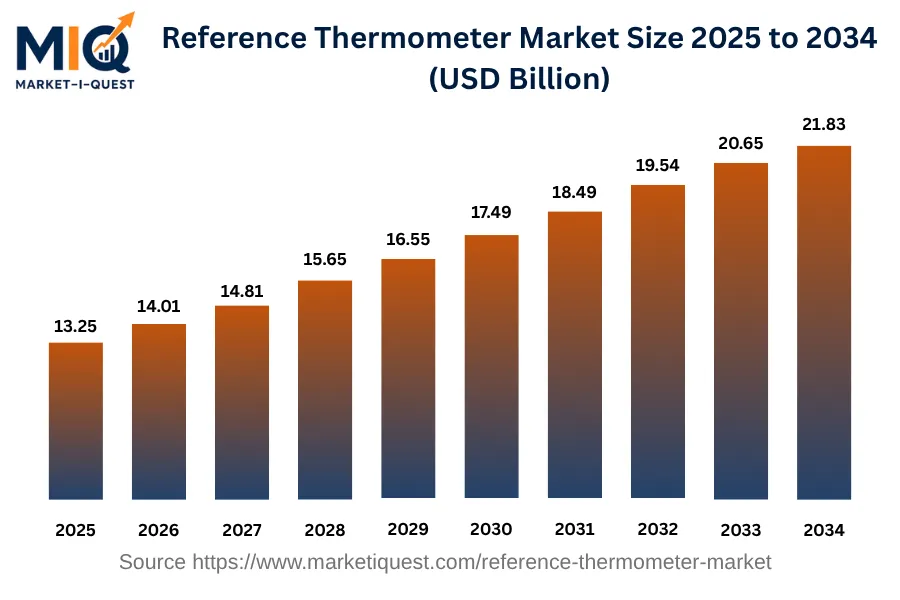
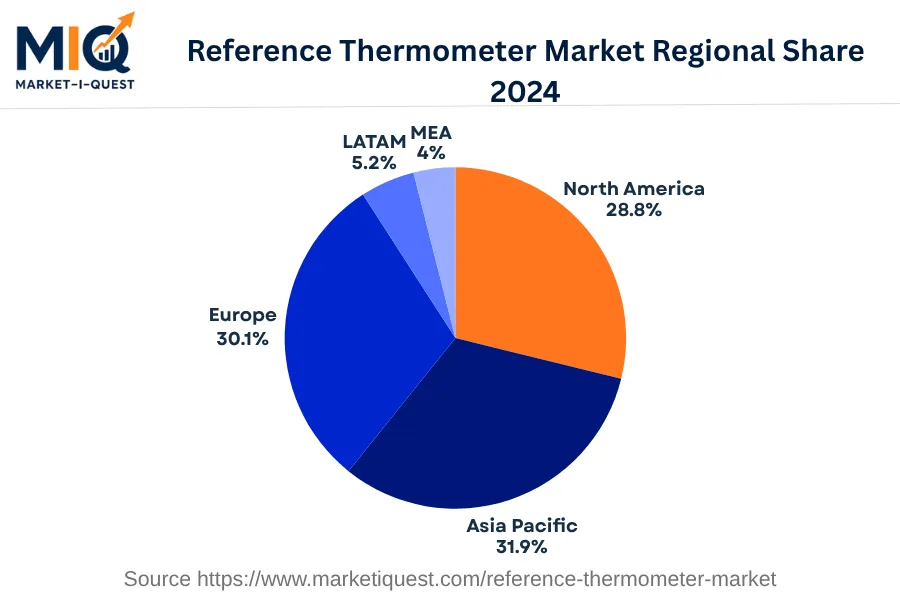
The Reference Thermometer Market size in 2025 is projected to be $13.25 billion, an increase from the $12.54 billion observed in 2024. By 2034, the market is predicted to reach $21.83 billion, which represents a compound annual growth rate (CAGR) of 5.7% over the period from 2025 to 2034. This growth represents a steady increase in market size, with the market expanding at a consistent rate. The rise in market value can be attributed to various factors like technological advancements, improved accuracy, and increased applications in different sectors. As for regional distribution of the market share in 2024, Asia Pacific holds largest share of 31.9%, closely followed by Europe at 30.1% and North America at 28.8%. The remaining market share is distributed between Latin America and Middle East and Africa, with 5.2% and 4.0% respectively.

Key Takeaways

  • By Type - Desktop segment led the Reference Thermometer Market with a dominant presence.
  • By Product Type - Thermocouples held the top position in the market indicating higher use.
  • By Application - Medical accounted for significant growth in the Reference Thermometer Market.
reference-thermometer-market market size

Key Driving Factors

Implementation of Stringent Standards for Instrument Calibration

One of the key factors driving the reference thermometer market today is the imposition of tighter standards for instrument calibration. Regulatory bodies like International Organization for Standardization and National Institute of Standards and Technology, prescribe strict regulations for temperature monitoring in numerous industries including pharmaceutical, food, beverage, Chemical, etc. Failure to adhere to such standards can lead to severe fines and reputational harm. Implementing these regulations necessitates the use of reference thermometers, as they provide highest standard in temperature measurement and ensure adherence to these regulatory norms. Hence, the implementation of stringent calibration standards is propelling the adoption and spend on reference thermometers.
Proliferation of Cold Chain Logistics

A notable propellant for reference thermometer market is the escalating expansion of cold chain logistics sector. Given the regulatory need for continual temperature monitoring during storage and transport of temperature-sensitive products (notably vaccines, biopharmaceuticals, fresh fruits, and vegetables), reference thermometers are becoming increasingly essential for efficient cold chain logistics. Their highest standard in temperature measurement helps to monitor the smallest temperature aberrations that can diminish quality or efficiency of such products. As more businesses engage in transport and storage of these temperature-sensitive goods, demand for reference thermometers is set to rise, driving market growth.

Market Evolution by Timeline

2019-2023
During this period, Reference Thermometer Market's most active customer segments appeared to be laboratories and healthcare providers, specifically in North America and Europe, mainly due to rising health concerns and stringent food safety regulations. The market was dominated by digital thermometers, and most suppliers were instrument manufacturers, like Fluke or Omega, offering integrated solutions with various degrees of customization. The sector was regulated by standards for medical devices (like ISO 13485) and geographic-specific programs, like European Metrology Programme for Innovation and Research. The predominant commercial model was the direct sale model with medium to long-term contracts. The key risk was increased cost of compliance with changing safety and quality standards, which was typically managed by negotiation of pricing and supply contracts.
2024
In 2024, the buyer landscape saw surge in demand from education sector globally, with sustained purchase from health and food industries. New suppliers entered, like ambient device manufacturers offering modular thermometer components suitable for various OEM designs, pushing for miniaturization and energy efficiency. Companies increasingly began complying with Global Greenhouse Standard, aligning with global sustainability goals. Direct-to-consumer sales through digital platforms skyrocketed, with typical transactions being fee-based with optional service add-ons. The primary risk in this year was seen as market saturation, which some companies navigated by targeting niche markets or seeking profitable partnerships.
2025-2029
From 2025 to 2029, sectors like agriculture and manufacturing experienced a spike in demand for reference thermometers to ensure accurate temperature measurement in critical processes, especially in Asian countries. Supply was marked by advancements in IoT-enabled smart thermometers offering real-time data collection and remote monitoring. The adoption was accelerated by QMS standards (like ISO 9000) that required accurate measurements. Subscription-based models with upfront costs became common, establishing long-term customer relationships. The main risk lay in data security due to increasing IOT implementations, likely addressed by heightened cybersecurity protocols.
2030-2034
In later years (2030-2034), demand for reference thermometers trended high in developing nations in climate change monitoring and research. Technological innovations majorly included AI-enhanced thermometers providing predictive analysis and improving measurement accuracy. Key standards like ISO/IEC 17025 guided the integration of these technologies. Hybrid models of licensing and pay-per-use shaped transaction landscape, with manufacturers and buyers forging strategic alliances. Looming risk was technology obsolescence, typically expected to be mitigated through continuous investment in R&D.

Future Market Outlook

Future Opportunities

The ongoing evolution of regulatory standards presents substantial opportunities in the reference thermometer market. The FDA's evolving framework around temperature monitoring in clinical settings, particularly with vaccine preservation mandates established since 2021, invites innovations tailored to meet compliance and safety criteria. Companies that develop smart thermometers integrated with data analytics solutions are well-positioned, as stakeholders in healthcare demand reliable temperature data for sensitive biological materials. Similarly, industries like food and beverage are witnessing an increased focus on maintaining temperature controls in line with latest food safety regulations adopted in 2022, which can propel creation of specialized reference thermometers designed for those applications. The anticipated growth of renewable energy technologies can also spur demand for reference thermometers in solar panel manufacturing, where temperature monitoring is vital to ensure quality and performance. Moreover, multi-sensor devices that offer multifunctional measurement including humidity alongside temperature may gain traction as industrial processes evolve towards more integrated data solutions. With expansion of telemedicine and remote health management, there is a burgeoning need for portable reference thermometers that ensure accuracy anywhere, which can be developed further leveraging existing technologies. These emerging needs illustrate a clear path for manufacturers to capitalize on current events and collaborations within the healthcare, food safety, and clean energy sectors, fostering continued market development.

Segmentation Analysis

By Type

The market is divided into subsegments including handheld and desktop, with the desktop segment accounting for the largest revenue share while the handheld segment is expected to grow at the fastest CAGR during the forecast period.

Largest Revenue Share

Desktop

Market Share Leader

The desktop segment commands the largest revenue share in the market. This can be attributed to some driving factors. First is the wide usage of desktops in corporate settings across different industries. Companies use desktop computers for their durability, processing power, and large storage capacities. They are also preferred due to their consistent physical connection to power and internet sources, which handheld devices may lack. Desktops also cater to a broad customer base, like gamers, developers, and creatives, who require high-performing computers for their tasks. Geographically, developed regions like North America and Western Europe remain the biggest markets due to high income levels and penetration rates of computers in households and offices. Regulations around data security and privacy also favor desktop usage in many organizations. Furthermore, buying considerations include factors like performance, upgradeability, and price - where desktops often provide best value. Finally, existing channels of distribution, like retailer partnerships, amplify desktop market's dominant position. It should be noted that desktop market's lead indicates its relative strength in the base year 2024 and doesn't necessarily predict future trends.

Fastest CAGR

Handheld

Forecast Period Growth Leader

Although handheld segment doesn't contribute the most towards market revenue currently, it's forecasted to be the fastest growing subsegment. The primary growth driver for handheld devices is their convenience and portability feature, which is highly favored by today's mobile-first consumer base. The rise of smartphone-dependent applications and cloud computing services has also escalated the overall handheld device adoption rate, thus driving growth in this segment. But adoption barriers like durability concerns, limited processing power and storage, and reliance on constant battery charging can decelerate growth pace. Policies promoting digital inclusion, especially in emerging economies, are expected to serve as catalysts for this segment. Additionally, the introduction of more powerful processors, increasing storage capacities, and improving battery life through technological advancements will propel market growth further. The risks tied to handheld segment growth include increased regulatory scrutiny and security risks, as handheld devices are susceptible to theft and data breaches. It's crucial to note that while handheld is forecasted as the fastest-growing segment, factors like future technological development and market acceptance will play an influential role in determining real growth rate.

By Product Type

The market is divided into subsegments including Platinum Resistance Thermometers (PRTs), Thermocouples, and Liquid-in-Glass Thermometers. Of these, Thermocouples accounted for the largest revenue share while Platinum Resistance Thermometers (PRTs) are expected to grow at the fastest CAGR during the forecast period.

Largest Revenue Share

Thermocouples

Market Share Leader

Thermocouples, a crucial component in numerous industrial and scientific applications, is the predominant revenue generator in the market. The wide applicability of Thermocouples in sectors like automotive industry, HVAC systems, gas appliances, and process industries is a robust driver for its leading position. The inherent advantages of Thermocouples - wide temperature range, ruggedness and fast response times are few reasons why customers prefer these devices. Additionally, these devices are exceptionally durable and economical compared to other temperature sensing devices, increasing their market attractiveness. The largest consumer base for Thermocouples is in developed economies due to presence of mature industries and high adoption rates. But emerging markets are showing promising potential, contributing further to this subsegment's robust revenue stream.

Fastest CAGR

Platinum Resistance Thermometers (PRTs)

Forecast Period Growth Leader

Platinum Resistance Thermometers (PRTs) demonstrate fastest growth in terms of CAGR. As industries evolve and applications become more demanding, industries are progressively moving towards PRTs due to their improved accuracy and long-term stability. In particular, PRTs are heavily relied upon in pharma manufacturing and aviation due to their ability to provide more precise temperature measurements. But the high cost of PRTs relative to other types of sensors is a barrier to their widespread adoption. Nevertheless, increasing application areas and technological advancements in manufacturing processes are expected to bring down prices of PRTs in near future and fuel their speedy adoption. Furthermore, collaborations by key players to improve PRT technology are expected to catalyze growth in this area. The biggest risk in the foreseeable future could be supply chain disruptions due to unforeseen global crises, which might affect regular operations and delay PRTs' production.

By Application

The market is divided into subsegments including Laboratories, Metrology, Environmental Monitoring, Chemical Manufacturing, Food Processing, Medical, and Others. The Medical subsegment accounted for the largest revenue share while Environmental Monitoring is expected to grow at the fastest CAGR during the forecast period.

Largest Revenue Share

Medical

Market Share Leader

In 2024, the Medical subsegment generated highest revenue among all application types. The primary reason for this dominance can be attributed the high demand for medical devices and research equipment, driven by continual need for improved healthcare services across the globe. Next, an aging global population and rise of chronic and acute diseases have increased the need for laboratory testing, diagnostic devices, and therapeutic equipment, directly boosting revenue for Medical subsegment. Additionally, hospitals, as major customers, are prioritizing purchasing from vendors who offer integrated solutions with high operational efficiency and improved patient outcomes. Geographic regions, particularly North America and Europe, contribute significantly due to their advanced healthcare systems, substantial healthcare spending, and presence of key market players. Regulations also have a role, with strict quality and safety standards pushing for adoption of reliable and certified products.

Fastest CAGR

Environmental Monitoring

Forecast Period Growth Leader

Despite not being the largest revenue generator, Environmental Monitoring emerges as fastest-growing segment. The key drivers for this growth include increasing global awareness and concern for environment coupled with strict environmental regulations and policies being implemented in numerous regions. Emerging technologies such as IOT and automation have further accelerated adoption rate by significantly improving accuracy and data collection speed, analysis, and reporting in environmental monitoring applications. But high implementation costs and limited availability of skilled personnel can pose barriers to rapid adoption. Investment in training programs, collaboration with tech companies for advanced solutions, and increased government and international body funding are potential catalysts for future growth. Yet, there remain near-term risks related to technological adoption and global economic fluctuations.

Competitive Analysis

Key Market Players

Manufacturers & OEMs

Hart Scientific Inc.
US
Fluke Corporation
US
WIKA Alexander Wiegand SE & Co. KG
Germany

Key Suppliers & Raw Materials

Omega Engineering Inc.
US
Amphenol Advanced Sensors
US
Texas Instruments
US

Distributors, Integrators & Channel Partners

Testo SE & Co. KGaA
Germany
RS Components
UK
Tequipment.NET
US

Porter’s Five Forces Analysis

This analysis investigates the competitive pressures in the Reference Thermometer Market.

Supplier Bargaining Power

Medium

Suppliers exercise control through the high cost of raw material for precision instruments.

Buyer Bargaining Power

Low

Buyers face a specialist market with high-switching costs and OEM-specific lock-ins.

Threat of Substitutes

Low

Low threat due to the essential, specific role of reference thermometers in calibrating other instruments.

Threat of New Entrants

Medium

The main barrier is the hefty investment in R&D and regulatory compliance.

Competitive Rivalry

High

Strong competition driven by players continuously innovating for better accuracy and reliability.

Regional Analysis

Geographic market dynamics and growth opportunities across key regions

Global Market Outlook

reference-thermometer-market market regional share

North America

In the base year 2024, the North American Reference Thermometer Market experienced a significant evolution driven by many key factors. Increased demand in sectors like healthcare, utilities, and manufacturing primarily contributed to market growth. The implementation of stricter temperature control regulations by governmental entities like FDA and Health Canada necessitated more robust and reliable monitoring systems, boosting investment in thermal technology. Both US and Canada witnessed higher technology adoption rates, with various enterprises proactively integrating cutting-edge thermal solutions.

Simultaneously, the market showed interesting trends reflective of shifting consumer preferences and regulatory pressures. Buyers increasingly sought digital and wireless thermometers over traditional models due to their convenience and improved accuracy. Additionally, there was a surge in e-commerce sales across the region, especially in U.S. and Canada, given the retail channel's ubiquity and convenience. The market also saw significant mergers and acquisitions, enabling companies to strengthen their profiles and broaden their clientele. Finally, policy enforcement on product standards became more stringent, with regulatory bodies throughout North America pressing manufacturers for more reliable and accurate devices. Such rigorous quality controls drove the market towards better innovations and higher accountability, shaping the robust and dynamic nature of the North American reference thermometer market in 2024.

Asia Pacific

In 2024, the Reference Thermometer Market in Asia-Pacific flourished, bolstered by an array of factors. Potent drivers included heightened demand from healthcare and manufacturing sectors to ensure quality control driven by rigorous regulatory requirements, particularly in China and India. Technological advancements, coupled with initiatives encouraging digital adoption, propelled growth, with Japan and South Korea at the helm. Investments made by governments and corporations in precision temperature monitoring equipment further spiked supply dynamics.

Several trends punctuated the year. The move towards digital and infrared thermometers surged in healthcare institutions, production units, and retail, seen largely in Australia and key ASEAN markets. The tempest of the pandemic necessitated non-contact thermometers, pushing demand in healthcare and public sector. Buying behavior tilted towards online purchasing, echoing the overarching shift towards e-commerce throughout many sectors. Notably there was an increase in the M&A activity in China and Japan, blending the sector's competitive landscape. In matters of policy enforcement, Australia stood out, implementing rigorous standards pertaining to accurate and reliable temperature measurements in healthcare and food safety inspections. These parameters shaped market dynamics of reference thermometer market in Asia-Pacific region in 2024.

Europe

In 2024, the European Reference Thermometer Market experienced significant activity. Drivers of this were numerous: widespread adoption of innovative technology across key sectors, increased government regulations promoting accuracy in temperature measurement, and strategic investments in science and healthcare, where precise temperature control is necessary. For example, Germany's significant commitment to pharmaceutical sector and the United Kingdom's focus on research and lab equipment saw accelerated adoption of smart, digital thermometers.

The key trends shaping the market included shifts in buyer preference towards partnerships and M&As for a secure and steady supply of reference thermometers, as witnessed in Central & Eastern Europe region. Technological advancements encompassed a move towards IOT-enabled, wireless thermometers for their convenience, specifically in healthcare and enterprise sectors. Policy enforcement was also seen, as several European countries, including France, Italy, and Spain, tightened accuracy standards for thermometers, stimulating demand for top-tier reference thermometers.

Latin America

In 2024, the Latin American market for reference thermometers saw significant developments. Growth was mainly driven by increased adoption in healthcare sectors in Brazil, Mexico, and Colombia due to rigorous regulation and need for temperature accuracy in diagnostic procedures. Investment surged in Argentina’s manufacturing sector, leveraging technology advancements in thermometer calibration for quality control. Additionally, a rise in renewable energy projects in Chile necessitated precise temperature monitoring, fortifying the reference thermometer demand.

Consumer behavior evolved, with a predilection for digital thermometers offering superior accuracy and handiness. The markets in Peru and Chile noted an escalated adoption of infrared thermometers due to their non-contact measure and maintenance advantages. Channel dynamics shifted in Mexico and Colombia, with e-commerce emerging as a preferred platform for thermometer purchases due to increased Internet penetration. Relationships solidified in the market with M&A activities, specifically with Brazil-based manufacturers seeking to extend their reach. The upheld enforcement of calibration standards, pushed by governments across LATAM, further normalized the use of these instruments. Spanning enterprise, government, healthcare, utilities, and manufacturing sectors, the demand for reference thermometers remained robust.

Middle East & Africa

In 2024, the Reference Thermometer Market in the Middle East and Africa was characterized by steady growth and diversification. Crucial drivers included heightened demand spurred by regulatory changes in healthcare sectors of Egypt and Kenya, pushing for improved patient care standardization. Greater investments in oil and gas industries in Nigeria and Qatar led to surge in demand, given the technology's critical role in sustaining operational efficiency. In Saudi Arabia and the United Arab Emirates, rapid technological adoption pivoted national policies towards encouraging digital transformation in utilities and manufacturing sectors, thereby widening the market.

Changing trends became evident as buyer behavior increasingly leaned towards thermometers with advanced, digital features across healthcare and retail sectors of South Africa and Israel. The shift towards non-contact, infrared technology was notable in these public health-oriented markets. Dynamic channel growth characterized by stronger partnerships in manufacturing stemmed from integration of these technologies into operational apparatus, particularly seen in the United Arab Emirates. Lastly, the policy enforcement across Middle East enforced mandatory calibration of reference thermometers, thereby ensuring a steady market for suppliers and maintaining product standardization.

Recent Industry Developments

Latest market innovations, product launches, and strategic initiatives

February 2026

Engineers successfully fabricated and characterized a silicon-on-insulator (SOI) piezoresistive pressure sensor fully integrated with a temperature sensor designed specifically for harsh downhole environments. This integration allows for highly precise thermal compensation directly at the bottom of exploration wells, ensuring reference-level measurement accuracy under extreme stress conditions.

October 2025

Researchers developed a practical fiber-optic primary thermometer based on refractive-index gas thermometry (RIGT) using argon. This system uses Fabry–Perot cavity at the tip of a single-mode optical fiber, determining temperature via wavelength shifts at different pressures. This advancement enables primary-standard temperature measurements up to 1073 K in industrial settings where traditional, fragile reference probes typically fail.

January 2024

A comprehensive framework was established to identify and mitigate intrinsic measurement impairments in silicon photonic ring resonator thermometers. The research specifically isolated and corrected resonance wavelength shifts caused by optical self-heating. Solving these power-induced distortions is a mandatory step towards commercializing miniaturized, chip-scale reference thermometers.

Frequently Asked Questions