Plasma Protein Therapeutic Market Snapshot

Key Players

  • CSL Behring (Australia)
  • Grifols S.A. (Spain)
  • Octapharma AG (Switzerland)
  • Baxter International Inc. (USA)
  • Biotest AG (Germany)
  • Novo Nordisk A/S (Denmark)
  • Shire Plc. (Ireland)
  • Kedrion S.p.A (Italy)
  • China Biologic Products Inc. (China)
  • Sanquin (Netherlands)

Market Size

Base Year 2024
$33.38 Bn
CAGR
7.65%
Forecast 2034
$69.76 Bn

Market Segments

By Product Type
  • Intravenous Immunoglobulin
  • Coagulation Factor Concentrates
  • Albumin
  • Alpha-1 Antitrypsin
By Patient Type
  • Pediatric
  • Adult
  • Geriatric
By End Use
  • Hospitals
  • Homecare Settings
  • Ambulatory Surgical Centers

Market Dynamics

Drivers
  • Increasing plasma donation rates
  • Advancements in therapeutic procedures
Restraints
  • High production costs
  • Strict regulatory scenarios
Opportunities
  • Emerging Biotechnological Advancements
  • Increasing Plasma Donation Rates

Market Size

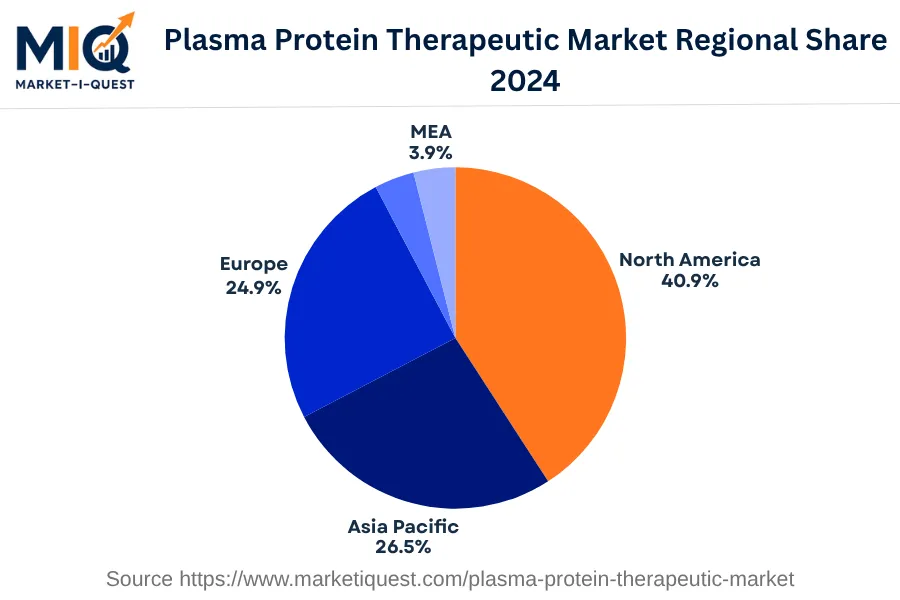
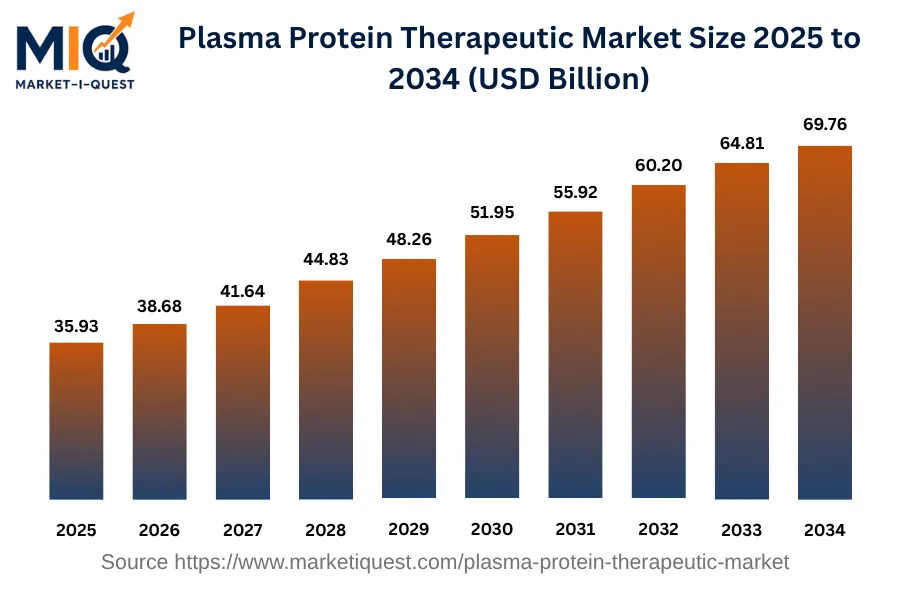
The Plasma Protein Therapeutic market size is expected to increase from USD 35.93 billion in 2025 to USD 69.76 billion in 2034, with a compound annual growth rate (CAGR) of 7.65%. The market was valued at USD 33.38 billion in 2024, indicating a steady rise over the years. This continual growth is due to certain market dynamics. When accounting for regional market share in 2024, North America held the highest share at 40.9%. Following closely, Asia Pacific accounted for 26.5% and Europe at 24.9% of the total market. Meanwhile, Latin America and the Middle East & Africa held more minor shares, at 3.8% and 3.95%, respectively. These shares reflect the extent to which different regions contribute to the global Plasma Protein Therapeutic market.

Key Takeaways

  • By Product Type - Intravenous Immunoglobulin held the leading position in the market in 2024.
  • By Patient Type - Adult segment dominated accounting for the largest market share in 2024.
  • By End Use - Hospitals held the majority share in the market in 2024.
plasma-protein-therapeutic-market market size

Key Driving Factors

Implementation of PPTA Standards

The Plasma Protein Therapeutic Market is significantly influenced by the strict control measures set by Plasma Protein Therapeutics Association (PPTA). PPTA standards, developed to ensure the safety and quality of plasma protein therapies, are a primary driving factor in defining market dynamics at a global level. These measures involve exacting screening, testing, and processing methods, which are strongly supported by advanced technological tools. Therefore, consistent adaptation to these standards by plasma collection centers and manufacturers drives the market as they aim to meet these rigorous benchmarks.

Upswing in Rare Diseases Research

The rise in the frequency and intensity of research studies to treat and manage rare diseases is also strongly propelling the Plasma Protein Therapeutic Market forward. Since plasma protein therapies are seen as a promising treatment method for several rare diseases, extensive research on them has become a key focus area in the biomedical field. A potential driving factor lies in governments and institutions increasingly allocating cost-effective funding structures specifically earmarked for rare diseases study. New research findings centered around plasma protein therapies can potentially open up new avenues and boost market growth significantly.

Market Evolution by Timeline

2019-2023
In this period, hospitals and clinics became prime buyers of plasma protein therapeutic products, mainly for treatments related to immunodeficiency and hemophilia. Particularly in developed regions such as North America and Europe, usage of these products spiked. Plasma-derived therapies manufacturing witnessed increased adoption of modern filtration and chromatography technologies. Regulatory pressure grew, with agencies like the U.S. FDA and European Medicines Agency boosting surveillance on production safety and control, while IRPC standards were often quoted in procurement exercises. Prices remained largely stable, albeit showing slight upward trend towards 2023, while contracts typically included long-term supply agreements. The primary risk was posed by potential contamination in plasma, prompting manufacturers to enhance safety protocols.
2024
In 2024, plasma protein therapeutics solidified its role in treating rare chronic diseases, attracting more healthcare providers as buyers worldwide. However, the industry hit a supply hurdle due to the limited number of plasma donors and lack of plasma collection centers. In response, manufacturers often turned to fractionation technology to maximize protein yield from available plasma, rising to maturity in integration. The industry faced increased scrutiny on compliance with PPTA standards, underlining enhanced product quality, safety and efficacy. Also, in a few countries, policy-driven supports for plasma donation began to emerge. On the commercial front, the pricing model inclined towards premium pricing and strategic alliances became more common to secure plasma supplies but struggled with contamination risks.
2025-2029
The demand for plasma protein therapeutics continued to increase globally, especially from Asia, driven by the rising prevalence of diseases such as respiratory disorders and infectious diseases. Technology took a leap forward with more efficient separation and purification methods coming to market. This resulted in improved yield and product quality but also carried constraints in terms of higher production costs. At the policy level, countries like China and India started implementing stringent regulations to ensure plasma safety and traceability. Typical commercial deals involved placement contracts with guaranteed volumes and prices, and risk-sharing clauses. The risk of potential plasma scarcity persisted during this period, and industry participants started investing in alternate sources of plasma proteins such as recombinant technologies.
2030-2034
Between 2030 and 2034, a new buyer segment emerged from the rise of personalized medicine and gene therapy, as researchers and specialist clinics sought specific plasma proteins for therapeutic purposes. Production capacity underwent a sizable expansion, often in response to favorable policies promoting plasma donation and processing, especially in the USA, Germany and France. Standard adherence became even more critical as a guarantee of product quality and patient safety, further bolstering the influence of bodies such as the PPTA in the policy landscape. The pricing dynamics of this period showed an increased tendency towards cost-based pricing models, and partnerships for raw plasma sourcing continued to grow in number. The risk of plasma demand exceeding supply still lurked, with potential impact on prices and ultimately, patient access.

Future Market Outlook

Future Opportunities

The plasma protein therapeutic market is poised for expansion due to several identified opportunities in research, development, and application. In 2023, several biotech firms initiated studies to explore the potential of monoclonal antibodies derived from plasma, aiming to provide new treatment avenues for severe autoimmune diseases. The increased focus on personalized medicine has also prompted collaborations between plasma providers and genomic sequencing firms, as seen in partnerships like those between BioMarin Pharmaceutical and various genomic laboratories. Regions such as Asia-Pacific show growing interest in plasma collection networks, with countries like China enhancing regulatory frameworks to support increased plasma donation rates. Regulatory clarity offered by the International Society of Blood Transfusion in guidelines for pathogen reduction technologies plays a critical role in bolstering confidence among stakeholders in emerging markets. Moreover, the rise in demand for immunoglobulin therapies, driven by the COVID-19 pandemic, has highlighted the need for sustainable plasma collection practices and improved supply chain management, leading to partnerships between industry leaders such as Kedrion and various blood donation organizations. As these trends advance, they present significant opportunities to enhance product portfolios and address untapped patient needs across diverse regions and therapeutic areas.

Segmentation Analysis

By Product Type

The market is divided into subsegments including Intravenous Immunoglobulin, Coagulation Factor Concentrates, Albumin, and Alpha-1 Antitrypsin. Among these, Intravenous Immunoglobulin accounted for the largest revenue share while Alpha-1 Antitrypsin is expected to grow at the fastest CAGR during the forecast period.

Largest Revenue Share

Intravenous Immunoglobulin

Market Share Leader

Intravenous Immunoglobulin (IVIG) has emerged as the subsegment with the highest revenue generation in this market. This trend can be attributed to its extensive adoption in the treatment of various immune deficiencies, autoimmune diseases, and acute infections. Moreover, the administration of IVIG is viewed as a lifesaving therapy for patients who are immune-compromised or who have undergone stem cell transplantation. This further augments its adoption rate and thus boosts revenue generation. IVIG's high demand is also fueled by its efficacy and the minimal side effects associated with its usage. In terms of geographies, developed nations like the United States and countries in Western Europe contribute significantly to the revenue generation due to the higher prevalence of immune deficiency diseases and better healthcare infrastructure. Regulatory support also plays a crucial role as the clearance and approval of different IVIG products help increase accessibility and, in turn, revenue.

Fastest CAGR

Alpha-1 Antitrypsin

Forecast Period Growth Leader

Expected to show the fastest CAGR during the forecast period is the Alpha-1 Antitrypsin subsegment. This estimated growth could be linked to its increasing application in treating Alpha-1 Antitrypsin Deficiency, a genetic disorder that may lead to lung and/or liver disease. The increasing incidence of this disorder is expected to drive the demand for Alpha-1 Antitrypsin, thereby boosting its growth rate. Technological improvements in the manufacturing of Alpha-1 Antitrypsin, along with increasing partnerships for its production and distribution, are expected to serve as key catalysts for the growth. That being said, the high cost of therapy and product shortages in certain regions may pose some barriers to adoption. However, ongoing research trials, development of recombinant forms of Alpha-1 Antitrypsin, and increasing awareness should mitigate these obstacles and support the subsegment's continued growth.

By Patient Type

The market is divided into subsegments including Pediatric, Adult, and Geriatric patient types. The Adult subsegment accounted for the largest revenue share while the Geriatric subsegment is expected to grow at the fastest CAGR during the forecast period.

Largest Revenue Share

Adult

Market Share Leader

The Adult subsegment leads in revenues largely due to the sheer volume of patients in this demographic. With the largest population share, adults form the backbone of most medical markets. Multifaceted health needs stemming from both chronic and acute conditions, as well as preventive care, contribute to this robust market segment. Often, adults are in the prime of their working lives, which potentially affords them better access to healthcare through employer-sponsored programs. Furthermore, adults typically have a higher purchasing power, allowing more regular and consistent engagement with the health system, contributing to sustained revenues. Geographically, urban areas often realize the larger share of this revenue due to greater accessibility and availing of health services. Regulatory landscapes fostering affordable healthcare also indirectly bolster the adult segment’s revenue size. At the intersection of demand volume and purchasing power lies the adult patient type which inevitably constitutes the market's highest grossing segment.

Fastest CAGR

Geriatric

Forecast Period Growth Leader

The Geriatric segment, while not the current leader in terms of revenue, is projected to grow at an unprecedented rate. This can largely be attributed to the rapidly aging global population – a result of advances in healthcare and quality of life improvements that are causing increases in life expectancy. Geographically, developed countries with higher proportions of elderly citizens are expected to drive this growth. Shifts in policy aimed at increasing access to healthcare for the elderly, combined with the tendency for older individuals to have higher healthcare usage, will have significant impacts on geriatric care market expansion. Technology is also a crucial catalyst in this regard. Remote patient monitoring, telehealth initiatives, and innovative healthcare solutions designed for the elderly are breaking down barriers and increasing care accessibility. However, it's essential to remain aware of potential risks such as inadequate geriatric-specialized resource allocations, which could stunt growth in this segment.

By End Use

The market is divided into subsegments including Hospitals, Homecare Settings, and Ambulatory Surgical Centers. Hospitals accounted for the largest revenue share while Homecare Settings is expected to grow at the fastest CAGR during the forecast period.

Largest Revenue Share

Hospitals

Market Share Leader

The hospital subsegment tops the chart in terms of revenue in 2024. Primary drivers of revenue for hospitals are the broad range of health-related services they offer, compared to other subsegments. Besides primary healthcare services, hospitals also provide specialized departments for critical care, surgeries, diagnostic services, and in-patient facilities. This allows them to cater to a larger patient base, thus generating higher revenue. Hospitals, both private and public, are also better equipped with advanced technology and highly qualified medical personnel, enabling them to handle more complex cases, translating to higher inpatient numbers and treatment costs. Additionally, the reimbursement from insurance companies is also notably significant in case of tertiary hospital services compared to home care and ambulatory centres, thereby making hospitals the highest revenue-generating subsegment.

Fastest CAGR

Homecare Settings

Forecast Period Growth Leader

While homecare settings is not the highest revenue earner, it is, however, projected to grow at the fastest CAGR during the forecast period. The rising ageing population, coupled with a preference for at-home treatments due to comfort and convenience, is a primary growth driver for homecare settings. Technological advancements in home healthcare devices and equipment have made it easier to administer complex treatments at home. Also adding fuel to this growth is the increasing support from governments and insurance companies. Despite this favourable stride, challenges persist such as a lack of skilled healthcare professionals and inaccurate diagnosis, which could act as significant growth barriers in homecare settings. Nevertheless, strategic partnerships and investments can assist in overcoming these challenges and further propel growth in this subsegment.

Competitive Analysis

Key Market Players

Manufacturers/OEMs

Grifols S.A
Spain
Shire Plc
Ireland
Baxter International Inc.
US

Key Suppliers & Raw Materials

Rockland Immunochemicals Inc.
US
GE Healthcare
US
Sigma-Aldrich Corporation
US

Distributors, Integrators & Channel Partners

CSL Plasma
Australia
Octapharma Plasma
Switzerland
Kedrion SpA
Italy

Porter’s Five Forces Analysis

Analyzing the plasma protein therapeutic market, considering its competitive forces and market dynamics.

Supplier Bargaining Power

Low

Few suppliers in industry, less competition leading to lower supplier bargaining power.

Buyer Bargaining Power

High

Multiple plasma protein therapeutics available facilitating high buyer power.

Threat of Substitutes

Low

High development costs and stringent regulations limit substitute products.

Threat of New Entrants

Low

High entry barriers due to complex production and regulatory certifications.

Competitive Rivalry

High

Intense competition among secured firms due to technological advancements.

Regional Analysis

Geographic market dynamics and growth opportunities across key regions

Global Market Outlook

plasma-protein-therapeutic-market market regional share

North America

In 2024, the North American Plasma Protein Therapeutic Market represented a complex assortment of healthcare and industry stakeholders, driven by a range of interwoven factors. Regulatory frameworks played a substantial role, with the U.S. Food and Drug Administration's stringent procedures ensuring robust quality and safety, subsequently boosting market confidence and viability. Demand surged across the U.S., Canada, and Mexico, fueled by increased awareness and prevalence of diseases such as hemophilia and primary immunodeficiency disorders. Meanwhile, technological advancements in plasma protein isolation refined extraction processes, augmenting supply dynamics.

In terms of trends, buyer behavior overwhelmingly swayed towards plasma-derived therapies due to their high efficacy in comparison to traditional therapeutics. Marinus Pharmaceuticals, for instance, witnessed a significant surge in popularity due to its advanced plasma protein therapies. Foremost among channel dynamics was the growth of e-pharmacies, which provided easy access to these therapeutics, while partnerships such as the one between Takeda Pharmaceutical and CSL Behring drove innovation and competition. Despite the aforementioned U.S. standards, there was a discernible push for stronger regulatory oversight in Mexico, enhancing the market’s overall integrity. At the forefront of these changes were healthcare providers, notably hospitals and clinics, that benefited significantly from the enhanced therapeutic options.
Asia Pacific

In 2024, the Asia Pacific Plasma Protein Therapeutic Market experienced significant growth due to numerous intrinsic and extrinsic factors. The primary drivers included increased patient awareness coupled with a rising prevalence of life-threatening diseases such as hemophilia in countries like China and India. Technological advancements across the region, particularly in Japan and South Korea, improved screening and diagnosis procedures for blood-related disorders, escalating the demand for plasma protein therapeutics. Additionally, robust investments in Australia's healthcare sector helped strengthen the product supply chain in the region.

Several trends surfaced in the market during this period. Increased preference for home-based healthcare resulted in the massive adoption of plasma-derived products in the retail sector, especially amongst ageing population in Japan and Australia. Government-led initiatives in China and India, such as policy enforcement for the usage of safe blood and blood products, catalyzed market expansion. Furthermore, M&A activities saw an uptick, with companies partaking in strategic collaborations to optimize their offerings and tap into hitherto unknown customer segments. Lastly, the focus on standardized procedures across ASEAN markets for plasma collection, production, and quality control formulated a safer and more reliable market landscape. Above all, the mounting trust in plasma protein therapeutics as a viable treatment option drove the market's success in 2024.

Europe

The plasma protein therapeutic market in Europe in 2024 showed significant activity. Drivers included increased prevalence of diseases like immunodeficiency and hemophilia, which led to a demand uptick for plasma-derived therapies, a force notably visible in the healthcare sectors of Germany and the United Kingdom. Regulatory norms encouraging safe and ethical plasma donation pushed supply dynamics positively, particularly in France and Italy where government programs were established. Additionally, the favorable reimbursement landscape in Spain encouraged patients' adoption of these therapies.

Remarkable trends were also noticeable in 2024. Advanced fractionation techniques gained momentum in Benelux and Nordics due to the drive towards efficient plasma protein extraction. There was a noticeable shift towards personalized treatment in Central & Eastern Europe, which leveraged specific plasma proteins for targeted therapies. Partnerships and M&As among the healthcare firms saw a perceptible boost chiefly in the United Kingdom and Germany, aiming to expand the reach and impact of plasma therapies. Regulatory bodies across Europe tightened policy enforcements, fortifying quality standards to ensure effective and safe plasma protein therapeutics.

Latin America

In 2024, the Plasma Protein Therapeutic Market in Latin America displayed significant growth, grounded in the increasing demand for plasma-derived medicines, evolving healthcare infrastructure, and significant government involvement. The amplified prevalence of chronic illnesses in countries, most notably Brazil and Mexico, bolstered the demand for plasma protein therapeutics. Regulatory agencies in Chile and Argentina intensified focus on setting standards ensuring the safety and efficacy of plasma-derived treatments. This influenced investment in research and technology adoption, facilitating an expandable supply chain and favorable pricing.

The market witnessed considerable trend shifts. Buyers, including healthcare providers and pharmaceutical enterprises, leaned towards local manufacturers due to reliability and cost-effectiveness. With advancements in biotechnology, LATAM observed a drift from traditional plasma-derived products towards more potent and highly purified forms. In trying to develop a comprehensive plasma protein therapeutics environment, partnerships and mergers were another trend seen - being enforced more stringently in Colombia and Peru. Policy enforcement intensified in healthcare and manufacturing sectors, where companies had to adhere to meticulous safety standards related to the extraction, screening, and utilization of plasma, thereby influencing the market dynamics. The changing preferences of stakeholders and regulatory stringencies reshaped the Plasma Protein Therapeutic Market across Latin America in 2024.

Middle East & Africa

In 2024, the Plasma Protein Therapeutic Market in the Middle East and Africa experienced a surge driven by increased healthcare investment, advanced medical technologies integration, and an increase in diseases requiring plasma protein therapy. Saudi Arabia and UAE, with their robust healthcare sectors, registered high demand due to progressive healthcare reforms and increased government spending on health infrastructure. In Nigeria and South Africa, a high prevalence of immune disorders fuelled demand, while in Israel, an increase in technological adoption triggered plasma therapy market growth. Furthermore, pricing regulations in Kenya posed a significant impact on market dynamics.

Trends observed include increased online sales of plasma protein therapeutics, especially during the COVID-19 crisis, facilitating treatment accessibility. Key pharmaceutical manufacturers in Egypt and the UAE engaged in strategic partnerships to enhance their supply chain, while mergers and acquisitions witnessed a rise in South Africa and Qatar. High standards of safety were maintained in plasma collection and utilization, especially in Saudi Arabia and Israel. There was a pronounced focus on disease awareness campaigns by healthcare sectors across these regions, impacting buyer behaviour significantly. Notably, healthcare policy enforcement in sectors like retail and manufacturing, primarily in Saudi Arabia and the UAE, played a pivotal role in driving the market.

Recent Industry Developments

Latest market innovations, product launches, and strategic initiatives

January 2026

Indonesia's First Plasma Fractionation Plant Nears Completion – The SK Plasma fractionation plant in Karawang, West Java (a joint venture between SK Plasma and the Indonesia Investment Authority) reached 98.72% completion. The 4.9-hectare facility has an annual capacity of 600,000 liters and is scheduled to begin commercial production in Q4 2026, becoming the largest plasma fractionation facility in Southeast Asia.

June 2026

Grifols Egypt JV Adds €180 Million in Additional Investment – Grifols Egypt for Plasma Derivatives (GEPD) – a joint venture between Grifols and the Egyptian government – announced an additional €180 million investment on top of the previously committed €280 million, to further expand local plasma fractionation capacity.

Frequently Asked Questions