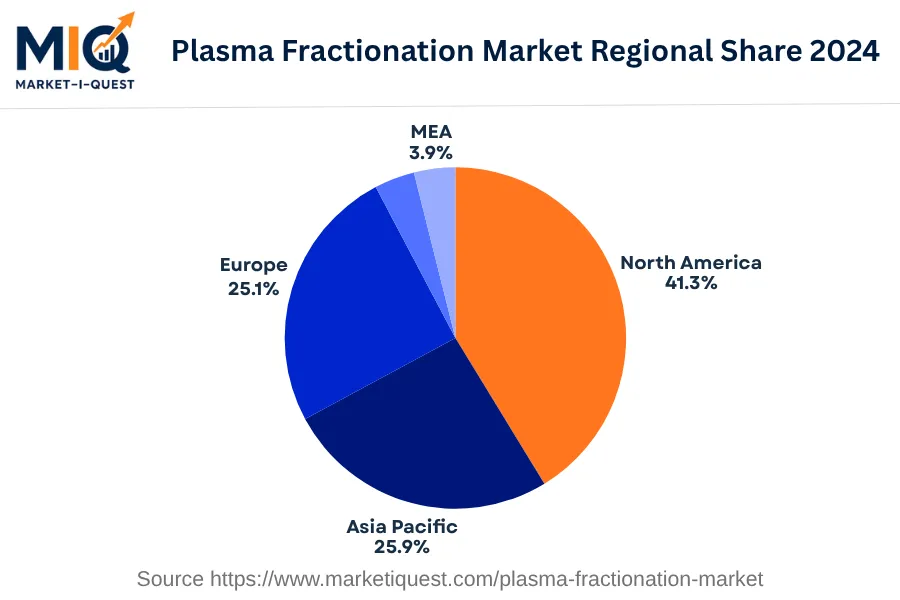
The Plasma Fractionation Market in the Middle East and Africa demonstrated significant dynamism in 2024. Key drivers included the rising prevalence of immunodeficiency disorders and other infectious diseases, which necessitated increased demand for plasma products. Governmental entities, especially in Saudi Arabia and South Africa, have also increased investment into national health infrastructures, prioritizing the acquisition of cutting-edge medical technologies, contributing to market expansion. Furthermore, regulatory support, illustrated by UAE's Ministry Of Health and Prevention endorsing plasma fractionation processes, has buoyed the sector's growth.
In terms of trends, changing consumer behavior towards preventative healthcare, particularly in affluent areas such as UAE and Qatar, has escalated demand for plasma products. Adoption of advanced fractionation technologies to optimize yield was also noticed across several nations, including Israel and Egypt. Additionally, strategic partnerships marked the sector, notably, Egypt's partnership with Grifols, a leading plasma fractionation company, bolstered local plasma product supply. Client sectors have broadly spanned government, healthcare, and manufacturing industries. Government buys for public healthcare benefited from policies encouraging foreign direct investment in technology, while private healthcare providers invested to meet increased consumer demand for higher-quality services. Manufacturers, meanwhile, utilized the technology to enhance the efficiency of their processes. Sectarian differences have been minimal, demonstrating a largely unified response to the benefits of plasma fractionation across the region.