Password Management Market Snapshot

Key Players

  • LastPass (USA)
  • Keeper Security (USA)
  • Dashlane (France)
  • NordPass (Panama)
  • Microsoft (USA)
  • RoboForm (Russia)
  • Zoho (India)
  • AgileBits (Canada)
  • Avira Operations (Germany)
  • Sticky Password (Czech Republic)

Market Size

Base Year 2024
$3.14 Bn
CAGR
19.24%
Forecast 2034
$18.25 Bn

Market Segments

By Deployment Mode
  • Cloud-Based
  • On-Premises
  • Hybrid
By Features
  • Password Generation
  • Password Storage
  • Password Sharing
  • Two-Factor Authentication (2FA)
  • User Activity Monitoring
By End User
  • Individual Users
  • Small Enterprises
  • Medium Enterprises
  • Large Enterprises

Market Dynamics

Drivers
  • Increasing cyber security threats
  • Rising demand for password synchronization
Restraints
  • Consumer trust issues
  • Complex integration process
Opportunities
  • Rising cybersecurity concerns
  • Increased remote working

Market Size

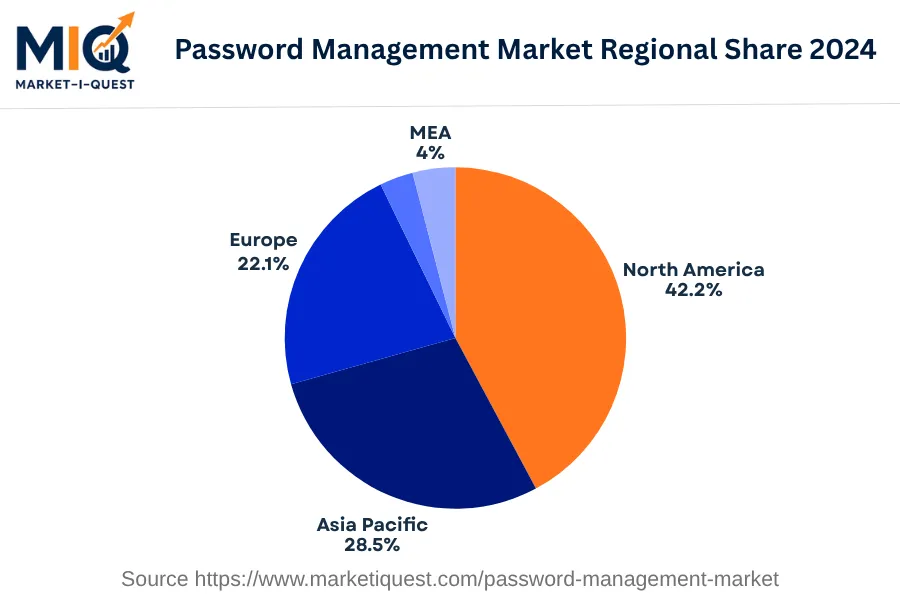
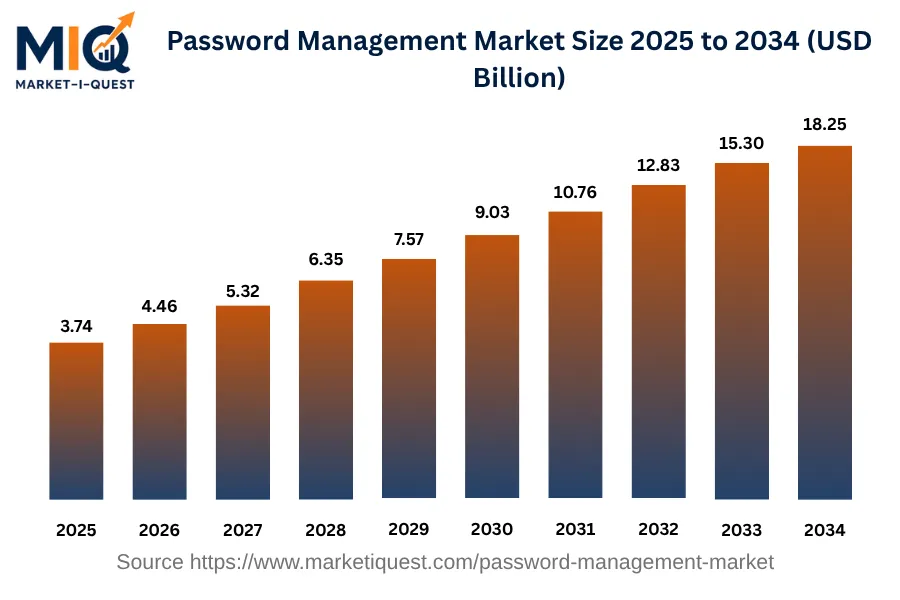
The Password Management Market was worth 3.74 billion USD in 2025 and is expected to grow to 18.25 billion USD by 2034, indicating a CAGR of 19.24%. The market saw a moderate increase from 3.14 billion USD in 2024 to the aforementioned 3.74 billion in 2025. From there, a consistent year-on-year expansion is noted, resulting in the forecasted 2034 value. This growth is attributed to the escalating demand for password management services, propelled by the surge in the number of password-protected accounts each individual or business needs to manage. The optimization of password practices and the need to comply with password policies further fuel market growth. In terms of regional share in the year 2024, North America led, accounting for 42.18% of the market. It was followed by Asia Pacific with a 28.46% share, Europe at 22.14%, the Middle East and Africa at 4.04%, and Latin America holding the smallest share of 3.18%.

Key Takeaways

  • By Deployment Mode - On-Premises segment led the market accounting for the highest market share in 2024.
  • By Features - User Activity Monitoring was the fastest-growing subsegment in the market demonstrating impressive expansion in the year 2024.
  • By End User - Large Enterprises held a dominant position in the Password Management Market.
password-management-market market size

Key Driving Factors

Increasing incidence of cyber-attacks

Over the last decade, there has been a rapid increase in the frequency and sophistication of cyber-attacks, particularly those targeting sensitive customer data and proprietary business information. A significant majority of these attacks exploit poorly managed or weak passwords, which makes password management a critical concern for businesses of all sizes. To mitigate the risk, organizations are investing in advanced password management solutions that can secure their digital assets while simplifying the task for employees. This need to strengthen cybersecurity has emerged as a key factor influencing the growth of the password management market.

Compliance with stringent data privacy regulations

In the wake of high-profile data breaches, countries worldwide are imposing stricter data protection regulations. For example, the European Union's General Data Protection Regulation (GDPR) and the California Consumer Privacy Act (CCPA) in the United States have laid out stiff penalties for non-compliance. These regulations require organizations to maintain stringent control over access to personal data, which often includes implementing robust password management policies and tools. As more organizations strive to adhere to these data privacy standards, the demand for effective password management solutions has spiked, significantly driving growth in the password management market.

Market Evolution by Timeline

2019-2023
The global uptake of digital services led to diverse buyer needs during 2019-2023, especially in North America and Western Europe. Businesses increasingly invested in password management services to safeguard against cybersecurity threats. In response, technology providers like LastPass and Dashlane refined their offerings, but integration with existing systems was sometimes problematic. Regulatory measures like the EU's General Data Protection Regulation began influencing adoption, necessitating stronger password protocols. Commercial models often involved subscription-based pricing, but partnerships flourished, with companies like Cisco integrating password management into broader cybersecurity packages. The primary risk was operational disruption during implementation, typically managed through staged deployment.
2024
In 2024, the privacy concerns mounted, driving robust password management adoption in Asia-Pacific, particularly in India and Australia. AgileBits' 1Password emerged as a compelling contender, known for its user-friendly integration with existing software environments. Many service providers had to comply with newly tightened privacy regulations, like Australia's Privacy Act 1988. The prevailing commercial model shifted slightly towards one-time purchase agreements for license-based products. Ignoring password management technologies presented a substantial risk to businesses, exposing them to potential data breaches and regulatory sanctions.
2025-2029
During 2025-2029, the password management market expanded in Latin America due to the growing digitalization of businesses. New suppliers like RoboForm gained traction because of their advanced auto-fill features. Remote work situations accelerated cloud-based password management adoption. Regulatory landscapes evolved; Brazil's General Personal Data Protection Law encouraged businesses to revisit their data privacy policies. Improved integrations resulted in bundled services with security software becoming increasingly common. Fluctuating cryptocurrency values introduced pricing instability for blockchain-based password management services. Increased cyber attacks accentuated the risk of data theft.
2030-2034
From 2030-2034, rapid technological advancements spiked the demand for password management services in Africa, especially in tech hubs like Kenya and Rwanda. Established players like Keeper offered advanced biometric-based solutions, challenging traditional password management services. Implementations often ran into integration issues due to legacy systems. The African Union's Convention on Cybersecurity urged businesses to invest more in cybersecurity. Bundle pricing for holistic security solutions became more prevalent. Increased reliance on digital infrastructure presented risks of large-scale service failures in the event of breaches.

Future Market Outlook

Future Opportunities

The ongoing developments in the Password Management Market indicate numerous future opportunities, particularly related to regulatory compliance and industry standards. As countries strengthen their data protection laws, like the California Consumer Privacy Act introduced in 2020, companies will need to adapt their password management practices to meet these requirements. This need fosters a market for solutions that prioritize legal compliance and secure user data management. The partnership landscape is evolving, with collaborations between tech giants like IBM and cybersecurity startups expected to generate robust password management features. The integration of artificial intelligence into password management systems, as evidenced by advances from companies like Keeper Security, presents another domain for growth; these solutions promise enhanced threat detection and response capabilities. Moreover, industries such as finance and healthcare, which are subject to strict regulatory frameworks, will continue to seek specialized password management tools that address their unique compliance challenges. Companies such as Okta are already positioning themselves to serve this growing niche. With the persistent rise in cyber threats, there are ample opportunities for product differentiation based on security features, user experience, and compliance readiness. As firms increasingly recognize the significance of effective password management, custom solutions tailored to specific industry requirements may emerge, signaling new avenues for innovation within the sector.

Segmentation Analysis

By Deployment Mode

The market is divided into subsegments including Cloud-Based, On-Premises, and Hybrid. The On-Premises subsegment accounted for the largest revenue share while Cloud-Based is expected to grow at the fastest CAGR during the forecast period.

Largest Revenue Share

On-Premises

Market Share Leader

The On-Premises subsegment has been leading the market in terms of revenue. This may be explained by several factors. First, enterprises prefer the on-premises deployment mode due to its superior control over data and systems. This is especially crucial for companies operating in strict regulatory environments which demand high levels of data security and privacy such as finance, healthcare, and government sectors. The ability of on-premises solutions to offer customization to suit specific needs also contributes to its demand. Plus, it's reassuring to customers to have immediate physical control and access to their equipment and data, avoiding reliance on internet access to manage systems and services. This also lessens the probability of data accesses and breaches, further making it a preferred choice. Existing infrastructures in these organizations create substantial barriers for shifting to other deployment modes. Moreover, organizations based in regions with less robust internet infrastructure may find on-premises deployment more trustworthy due to their capability of functioning without the internet.

Fastest CAGR

Cloud-Based

Forecast Period Growth Leader

The Cloud-Based subsegment is anticipated to exhibit the fastest CAGR during the forecast period. The segment's growth can be attributed to the increasing penetration of internet services, reducing the data threat associated with regions with weak cyber infrastructure. The demand for cloud-based solutions is further fostered by its cost-effectiveness, simplicity of integration, and scalability. It eliminates the need for establishments to make hefty investments in hardware and allows a pay-as-you-go model making it affordable for small and medium enterprises. Moreover, catalytic policies for cloud-first strategies in many countries, coupled with advancements in artificial intelligence and machine learning technology, are expected to accelerate the growth momentum of this segment. However, concerns related to data security and regulatory compliance are significant barriers to adoption. These issues need to be addressed with vigorous cybersecurity measures, strategic partnerships, and adherence to regional data protection laws to ensure sustained growth in cloud technology adoption. Expect an emphasis on collaboration and partnerships with local service providers for personalized, regionalized cloud services.

By Features

With a focus on feature-based segments within the market, the primary subsegments include Password Generation, Password Storage, Password Sharing, Two-Factor Authentication (2FA), and User Activity Monitoring. In 2024, Password Storage accounts for the largest revenue share, while User Activity Monitoring is predicted to witness the fastest growth rate in the coming years.

Largest Revenue Share

Password Storage

Market Share Leader

Password Storage commands the largest share of the feature-based market segment. This is primarily due to its central role in data security across numerous industries, including financial services, healthcare, and technology. In an era increasingly characterized by sophisticated cyber threats, secure password storage has gained precedence over simple password creation. Organizations of all scales prioritize secure password storage to protect sensitive data from security breaches. Moreover, regulations such as the General Data Protection Regulation (GDPR) and the California Consumer Privacy Act (CCPA) have imposed stringent data security measures, indirectly driving demand for efficient password storage solutions. Additionally, the advent of cloud-based password storage solutions has accelerated this trend, as enterprises increasingly rely on cloud platforms for business operations. High switching costs also contribute to segment revenue, as users are usually reluctant to change their password storage provider due to the potential risk of data breaches during the process.

Fastest CAGR

User Activity Monitoring

Forecast Period Growth Leader

User Activity Monitoring is set to be the fastest-growing subsegment, bolstered by increasing concerns over insider threats and the rising trend of remote work. Monitoring user activity allows companies to promptly identify and respond to abnormal activities, minimizing the risk of inside attacks and enhancing overall system security. Technological advancements and the advent of AI-enhanced monitoring solutions have made it even more feasible for companies to seamlessly surveil user activities within their systems. However, privacy concerns could potentially impede the growth of this subsegment. Governments and institutions are starting to challenge the extent to which user activity monitoring impinges on personal privacy rights, posing regulatory hurdles and putting the spotlight on ethical conduct. As a result, vendors in this space must address these concerns effectively, possibly through implementing measures to anonymize data or regulate access to sensitive user information.

By End User

The market is divided into subsegments including Individual Users, Small Enterprises, Medium Enterprises, and Large Enterprises. In 2024, Large Enterprises accounted for the largest revenue share while Small Enterprises is expected to grow at the fastest CAGR during the forecast period.

Largest Revenue Share

Large Enterprises

Market Share Leader

Large enterprises demonstrate the largest revenue share in the market. This is based on the fact that such firms possess substantial investment capabilities and often have sophisticated requirements which drive heavy consumption of solutions and services. Large businesses, due to their extensive scale of operations, typically have a significant number of clients and employees which makes them pivotal consumers in the market. Factors such as increasing digital transformation, the need to manage large data sets, and the requirement for advanced technological infrastructure are strong factors encouraging large enterprises to invest heavily into the sector. Market offerings cater to their need for streamlined workflows and improved productivity, promoting substantial investment. Large enterprises often operate across multiple geographies, which further multiplies their customer base and escalates their purchasing power. Regulatory compliance is another factorial pushing them towards market offerings, as is the drive towards maintaining a competitive edge in the growing digital marketplace.

Fastest CAGR

Small Enterprises

Forecast Period Growth Leader

Small enterprises are demonstrating the fastest growth in terms of compound annual growth rate. They are typically characterized by their agility and flexibility, which enables them to quickly integrate advancing technologies into their operations. Small enterprises often look for cost-effective solutions which can help them incrementally, and thus are more inclined to use scalable solutions that accommodate their growth and operational expansion. The adoption barriers seen within this segment often originates in budget constraints, scarcity of IT proficiency and the inability to bear significant upfront costs. Yet, small enterprises are increasingly recognizing the necessity for digital transformations to remain competitive and to start or expand their operations. External catalysts like supportive government policies, availability of enterprise-grade solutions at lower costs, advantages of cloud-based solutions, tech innovation, and strategic partnerships are encouraging more adoption by small enterprises. A potential risk for this segment is the total cost of ownership considering maintenance, upgrades, and security. However, the advantages and possibilities for business expansion far outweigh the potential risks.

Competitive Analysis

Key Market Players

Manufacturers / OEMs

LastPass Enterprise
US
Dashlane Business
France
1Password
Canada

Key Suppliers & Raw Materials

Microsoft Azure AD
US
Google Cloud Identity
US
Okta
US

Distributors, Integrators & Channel Partners

Tech Data
US
Ingram Micro
US
SYNNEX Corporation
US

Porter’s Five Forces Analysis

These forces determine the competitive intensity and attractiveness of the Password Management Market.

Supplier Bargaining Power

Low

Minimal supplier influence due to abundance of potential vendors and low switching costs.

Buyer Bargaining Power

High

Buyers have a high degree of control due to increasing number of suppliers and easily comparable products.

Threat of Substitutes

Medium

Rise in related technologies like biometric authentication poses fair threat of substitution.

Threat of New Entrants

Medium

Moderate barriers to entry in technology development, but relatively low capital investment needed.

Competitive Rivalry

High

Intense rivalry with numerous existing players, fast-paced innovation and high price competition.

Regional Analysis

Geographic market dynamics and growth opportunities across key regions

Global Market Outlook

password-management-market market regional share

North America

In the base year of 2024, the password management market in North America developed remarkably owing to various factors driving the area's growth. The urgency for stringent security regulations across multiple sectors, including retail, healthcare, and government, triggered rising demand for password management solutions. These tight measures have been primarily driven by increased cybersecurity threats and data breaches. Correspondingly, substantial investments in enhancing these security measures augmented the market's expansion, largely in the United States and Canada. Moreover, the burgeoning adoption of advanced technologies like multi-factor authentication and biometrics further fueled market growth.

Among trends dominating the arena, a significant shift was observed towards adopting sophisticated solutions for password management by larger enterprises given the extensive networks they handle. There was a noteworthy increase in partnerships and acquisitions among major players, aiming to solidify their position and widen their product offerings, with prominent partnerships in the US market seeking to join technological powerhouses such as Microsoft and IBM. Additionally, the rapid implementation of stringent regulatory standards in Canada and the US significantly shaped the market trends. With North American organizations putting higher emphasis on policy enforcement to protect sensitive credentials, the need for password management solutions has notably surged. Thus, the password management market in North America in 2024 witnessed extensive growth powered by driving factors and trending behaviors.

Asia Pacific

In 2024, the Password Management Market in the Asia-Pacific region emerged as a pivotal sector in securing digital identities. The principal drivers were regulatory changes, increased digitization, and a surge in cyber-attacks. Notably in China and Australia, tighter cybersecurity regulations compelled businesses to adopt sophisticated password management systems. Concurrently, rapid digitization in India and ASEAN markets expanded the digital footprint and thus the potential for password-related breaches, necessitating a robust solution. Furthermore, the rise in cyber-attacks, particularly in Japan, South Korea, and China, amplified demand for password management software.

The market highlighted several notable trends. Firstly, a growing preference was observed for biometric authentication within enterprise sectors in Australia and Japan as it adds an extra layer of security. Meanwhile, the adoption of cloud-based password management solutions was prominent among SMEs across India and the ASEAN region due to cost-effectiveness. Substantial partnerships were forged in China and South Korea between local tech providers and global cybersecurity firms to offer efficient password management solutions. Lastly, regulatory bodies across key markets started rigorously enforcing password management policies in sectors such as government, healthcare, and retail to prevent data breaches. Overall, the Asia-Pacific Password Management Market conveyed a heightened emphasis on strengthening password security in 2024.

Europe

In 2024, the European password management market was significantly driven by escalated cyber threats, stringent data protection laws and growing technological adoption. First, the heightened awareness of cyber threats, especially in sectors such as healthcare, government and retail, ramped up the demand for robust password management solutions. Second, stringent regulations including the General Data Protection Regulation (GDPR) and the UK's Data Protection Act 2018, imposed strict privacy and data security requirements, resulting in increased investment by several organizations into password management systems. Lastly, rapid technological advancements and the increased adoption of cloud-based solutions in Germany, the UK, France, and the Nordics further strengthened the European market for password management.

Trends in 2024 showcased the evolution towards more secure and user-friendly systems. Organizations shifted their focus to biometric technologies and multifactor authentication (MFA) to enhance security, especially in the UK and Germany. This coincided with changing channel dynamics, where many enterprises moved from on-premise to cloud-based password management solutions, notably within the utility and retail sectors throughout Italy, Spain and Benelux. Furthermore, strategic partnerships were common in Central & Eastern Europe, as businesses combined resources to maintain a robust cybersecurity framework, which was largely constricted by national and E.U. policy regulations.

Latin America

In 2024, the password management market in Latin America (LATAM) experienced significant growth due to increased internet penetration and a rise in cyber threats. Drivers included the evolving digital landscape in countries such as Brazil and Mexico, marked by greater accessibility and affordability of the internet, contributing to burgeoning demand. Legislation around data protection and consumer privacy, notably in Argentina and Colombia, also shaped market dynamics, necessitating robust password management solutions. Furthermore, businesses across various sectors, including retail, manufacturing, and healthcare, heightened their investment in advanced technologies to secure confidential data, fueling market growth.

In terms of trends, the year saw a solid shift towards biometric authentication in password management, driven primarily by its higher security relative to traditional methods. Brazil and Mexico, the region's leading tech adopters, pioneered this trend. Moreover, an uptick in partnerships and mergers & acquisitions among tech companies was key to expanding their foothold in this market. For instance, Chilean and Peruvian firms strategically collaborated with international tech giants. Finally, stricter policy enforcement, particularly in the government and enterprise sectors in LATAM, called for more reliable password management systems to mitigate data breaches, contributing to an active market throughout the base year.

Middle East & Africa

In 2024, the Password Management Market in the Middle East and Africa demonstrated dynamic growth. Drivers included escalating cybersecurity threats triggering demand for robust password management solutions. Regulatory push, particularly in financial services, saw increased adoption of secure password policies. For instance, Saudi Arabia and the United Arab Emirates implemented stringent cybersecurity guidelines to safeguard online transactions. Diversified investment from prominent markets including Kenya, Nigeria, and South Africa substantiated the market's expansion with the increased integration of advanced password management technologies across sectors like government, healthcare, and retail.

In terms of trends, discerning consumer behavior reflected heightened consciousness for data privacy, especially in sectors like telecom and utilities, prompting companies to enhance password management strategies. Technological advancements in Israel, a hub for cybersecurity innovations, remarkably influenced the market with products like biometric-based password systems and multi-factor authentication. Channel dynamics saw a significant surge in the demand for cloud-based password management solutions, resulting from extensive digital transformation strategies in region's oil, gas, and manufacturing sectors. Additionally, strategic collaborations among regional and international technology providers, such as mergers and acquisitions, formed an integral part of the landscape in 2024, aiming for comprehensive password policy enforcement and regional cybersecurity integrity.

Recent Industry Developments

Latest market innovations, product launches, and strategic initiatives

May 2026

1Password (AgileBits Inc.) expanded its enterprise Passkey Management Platform, integrating native WebAuthn/FIDO2 hardware security keys alongside biometric unlock mechanisms. The update enables continuous session verification across desktop and mobile browsers while retaining end-to-end $AES\text{-}256\text{-}bit$ zero-knowledge vault encryption.

September 2025

Dashlane Inc. unveiled an AI-driven credentials risk engine that performs real-time dark web credential leak auditing and automated weak-password scoring, giving IT administrators dynamic risk telemetry across enterprise endpoints.

Frequently Asked Questions